
 Chat with us on WhatsApp


Best American Craft Bourbons: Beyond The Big Distilleries
Craft bourbon brands are usually smaller, more independent American whiskey producers that sit outside the biggest global bourbon names. The term “craft” is not a strict legal category, so it needs handling carefully. A useful craft bourbon guide should look at who distilled the whiskey, where it was made, how transparent the label is, and whether the bottle offers character beyond branding.
For UK buyers, craft bourbon can be a strong route into more regional American whiskey. It can also be confusing, because some bottles are genuinely made by small distilleries while others are sourced, blended, or bottled by non-distiller producers. If you are exploring American whiskey more broadly, our American whiskey range is the natural place to compare available bottles by producer, style, and price.
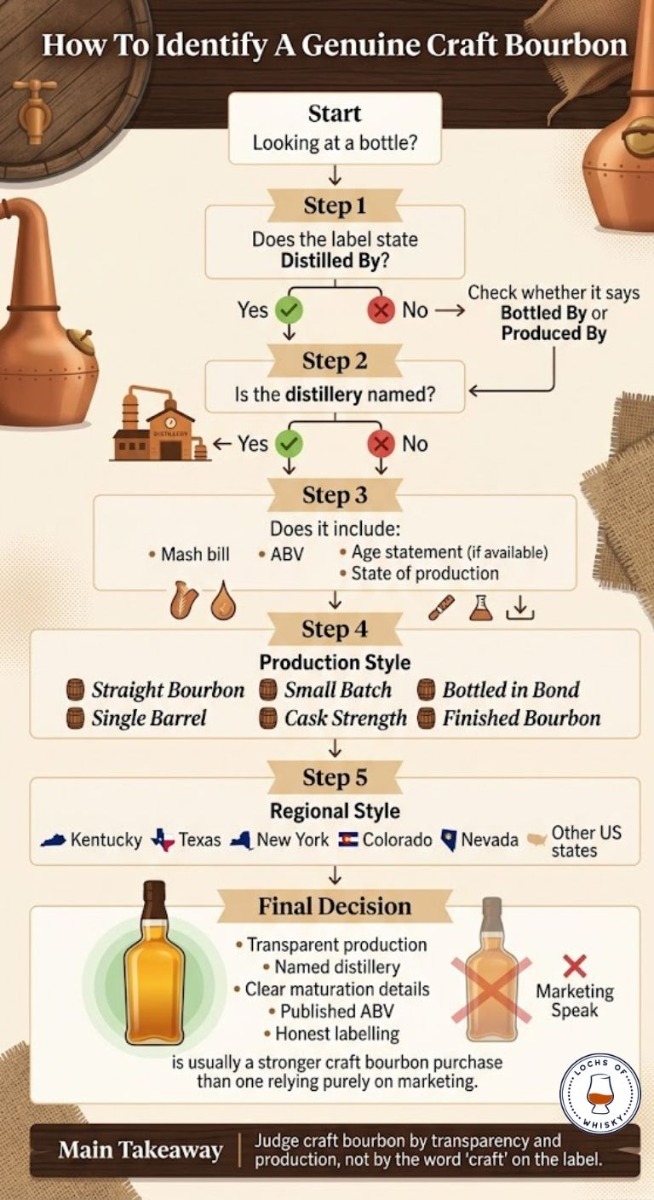
What Counts As Craft Bourbon?
Craft bourbon usually means bourbon from a smaller, independently minded producer, but there is no single legal definition. Some people use production volume. Others use ownership, distillery size, or whether the brand actually distils its own spirit.
Legally, bourbon must be made in the United States from at least 51% corn, distilled to no more than 80% ABV, and matured in new charred oak containers. The US standards of identity for distilled spirits set out those requirements. “Craft” sits on top of that. It is a market description, not the legal definition of bourbon.
That means a craft bourbon brand should be judged on evidence, not just label language. Look for clear information on:
- Who distilled the whiskey
- Where it was matured
- The mash bill or grain recipe
- Age statement or maturation details
- ABV, proof, and whether it is cask strength
- Whether the bottle is straight bourbon, small batch, single barrel, or finished bourbon
For the wider brand landscape, use this article alongside our Best Bourbon Brands guide, which covers the larger category without narrowing in on craft producers alone.
How To Tell If A Bourbon Is Distilled In-House Or Sourced
The fastest check is the wording on the label. “Distilled by” usually means the named company distilled the whiskey. “Bottled by” or “produced by” may mean the brand sourced whiskey from another distillery, then blended, finished, or bottled it under its own name.
This is not automatically a problem. Some sourced bourbons are excellent. The issue is transparency. A sourced bourbon that clearly explains its origin, age, finish, and blending approach can be more trustworthy than a supposedly “craft” bottle with a vague founder story and no production detail.
MGP in Indiana is one of the best-known sources of American whiskey for independent brands. Many respected bottlers have used MGP-distilled stock well. What matters is whether the bottle is honest about what it is. A customer buying a small-distillery bourbon often expects the whiskey to be made by that distillery, not simply bottled there.
One thing our customers often notice only after comparing bottles side by side is that transparency matters more than the word “craft” itself; a clear sourced whiskey can feel more credible than a vague small-brand bottle.
Why Non-Kentucky Bourbon Matters
Bourbon does not have to be made in Kentucky. It must be made in the United States, but producers in Texas, New York, Colorado, Nevada, Washington, Indiana, and other states can all make bourbon if they follow the legal production rules.
This is where craft bourbon becomes interesting. Smaller producers outside Kentucky often show stronger regional character because climate, maturation speed, warehouse conditions, grain sourcing, and production scale can all affect the final whiskey.

Texas Bourbon
Texas bourbon often matures aggressively because of heat and wide temperature shifts. This can drive rapid extraction from new charred oak, giving some bottles bold vanilla, toasted sugar, dark spice, leather, and heavy wood character at a younger age than many Kentucky bourbons.
The risk is imbalance. Some Texas bourbons can feel too oak-heavy, hot, or tannic. Look for ABV, age, and whether the producer is known for managing wood influence carefully. Expect prices in the UK to sit higher than mass-market bourbon, often around £60–£150 depending on producer and release.
New York Bourbon
New York craft bourbon often leans into local grain, smaller batches, and urban or farm distillery identity. These bottles can be distinctive but may taste younger, grainier, or more experimental than classic Kentucky profiles.
They suit drinkers who want something different rather than a familiar caramel-and-vanilla profile. Check the age statement carefully, especially on bottles under £70.
Colorado And Western Bourbon
Colorado and western-state bourbons can show drier spice, high-altitude maturation influence, and a more rugged oak profile. Some producers work with wheat, malted grains, or four-grain mash bills to build texture.
These are good options for Scotch drinkers who want American whiskey with structure rather than simple sweetness. For a more direct style bridge, our bourbon for Scotch drinkers guide explains how to match bourbon styles to Scotch preferences.
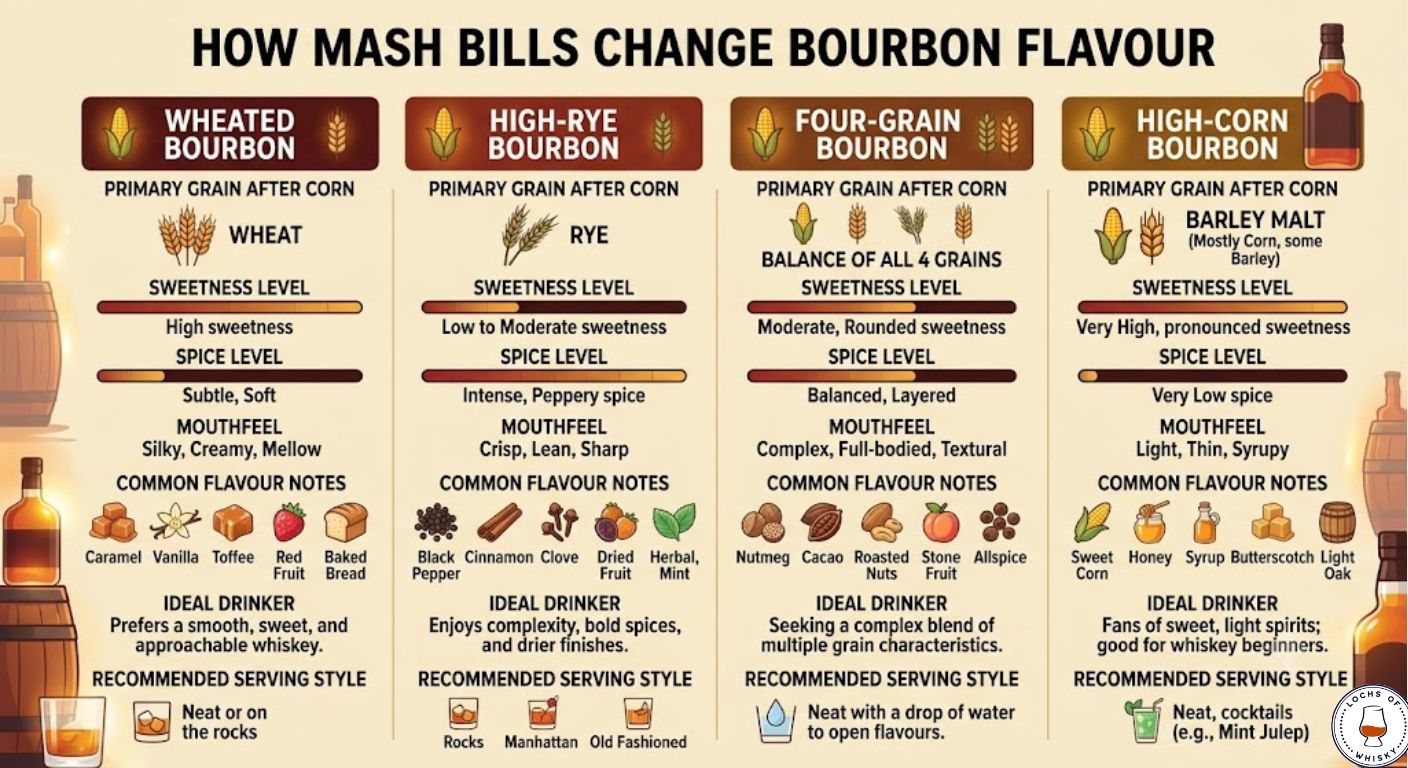
Mash Bill: Wheated, High-Rye And Four-Grain Bourbon
Every bourbon must contain at least 51% corn. The remaining grains shape much of the flavour. Craft producers often use mash bills to differentiate themselves from larger distilleries.
- Wheated bourbon: softer, rounder, sweeter. Often shows vanilla, honey, pastry, and gentle spice.
- High-rye bourbon: bolder and spicier. Expect pepper, cinnamon, mint, orange peel, and drier structure.
- Four-grain bourbon: usually includes corn, rye, wheat, and malted barley. These can be layered but vary widely by producer.
- High-corn bourbon: sweeter and fuller, sometimes with popcorn, caramel, and creamy texture.
If you prefer softer Scotch styles or Irish whiskey, wheated bourbon may be the easier entry point. If you enjoy rye spice, cask strength Scotch, or bold sherry-cask whisky, a higher-rye or barrel-proof bourbon may make more sense.
Age, ABV And Cask Finish Matter More Than The Craft Label
Craft bourbon can be young. That does not automatically make it poor, but it changes what you should expect. Younger bourbon may show more grain, more alcohol heat, and less integrated oak. Older bourbon may bring depth, but it can also become too woody if matured in a hot climate.
ABV is equally important. A 40% bourbon may be easy to drink but lighter in texture. A 50% bottled-in-bond style or higher-proof release can carry more flavour through ice, water, or cocktails. Barrel-proof craft bourbon can be excellent, but it is not always beginner-friendly.
Cask finishes are another common craft strategy. Port, sherry, rum, Cognac, and double-oak finishes can add sweetness, fruit, spice, or extra wood. These finishes can work well, but they can also cover up immature spirit. Look for balance rather than novelty.
Craft Bourbon Brands Worth Knowing
Availability changes quickly in the UK, so this is best treated as a producer watchlist rather than a fixed shopping list. The following names are useful reference points when comparing craft and smaller-producer bourbon.
New Riff
New Riff is a Kentucky producer often discussed as a modern craft success story. Its appeal comes from transparency, bottled-in-bond releases, clear mash bills, and a focus on straight bourbon and rye. It is craft in attitude, even though it sits within Kentucky’s traditional bourbon geography.
Frey Ranch
Frey Ranch in Nevada is known for grain-to-glass production and estate-grown grains. Its bourbons can appeal to buyers who want provenance and agricultural detail, not just a famous label.
Garrison Brothers
Garrison Brothers is one of the best-known Texas bourbon producers. Expect bold oak, high flavour concentration, and premium pricing. It suits drinkers who like power and wood influence, but it may be too intense for those wanting soft, easy bourbon.
Kings County Distillery
Kings County in New York is a useful example of urban craft distilling. Its whiskeys often show a smaller-scale, grain-forward identity. These bottles are best approached as distinctive American whiskey rather than direct substitutes for classic Kentucky bourbon.
FEW Spirits
FEW, based in Illinois, is known for craft American whiskey with a drier, spicier edge. It can suit drinkers who want more grain character and less mainstream sweetness.
Balcones
Balcones is better known for Texas single malt and other American whiskey styles, but it remains important in the wider craft whiskey conversation. It shows how smaller producers can build strong identity through grain choice, climate, and flavour concentration.
When Craft Bourbon Makes Sense
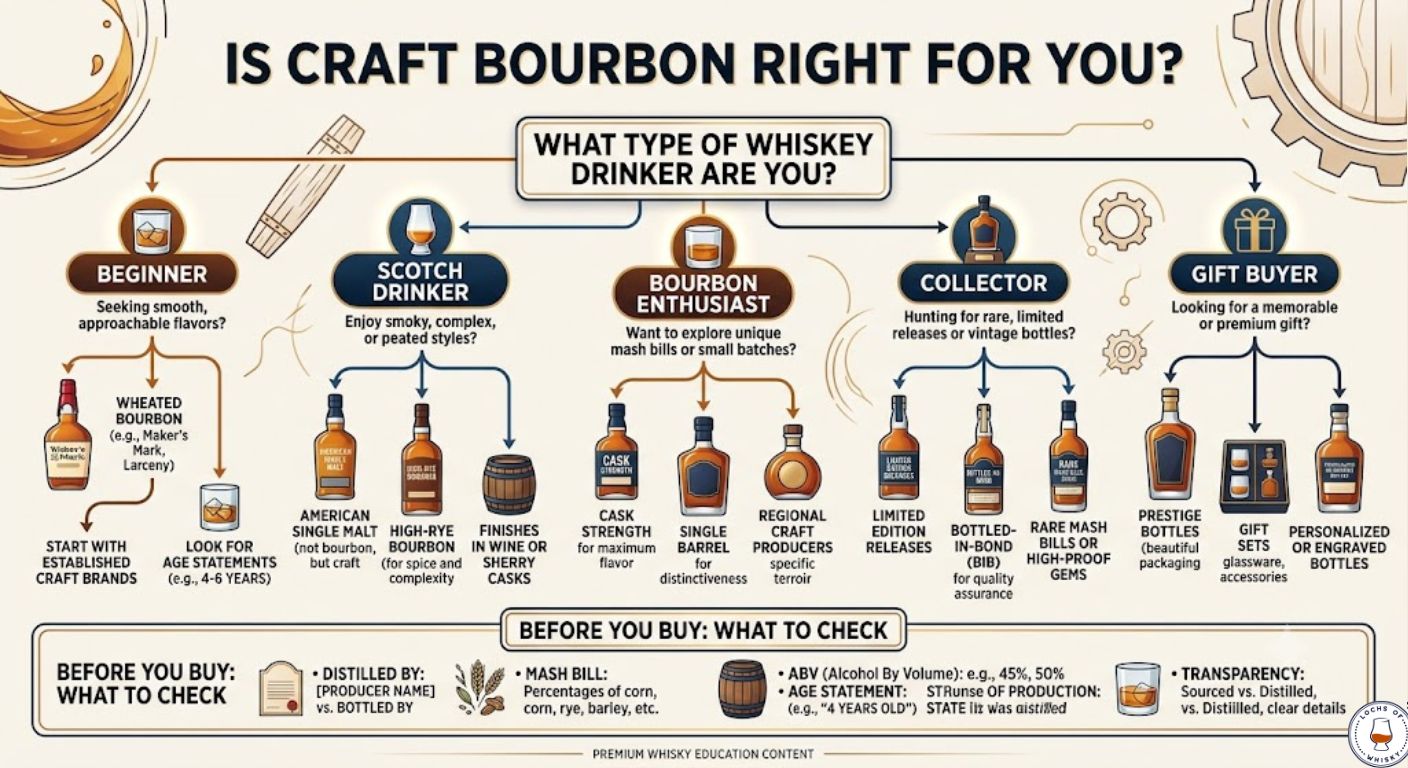
Craft bourbon makes sense when you want regional character, producer transparency, unusual mash bills, higher ABV, or smaller-batch releases. It is also a good route for buyers who already know the major bourbon names and want to understand how American whiskey changes outside the biggest distilleries.
It suits:
- Enthusiasts who read labels closely
- Scotch drinkers looking for American whiskey with provenance
- Gift buyers who want something less obvious
- Collectors interested in emerging producers
- Drinkers who enjoy cask strength or single barrel releases
For gift buying, craft bourbon can work well when the recipient already enjoys American whiskey. If you need a broader price-led route, our bourbon gifts guide covers more gift-specific buying decisions.
When To Avoid Craft Bourbon
Avoid craft bourbon when the bottle gives no clear information on origin, age, ABV, mash bill, or distillation. Vague storytelling is not enough. If the price is high but the label does not explain why, treat it cautiously.
Craft bourbon may also be the wrong starting point for beginners who simply want a classic, easy bourbon profile. Smaller producers can be more variable than established brands. Some bottles are excellent. Others are young, hot, woody, or priced above their drinking quality.
For cocktails, do not assume craft is automatically better. A reliable, affordable bourbon at 45–50% ABV may perform better in an Old Fashioned or Manhattan than a delicate small-batch bottle with a high price and limited availability.
FAQ
What is a craft bourbon brand?
A craft bourbon brand is usually a smaller or independently positioned American whiskey producer, but “craft” is not a legal bourbon category. Judge the bottle by who distilled it, where it was matured, the mash bill, ABV, age, transparency, and whether the producer clearly explains what is inside the bottle.
Can bourbon be made outside Kentucky?
Yes. Bourbon can be made anywhere in the United States, provided it follows the legal rules for bourbon production. Kentucky remains the historic centre, but Texas, New York, Colorado, Nevada, Indiana, Washington, and other states now produce notable bourbon and American whiskey.
How do I know if bourbon is sourced?
Check the label wording. “Distilled by” usually points to the distillery that made the whiskey. “Bottled by” or “produced by” may mean the brand sourced the liquid elsewhere. Sourced bourbon can still be very good, but the best examples are transparent about origin, age, blending, and finishing.
Is craft bourbon better than big-brand bourbon?
Not automatically. Craft bourbon can offer more regional character, transparency, and unusual mash bills, but it can also be younger, hotter, or more expensive. Big-brand bourbon often has consistency and value. The better choice depends on whether you want reliability or discovery.
What should I look for before buying craft bourbon?
Look for the distiller, state of production, age, ABV, mash bill, cask details, and whether it is straight bourbon, single barrel, small batch, or finished bourbon. If the bottle costs more than £70, the label or product page should give enough detail to justify the price.
Final Thoughts
The best craft bourbon brands are not defined by small-batch language alone. They stand out through transparency, production detail, regional character, and flavour that justifies the price. For UK buyers, the safest approach is to read the label closely, check who distilled the whiskey, and match the mash bill and ABV to your own taste.
Craft bourbon is most rewarding when treated as discovery, not as a guarantee of quality. Start with producers that explain what they make clearly, then compare them against the wider American whiskey selection to understand where they sit in style, strength, and value.

Comments