
 Chat with us on WhatsApp


What Is Peated Whisky? Peat & Smoke Explained
Peated whisky is whisky made using malted barley that has been dried over burning peat. The smoke from the peat attaches phenolic compounds to the barley, which later carry through fermentation, distillation and maturation into the finished spirit.
That is why peated whisky can taste smoky, earthy, medicinal, coastal or ashy. It is not simply “smoke flavour” added later. It starts during malting. If you are exploring this style, our peated whisky collection is the most relevant place to compare bottles across different regions and smoke levels.
How Peated Whisky Is Made
Peated whisky begins with barley. During malting, barley is soaked so it starts to germinate. The germination is then stopped by drying the grain in a kiln. For peated whisky, peat is burned as part of that drying process.
- Malting: barley is soaked and allowed to germinate.
- Kilning: peat is burned beneath the malt to create smoke.
- Absorption: phenolic compounds attach to the damp barley.
- Distillation: some of that smoky character carries into the new make spirit.
- Maturation: casks shape, soften and integrate the smoke over time.
The Scotch Whisky Association notes that peat is used in Scotch whisky to give malted barley a distinctive smoky character, while also setting out industry commitments around responsible peat use in its Commitment to Responsible Peat Use.
What Does Peated Whisky Taste Like?
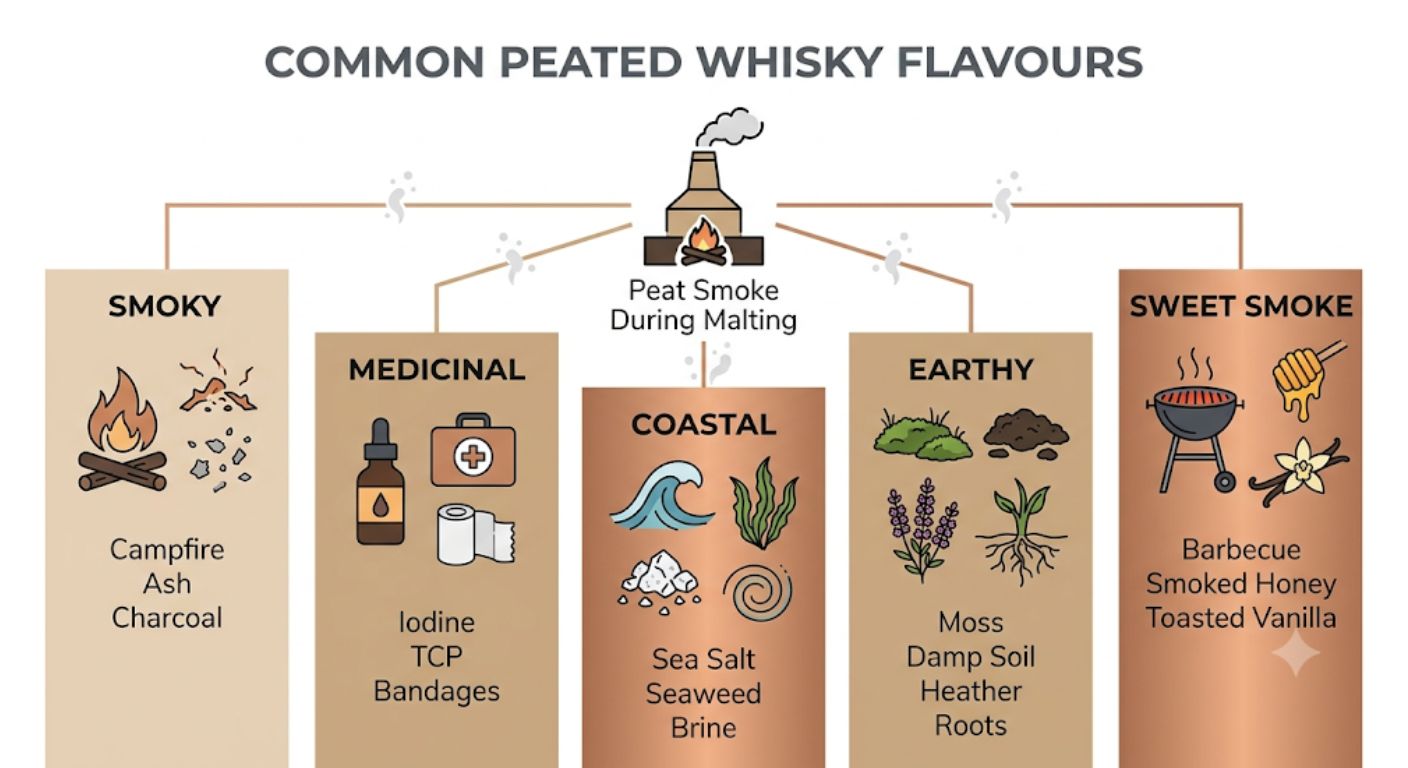
Peated whisky can taste smoky, medicinal, coastal, earthy, tarry or barbecue-like depending on the peat source, malt specification, distillery style and cask maturation. Not every peated whisky tastes the same, and high smoke does not always mean a harsher dram.
Common peated whisky notes include:
- Medicinal: iodine, TCP, bandages, antiseptic notes.
- Coastal: seaweed, brine, wet rope, sea spray.
- Earthy: damp soil, moss, roots, burnt heather.
- Smoky: bonfire, ash, soot, charred wood.
- Sweet smoke: barbecue, smoked honey, grilled fruit.
One thing our customers often discover quickly is that “peated” does not mean one fixed flavour; some bottles are clean and coastal, while others are dense, medicinal and much harder for a first-time drinker.
Islay, Islands And Regional Peat Character
Islay is the region most closely associated with heavily peated Scotch. The island’s style often leans towards medicinal, maritime and powerful smoke, although not every Islay whisky is peated. For a deeper regional route into this style, the Islay whisky category is the strongest starting point.
Distilleries such as Laphroaig are strongly associated with medicinal peat, iodine, seaweed and coastal smoke. Closed distilleries such as Port Ellen also matter to collectors because older and independent bottlings can show how peat, age and cask influence develop over decades.
The Islands can be different. Island peat character often combines smoke with salt, pepper, heather, wax or mineral notes. It may feel less medicinal than Islay and more rugged or coastal. The Islands whisky category is useful if you want smoke without assuming every bottle will be heavily medicinal.
Not all island distilleries are heavily peated. Scapa, for example, is better understood through its Orkney context and generally lighter distillery identity rather than as a heavy peat benchmark.
How Peat Is Measured: PPM Explained
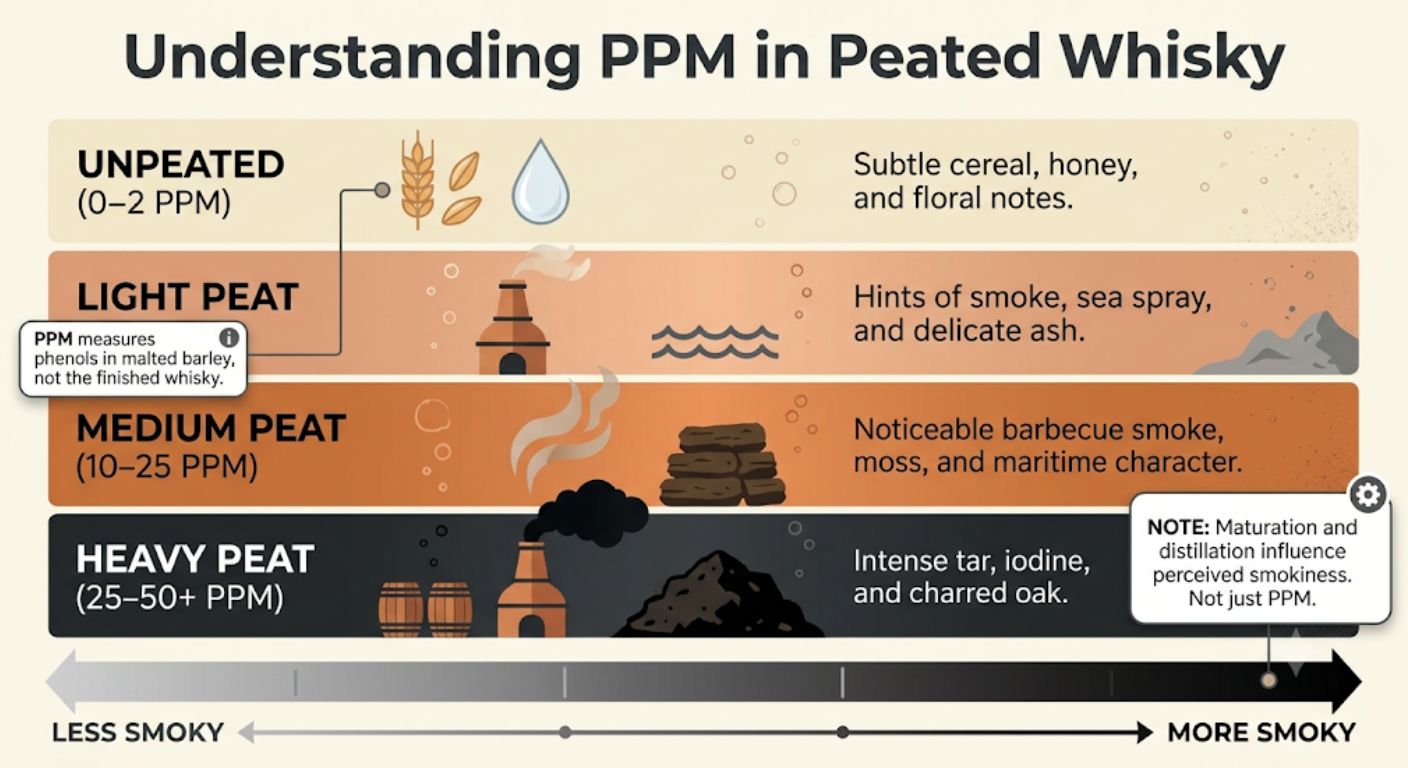
Peatiness is commonly measured in PPM, meaning phenol parts per million. This measures the concentration of phenolic compounds in the malted barley, not necessarily the final bottled whisky. Distillation, cask ageing and blending decisions can all reduce or reshape the perceived smoke.
| Peat level | Typical PPM range | What to expect |
|---|---|---|
| Unpeated or trace peat | 0–2 PPM | Little obvious smoke; fruit, malt and cask lead the profile. |
| Lightly peated | 2–10 PPM | Gentle smoke, often balanced with honey, fruit or malt. |
| Medium peated | 10–25 PPM | Clear smoke, but still usually approachable. |
| Heavily peated | 25–50+ PPM | Assertive smoke, ash, medicinal or coastal notes. |
PPM is useful, but it is not the whole story. A younger whisky at 46% ABV can feel sharper and smokier than an older whisky with a higher original malt PPM. Cask type matters too. Ex-bourbon casks can leave smoke cleaner and sharper, while sherry casks can add dried fruit, spice and sweetness around the peat.
Does Peated Whisky Get Less Smoky With Age?
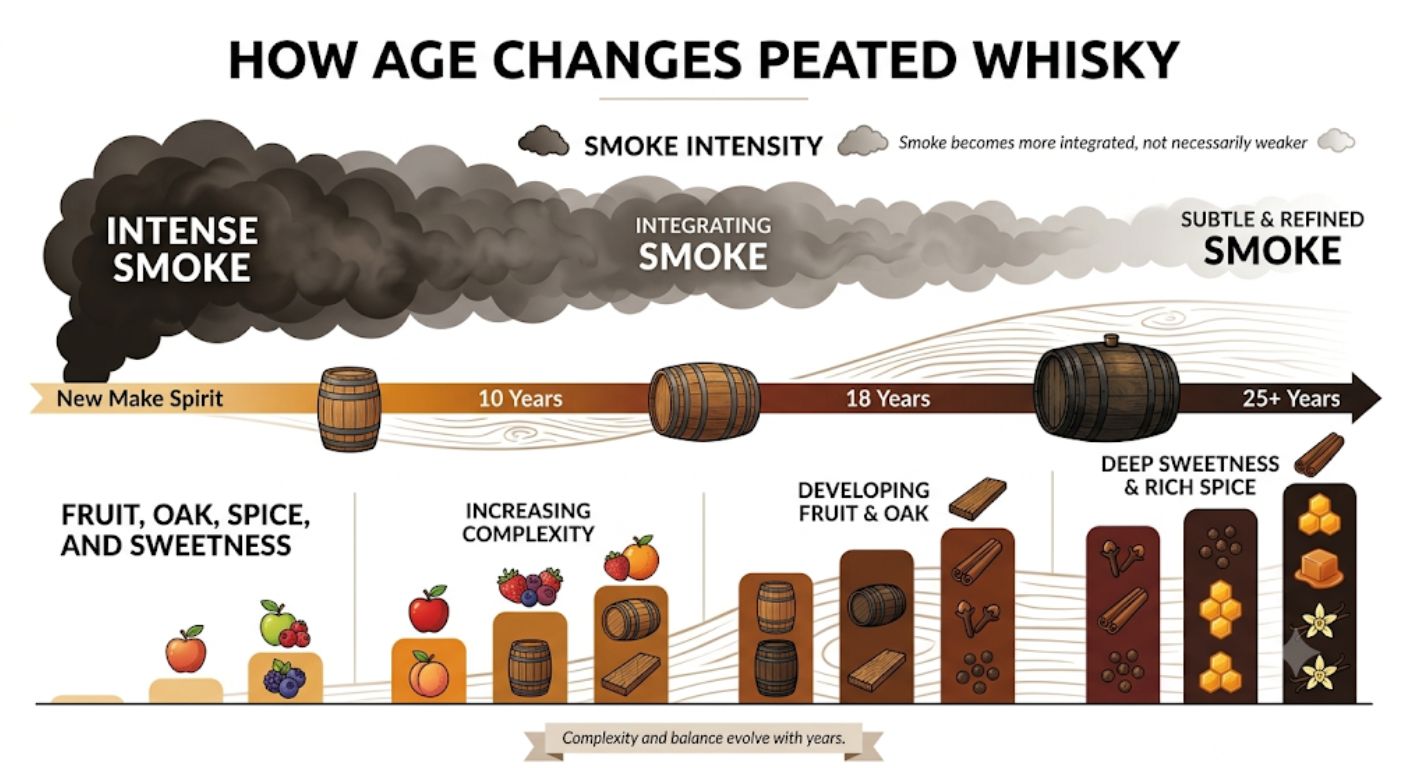
Peated whisky often becomes less aggressive with age because cask maturation softens, integrates and reshapes the phenolic compounds. Older peated whiskies can still be smoky, but the smoke may sit behind fruit, oak, wax, leather, spice or dried fruit rather than dominating the first sip.
This is why an 18-year-old peated whisky can feel rounder than a younger 10-year-old expression, even if both come from a smoky distillery. Age does not remove peat completely, but it can change the balance. ABV also matters: cask-strength peated whisky may feel more intense because alcohol carries aroma and heat more forcefully.
Peated Vs Unpeated Whisky
The difference is mainly in the malt drying process. Peated whisky uses smoke from burning peat during kilning. Unpeated whisky uses malt that has not been exposed to peat smoke, so the flavour is driven more by malt, fermentation, distillation character and cask maturation.
| Style | Main character | Best suited to |
|---|---|---|
| Peated whisky | Smoke, ash, iodine, brine, earth, char | Drinkers who enjoy bold, savoury or coastal flavours. |
| Unpeated whisky | Malt, fruit, honey, spice, oak, sherry influence | Drinkers who prefer cleaner, sweeter or fruit-led whisky. |
Who Peated Whisky Suits
Peated whisky makes sense if you enjoy strong savoury flavours: smoked fish, blue cheese, charred meat, black coffee, dark chocolate or coastal food. It also suits drinkers who want whisky with a clear distillery identity rather than a soft, neutral profile.
It may not suit you if you dislike medicinal notes, ash, smoke or drying finishes. In that case, start with a lightly peated bottle rather than jumping straight into a heavily peated Islay whisky.
How To Start With Peated Whisky
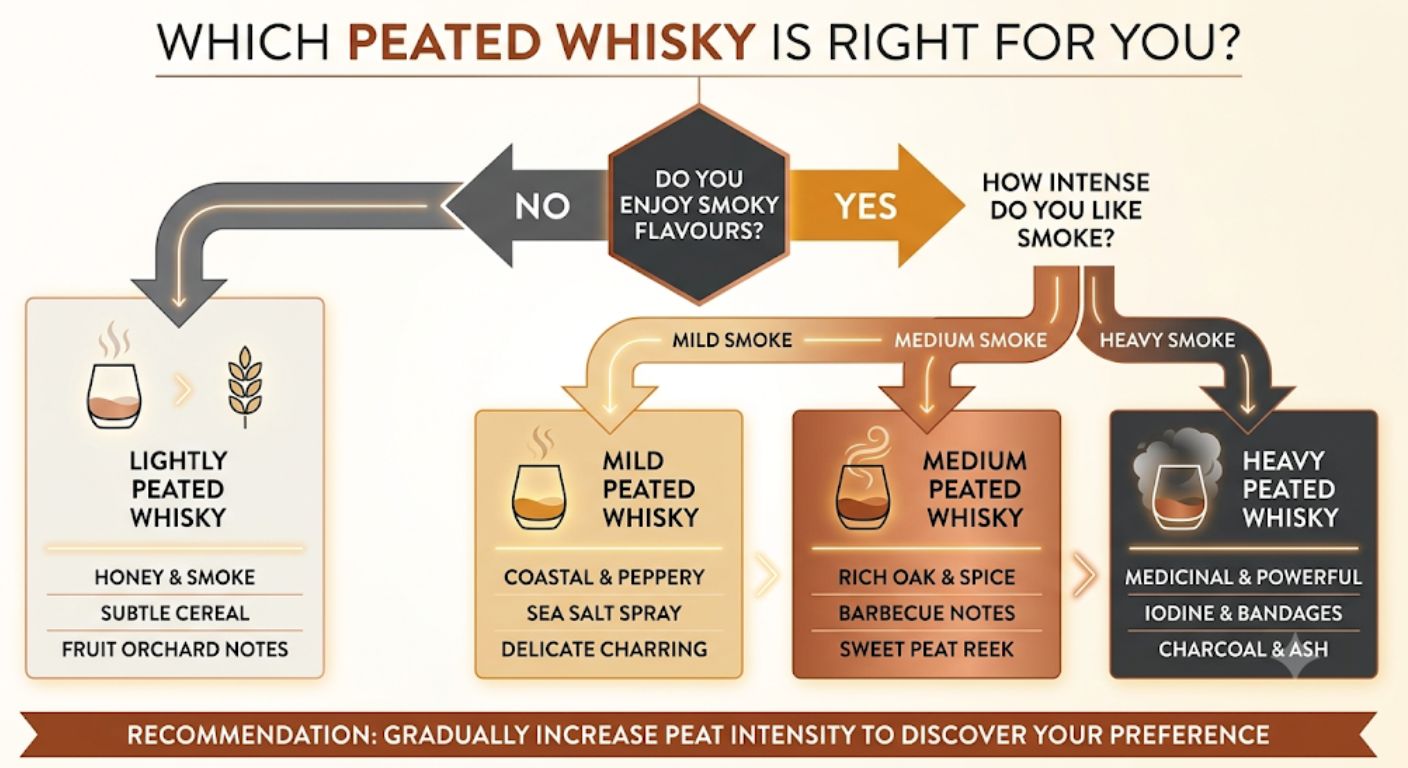
The best route is gradual. Start with light or medium peat, then move towards heavier smoke if you enjoy the style. Add a few drops of water if the whisky feels too sharp; this can open the aroma and reduce alcohol heat without removing the peat character.
- Start light: choose gentle smoke before heavy medicinal peat.
- Check ABV: 40–46% ABV is usually easier than cask strength.
- Look at cask type: sherry influence can soften smoke with sweetness.
- Use food: smoked salmon, blue cheese, grilled meat and 70% dark chocolate work well.
FAQ
Is all Islay whisky peated?
No. Islay is strongly associated with peated whisky, but not every Islay whisky is smoky. Some Islay distilleries produce unpeated or lightly peated expressions. The region is important for peat, but it should not be treated as a guarantee of heavy smoke.
Why does peated whisky taste medicinal?
Medicinal notes come from phenolic compounds created when peat smoke dries the malted barley. In some whiskies, especially coastal Islay styles, these compounds can suggest iodine, TCP, seaweed, antiseptic or bandages. For some drinkers this is the appeal; for others it is the reason peat feels challenging.
Is higher PPM always smokier?
No. PPM is usually measured in the malted barley, not the finished whisky. Distillation, cask maturation, age, ABV and blending can all change how smoky the whisky feels. A high-PPM malt may produce a whisky that feels more balanced than the number suggests.
What food pairs well with peated whisky?
Peated whisky works well with bold food. Smoked salmon, grilled fatty meats, blue cheese, oysters and dark chocolate are strong matches. The key is to pair smoke with salt, fat, umami or bitterness rather than delicate flavours that the whisky will overpower.
-
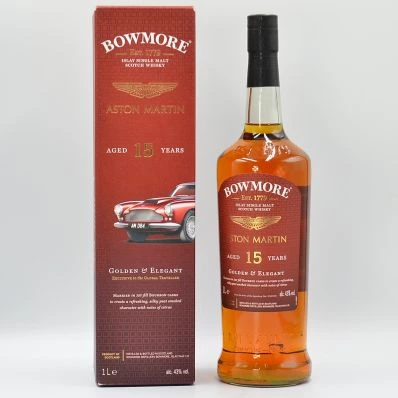
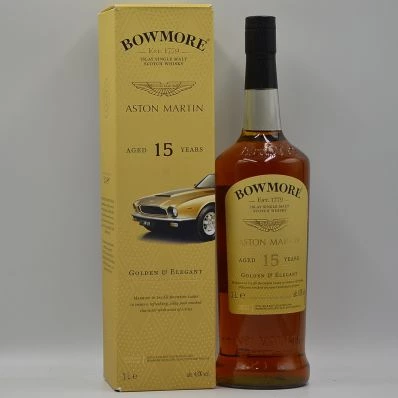 Bowmore 15 Year Old Islay Whisky Aston Martin Edition No.5 100clSpecial Price £142.98 Regular Price £169.99 Inc VATSaving £27.01
 -
-
-
-
-
-
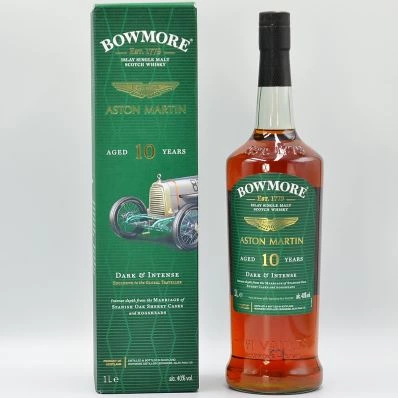 Bowmore 10 Year Old Islay Whisky Aston Martin Edition No.7 100clSpecial Price £83.98 Regular Price £99.99 Inc VATSaving £16.01
 -
-
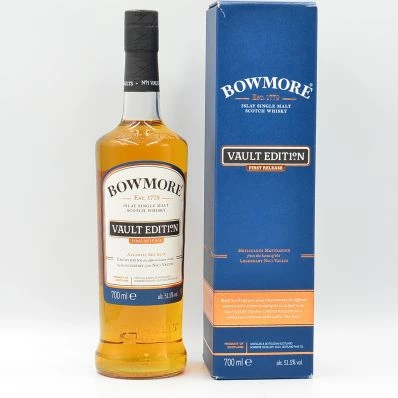 Bowmore Islay Whisky Vault Edition First Release: Atlantic Sea SaltSpecial Price £73.98 Regular Price £89.99 Inc VATSaving £16.01
 -
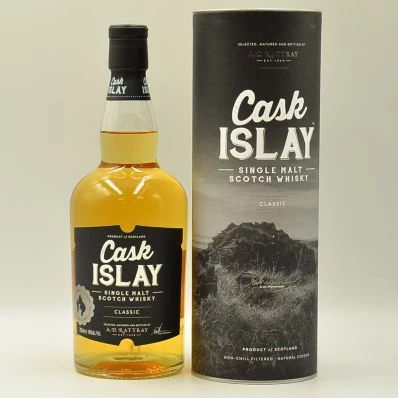 Cask Islay Classic Single Malt Whisky A.D. RattraySpecial Price £35.98 Regular Price £39.99 Inc VATSaving £4.01
 -
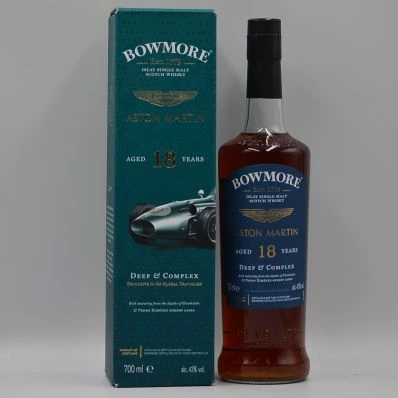 Bowmore 18 Year Old Islay Whisky Aston Martin Edition No.6Special Price £199.98 Regular Price £229.99 Inc VATSaving £30.01Out of stock
 -
Final Takeaway
Peated whisky is defined by peat smoke used during malting, but its flavour depends on much more than smoke alone. Region, malt PPM, distillation, cask type, ABV and age all affect how the finished whisky tastes.
If you want to understand the style properly, compare bottles by smoke level and regional character rather than assuming all peated whisky tastes the same. For a broader route into coastal and maritime smoke, continue through the Islands whisky selection.

Comments