
 Chat with us on WhatsApp

Best Small Batch Bourbon: What It Means & Top Bottles
Small batch bourbon is bourbon made by combining a selected group of barrels before bottling. The term sounds precise, but it has no fixed legal definition. In practice, it usually points to a more controlled batch than a standard high-volume release, with the distiller aiming for balance, consistency and a recognisable house style.
For UK buyers, the useful question is not whether “small batch” is automatically better. It is whether the bottle gives you the style, strength, age and value you want. If you are browsing Bourbon Whiskey, small batch releases are often a good middle ground between everyday bourbon and more individual single barrel bottlings.
What Is Small Batch Bourbon?
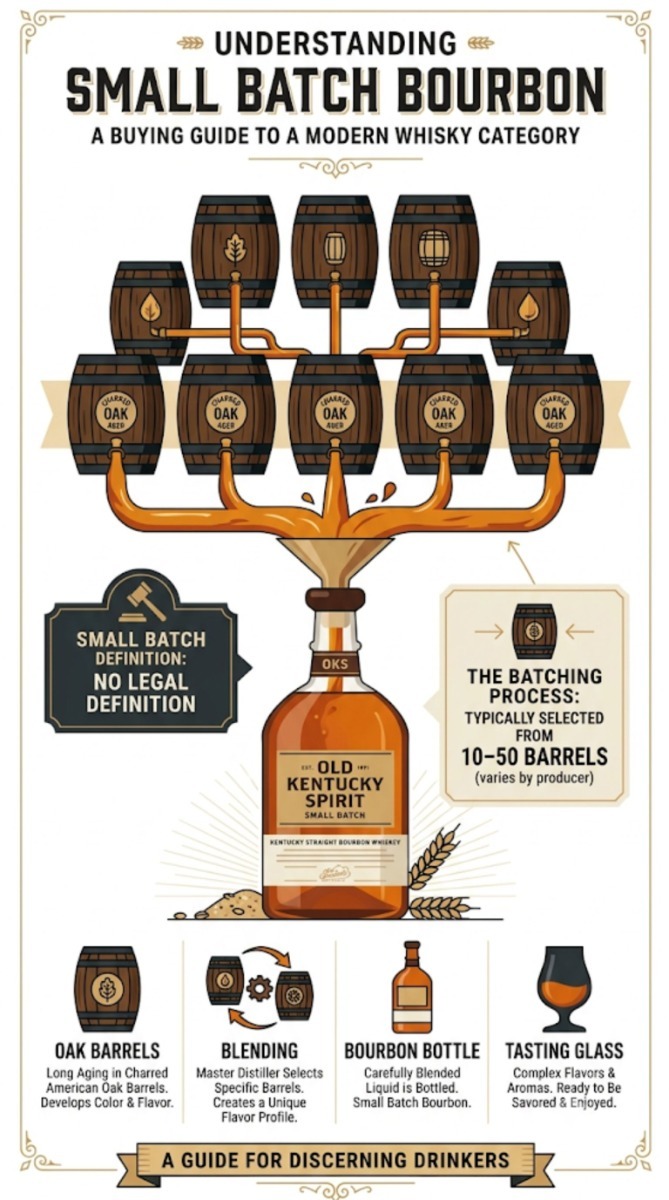
Small batch bourbon is bourbon drawn from multiple selected barrels rather than one single barrel or a huge production run. The barrels are blended together to create a consistent flavour profile. The exact number of barrels is decided by the producer, not by law.
Bourbon itself does have legal rules. Under the US federal standards, bourbon must be made from a mash bill of at least 51% corn, distilled to no more than 160 proof, and stored in charred new oak barrels at 125 proof or less. The phrase “small batch” sits outside those core legal definitions.
That means small batch is best read as a production and selection term, not a guarantee of quality. A strong small batch bourbon should show clear barrel selection, good integration and enough character to justify any price premium.
Small Batch Bourbon vs Regular Bourbon
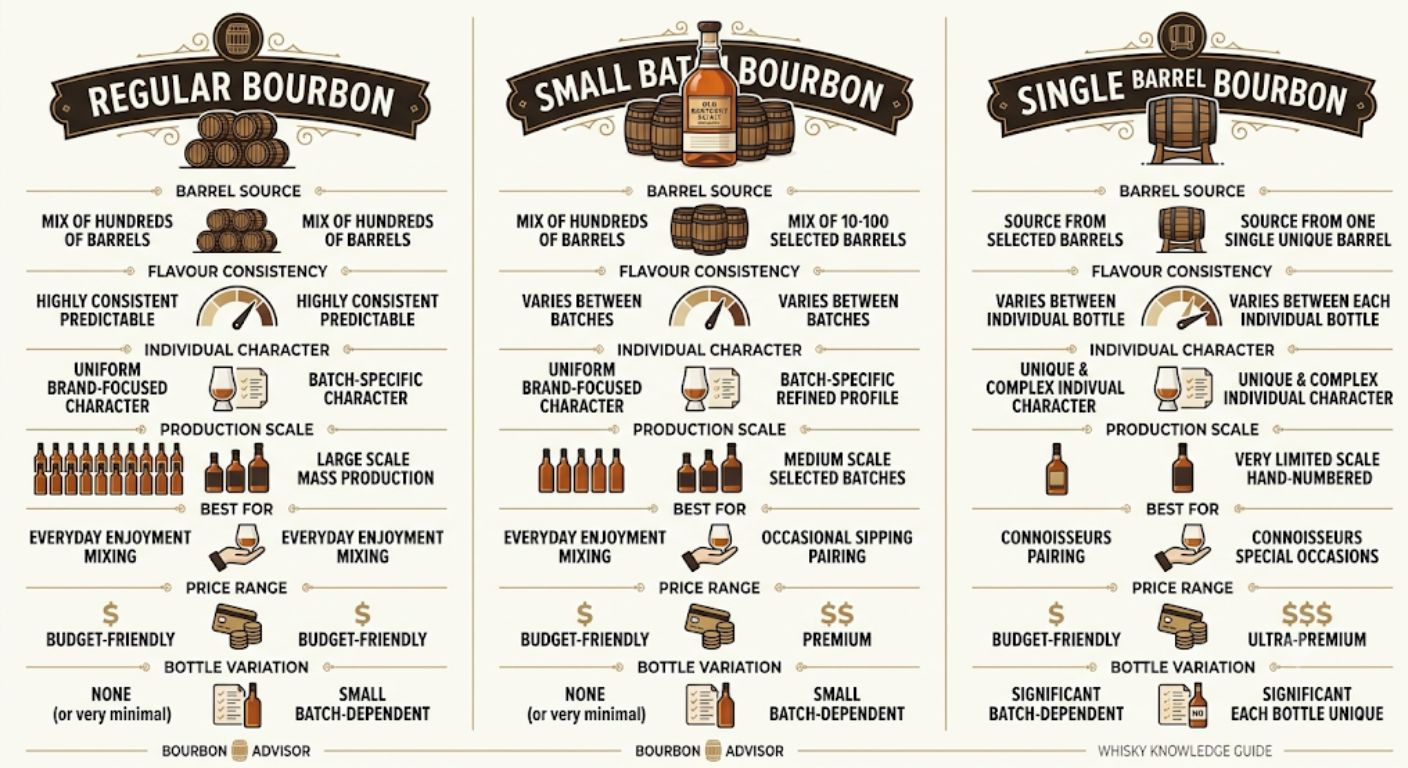
The main difference is barrel selection. A regular bourbon may be blended from a large number of barrels to maintain a broad, consistent house profile. A small batch bourbon usually comes from a smaller chosen parcel of barrels, giving the producer more control over flavour, age profile and strength.
- Regular bourbon: often reliable, widely available and priced for everyday drinking.
- Small batch bourbon: usually more selected, sometimes higher strength, and often positioned as a step up.
- Single barrel bourbon: bottled from one barrel, so flavour can vary more from bottle to bottle.
Small Batch vs Single Barrel Bourbon
| Feature | Small Batch Bourbon | Single Barrel Bourbon |
|---|---|---|
| Source | Several selected barrels | One individual barrel |
| Flavour | Balanced and repeatable | More individual and variable |
| Best for | Reliable sipping, gifting, cocktails | Collectors and drinkers chasing variation |
| Risk | Can be vague if batch details are not disclosed | Can vary sharply between barrels |
| Typical price position | Mid-range to premium | Often premium due to scarcity |
We find our customers often expect small batch to mean “rare”, but the better way to judge it is by whether the bottle clearly explains its strength, age, mash bill or production context.
How Many Barrels Are In A Small Batch Bourbon?
There is no legal barrel count for small batch bourbon. Some producers may use fewer than ten barrels, while larger distilleries may use dozens or even hundreds. The number matters less than whether the producer is transparent and whether the bourbon tastes properly integrated.
As a rough buying guide:
- Very small batches: often fewer than 10 barrels, usually more limited and variable.
- Typical small batch releases: often around 10–50 barrels.
- Larger “small batch” releases: can run much higher, especially from major producers.
Distilleries such as Barton Distillery and Heaven Hill show how established Kentucky producers can use scale while still making selected bourbon styles with clear identity.
What To Check Before Buying Small Batch Bourbon
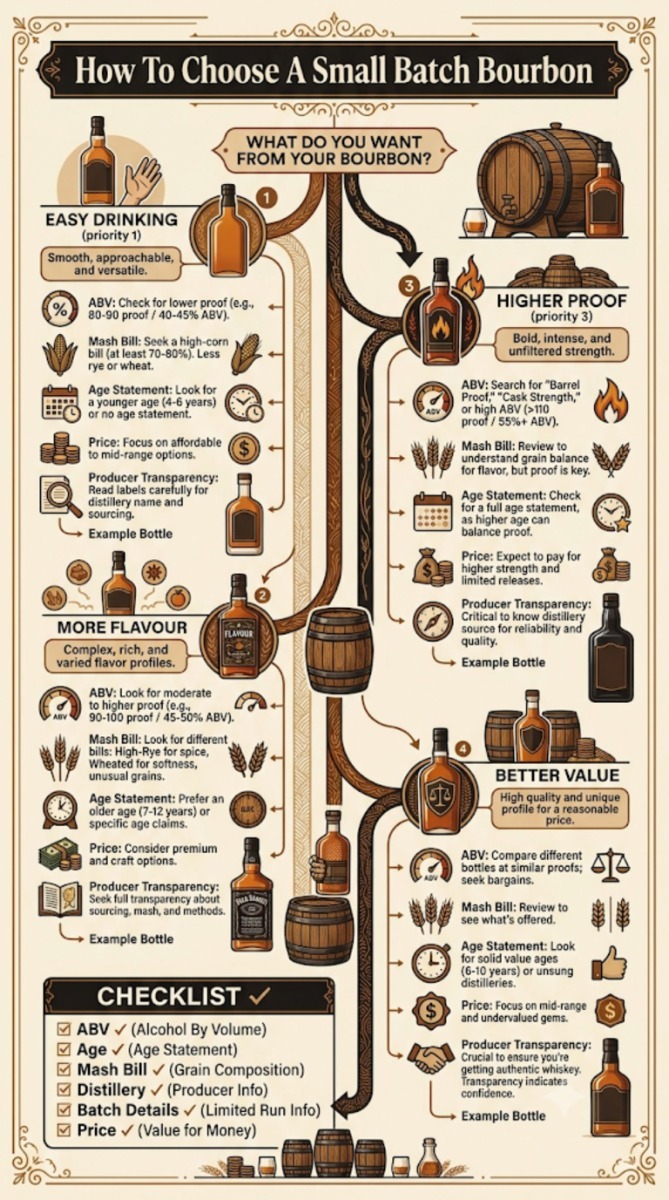
Do not buy on the phrase alone. Check the details that actually shape the whiskey.
ABV and proof
Most bourbon is bottled at 40–50% ABV, but some small batch releases sit higher. Higher proof can bring more concentration, oak and spice, but it can also feel aggressive if the bourbon lacks balance.
Age statement
An age statement is useful but not essential. A younger bourbon can work well if the cask influence is controlled. Older bourbon can bring deeper oak, leather and spice, but too much oak can dry the finish.
Mash bill
High-corn recipes tend to feel sweeter and rounder. Higher rye content usually brings more spice and lift. Wheated bourbon often feels softer, with less peppery edge.
Producer transparency
Look for batch numbers, age information, proof, distillery origin and bottling context. A small batch label with no detail is weaker than a standard bourbon with clear production information.
Price in the UK
Good small batch bourbon often sits between £35 and £90 in the UK. Above that, you should expect stronger justification: higher proof, age, limited allocation, named distillery provenance or a particularly respected release.
Top Small Batch Bourbon Styles To Consider
This article should not replace bottle-level tasting notes, but these are the main styles worth understanding before choosing.
Classic Kentucky Small Batch
This is the safest starting point for most drinkers. Expect vanilla, caramel, baking spice, charred oak and a rounded finish. It suits sipping neat, drinking over ice or using in an Old Fashioned where you want structure without excessive heat.
Higher-Proof Small Batch
Higher-proof releases suit drinkers who want more texture and concentration. They can work well for Scotch drinkers used to cask-strength whisky, but the flavour profile remains bourbon-led: sweet oak, corn richness, spice and barrel char.
Craft Small Batch Bourbon
Craft small batch bourbon can be interesting, but it needs careful buying. Smaller production does not automatically mean better maturation. Check age, distillery track record and whether the flavour profile sounds mature enough for the price.
Independent or Sourced Small Batch
Some bottles are made by brands sourcing whiskey from established distilleries. This can still be good bourbon if the selection and blending are strong. Michter's is often discussed in this wider context of American whiskey sourcing, selection and brand-led maturation decisions.
For readers comparing wider American whiskey styles beyond bourbon, American Whiskey is the broader category to explore.
When Small Batch Bourbon Makes Sense
Small batch bourbon makes sense when you want more character than an entry-level bottle but still want consistency. It is a strong choice for gifts, home bars and drinkers who want a bottle that works both neat and in spirit-forward cocktails.
It is also a sensible category for Scotch drinkers moving into bourbon. The better examples show clear cask influence without the unpredictability of single barrel releases.
When To Avoid Small Batch Bourbon
Avoid small batch bourbon when the label gives no useful information and the price is high. The phrase alone is not enough. Also avoid it if you specifically want the variation, collectibility and one-off nature of single barrel bourbon.
If your main interest is value, compare small batch releases against standard bottlings from the same producer. Sometimes the standard bottle is the better buy.
FAQ
Is small batch bourbon better than regular bourbon?
Not automatically. Small batch bourbon can be better if the producer has selected and blended the barrels carefully. The label itself does not guarantee quality. Judge the bottle by age, ABV, mash bill, producer reputation, price and how much detail is disclosed.
What is the difference between small batch and single barrel bourbon?
Small batch bourbon combines several selected barrels to create balance and consistency. Single barrel bourbon comes from one barrel, so it can show more individuality and variation. Small batch is usually safer for reliable drinking; single barrel is better for discovery and comparison.
How many barrels make a small batch bourbon?
There is no fixed legal number. Some small batch bourbons may use fewer than ten barrels, while larger producers may use many more. The practical question is whether the producer gives enough information to make the term meaningful.
Is small batch bourbon good for cocktails?
Yes, especially in simple bourbon-led cocktails where the whiskey still matters. A small batch bourbon with good proof, oak structure and spice can work well in an Old Fashioned or Manhattan-style serve. Very expensive or highly limited bottles are usually better kept for sipping.
Why is small batch bourbon often more expensive?
It is often priced higher because the barrels are selected more carefully, the batch may be smaller, and the bottle is positioned above a standard release. The premium is only justified when the bourbon gives clearer flavour, better balance, higher strength or stronger provenance.
Final Thoughts
Small batch bourbon is best understood as a selected-barrel style, not a legal guarantee. The strongest bottles offer balance, consistency and enough detail to explain the price. The weakest use the phrase as shelf language without much substance.
For most buyers, small batch is a useful middle ground: more considered than basic bourbon, less variable than single barrel, and often flexible enough for sipping or cocktails. To compare current options, start with the wider Bourbon Whiskey selection and use the label details to narrow from there.


Comments