
 Chat with us on WhatsApp


Bourbon For Highland & Island Scotch Drinkers
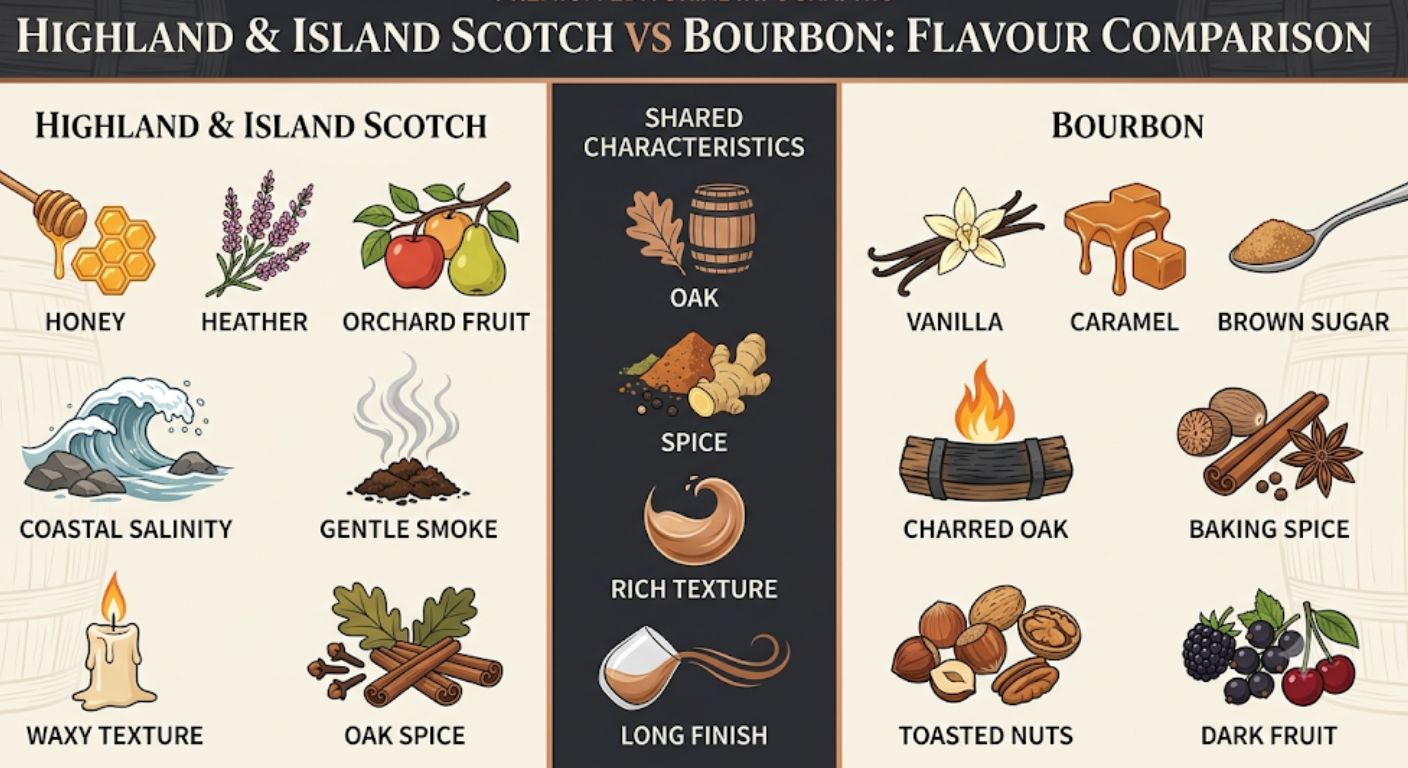
Highland and Island Scotch drinkers often look for balance rather than one dominant flavour. They may enjoy coastal weight, gentle smoke, honeyed malt, waxy texture, dried fruit, spice, or oak structure, depending on the distillery. Bourbon will not copy those profiles, but the right bottle can give a similar sense of depth.
The best place to start is not with the sweetest or softest bourbon, but with bottles that show oak, spice, proof, cask influence, or a more robust grain character. For a wider buying context, browse our Bourbon Whiskey selection alongside this focused guide.
What Highland And Island Scotch Drinkers Usually Need From Bourbon
Highland and Island whisky drinkers are rarely looking for simple vanilla sweetness. They are usually looking for structure. That might mean a firm finish, enough alcohol strength to carry flavour, some savoury oak, or a profile that does not collapse into caramel after the first sip.
Bourbon is legally built around corn and new charred oak, so it naturally leans towards vanilla, toffee, brown sugar, coconut, and spice. The difference is that some bourbons carry those notes with more grip and maturity than others. The official US standards describe bourbon as whiskey made in the United States from at least 51% corn and stored in charred new oak containers, which explains why it tastes so different from Scotch matured mainly in used casks: US distilled spirits standards.
If you want the broader brand-by-brand overview, our Best Bourbon Brands guide covers the wider category. This article is narrower: how to choose bourbon if your normal reference point is Highland or Island Scotch.
Look For Higher Proof If You Like Weight And Texture
Many Highland and Island Scotch drinkers are used to whiskies bottled at 46% ABV or higher. That matters. A bourbon bottled at 40% can feel thin if you are used to textured single malts, especially those with coastal weight or cask-led intensity.
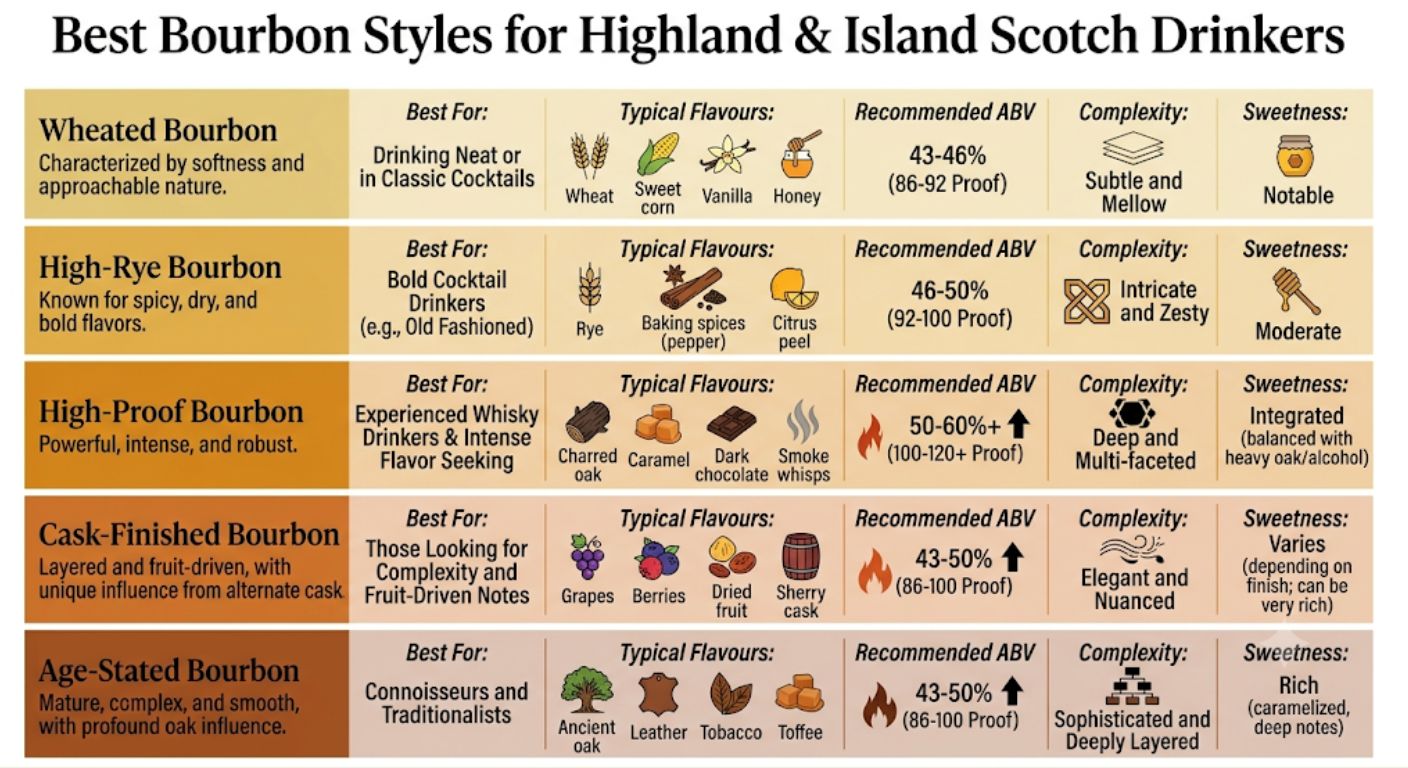
For this drinker, 50% ABV and above is often a better match. High-proof bourbon gives more oak spice, darker sugars, stronger finish, and more grip on the palate. It is not the same as cask-strength Scotch, but it gives a comparable sense of concentration.
Wild Turkey is a useful distillery reference here because its bourbon style is often robust, spicy, and oak-forward rather than soft and polished. Wild Turkey 101 and Rare Breed are common examples of the kind of profile Scotch drinkers often understand quickly.
Choose Rye-Forward Bourbon For Spice And Dryness
If your Highland preference leans towards firm, spicy, or slightly drier malts, rye-forward bourbon is usually a better fit than wheated bourbon. Rye in the mash bill can bring pepper, clove, mint, dry spice, and a firmer finish. That helps control bourbon’s natural corn sweetness.
This does not mean switching fully into rye whiskey. That is a different category and should be judged separately. For this article, the useful middle ground is bourbon with enough rye influence to give shape and tension.
Good signs on the label include:
- ABV around 45–55%
- Single barrel or small batch wording
- Clear age statement, often 6 years or more
- Producer reputation for spice-led bourbon
- Less emphasis on “smooth” as the main selling point
We find our customers who normally buy Highland malts often adjust faster to bourbon when the finish has spice and oak rather than just sweetness.
Use Wheated Bourbon Carefully
Wheated bourbon replaces rye as the main secondary grain with wheat. That usually makes the whiskey softer, rounder, and less spicy. It can work for Scotch drinkers who enjoy gentle Highland malts, but it is not always the best first step for those who want complexity.
W.L Weller is the obvious wheated bourbon reference point. The style can show honey, soft oak, vanilla, and rounded cereal sweetness. That can appeal to drinkers who enjoy approachable malts, but it may feel too sweet if your Scotch preference is coastal, waxy, smoky, or mineral.
Choose wheated bourbon when you want softness. Avoid it as your first bottle if you already find bourbon too sweet.
Consider Cask-Finished Bourbon For Scotch-Like Complexity
Cask-finished bourbon can be useful for Scotch drinkers because it adds an extra layer beyond new charred oak. Port, sherry, wine, rum, and cognac finishes can bring dried fruit, tannin, spice, or richer texture.
This is not the same as Scotch maturation. Bourbon must first meet its own production rules, and finishing does not erase the core bourbon character. But secondary cask influence can make the whiskey feel more familiar to drinkers used to sherry casks, wine finishes, or layered Highland malts.
Look for:
- Port finish for red fruit and heavier sweetness
- Sherry finish for dried fruit and spice
- Cognac finish for orange peel, oak, and rounded richness
- Higher ABV if you want the finish to stay structured
Island Scotch Drinkers Should Not Expect True Peat
Most bourbon is not smoky in the same way as Island or Islay Scotch. New charred oak can bring toast, smoke, and char, but it is not peat smoke. If your Island preference is lightly coastal rather than heavily peated, bourbon can work well. If peat is the main reason you drink Scotch, bourbon will usually feel like a different category.
Some American whiskeys use smoked grains or peated malt, but these are exceptions. They can be interesting, but they should not be treated as direct substitutes for peated Scotch. For most Island Scotch drinkers, the better bridge is high proof, charred oak, and a firm finish.
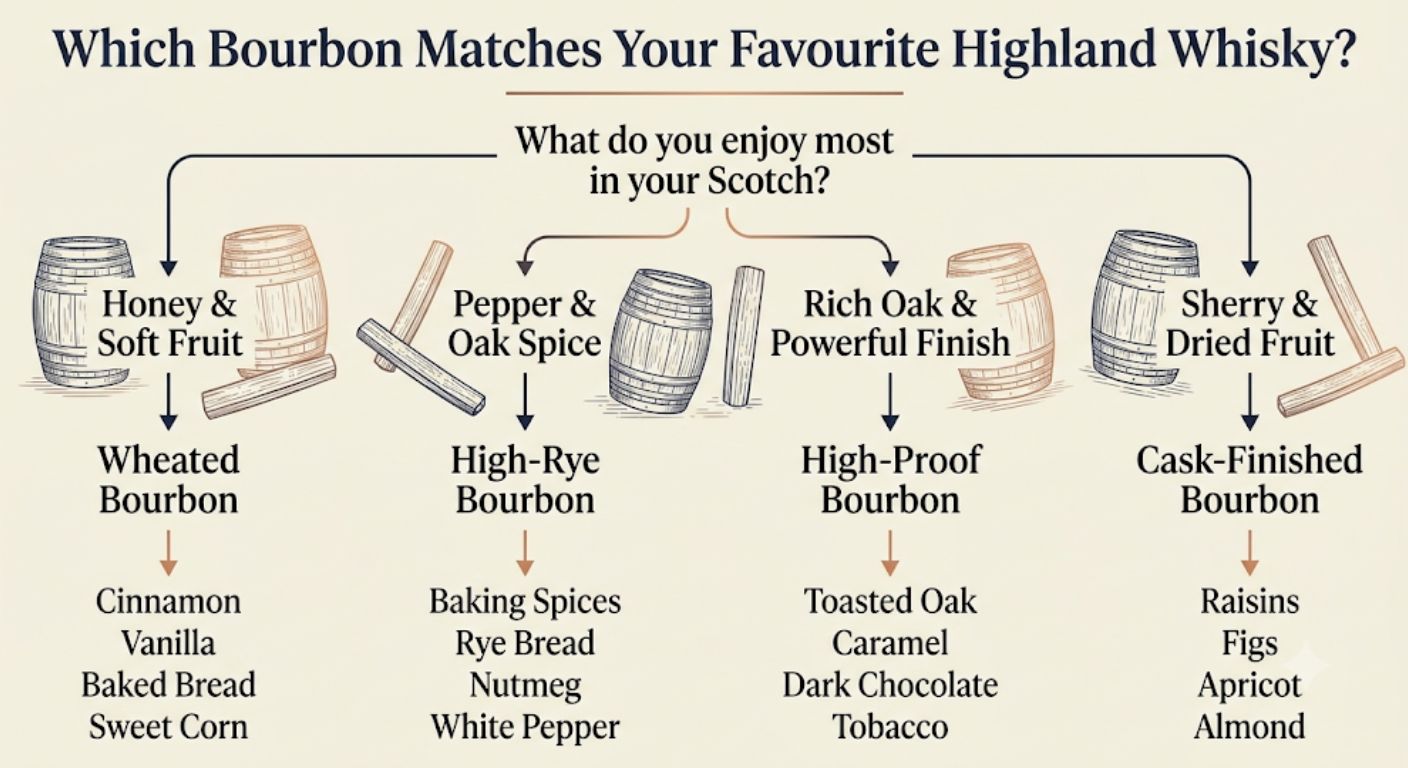
How To Match Your Scotch Preference To Bourbon
| Scotch Preference | Bourbon Direction | Why It Works |
|---|---|---|
| Honeyed Highland malt | Wheated bourbon | Soft grain sweetness, vanilla, rounded texture |
| Spicy Highland malt | Rye-forward bourbon | Pepper, oak spice, firmer finish |
| Coastal Island whisky | High-proof bourbon | Weight, grip, char, stronger finish |
| Sherry-led Highland whisky | Cask-finished bourbon | Dried fruit, wine cask depth, richer oak |
| Older Scotch with oak maturity | Age-stated bourbon | More developed oak, less raw sweetness |
Where American Whiskey Fits In The Wider Shelf
Bourbon sits inside the broader American whiskey category, but not every American whiskey is bourbon. Tennessee whiskey, rye whiskey, American single malt, corn whiskey, and blended American whiskey can all offer different routes for Scotch drinkers.
If you are still comparing styles, our American Whiskey category is the better wider starting point. It lets you move beyond bourbon if you decide rye, malt whiskey, or Tennessee whiskey makes more sense for your palate.
When Bourbon Makes Sense For Highland And Island Scotch Drinkers
Bourbon makes sense when you want power, oak, spice, and a different kind of sweetness without leaving serious whiskey behind. It is especially useful if you enjoy Scotch at higher ABV, like structured finishes, or want a bottle that works neat but also stands up well with ice.
It is less suitable if you mainly drink delicate refill-cask Scotch, heavily peated Island whisky, or old single malts where subtle development matters more than impact. Bourbon is usually more direct. That directness can be a strength, but it is not the same experience.
FAQ
Is bourbon too sweet for Highland whisky drinkers?
Some bourbon will be too sweet, especially lower-proof bottles built around soft vanilla and caramel. Highland whisky drinkers should usually look for higher ABV, rye influence, age statements, or cask finishes. These details add structure and stop the bourbon feeling flat or overly sugary.
What bourbon style suits Island Scotch drinkers?
Island Scotch drinkers should usually start with high-proof or oak-forward bourbon rather than soft wheated bourbon. The aim is not to copy peat or coastal malt, but to find weight, char, spice, and a long finish. Barrel-proof expressions often make the most sense.
Is cask-finished bourbon closer to Scotch?
Cask-finished bourbon can feel closer to Scotch because port, sherry, wine, or cognac casks add extra layers beyond new oak. It still tastes like bourbon, but the added fruit, spice, and tannin can make it more familiar to Scotch drinkers used to secondary maturation.
Final Takeaway
The best bourbon for Highland and Island Scotch drinkers is usually not the smoothest bottle on the shelf. It is the bottle with enough proof, oak, spice, age, or cask influence to hold attention.
Start with structured bourbon rather than the softest option. If you want to compare suitable bottles, browse our Calumet Farm guide for age-stated bourbon context, then use the wider bourbon category to compare styles carefully.


Comments