
 Chat with us on WhatsApp


Bourbon for Speyside Lovers: Sweet, Fruity and Approachable
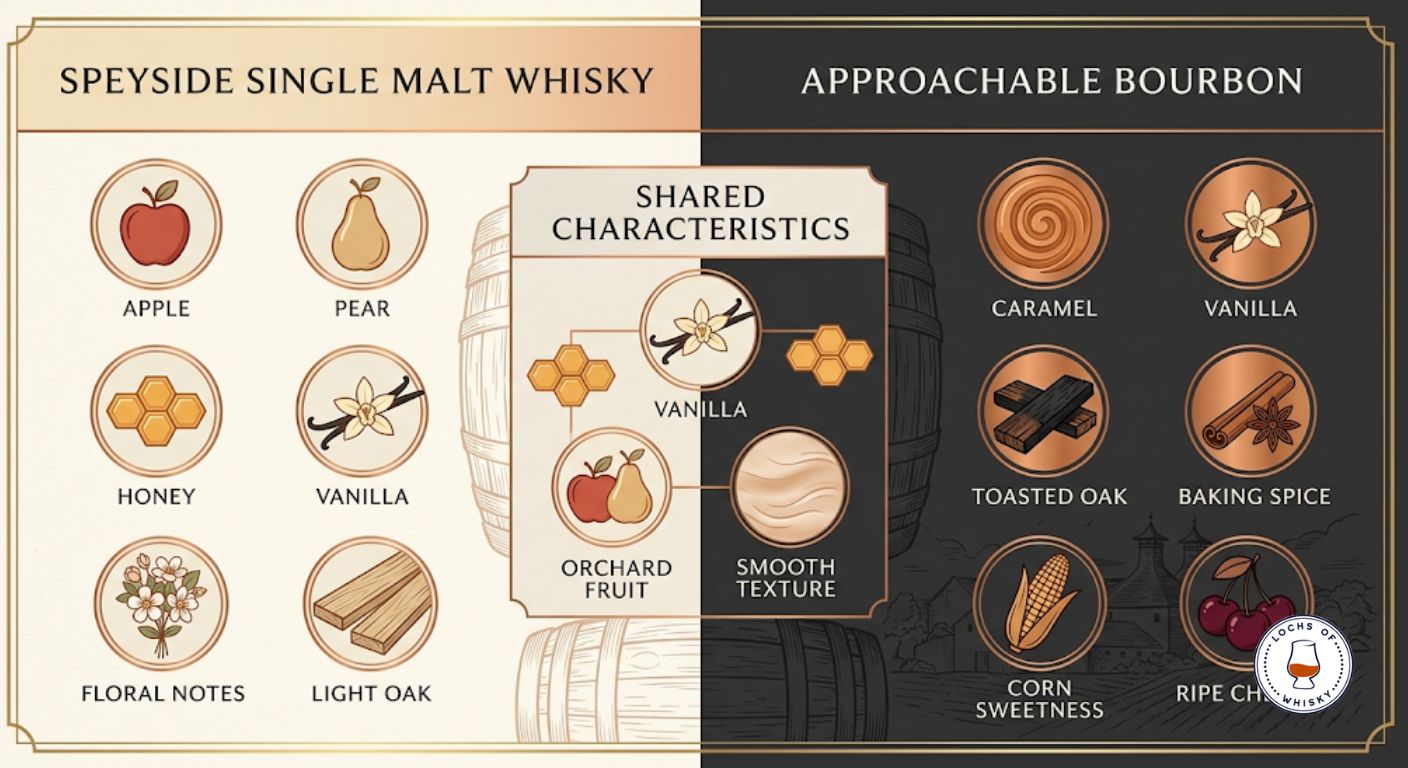
Speyside whisky drinkers usually value orchard fruit, honeyed sweetness, vanilla and a soft texture rather than heavy smoke or aggressive oak. Bourbon can offer many of the same broad characteristics, although it reaches them through corn-led grain recipes and maturation in new charred oak.
The most suitable starting points are generally balanced bourbons bottled between 40% and 47% ABV, particularly wheated recipes and mature expressions with clear fruit beneath the caramel and vanilla. The wider Bourbon whiskey selection includes several styles, but Speyside drinkers should begin with bottles that prioritise softness, fruit and balance over high proof or intense barrel char.
What Speyside Drinkers Should Look for in Bourbon
Speyside is not a single flavour profile. A light, floral single malt and a heavily sherry-influenced Speyside whisky can taste very different. However, many commonly encountered examples share several characteristics:
- Apple, pear, peach or other orchard-fruit notes
- Honey, vanilla or malt sweetness
- Low levels of peat smoke
- A smooth or gently oily texture
- Moderate alcohol strength
- Oak that supports rather than dominates the spirit
Bourbon naturally brings more caramel, vanilla and toasted oak because it must mature in new charred oak containers. US regulations also require bourbon to contain at least 51% corn. The detailed production standards are set out in the US standards of identity for whisky.
The corn contributes rounded sweetness, while the barrel supplies vanilla, caramel, coconut and baking-spice flavours. A Speyside drinker therefore needs to find a bourbon in which fruit and grain remain visible beneath that new-oak influence.
Is There an American Equivalent to Speyside Scotch?
There is no exact American equivalent because Bourbon and Speyside single malt use different grains, casks and production rules. Fruit-forward Bourbon at low-to-moderate strength is usually the closest practical match. American single malt can also provide a familiar barley-led structure, but it does not deliver Bourbon’s characteristic corn sweetness.
The best comparison is based on flavour rather than category. A honeyed Speyside malt may align with a wheated Bourbon, while a richer Speyside expression may suit an older or double-oaked bottle.
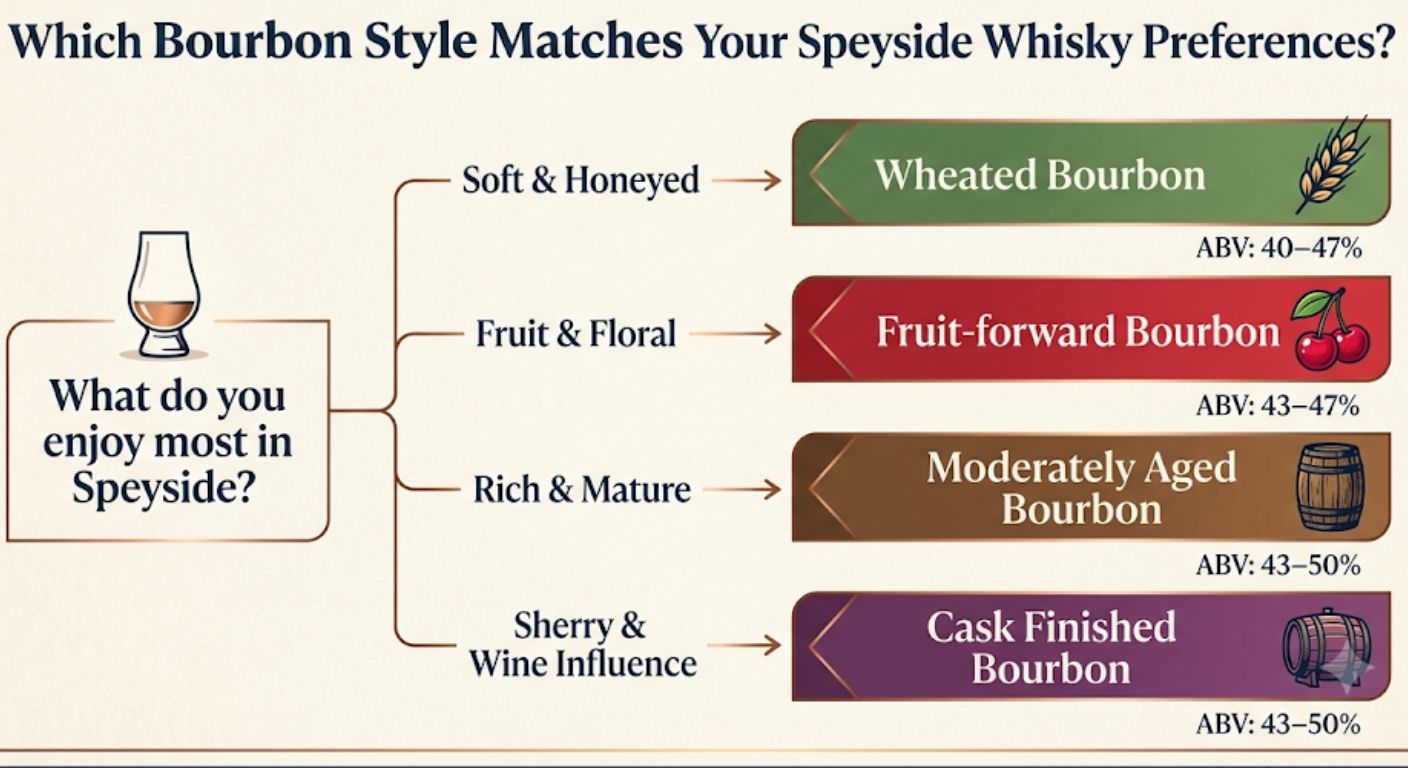
Four Bourbon Styles That Work for Speyside Lovers
| Style | Typical ABV | Key Characteristics | Why It Suits Speyside Drinkers |
|---|---|---|---|
| Wheated Bourbon | 40–47% | Soft caramel, honey, vanilla and gentle spice | Wheat reduces the sharper pepper character associated with rye |
| Fruit-forward Bourbon | 43–47% | Cherry, apple, orange, vanilla and light oak | Retains recognisable fruit beneath the Bourbon sweetness |
| Moderately aged Bourbon | 43–50% | Deeper fruit, polished oak and greater complexity | Provides more structure without necessarily becoming overly tannic |
| Finished Bourbon | 43–50% | Dried fruit, wine sweetness and baking spices | Offers a bridge for drinkers familiar with secondary cask maturation |
1. Wheated Bourbon for Softness and Honeyed Sweetness
Most Bourbon uses rye or wheat alongside corn and malted barley. Replacing rye with wheat generally creates a softer profile with less pepper and herbal spice. The result is often rounded, sweet and approachable, making wheated Bourbon a logical starting point for drinkers who favour gentle Speyside malts.
Maker’s Mark is one of the clearest examples. Bottled at 45% ABV, it combines vanilla, caramel and soft baking spice without pushing too far into heavy oak. You can explore the producer through the Maker’s Mark distillery guide.
Expressions associated with W.L. Weller also use wheat rather than rye as their secondary grain. These can suit Speyside drinkers looking for a fuller texture and restrained spice, although availability and UK pricing vary considerably between releases.
We often find that our customers moving from Speyside whisky respond better to wheat-led Bourbon when they describe standard Bourbon as too spicy or too strongly charred.
2. Fruit-Forward Bourbon for Orchard and Red-Fruit Notes
A fruit-forward Bourbon is often a better match than simply choosing the sweetest bottle. Look for descriptions that mention apple, cherry, orange peel, peach or dried fruit alongside vanilla and caramel.
Eagle Rare 10 Year Old is a useful example of this style. It is bottled at 45% ABV and usually shows more mature oak and red-fruit character than younger entry-level Bourbon. Its age gives it additional structure, but the strength remains approachable for someone accustomed to 40–46% ABV Speyside whisky.
Four Roses Small Batch is another practical option. Its higher-rye recipes add floral and lightly spicy notes, while the overall profile remains balanced and fruit-led. It may suit a Speyside drinker who enjoys freshness and complexity but does not want the softness of a wheated Bourbon.
3. Mature Bourbon for Greater Structure
Age statements do not translate directly between Scotch and Bourbon. Bourbon matures in new oak and often develops faster, particularly in Kentucky’s warmer climate. A Bourbon aged for eight to twelve years may therefore show much more barrel influence than a Speyside whisky of the same age.
Moderately aged Bourbon can still work well when the oak is balanced by fruit and sweetness. Elijah Craig Small Batch, produced by Heaven Hill, is bottled at 47% ABV and offers caramel, citrus, spice and structured oak. It is a better fit for drinkers who want more weight than Maker’s Mark without moving immediately into barrel-proof territory.
Avoid selecting by age alone. Older Bourbon can become dry, leathery or heavily tannic. Speyside drinkers seeking softness should prioritise balance rather than the highest age statement available.
4. Cask-Finished Bourbon for Extra Fruit and Spice
Finished Bourbon undergoes secondary maturation in another cask after its initial period in new charred oak. Port, sherry, rum and wine casks can add dried fruit, sweetness and spice that feel familiar to Scotch drinkers.
Angel’s Envy Port Finished Bourbon is bottled at 43.3% ABV and uses port casks to introduce red fruit and additional sweetness. It can be an approachable bridge for someone who enjoys fruit-led Speyside whisky but wants more depth than a standard entry-level Bourbon.
Finishing does not make Bourbon taste like Scotch. The underlying corn sweetness and new-oak character remain present. The secondary cask simply adds another layer, and heavily finished releases can become sweeter than some Speyside drinkers expect.
Why Bourbon Usually Tastes Sweeter Than Speyside Whisky
Bourbon’s sweetness comes mainly from its grain recipe and maturation rules. Corn must form at least 51% of the mash bill, and many producers use considerably more. Corn gives the spirit a rounded, sweet foundation compared with the cereal and malt character of barley-based Scotch.
New charred oak then adds strong vanilla, caramel, coconut and toasted sugar flavours. Speyside single malt commonly matures in casks that have already held Bourbon, sherry or another liquid, so the wood generally releases flavour less aggressively.
This does not mean all Bourbon is cloying. Higher rye content, longer ageing and higher bottling strength can introduce spice, dryness and oak structure. The most approachable Bourbon recommendations for Speyside drinkers balance those elements rather than maximising sweetness.
A Simple Progression from Speyside Whisky to Bourbon
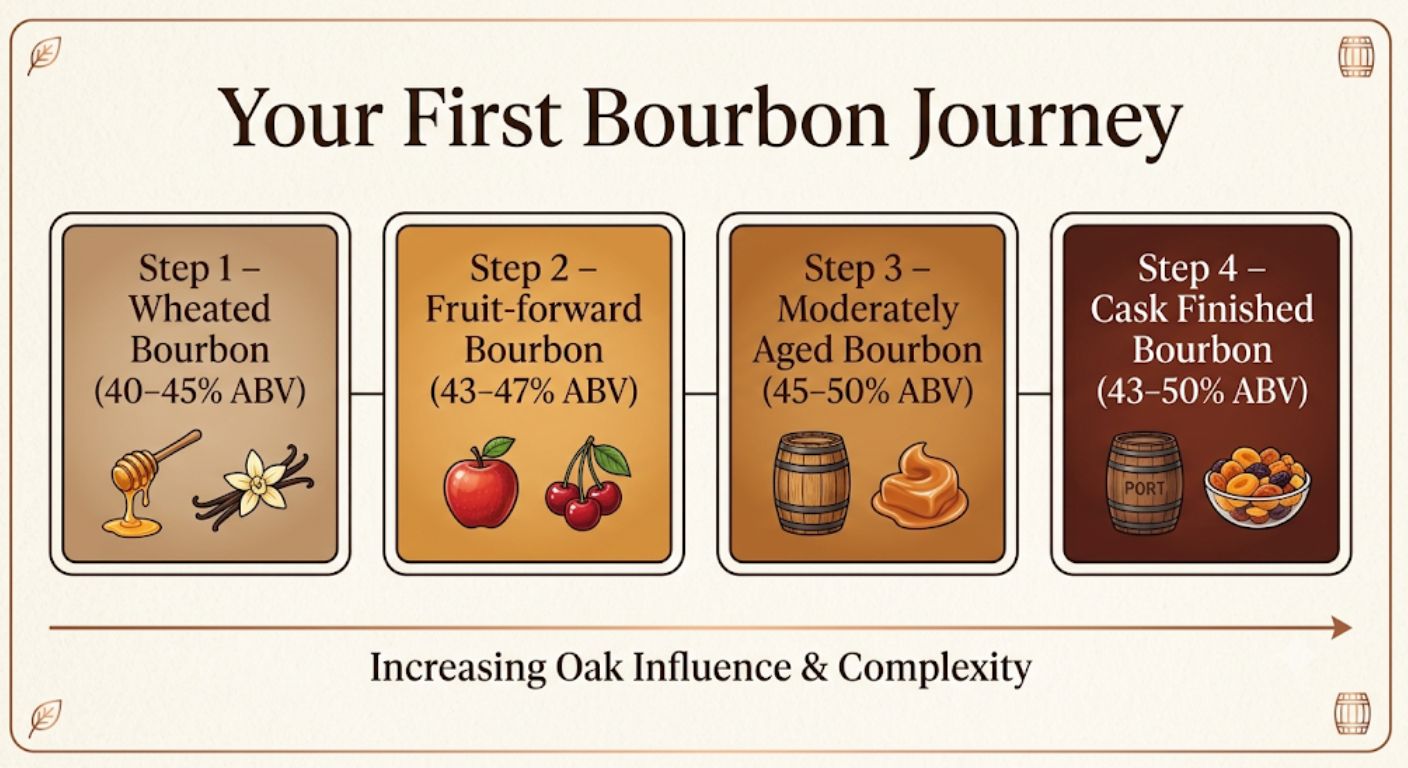
- Begin with a wheated Bourbon at 43–45% ABV. This introduces corn sweetness and new oak without excessive spice or alcohol.
- Move to a fruit-forward Bourbon with moderate age. Look for cherry, apple, citrus and polished oak.
- Try a cask-finished expression. Port or wine finishing adds dried fruit and baking spice, but check that the finish is not excessively sweet.
- Explore higher-proof Bourbon last. Bottles above 50% ABV can offer more texture and complexity, but they are not automatically better suited to a Speyside palate.
When This Style of Bourbon Makes Sense
Bourbon is a sensible next step when you enjoy Speyside whisky for its fruit, vanilla and approachable texture but want more caramel, toasted oak and baking spice. It also works well for drinkers who prefer whisky at 40–46% ABV and do not want peat smoke.
Start with Bourbon when:
- You enjoy honeyed or orchard-fruit Speyside malts
- You prefer moderate alcohol strength
- You want a richer vanilla and caramel profile
- You are comfortable with more obvious oak influence
- You want to compare malt sweetness with corn sweetness
Avoid softer Bourbon styles when you prefer very dry whisky, mineral character or strong cereal notes. Drinkers who find Bourbon consistently too sweet may be better served by a high-rye recipe, although that will introduce more pepper and spice.
Frequently Asked Questions
What Bourbon is closest to Speyside whisky?
A wheated or fruit-forward Bourbon bottled between 43% and 47% ABV is usually the closest match. Maker’s Mark offers soft vanilla and gentle spice, while Eagle Rare adds mature oak and red-fruit character. Neither tastes exactly like Speyside whisky, but both provide an approachable transition from fruit-led single malt.
What Bourbon is not too sweet?
Choose a Bourbon with a noticeable rye component, moderate age and at least 45% ABV. Rye adds pepper, herbs and dryness that balance corn and oak sweetness. Four Roses Small Batch is a useful starting point because it combines fruit and floral notes with a firmer spicy structure.
Should Speyside drinkers choose low-proof or high-proof Bourbon?
Most should begin between 40% and 47% ABV. This range makes it easier to identify the grain, fruit and oak without alcohol dominating the first impression. Higher-proof Bourbon can provide more texture and complexity, but it may require water and is not necessarily a better introduction.
What is the difference between high-rye Bourbon and rye whiskey?
High-rye Bourbon still contains at least 51% corn, with rye forming a larger part of the remaining mash bill. Rye whiskey must contain at least 51% rye. High-rye Bourbon remains sweeter and fuller, while rye whiskey is generally drier, spicier and more herbal.
Are cask-finished Bourbons suitable for Speyside drinkers?
They can be, particularly when finished in port or wine casks that add red fruit, dried fruit and baking spices. However, a finish sits on top of Bourbon’s existing corn and new-oak sweetness. Drinkers who prefer lighter Speyside whisky may find some heavily finished releases too rich.
‹
Best Sellers
-
-
-
-
-
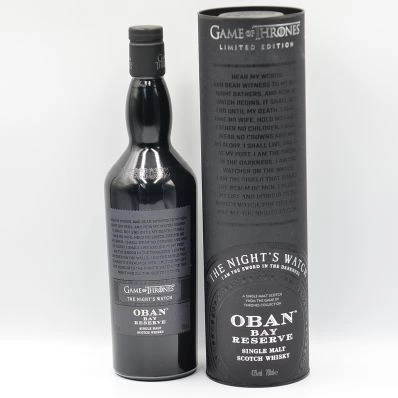 Game of Thrones Whisky Oban Bay Reserve The Night's Watch
Special Price
£72.98
Regular Price
£84.99
Inc VAT
Saving £12.01
Game of Thrones Whisky Oban Bay Reserve The Night's Watch
Special Price
£72.98
Regular Price
£84.99
Inc VAT
Saving £12.01
-
-
-
-
-
-
-
›
-
-
-
Game of Thrones Whisky Oban Bay Reserve The Night's WatchSpecial Price £72.98 Regular Price £84.99 Inc VATSaving £12.01
-
-
-
-
-
Choosing Your First Bourbon as a Speyside Drinker
The safest starting point is a balanced bottle at moderate strength, not the oldest, strongest or most heavily finished release. Wheated Bourbon provides the softest transition, while fruit-forward and moderately aged bottles add complexity without losing approachability.
The aim is not to find an exact American copy of Speyside single malt. It is to identify the shared elements—fruit, honeyed sweetness, vanilla and balance—while accepting that corn and new charred oak will produce a distinctly American style. Drinkers comparing those profiles can use the Speyside whisky collection as a reference point when deciding which characteristics they want their first Bourbon to retain.

Comments