
 Chat with us on WhatsApp


Bourbon vs Rye Whiskey: Mash Bills, Flavour & When To Drink Each
Bourbon and rye are both American whiskeys, often made in the same distilleries and matured under closely related rules. The main distinction begins with the mash bill. Bourbon must contain at least 51% corn, while American rye whiskey must contain at least 51% rye grain. That change in the dominant grain usually shifts the balance from bourbon’s rounded sweetness towards rye’s drier spice and firmer structure.
Neither style is automatically better. Bourbon often suits drinkers looking for vanilla, caramel and a softer texture, while rye is useful when pepper, grain spice and a cleaner finish are preferred. Our wider range of bourbon whiskey shows how much variation can exist even within the corn-led side of this comparison.
Bourbon vs Rye Whiskey: The Main Differences
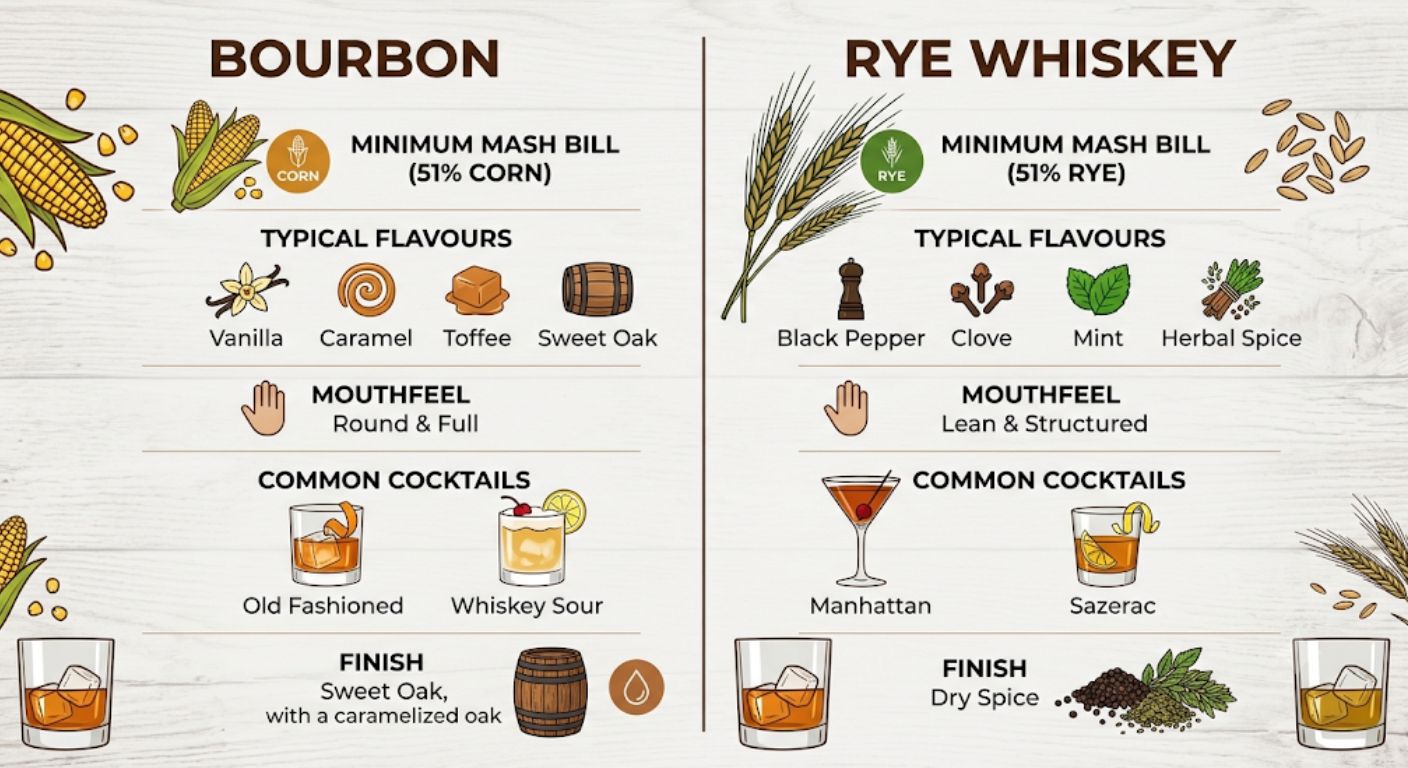
| Characteristic | Bourbon | American Rye Whiskey |
|---|---|---|
| Dominant grain | At least 51% corn | At least 51% rye |
| Typical flavour direction | Caramel, vanilla, sweet oak and soft spice | Pepper, herbs, dry grain spice and firmer oak |
| Texture | Often rounder and fuller | Often leaner and more structured |
| Common cocktail role | Adds sweetness and body | Adds spice and definition |
| Beginner suitability | Generally more immediately approachable | Better for drinkers comfortable with a drier profile |
| Typical UK availability | Broad selection across most price levels | Smaller selection, often with higher import pricing |
These are useful tendencies rather than guarantees. A high-rye bourbon may taste more peppery than a softly styled rye, while age, proof, fermentation, distillation and barrel management can be just as influential as the grain percentages.
The Mash Bill Is the Starting Point
A mash bill is the mixture of grains fermented and distilled to make whiskey. Bourbon must be produced from a grain recipe containing at least 51% corn. American rye whiskey follows broadly similar production standards but replaces corn with a minimum of 51% rye as its defining grain.
The remaining percentage can include corn, rye, wheat and malted barley. Those secondary grains matter. A bourbon containing a relatively large proportion of rye may show more pepper, mint or herbal spice, while a rye whiskey containing substantial corn may retain noticeable sweetness.
A high-rye bourbon is still bourbon because corn remains the majority grain. A straight rye whiskey must remain majority rye.
What Makes a Whiskey a Rye Whiskey?
American rye whiskey must be made from a fermented mash containing at least 51% rye grain. It must be distilled to no more than 80% ABV and stored in new charred oak containers at no more than 62.5% ABV. These requirements are set out in the US federal standards of identity for whisky.
For the word “straight” to appear on an American rye or bourbon label, the whiskey must normally spend at least two years in oak. A straight whiskey aged for less than four years must carry an age statement.
How Bourbon and Rye Usually Taste
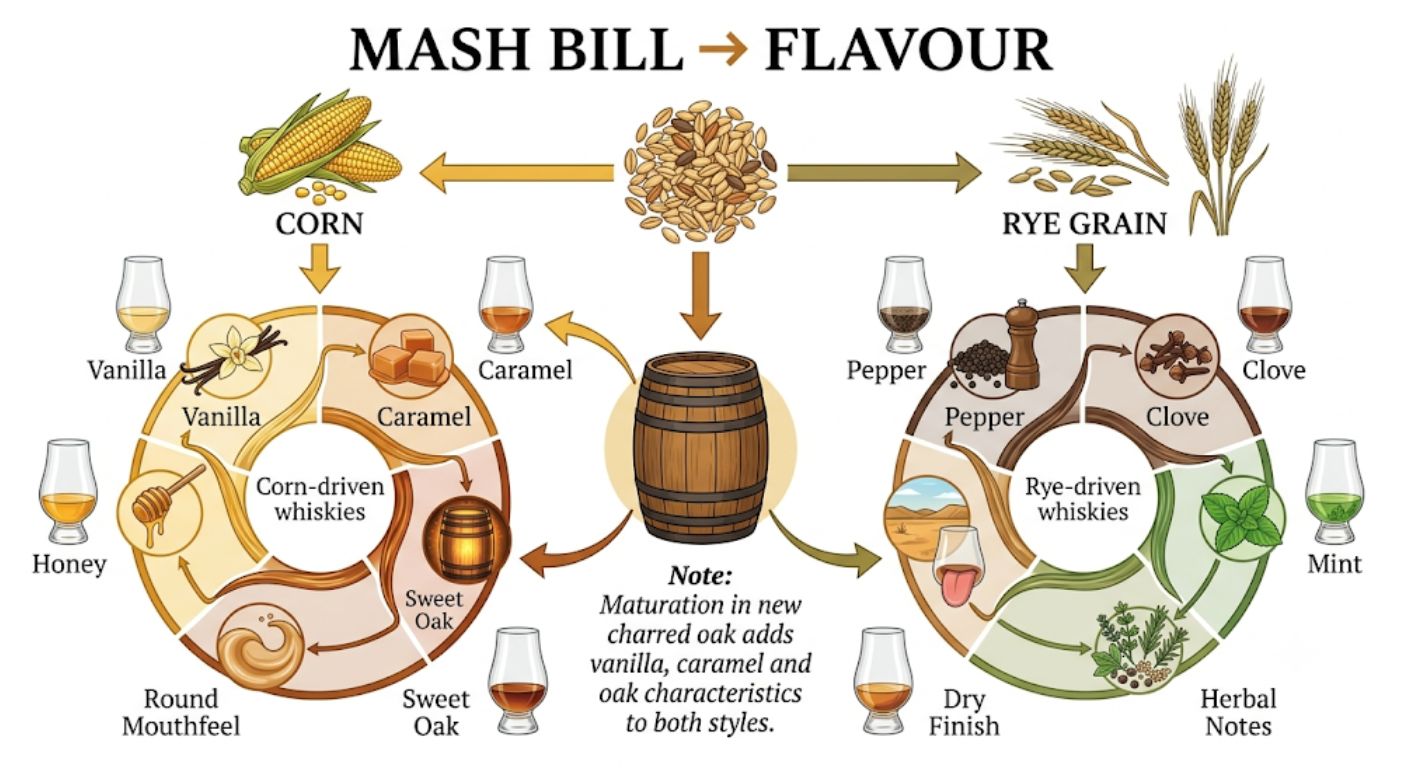
Bourbon is often described as sweeter than rye, but this does not mean sugar has been added. Distillation leaves fermentable grain sugars behind. The impression of sweetness mainly comes from aroma compounds developed during maturation, including vanilla, caramelised oak and toasted wood notes.
Common bourbon characteristics include:
- Vanilla and caramel
- Toffee or brown sugar aromas
- Sweet oak and baking spice
- Ripe fruit or orange peel
- A rounded or relatively full texture
Rye whiskey commonly moves towards:
- Black pepper and clove
- Mint, dill or herbal notes
- Dry cereal and toasted grain
- Citrus peel
- A firmer, cleaner finish
We often find that our customers notice the difference most clearly in the finish: bourbon tends to leave more rounded oak sweetness, while rye usually finishes with a drier grain-led bite.
However, the grain recipe should not be treated as a complete tasting forecast. Barrel age, warehouse position, yeast, distillation cut and bottling strength can blur the expected boundary between the two styles.
New Charred Oak Shapes Both Styles
Bourbon and American rye whiskey can both be matured in new charred oak. The fresh barrel contributes colour, vanilla, toasted sugar aromas, tannin and spice. As a result, the two categories share a recognisable American whiskey foundation even when their grain recipes differ.
A younger whiskey may show more direct grain character, while longer maturation can place greater emphasis on oak, leather, tobacco and drying tannin. Age is not automatically an advantage. Rye’s grain spice can become obscured if oak influence becomes too dominant, just as an older bourbon can lose balance beneath heavy wood.
Is Bourbon or Rye Better for Cocktails?
Bourbon is usually the better choice when a drink needs sweetness, body and accessibility. Rye is often more effective when the whiskey must retain definition against sugar, bitters, vermouth or dilution. Bottling strength also matters: expressions at 45% ABV or above generally hold their shape more effectively in spirit-forward cocktails.
| Cocktail | Choose Bourbon When | Choose Rye When |
|---|---|---|
| Old Fashioned | You want a rounder, sweeter and softer drink | You want a drier drink with firmer spice |
| Manhattan | You prefer a richer and fruitier result | You want more structure against sweet vermouth |
| Whiskey Sour | You want an approachable balance of citrus and sweetness | You want the whiskey spice to remain prominent |
| Sazerac | You want a softer variation on the drink | You want the more traditional dry and spicy profile |
Is an Old Fashioned Traditionally Made with Bourbon or Rye?
Early versions of the Old Fashioned were commonly associated with rye whiskey, particularly when rye was widely produced in the north-eastern United States. Bourbon became increasingly common during the 20th century. Both are now standard choices: bourbon produces a softer, sweeter drink, while rye adds a drier and more peppery structure.
Is Rye Better Than Bourbon for a Manhattan?
Rye is generally the more structured choice for a Manhattan. Its grain spice and drier finish balance sweet vermouth without allowing the cocktail to become overly rich. Bourbon creates a rounder, sweeter Manhattan and may suit drinkers who find a traditional rye-based version too sharp or dry.
Which Style Should You Choose?
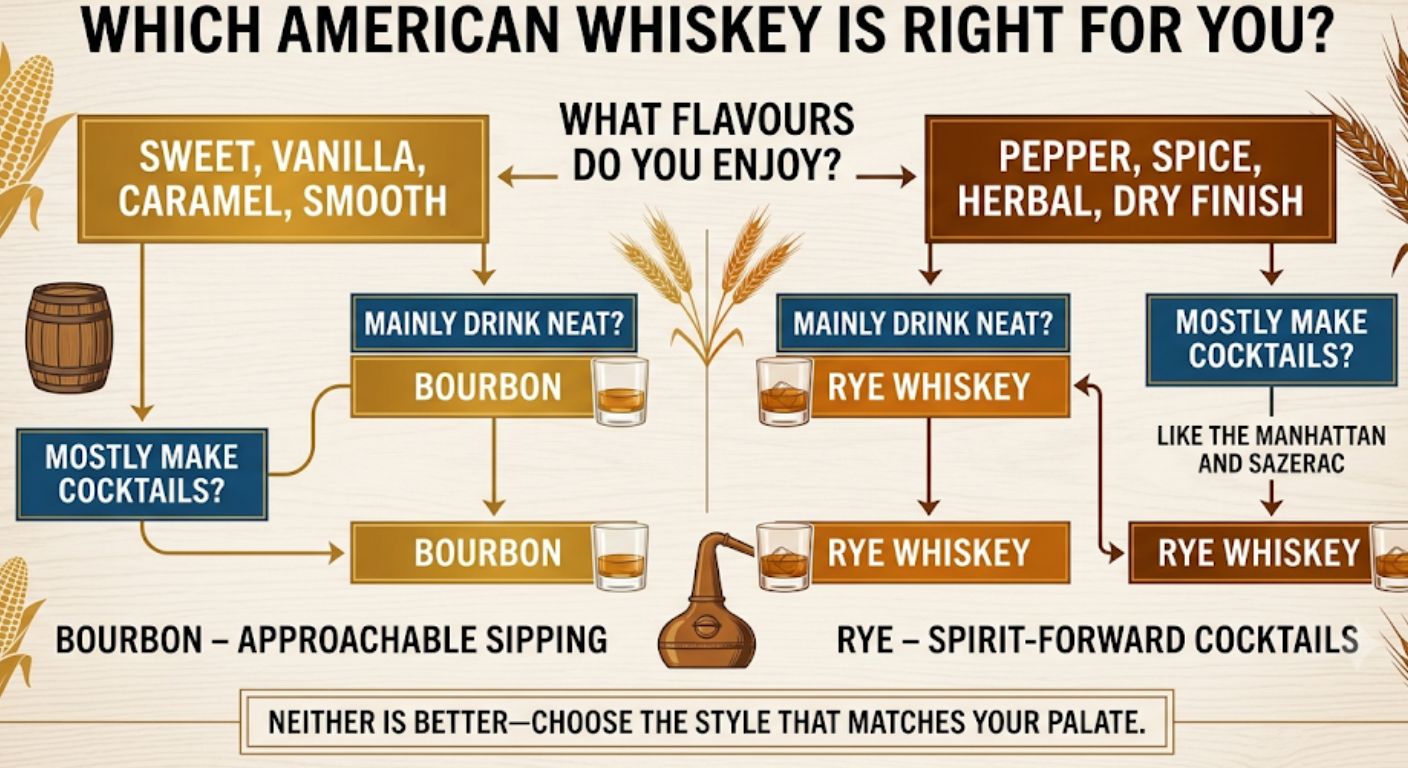
Choose Bourbon If You Prefer:
- Vanilla, caramel and sweet oak
- A rounder texture
- A softer introduction to American whiskey
- Whiskey Sours or sweeter Old Fashioneds
- A wider choice at entry-level UK prices
Bourbon is often the easier starting point for drinkers moving from smooth blended whisky, unpeated single malt or sweeter cask styles. Bottles at 40–46% ABV usually offer enough flavour without the heat associated with barrel-proof releases.
Choose Rye If You Prefer:
- Pepper, clove, mint or herbal spice
- A drier finish
- More structure in spirit-forward cocktails
- Less emphasis on caramel-like sweetness
- A grain-led style with a firmer profile
Rye tends to suit drinkers who already enjoy robust spice, dry oak or higher-strength whiskey. Beginners do not need to avoid it, but a balanced rye at approximately 40–46% ABV is usually more approachable than a high-proof or extremely rye-heavy expression.
American Rye and Canadian Rye Are Not the Same Category
The 51% rye requirement applies to American rye whiskey. Canadian whisky has different production and labelling traditions, and the term “rye” has historically been used more broadly for Canadian whisky even where rye is not the majority grain.
This means a Canadian bottle labelled or commonly described as rye should not automatically be expected to taste like an American straight rye. Check the country of production, stated whisky category and any disclosed grain information rather than relying on the word “rye” alone.
Frequently Asked Questions
Is Rye Whiskey a Bourbon?
No. Bourbon must contain at least 51% corn, while American rye whiskey must contain at least 51% rye. A high-rye bourbon can contain a substantial amount of rye, but corn must remain the dominant grain for it to retain the bourbon designation.
Is Bourbon Sweeter Than Rye?
Bourbon usually gives a stronger impression of sweetness because its corn-led recipe and new oak maturation commonly produce vanilla, caramel and toffee-like aromas. Rye generally tastes drier and spicier. These are tendencies rather than fixed rules, particularly when comparing whiskeys of different ages, proofs or barrel styles.
How Much Sugar Is in Straight Bourbon or Rye Whiskey?
Unflavoured straight bourbon and straight rye contain no meaningful residual sugar after distillation. The sweet character associated with bourbon is sensory rather than the result of dissolved sugar. Wood-derived vanilla and toasted aromas can make the whiskey seem sweet even though its nutritional sugar content remains effectively zero.
Can Bourbon and Rye Be Aged in the Same Type of Barrel?
Yes. Both bourbon and American rye whiskey can be matured in new charred oak containers under closely related rules. This shared maturation method explains why both may show vanilla, toasted oak and caramelised aromas despite having different dominant grains.
Is Rye More Expensive Than Bourbon in the UK?
Rye can be more expensive because the UK selection is smaller and many bottles are imported in lower volumes. Price is also affected by age, proof, producer and availability. A higher price does not necessarily indicate a more rye-forward flavour or better balance.
-
-
-
-
 Game Of Thrones Whisky Dalwhinnie Winter's Frost House StarkSpecial Price £104.98 Regular Price £134.99 Inc VATSaving £30.01Out of stock
 -
-
-
-
-
-
-
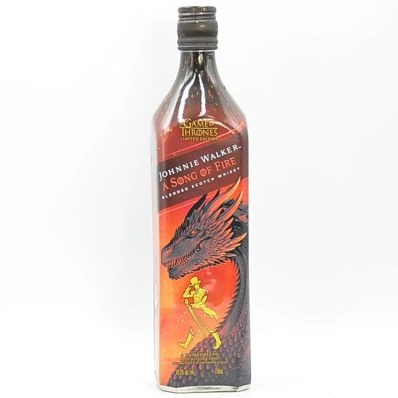 Game of Thrones Whisky Johnnie Walker A Song Of FireSpecial Price £139.98 Regular Price £144.99 Inc VATSaving £5.01
 -
Bourbon or Rye: The Final Decision
The practical difference between bourbon and rye begins with the dominant grain but does not end there. Bourbon is generally rounder, sweeter and more approachable. Rye is typically drier, spicier and more structured, particularly in cocktails. Proof, age and barrel influence can narrow or widen that distinction.
Drinkers ready to explore the grain-led side of the comparison can browse our rye whiskey range for further bottle context.


Comments