
 Chat with us on WhatsApp


English Whisky Distilleries A–Z
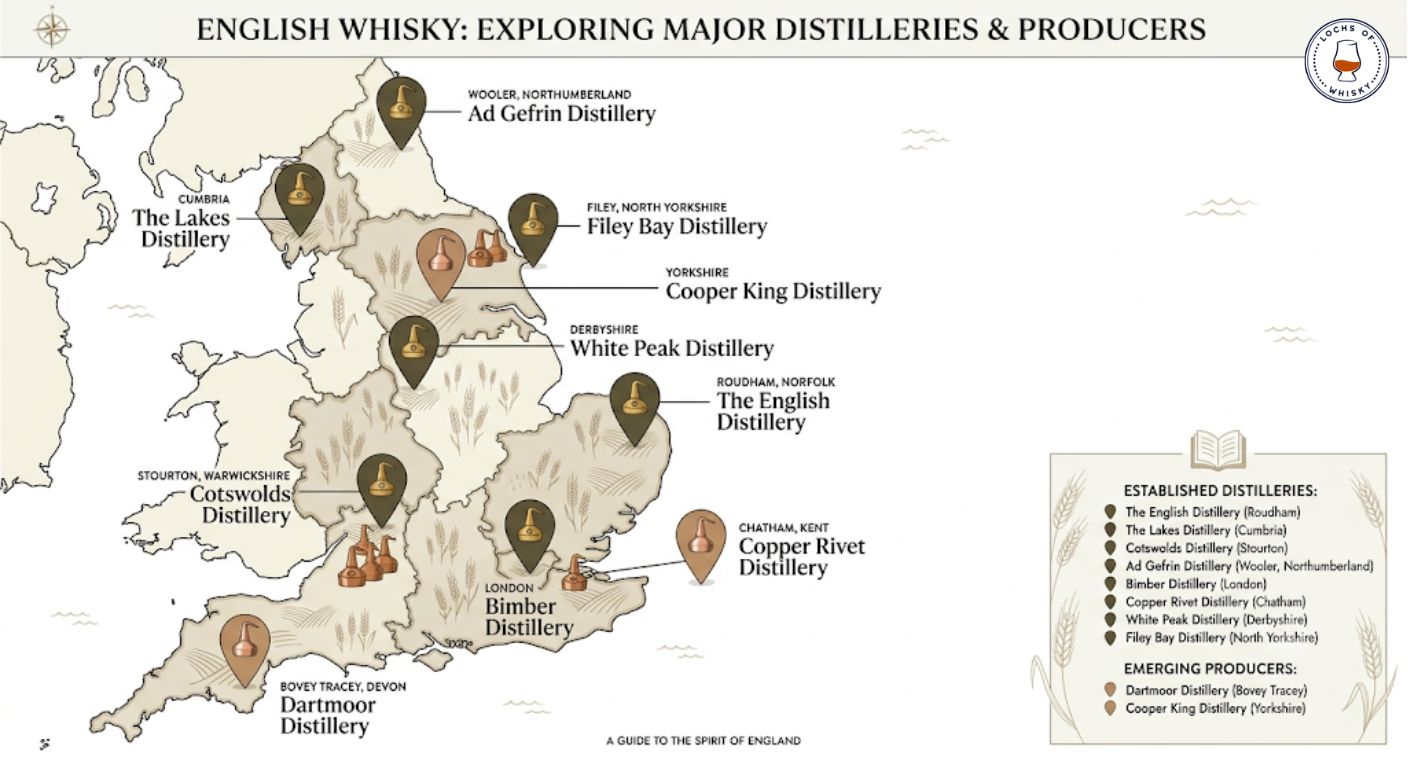
England’s whisky industry now includes established producers with mature core ranges, newer distilleries releasing their first bottlings, and emerging sites that are still laying down casks. The result is a varied category shaped by local grain, different still designs and a broad approach to cask maturation.
This guide provides an alphabetical overview of notable English whisky distilleries and explains how to distinguish active producers from emerging operations. For bottles currently available from these producers, explore our English whisky collection.
What Is English Whisky?
English whisky is whisky distilled and matured in England. Producers work with malted barley and other cereal grains, using equipment that ranges from traditional copper pot stills to more flexible distillation systems. Unlike Scotch whisky, the category does not have centuries of established regional conventions, so distilleries have greater freedom to develop their own production identities.
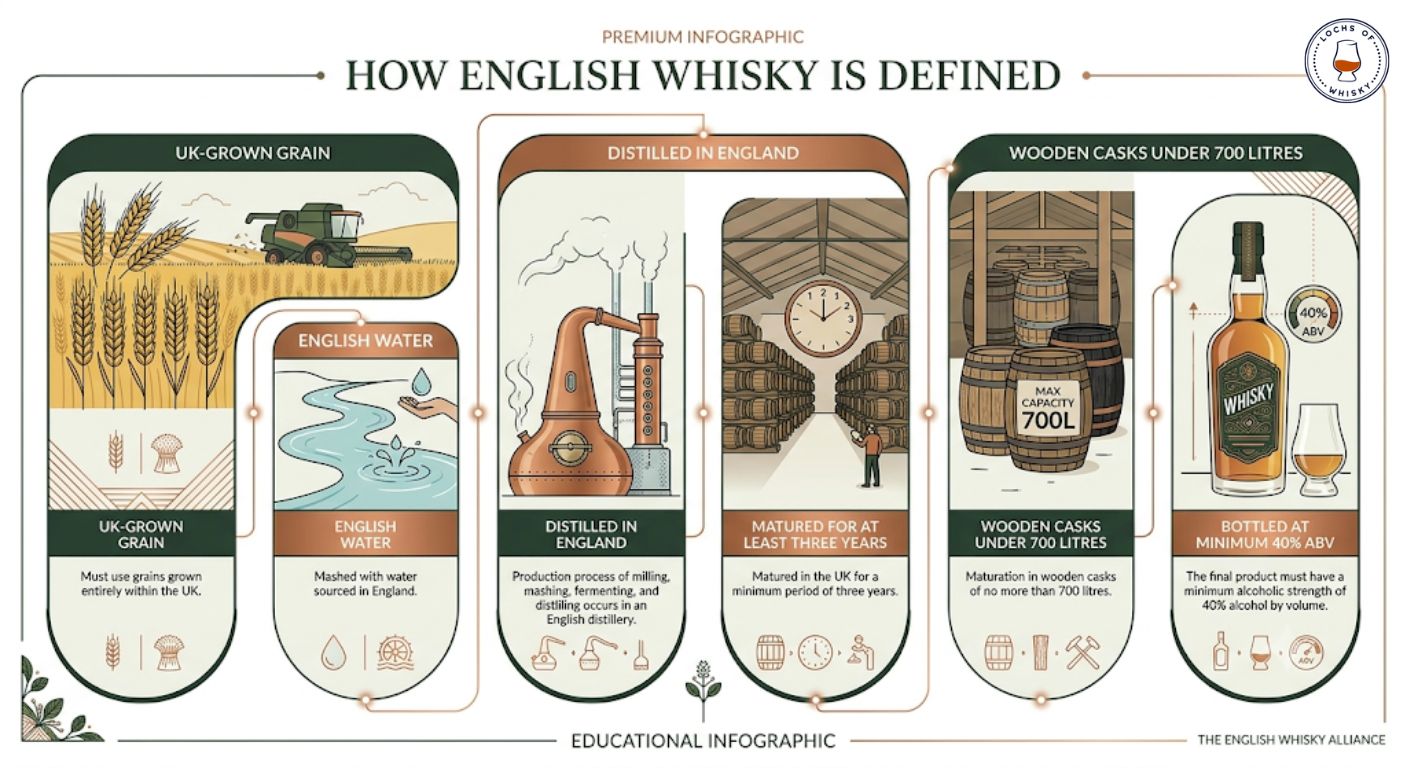
The proposed geographical indication for English whisky provides a useful working definition. Under the published UK Government English Whisky product specification, the spirit must:
- Be made from cereal grain grown in the UK.
- Use English water for mashing and distillation.
- Be distilled in England at less than 94.8% ABV.
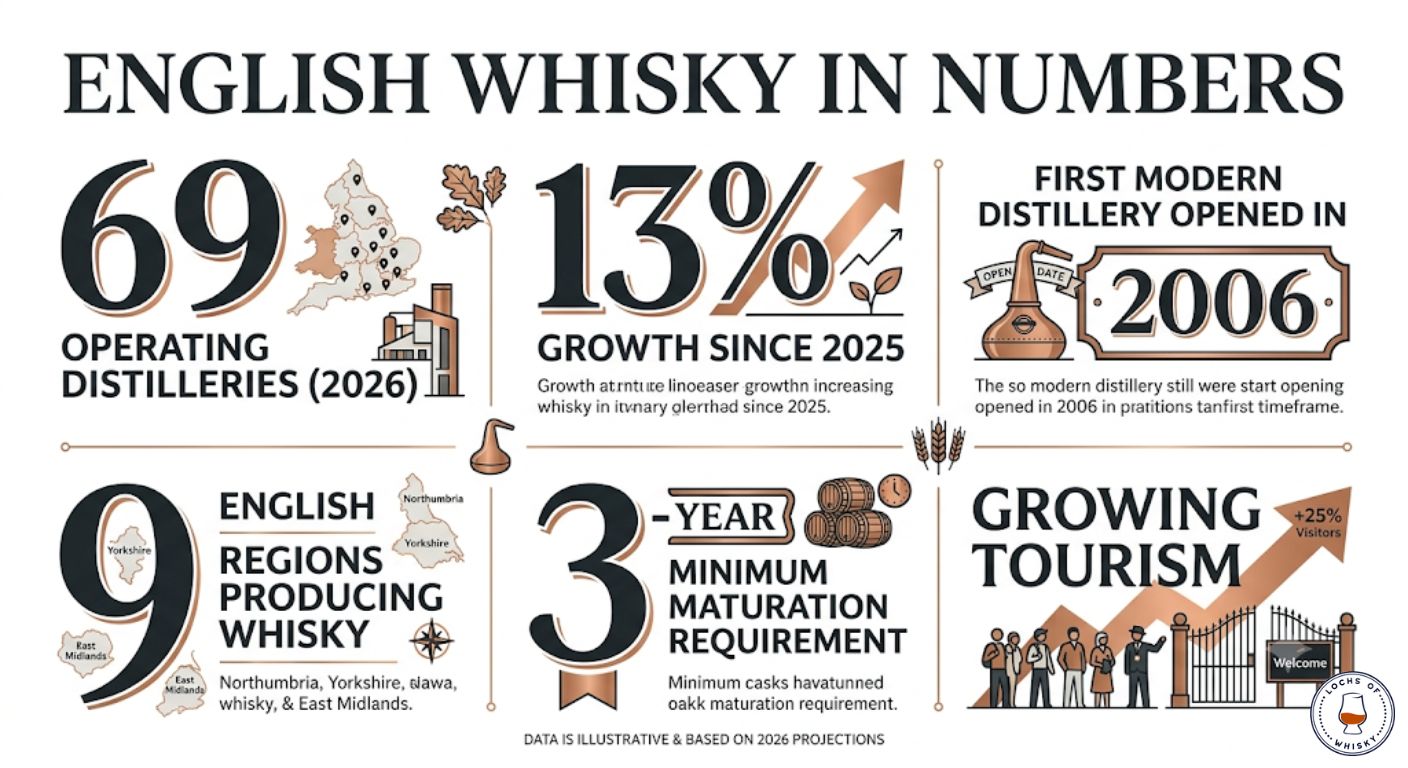
- Be matured in England for at least three years.
- Be matured in wooden casks no larger than 700 litres.
- Be bottled at a minimum strength of 40% ABV.
These requirements establish geographical provenance without forcing every producer into one flavour profile. English distilleries can use different grains, fermentation periods, still shapes and cask programmes, which explains why the category ranges from light, orchard-fruit-led malts to heavily sherried, smoky or grain-forward whiskies.
How Many English Whisky Distilleries Are There?
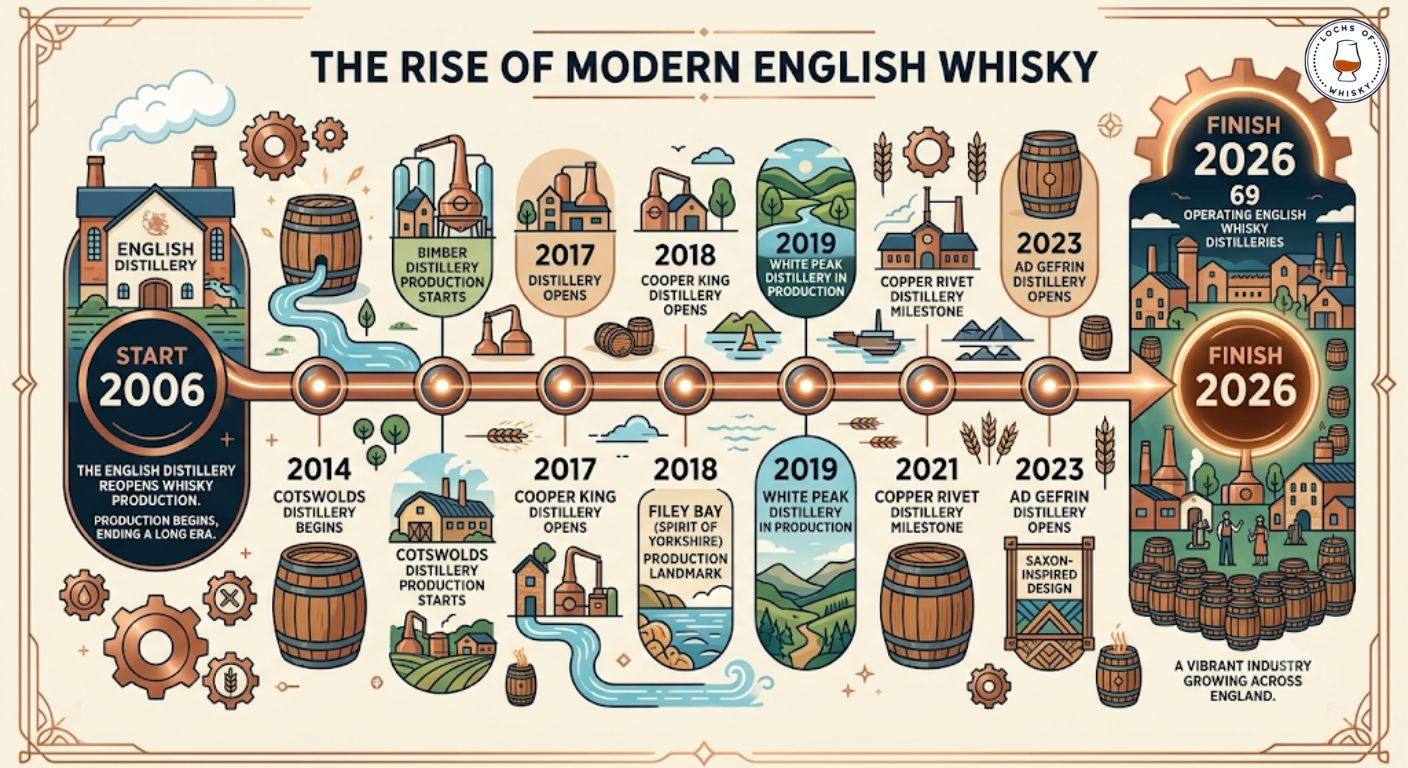
The 2026 English Whisky Map identifies 69 whisky distilleries operating across England, representing a reported increase of 13% from 2025. This total includes distilleries with mature whisky available as well as emerging producers whose spirit is still ageing.
The number should therefore be read carefully. A site may be actively distilling whisky without yet being able to sell it as whisky. Spirit must mature for at least three years before it qualifies, so newer producers may initially release gin, vodka or new-make spirit while their casks develop.
Active and Emerging English Whisky Distilleries
An active whisky distillery is generally understood to be a functioning producer that is distilling spirit intended for whisky. However, directories often divide these sites into two more useful groups:
- Whisky available: The distillery has spirit that has completed the minimum three-year maturation period and has released qualifying whisky.
- Whisky maturing: The distillery is producing spirit, but its earliest casks have not yet reached three years of age.
This distinction matters when researching a producer. An established distillery may offer age statements, recurring batches and single-cask releases, while an emerging distillery may only be able to discuss its grain, still design and intended maturation programme.
English Whisky Distilleries A–Z
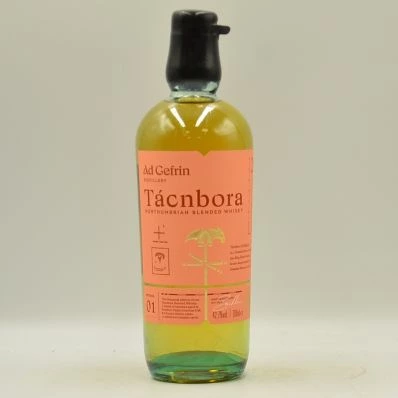
Ad Gefrin
Ad Gefrin Distillery is based in Wooler, Northumberland. Its identity connects whisky production with the history and culture of the ancient Anglo-Saxon kingdom of Northumbria. The site combines a working distillery with a museum and visitor experience.
The distillery works with local grain and has laid down casks for future single malt releases. Its location also makes it an important northern reference point in an industry that is often more heavily associated with southern and central England.
Adnams Copper House
Adnams produces whisky at its Copper House Distillery in Southwold, Suffolk. Better known historically as a brewery, Adnams can draw on established knowledge of grain, fermentation and yeast.
The distillery produces both malt and grain-based spirits using a combination of copper pot and column distillation. Its whisky releases have included single malt, rye-led expressions and grain recipes, demonstrating how English producers can move beyond a single house style.
Bankhall
Bankhall Distillery operates in Blackpool and produces whisky alongside other spirits. Its releases have included single malt and grain-led styles matured in casks selected to create approachable sweetness and spice.
Bankhall illustrates the difference between English whisky and English single malt. English whisky can be produced from different cereals, while a single malt must be made entirely from malted barley at one distillery.
Bimber
Bimber is a London distillery known for small-batch production and a traditional approach to single malt. Its methods have included floor-malted barley, extended fermentation, direct-fired copper pot stills and carefully selected maturation casks.
Early single-cask and limited releases attracted substantial attention from enthusiasts. That interest also shows why bottle context matters: the cask type, release size, ABV and batch history can be more informative than the distillery name alone.
Cooper King
Cooper King Distillery is located near York and was established with a strong emphasis on provenance and lower-impact production. It has used locally grown barley, renewable energy and small copper pot stills.
The distillery is also closely associated with the English Whisky Map, which documents active and developing whisky producers across the country. The map is useful for separating established whisky makers from distilleries whose stock remains in maturation.
Copper Rivet
Based at Chatham’s historic dockyard in Kent, Copper Rivet Distillery produces whisky under the Masthouse name. The distillery controls much of the process on site, including mashing, fermentation and distillation.
Its whisky production has included single malt and grain-based styles made with locally sourced cereals. This grain-to-glass model gives the producer greater control over raw materials and allows individual grain varieties to form part of the whisky’s identity.
Cotswolds
Cotswolds Distillery began producing spirit in 2014 and has become one of the more established modern English single malt producers. It uses locally grown barley, long fermentation and copper pot still distillation.
Its maturation programme is particularly associated with active casks, including shaved, toasted and re-charred red wine barriques. These casks can create strong fruit, spice and oak influence at a relatively young age.
Cotswolds is also notable for scale. Published comparisons list its spirit still capacity at approximately 6,500 litres, placing it among the larger pot-still whisky operations in England.
Dartmoor
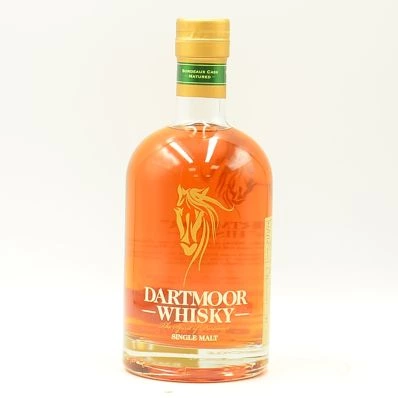
Dartmoor Whisky Distillery produces single malt in Devon using a distinctive copper alembic still. Its location supports a regional identity built around local barley, Dartmoor water and maturation in a range of wine and fortified-wine casks.
The use of an alembic still demonstrates that English distilleries do not all follow the standard Scottish wash-still and spirit-still arrangement. Equipment choices can materially affect spirit weight, reflux and texture.
East London Liquor Company
East London Liquor Company produces whisky and other spirits in Bow. Its whisky work has included malt, rye and mixed-grain recipes, often supported by an experimental approach to fermentation and maturation.
London distilleries face different practical conditions from rural producers, but they can still develop provenance through grain choice, production methods and local maturation.
Filey Bay
Produced by the Spirit of Yorkshire Distillery in Hunmanby, Filey Bay whisky is made using barley grown on the founders’ family farm. This field-to-bottle approach provides a direct connection between agriculture and finished spirit.
The distillery uses both pot and column stills, allowing it to create different spirit styles for blending and maturation. Filey Bay releases commonly combine several cask types rather than relying on one dominant finish.
One thing our customers regularly notice is that English whisky varies more between producers than they expect, so checking the grain, still type and cask details is often more useful than relying on the country of origin alone.
Fielden
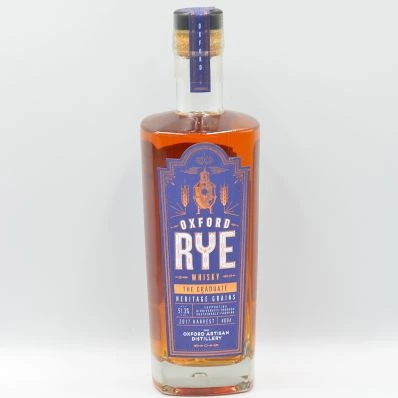
Fielden, formerly associated with The Oxford Artisan Distillery, has focused on heritage grains and regenerative farming. Its whisky is notable for recipes that use rye, wheat and malted barley rather than following a conventional all-malt template.
This makes Fielden particularly relevant to the wider discussion of English whisky provenance. Grain variety is treated as a source of flavour rather than simply a fermentable raw material.
Henstone
Henstone Distillery is based in Shropshire and produces whisky alongside gin, vodka and apple brandy. Its whisky is made in relatively small batches and has included both single malt and peated releases.
Smaller output does not automatically mean greater quality or collectibility, but it can produce meaningful batch variation. Buyers should check whether a release is a standard expression, a numbered batch or an individual cask.
The Lakes Distillery
The Lakes Distillery is based near Bassenthwaite Lake in Cumbria. Its whisky-making approach has placed particular emphasis on blending multiple casks during maturation, a method the distillery describes through the concept of élevage.
Rather than treating blending as a final step, casks may be assessed and combined throughout development. This produces a house style built around layered cask influence, often involving sherry-seasoned oak.
St George’s and The English Distillery
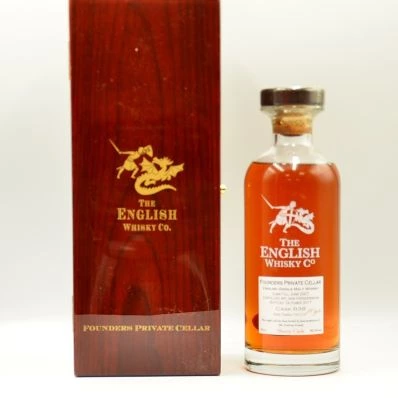
St George’s Distillery, now commonly known as The English Distillery, was established in Norfolk by the Nelstrop family. Production began in 2006, making it the first English distillery in more than a century to produce whisky on one site.
Its early releases helped demonstrate that modern English single malt could be produced consistently and at commercial scale. The range has included unpeated, peated, age-stated and single-cask bottlings.
The distillery’s importance is historical as well as commercial. It created a visible reference point for the modern English whisky revival and was operating before most of the producers now associated with the category.
White Peak
White Peak Distillery produces Wire Works whisky at the former Johnson & Nephew wireworks in Derbyshire. Its production has used long fermentation and copper pot stills, with maturation influenced by both first-fill bourbon barrels and wine-derived casks.
The distillery’s identity is closely tied to its industrial location and Derbyshire surroundings, but the useful bottle-level details remain the release recipe, cask composition and bottling strength.
English Whisky Flavour Profiles
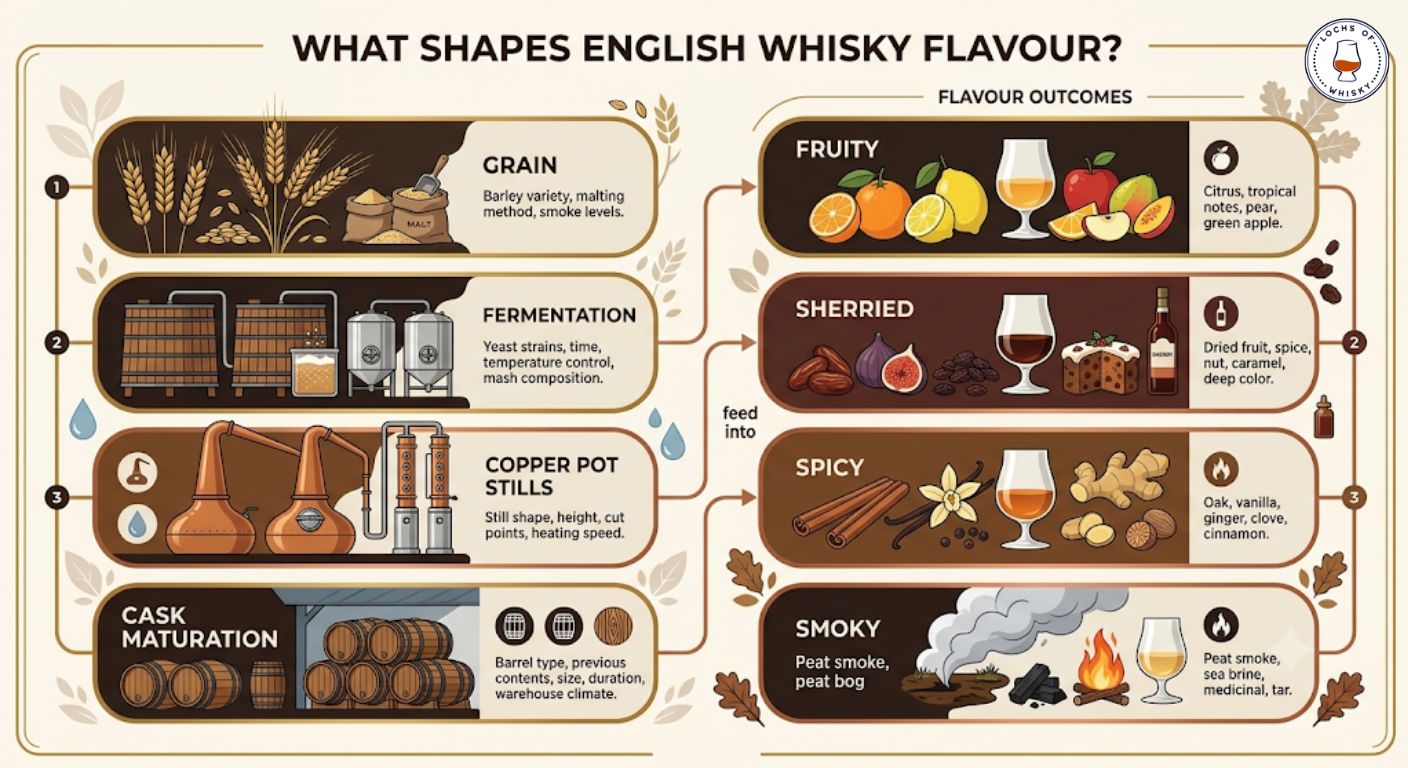
English whisky does not have one fixed flavour profile. Styles range from sweet and fruit-led single malts to spicy rye recipes, heavily sherried releases and smoky expressions. Grain choice, fermentation, still design and cask selection usually provide a better indication of flavour than geographical region alone.
Common profiles include:
- Fruit-led: Orchard fruit, citrus, berries and malt sweetness, often supported by bourbon or wine casks.
- Sherried: Dried fruit, chocolate, nuts and baking spice from oloroso, Pedro Ximénez or related casks.
- Grain-forward: Rye bread, cereal, pepper and herbal notes from rye or mixed-grain recipes.
- Smoky: Peat smoke, charred wood, leather and earthy flavours from peated malt or heavily charred casks.
English Whisky Distilleries by Still Capacity
| Distillery | Approximate Spirit Still Capacity | Production Context |
|---|---|---|
| Cotswolds | 6,500 litres | One of England’s larger copper pot spirit stills |
| The Lakes | 3,600 litres | Designed for a cask-led, blended maturation programme |
| Spirit of Yorkshire | 3,500 litres | Works alongside a column still for production flexibility |
| Cooper King | 900 litres | Small-batch production with local provenance |
| Ludlow | Approximately 200 litres | Among the smaller recorded English spirit stills |
Still capacity measures potential batch size, not whisky quality. A larger still may support higher production volumes, while a smaller still may allow a producer to work with shorter runs. Spirit character depends more directly on still shape, cut points, heating method and the speed of distillation.
Can You Visit English Whisky Distilleries?
Many English whisky distilleries offer tours, guided tastings or visitor-centre experiences, although access varies by site. Established producers are more likely to operate regular scheduled tours, while smaller distilleries may require advance booking or only open on selected dates.
A distillery visit can help explain details that are difficult to understand from a label, including the scale of the equipment, fermentation times and how casks are managed. The English Whisky Map is a practical starting point for planning routes, particularly in areas where several producers can be visited during one trip.
How to Explore English Whisky Distilleries
Start with the production details rather than trying to identify one national house style. Check:
- Whether the whisky is single malt, grain whisky or a mixed-grain recipe.
- The distillery’s fermentation and still arrangement.
- Whether the bottle is a core release, batch release or single cask.
- The principal maturation casks and whether any finish was used.
- The bottling strength, particularly for releases above 50% ABV.
- Whether the distillery has mature whisky available or is still developing its stock.
English whisky makes most sense for drinkers and collectors who are interested in production differences, newer distillery histories and bottle-specific context. It is less suitable for anyone expecting consistent regional flavour rules comparable with established Scotch whisky regions.
English Whisky Distilleries in Context
England’s whisky industry has developed into a varied network of farm distilleries, urban producers, brewery-led operations and larger destination sites. Some have mature ranges and established house styles; others are still building the cask stocks that will define them.
The key is not to treat every English whisky as part of one uniform style. Grain provenance, still configuration, fermentation and cask policy differ substantially between producers. Explore those details first, then use the wider world whisky category to place English distilleries alongside producers from other developing whisky regions.

Comments