
 Chat with us on WhatsApp


European Whisky Tasting Notes & Reviews
European whisky is no longer a side category for curious drinkers. It now covers serious single malts, rye-led styles, wine-cask maturation, cold-climate distilling and regional approaches that do not always follow Scotch rules. The main decision problem is knowing what actually matters before you buy: country, cask type, ABV, age statement, production method and price.
This guide explains how to read European whisky properly before choosing a bottle. It covers the main flavour patterns, how casks affect tasting notes, which regions tend to suit different palates, and how to avoid common buying mistakes. For a broader buying view across non-Scotch producers, you can browse the full World Whisky range.
What Counts As European Whisky?
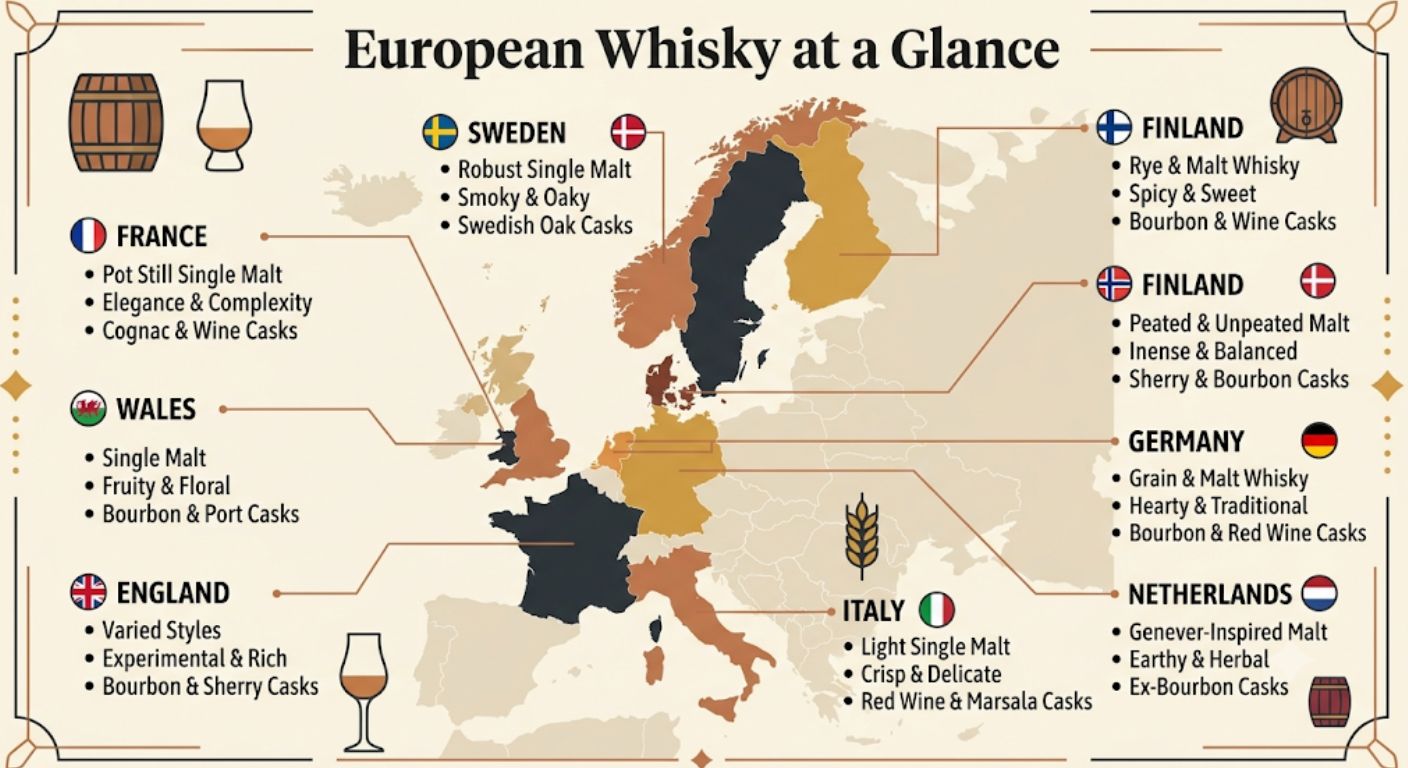
European whisky means whisky produced in Europe outside Scotland and Ireland, although Irish whiskey often appears in the same buying conversation because it shares shelf space with other European styles. In practical terms, most buyers are comparing countries such as Wales, England, France, Sweden, Denmark, Norway, Germany, Italy, Finland and the Netherlands.
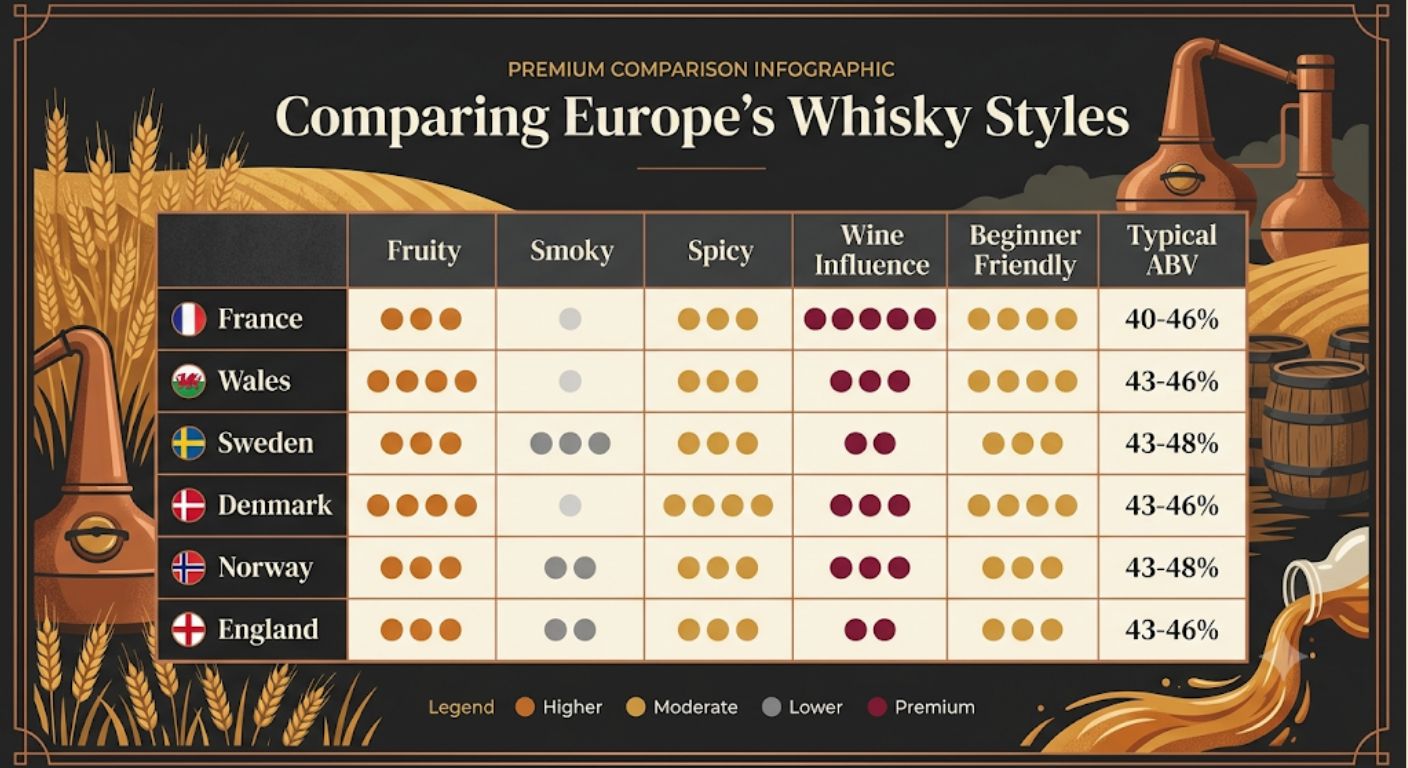
The key point is that European whisky is not one style. French whisky may lean towards wine-cask influence. Scandinavian whisky often highlights local barley, rye, smoke or cold-climate maturation. Welsh whisky tends to be bright, fruity and approachable. Danish whisky can be grain-forward, spicy and experimental.
How To Read European Whisky Tasting Notes
Good tasting notes should tell you more than whether a whisky is “smooth”. Look for four parts: nose, palate, finish and structure. The nose tells you what aromas appear first. The palate tells you how those flavours behave in the mouth. The finish shows what remains after swallowing. Structure tells you whether the whisky feels balanced, thin, hot, oily, sweet, dry or cask-heavy.
- Nose: fruit, cereal, oak, smoke, spice, wine, vanilla or solvent notes.
- Palate: sweetness, texture, alcohol heat, oak grip and flavour development.
- Finish: short, medium or long; clean, bitter, spicy, smoky or drying.
- Balance: whether spirit, cask and alcohol work together.
A whisky can have attractive aromas but still underperform if the palate is hot, thin or dominated by young oak. This happens often in newer European distilleries where the spirit is well made but the cask programme is still developing.
Why Cask Type Matters So Much
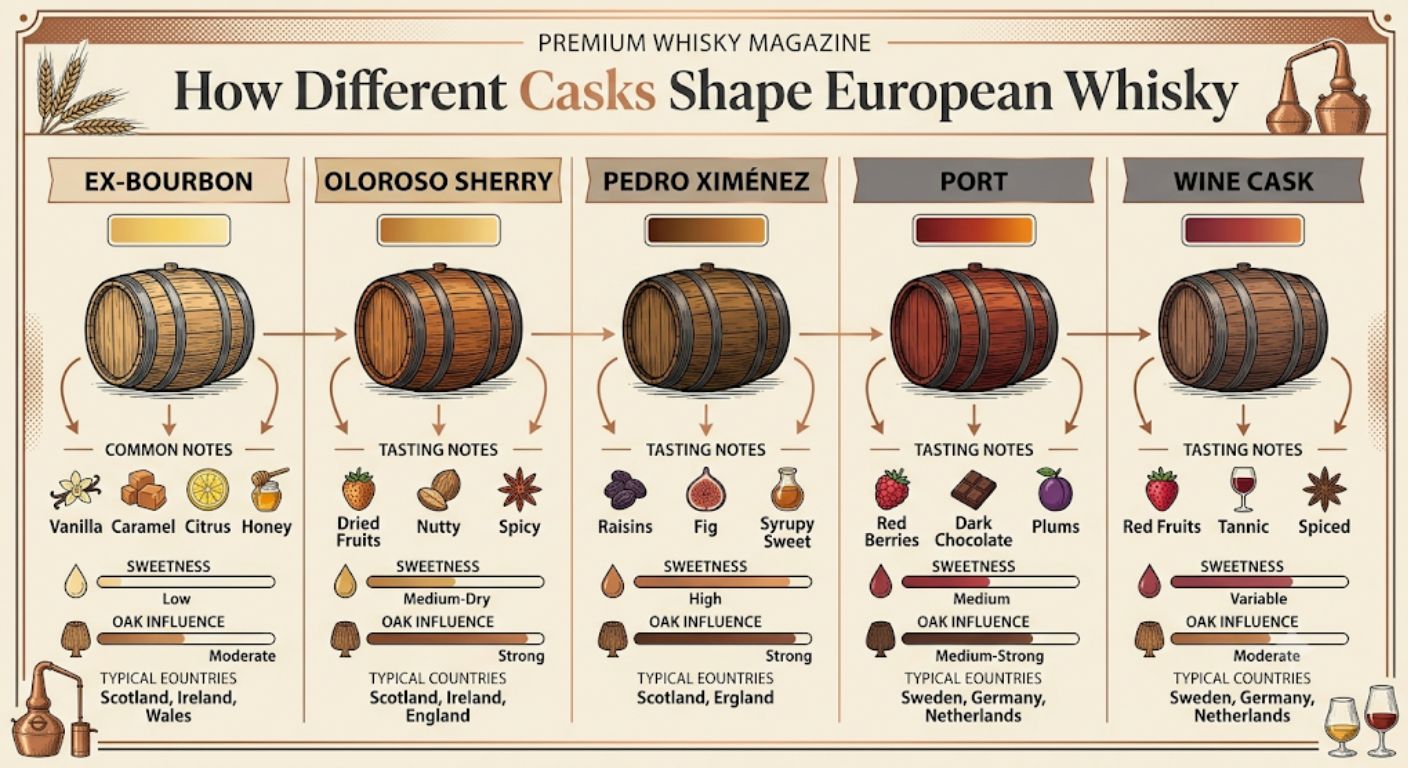
Cask type is often the strongest clue to flavour. Ex-bourbon casks usually bring vanilla, coconut, orchard fruit and honey. Sherry casks add dried fruit, spice, chocolate and nutty depth. Wine casks can create red fruit, tannin, grape skin, sweetness or dryness depending on the wine. Port, Madeira, Marsala and PX finishes can make a whisky richer, but they can also cover a young spirit.
The question we get asked most is whether a sherry-cask finish is the same as full sherry maturation. It is not, and the difference shows up in both the flavour and the price.
For European whisky, wine-cask influence is especially important because many producers are based in countries with strong wine traditions. French, Italian and some Nordic producers often use wine casks as part of their identity rather than as a novelty.
Regional Styles Across Europe
French Whisky
French whisky often benefits from access to quality wine casks, local barley and a strong culture of maturation. Expect styles ranging from elegant malt whisky to richer wine-finished releases. Brittany is especially important, with producers such as Armorik showing how French whisky can combine coastal identity with classic malt structure.
If you are specifically comparing bottles from France, the French Whisky category is the most relevant place to narrow the search.
Welsh Whisky
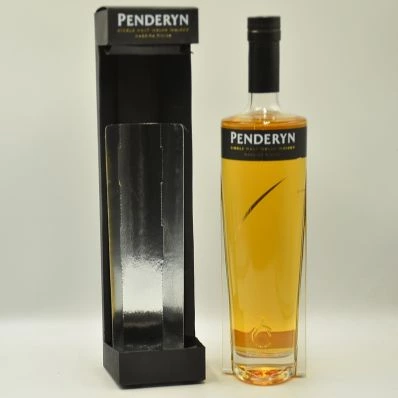
Welsh whisky is usually approachable, fruit-led and clear in style. It is a strong starting point for drinkers who want something outside Scotland without moving into very smoky or heavily experimental territory. Penderyn is the key name here, with a range that helps explain modern Welsh single malt.
Danish Whisky
Danish whisky often feels more experimental than traditional. Rye, local grain, floor maltings, smoke and mixed-cask maturation appear regularly. It can be excellent, but buyers should check the grain type and ABV before assuming it will drink like a standard single malt.
For Danish bottles and distillery-led releases, use the Danish Whisky category. Distilleries such as Thornaes show how smaller European producers can build identity through grain, cask and production choices.
Scandinavian Whisky
Scandinavian whisky covers Sweden, Denmark, Norway and Finland. It is not one flavour profile. Swedish whisky can be bright, spicy and oak-driven, while Norwegian whisky may lean into colder maturation and Arctic provenance. Mackmyra helped establish Swedish whisky internationally, especially through local oak, fresh fruit notes and controlled experimentation.
For Norway specifically, the Bivrost Whisky guide explains how Arctic conditions shape production and maturation.
English Whisky
English whisky is produced in England from cereal grains, water and yeast, then matured in wood for at least three years under the wider whisky rules. A formal English Whisky GI has been developed to define the category more clearly; GOV.UK’s English Whisky product specification sets out the protected-name framework.
This article does not try to replace the dedicated English whisky guides. For more depth, use the specialist pages on English producers and regional development rather than treating English whisky as a single flavour style.
Irish Whiskey In The European Buying Conversation
Irish whiskey is usually softer, lighter and more approachable than many young European single malts. Triple distillation is common, but not universal. Single pot still whiskey is especially important because it uses both malted and unmalted barley, creating a creamy, spicy profile that differs from standard single malt.
ABV, Age And Price: What To Check Before Buying
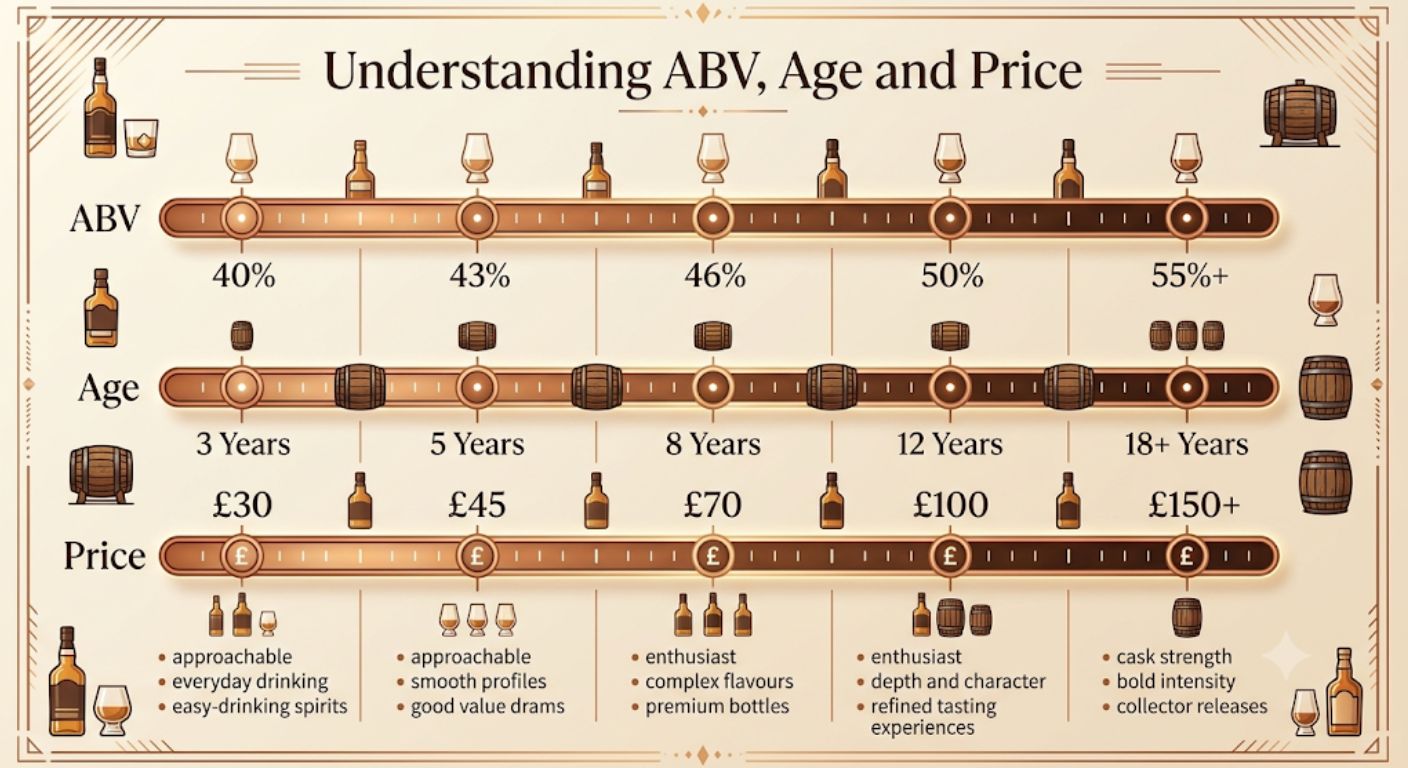
ABV tells you how concentrated the whisky is. Most entry-level bottles sit around 40–43% ABV. Enthusiast releases often sit at 46% ABV or higher. Cask-strength whiskies can exceed 55% ABV and need more care, especially for newer drinkers.
Age statement matters, but it is not a quality guarantee. A young European whisky from active casks can taste fuller than an older whisky from tired wood. Equally, a heavily cask-led three-year-old can taste mature at first but become sharp, bitter or hot on the finish.
- £30–45: suitable for entry-level bottles, gifts and lighter styles.
- £45–70: the strongest range for serious European whisky discovery.
- £70–100: expect clearer cask identity, stronger ABV or limited releases.
- £100+: buy only when the age, cask, producer reputation or rarity justifies it.
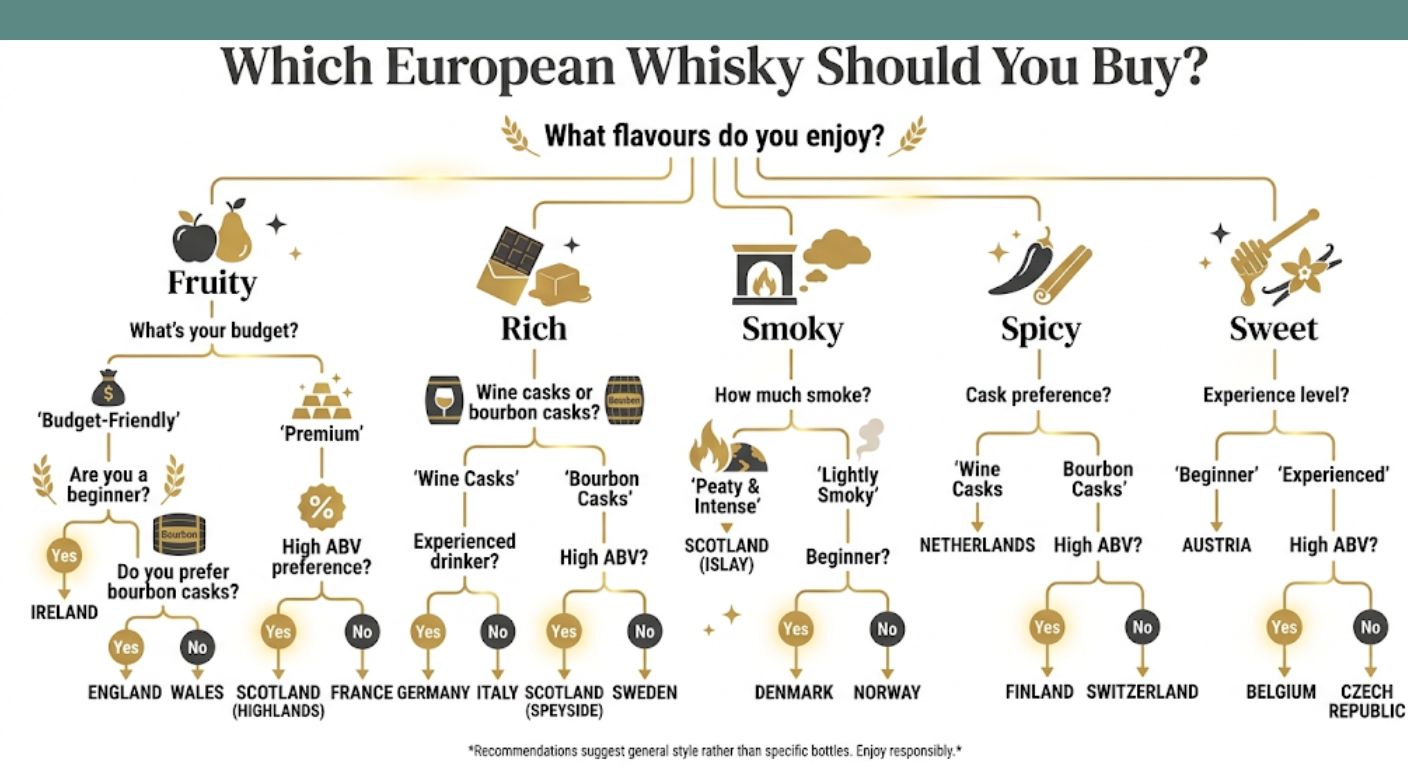
Decision Logic: Which European Whisky Should You Choose?
- If you want an easy first bottle, choose Welsh, Irish or lighter French whisky around 40–46% ABV.
- If you like red fruit and wine influence, look at French or Italian whisky with wine-cask maturation.
- If you prefer spice and grain character, consider Danish or Nordic rye-influenced whisky.
- If you like smoke, check whether the bottle is lightly peated or heavily peated before buying.
- If your budget is £30–60, avoid chasing rare releases; focus on clear cask type and reliable producer style.
- If you are buying a gift, choose a recognisable region, moderate ABV and a flavour profile that does not rely on heavy peat.
Common Buying Mistakes
- Assuming all European whisky tastes similar.
- Buying only by age statement and ignoring cask type.
- Choosing cask strength without checking the ABV.
- Confusing a cask finish with full maturation.
- Expecting Scotch-style flavour from newer European producers.
- Ignoring price compared with maturity and production detail.
FAQ
Is European whisky good?
Yes, but quality varies by producer, cask management and maturity. The best European whiskies have clear regional identity, balanced alcohol, well-integrated oak and honest production detail. Avoid buying only because a bottle sounds unusual; check ABV, cask type, age and flavour profile first.
Which European whisky is best for beginners?
Beginners usually do best with Welsh, Irish or lighter French whisky around 40–46% ABV. Look for fruit, honey, vanilla, gentle spice and moderate oak. Avoid very young cask-strength bottles or heavily peated releases unless you already know you enjoy intense flavours.
What flavours are common in European whisky?
Common flavours include orchard fruit, vanilla, honey, cereal, spice, dried fruit, wine tannin and light smoke. French and Italian whiskies may show more wine-cask influence, while Scandinavian whiskies can bring spice, smoke, fresh fruit or local oak character.
Is older European whisky always better?
No. Age helps only when the cask has improved the spirit. A well-made 5–8 year old whisky from active oak can outperform an older bottle from tired casks. Look at age, ABV, cask type and producer reputation together rather than treating age as the only quality marker.
What ABV should I choose?
For casual drinking, 40–46% ABV is usually best. For stronger flavour and better texture, 46–50% ABV is often ideal. Cask-strength bottles above 55% ABV can be excellent, but they are not always beginner-friendly and may need water.
Structured Summary
- Region: use country and distillery style to narrow the flavour profile.
- Cask type: ex-bourbon, sherry, wine and fortified-wine casks all change the whisky significantly.
- ABV: 40–46% is accessible; 46%+ often gives more texture; cask strength needs care.
- Age: useful, but never more important than cask quality and balance.
- Price: £45–70 is often the strongest discovery range for European whisky.
The safest shortcut is simple: choose by flavour first, then region, then cask type, then ABV. Once those match your taste, price becomes easier to judge. For browsing across the wider category, return to the World Whisky selection.

Related Products
-
-
-
-
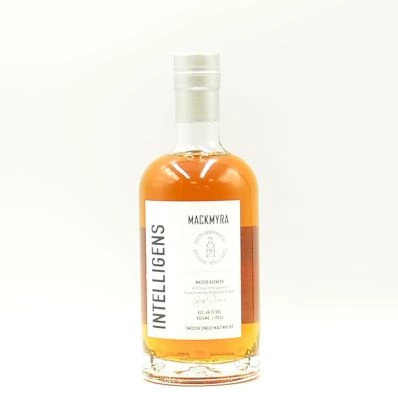 Mackmyra Swedish Single Malt Whisky Intelligens AI:02Special Price £58.98 Regular Price £64.99 Inc VATSaving £6.01
Comments