
 Chat with us on WhatsApp


Asian Whisky Tasting Notes & Reviews
Asian whisky is not one style. It covers Japanese blends and single malts, Indian single malts shaped by heat, Taiwanese whiskies matured in intense humidity, and newer producers across the region. The main decision is not simply “which Asian whisky is best”, but which production style, cask type, ABV and provenance best match the drinker.
This guide explains how to read Asian whisky properly before buying or tasting. It covers Japanese whisky standards, Indian and Taiwanese maturation, cask influence, common flavour profiles, authenticity checks and practical decision rules. For readers comparing bottles, the aim is simple: understand what the bottle is, where it comes from, and why it tastes the way it does.
For Japanese bottles specifically, start with the broader Japanese Whisky category if you want to compare available styles while reading.
What Is Asian Whisky?
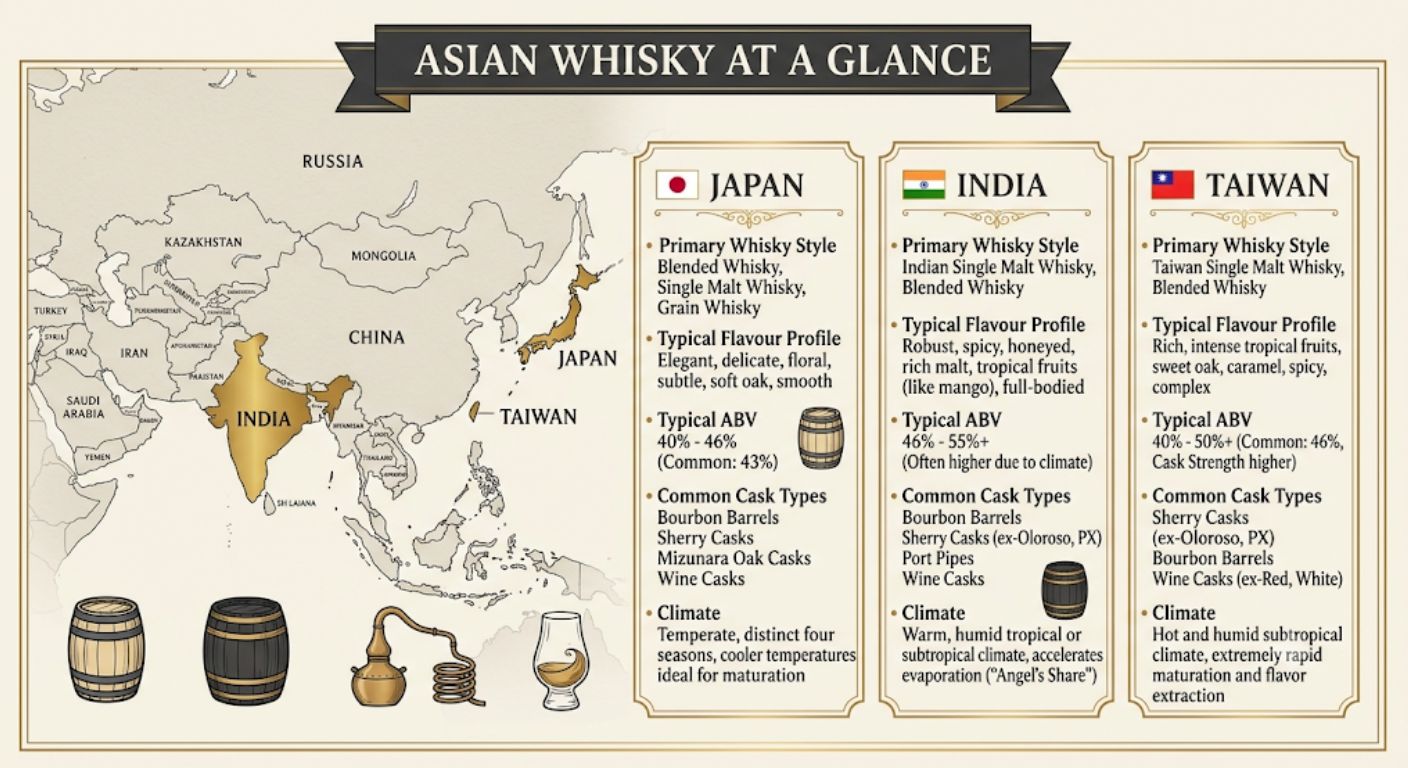
Asian whisky refers to whisky produced across Asia, most commonly Japan, India and Taiwan, with smaller but increasingly serious production in other countries. It is not a protected category in the way Scotch whisky is. The meaning depends on the country, producer and label claim.
The most important distinction is provenance. A bottle labelled as Japanese whisky should now be assessed differently from a world blend with Japanese branding. Indian whisky may refer to true single malt, molasses-based domestic spirit, or blended whisky depending on the producer and market. Taiwanese whisky is usually judged through climate, cask activity and distillery style.
Good Asian whisky buying starts with four checks:
- Country and distillery: where was it actually distilled?
- Whisky type: single malt, blended malt, grain whisky or blend?
- Cask type: ex-bourbon, sherry, wine, Mizunara, STR or mixed wood?
- ABV: approachable 40–46% or higher-strength 50%+?
Japanese Whisky: Balance, Precision and Provenance
Japanese whisky is usually associated with balance, clean texture and careful blending. The style developed from Scottish influence, but the best Japanese producers are not simply copying Scotch. They often work with multiple still shapes, varied cask types and house-led blending to create layered but controlled whisky.
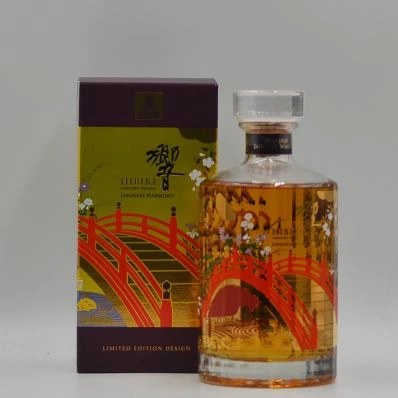
At entry level, many drinkers encounter Japanese whisky through blends such as Hibiki Japanese Harmony or compact, high-strength blends such as Nikka From The Barrel. Single malts such as Yamazaki and Hakushu sit in a different decision space because age statement, distillery character and scarcity can move the price sharply upward.
Japanese Whisky Requirements
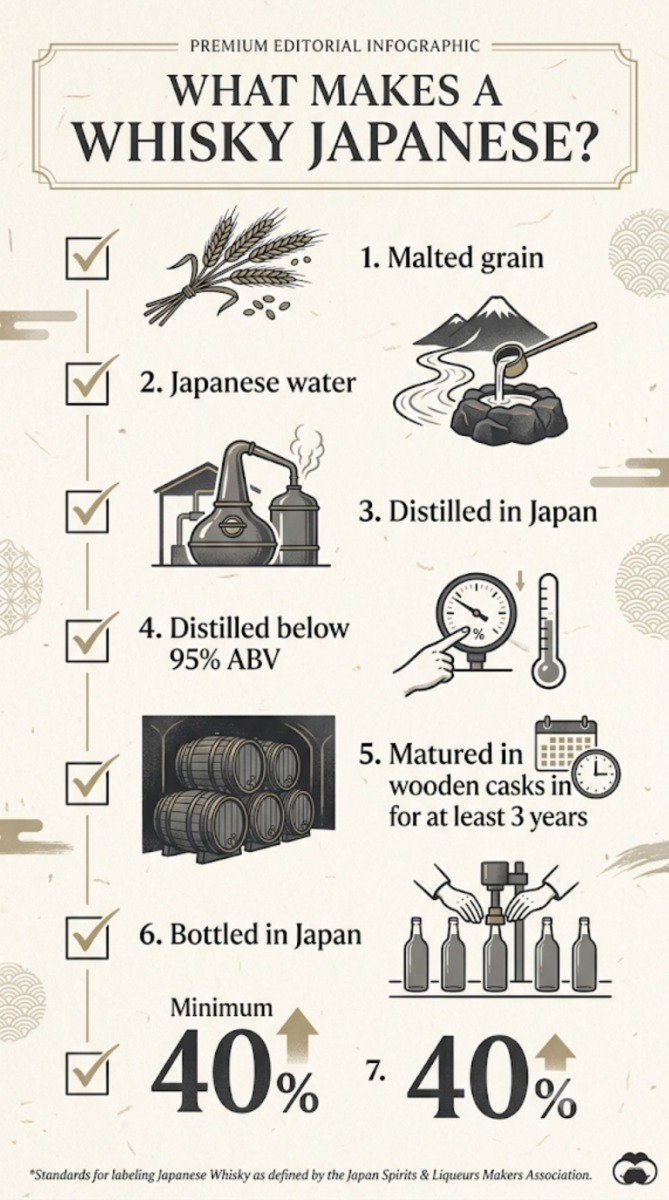
Under the Japan Spirits & Liqueurs Makers Association standards, whisky labelled as Japanese whisky by member companies must meet defined production requirements. These standards apply to labelling by JSLMA members and are designed to make provenance clearer for drinkers.
- Malted grain must be used.
- Water used in production must be extracted in Japan.
- Saccharification, fermentation and distillation must take place at a distillery in Japan.
- The spirit must be distilled below 95% ABV.
- Maturation must take place in wooden casks in Japan for at least three years.
- Bottling must take place in Japan.
- The final whisky must be bottled at a minimum of 40% ABV.
These rules matter because older Japanese-labelled bottles sometimes included whisky sourced from outside Japan. That does not automatically make them poor-quality, but it changes what the bottle is. For collectors and serious drinkers, the distinction between Japanese whisky and Japanese-style world whisky is important.
You can read the formal background on Japanese whisky labelling through the House of Suntory’s explanation of the JSLMA standards.
Indian Whisky: Heat, Barley and Intensity
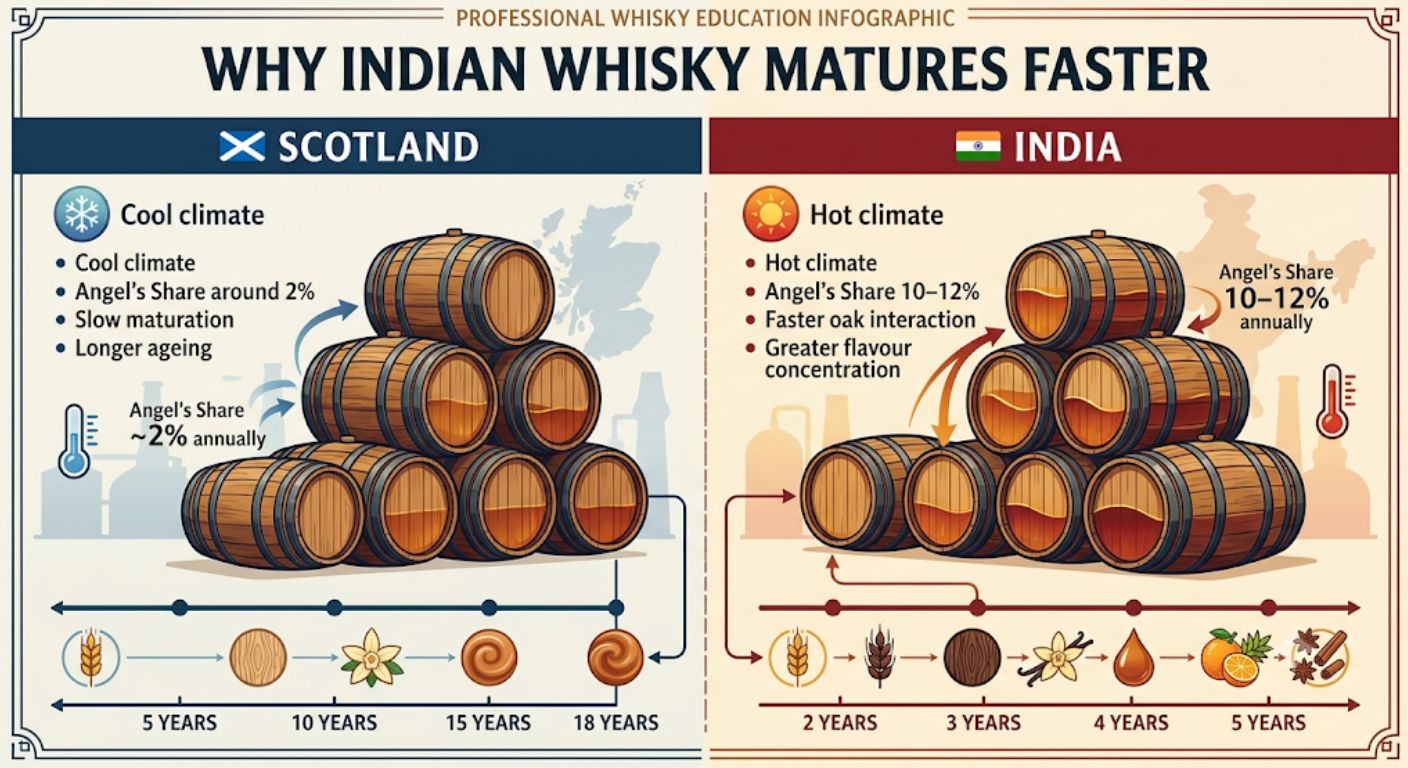
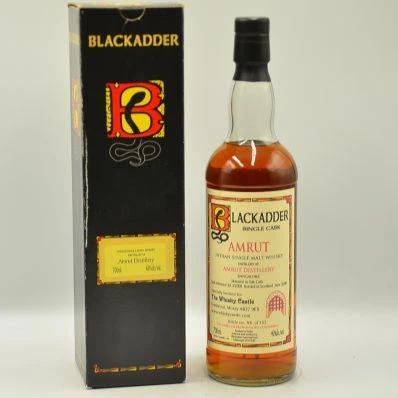
Indian whisky needs careful reading because the category is broad. For international whisky buyers, the most relevant segment is Indian single malt: malt whisky distilled from barley, usually matured in a hot climate that accelerates cask interaction.
Indian single malts often show fuller body, spice, tropical fruit, honey, oak and sometimes peat. The climate is a major reason. Higher temperatures increase interaction between spirit and wood, while evaporation rates are much higher than in Scotland. The Angel’s Share in India can reach around 10–12% annually, compared with roughly 2% in Scotland.
This does not mean Indian whisky is simply “older than its age”. It means age statements cannot be compared directly with Scotch. A four-year-old Indian single malt may show wood intensity that would take far longer in a cooler climate, but balance still depends on cask quality, warehouse conditions and distillery control.
Six-row barley is another useful marker. Some Indian distillers use barley grown in or around the Himalayan foothills. Compared with European two-row barley, six-row barley can contribute a fuller, spicier profile. It is one of the reasons Indian single malt often feels weightier than its age suggests.
For bottles from India, browse the Indian Whisky category when comparing cask type, ABV and distillery style.
Taiwanese Whisky: Tropical Maturation and Cask Power
Taiwanese whisky is usually defined by climate and cask impact. High heat and humidity drive rapid maturation, producing whiskies with strong fruit concentration, active oak and polished texture at relatively young ages.
Ex-bourbon casks are common because they allow the spirit’s tropical fruit, vanilla and honey notes to remain clear. Sherry casks add darker fruit, chocolate, spice and weight. Wine and fortified wine casks can push the whisky into richer, more dessert-led territory.
The main buying risk with Taiwanese whisky is assuming all tropical maturation creates balance. It does not. Active casks can produce impressive concentration, but they can also dominate the spirit. ABV matters here. A 40–46% Taiwanese whisky may feel rounded and fruit-led, while cask-strength releases can be powerful, oak-forward and intense.
Key Asian Whisky Countries Compared
| Country | Typical Style | Common Casks | Buyer Watchpoint |
|---|---|---|---|
| Japan | Balanced, precise, layered | Ex-bourbon, sherry, Mizunara, refill oak | Check whether it meets Japanese whisky standards |
| India | Full-bodied, spicy, tropical, often intense | Ex-bourbon, sherry, wine, peated variants | Do not compare age statements directly with Scotch |
| Taiwan | Fruit-rich, cask-driven, polished | Ex-bourbon, sherry, wine, fortified wine | Check ABV and cask intensity before buying |
| Other Asian producers | Varied and producer-specific | Usually ex-bourbon, sherry or wine casks | Assess by distillery, not country reputation alone |
How Cask Type Shapes Asian Whisky
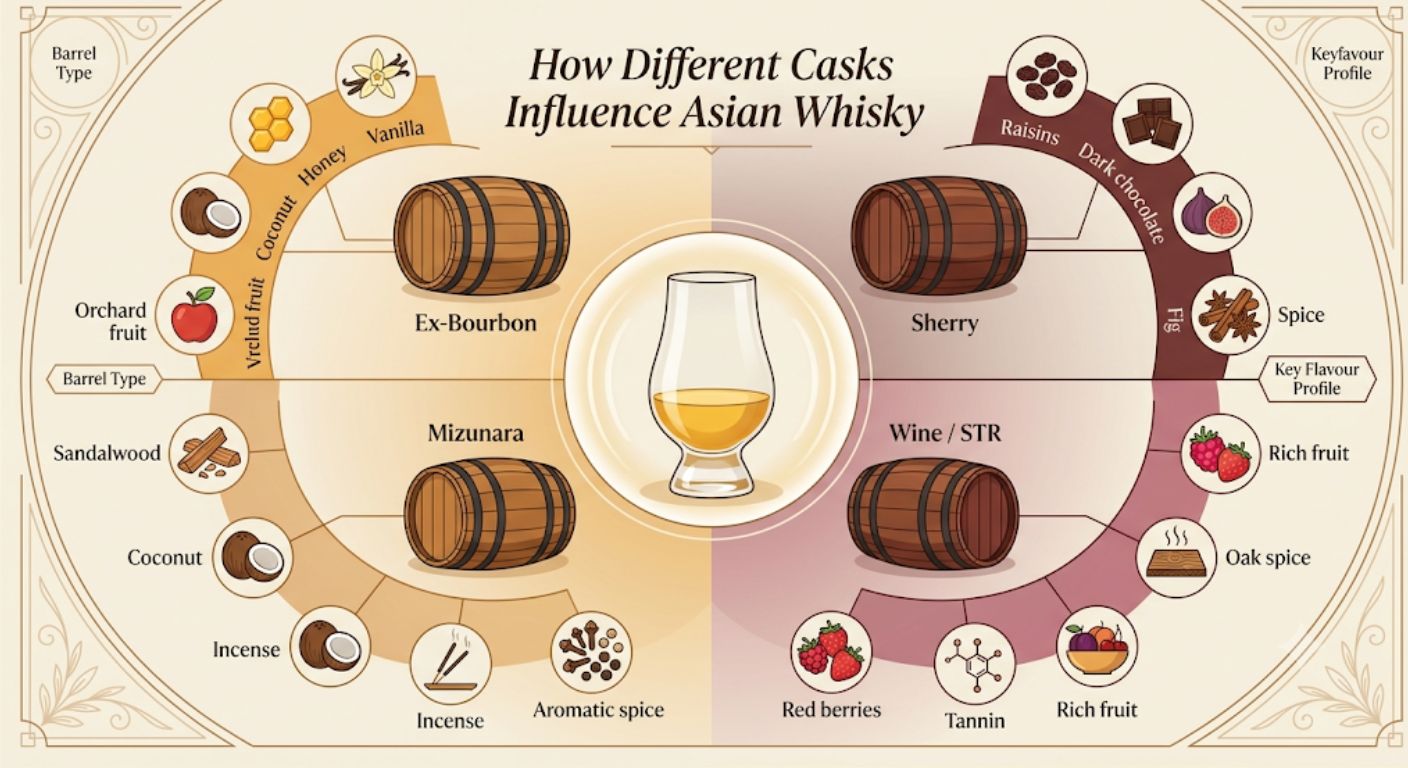
Cask type is one of the strongest predictors of flavour in Asian whisky. Because many Asian distilleries operate in warmer climates, wood influence can arrive quickly. That makes the cask more important, not less.
Ex-Bourbon Casks
Ex-bourbon casks usually give vanilla, honey, coconut, light oak, orchard fruit and clean sweetness. They are a good starting point for Japanese, Indian and Taiwanese single malts because they often allow the distillery character to remain visible.
Sherry Casks
Sherry casks usually add dried fruit, raisin, fig, dark chocolate, spice and richer colour. Oloroso tends to be nutty and dry-fruited, while PX can be sweeter and denser. The question we get asked most is whether a sherry-cask finish is the same as full sherry maturation. It is not, and the difference shows up in both flavour and price.
Mizunara Oak
Mizunara is Japanese oak and is most associated with sandalwood, incense, coconut and aromatic spice. It is expensive, difficult to work with and often used selectively. Do not buy a bottle only because it mentions Mizunara; check whether it is full maturation, partial maturation or finishing.
Wine and STR Casks
Wine and STR casks can add red fruit, spice, tannin and darker sweetness. They can work well in warm climates, but they can also become dominant. If the ABV is high and the cask is very active, expect a more forceful whisky.
How to Read Asian Whisky Tasting Notes
Useful tasting notes should connect flavour to production. A note that says “tropical fruit and spice” is only partly useful. The better question is why those notes are present.
- Tropical fruit: often linked to warm maturation, distillery ester profile or active bourbon casks.
- Dried fruit and chocolate: usually points toward sherry or fortified wine cask influence.
- Vanilla and coconut: commonly associated with American oak and ex-bourbon casks.
- Incense and sandalwood: may suggest Mizunara influence in Japanese whisky.
- Spice and weight: can come from barley type, hot maturation, cask activity or higher ABV.
For Japanese whisky, tasting notes often focus on balance rather than volume. For Indian whisky, expect more impact from heat and barley character. For Taiwanese whisky, cask activity often drives the shape of the whisky.
ABV and Strength: Why It Matters
ABV changes how Asian whisky drinks. A 40% blend may be soft, polished and easy to drink. A 46% single malt often gives better texture and flavour clarity. A cask-strength release above 55% can be excellent, but it needs more care.
Use this simple rule:
- 40–43% ABV: best for lighter blends, highballs and easy drinking.
- 46% ABV: a strong point for flavour, texture and balance.
- 50–55% ABV: richer, more intense and better suited to experienced drinkers.
- 55%+ ABV: powerful, often cask-led, and usually worth adding water gradually.
Higher ABV is not automatically better. It gives more concentration, but also more heat. For tropical maturation, cask strength can amplify oak, spice and tannin quickly.
How to Spot Fake Hibiki and Yamazaki Whisky
Counterfeit risk is highest around scarce, famous Japanese bottles. Check label print quality, capsule condition, box and bottle consistency, fill level, closure details and whether fonts match across packaging. Buy from reputable sellers, avoid prices far below market level, and be cautious with private listings that cannot prove provenance.
For Hibiki and Yamazaki, the bottle and outer packaging should look consistent. Poor printing, uneven foil, spelling errors, mismatched embossing or cloudy liquid are warning signs. The more expensive the bottle, the more important seller reputation becomes.
Asian Whisky Decision Logic
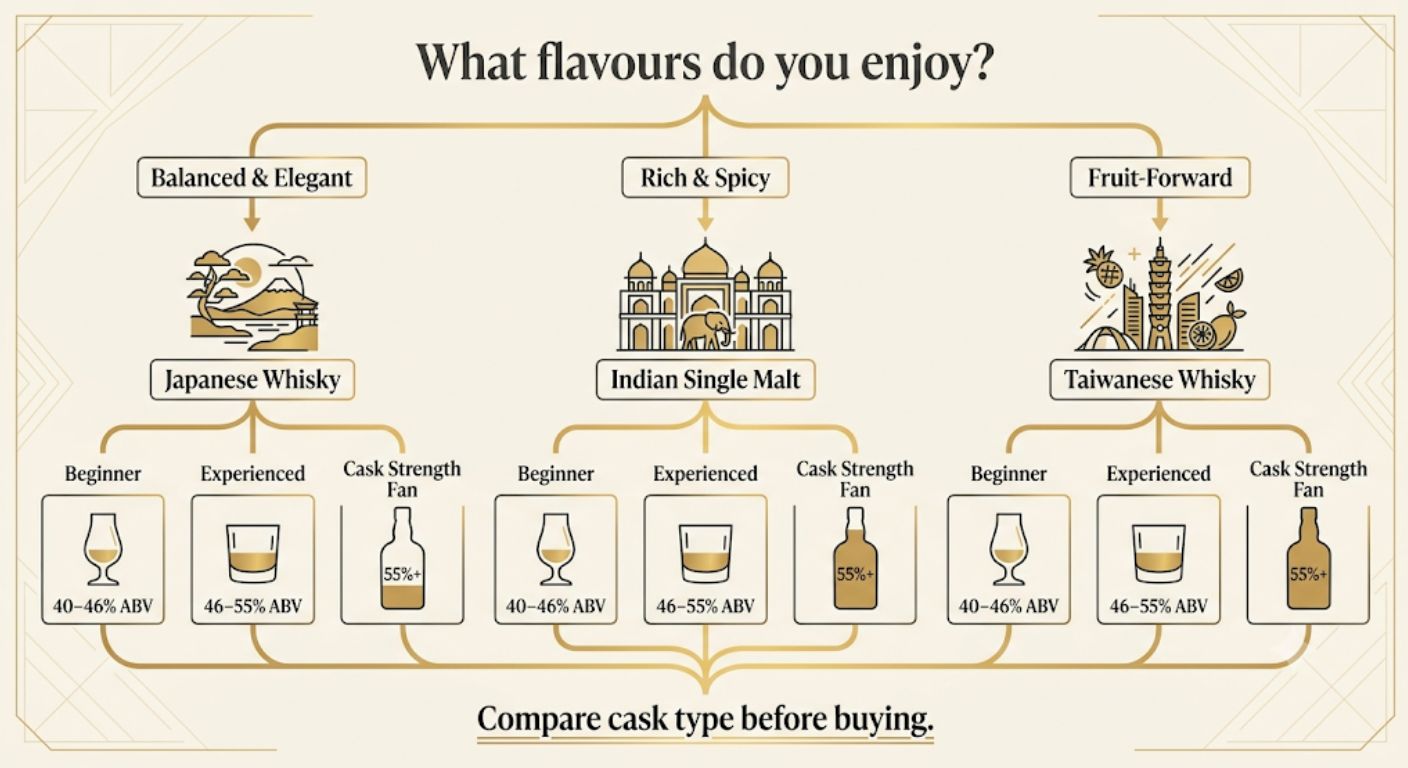
The clearest way to choose Asian whisky is by drinking goal, not country reputation.
- If you want balance and elegance: choose Japanese blends or lighter Japanese single malts around 40–46% ABV.
- If you want full body and spice: choose Indian single malt, especially bourbon or sherry cask releases around 46–50% ABV.
- If you want fruit concentration: choose Taiwanese whisky from ex-bourbon or wine casks.
- If you are new to single malt: avoid very high ABV releases first. Start around 40–46%.
- If your budget is £30–60: look at blends and younger single malts rather than age-statement Japanese icons.
- If your budget is £60–120: compare Indian single malt, Taiwanese single malt and Japanese NAS releases by cask type.
- If your budget is £150+: check provenance, age statement, distillery and packaging carefully before buying.
Distilleries and Producers to Understand
Asian whisky makes more sense when viewed through distilleries rather than broad country labels. Japanese whisky is shaped by houses such as Suntory, Nikka and Kirin. Indian whisky is shaped by distillers working with heat, barley and fast cask interaction. Taiwanese whisky is shaped by climate and wood management.
For Japanese producers beyond the best-known names, the Kirin distillery guide is useful for understanding the role of Fuji Gotemba and Japanese grain and malt production. For newer Japanese island production, Helios gives useful context. For Indian whisky, Indri is a relevant modern distillery to understand because it reflects the growth of Indian single malt as an international category.
Common Mistakes When Buying Asian Whisky
- Assuming all Japanese-labelled whisky is fully Japanese: check standards, producer and label wording.
- Comparing Indian age statements directly with Scotch: hot-climate maturation changes the equation.
- Ignoring ABV: cask-strength Asian whisky can be much more intense than expected.
- Buying by country only: distillery, cask and bottling details matter more.
- Overpaying for famous names: scarcity can distort value, especially with Japanese age statements.
- Assuming dark colour means better whisky: colour often reflects cask type and activity, not quality alone.
FAQ
Is Asian whisky suitable for beginners?
Yes, but choose carefully. Japanese blends around 40–43% ABV are usually the easiest starting point because they tend to be balanced, smooth and lightly fruity. Avoid cask-strength Indian or Taiwanese releases as a first bottle unless you already enjoy high-strength Scotch or bourbon.
Why does Indian whisky age faster than Scotch?
Indian whisky matures faster because higher heat and humidity increase interaction between spirit and wood. Evaporation is also much higher, with Angel’s Share often around 10–12% annually compared with roughly 2% in Scotland. This creates intensity quickly, but balance still depends on cask quality.
Is Hibiki Japanese Harmony a single malt?
No. Hibiki Japanese Harmony is a blended whisky, not a single malt. It combines malt and grain whiskies from Suntory’s Japanese production network, including Yamazaki, Hakushu and Chita. Its appeal comes from blending balance rather than single-distillery character.
Suntory or Nikka: which is better for beginners?
Suntory is usually easier for beginners because its best-known whiskies often emphasise balance, soft fruit and harmony. Nikka can feel bolder, especially through Yoichi’s heavier style and the higher-strength character of Nikka From The Barrel. Choose Suntory for softness and Nikka for more impact.
What is the difference between six-row and two-row barley in whisky?
Six-row barley has a different protein and enzyme structure from two-row barley and can produce a fuller, spicier profile. Some Indian distillers use locally grown six-row barley, which helps explain the weight and spice found in many Indian single malts compared with lighter European barley styles.
Are age statements important in Asian whisky?
Age statements help, but they are not the whole decision. In Japan, age statements often carry scarcity and price pressure. In India and Taiwan, hot climates can create strong cask influence at younger ages. Always compare age with cask type, ABV and country of maturation.
What cask type should I choose first?
Start with ex-bourbon cask whisky if you want vanilla, honey, orchard fruit and a cleaner view of the spirit. Choose sherry cask whisky if you prefer dried fruit, chocolate and spice. For a first Asian whisky, ex-bourbon or balanced multi-cask maturation is usually safer.
Structured Summary
- Japanese whisky: look for provenance, JSLMA-compliant labelling, distillery detail and balanced ABV.
- Indian whisky: expect more intensity from heat, barley and faster cask interaction.
- Taiwanese whisky: judge by cask type and ABV because wood influence can be powerful.
- Ex-bourbon casks: usually bring vanilla, honey, coconut and clean fruit.
- Sherry casks: usually bring dried fruit, chocolate, spice and richness.
- ABV: 40–46% is safer for beginners; 50%+ is better for experienced drinkers.
- Common mistake: buying by famous country or brand name without checking what the bottle actually is.
If you want a practical next step, compare country, cask type and ABV first, then decide whether you want balance, intensity or cask richness. For Japanese bottles, the Japanese Whisky category is the most natural place to continue browsing.

Comments