
 Chat with us on WhatsApp


How To Invest In Whisky
Whisky investment involves buying bottles or casks with the intention of selling them later at a higher price. Returns are not guaranteed. Value depends on provenance, scarcity, distillery demand, condition, ownership documentation and the availability of a credible resale market.
For most beginners, collectible bottles are easier to understand, store and resell than whole casks. They also allow investors to start with a smaller budget and spread risk across several purchases. Reviewing the bottles available within our old and rare whisky collection can help illustrate how age, release history, packaging and distillery reputation affect the specialist market.
Choose Between Bottle and Cask Investment
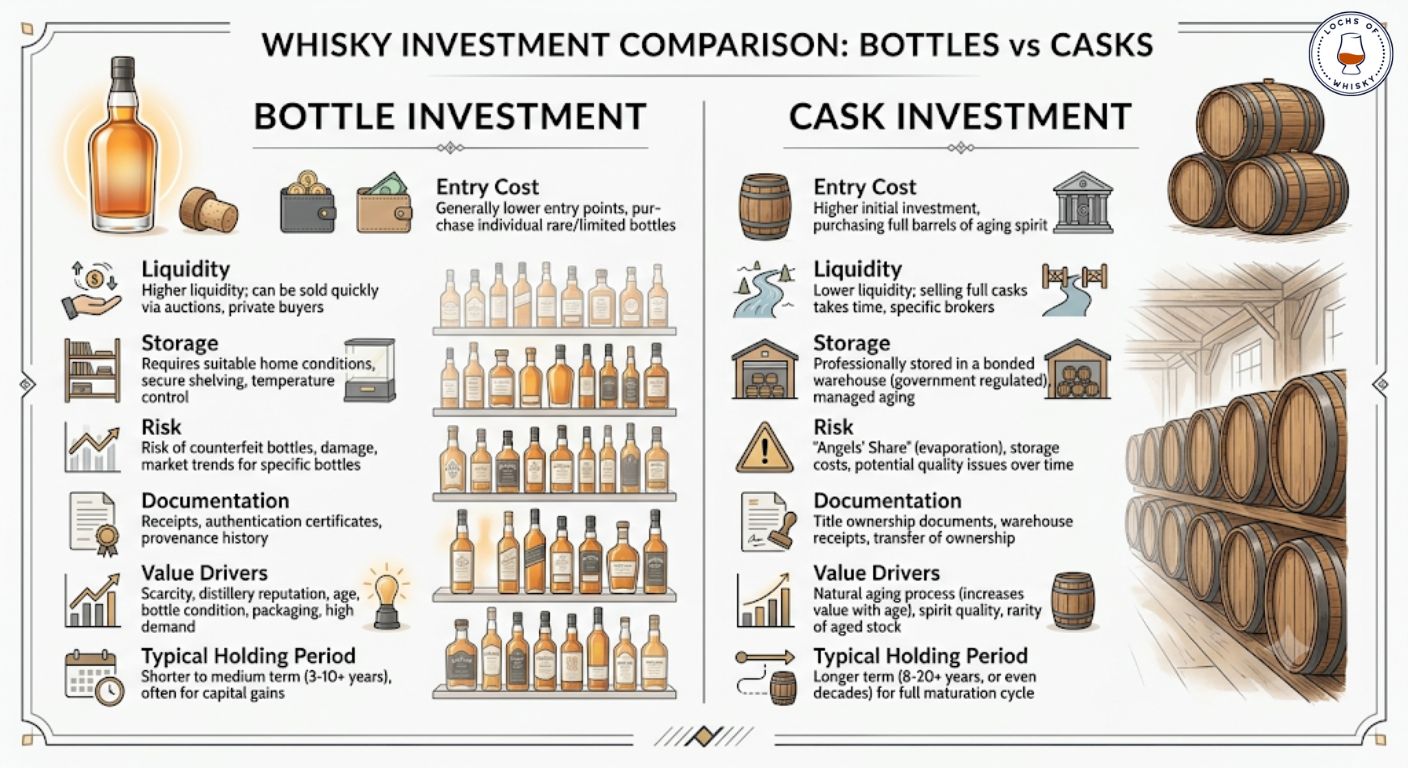
The first decision is whether to buy bottled whisky, an entire cask or a combination of both. These assets may contain the same spirit, but their ownership costs, value drivers and exit routes are very different.
| Feature | Whisky Casks | Whisky Bottles | Practical Note |
|---|---|---|---|
| Typical entry cost | Usually several thousand pounds or more | Can begin with hundreds of pounds | Bottles allow easier diversification |
| Main value drivers | Distillery, age, cask type, ABV and spirit volume | Scarcity, brand demand, release history, condition and provenance | Neither rises in value automatically |
| Storage | Bonded warehouse with ongoing fees | Secure, upright, temperature-stable storage | Storage costs reduce realised returns |
| Liquidity | Can take weeks or months to find a buyer | Established auction and specialist retail markets | Recognisable bottles are generally easier to price |
| Ownership checks | Warehouse-recognised documentation is essential | Invoices, provenance and authenticity checks | A broker certificate alone may be insufficient |
| Tax position | May qualify as a wasting chattel in the UK | Depends on the bottle, activity and individual circumstances | Obtain professional tax advice |
A cask matures and changes physically over time. A bottle does not continue maturing once it has been filled. Bottle values therefore depend more heavily on collector demand, scarcity and the continuing reputation of the release.
Set a Realistic Budget and Holding Period
Only use capital that you can leave committed for several years. Whisky is not equivalent to a savings account, and there may be no immediate buyer when you decide to sell.
A sensible bottle portfolio does not need to begin with the most expensive release available. A buyer might divide a £2,000 budget across four or five bottles rather than committing the entire sum to one speculative purchase. This reduces exposure to changes in demand for a single distillery or bottling series.
Cask buyers must also budget for costs beyond the purchase price:
- Annual warehouse storage
- Insurance and administrative charges
- Periodic regauging
- Broker or auction commission when selling
- VAT, duty, bottling and packaging if the cask is removed from bond
Calculate returns after every fee rather than comparing only the original purchase price with the eventual sale price.
Understand What Drives Whisky Value
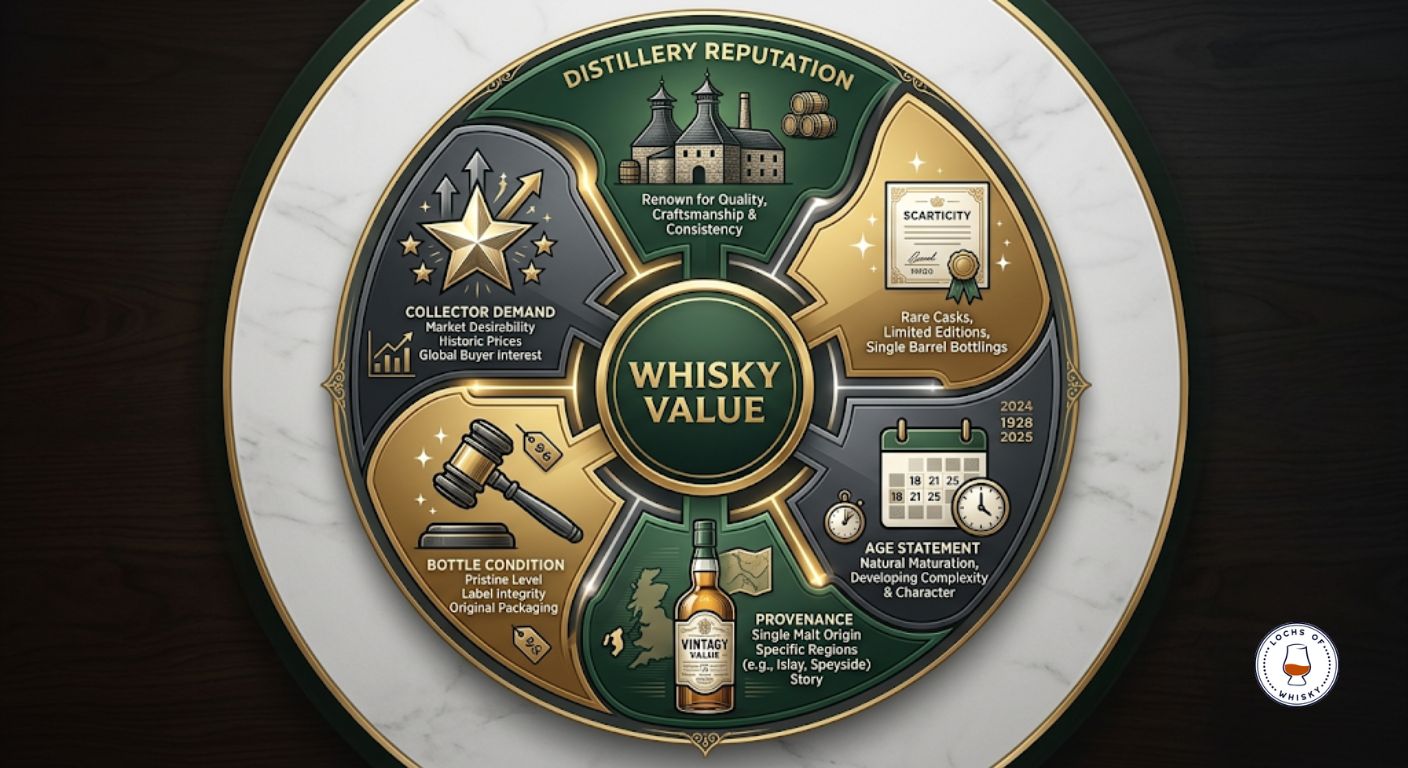
Distillery reputation and market depth
A familiar distillery name can make a bottle or cask easier to explain and resell, but recognition alone does not make every release investable. Buyers should study historical demand for the exact bottling, ownership group or cask rather than relying on the distillery name in isolation.
Established Scotch producers such as Dalwhinnie may benefit from broad consumer recognition, while newer producers such as Bimber can attract enthusiasts following limited releases and the development of a younger distillery. These are different demand profiles and should not be valued using the same assumptions.
Age and maturation
Age can support value, but older does not always mean more desirable. Casks often attract commercial interest around recognised age statements such as 10, 12, 15, 18 and 21 years. However, maturation must remain suitable for the spirit. Excessive wood influence, declining ABV or low remaining volume can reduce a cask’s usefulness.
Cask type
Ex-bourbon barrels, sherry butts, hogsheads and other formats mature whisky differently. Cask type affects flavour, remaining volume, expected bottle yield and the potential audience for the finished whisky. Ask whether the cask is first-fill, refill or re-racked, and require written evidence for any claimed maturation history.
Scarcity and release context
For bottles, scarcity matters only when demand exists. A limited release of 500 bottles is not automatically valuable if collectors have little interest in the distillery, bottler or series. Stronger candidates normally combine genuine scarcity with identifiable provenance, collector recognition and a transparent release history.
One point our customers often discover only after comparing several releases is that a limited bottle count means little without an active group of buyers who understand why that specific bottling matters.
Carry Out Due Diligence Before Buying
Due diligence is especially important in the cask market because ownership may be promoted through brokers rather than directly by a distillery or warehouse. Most personal whisky cask arrangements are not protected in the same way as regulated financial products.
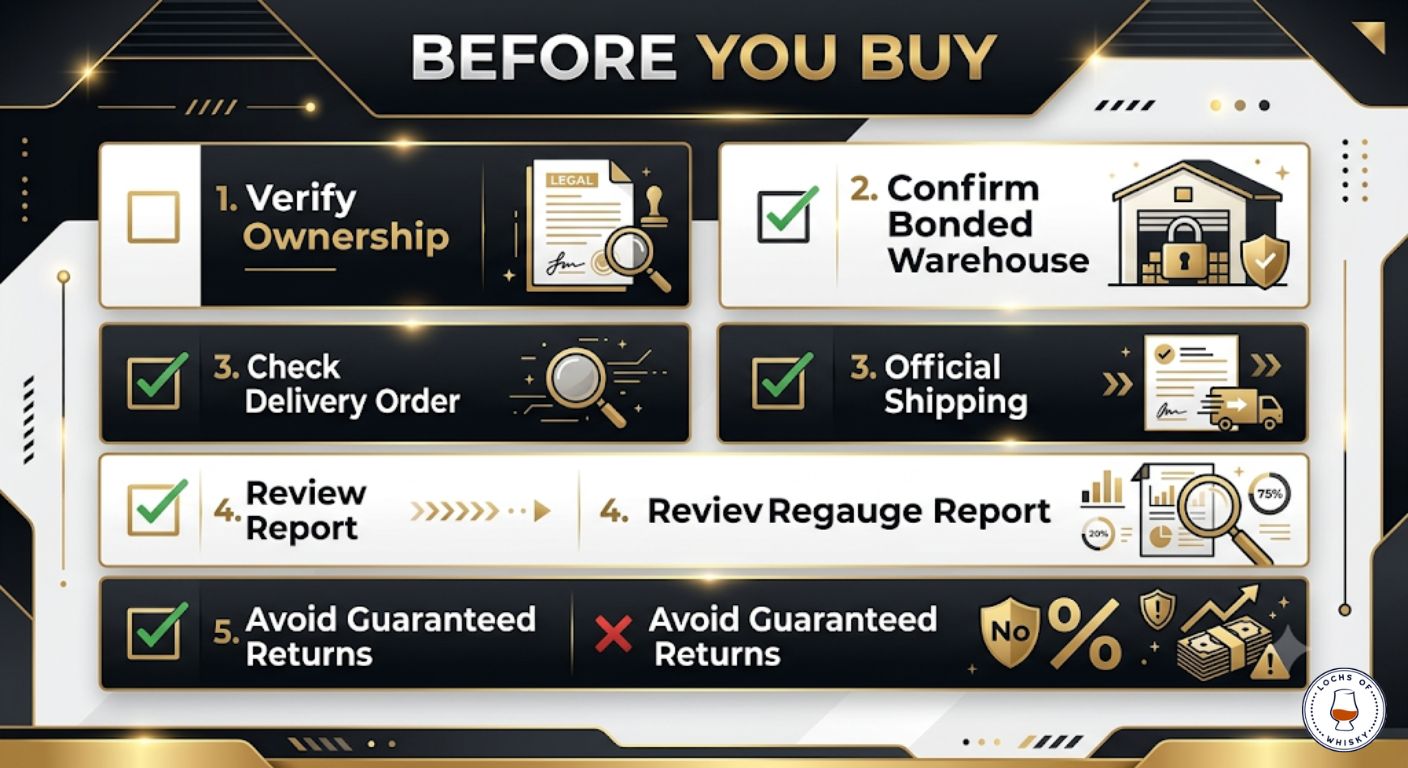
Avoid sellers that promise fixed annual returns, create pressure to buy immediately or refuse to identify the bonded warehouse. Promotional projections should never be treated as guaranteed outcomes.
What documents do you need to own a whisky cask?
You need documentation that identifies the exact cask and allows the bonded warehouse to recognise your ownership. A seller-issued certificate is not enough by itself. Confirm the cask number, storage location and ownership status independently with the warehouse before transferring funds.
- Delivery Order: The primary legal document instructing the warehouse to transfer the cask into the buyer’s name.
- Warehouse confirmation: Independent confirmation that the cask exists and is recorded against the correct owner.
- Regauge report: A current record of bulk litres, alcohol strength and litres of pure alcohol.
- Storage agreement: Written terms covering fees, insurance, access, samples and future transfers.
- Purchase invoice: A detailed invoice naming the distillery, cask number, fill date, cask type and purchase price.
The cask number should match across every document. Verify that the warehouse is an HMRC-approved facility and contact it through independently obtained details rather than relying only on contact information supplied by the broker.
Check the Cask’s Volume and Alcohol Strength
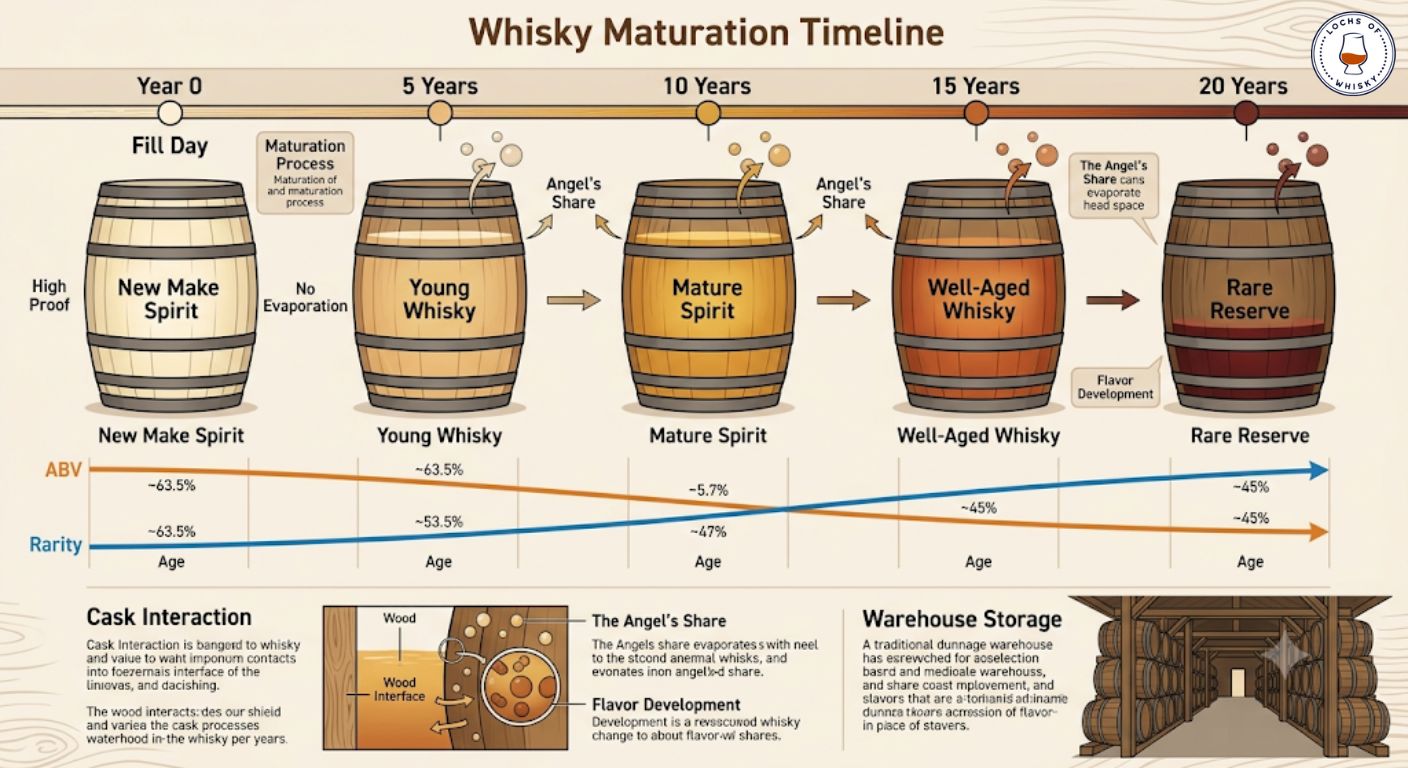
Whisky evaporates while it matures. This natural loss is known as the angel’s share and is often estimated at around 2% per year, although the actual rate varies according to warehouse conditions, cask size, climate and age.
A regauge should show:
- Bulk litres of liquid remaining
- Alcohol by volume
- Litres of pure alcohol or regauged litres of alcohol
- The date of measurement
Both volume and ABV influence the number of bottles a cask may eventually produce. Scotch whisky must be bottled at a minimum strength of 40% ABV. A cask approaching that threshold may have a limited remaining maturation period, regardless of how attractive its age appears.
Is Whisky Investment Tax Free in the UK?
Maturing whisky casks are often treated as wasting chattels because natural evaporation gives them a predictable useful life of no more than 50 years. Gains made by an individual may therefore be exempt from Capital Gains Tax, but the treatment depends on ownership, activity and personal circumstances.
The HMRC Capital Gains Manual on wines and spirits explains the relevant wasting-asset rules. The exemption should not be interpreted as meaning that every whisky transaction is tax-free. Frequent buying and selling may be treated as trading activity, while VAT, excise duty and other charges may apply when a cask is bottled or removed from bond.
Obtain advice from a qualified UK tax professional before relying on a particular tax treatment.
Plan the Exit Before You Buy
An investment return is not realised until the asset is sold. Before purchasing, identify who might buy it, how the sale would take place and what fees would be deducted.
Common bottle exit routes include specialist auctions, private sales and sales through established whisky businesses. Casks may be sold to another private owner, a broker, an independent bottler or, in some cases, a trade buyer. A distillery is not obliged to repurchase a privately held cask.
Ask these questions before buying:
- Is there evidence of previous sales for comparable bottles or casks?
- Does the seller provide an independent resale route?
- What commission, transfer or warehouse charges apply?
- How long might a sale reasonably take?
- Can ownership be transferred without using the original broker?
Avoid any arrangement where the only proposed buyer is the company selling the investment. That creates dependency on the seller’s future solvency and willingness to repurchase the asset.
Who Whisky Investment Suits
Whisky investment may suit buyers who understand collectible spirits, can tolerate an uncertain holding period and are prepared to research individual assets. It is better suited to patient buyers than anyone seeking predictable income or rapid access to their money.
It may make sense when:
- You can verify provenance and legal ownership.
- You understand the total storage and selling costs.
- You can hold the asset for several years.
- You are spreading risk rather than relying on one bottle or cask.
- You have identified a realistic exit route.
Avoid it when:
- The seller guarantees returns or uses pressure tactics.
- The warehouse will not confirm the cask independently.
- Ownership depends only on a broker-issued certificate.
- You may need the capital at short notice.
- You do not understand how the asset will eventually be sold.
Frequently Asked Questions
How much money do you need to start investing in whisky?
Bottle investment can begin with several hundred pounds, although a broader portfolio may require £1,000–£3,000. Whole casks usually require a substantially larger commitment once storage, insurance and future selling costs are included. The budget should be based on affordable risk, not the minimum price advertised by a seller.
How can you verify that a whisky cask is real?
Obtain the unique cask number, distillery name, fill date, cask type and warehouse location. Contact the bonded warehouse independently and ask it to confirm that the cask exists and is recorded in the correct owner’s name. Check that these details match the Delivery Order, regauge report and invoice.
Can whisky casks lose value?
Yes. A cask can lose value because of weaker market demand, excessive purchase mark-ups, falling ABV, low remaining volume, poor maturation or difficulty finding a buyer. Storage and transaction charges can also turn an apparent paper gain into a realised loss.
Are whisky bottles easier to sell than casks?
Established bottles are generally easier to price and sell because auction records provide visible comparisons. Casks have fewer public transactions and require warehouse transfers, specialist buyers and more detailed documentation. However, obscure or overpriced bottles can also remain unsold for long periods.
How often should a whisky investment be reviewed?
Review bottles at least annually for condition, insurance value and relevant market activity. Casks should also be checked through warehouse statements and periodic regauging. Daily price monitoring is rarely useful because whisky is normally a long-term, relatively illiquid asset.
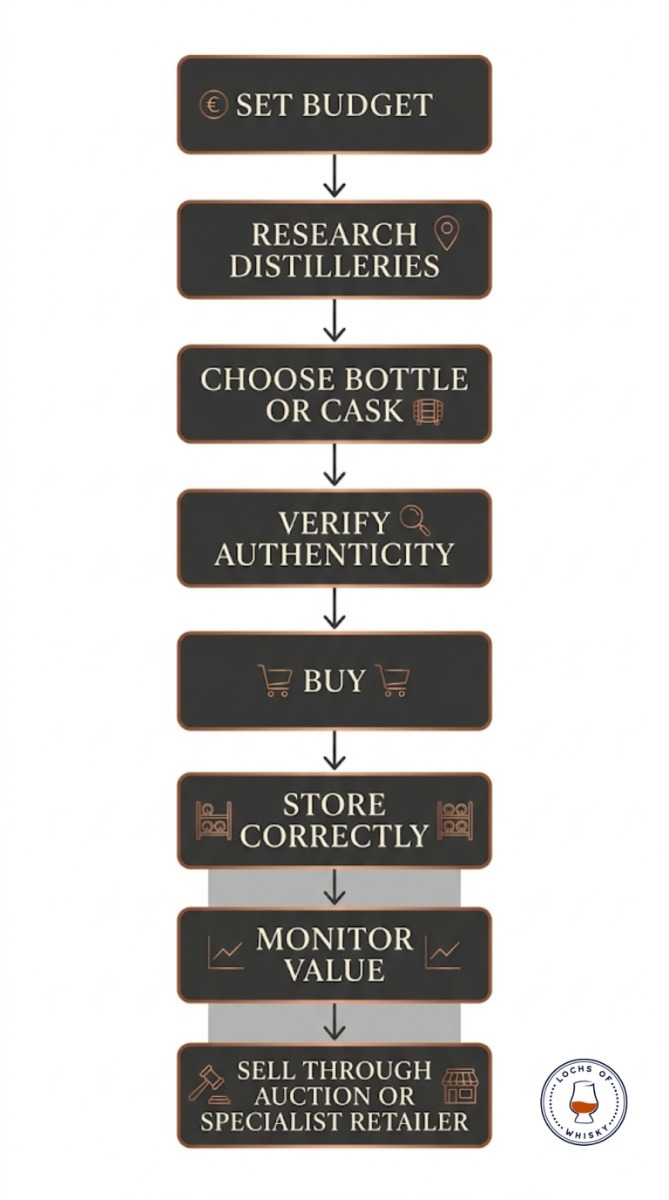
Starting With a Controlled Whisky Investment Strategy
Start by choosing bottles or casks that you can explain clearly: what they are, why demand may exist, how ownership is proven and who could eventually buy them. Do not rely on age, scarcity or a famous distillery name without supporting market evidence.
For bottle-led research, compare releases by distillery, bottler, age, condition and provenance. Our directory of Scotch whisky distilleries provides a structured starting point for examining the producers behind collectible and specialist bottlings.


Comments