
 Chat with us on WhatsApp

The Best Whisky Decanters: Style, Function & Worth The Investment
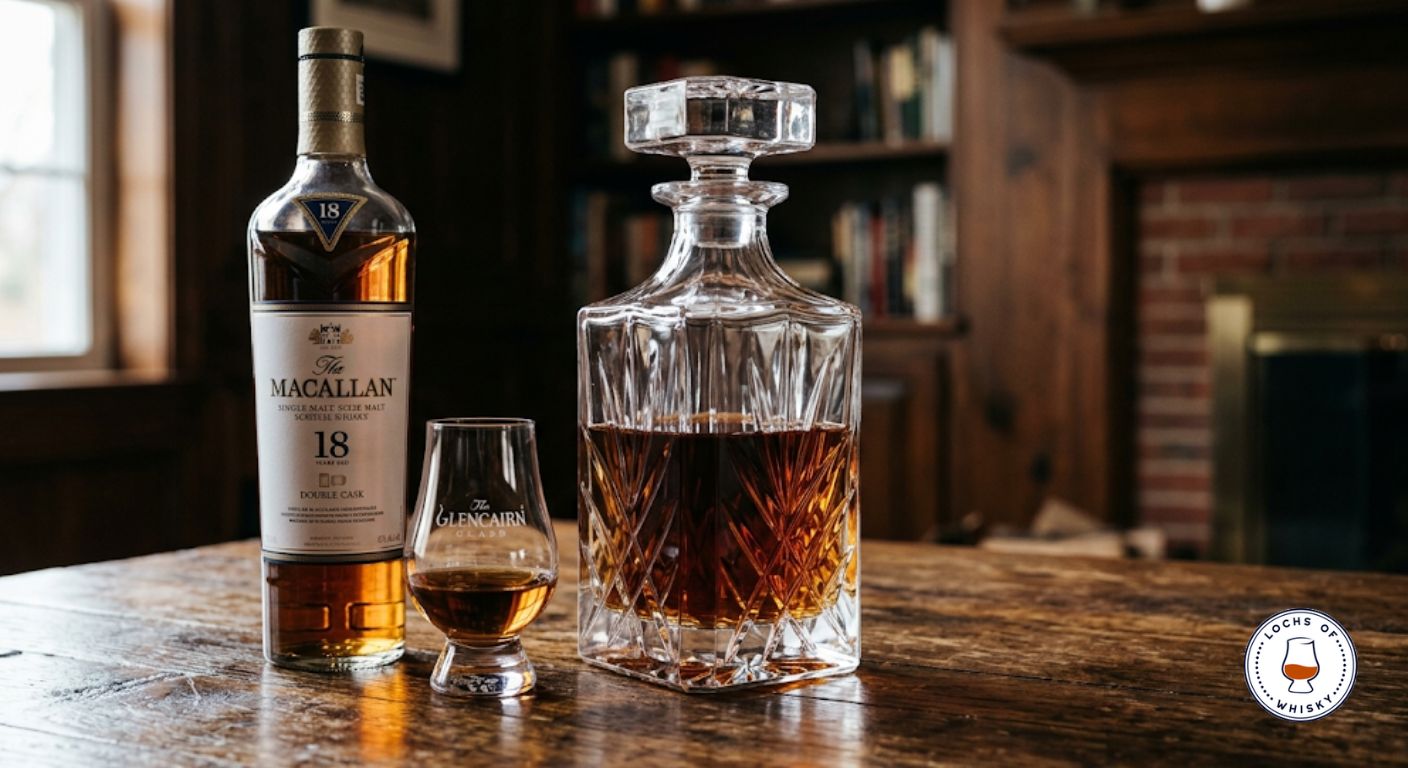
A whisky decanter is a stoppered glass or crystal vessel used to present and serve whisky outside its original bottle. Unlike a wine decanter, it is not designed to expose the spirit to large amounts of oxygen. Its main purposes are presentation, controlled serving and, in some cases, creating an unlabelled vessel for tastings or house blends.
A well-made decanter can be a useful addition to a home bar, but appearance should not take priority over material safety or the quality of the seal. Anyone considering one should focus on lead-free construction, sufficient capacity and a stopper that limits evaporation. Decanters and related serving pieces can be explored within our whisky memorabilia and gifts collection.
Does A Whisky Decanter Improve The Taste?
A whisky decanter does not normally improve flavour in the way a wine decanter can. Whisky is already a mature, stable spirit, usually bottled at 40% ABV or above. Brief exposure to air may release some volatile aromas, but extended aeration is unnecessary and can gradually reduce aromatic intensity rather than improve it.
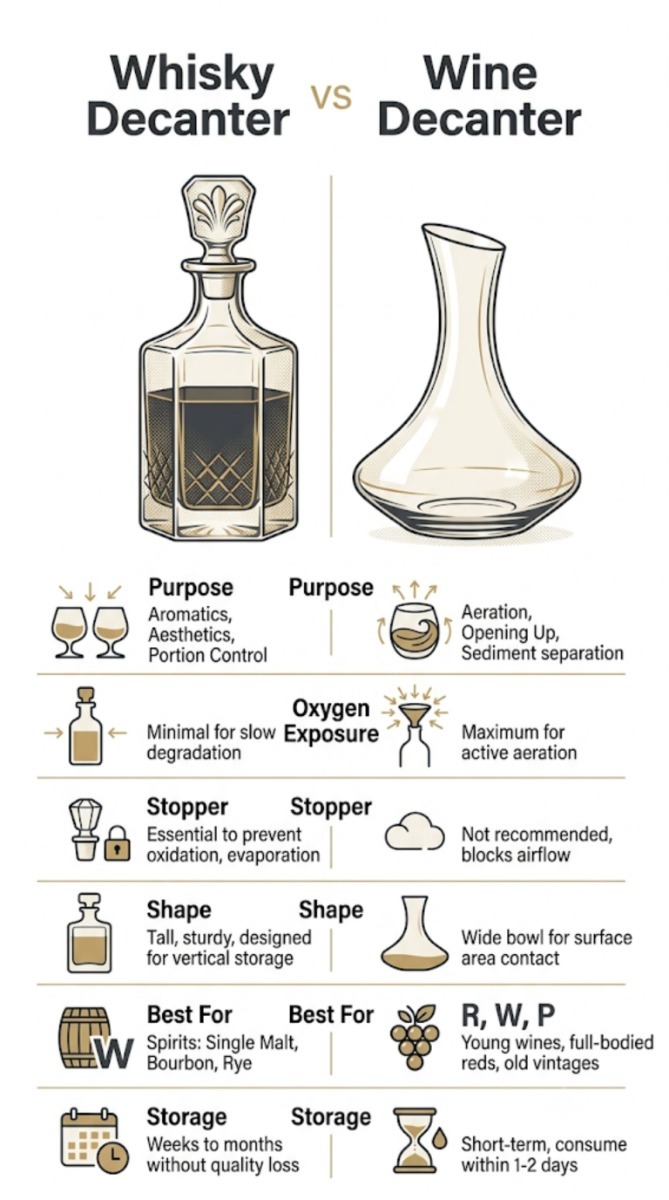
Wine decanters use a broad base to increase the liquid’s contact with oxygen. This can soften tannins, separate sediment and help a young wine open up. Whisky decanters have a different job. They usually have a narrower body and a fitted stopper intended to preserve the spirit rather than aerate it.
| Feature | Whisky Decanter | Wine Decanter |
|---|---|---|
| Primary purpose | Presentation and controlled serving | Aeration and sediment separation |
| Stopper | Important for limiting evaporation | Usually unnecessary during serving |
| Oxygen exposure | Kept relatively low | Deliberately increased |
| Typical shape | Compact body with a narrower opening | Wide base with a broad exposed surface |
The drinking vessel will usually have more influence on how a whisky presents its aromas than the decanter itself. Our guide to whisky glass shapes and their uses explains how bowl size, rim shape and glass design affect nosing and drinking.
What Makes A Good Whisky Decanter?
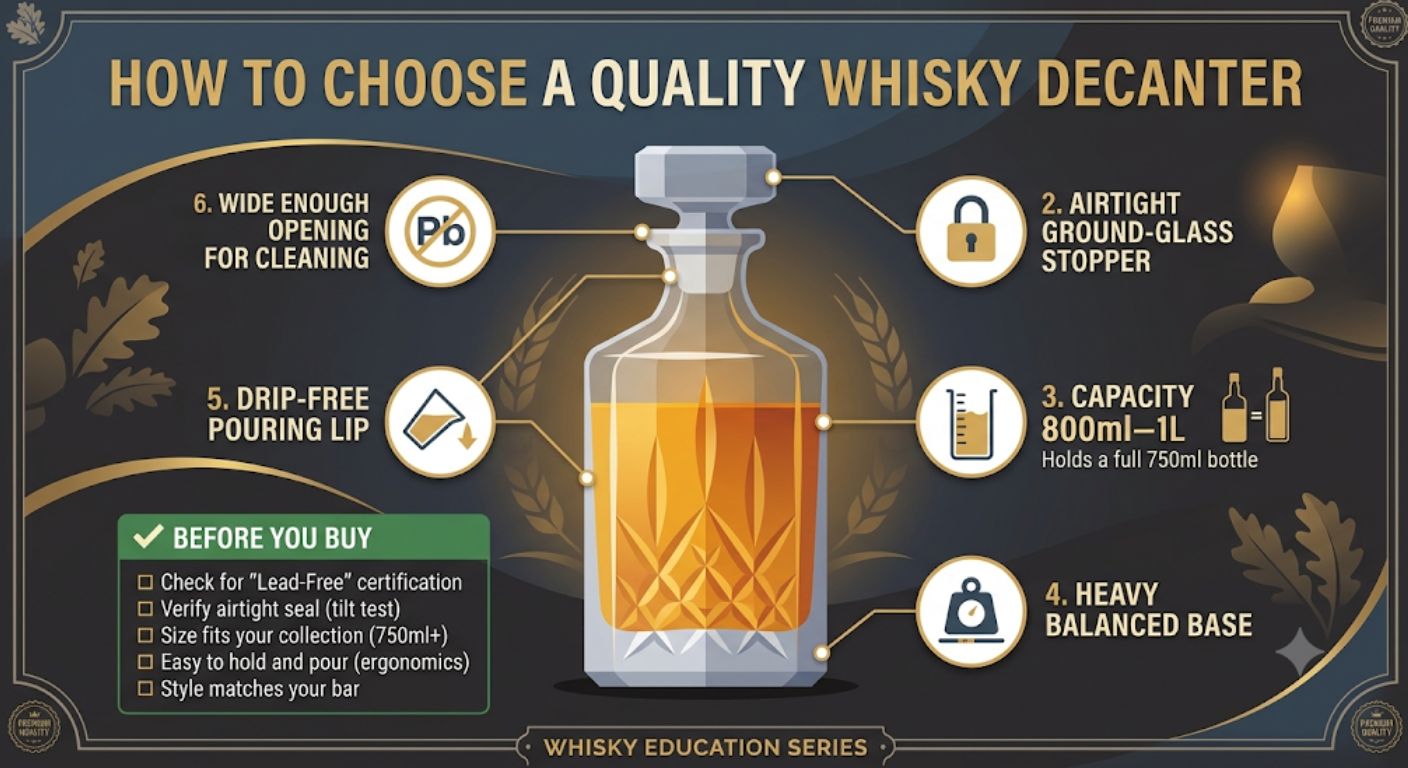
A good whisky decanter should be made from verified lead-free material, hold at least one standard bottle and close with a secure stopper. It should also pour cleanly without dripping. Decorative cutting and extra weight can improve appearance, but neither compensates for poor material information or an unreliable seal.
Lead-Free Glass Or Crystal
Modern lead-free crystal offers much of the clarity, brilliance and weight associated with traditional crystal without using lead oxide. Manufacturers may instead use compounds containing zinc, barium, potassium or magnesium to alter the glass’s optical and physical properties.
Product descriptions should explicitly state that the vessel is lead-free. Terms such as “premium crystal”, “crystalline” or “cut crystal” do not automatically confirm its composition. If the manufacturer does not disclose the material clearly, it is safer to choose another decanter.
A Secure, Precisely Fitted Stopper
The stopper is the most important functional part of the decanter. Ground glass-on-glass stoppers can provide a close traditional fit, while silicone or polymer seals may offer equally effective closure in modern designs.
A stopper does not need to create a laboratory-grade vacuum, but it should sit evenly without rocking or leaving a visible gap. A poor fit allows alcohol and aromatic compounds to escape over time. This can lower the spirit’s strength and leave it tasting flatter.
One issue our customers often notice only after filling a decanter is that a decorative stopper can feel substantial while still fitting poorly; the seal matters more than the weight of the stopper.
Enough Capacity For A Full Bottle
A practical decanter should hold at least 750ml, although a capacity of around 800ml to one litre is preferable. The extra space allows a standard 700ml UK bottle to be transferred without filling the vessel up to the neck.
Do not assume that a large-looking decanter has a large capacity. Thick walls, a heavy base and deep external cutting can reduce the internal volume considerably. Check the stated capacity before buying.
Weight, Balance And Pouring Control
Heavier glass often feels more substantial and may indicate thicker walls or a reinforced base. Weight alone is not proof of quality, however. A useful decanter should remain comfortable to lift, balanced when full and easy to control during pouring.
Look for a defined lip that directs the whisky cleanly into the glass. A vessel that drips down its side after every pour is poorly designed, regardless of how decorative it appears.
Is It Safe To Store Whisky In Lead Crystal?
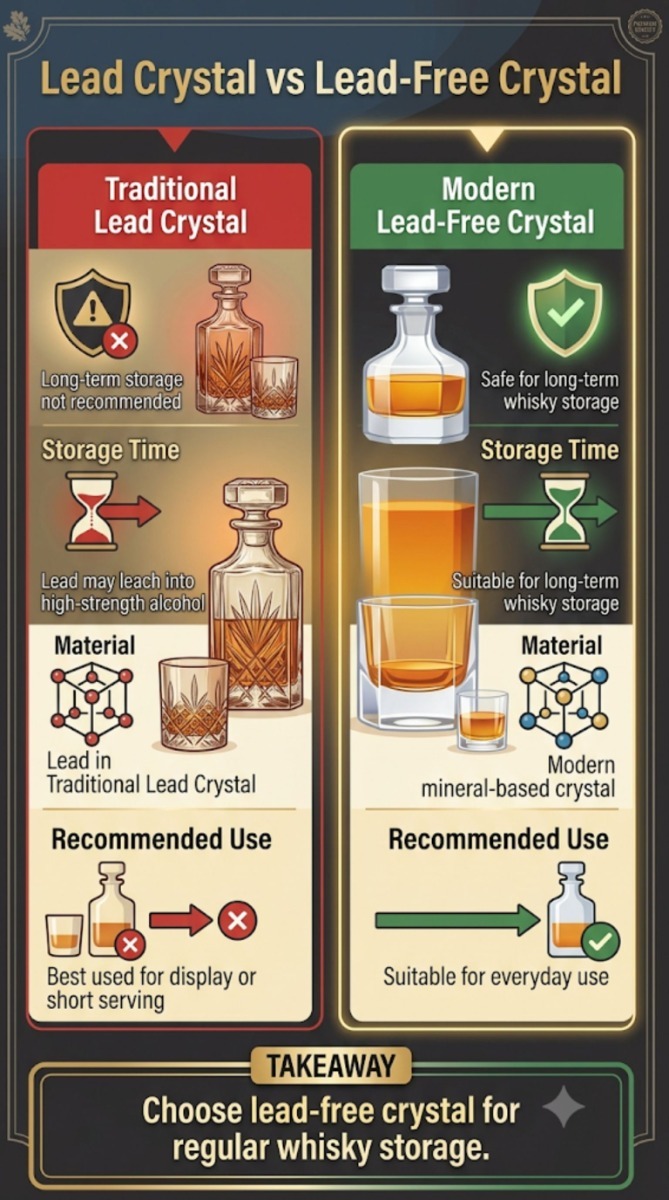
No. Whisky should not be stored long term in a lead crystal decanter. Alcohol can draw lead from traditional crystal into the liquid, and the amount transferred can increase with contact time. Vintage lead crystal is better treated as display ware or used briefly for serving rather than as permanent storage.
Health Canada’s guidance on lead crystalware states that the risk of lead transfer increases when food or drink remains in lead crystal for longer periods. It recommends limiting contact time and avoiding lead crystalware for children and pregnant women.
A vintage decanter should not be assumed safe because it appears undamaged. Clear glass, a ringing sound and substantial weight can all suggest crystal, but they cannot reliably confirm whether it contains lead. Manufacturer markings, original packaging or a documented product specification are stronger evidence.
- Verified lead-free glass: suitable for normal use when clean and properly sealed.
- Verified lead-free crystal: suitable for serving and storage, subject to stopper quality.
- Known lead crystal: avoid using for extended storage.
- Unknown vintage crystal: treat as decorative unless its composition can be confirmed.
How Long Can Whisky Stay In A Decanter?
Whisky can remain in a verified lead-free decanter for several weeks or months if the stopper seals properly and the vessel is kept away from heat and direct sunlight. For longer-term preservation, however, the original bottle is normally the safer choice because its closure and storage suitability are easier to assess.
The amount of air inside the vessel also matters. A nearly full, well-sealed decanter changes slowly. A half-empty decanter contains more oxygen and may lose aromatic intensity sooner, particularly if it is opened frequently.
Valuable, discontinued or collectible bottles should generally remain in their original packaging. Transferring them removes the label, fill-level reference and provenance that help identify the whisky. This is particularly relevant to older and limited-release Scotch whisky, where the original bottle is an important part of the product’s context.
When A Whisky Decanter Makes Sense
A decanter is most useful when presentation and serving matter more than preserving the original packaging. It can work well for a regularly poured house whisky, an informal blind tasting or a carefully managed blend made from small amounts of different bottles.
It may suit:
- A home bar where the same whisky is served regularly.
- Blind tastings where labels could influence expectations.
- A lead-free, clearly labelled gift for an established whisky drinker.
- A house blend or infinity bottle with accurate notes kept separately.
- Short-term table service during a dinner or tasting.
A decanter is less suitable for:
- Long-term storage of high-value whisky.
- Collectible bottles whose original presentation matters.
- Whisky that will take several years to finish.
- Vintage crystal with unknown material composition.
- Any vessel with a loose, chipped or mismatched stopper.
How To Make A Loose Whisky Decanter Stopper More Airtight
A loose stopper can sometimes be improved with a thin food-safe barrier, but this should be considered a temporary measure. A precisely matched replacement stopper or a new decanter is more reliable. Avoid forcing an oversized stopper, as pressure against the neck can crack the vessel.
- Use a food-grade silicone O-ring: fit a thin ring around the stopper where it meets the neck, ensuring it does not contact the whisky.
- Apply PTFE tape carefully: wrap a small amount around the stopper stem to reduce movement, keeping the tape above the liquid line.
- Use foil as a short-term test: a narrow strip can confirm whether the gap is causing evaporation, but it is not a suitable permanent repair.
- Replace mismatched components: stoppers are not universally sized, so use one made for the exact neck dimensions.
How To Clean A Whisky Decanter
Rinse the decanter with warm water soon after use and avoid strongly scented detergents. For residue at the base, use stainless-steel cleaning beads or a flexible bottle brush. Rinse thoroughly and allow the vessel to dry completely before replacing the stopper, as trapped moisture can create stale or musty odours.
- Empty the decanter and rinse it several times with warm water.
- Add cleaning beads with a small amount of water if residue remains.
- Rotate the vessel gently rather than shaking it aggressively.
- Rinse until no residue or cleaning smell remains.
- Leave the decanter upside down or angled on a drying rack.
- Replace the stopper only when the inside is fully dry.
If a stopper becomes stuck, place a warm, damp cloth around the neck for several minutes and twist gently. Do not strike the stopper or apply sudden force. Glass-on-glass fittings can chip, and small fragments may fall into the vessel.
-
-
-
-
-
-
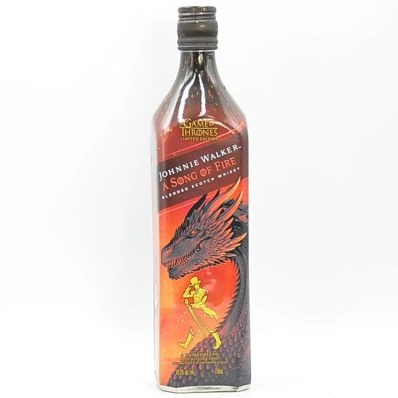 Game of Thrones Whisky Johnnie Walker A Song Of FireSpecial Price £139.98 Regular Price £144.99 Inc VATSaving £5.01
 -
-
-
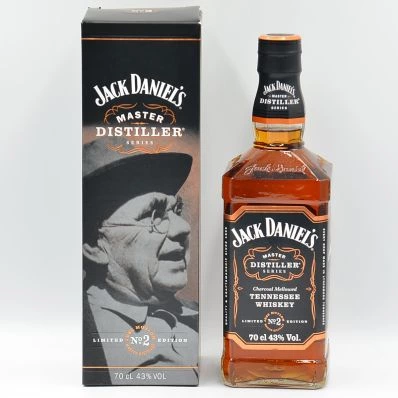 Jack Daniel's - Master Distiller Batch 2 Jess Motlow Limited Edition Bourbon Whiskey£164.99 Inc VATOut of stock
 -
-
Frequently Asked Questions
How Can You Tell If A Decanter Is Lead-Free?
Check the manufacturer’s label, packaging or product specification for an explicit lead-free statement. Weight, clarity, rainbow refraction and a ringing sound can suggest crystal, but they cannot prove its composition. If the material is unknown, particularly with a vintage piece, do not use it for long-term whisky storage.
Is Crystal Better Than Glass For A Whisky Decanter?
Lead-free crystal can offer greater brilliance, decorative cutting and a heavier feel, but standard glass can preserve whisky equally well. The better choice is the vessel with clearly documented materials, adequate capacity, a balanced pour and a secure stopper. Crystal is mainly a presentation preference rather than a functional requirement.
Can You Put Bourbon Or Irish Whiskey In A Whisky Decanter?
Yes. A lead-free decanter can hold Bourbon, rye, Irish whiskey, Scotch or another spirit. The same storage rules apply: use a secure stopper, avoid heat and sunlight, and keep collectible bottles in their original packaging. The spelling of whisky or whiskey does not affect the type of decanter required.
Will A Decanter Improve An Inexpensive Whisky?
No. Moving whisky into another vessel does not change its maturation, cask influence or underlying quality. A decanter may alter how the drink is presented and may briefly release some aroma when poured, but it cannot correct imbalance, harshness or weak flavour in the original whisky.
Do Whisky Decanters Make Good Gifts?
They can, provided the recipient regularly drinks whisky and the product is clearly lead-free. The most dependable choices combine an 800ml or larger capacity, a precisely fitted stopper, balanced weight and protective packaging. Avoid novelty shapes that sacrifice pouring control, cleaning access or an effective seal.
Are Whisky Decanters Worth The Investment?
A whisky decanter is worth buying when it will be used for regular serving, controlled tastings or thoughtful presentation. It is not an essential tool for improving flavour, and it should not replace the original bottle for long-term storage of valuable whisky.
The strongest choice is a lead-free vessel with enough capacity for a full bottle, a reliable stopper and a clean pouring lip. Decorative detail is secondary. Used within those limits, a decanter can be a practical serving piece rather than an unnecessary ornament.


Comments