
 Chat with us on WhatsApp


Irish Whiskey vs Scotch Whisky: What's The Difference?
Irish whiskey and Scotch whisky are both protected styles, but they differ in origin, spelling, grain recipe, distillation habits and flavour profile. Irish whiskey is made in Ireland and often leans lighter, softer and more approachable. Scotch whisky is made in Scotland and ranges from gentle and fruity to smoky, coastal and heavily peated.
For drinkers comparing Irish Whiskey with Scotch, the useful question is not which is better. It is which style suits your palate, budget and drinking occasion.
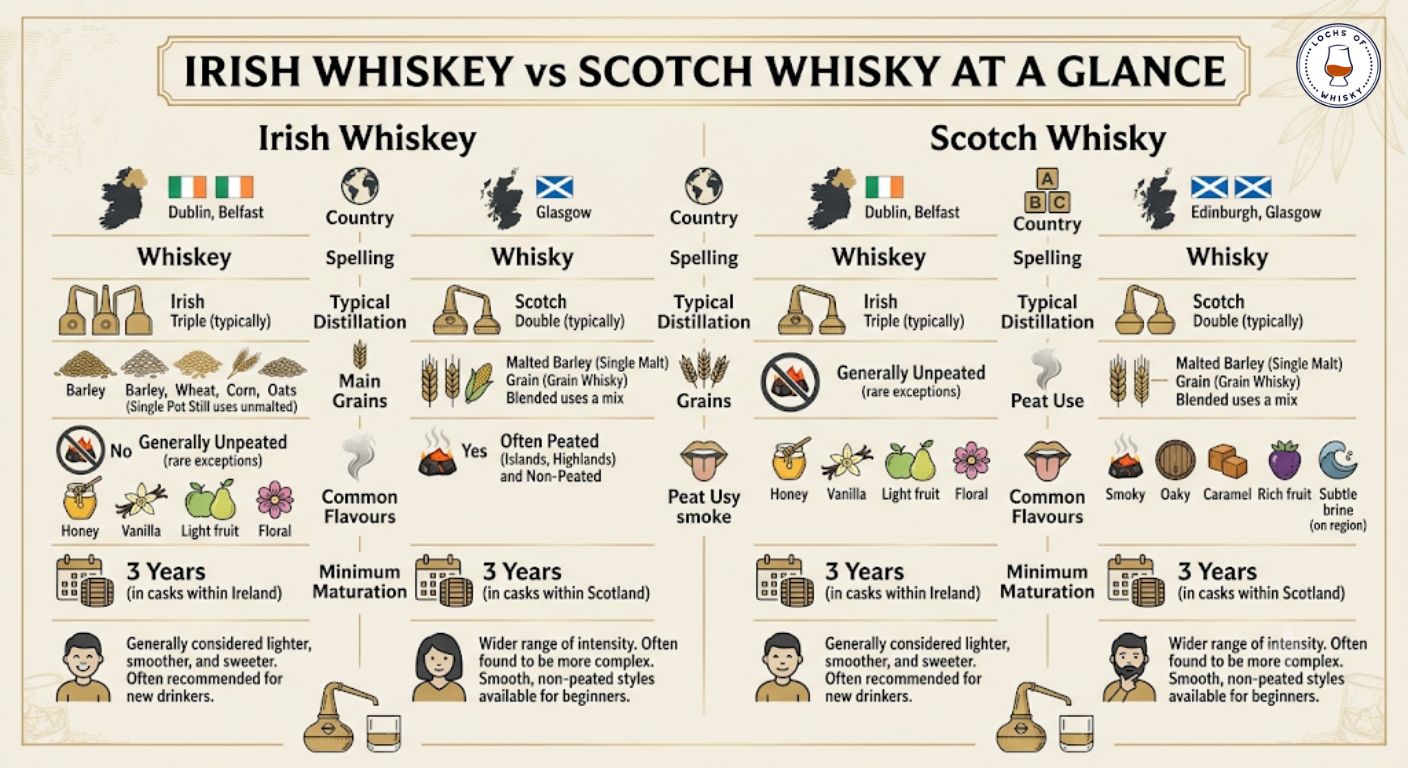
Irish Whiskey Or Scotch Whisky: The Quick Comparison
| Point of difference | Irish whiskey | Scotch whisky |
|---|---|---|
| Country | Made in Ireland | Made in Scotland |
| Spelling | Usually “whiskey” | Usually “whisky” |
| Typical distillation | Often triple distilled | Often double distilled |
| Common character | Light, smooth, cereal-led, honeyed | Wide range: fruity, malty, coastal, smoky or rich |
| Peat smoke | Usually little or none | Common in some regions and styles, but not universal |
| Legal minimum maturation | At least 3 years | At least 3 years |
| Minimum bottling strength | 40% ABV | 40% ABV |
Why Is Irish Whiskey Spelled With An “E”?
Irish whiskey is usually spelled with an “e”, while Scotch whisky is usually spelled without one. The difference became more common in the 19th century, when Irish distillers used the spelling to distinguish their whiskey from Scotch in export markets.
The spelling is useful, but it is not the whole story. Production rules, distillery tradition, grains, stills, casks and regional identity matter more than the extra letter. A serious comparison needs to look at how each spirit is made.
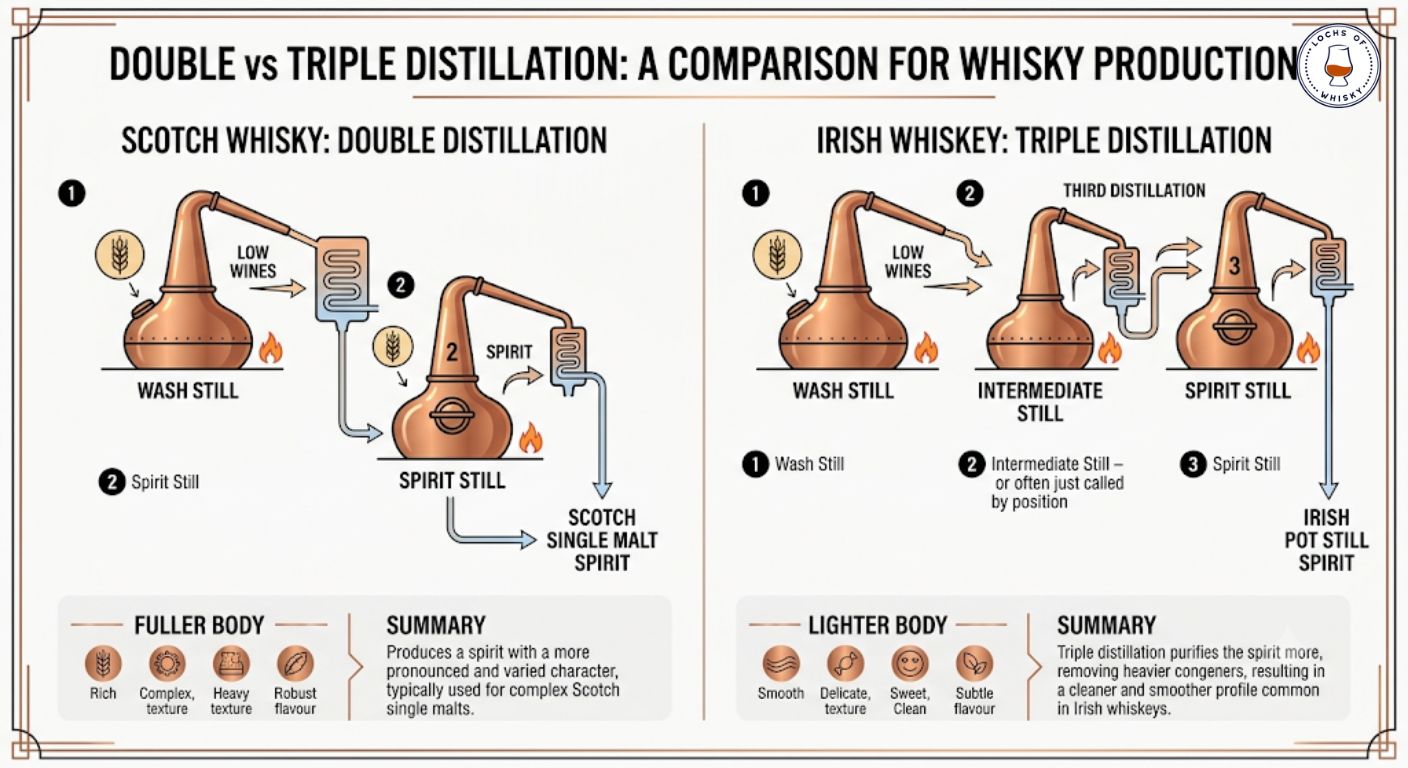
Distillation: Is Irish Whiskey Smoother Than Scotch?
Irish whiskey is often described as smoother because many well-known Irish whiskeys are triple distilled. That third distillation can create a lighter spirit with fewer heavy congeners, giving a cleaner texture and softer finish.
Scotch is commonly double distilled, especially single malt Scotch. This can leave more weight, oiliness and texture in the spirit. That does not make Scotch rougher by default. It simply means Scotch often carries more distillery character, especially in malt-led styles.
Most people comparing the two for the first time notice texture before detail: Irish whiskey often feels easier at first sip, while Scotch can feel broader, deeper or more assertive depending on the region and cask.
Grain Recipe: Malted Barley, Unmalted Barley And Style
Scotch single malt whisky is made from malted barley at one distillery. Irish whiskey has a broader set of traditional styles, including single malt, grain whiskey, blended Irish whiskey and single pot still whiskey.
Single pot still is especially important because it uses both malted and unmalted barley. That gives many Irish whiskeys a distinctive texture: creamy, spicy, cereal-led and sometimes slightly oily.
The use of unmalted barley is often linked to historical taxation on malted barley. Irish distillers adapted, and the result became one of Ireland’s defining whiskey styles rather than a compromise.
Peat And Smoke: Is All Scotch Smoky?
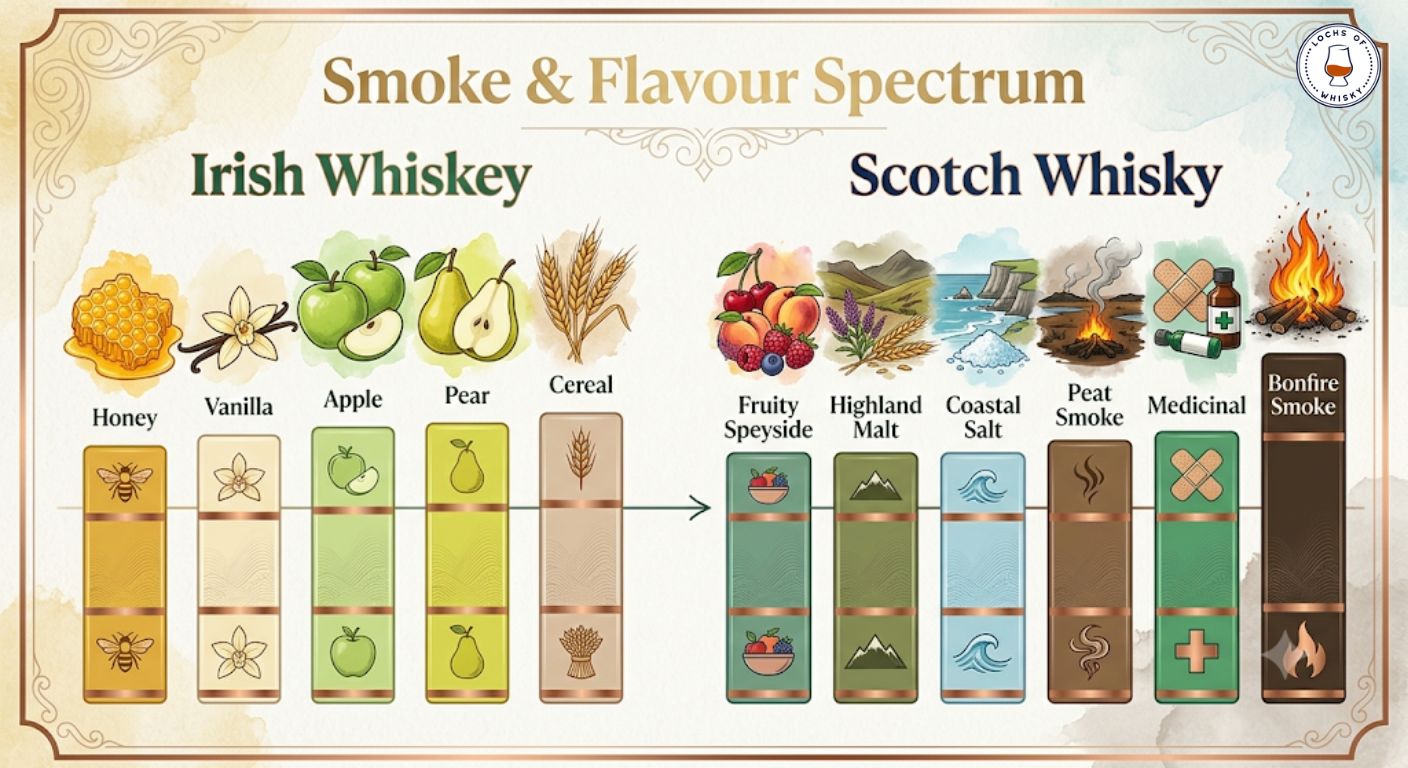
No, not all Scotch whisky is smoky. Peat is strongly associated with Scotch, especially Islay and some coastal malts, but many Scotch whiskies are unpeated, fruity, honeyed or sherry-led. Irish whiskey is usually less smoky, though peated Irish whiskey does exist.
Peat smoke comes from drying malted barley over peat fires. This can create flavours people describe as smoke, ash, iodine, brine or medicinal notes. Scotch gives the drinker more exposure to this range, while Irish whiskey usually keeps closer to clean cereal, fruit and vanilla notes.
For readers moving from Irish whiskey into Scotch Whisky, peat is the main point to check before buying. We find our customers rarely regret choosing a lighter bottle first, but they often regret buying heavily peated Scotch before knowing whether they actually enjoy smoke.
Cask Maturation And Ageing
Both Irish whiskey and Scotch whisky must be matured for at least three years in wooden casks and bottled at a minimum of 40% ABV. The cask can have a major effect on flavour, sometimes more obvious than the country of origin.
Ex-bourbon casks often bring vanilla, coconut, honey and light oak. Sherry casks can add dried fruit, spice, chocolate and richer texture. Port, wine and rum casks may add sweetness or fruit concentration, depending on how they are used.
Official technical standards for Scotch are set out by the UK Government Scotch Whisky technical file, including production, maturation and bottling requirements.
Distillery Examples: Paddy And Waterford
Irish whiskey is not one single flavour. A lighter blended Irish whiskey such as Paddy sits in a very different place from a modern, terroir-led producer such as Waterford.
Paddy represents the approachable, easy-drinking side of Irish whiskey. Waterford is more focused on barley provenance, farm origin and detailed production transparency. Both are Irish, but they speak to different types of drinker.
Which Should Beginners Choose?
Irish whiskey usually makes more sense for beginners who want a softer, less smoky introduction. Scotch is better for drinkers who want more variation, stronger regional identity and a wider spread of flavour styles.
Choose Irish whiskey if you prefer:
- a lighter texture
- less smoke
- vanilla, honey, orchard fruit and cereal notes
- easy sipping or mixing
Choose Scotch whisky if you prefer:
- more regional variation
- malt-driven flavour
- sherry cask richness
- coastal, smoky or peated styles
FAQ
What's The Difference Between Irish Whiskey And Scotch?
Irish whiskey is made in Ireland and is often triple distilled, giving many bottles a lighter and smoother profile. Scotch whisky is made in Scotland and is often double distilled, with a broader range of regional styles, including smoky, peated, fruity, malty and sherry-led examples.
Does Triple Distillation Make Whiskey Smoother?
Triple distillation can make whiskey feel lighter and cleaner because the spirit is refined through an extra distillation run. It does not automatically make it better. Some drinkers prefer that smoothness, while others prefer the heavier texture and fuller flavour often found in double-distilled Scotch.
Which Is Smokier, Scotch Or Irish Whiskey?
Scotch is usually smokier, especially when peat is used during malting. Irish whiskey is normally less smoky and more cereal-led, although peated Irish examples exist. The safest approach is to check the bottle style rather than assume all Scotch is smoky or all Irish whiskey is unpeated.
Is Irish Whiskey Better For Beginners?
Irish whiskey is often easier for beginners because many bottles are smooth, lightly sweet and low in smoke. Scotch may suit beginners too, but it helps to start with an approachable Speyside, Highland or Lowland style before moving into heavily peated whisky.
Final Takeaway
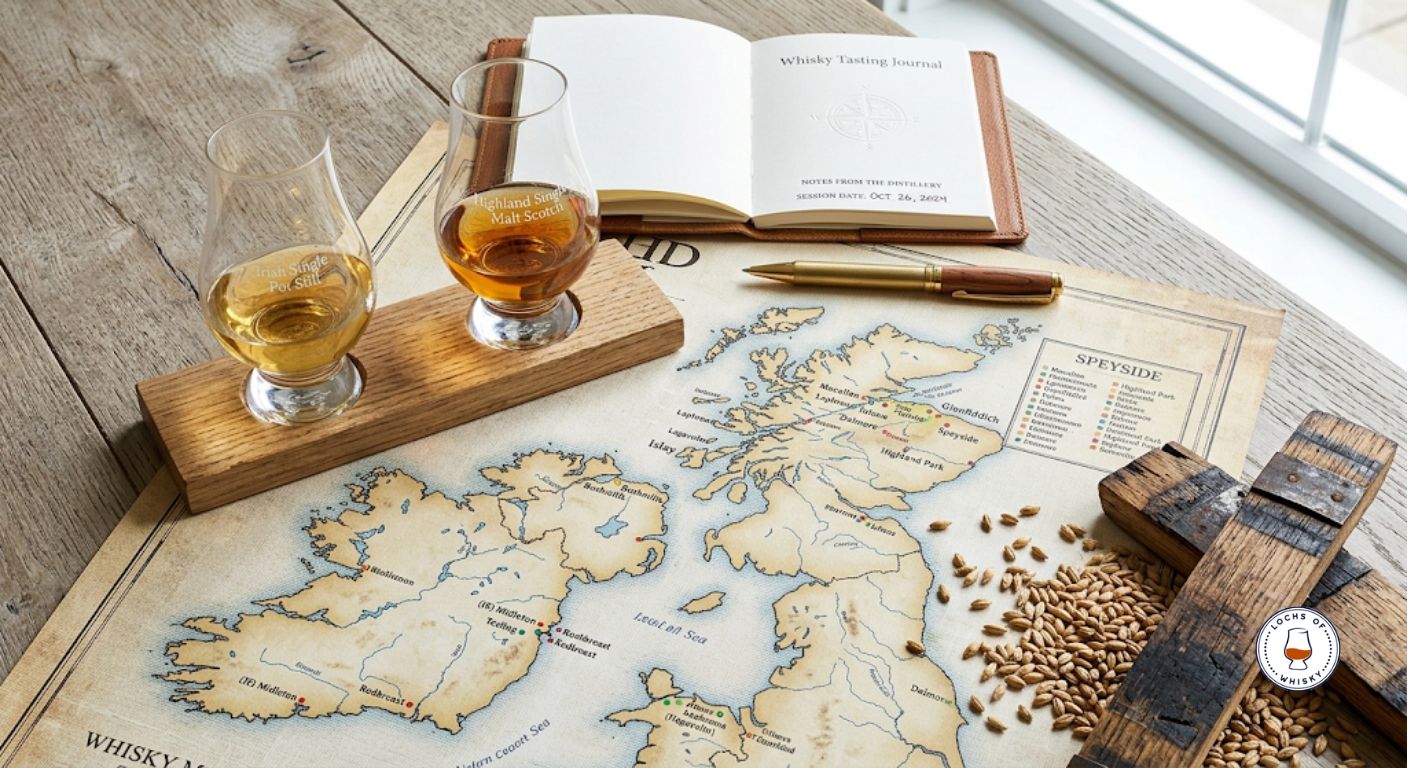
The key difference in Irish whiskey vs Scotch is not one single rule. It is the combined effect of country, spelling, grain recipe, distillation, peat use and cask maturation. Irish whiskey often feels lighter and smoother. Scotch whisky usually offers a wider spread of styles, from gentle and fruity to smoky and complex.
If you want to compare bottles directly, start with one approachable Irish whiskey and one lighter Scotch before moving into heavier cask strength or peated styles.

Related Products
-
-
-
 Bunnahabhain 11 Year Old Islay Whisky Rubha A' Mhail Feis Ile 2015Special Price £205.98 Regular Price £227.99 Inc VATSaving £22.01
 -
Comments