
 Chat with us on WhatsApp

Japanese Whisky Producers: Yamazaki, Hakushu, Hibiki & Beyond
Japanese whisky producers can be difficult to compare because the category includes historic distilleries, blended whisky houses, grain whisky specialists, new craft producers and brands that may not always meet the same production standards. For buyers, the key issue is not simply whether a bottle says “Japan” on the label. It is who made it, where it was distilled, how it was matured, and whether it qualifies as Japanese whisky under modern labelling standards.
This guide explains the main producers behind Japanese whisky, from Suntory and Nikka to newer distilleries such as Akkeshi and Chichibu. It also covers authenticity, Mizunara oak, scarcity, highballs, age statements and where each producer fits in the wider Japanese whisky landscape. For current bottles, you can browse the full Japanese Whisky selection at Lochs of Whisky.
What Counts As Japanese Whisky?
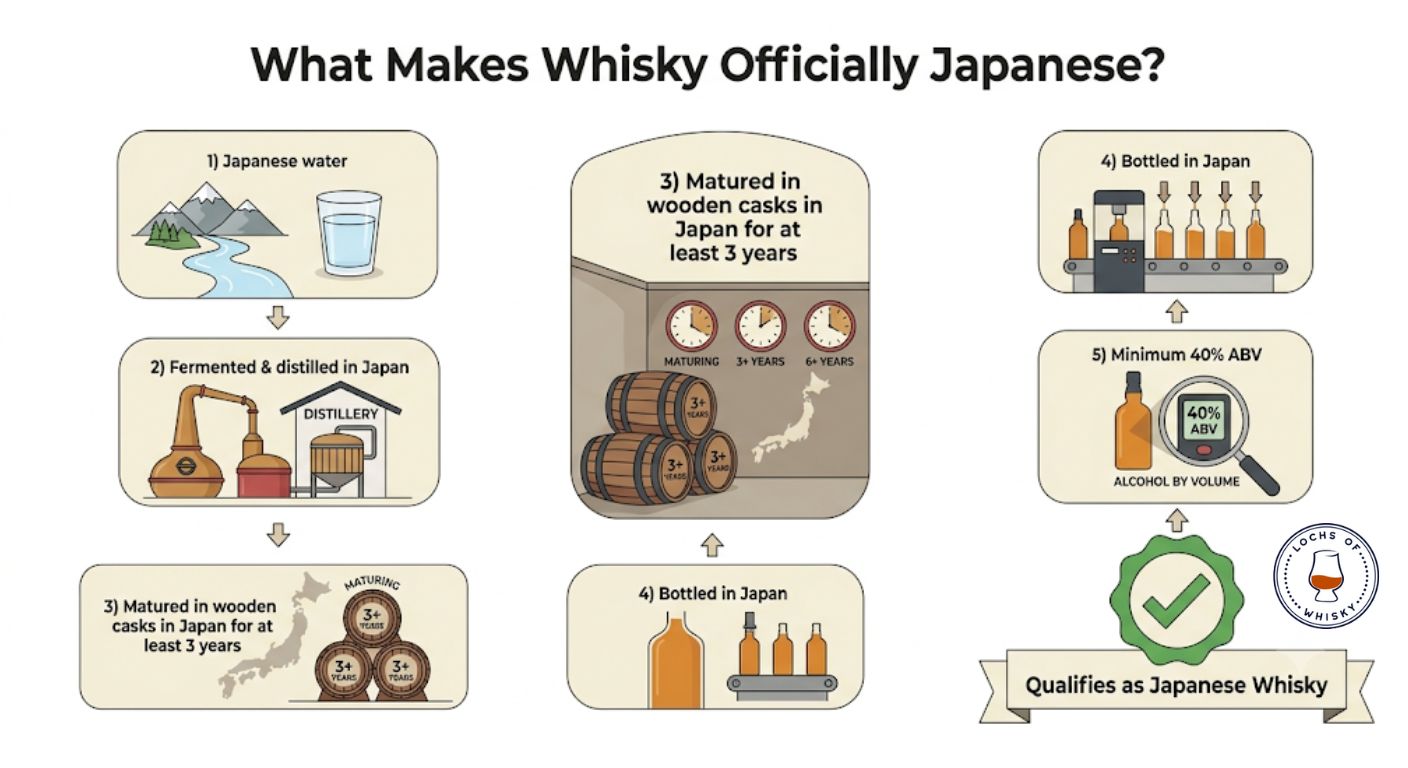
Japanese whisky is whisky made from cereal grains, produced using Japanese water, and fermented, distilled, matured and bottled in Japan. Under JSLMA standards, it must be matured in wooden casks in Japan for at least three years and bottled at a minimum strength of 40% ABV.
The distinction matters because older labelling practice allowed some products associated with Japan to include imported whisky. Some were blended, bottled or branded in Japan but not fully distilled and matured there. That does not automatically make them poor-quality drinks, but it does change what the buyer is actually purchasing.
The Japan Spirits & Liqueurs Makers Association introduced Standards for Labeling Japanese Whisky to clarify this issue. The standards came into effect in 2021, with a transition period ending in 2024. A compliant whisky must use water extracted in Japan, be saccharified, fermented and distilled at a Japanese distillery, matured in Japan for at least three years, bottled in Japan, and bottled at 40% ABV or above.
The Foundational Producers: Suntory And Nikka
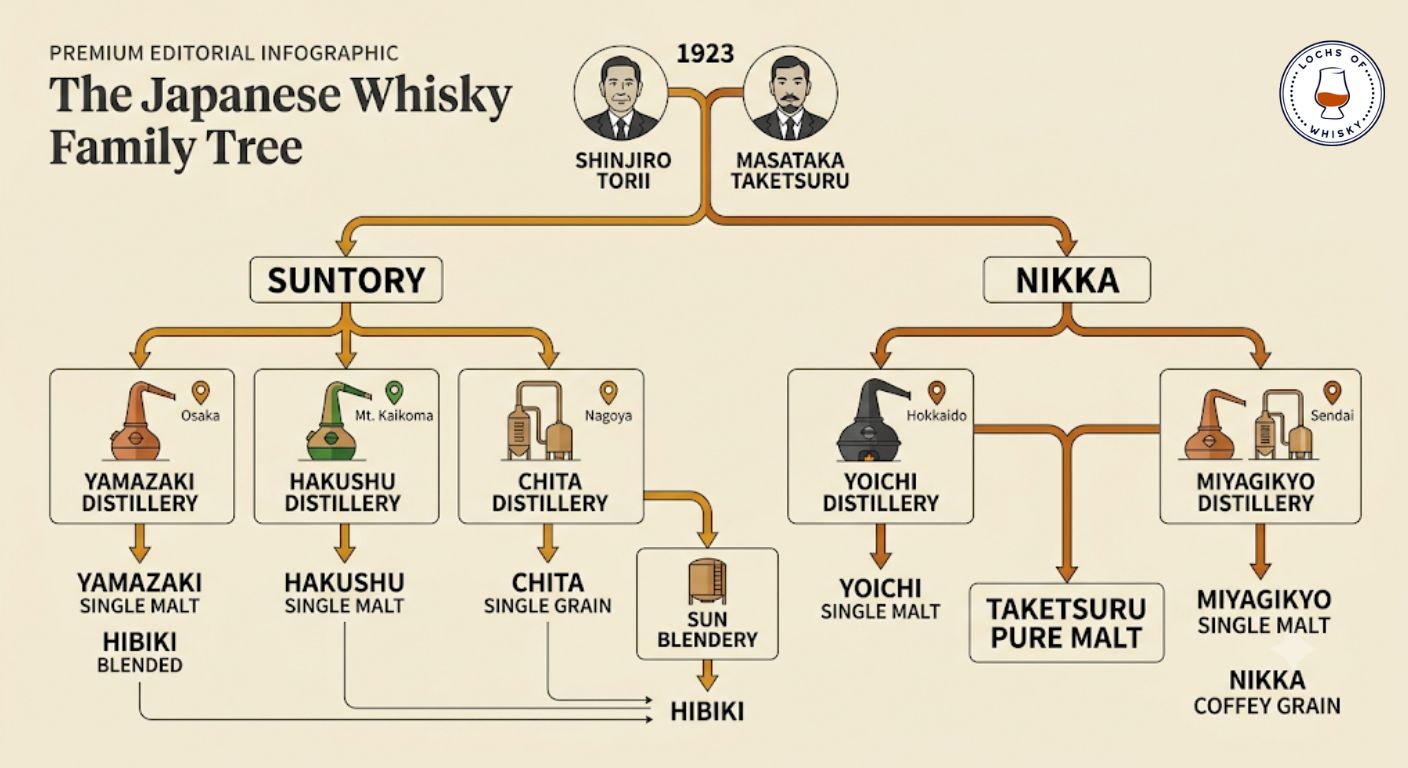
Modern Japanese whisky begins with two names: Shinjiro Torii and Masataka Taketsuru. Torii founded Yamazaki Distillery in 1923 with the aim of making whisky suited to Japanese conditions and taste. Taketsuru had studied whisky-making in Scotland and brought technical production knowledge back to Japan before later founding what became Nikka.
The partnership did not last, but the split created the two houses that still define much of Japanese whisky: Suntory and Nikka. Suntory built its reputation around Yamazaki, Hakushu, Chita and Hibiki. Nikka developed Yoichi, Miyagikyo, Coffey grain distillation and blended releases such as Taketsuru.
Suntory: Yamazaki, Hakushu, Chita And Hibiki
Suntory is the most recognisable Japanese whisky producer internationally. Its structure is closer to a whisky house than a single distillery brand because it produces malt whisky, grain whisky and blended whisky across several sites.
Yamazaki
Yamazaki is Japan’s first commercial malt whisky distillery. It sits near Kyoto, where humid conditions, varied seasons and local water sources influence maturation. Yamazaki is most associated with layered single malt styles, including sherry cask, American oak and Mizunara oak components.
Hakushu
Hakushu is Suntory’s forest distillery in the Japanese Alps. It is typically associated with a fresher, greener style than Yamazaki, often with herbal, orchard fruit and lightly smoky characteristics. Buyers who find Yamazaki too rich may find Hakushu more precise and lifted.
Chita
Chita is Suntory’s grain whisky distillery. It supplies grain whisky for blends such as Hibiki and also appears as a single grain whisky. Grain whisky is usually lighter than malt whisky, but it plays an important role in Japanese blending because texture and balance are central to the house style.
Hibiki
Hibiki is not a distillery. It is Suntory’s flagship blended whisky range, drawing from malt and grain components across the wider house. That distinction is important: Hibiki is a producer-led blend, while Yamazaki and Hakushu are single malt distillery names.
One thing our customers often ask is whether Hibiki is “less serious” because it is blended; in Japanese whisky, that assumption is wrong, because blending is one of the category’s core strengths.
Nikka: Yoichi, Miyagikyo And Coffey Grain Whisky
Nikka’s style is strongly tied to Masataka Taketsuru’s Scottish training. Yoichi, on Hokkaido, was chosen for conditions Taketsuru believed could support a robust malt whisky style. Miyagikyo, in contrast, was built later in a more sheltered environment and is generally associated with a lighter, fruitier profile.
Nikka also has an important grain whisky identity through Coffey still production. Coffey stills are traditional continuous stills, not coffee-flavoured whisky. Nikka Coffey Grain and Coffey Malt are useful examples of how Japanese producers approach texture, sweetness and balance outside the single malt framework.
For buyers, the simplest rule is this: choose Yoichi if you want weight, smoke and structure; choose Miyagikyo if you want fruit, softness and aromatic lift; choose Nikka grain or blended whisky if texture and balance matter more than distillery individuality.
New-Wave Japanese Whisky Producers
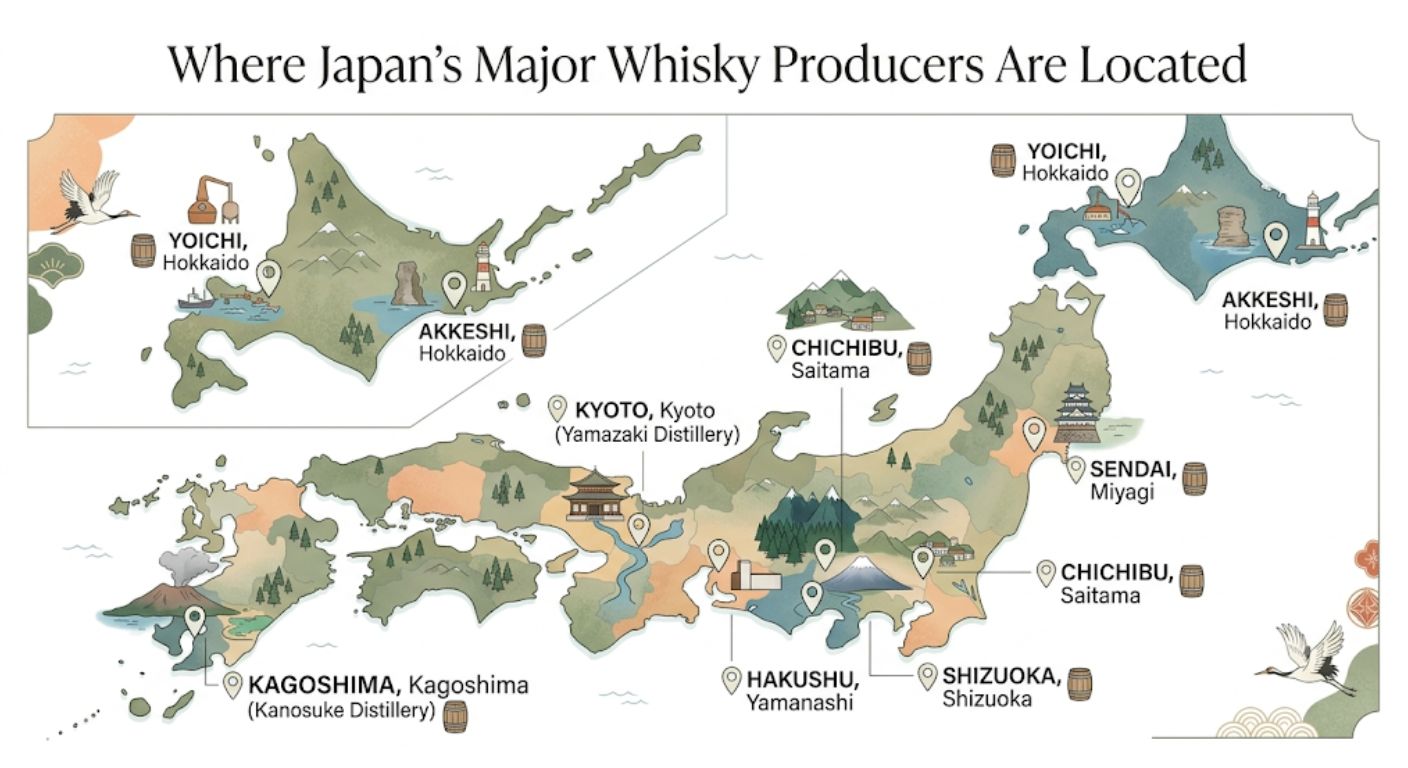
The Japanese whisky market is no longer defined only by Suntory and Nikka. Newer producers have expanded the category, although maturity, scale and stock availability vary widely. Some distilleries are already producing whisky of clear identity, while others are still developing their mature stocks.
Chichibu
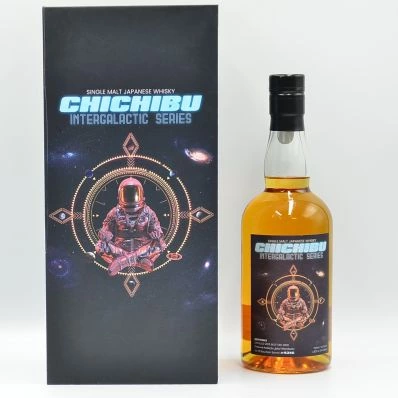
Chichibu, founded by Ichiro Akuto, is one of the most important modern Japanese whisky producers. It operates on a smaller scale than Suntory or Nikka, but its releases have become highly sought after because of limited production, active cask management and clear distillery identity.
Akkeshi
Akkeshi is based in Hokkaido and is often discussed in relation to peated Japanese whisky. Its coastal location, cool climate and production choices give it a distinct position among newer producers. Buyers interested in peat, maritime influence and younger Japanese single malt should understand Akkeshi before assuming Japanese whisky is always soft or delicate.
Kanosuke
Kanosuke, in Kagoshima, is part of the newer generation of Japanese distilleries. Its coastal site and warm climate can influence maturation differently from cooler northern producers. Kanosuke is useful for buyers who want to understand where Japanese whisky is going rather than only where it began.
Shizuoka
Shizuoka is known for technical interest, including equipment linked to the former Karuizawa distillery and a focus on varied production styles. It appeals to enthusiasts who care about production detail, small-batch variation and emerging Japanese malt whisky.
Sakurao
Sakurao, in Hiroshima, has become relevant because it sits at the intersection of new Japanese whisky production and the wider discussion around authenticity, imported components and future compliance. It is a producer worth watching, but buyers should still check label detail carefully.
Authenticity: Japanese Whisky Vs Product Of Japan
“Japanese Whisky” should now indicate whisky that meets domestic production standards. “Product of Japan” can be less precise and may indicate a product bottled, blended or associated with Japan without every stage of whisky production taking place there.
When checking a bottle, look for:
- The producer or distillery name
- Whether it states “Japanese Whisky” clearly
- Distillation and maturation information
- Age statement or non-age-statement status
- ABV, usually 40–46% for standard releases and higher for cask strength
- Any JSLMA compliance mark or producer statement
This is especially important with older labels, export releases and brands that use Japanese imagery heavily. A bottle can still be enjoyable without full Japanese production, but it should be priced and understood honestly.
Mizunara Oak And Why It Matters
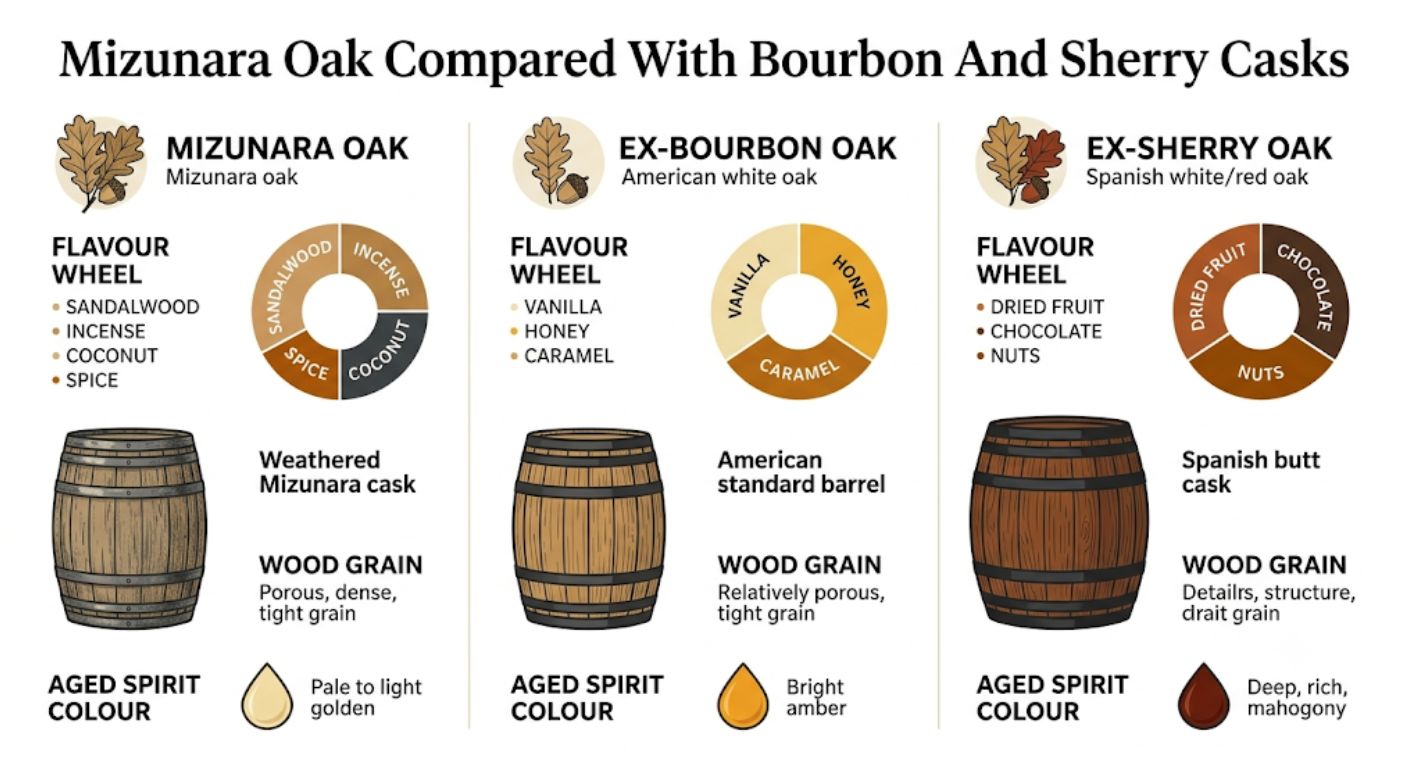
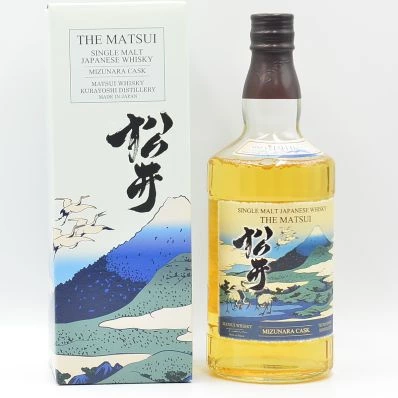
Mizunara is Japanese oak, often associated with sandalwood, incense, coconut and a temple-like aromatic character. It is difficult to cooper because the wood can be porous and prone to leaking, which makes fully Mizunara-matured whisky expensive and comparatively scarce.
Mizunara should not be treated as a guarantee of quality. Some bottles contain only a Mizunara finish or a small Mizunara component within a blend. The impact depends on time in cask, cask quality, spirit weight and blending decisions.
Why Aged Japanese Whisky Became Expensive
Aged Japanese whisky became expensive because demand rose faster than mature stock could be replaced. Whisky production had slowed during weaker domestic demand periods, then global interest increased sharply in the 2010s. Producers could not create 12, 17 or 21-year-old whisky quickly, so age-statement bottles became scarce.
This explains why many Japanese whisky producers moved towards non-age-statement releases. NAS does not mean young whisky only, but it gives producers flexibility when older stock is limited. Buyers should judge NAS whisky by producer, composition, ABV and cask information rather than assuming it is automatically inferior.
How Japanese Producers Use Blending Differently
Japanese whisky producers often place blending at the centre of quality. In Scotland, single malt receives much of the attention, while blends are sometimes treated as entry-level. In Japan, house blending is often a prestige skill because companies historically relied on internal stocks rather than trading casks widely between competitors.
That structure pushed producers to create variety within their own distilleries. Different still shapes, fermentation choices, cask types and grain whisky components allow producers such as Suntory and Nikka to build complexity without relying on external supply. Hibiki is the clearest example: its identity depends on blending, not on one distillery.
How To Choose Between Japanese Whisky Producers
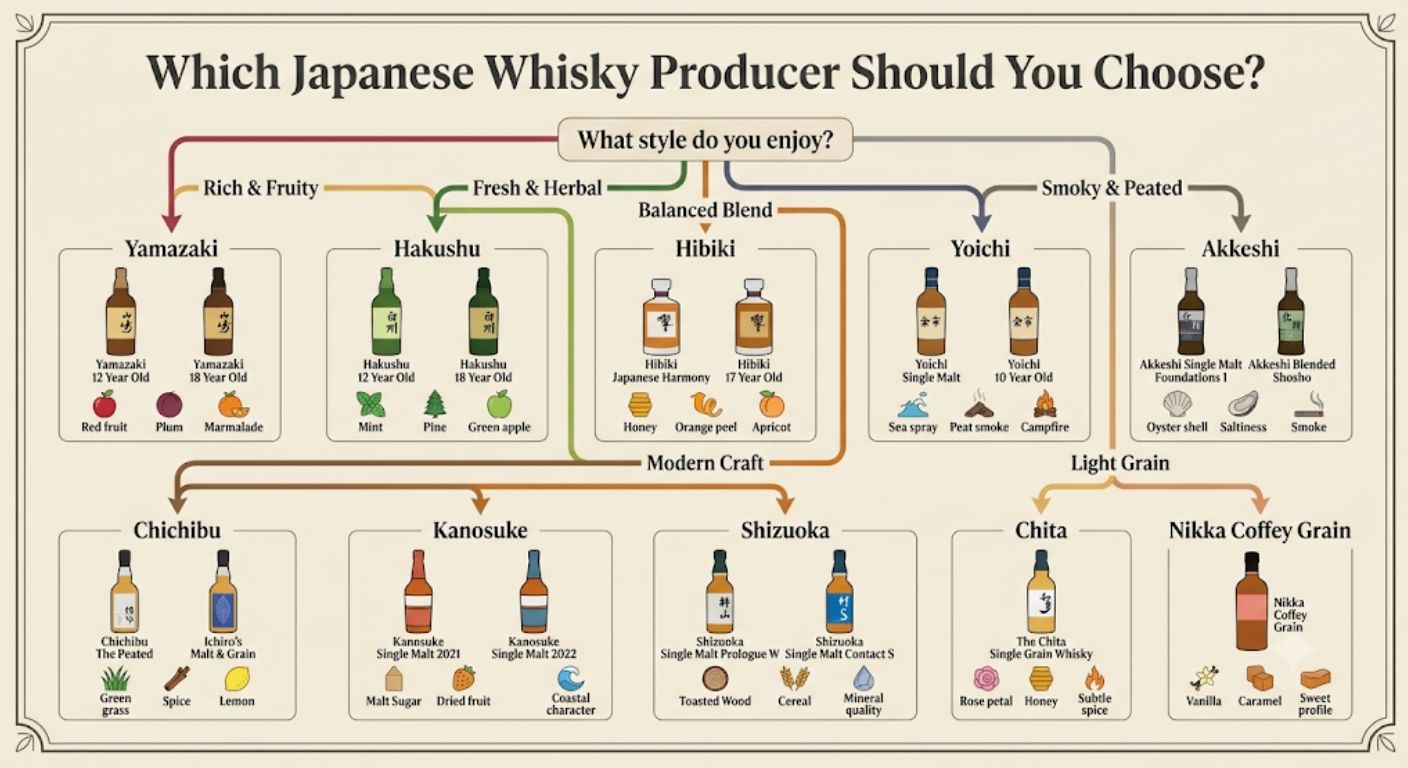
Use producer identity before price. Japanese whisky has become expensive enough that buying only by label recognition can lead to poor value. The better approach is to match the producer to the drinking style, bottle purpose and budget.
- If you want classic Japanese single malt: start with Yamazaki or Hakushu, depending on whether you prefer richer or fresher styles.
- If you want blended Japanese whisky: look at Hibiki or Nikka blends, especially where balance matters more than distillery character.
- If you want grain whisky: Chita and Nikka Coffey Grain are useful reference points.
- If you want peat: look at Yoichi or Akkeshi before assuming Japanese whisky is always delicate.
- If you want modern craft Japanese whisky: consider Chichibu, Kanosuke, Shizuoka or Sakurao, but check age, ABV and release size carefully.
- If your budget is under £100: be cautious with age statements and famous names. You may get better value from NAS blends or newer producers.
- If your budget is £150–£500: focus on producer credibility, cask detail and whether the bottle is for drinking or collecting.
- If your budget is above £500: provenance, condition, bottling year and label clarity become essential.
For wider browsing beyond Japan, the World Whisky category is useful for comparing Japanese bottles with other non-Scotch producers.
Japanese Highball Culture And Producer Style
The highball helped revive Japanese whisky by repositioning it as a precise, food-friendly serve rather than only a neat sipping drink. It also explains why many Japanese whiskies are built around balance, clarity and texture.
- Fill a tall glass with clear ice.
- Add whisky and stir with the ice to chill it.
- Some Japanese serves specify 13.5 clockwise stirs before adding soda.
- Add chilled soda water slowly down the side of the glass.
- Stir gently around 3.5 times to combine without losing carbonation.
- Serve immediately.
Producer choice matters here. Lighter grain whisky and blended whisky can work very well in a highball, while heavily sherried or rare aged malt may be better kept neat.
Common Buyer Mistakes
- Assuming every Japanese-looking label is fully Japanese whisky. Check producer, production location and labelling language.
- Confusing Hibiki with a distillery. Hibiki is a blended whisky range, not a production site.
- Overpaying for age alone. Older Japanese whisky can be excellent, but scarcity can inflate price beyond drinking value.
- Ignoring ABV. A 43% blend and a 60% cask-strength single malt will drink very differently.
- Treating Mizunara as a magic word. The cask influence matters, but the full production context matters more.
FAQ
Who are the main Japanese whisky producers?
The main Japanese whisky producers are Suntory and Nikka, followed by newer and smaller producers such as Chichibu, Akkeshi, Kanosuke, Shizuoka and Sakurao. Suntory owns Yamazaki, Hakushu, Chita and Hibiki. Nikka owns Yoichi and Miyagikyo and is known for malt, grain and blended whisky.
Is Hibiki a distillery?
No. Hibiki is a blended whisky range from Suntory, not a distillery. It uses malt and grain whiskies from Suntory’s wider production system, including Yamazaki, Hakushu and Chita. That is why Hibiki should be understood as a house blend rather than a single-site whisky.
How can I identify authentic Japanese whisky?
Check whether the label clearly says Japanese whisky, then look for producer details, distillation location, maturation information and ABV. Under JSLMA standards, compliant whisky must be fermented, distilled, matured and bottled in Japan, using Japanese water, with at least three years of maturation in wooden casks.
What does Mizunara oak taste like?
Mizunara oak is usually associated with sandalwood, incense, coconut, spice and a temple-like aromatic note. It is difficult and costly to use because the oak can be porous and leaky. Its effect depends on whether the whisky was fully matured, partly matured or only finished in Mizunara.
Why is aged Japanese whisky so expensive?
Aged Japanese whisky is expensive because demand rose sharply while mature stock was limited. Many producers had reduced production during weaker domestic demand periods, so there was not enough 12, 17 or 21-year-old whisky available when global demand increased. Scarcity then pushed prices higher.
Are new Japanese distilleries worth buying?
Some are, but the bottle details matter. New producers such as Chichibu, Akkeshi, Kanosuke and Shizuoka can offer strong character, but age, cask type, ABV and release size vary. Do not buy only because a bottle is Japanese; check the producer and production information first.
Which Japanese whisky producer is best for beginners?
Beginners usually do best with balanced blends or softer single malts before moving into scarce age statements or cask-strength releases. Hibiki, Suntory’s core blends, Nikka blends, Chita grain whisky and lighter Hakushu-style malts are generally more approachable than heavily sherried, peated or high-strength bottles.
Structured Summary
- Authenticity: look for clear Japanese whisky labelling, producer transparency and JSLMA-aligned production details.
- Producer structure: Suntory and Nikka remain the foundation, but newer producers now shape the category’s future.
- ABV: standard releases are often 40–46%; cask-strength bottles can exceed 55% and need more careful selection.
- Age: age statements are scarce and expensive; NAS whisky can still be credible when producer and composition are strong.
- Cask type: Mizunara, sherry and bourbon casks all appear, but the label should make clear whether it is full maturation or a finish.
- Best shortcut: choose Yamazaki for classic richness, Hakushu for freshness, Yoichi or Akkeshi for peat, Hibiki for blending, and Chichibu or Kanosuke for modern craft interest.
The safest way to buy Japanese whisky is to start with the producer, then verify the label, ABV, age statement and cask information. Once those details are clear, the bottle is much easier to place within the wider Japanese whisky category.

Comments