
 Chat with us on WhatsApp


Japanese Whisky vs Scotch: How They Differ
Japanese whisky and Scotch share a close historical connection, but they are not the same style. Japanese whisky was shaped by Scottish production methods, then refined through Japan’s own approach to blending, maturation, water use and balance. Scotch, by contrast, is defined by Scotland’s regional diversity, long-established regulations and a wider spread of flavour styles.
For UK buyers comparing Japanese whisky or Scotch whisky, the decision usually comes down to flavour, provenance and availability. If you want to explore bottles from Japan, our Japanese Whisky category is the natural starting point. If you want the broader Scottish benchmark, Scotch Whisky gives you the reference point Japanese whisky was originally built against.
What Makes Japanese Whisky Different?
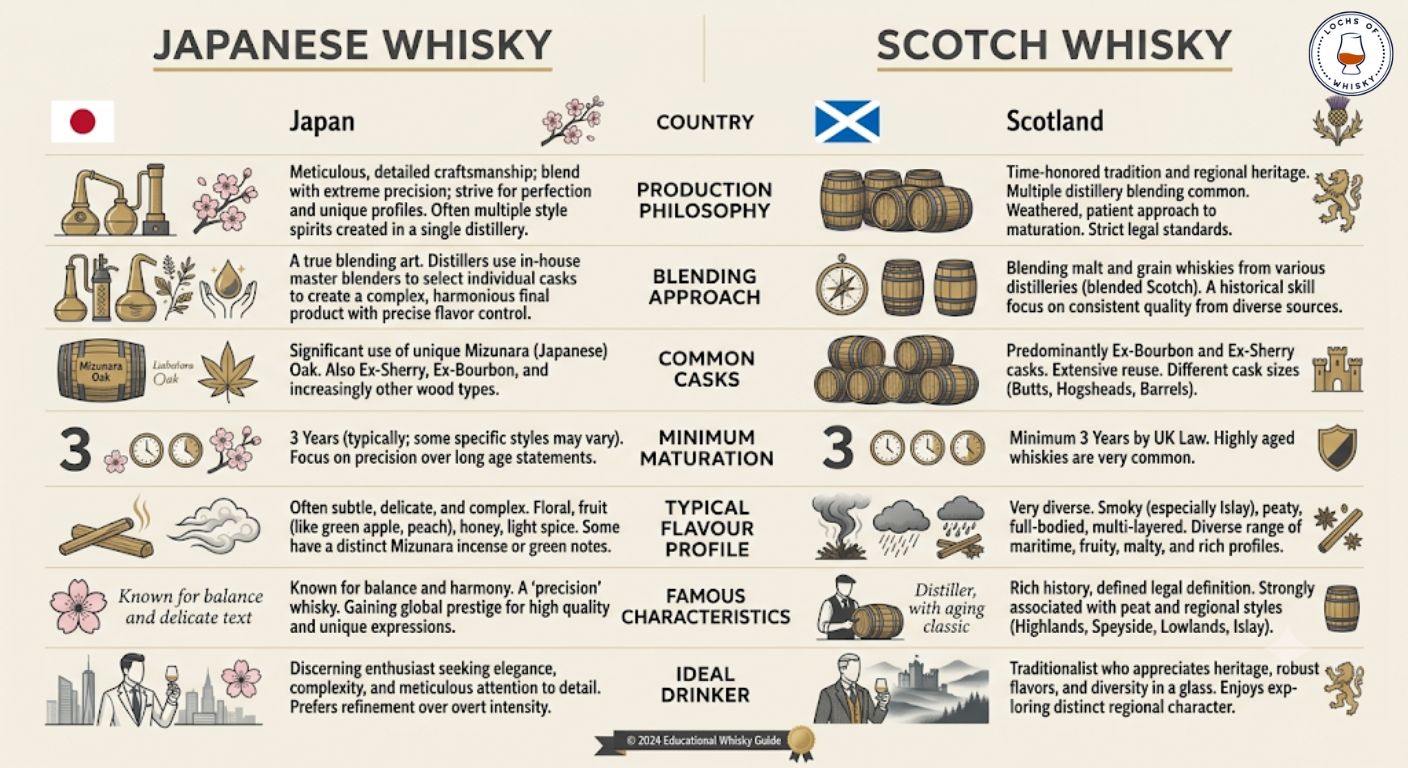
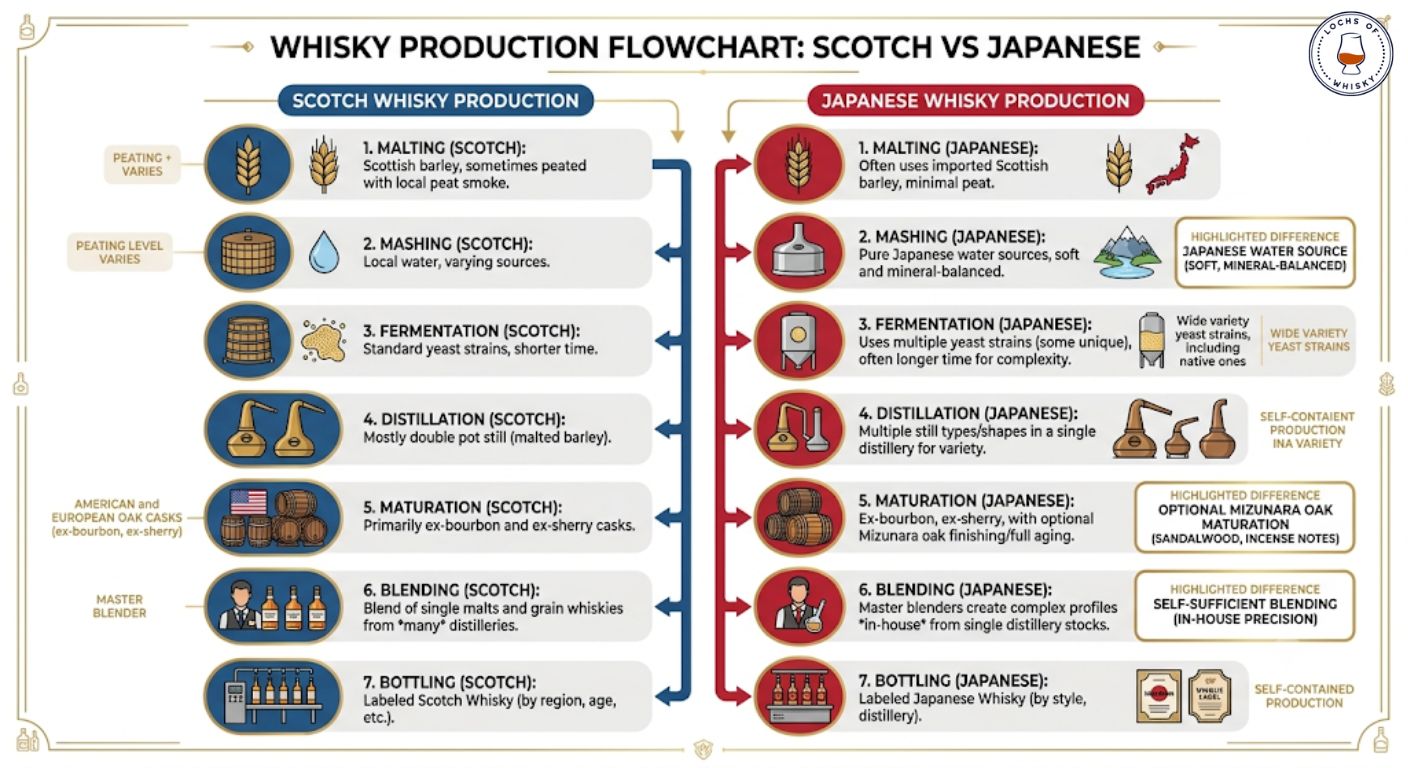
Japanese whisky is different from Scotch because it combines Scottish-inspired methods with a more self-contained production culture. Many Japanese producers create a wide range of malt and grain styles in-house rather than trading spirit between distilleries. This has encouraged precision blending, varied still shapes, proprietary yeast work and a strong focus on balance.
The main differences are:
- Production philosophy: Japanese producers often make many component styles within one company.
- Blending culture: balance and harmony are usually prioritised over heavy house character.
- Cask influence: Mizunara oak can add sandalwood, incense, coconut and spice notes.
- Flavour profile: Japanese whisky is often lighter, cleaner and more delicate than many Scotch styles.
- Provenance rules: Japanese whisky labelling standards now make authenticity more transparent.
That does not mean Japanese whisky is always lighter or Scotch is always heavier. Both categories vary. The difference is more about structure and intent than a fixed flavour rule.
Japanese Whisky vs Scotch Taste
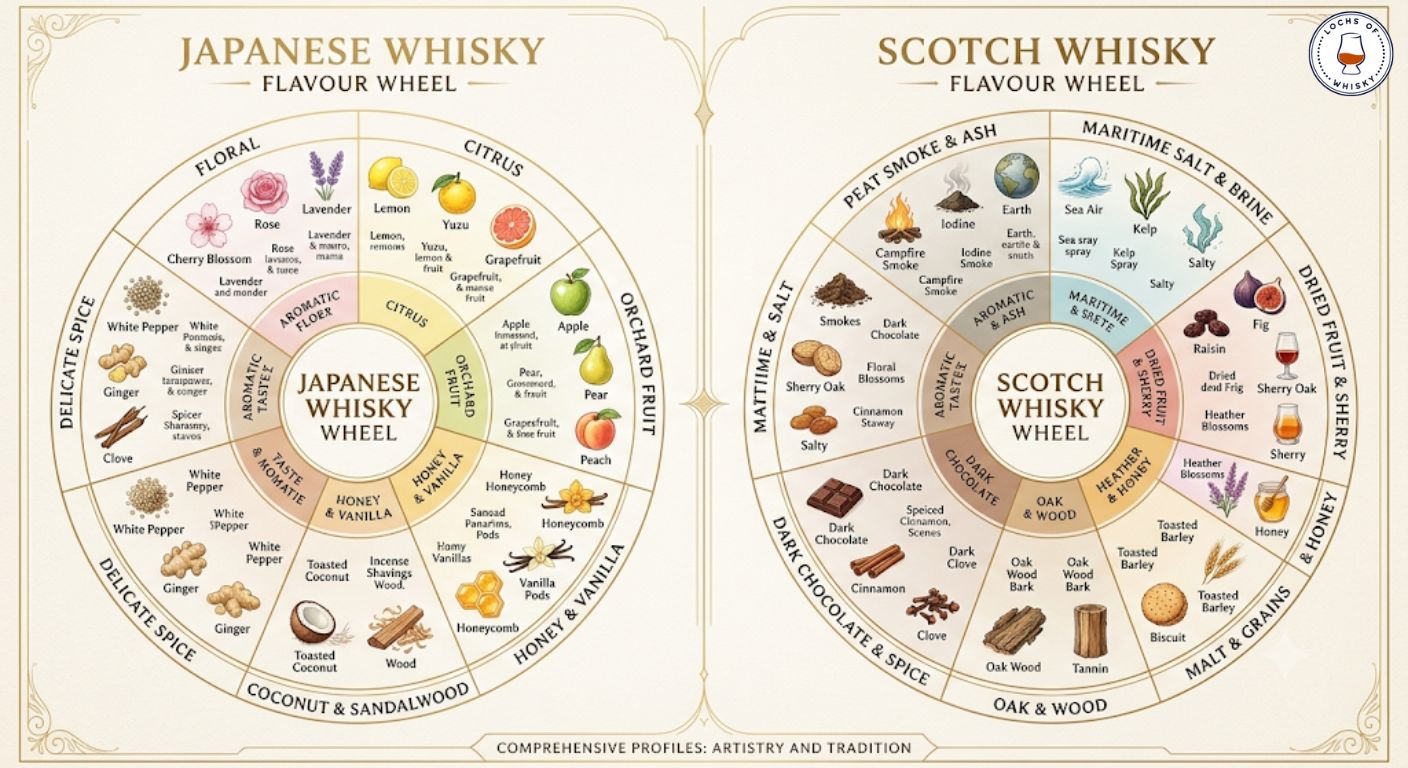
Japanese whisky is often described as refined, floral, clean and balanced. Common notes include orchard fruit, citrus, honey, soft spice, vanilla, green apple and gentle oak. Mizunara-influenced whiskies may show incense, sandalwood and coconut, although true Mizunara maturation is usually expensive and limited.
Scotch has a wider flavour range because it covers many regions, distillery styles and cask traditions. Speyside can be fruity and sherried, Highland whisky can range from waxy to coastal, Islay is known for peat smoke, and Lowland whisky is often lighter and grassy.
In practical terms, Japanese whisky often suits drinkers who want precision and balance. Scotch suits drinkers who want more choice across peat, sherry, coastal, waxy, fruity or old-style malt character.
One thing we see with our customers is that Japanese whisky often appeals to people who want elegance first, while Scotch buyers are more likely to ask for a specific distillery character or cask style.
Side-by-Side Comparison
| Point of Difference | Japanese Whisky | Scotch Whisky |
|---|---|---|
| Country | Japan | Scotland |
| Historical influence | Strongly influenced by Scotch methods | The original model for malt whisky production |
| Typical style | Balanced, delicate, floral, precise | Broad range: fruity, smoky, coastal, sherried, waxy |
| Blending model | Often self-sufficient within one producer | Historically more open to trading spirit between companies |
| Key casks | Ex-bourbon, sherry, wine, Mizunara oak | Ex-bourbon, sherry, wine, port, refill oak |
| Minimum ABV | Usually bottled at 40% ABV or higher | Minimum 40% ABV |
| Ageing expectation | Japanese standards require at least 3 years for compliant Japanese whisky | Must be matured in oak casks in Scotland for at least 3 years |
The Scottish Roots of Japanese Whisky
Japanese whisky’s connection to Scotland is not just stylistic. Masataka Taketsuru, often called the Father of Japanese Whisky, studied organic chemistry at the University of Glasgow in 1918 and learned Scotch whisky production methods before returning to Japan. His work helped establish the technical foundation for Japanese malt whisky.
This is why many Japanese distilleries use familiar Scotch-style processes: malted barley, copper pot stills, wooden cask maturation and blending. The difference is what Japanese producers did with those methods afterwards. They built a category focused on controlled variation, internal blending and precision.
Japanese Whisky Labelling Standards
Japanese whisky has had a provenance problem. For years, some bottles sold as Japanese whisky contained imported whisky from other countries. This created confusion for buyers who wanted whisky actually fermented, distilled, matured and bottled in Japan.
The Japan Spirits & Liqueurs Makers Association introduced standards to improve transparency. Under those standards, whisky using the term “Japanese whisky” must meet key criteria, including production and maturation in Japan. The JSLMA standards for Japanese whisky are the main reference point for understanding these requirements.
Core requirements include:
- Raw ingredients must include malted grain.
- Water used in production must be extracted in Japan.
- Saccharification, fermentation and distillation must take place in Japan.
- The spirit must be matured in wooden casks in Japan for at least three years.
- The whisky must be bottled in Japan at a minimum of 40% ABV.
This matters for buyers because “Japanese-style” and “Japanese whisky” are not always the same thing. Check the label, producer information and bottling details before assuming provenance.
Mizunara Oak and Cask Character
Mizunara oak is one of the most distinctive features associated with Japanese whisky, although it is not used in every bottle. It is rare, difficult to work with and more porous than many common cask types. When managed well, it can add notes of sandalwood, temple incense, coconut, gentle spice and aromatic wood.
Scotch also uses a wide range of casks, especially ex-bourbon barrels and sherry-seasoned oak. The difference is that Mizunara gives Japanese whisky a flavour reference strongly tied to Japanese maturation culture. It is one reason some collectors and enthusiasts treat older or Mizunara-influenced Japanese releases as especially distinctive.
Distilleries and Producer Style
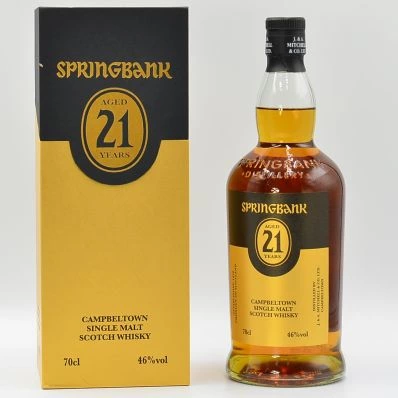
Scotch whisky is often understood through distillery identity. A drinker may choose GlenDronach for sherry influence, Laphroaig for peat smoke, Clynelish for waxy coastal Highland character, or Springbank for old-style Campbeltown complexity.
Japanese whisky is more often understood through producer blending philosophy. Large producers may operate multiple still types, yeast approaches and maturation styles within their own system. This gives them internal blending flexibility without relying heavily on outside spirit exchange.
For collectors, closed or highly regarded Japanese names can carry extra interest. Hanyu is one of the most recognised examples because of its closed-distillery status and historic releases. Fuji Gotemba is different again, known for its grain and malt production capability under one producer structure.
Which Is Better for Beginners?
Japanese whisky is often easier for beginners if they prefer smooth, balanced and lightly fruity whisky. Scotch is better for beginners who want to explore a wider range of styles, including peat smoke, sherry richness, coastal saltiness and older malt character. Neither is automatically better; the right choice depends on flavour tolerance and curiosity.
Choose Japanese whisky if you want:
- a cleaner, more delicate drinking style
- good options for highballs
- floral, fruity or lightly spiced flavours
- a polished blended whisky experience
Choose Scotch if you want:
- more regional variation
- peated whisky options
- older age statements at a wider range of prices
- stronger distillery-led character
How to Drink Japanese Whisky and Scotch
Japanese whisky works especially well in a highball because the serve preserves freshness and texture. Use a tall glass, plenty of ice, one measure of whisky and two to three measures of chilled soda water. Stir gently to keep the drink lively rather than flat.
Mizuwari is another Japanese serve, made by diluting whisky with still water over ice. It softens the alcohol and opens delicate aromas. This approach suits lighter Japanese blends and malt whiskies.
Scotch is usually better assessed neat first, especially if you want to understand distillery character. Add a few drops of water if the ABV is high or the whisky feels closed. Cask-strength Scotch can sit well above 55% ABV, so dilution is often useful rather than a sign of weakness.
When Japanese Whisky Makes More Sense
Japanese whisky makes sense when you want balance, subtlety and a refined drinking experience. It is also a good choice for drinkers who enjoy whisky in a highball or who find heavily peated Scotch too dominant.
It may be less suitable if you want maximum value by age statement. Japanese whisky has faced high demand and limited mature stock, which means older bottles can be expensive. If age, cask strength or distillery intensity matter most, Scotch may offer more choice for the same budget.
When Scotch Makes More Sense
Scotch makes sense when you want breadth. It gives you access to multiple regions, production styles, cask types and flavour profiles. It is usually easier to find age-stated options across a wider price range, from approachable 10 and 12 year old malts to older collectible bottlings.
Scotch may be less suitable if you want a softer, cleaner style without much trial and error. Some Scotch styles are assertive, especially heavily peated Islay malts or strong sherry-cask releases.
FAQ
Is Japanese whisky a type of Scotch?
No. Japanese whisky was strongly influenced by Scotch, but it is not Scotch. Scotch must be produced and matured in Scotland under Scotch whisky regulations. Japanese whisky is made in Japan and now has its own labelling standards for producers who use the term Japanese whisky.
What does Japanese whisky taste like compared with Scotch?
Japanese whisky is often lighter, smoother and more balanced, with fruit, floral notes, vanilla and gentle spice. Scotch has a wider range, from delicate Lowland malts to smoky Islay whisky and rich sherry-cask Speyside styles. Japanese whisky tends to emphasise precision; Scotch often emphasises distillery identity.
Why is Japanese whisky often expensive?
Japanese whisky can be expensive because global demand grew faster than mature stock. Many aged releases became limited, and some older bottles now appeal to collectors. Pricing also reflects production scale, brand reputation, cask type and provenance, especially for discontinued or age-stated releases.
What is Mizunara oak?
Mizunara is Japanese oak used for whisky maturation. It is difficult to cooper, prone to leaking and usually expensive. When successful, it can add sandalwood, incense, coconut and gentle spice notes. It is strongly associated with Japanese whisky but appears only in selected releases.
Is Japanese whisky or Scotch better for highballs?
Japanese whisky is often better suited to highballs because many expressions are designed around balance, light fruit and clean texture. Scotch can also work, especially lighter blends or malts, but heavily peated or sherry-heavy Scotch may dominate the soda rather than refresh the drink.
Final Takeaway
The key difference between Japanese whisky and Scotch is not simply flavour. Japanese whisky takes Scottish foundations and applies a more internally controlled, precision-led approach. Scotch offers wider regional and distillery variation, with more choice across peat, sherry, coastal and aged malt styles.
If you want balance, refinement and highball-friendly whisky, Japanese whisky is often the better fit. If you want breadth, distillery identity and a wider range of traditional malt styles, Scotch remains the stronger reference point.


Comments