
 Chat with us on WhatsApp


Lowland Whisky: Region Guide, Style & Key Distilleries
Lowland whisky comes from the southern part of Scotland, broadly below the Highland boundary line. The region is often associated with a lighter, cleaner style of Scotch, with floral, grassy, citrus and cereal notes rather than heavy peat smoke or dense sherry richness.
That makes the Lowlands a useful starting point for drinkers who want to understand regional character without jumping straight into the bigger flavours of Islay, Highland or heavily sherried Speyside whisky. For bottles from the region, our Lowlands Whisky category is the most relevant place to explore current availability.
Where Is The Lowland Whisky Region?
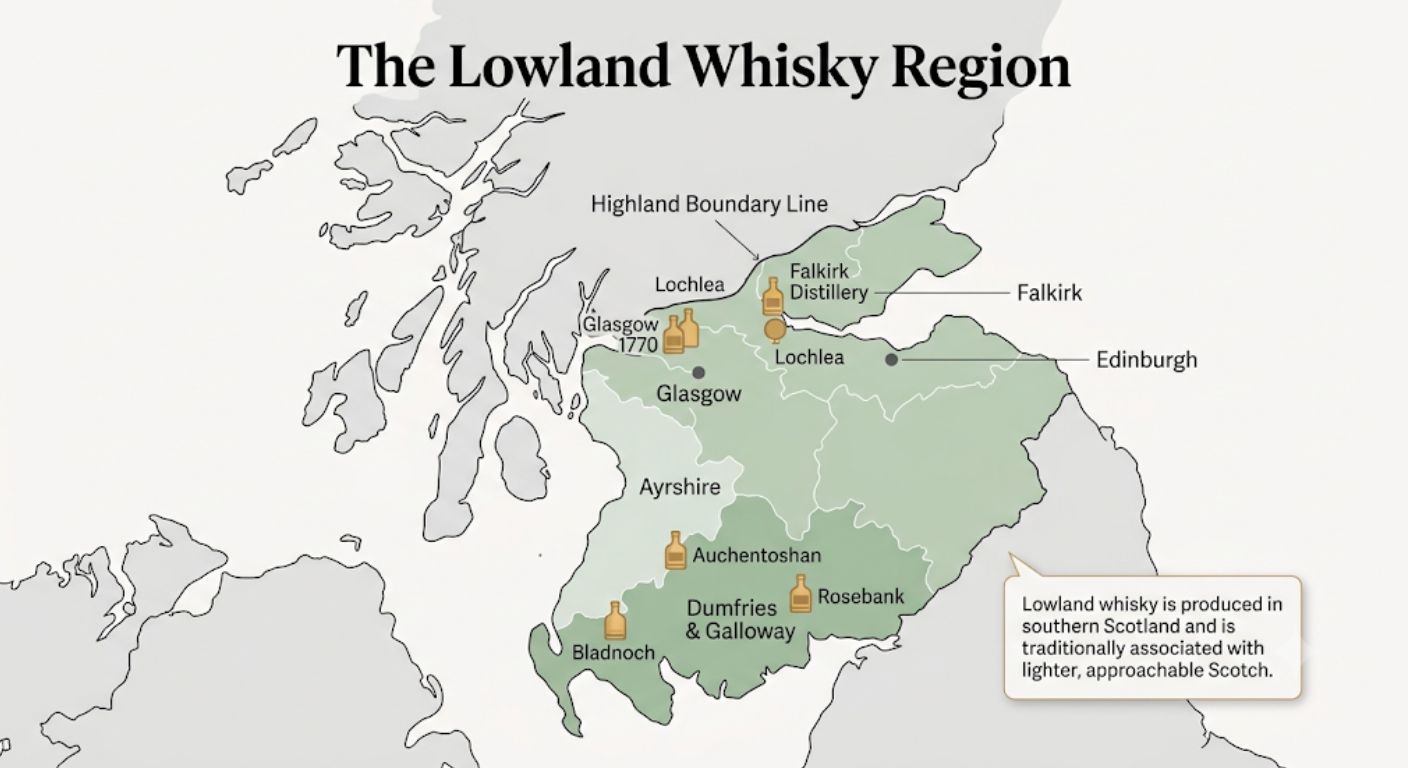
The Lowland whisky region covers the southern part of Scotland. In whisky terms, it generally sits south of the Highland boundary line, which runs roughly from the west coast near Greenock and Helensburgh across towards Dundee and Stonehaven on the east coast.
This is a legal and regional whisky designation, not a guarantee that every bottle will taste the same. A Lowland single malt can be light and delicate, but newer distilleries are now producing a wider range of styles using different casks, fermentation regimes and peating levels.
Lowland whisky sits within the wider world of Scotch Whisky, but its identity is shaped by a long association with approachable malt whisky, major grain whisky production and city-accessible distilleries.
What Does Lowland Scotch Whisky Taste Like?
Lowland Scotch whisky is usually light, floral, grassy and citrus-led, often with cereal, vanilla, cream or soft fruit notes. It is commonly seen as one of the gentler Scottish regional styles, especially when compared with heavily peated Islay whisky or richer sherry-cask malts.
The traditional Lowland profile is sometimes described as “breakfast whisky” because it can feel fresh, clean and easy-drinking. That phrase is not a technical category, but it does capture the softer end of the regional style.
Common Lowland flavour markers include:
- Fresh grass, hay and cereal
- Lemon peel, green apple and orchard fruit
- Vanilla, cream and light oak
- Floral notes rather than heavy smoke
- A cleaner, lighter spirit texture
Most people buying their first single malt underestimate how much the regional style matters; our customers often know after one dram whether they prefer this lighter Lowland profile or want something heavier next time.
Why Is Lowland Whisky Linked With Triple Distillation?
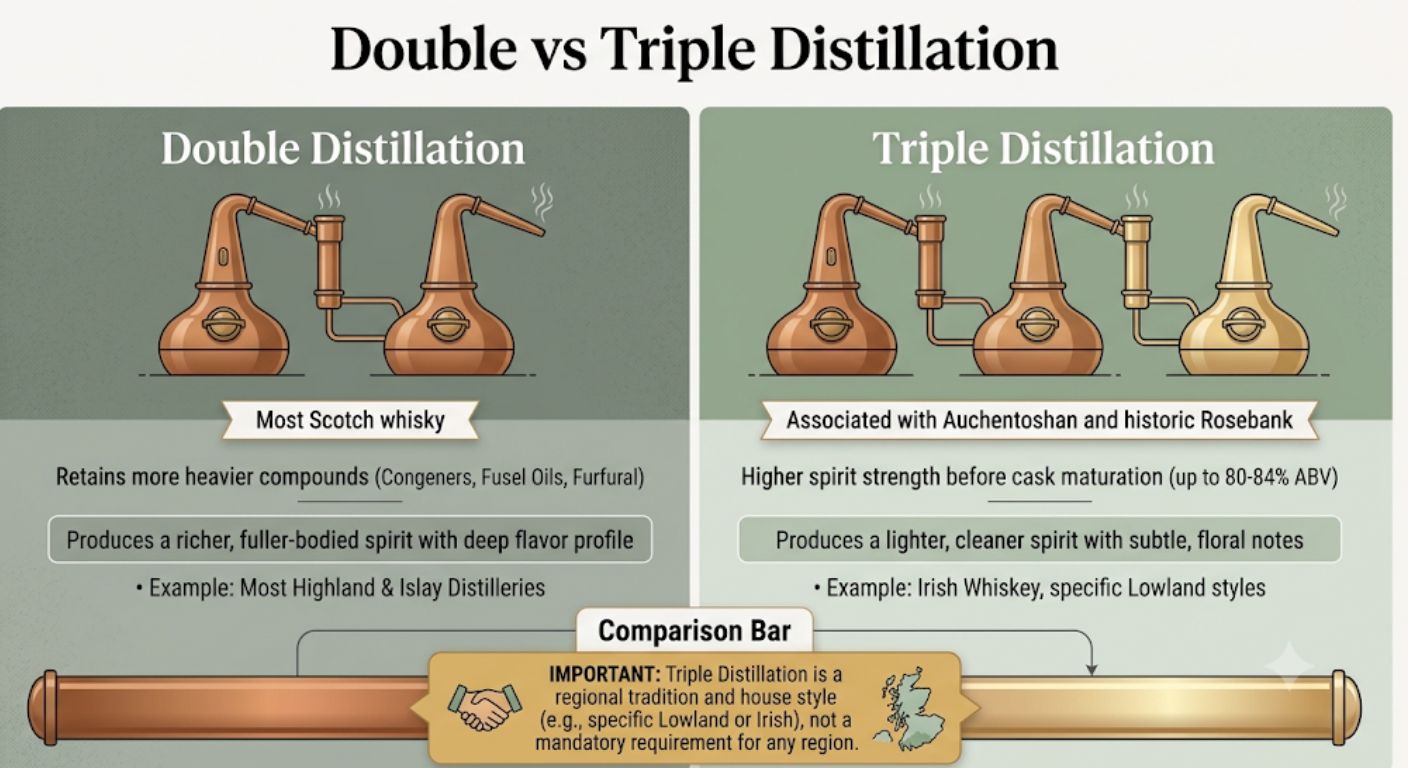
Triple distillation is closely associated with Lowland whisky because several historic Lowland distilleries used three distillation runs rather than the more common Scottish double distillation method. The extra distillation can remove heavier compounds and produce a lighter, cleaner spirit.
The best-known modern example is Auchentoshan, which has built its identity around triple distillation. Rosebank was also historically famous for this style. The third distillation run can raise the spirit strength significantly before maturation, producing a cleaner new make spirit before cask influence takes over.
This does not mean every Lowland whisky is triple distilled. It is an important regional tradition, not a universal rule. Many modern Lowland distilleries use double distillation, while others experiment with different spirit cuts, cask types and production styles.
Lowland Whisky And Grain Whisky
The Lowlands also have a major role in grain whisky production. Large-scale grain distilleries using continuous column stills have historically supported the blended Scotch whisky industry, providing lighter grain spirit used in many blends.
This is different from Lowland single malt. Single malt is made at one distillery from malted barley in pot stills. Grain whisky can use other cereals and is usually produced in column stills. The Lowlands matter because the region has long contributed both malt whisky and the grain whisky backbone behind Scotch blending.
Key Lowland Distilleries To Know
Glasgow 1770
Glasgow 1770 is part of the modern Lowland revival, bringing single malt production back into Glasgow. Its range is useful for understanding how contemporary Lowland whisky has moved beyond only light, floral styles, with unpeated, peated and cask-led releases all playing a role.
Lochlea
Lochlea is a Lowland farm distillery in Ayrshire. Its identity is closely tied to barley, place and controlled small-scale production. For readers exploring newer Lowland whisky, Lochlea shows how the region can balance accessible flavour with more specific production character.
Falkirk Distillery
????Falkirk Distillery sits near the Lowland and Highland boundary and reflects the newer generation of Scottish distilleries building long-term identity through careful production and maturation. It is relevant for anyone following the expansion of Lowland and border-region whisky.
Auchentoshan, Bladnoch And Rosebank
Auchentoshan remains the clearest example of Lowland triple distillation. Bladnoch is one of Scotland’s oldest operating Lowland distilleries and has become increasingly important again after revival and renewed investment. Rosebank is one of the most significant Lowland revival stories, with production restarted after decades of closure.
Who Does Lowland Whisky Suit?
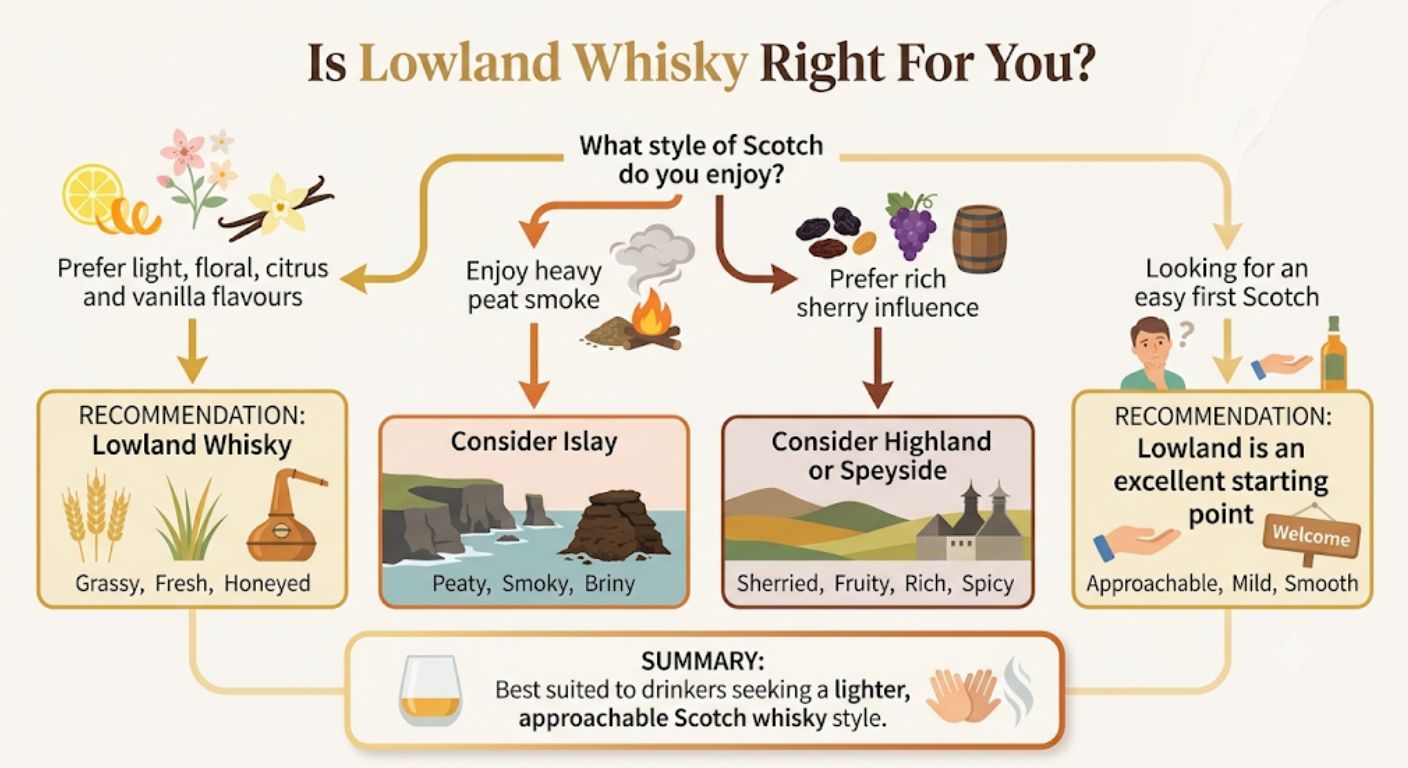
Lowland whisky makes sense if you prefer a lighter spirit style, want a gentle route into Scotch, or enjoy citrus, cereal, vanilla and floral notes. It is also a good region to explore if you want Scotch without strong peat smoke.
It may not suit you if you mainly enjoy dense sherry cask whisky, coastal smoke, medicinal peat, heavy oak or very oily texture. Some Lowland bottles can show those traits, especially modern cask-led releases, but they are not the classic regional centre of gravity.
Lowland whisky is particularly useful for:
- New Scotch drinkers who want a softer introduction
- Drinkers who dislike heavy peat smoke
- Fans of citrus, grass, vanilla and cereal-led flavour
- Collectors following revived or newer Scottish distilleries
- Buyers interested in distillery-led discovery rather than only famous names
FAQ
Is Lowland whisky good for beginners?
Yes. Lowland whisky is often a good starting point because the classic style is lighter, cleaner and less smoky than many other Scotch regions. Auchentoshan 12 Year Old is a common beginner-friendly example because it is smooth, approachable and built around a softer triple-distilled profile.
Is all Lowland whisky triple distilled?
No. Triple distillation is an important Lowland tradition, but it is not required for every Lowland whisky. Auchentoshan is the best-known modern example, while Rosebank was historically associated with the style. Many Lowland distilleries use double distillation.
What flavours are common in Lowland whisky?
Common Lowland whisky flavours include grass, lemon, green apple, cereal, vanilla, cream and soft floral notes. The style is usually lighter and cleaner rather than smoky or heavily oily, although modern Lowland releases can vary depending on cask type and production choices.
Are there Lowland distilleries near Glasgow?
Yes. Glasgow has become an important Lowland whisky city again, with Glasgow 1770 and Clydeside both helping to rebuild urban whisky production. Auchentoshan is also close to Glasgow, making the area one of the easiest parts of Scotland for whisky visitors to explore.
-
-
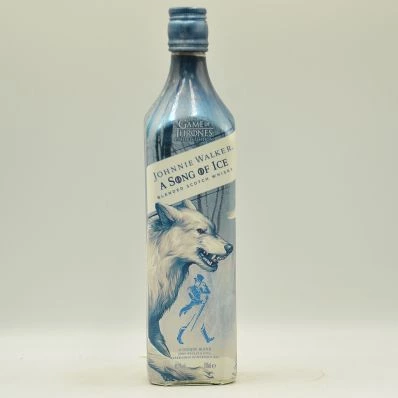
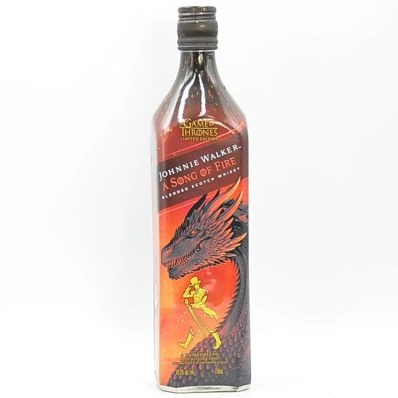 Game of Thrones Whisky Johnnie Walker A Song Of FireSpecial Price £139.98 Regular Price £144.99 Inc VATSaving £5.01
 -
-
-
-
-
-
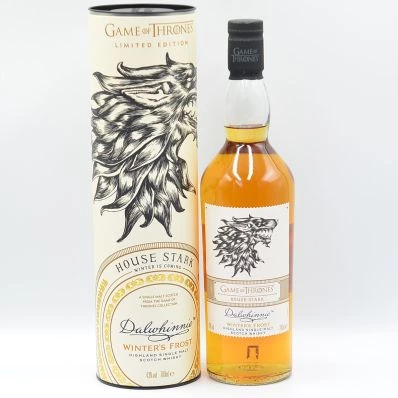 Game Of Thrones Whisky Dalwhinnie Winter's Frost House StarkSpecial Price £104.98 Regular Price £134.99 Inc VATSaving £30.01Out of stock
 -
-
-
-
Final Thoughts On The Lowland Whisky Region
The Lowland whisky region is best understood as Scotland’s lighter, cleaner and often more approachable whisky region, but it is no longer a narrow style. Triple distillation, grain whisky history, revived distilleries and newer producers all shape its modern identity.
For buyers, the main decision is simple: choose Lowland whisky when you want clarity, freshness and regional accessibility rather than heavy smoke or dense cask weight. To compare current bottles from the region, explore the Lowland whisky selection.

Comments