
 Chat with us on WhatsApp


Whisky Stones, Ice Balls & Spheres: What Actually Works?
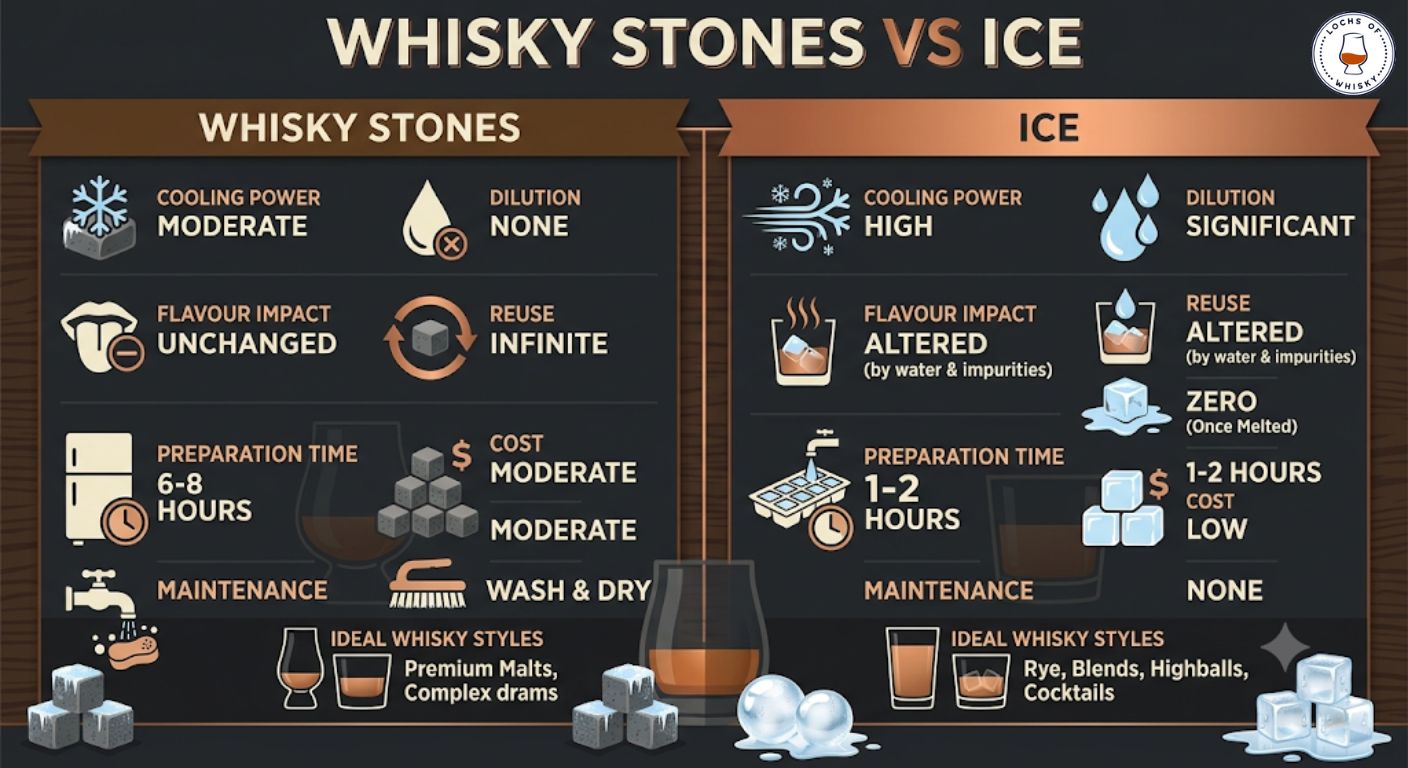
Whisky stones and ice both cool a dram, but they produce very different results. Whisky stones provide a mild reduction in temperature without adding water. Ice cools more effectively, but gradually dilutes the whisky as it melts. Large ice balls and cubes sit between these two aims by delivering strong cooling with slower, more controlled dilution.
The right option depends on the whisky, its strength and how you prefer to drink it. Stones can suit someone who wants the flavour concentration left unchanged, while a large ice sphere often works better for a high-strength Bourbon or cask-strength Scotch. Chilling stones, moulds and other serving accessories are commonly found within whisky memorabilia and gifts, but their practical value varies considerably.
Whisky Stones vs Ice: The Quick Verdict
Ice is the better option for effective cooling. Whisky stones are useful only when avoiding dilution matters more than achieving a genuinely cold drink. A large ice ball or cube usually gives the most balanced result because it cools the whisky quickly while melting more slowly than several small cubes.
| Method | Cooling Power | Dilution | Best Suited To |
|---|---|---|---|
| Soapstone whisky stones | Low | None | A gentle chill without changing strength |
| Stainless steel stones | Moderate | None | Stronger cooling without water |
| Large ice sphere | High | Slow and controlled | Slow sipping and higher-strength whisky |
| Large ice cube | High | Slow and controlled | Whisky served on the rocks |
| Several small cubes | Very high initially | Fast | Rapid chilling or mixed drinks |
Do Whisky Stones Actually Work?
Yes, whisky stones work, but only as a source of modest cooling. Properly frozen stones can take some heat from a small pour, but they cannot match ice because they do not melt. Most stones slightly soften the warmth of the alcohol rather than making the whisky properly cold.
The difference comes down to heat transfer. A frozen stone absorbs heat as its temperature rises. Ice also absorbs heat as it warms, but it then uses considerably more energy while changing from solid ice into liquid water. This phase change, known as latent heat, gives ice much greater cooling capacity.
Whisky stones therefore work best when the aim is to reduce the temperature by a few degrees without changing the whisky’s ABV. They are less suitable for someone expecting the cold temperature produced by a conventional glass of whisky on the rocks.
How Long Should You Freeze Whisky Stones?
Freeze whisky stones for at least four hours, although storing them overnight is more reliable. Keep them in a clean freezer pouch or sealed container so they do not absorb food smells. They should be completely dry before freezing, particularly if they are made from natural stone.
Using more stones increases the available thermal mass. Three small soapstone cubes may barely affect a generous pour, while six to nine can create a more noticeable chill. Filling the glass with stones, however, makes the drink awkward to handle and increases the risk of damage.
Soapstone vs Stainless Steel Whisky Stones
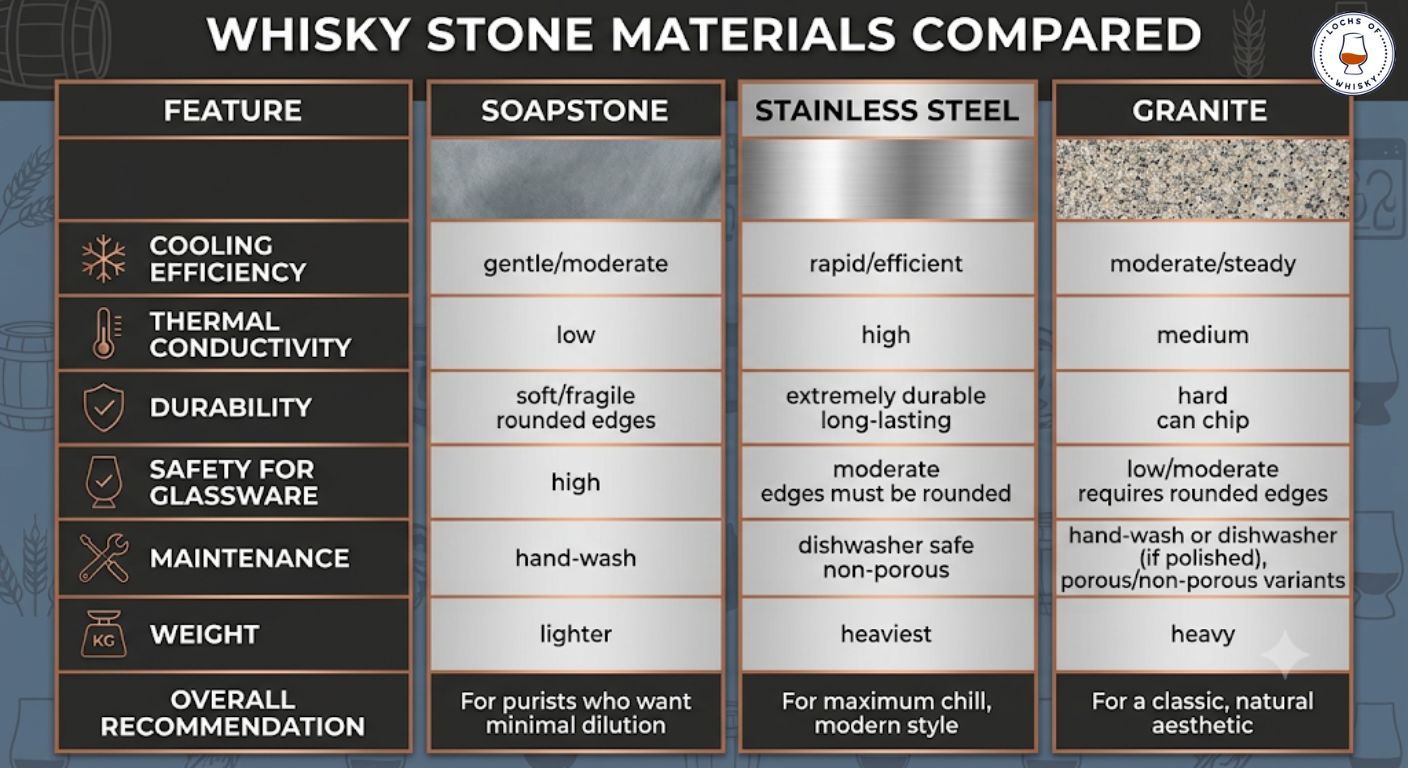
Soapstone is the traditional material used for whisky stones. It has a relatively soft surface, which makes it less likely to scratch glass than harder materials such as granite. Its main weakness is limited heat transfer. Soapstone warms relatively slowly and often produces only a subtle temperature change.
Stainless steel stones transfer heat more quickly. Many are hollow and contain a food-safe freezing gel, allowing them to hold more cooling energy than a solid piece of metal of the same size. They generally outperform natural stone but can still feel heavy in the glass.
| Material | Main Benefit | Main Limitation | Best Use |
|---|---|---|---|
| Soapstone | Soft surface and no dilution | Weak cooling performance | A small, gentle temperature reduction |
| Stainless steel | Faster heat transfer | Heavy and potentially damaging if dropped | Stronger chilling without dilution |
| Granite | Durable appearance | Harder surface and variable porosity | Generally less practical than soapstone or steel |
Choose clearly identified food-grade stainless steel from a reputable manufacturer. Natural materials should be smooth, properly finished and intended specifically for use in drinks. Avoid improvised stones or decorative cubes with an unknown composition.
Are Whisky Stones Safe for Teeth and Glassware?
Whisky stones are generally safe when used carefully, but they can chip teeth or scratch glassware. Do not tip the glass steeply towards your mouth, as a loose stone can slide forward suddenly. Soapstone is softer than granite or steel, but no reusable stone should be allowed to strike delicate crystal.
Do Spherical Ice Cubes Melt Slower Than Regular Cubes?
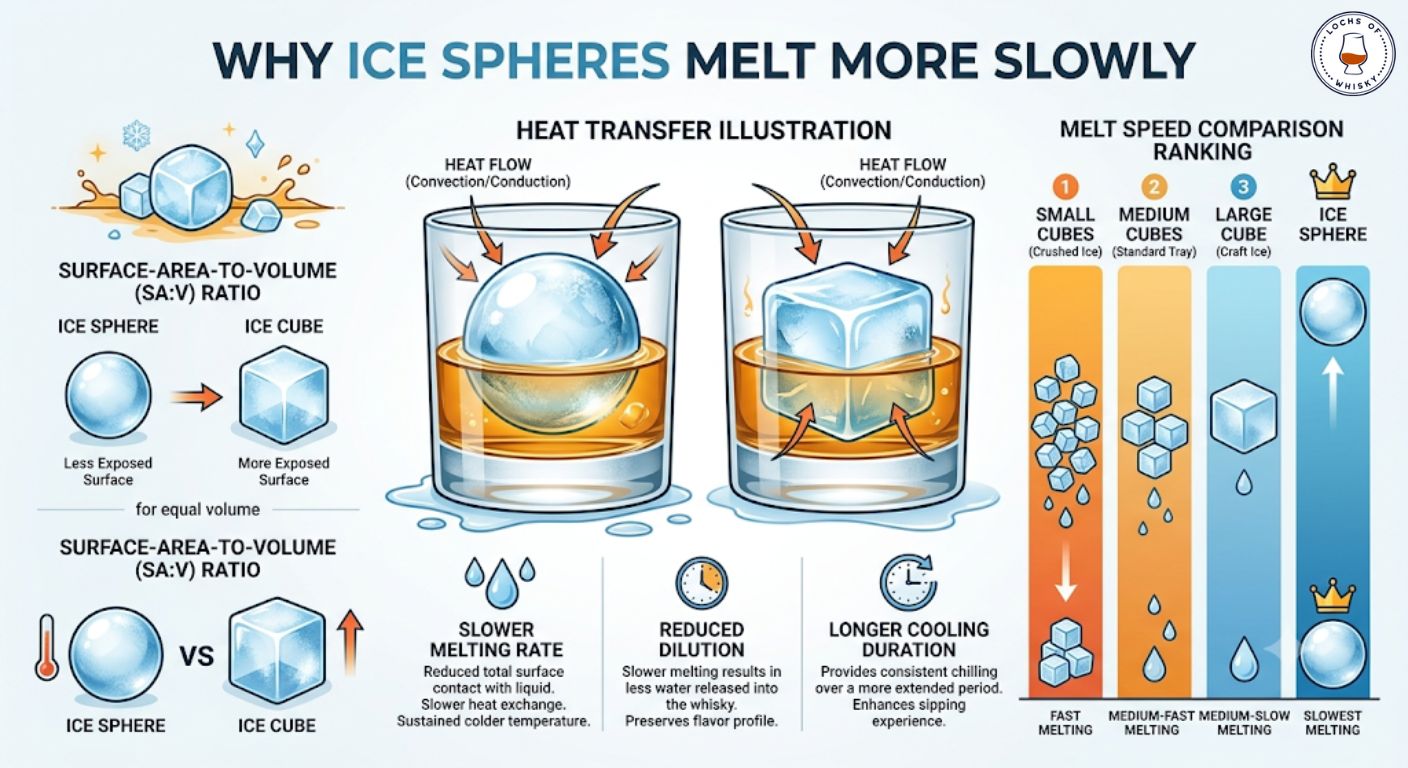
Yes. A sphere normally melts more slowly than several conventional ice cubes because it has less exposed surface area relative to its volume. Less surface contact means heat enters the ice more gradually, producing slower dilution during a typical pour.
The comparison becomes less clear between one sphere and one large cube of equal volume. A sphere is mathematically the most efficient shape, but the difference during one drink may be modest. Size matters more than shape when comparing a large 50–60 mm piece of ice with several small freezer cubes.
For practical use, both a large cube and a large sphere perform well. An ice ball rolls easily and looks visually clean in a round tumbler. A cube sits more securely and is usually easier to make at home. Both are better suited to slow sipping than small cubes or crushed ice.
What Size Ice Ball Is Best for Whisky?
An ice ball around 50–60 mm in diameter works well in most whisky tumblers. It provides enough mass to cool a 25–50 ml pour while leaving room for the whisky. Check the internal width of the glass before buying a mould, as some larger spheres will not fit through a narrow rim.
Does Dilution Ruin Whisky?
Dilution is not automatically a fault. A controlled amount of water can reduce alcohol heat and make some aromas easier to detect. This is particularly relevant for cask-strength whisky bottled at 50–60% ABV or above.
Research into whisky aroma has examined how water and ethanol influence compounds such as guaiacol. As reported in research on why whisky can taste different after adding water, reducing the alcohol concentration can change how aromatic compounds gather near the surface of the liquid.
Ice introduces this water gradually. The whisky may begin cold and concentrated, then become softer and more open as the ice melts. This progression can work especially well with robust Bourbon, peated Scotch and heavily sherried cask-strength releases. It can be less successful with a delicate whisky bottled at 40% ABV, where excess meltwater may quickly flatten the flavour.
One thing we regularly see with our customers is an assumption that avoiding all dilution protects every whisky, when many higher-strength bottlings become more expressive after a carefully controlled addition of water.
Clear Ice vs Cloudy Ice
Clear ice is primarily valued for presentation and consistency. Cloudy ice contains trapped air and dissolved material pushed into the centre as the water freezes. It can also pick up unwanted freezer smells if stored uncovered.
Clarity alone does not transform the flavour of a whisky. The practical advantages come from making a large, dense piece of ice from clean water and keeping it away from strongly scented frozen food. A clear large cube will normally melt more predictably than small, cracked domestic ice.
How to Make Clear Ice at Home With a Cooler
Clear ice can be made through directional freezing, which forces water to freeze from one direction and pushes trapped air towards the unfrozen section. A small insulated cooler is the simplest home method.
- Fill a clean, freezer-safe cooler with filtered water, leaving some expansion space.
- Place it in the freezer without its lid so the water freezes from the exposed top downwards.
- Remove it before the entire block freezes, usually after 18–24 hours depending on its size.
- Discard the cloudy or unfrozen lower section where air and impurities have collected.
- Cut the clear upper block into large cubes using a serrated knife and a clean mallet.
Allow the ice to temper at room temperature for several minutes before cutting. Ice taken directly from a very cold freezer is more likely to fracture unpredictably.
When to Use Stones, Ice Balls or Large Cubes
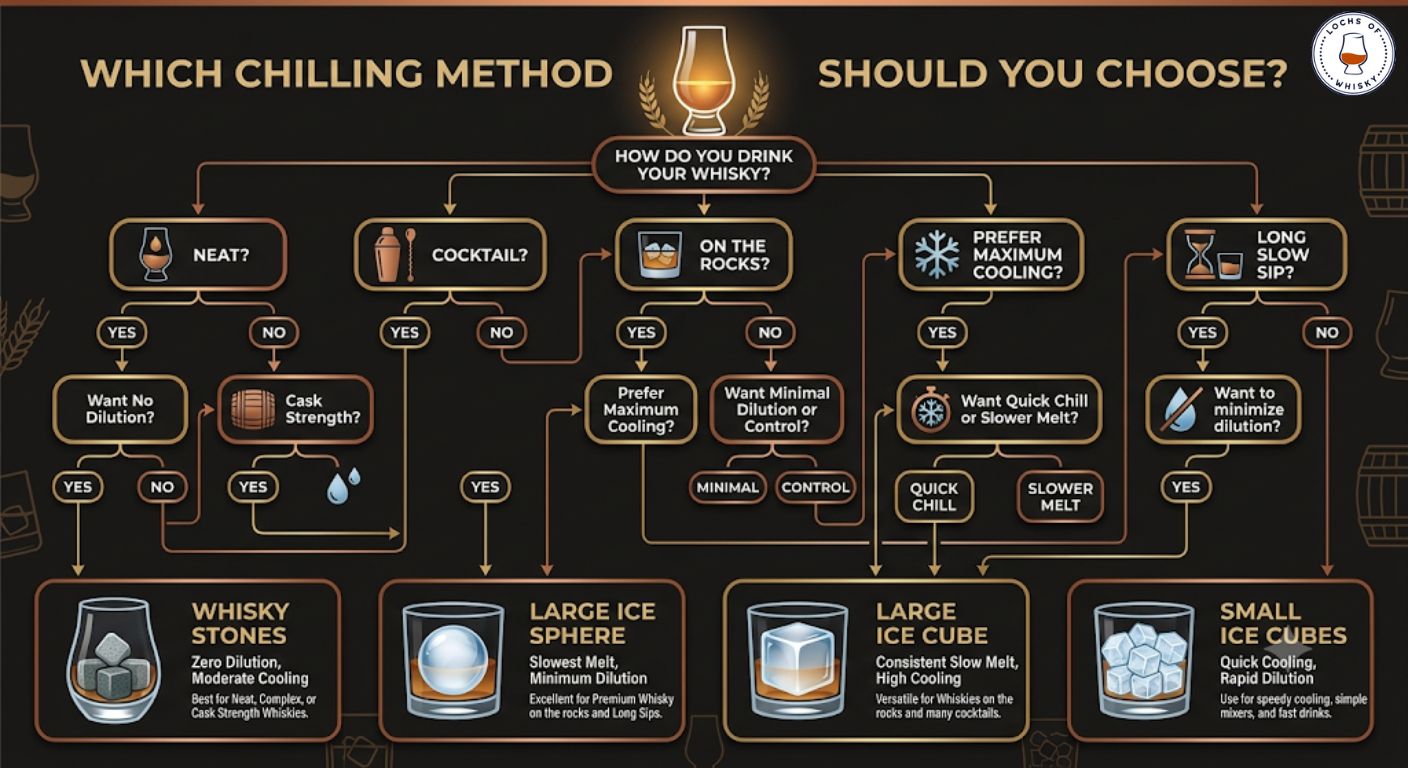
Use Whisky Stones When:
- You want a slightly cooler dram with no change to its ABV.
- You are drinking a lower-strength whisky that could become watery quickly.
- You prefer a subtle chill rather than a genuinely cold serve.
- You are willing to handle and clean the stones carefully.
Use a Large Ice Ball or Cube When:
- You are drinking a cask-strength or high-proof whisky.
- You want effective cooling with gradual dilution.
- You intend to sip the drink slowly.
- You are using a wide, heavy-based tumbler.
Avoid Whisky Stones When:
- You expect the drink to become as cold as it would over ice.
- You are using delicate crystal or narrow-rimmed glassware.
- You have concerns about loose objects striking your teeth.
- The material or food-safety standard is unclear.
How to Clean and Store Whisky Stones
- Rinse the stones under warm water immediately after use.
- Wash them with mild, unscented washing-up liquid.
- Rinse thoroughly to remove any soap residue.
- Allow them to air-dry completely.
- Store them in a sealed freezer pouch or clean container.
Do not freeze damp natural stone in a closed container. Avoid strongly scented detergents, as lingering aromas may transfer to the whisky. Follow the manufacturer’s instructions before placing stainless steel stones in a dishwasher.

Whisky Stones vs Ice: Final Verdict
Whisky stones prevent dilution, but they provide only a modest chill. Stainless steel versions perform better than soapstone, although both remain less effective than ice. For most people who want whisky properly chilled, one large ice sphere or cube is the strongest option because it combines efficient cooling with slow, controlled dilution.
Stones make sense for a drinker who values consistency of strength above temperature. Large-format ice suits stronger whiskies and anyone interested in how a dram develops as water is gradually introduced. Neither method is universally correct; the best choice is the one that produces the temperature, dilution and flavour balance you prefer.

Related Products
-
-
 Bimber The Spirit Of The Underground Covent Garden Single Malt WhiskySpecial Price £299.99 Regular Price £399.99 Inc VATSaving £100
 -

Comments