
 Chat with us on WhatsApp

World Whisky Beyond The Big Names: Indian, Taiwanese, Australian
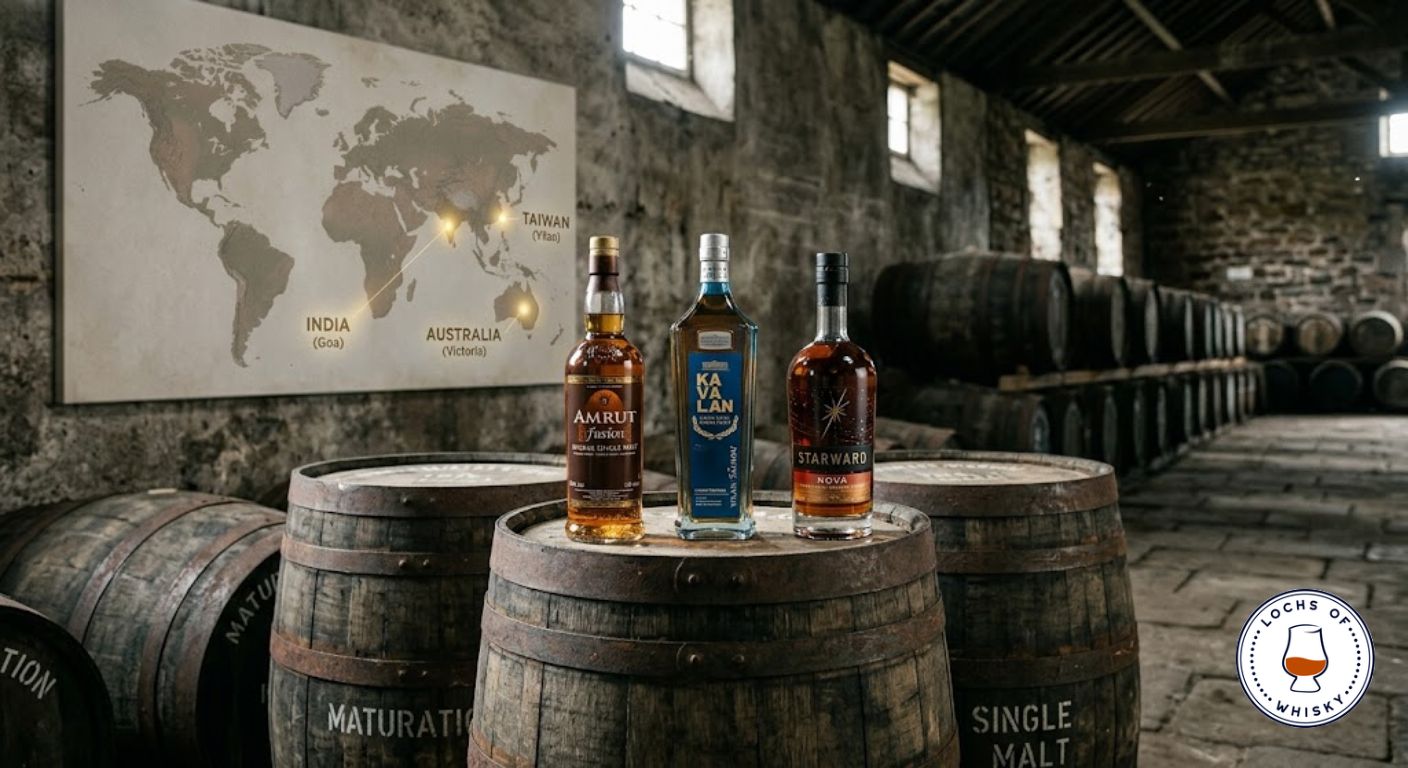
World whisky beyond Scotch is no longer a side category. Indian, Taiwanese, Australian and other new-world whiskies now offer serious alternatives for drinkers who want flavour intensity, regional identity and distillery-led discovery without relying only on Scotland, Ireland, Japan or America.
The main decision problem is knowing what actually matters. Age statements can be misleading in hot climates. A young whisky from India or Taiwan may show more cask influence than an older Scotch, while Australian whisky often builds its character around local barley, fortified wine casks and smaller-scale production. This guide explains how to assess world whisky by climate, maturation, cask type, ABV, provenance and price, so you can buy with clearer expectations.
If you want to browse the category while reading, the main commercial hub is world whisky at Lochs of Whisky.
What Counts As World Whisky Beyond Scotch?
World whisky usually refers to whisky made outside the traditional headline regions of Scotland, Ireland, America and Japan, although the boundary is flexible. In buying terms, it is more useful to think of world whisky as a set of emerging or less familiar producing countries with their own climates, rules and maturation styles.
India, Taiwan and Australia are three of the most important examples because they show how whisky changes when it is made outside Scotland’s cool, damp maturation conditions. These countries are not copying Scotch in a simple way. They use familiar production ideas — malted barley, copper pot stills, ex-bourbon casks, sherry-style casks — but the local climate and cask policy can create very different results.
This is why the phrase “world whisky beyond Scotch” matters. It is not just a shopping label. It helps explain why a three-year-old Indian single malt, a Taiwanese single malt from a humid warehouse, or an Australian whisky matured in Apera casks may taste more developed than its age suggests.
Why Climate Matters More Than Age
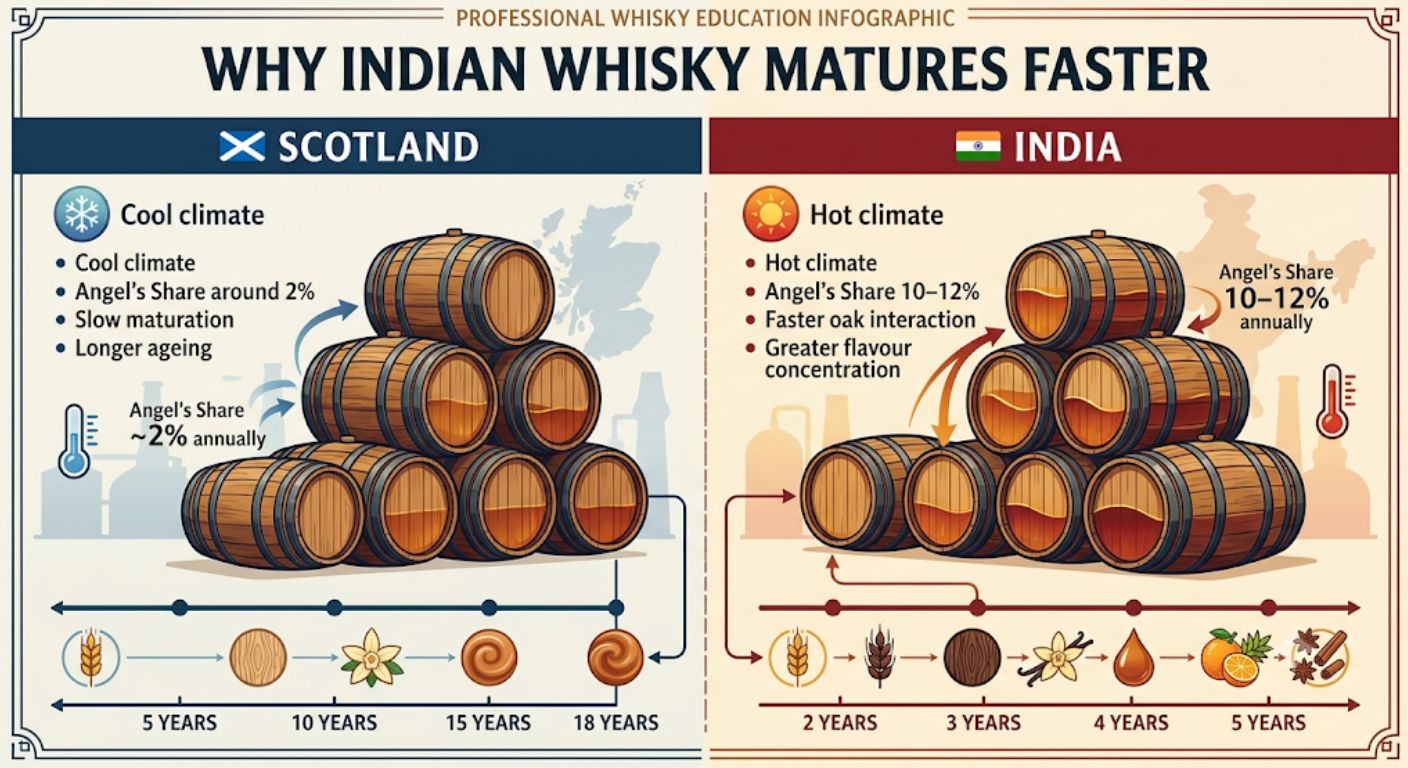
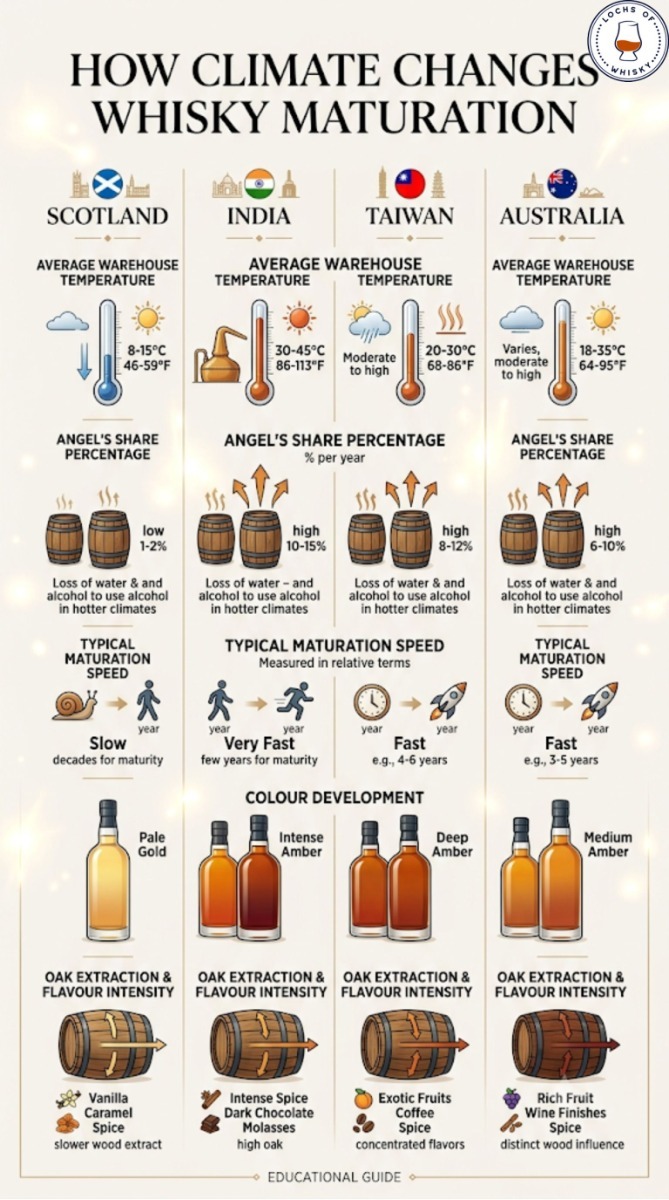
In Scotland, whisky usually matures slowly. The climate is cool and relatively stable, so the spirit interacts with oak over many years. In India and Taiwan, heat and humidity accelerate that process. Whisky moves in and out of the cask more aggressively, taking on oak, spice, fruit and colour at a faster rate.
This does not mean hot-climate whisky is automatically better. It means chronological age is less useful as a quality shortcut. A whisky that is three to five years old in India or Taiwan may show strong oak influence, high colour and concentrated flavour. The same age in Scotland would usually suggest a much younger profile.
The angel’s share is central to this. Scotland often loses around 2% of maturing whisky per year through evaporation. Hotter climates can lose far more, sometimes around 8–15% annually depending on the warehouse, temperature and humidity. That raises costs and changes flavour development.
Indian Whisky: Bold Flavour, Fast Maturation, Clear Buyer Rules
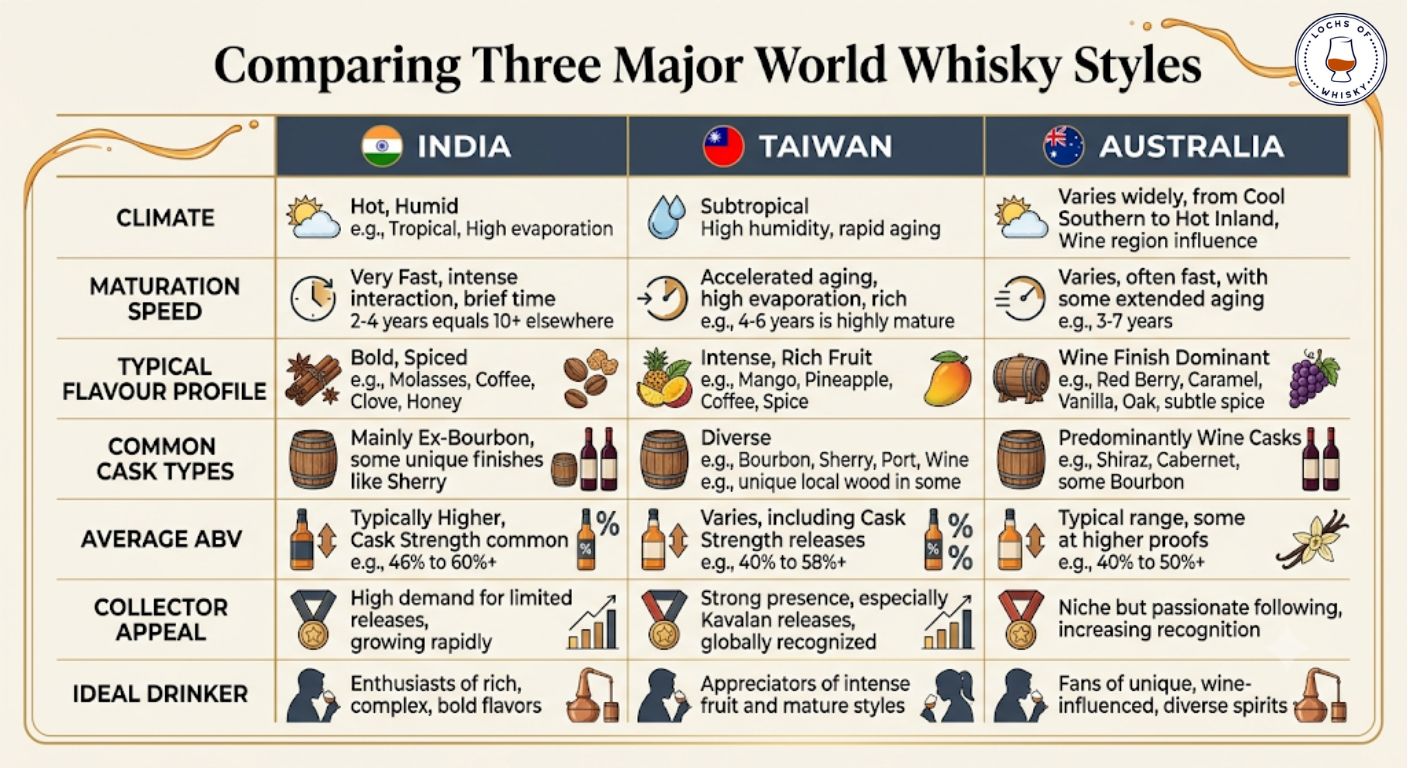
Indian single malt has become one of the most important world whisky categories because the climate creates intensity quickly. The best examples are usually made from malted barley, distilled in pot stills and matured in oak, often ex-bourbon or wine-influenced casks.
The key point for buyers is that Indian whisky should not be judged by Scotch age expectations. A young Indian single malt may carry ripe fruit, spice, vanilla, toasted oak and a heavier body. Cask strength releases can be powerful, so ABV matters. Many serious Indian single malts sit around 46–60% ABV, with the higher-strength bottles needing more careful drinking.
Indri is one of the names many UK buyers now recognise when exploring Indian single malt. Where relevant, you can view the Indri distillery page for bottle context and related releases.
Use Indian whisky when you want:
- High flavour intensity at a younger age
- Fruit, oak, spice and warmth rather than delicate restraint
- A useful alternative to sherry-led or bourbon-cask Scotch
- Strong value in the £40–£80 range, depending on ABV and cask type
Avoid assuming that older is always better. With Indian whisky, cask balance matters more than the number on the label.
Taiwanese Whisky: Precision, Humidity And Cask Power
Taiwanese whisky is shaped by heat, humidity and technically precise production. The climate creates rapid maturation, but the best bottles avoid becoming over-oaked. This balance is why Taiwanese whisky has gained such strong recognition among enthusiasts.
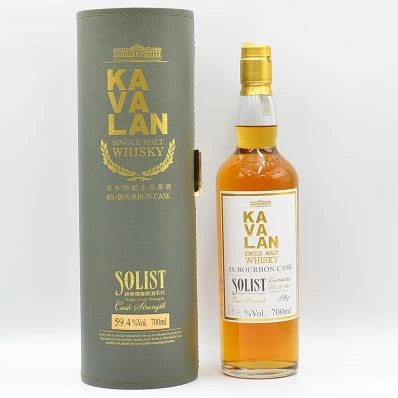
Kavalan is the best-known Taiwanese producer and a useful reference point for the category. Its whiskies often show tropical fruit, vanilla, coconut, oak spice and strong cask definition. Sherry casks, port casks and wine casks can produce rich, concentrated styles, while bourbon-cask releases tend to show cleaner fruit and vanilla.
For a deeper country-specific guide, read Your Guide To Taiwanese Whisky. You can also explore the Kavalan distillery page for distillery-led context.
Taiwanese whisky is usually a good choice if you prefer:
- Tropical fruit and polished oak
- Cask-led single malts with strong structure
- Higher ABV releases that still feel controlled
- Whisky that works well for collectors and drinkers alike
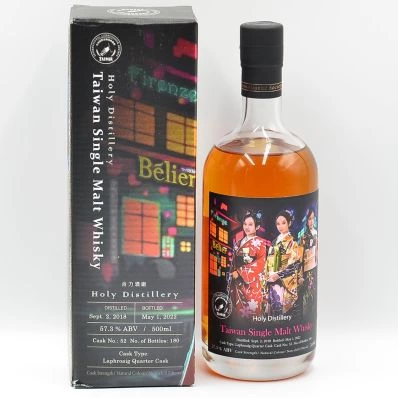
One thing our customers often underestimate is how much cask strength changes the experience: a 58% Taiwanese single malt is not just a stronger version of a 40% whisky, it can feel much denser, hotter and more concentrated.
Australian Whisky: Small-Scale Production And Local Cask Identity
Australian whisky is less uniform than Indian or Taiwanese whisky. The country has a wide range of climates, from Tasmania’s cooler conditions to warmer mainland regions. This creates a broad spectrum of styles rather than one single national profile.
Australian producers often work with smaller batches, local barley and distinctive cask choices. Apera casks — Australia’s term for sherry-style fortified wine casks — are especially important. These can bring dried fruit, spice, dark sweetness and texture without simply copying European sherry cask Scotch.
Tin Shed Distilling Co. is one example of the more specialist Australian distillery landscape. For bottle context, see the Tin Shed Distilling Co. distillery page.
Australian whisky is worth considering if you want:
- Small-batch production rather than large-volume consistency
- Fortified wine cask influence
- Regional variety rather than a fixed national style
- Collector interest from limited releases and smaller producers
The buying risk is variation. Some Australian whiskies are elegant and balanced; others are heavily cask-driven. Always check ABV, cask type and producer context before judging by country alone.
Other World Whisky Regions Worth Understanding
India, Taiwan and Australia are the core focus here, but world whisky also includes strong European and Nordic producers. These regions matter because they show how whisky can develop outside the old production centres without losing technical credibility.
Sweden has become especially important in Scandinavian whisky. Mackmyra helped establish modern Swedish whisky, while High Coast has built a reputation around northern maturation conditions and precise production.
Denmark also has a clear identity through Stauning, which works with floor maltings, rye, smoke and grain-led character.
Germany’s Slyrs shows how Bavarian single malt can sit within the wider European whisky conversation without needing to copy Scotland directly.
For general context on how whisky is developing globally, the Wine & Spirit Education Trust has a useful overview of world whisky and its global evolution.
How To Judge World Whisky Before Buying
The safest way to assess world whisky is to ignore country hype and check the details. The strongest bottles usually make their production context clear: distillery, country, whisky type, ABV, cask type, maturation approach and bottling details.
Check The ABV
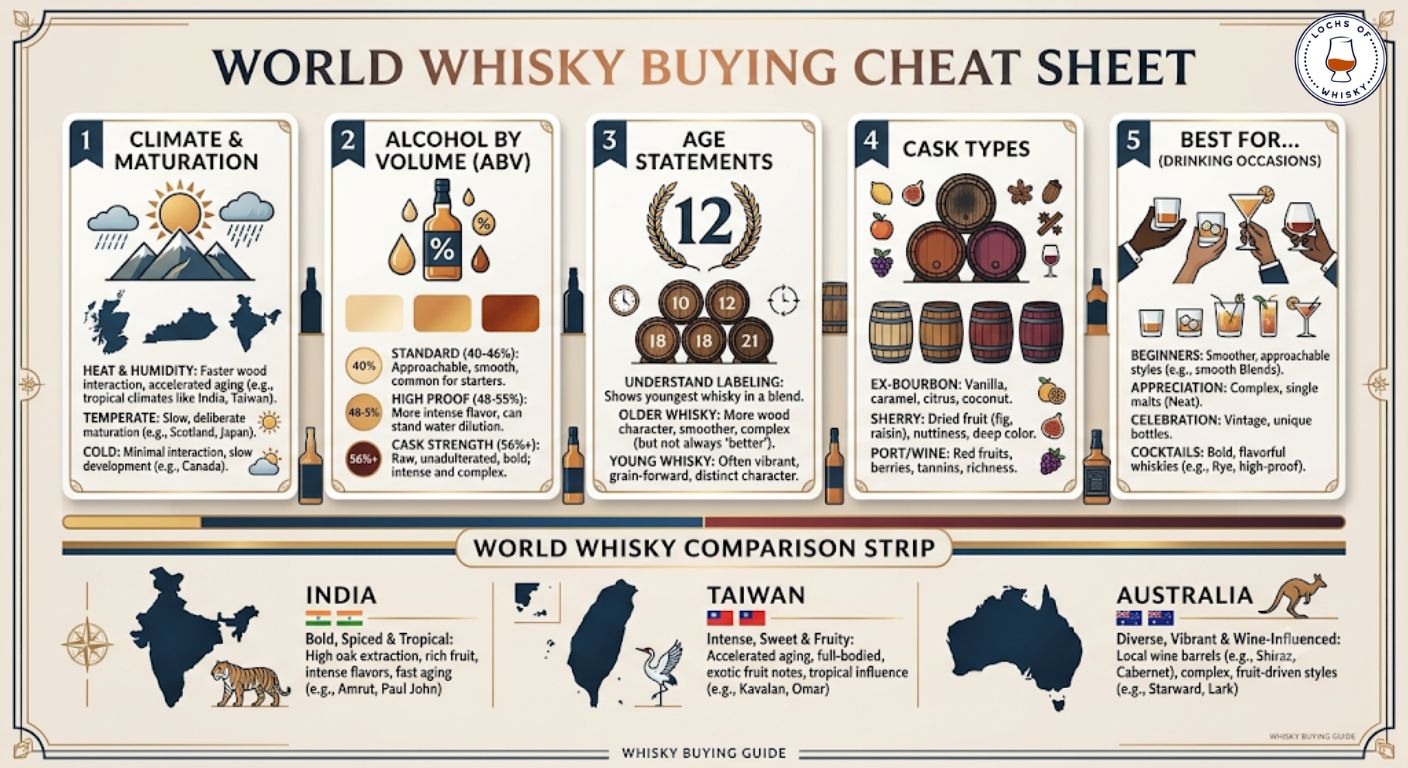
ABV changes both flavour and drinking experience. A 40–43% whisky will usually be softer and easier to approach. A 46% bottle often gives better texture and less dilution. Cask-strength world whisky can sit above 55%, which brings intensity but also heat.
Check The Cask Type
Ex-bourbon casks usually bring vanilla, citrus, coconut and lighter oak. Sherry-style or fortified wine casks bring dried fruit, spice and darker sweetness. Wine casks can add red fruit, tannin and grip. In hot climates, cask influence builds quickly, so heavy cask types need balance.
Check The Age Statement Carefully
Age does not mean the same thing everywhere. A young hot-climate whisky may show maturity beyond its years, while a poorly managed cask can become woody quickly. Treat age as one data point, not the main buying rule.
Check The Producer
Distillery identity matters. A named distillery with clear production details gives more confidence than a vague world whisky blend with limited provenance. This is especially important when buying bottles for collection, gifting or comparison tasting.
Decision Logic: Which World Whisky Should You Choose?
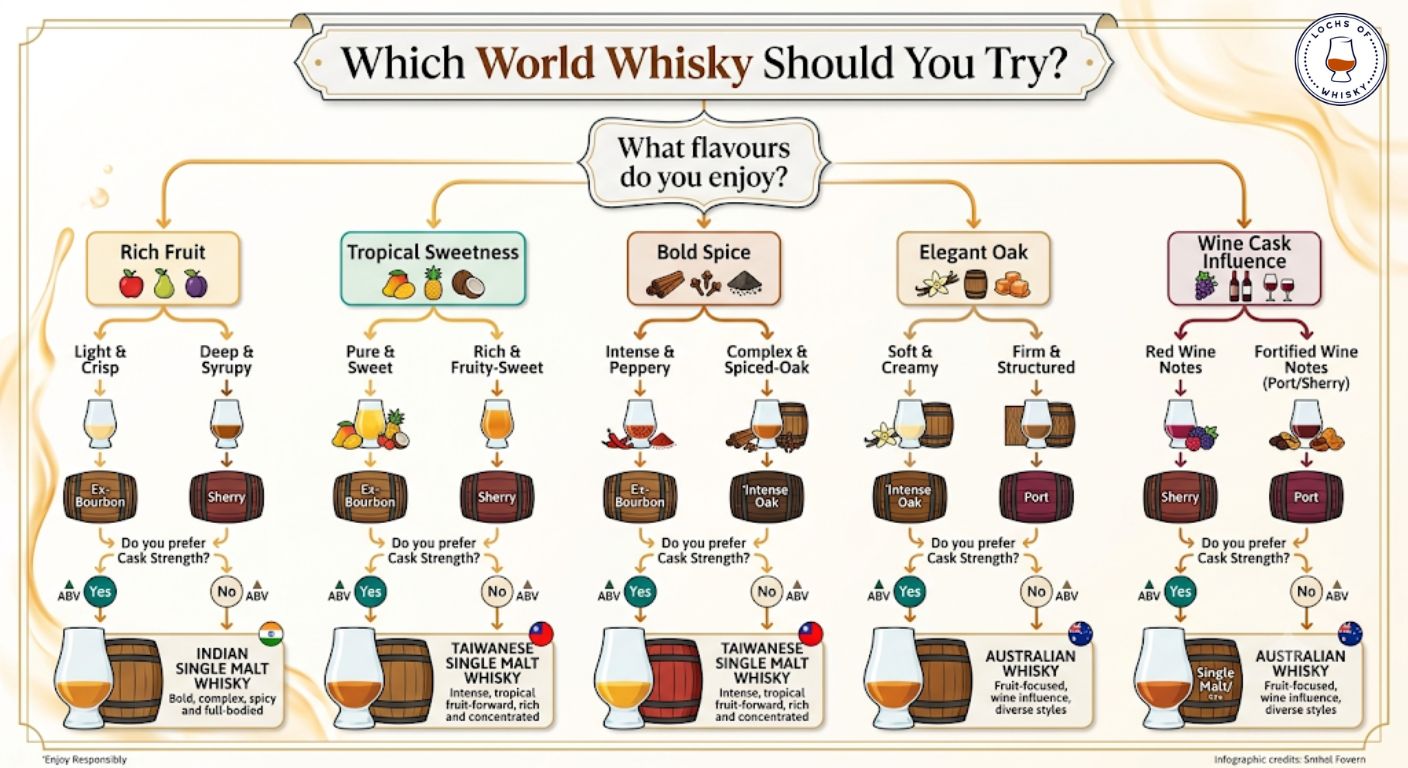
If you like rich, bold whisky with strong fruit, spice and oak, start with Indian single malt. Look around 46% ABV if you want balance, or higher if you already enjoy cask-strength Scotch.
If you prefer polished texture, tropical fruit and precise cask influence, choose Taiwanese whisky. Kavalan-style releases are especially useful for drinkers who like flavour concentration but still want structure.
If you want smaller-scale production, regional variation and cask-led individuality, look at Australian whisky. Pay close attention to Apera, wine and fortified cask maturation.
If you are exploring beyond India, Taiwan and Australia, Scandinavian and European whisky can be useful next steps. Sweden, Denmark and Germany often offer cleaner production stories and distinctive regional identities.
If your budget is £30–£60, avoid chasing trophy bottles. Look for well-made entry or mid-strength releases with clear distillery details. If your budget is £60–£120, you can consider stronger single malts, limited cask releases and more distinctive maturation styles.
Common Mistakes When Buying World Whisky
- Using Scotch age rules everywhere: hot-climate whisky matures differently.
- Ignoring ABV: cask-strength bottles can be much more intense than expected.
- Buying only by country: producer and cask type matter more.
- Assuming darker colour means better whisky: active casks and climate can create deep colour quickly.
- Missing provenance: clear distillery information is important for trust and bottle context.
FAQ
Why does Indian whisky mature faster than Scotch?
Indian whisky matures faster because heat and humidity increase the interaction between spirit and oak. The angel’s share can be far higher than Scotland’s typical annual loss, so flavour, colour and cask influence build quickly. This is why a young Indian single malt can taste more mature than its age suggests.
Is Indian single malt as good as Scotch?
Indian single malt can be excellent, but it should not be judged as a direct Scotch substitute. It often delivers more intensity at a younger age, with bold fruit, spice and oak. Scotch still offers greater regional depth and longer historical provenance, while Indian whisky offers strong flavour and value.
What is the angel’s share in hot climates?
The angel’s share is the whisky lost to evaporation during maturation. In Scotland it is often around 2% per year. In hotter climates such as India or Taiwan, losses can be much higher, sometimes around 8–15% depending on warehouse conditions, cask type and local climate.
Is Taiwanese whisky good for collectors?
Taiwanese whisky can appeal to collectors because leading distilleries produce distinctive cask-led releases with strong global recognition. The best approach is to look for clear distillery provenance, limited release details, ABV, cask type and packaging condition. Avoid buying only because a bottle is described as rare.
What makes Australian whisky different?
Australian whisky is shaped by regional climate variation, smaller-scale production and distinctive cask use. Apera and fortified wine casks are common points of difference. The category is broad, so bottle quality depends heavily on producer, cask selection, ABV and maturation control.
What is the best first world whisky beyond Scotch?
For most buyers, a balanced Indian or Taiwanese single malt around 46% ABV is the safest starting point. Choose Indian whisky for bold fruit and spice. Choose Taiwanese whisky for tropical fruit and polished cask influence. Choose Australian whisky if you want a more individual, small-producer style.
Structured Summary
- ABV: 40–43% is softer; 46% often gives better texture; 55%+ needs more experience.
- Age: do not compare hot-climate age statements directly with Scotch.
- Region: India gives intensity, Taiwan gives precision, Australia gives cask-led variety.
- Cask type: ex-bourbon is cleaner; sherry, Apera and wine casks are richer and heavier.
- Provenance: named distillery, clear bottling details and cask information matter.
The main shortcut is simple: choose Indian whisky for boldness, Taiwanese whisky for polished tropical concentration, Australian whisky for smaller-scale individuality, and European or Scandinavian whisky for further regional discovery. To continue browsing by country and style, use the world whisky category.

Comments