
 Chat with us on WhatsApp


Best Bourbon Brands: A Complete Buyer’s Guide
Bourbon is one of the most searched-for American whiskey styles, but choosing between brands is not as simple as picking the most famous label. The better question is what kind of bourbon buyer you are: beginner, Scotch drinker, cocktail maker, collector, high-proof drinker, or someone looking for reliable value in the UK.
This guide explains how to compare bourbon brands by style, proof, mash bill, age, availability, price tier and distillery background. It is not a countdown list. It is a buying framework designed to help you understand why one bourbon may suit you better than another.
For current bottle discovery, Lochs of Whisky keeps its main American selection under Bourbon Whiskey, with wider American styles grouped separately under American Whiskey.
What Makes A Bourbon Brand Worth Considering?
A bourbon brand is worth considering when the bottle gives you clear information about what is inside: producer, style, ABV, age statement where relevant, mash bill direction, cask influence and realistic price position.
Brand fame matters less than bottle clarity. Some large brands produce reliable, accessible bourbon. Some smaller producers offer distinctive whiskey with more variation. Some allocated names carry prices that no longer match the drinking experience.
A good bourbon brand usually gives you at least three of the following:
- Clear distillery or producer identity
- Consistent house style
- Sensible ABV for the intended drinker
- Honest pricing against UK availability
- Useful bottle information
- A range that helps you move from entry-level to more complex releases
The legal baseline also matters. Bourbon must be made in the United States from a mash bill of at least 51% corn, distilled below 160 proof, entered into new charred oak at no more than 125 proof, and bottled at no less than 80 proof. The US eCFR sets out the federal standards for bourbon and related whiskey categories in its distilled spirits rules: 27 CFR § 5.143.
That legal definition tells you what bourbon is. It does not tell you whether a bottle is balanced, good value, overhyped, beginner-friendly or worth paying UK pricing for. That is where buying judgement matters.
How Bourbon Brands Differ
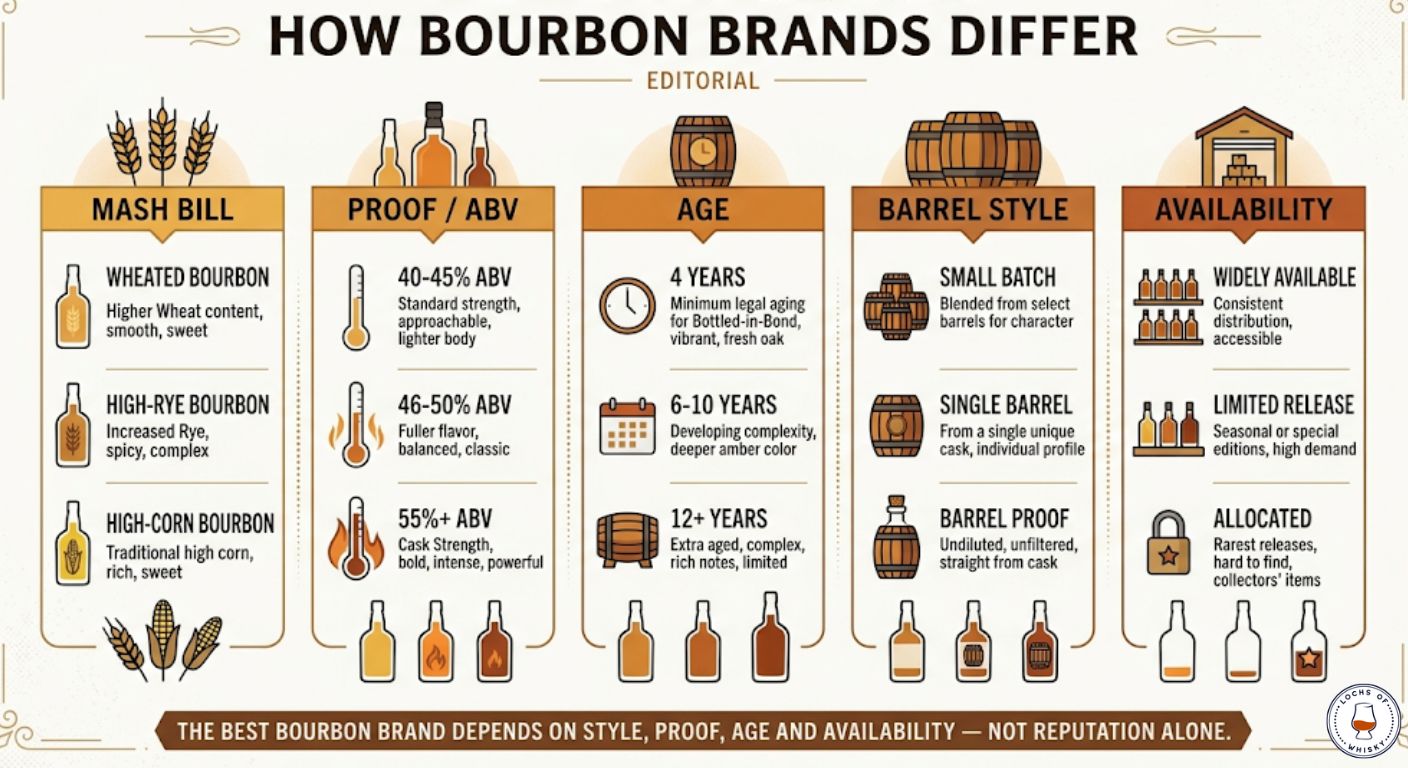
Most bourbon brands differ through five main factors: mash bill, proof, age, barrel selection and availability.
Mash Bill
Bourbon must contain at least 51% corn, but the remaining grain mix shapes the style.
High-corn bourbons tend to feel sweeter, softer and more vanilla-led. Wheated bourbons replace rye with wheat, usually giving a rounder, smoother profile. High-rye bourbons bring more spice, pepper, orange peel and structure.
This is why two bourbons at the same ABV can taste very different. A wheated bourbon at 45% ABV may feel softer than a high-rye bourbon at the same strength.
Proof And ABV
Proof is a major buying signal in bourbon.
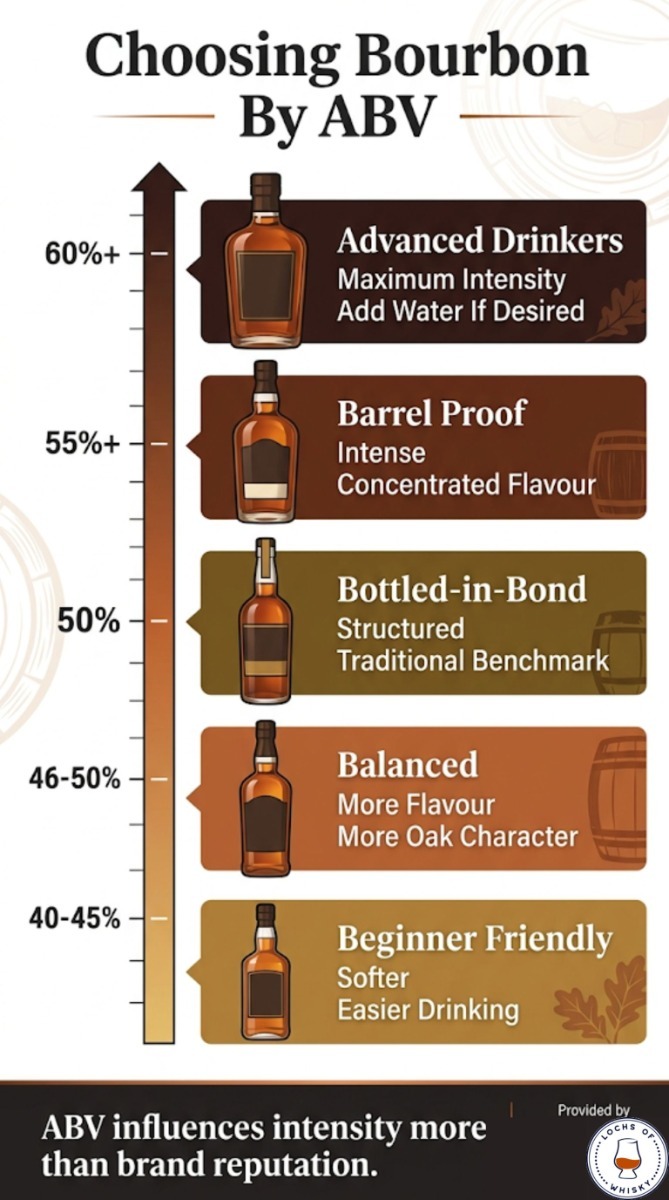
- 40–45% ABV: softer, easier, better for beginners
- 46–50.5% ABV: fuller flavour, still controlled
- 50% ABV: bottled-in-bond territory
- 55%+ ABV: cask strength or barrel proof, more intense
- 60%+ ABV: powerful, often best for experienced drinkers
A higher ABV does not automatically mean better bourbon. It means more concentration, more heat and less dilution. Some drinkers want that density. Others find it tiring.
One thing our customers often do not flag until after the bottle arrives is that barrel-proof bourbon can feel far more aggressive than Scotch at a similar ABV, because American oak sweetness and alcohol heat arrive together.
Age Statement
Bourbon does not need an age statement to be good. New charred oak gives strong flavour quickly, so many bourbons reach a useful balance between around four and ten years.
Older bourbon can be excellent, but too much time in new oak may create heavy tannin, dry wood, bitter spice or over-concentrated oak. For many buyers, the sweet spot is not the oldest bottle. It is the bottle where oak, sweetness, spice and proof are in balance.
Barrel Selection
Single barrel, small batch and barrel proof all signal different approaches.
Small batch bourbon is usually made by blending a controlled number of barrels to create a consistent profile. Single barrel bourbon comes from one barrel, so it may show more individuality and variation. Barrel proof or cask strength bourbon is bottled with little or no dilution, giving more power and concentration.
Availability
Availability changes the buying decision, especially in the UK. Some bottles that are reasonable in the US become expensive or inconsistent in the UK. Others are widely available and fairly priced.
This matters because “best bourbon brands” is not just a flavour question. It is also a value question. A bottle that makes sense at £35 may stop making sense at £85.
Major Bourbon Brand Types
Rather than ranking brands from worst to best, it is more useful to group them by buyer type.
Large Kentucky Producers
Large Kentucky producers usually offer the most reliable entry point. They have scale, mature stock, recognisable house styles and broad ranges.
Examples include brands linked to producers such as Buffalo Trace, Jim Beam, Barton, Heaven Hill, Wild Turkey, Four Roses and Maker’s Mark. These names are not all equal in pricing or availability, but they define much of the modern bourbon shelf.
Lochs of Whisky also carries distillery context pages for several major producers, including Buffalo Trace, Jim Beam and Barton Distillery.
Wheated Bourbon Brands
Wheated bourbon is often a strong choice for drinkers who want softness and sweetness without too much rye spice.
- Caramel
- Vanilla
- Soft baking spice
- Brown sugar
- Gentle oak
- Round texture
Wheated bourbon is not automatically beginner bourbon. Some wheated releases are high proof, expensive or heavily allocated. But at moderate ABV, it can be one of the easiest styles to understand.
High-Rye Bourbon Brands
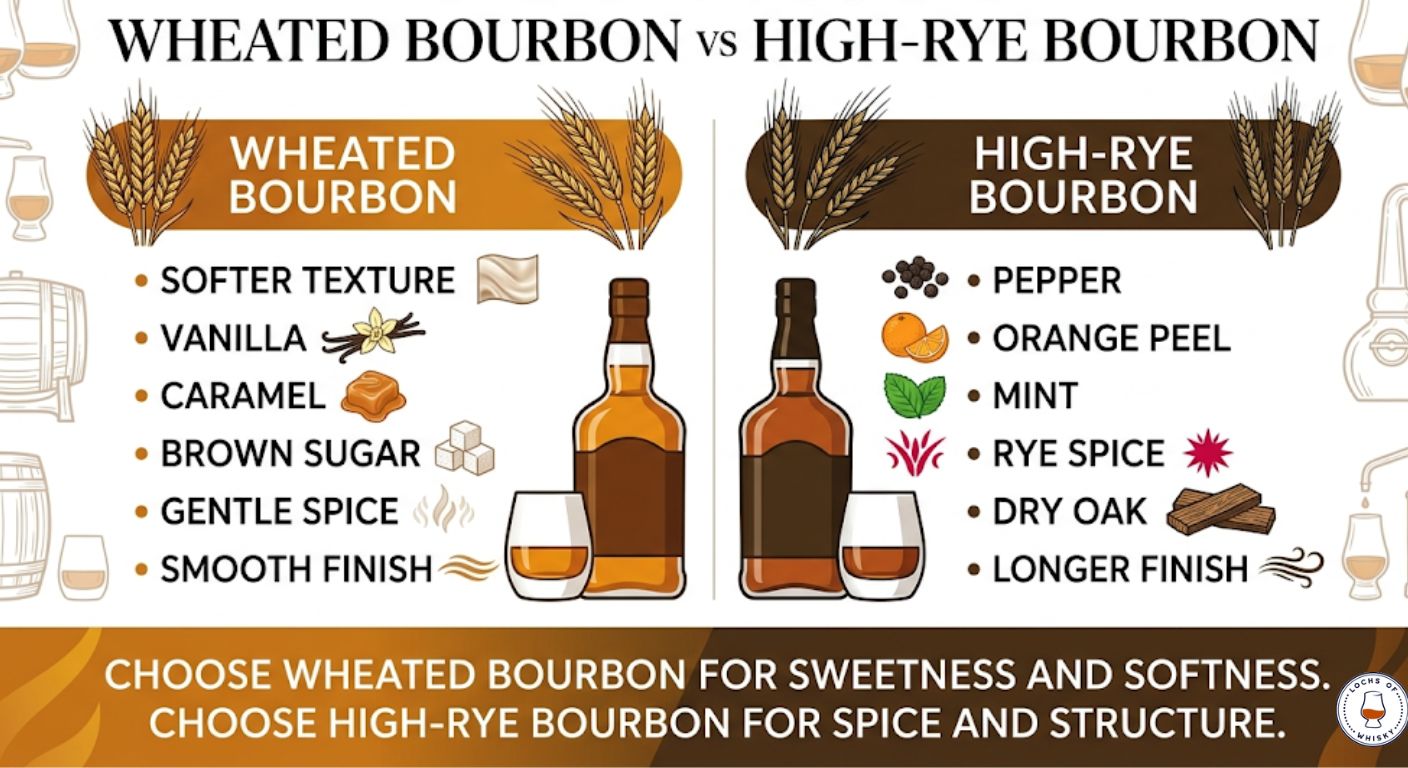
High-rye bourbon suits drinkers who want more spice, lift and structure.
- Pepper
- Orange peel
- Mint
- Rye spice
- Dry oak
- Sharper finish
This style often works well for drinkers who find soft bourbon too sweet. It can also appeal to Scotch drinkers who prefer structure over syrupy sweetness.
Bottled-in-Bond Bourbon
Bottled-in-bond is a useful quality signal, but it is not a guarantee that you will like the bottle.
In broad terms, bottled-in-bond bourbon must be the product of one distillery, one distilling season, aged under US government supervision for at least four years, and bottled at 100 proof, or 50% ABV.
For buyers, the practical point is simple: bottled-in-bond bourbon gives you defined strength and a minimum maturity standard. It is often a strong middle ground between gentle entry-level bourbon and full barrel proof releases.
Craft Bourbon Brands
Craft bourbon can be interesting, but it requires more caution. Smaller producers may offer distinctive grain choices, local production and unusual maturation approaches. They may also release younger whiskey at higher prices because they do not have the aged stock depth of larger distilleries.
Craft bourbon is worth considering when the bottle tells you enough: age, proof, mash bill, state, distillery, cask details and bottling style. If the label leans only on “small batch”, “handcrafted” or local identity without meaningful detail, judge carefully.
Best Bourbon Brands By Buyer Type
For Beginners
A good beginner bourbon should usually sit around 40–45% ABV. It should not be too tannic, too hot or too expensive. The aim is to understand bourbon’s core profile before moving into cask strength, single barrel variation or heavily oaked releases.
- 40–45% ABV
- Clear caramel and vanilla character
- Moderate oak
- No excessive alcohol heat
- Price around £30–£50 in the UK
Avoid starting with barrel proof bourbon unless you already drink high-strength whisky. It may be impressive, but it can make bourbon seem hotter and less balanced than it really is.
For Scotch Drinkers
Scotch drinkers often need to recalibrate when buying bourbon. Bourbon usually carries more vanilla, caramel, coconut, corn sweetness and new oak than Scotch. It can feel sweeter and more direct.
If you usually drink Speyside single malt, start with softer wheated or lower-proof bourbon. If you prefer Highland or Island Scotch, a higher-rye bourbon may give more structure. If you like heavily sherried Scotch, consider finished bourbon cautiously, but do not expect it to behave like full sherry-cask maturation.
For Cocktail Use
For cocktails, avoid bourbon that disappears once mixed. You usually want enough proof and spice to hold structure.
A useful range is 45–50% ABV. High-rye bourbon and bottled-in-bond bourbon often work well because they bring spice, oak and enough strength to remain visible in the drink.
You do not need a rare bottle for cocktail use. In fact, using an expensive allocated bottle in cocktails is usually poor value.
For Collectors
Collectors usually look at producer, age, batch, discontinued status, allocation, condition and release context. In bourbon, scarcity can drive attention quickly, but not all scarcity is meaningful.
- Genuinely limited releases
- Discontinued age statements
- Respected batch codes
- Distillery-led releases
- Marketing-led scarcity
- Secondary market inflation
A high price does not prove quality. It may only prove demand.
For Value Buyers
Value bourbon in the UK is about fair pricing, not lowest price. A bottle can be good value at £45 if it offers quality, maturity and availability. Another bottle can be poor value at £70 if the same drinking experience exists elsewhere for less.
- Under £35: expect simplicity
- £35–£60: strongest general buying range
- £60–£100: look for clear added value
- £100+: expect proof, age, rarity or release significance
- £200+: buy for collectability or specialist interest, not casual drinking
Kentucky Bourbon Brands
Kentucky remains the centre of bourbon production, though bourbon does not legally have to come from Kentucky. The state matters because of its production history, concentration of major distilleries, climate, warehousing traditions and brand depth.
For buyers, Kentucky bourbon often means better access to mature stock and established house styles. That does not mean every Kentucky bottle is better than every non-Kentucky bottle. It means the region gives you a strong starting point.
How To Read A Bourbon Label
A bourbon label gives you most of the buying information you need if you know what to look for.
Producer Or Distillery
Check whether the bottle names a distillery, producer or sourcing partner. Some bourbon brands distil their own whiskey. Others source whiskey and bottle it under their own label.
Sourced bourbon is not automatically inferior. Some sourced releases are excellent. But transparency matters.
Age Statement
If an age statement is present, read it as context, not a score. A six-year bourbon may be better balanced than a twelve-year bourbon if the older bottle has become too woody.
If no age statement is present, look harder at proof, producer reputation and price.
ABV
ABV tells you how intense the bottle is likely to feel. For most buyers, this is more immediately useful than brand fame.
A 40% bourbon and a 60% bourbon are not close substitutes. They may come from the same producer, but they serve different drinkers.
Small Batch
Small batch usually means a controlled blend of selected barrels. It does not have a single legal meaning, so judge it alongside producer reputation, proof and price.
Single Barrel
Single barrel means the bottle comes from one barrel. This gives more individuality, but also more variation. One barrel may be excellent; another may be less balanced.
Barrel Proof Or Cask Strength
This means the whiskey has been bottled close to its natural barrel strength. Expect more flavour concentration and more alcohol heat. Add water if needed.
Finished Bourbon
Finished bourbon has spent additional time in another cask type, such as port, sherry, rum or toasted oak. Finishing can add complexity, but it can also cover young spirit or push the bottle into sweetness.
Bourbon Brand Decision Logic
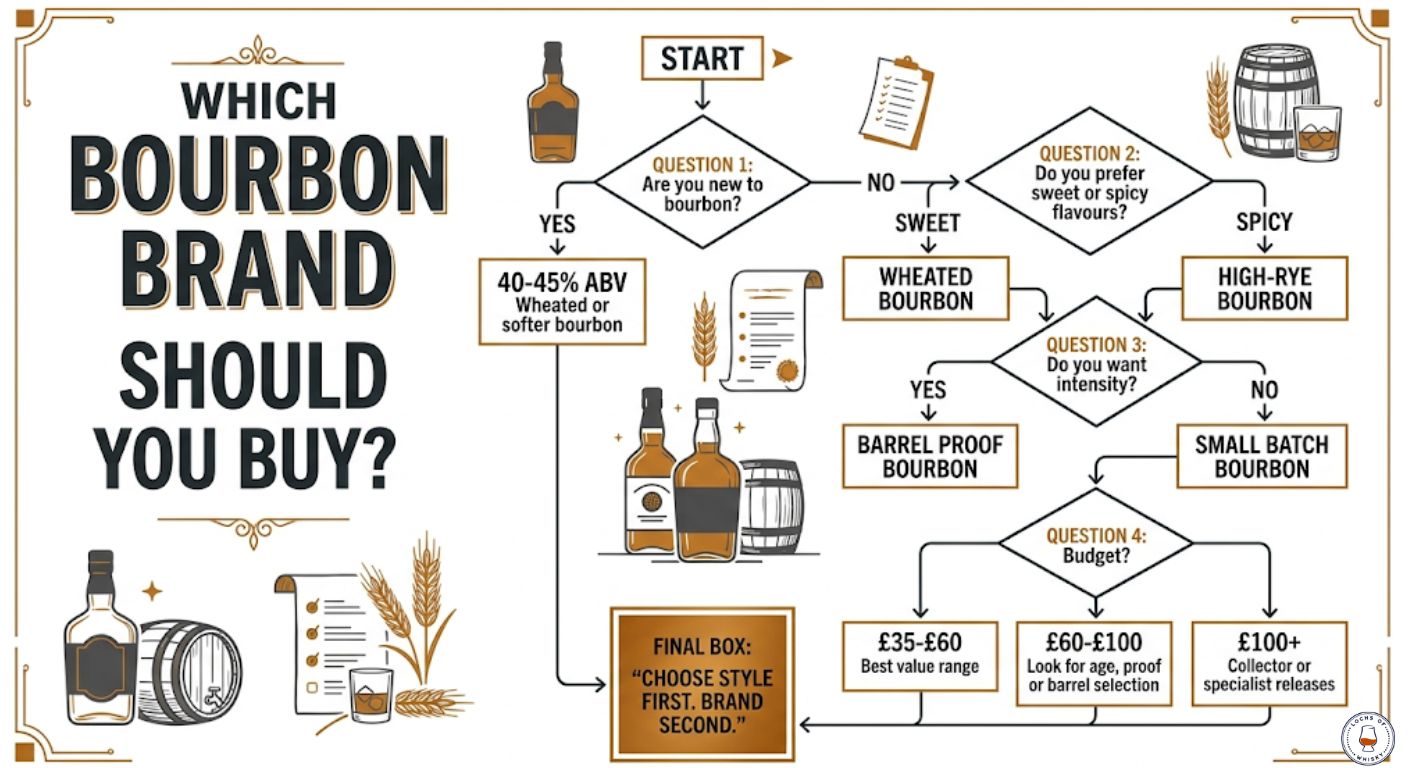
Use this section as a quick decision tool.
- If you are completely new to bourbon, choose a lower-proof bottle around 40–45% ABV from a reliable producer.
- If you want smoothness, choose wheated bourbon or a softer high-corn bourbon.
- If you want spice and structure, choose high-rye bourbon or bottled-in-bond bourbon.
- If you want intensity, choose barrel proof or cask strength bourbon.
- If you want value, focus on the £35–£60 range.
- If you want collectability, check producer, release type, batch, age, condition and availability.
- If you drink Scotch and want a bridge into bourbon, start with a brand that shows balance rather than maximum sweetness.
Common Bourbon Buying Mistakes
The first mistake is assuming the famous bottle is always the right bottle. In bourbon, some of the most discussed names are also the most price-distorted.
The second mistake is chasing proof too early. High-proof bourbon can be excellent, but it is not the correct starting point for every buyer.
The third mistake is ignoring UK pricing. American recommendations often assume US shelf prices. A bourbon that is a bargain in Kentucky may be poor value once it reaches the UK.
The fourth mistake is treating age as a simple quality ladder. New charred oak is powerful. More years can mean more complexity, but also more dryness and oak dominance.
The fifth mistake is buying craft bourbon without checking age and production detail. Craft does not automatically mean better. It means different, and sometimes younger.
FAQ
What are the best bourbon brands for beginners?
The best beginner bourbon brands are usually those offering lower-proof, consistent bottles around 40–45% ABV. Look for caramel, vanilla, soft oak and controlled spice. Avoid starting with barrel proof or heavily allocated releases. A £30–£50 bottle from an established producer is usually a better first step than a rare bottle.
What proof is good for beginner bourbon?
A good beginner bourbon usually sits at 80–90 proof, or 40–45% ABV. That range gives enough flavour without making alcohol heat the main feature. Once you understand the style, 46–50% ABV is a sensible next step. Barrel proof bourbon is better left until you know what level of intensity you enjoy.
Is expensive bourbon always better?
No. Expensive bourbon may reflect age, scarcity, batch reputation, import cost or secondary market demand. It does not always mean better flavour. Many buyers get better value between £35 and £60 than they do chasing inflated allocated bottles. Over £100, check what you are actually paying for: age, proof, rarity or collectability.
What is the difference between wheated and high-rye bourbon?
Wheated bourbon replaces rye with wheat, usually creating a softer, rounder profile with caramel, vanilla and gentle spice. High-rye bourbon uses more rye in the mash bill, giving pepper, citrus peel, mint and a drier finish. Choose wheated bourbon for softness and high-rye bourbon for structure.
What does bottled-in-bond mean?
Bottled-in-bond bourbon is bottled at 100 proof, or 50% ABV, and must meet defined US production standards, including being from one distillery and one distilling season, with at least four years of ageing. For buyers, it often signals a useful balance of maturity, structure and strength.
Is single barrel bourbon better than small batch bourbon?
Not always. Single barrel bourbon gives individuality, but each barrel can vary. Small batch bourbon is blended from selected barrels for consistency. Choose single barrel if you want variation and character. Choose small batch if you want a more controlled house style. Neither term automatically guarantees quality.
Why is bourbon more expensive in the UK?
UK bourbon prices reflect import costs, taxes, distribution, limited allocation and demand. Some bottles that are everyday purchases in the US become premium purchases in the UK. Always judge bourbon against UK shelf pricing, not American recommendation lists. A bottle can be good whiskey and still be poor value here.
Are craft bourbon brands worth buying?
Craft bourbon brands can be worth buying when they disclose useful details: age, proof, mash bill, production site and cask approach. Be cautious when a bottle relies only on vague terms such as small batch or handcrafted. Smaller producers often have less mature stock, so price should be judged carefully.
Should I buy bourbon by brand or by style?
Buy by style first, then brand. Decide whether you want soft, spicy, high-proof, cocktail-friendly, collectible or value-led bourbon. Brand choice becomes easier once you know the style. A famous label is less useful than understanding ABV, mash bill, age and price.
What is the safest bourbon price range in the UK?
For most buyers, £35–£60 is the safest bourbon range in the UK. Below that, bottles can be simple but useful. Above £60, expect a clear reason for the extra cost, such as higher proof, better age, single barrel selection, limited release status or stronger producer reputation.
Structured Summary
The strongest bourbon buying decisions come from reading the bottle, not chasing the loudest brand.
Key Rules
- Start around 40–45% ABV if you are new to bourbon.
- Use 46–50% ABV when you want more structure without excessive heat.
- Choose wheated bourbon for softness.
- Choose high-rye bourbon for spice.
- Treat age as context, not proof of quality.
- Be cautious with UK prices on allocated bottles.
- Use barrel proof bourbon only if you want intensity.
- Judge craft bourbon by disclosed detail, not branding language.
Common Mistakes
- Paying secondary-style prices for ordinary drinking bottles
- Starting with cask strength too early
- Assuming older bourbon is always better
- Ignoring mash bill
- Treating “small batch” as a fixed quality guarantee
- Following US price advice without adjusting for UK availability
Decision Shortcuts
- New buyer: lower proof, established producer, £30–£50
- Scotch drinker: balanced oak, moderate ABV, avoid extreme sweetness
- Cocktail buyer: 45–50% ABV, high-rye or bottled-in-bond
- Value buyer: £35–£60, avoid allocation markups
- Collector: producer, batch, age, condition and release context first
For wider browsing, the full American Whiskey category gives useful context beyond bourbon alone, including related US whiskey styles.

Comments