
 Chat with us on WhatsApp

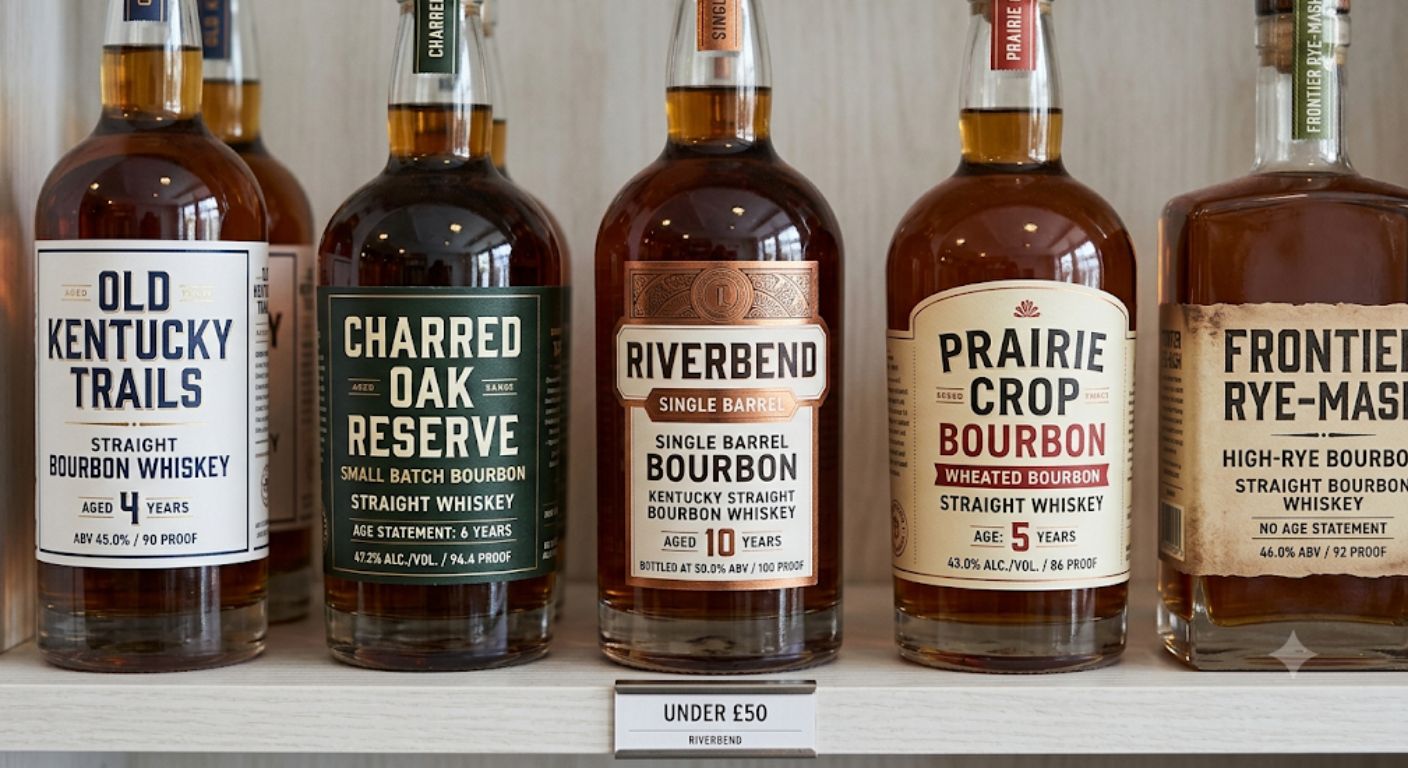
Best Bourbon Under £50: Top Value Bottles
Introduction
Finding the best bourbon under £50 is mostly about avoiding poor value, not chasing the loudest bottle on the shelf. In this price range, the strongest choices usually come from clear production standards: straight bourbon, sensible ABV, reliable distillery provenance, and a flavour profile that suits how you plan to use it.
This guide explains what to look for before buying bourbon under £50 in the UK. It covers ABV, age statements, mash bills, Bottled-in-Bond, small batch wording, single barrel variation, and the difference between an everyday sipper and a bottle better suited to cocktails.
For current bottles within this price point, the Lochs of Whisky Best Bourbon Under £50 category is the natural place to compare available options after you understand the buying logic.
What Makes A Bourbon Good Value Under £50?
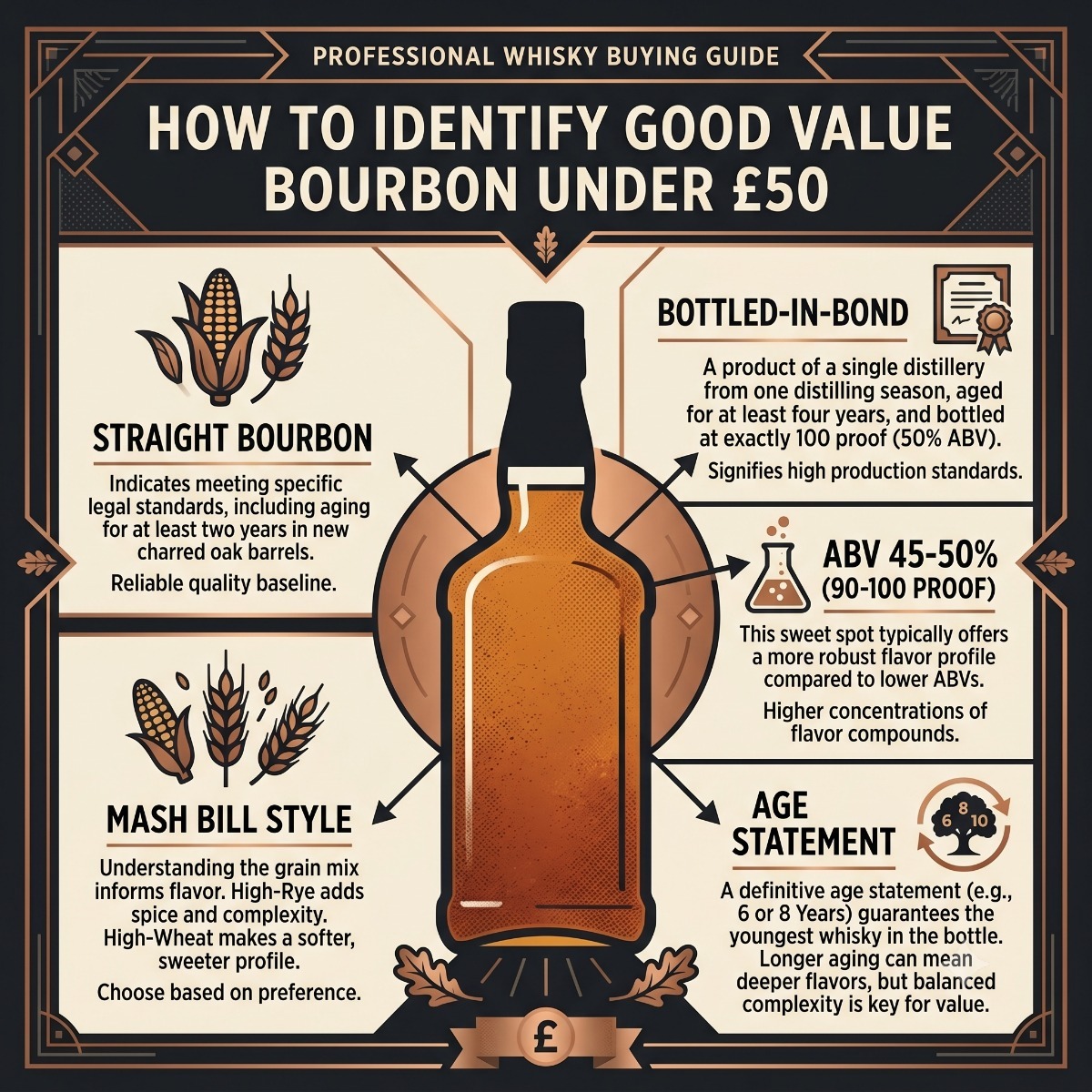
Good value bourbon under £50 usually has at least one of four strengths: a solid legal designation, a useful ABV, a recognisable production style, or consistent availability. A bottle does not need all four, but it should have a clear reason to justify its price.
The most useful value signals are:
- Straight bourbon — usually a safer baseline than vague American whiskey wording.
- 45–50% ABV — often gives better structure than basic 40% bottles.
- Bottled-in-Bond — guarantees 50% ABV and minimum four years’ ageing.
- Age statement — useful when the bottle is genuinely mature for the price.
- Clear mash bill style — high-rye, wheated, or corn-led.
- Reliable availability — a bottle you can replace is often more useful than an allocated one.
Under £50, you are not usually buying extreme age or rarity. You are buying balance: enough maturity, enough proof, and enough flavour to justify the spend.
Bourbon Under £50 In The UK: What Buyers Need To Know
UK bourbon prices do not always match US bourbon prices. A bottle that appears to be a budget staple in America can become a mid-tier bottle once imported, distributed, taxed, and retailed in the UK. This is why UK buyers should judge bourbon by local shelf price, not American listicles.
A strong UK under-£50 bourbon should do one of the following:
- Offer dependable everyday drinking quality.
- Bring higher proof without becoming harsh.
- Provide a clear mash bill identity.
- Work well neat and in an Old Fashioned.
- Come from a producer with consistent quality control.
This is also why bottle availability matters. Some bourbons are heavily discussed online but difficult to find at fair UK prices. If a bottle is only good value at its American retail price, it may not be good value in Britain.
For the wider category, including bottles above and below this price point, see the Lochs of Whisky Bourbon Whiskey selection.
Straight Bourbon, Age Statements And Why The Label Matters
Straight bourbon is one of the most useful phrases on a bottle because it tells you the whiskey has met stricter production rules. Bourbon must be made in the United States from a mash bill of at least 51% corn and aged in new charred oak. Straight bourbon must also be aged for at least two years.
The Alcohol and Tobacco Tax and Trade Bureau explains US whiskey labelling and age-statement requirements in its official distilled spirits guidance, which is useful when checking what a label can and cannot claim.
In practice:
- No age statement does not mean poor quality.
- Straight bourbon is a helpful minimum standard.
- Under four years old straight bourbon must carry an age statement.
- Four years and older does not always need an age statement.
- Older is not automatically better if the cask quality is weak.
A clear label reduces buyer error. If a bottle does not tell you much about what it is, the price needs to be low enough to justify that uncertainty.
Bottled-in-Bond: One Of The Strongest Value Signals
Bottled-in-Bond is one of the clearest quality markers in American whiskey. It means the whiskey comes from one distillery, in one distilling season, has been aged for at least four years, and is bottled at exactly 100 proof, or 50% ABV.
For under £50, that matters because it gives you three things at once:
- Enough age to avoid very young spirit character.
- Enough ABV to hold flavour.
- A regulated production standard rather than loose marketing wording.
Bottled-in-Bond bourbon is especially useful if you want one bottle that can work both neat and in cocktails. The 50% ABV gives structure without moving into cask-strength territory.
The trade-off is intensity. If you prefer softer whiskey, Bottled-in-Bond can feel firmer than 40–45% bourbon. If you like flavour concentration, it is often one of the safest ways to spend under £50.
ABV: Why Proof Matters Under £50
ABV is one of the fastest ways to judge bourbon value. At this price point, very low ABV can still be enjoyable, but it often gives less depth for the money.
A simple working rule:
- 40% ABV — softer, lighter, often easy drinking.
- 43–46% ABV — better balance for neat drinking.
- 50% ABV — strong value zone, especially Bottled-in-Bond.
- Above 50% ABV — more power, but not always more refinement.
For cocktails, higher ABV helps the bourbon remain visible against sugar, bitters, citrus, vermouth, or dilution from ice. For neat drinking, the right ABV depends on your tolerance for alcohol warmth.
One thing our customers often underestimate is how much difference 5% ABV makes in American whiskey; a 50% bourbon can feel like a different category beside a soft 40% bottle from the same shelf.
Mash Bill: High-Rye, Wheated And Corn-Led Bourbon
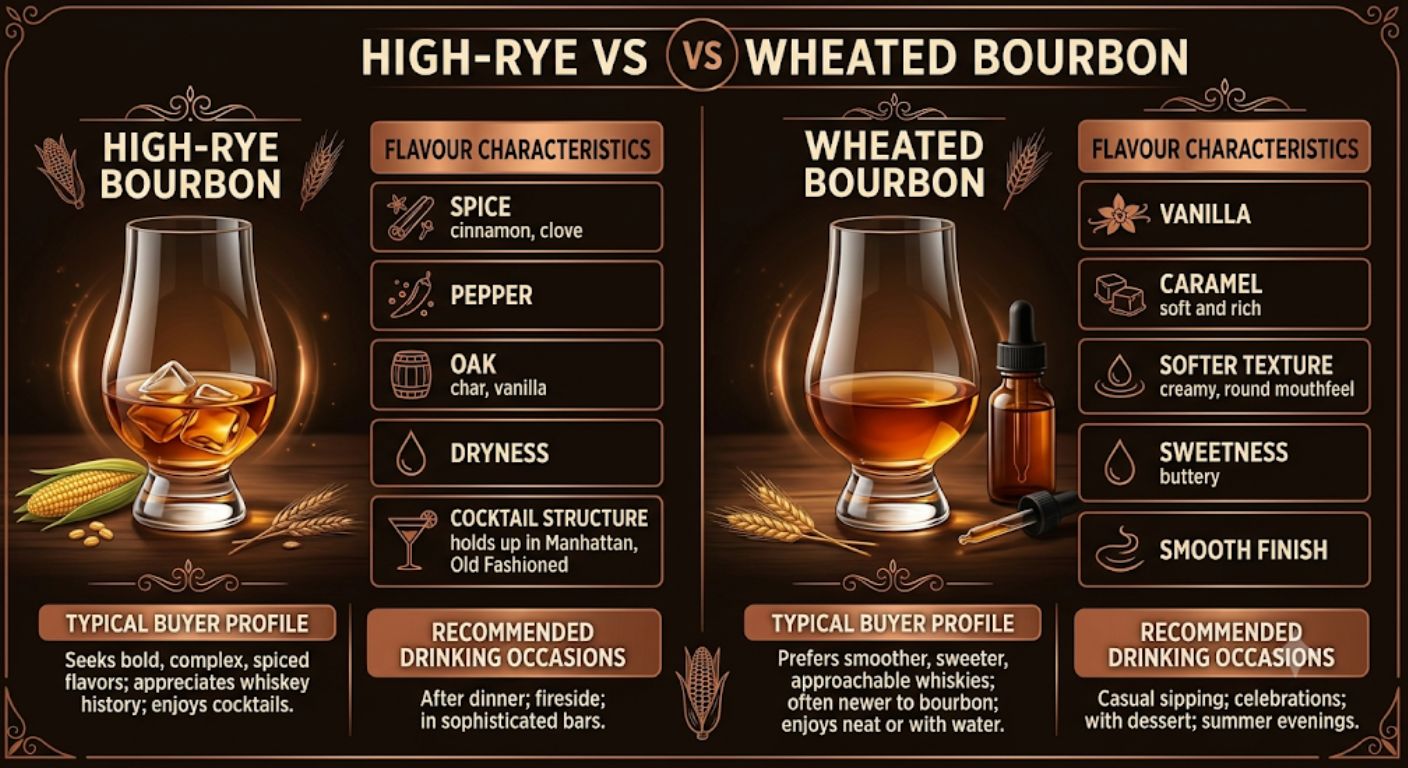
The mash bill is the grain recipe used to make the bourbon. By law, bourbon must contain at least 51% corn, but the remaining grain choices have a major effect on flavour.
High-Rye Bourbon
High-rye bourbon uses a higher proportion of rye grain. This usually brings more spice, grip, dryness, and structure. It can work well for drinkers who find very sweet bourbon too soft.
Choose high-rye bourbon if you want:
- More spice.
- Better cocktail structure.
- A drier finish.
- Less obvious sweetness.
Wheated Bourbon
Wheated bourbon uses wheat instead of rye as the secondary flavouring grain. This often gives a softer, rounder, sweeter profile.
Choose wheated bourbon if you want:
- Softer texture.
- Less spice.
- Vanilla and caramel-led flavour.
- A gentler introduction to bourbon.
Maker’s Mark is the best-known wheated bourbon reference point, and the Lochs of Whisky Makers Mark distillery guide gives useful context for that style.
Corn-Led Bourbon
All bourbon is corn-led legally, but some bottles lean more heavily into sweet corn, caramel, vanilla, and oak. These can be accessible, but they risk becoming simple if the ABV or age is too low.
Choose corn-led bourbon if you want a softer, sweeter everyday bottle rather than a spicy or high-proof pour.
Small Batch And Single Barrel: Useful Terms, But Not Equal
Small batch and single barrel are common bourbon terms, but they do not mean the same thing.
Small batch usually means the bottle was made from a selected group of barrels. The problem is that “small batch” has no fixed legal definition. One producer’s small batch can be genuinely limited; another’s can be much larger.
Single barrel means the whiskey came from one individual barrel. This can be more characterful, but it also means more variation. One barrel may be excellent, while another from the same label can taste noticeably different.
Under £50, small batch is often the safer choice for consistency. Single barrel can be more interesting, but it is less predictable.
Noah’s Mill is one example of a bourbon name often discussed by enthusiasts looking for more characterful American whiskey, and the Lochs of Whisky Noahs Mill guide gives more context around that bottling style.
Sipping Bourbon Under £50
A good sipping bourbon under £50 should not rely only on sweetness. It needs enough structure to stay interesting after the first glass.
Look for:
- 43–50% ABV.
- Straight bourbon wording.
- Some oak maturity.
- A finish that does not collapse quickly.
- A mash bill that suits your preference.
If you prefer soft bourbon, choose wheated or lower-rye styles around 45% ABV. If you prefer spice and grip, choose high-rye bourbon or Bottled-in-Bond.
Avoid paying close to £50 for very basic 40% bourbon unless the bottle has a clear reason to cost that much in the UK market.
Bourbon Under £50 For Cocktails
For cocktails, structure matters more than subtlety. A bourbon that seems slightly firm neat can work very well in an Old Fashioned, Manhattan, Whiskey Sour, or Boulevardier.
The best cocktail choices usually have:
- 45–50% ABV.
- Clear oak and spice.
- Enough sweetness to balance bitters.
- A finish that survives dilution.
Avoid overly soft bottles if the cocktail contains sugar, citrus, or strong bitters. They can disappear once mixed.
When To Spend More Than £50
Under £50 covers many good bourbons, but there are times when moving up makes sense. Spend more when you want stronger age statements, limited releases, higher-proof bottlings, single barrel selections, or more complex cask influence.
The key is to spend more for a reason, not just for a heavier bottle or a more famous label.
Move beyond £50 if you want:
- More maturity.
- More concentration.
- Less common releases.
- Barrel proof or cask strength.
- Collector interest.
- Better depth for neat drinking.
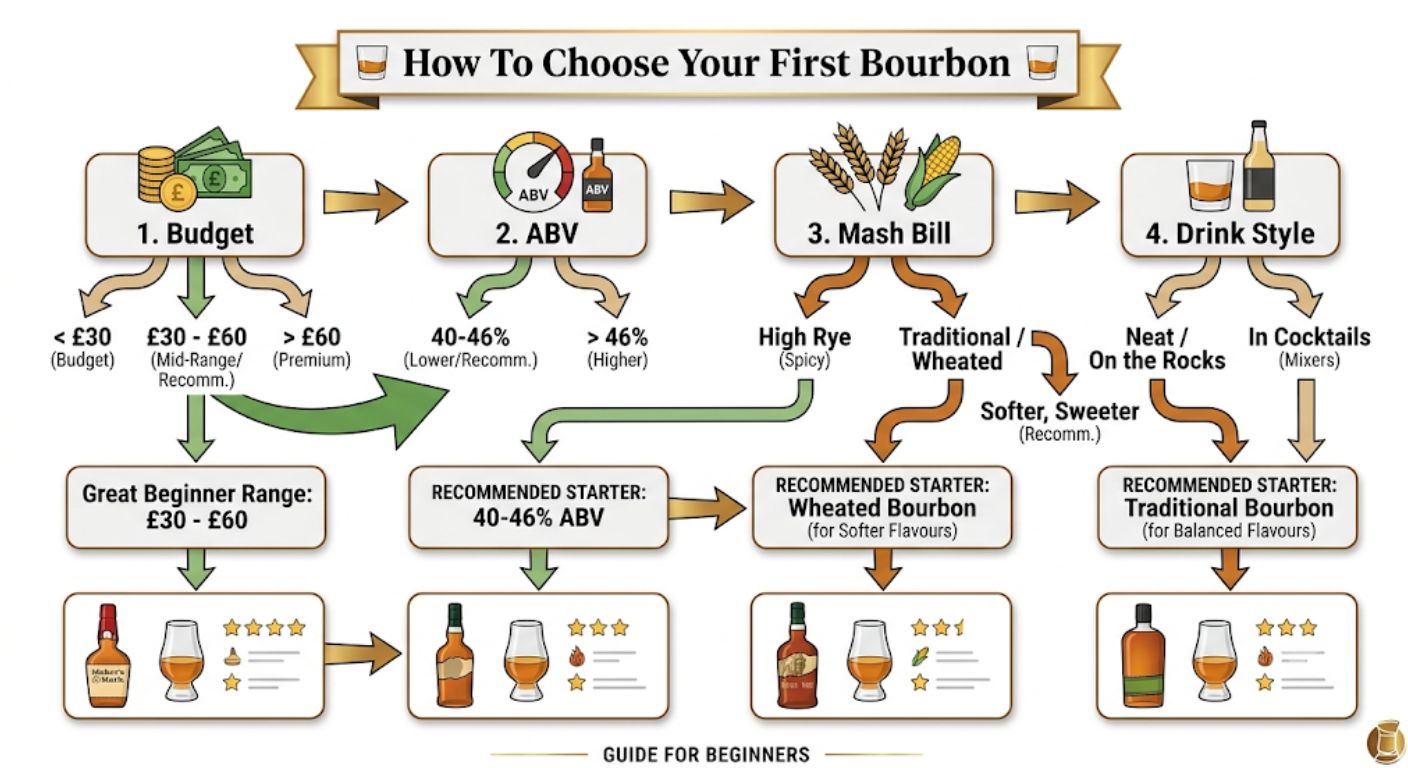
How To Choose The Right Bourbon Under £50
If You Want A Neat Sipper
Choose a straight bourbon around 45–50% ABV. Look for balance rather than maximum proof. Wheated bourbon suits softer palates; high-rye bourbon suits drinkers who want spice.
If You Want One Bottle For Everything
Choose Bottled-in-Bond or a reliable 46–50% bourbon. This gives enough structure for cocktails and enough maturity for neat drinking.
If You Prefer Softer Whiskey
Choose wheated bourbon or lower-rye bourbon. Avoid high-proof labels unless you already enjoy stronger American whiskey.
If You Prefer Bold Flavour
Choose high-rye, Bottled-in-Bond, or single barrel bourbon. Check ABV carefully because higher strength can bring more flavour but also more heat.
If You Are Buying A Gift
Choose something with clear provenance and broad appeal. Avoid very high-proof bottles unless you know the recipient already drinks cask-strength whiskey.
For broader brand context, use the separate Best Bourbon Brands guide rather than treating brand reputation alone as the buying decision.
Common Mistakes When Buying Bourbon Under £50
Mistake 1: Assuming American Budget Prices Apply In The UK
They do not. Import costs, duty, distribution, and availability change the value equation.
Mistake 2: Buying Hype Instead Of Specification
A bottle can be widely discussed online and still be poor value at its UK price.
Mistake 3: Ignoring ABV
ABV affects flavour, texture, cocktail performance, and perceived value.
Mistake 4: Treating Small Batch As A Guarantee
Small batch can be meaningful, but it is not tightly defined.
Mistake 5: Assuming Age Always Wins
Age helps, but cask quality, proof, and balance matter just as much.
Mistake 6: Buying Allocated Bottles At Inflated Prices
If the price has moved far beyond normal retail, it may no longer belong in the under-£50 value conversation.
W.L. Weller is often discussed in relation to wheated bourbon demand and allocation, and the Lochs of Whisky W.L Weller page gives further context for that name.
FAQ
What is the best bourbon under £50?
The best bourbon under £50 is usually a straight bourbon with clear provenance, useful ABV, and a style that suits how you will drink it. For most buyers, 45–50% ABV gives better value than basic 40% bourbon. Bottled-in-Bond is especially strong if available under £50.
Is bourbon under £50 good enough to drink neat?
Yes, many bourbons under £50 are suitable for neat drinking. Look for straight bourbon, balanced oak, and ABV around 43–50%. Softer wheated bourbons suit gentler palates, while high-rye styles suit drinkers who want spice and structure.
What does Bottled-in-Bond mean for bourbon value?
Bottled-in-Bond means the bourbon meets stricter rules: one distillery, one distilling season, minimum four years’ ageing, and 50% ABV. Under £50, that makes it one of the clearest value signals because it guarantees age, strength, and production discipline.
Is 40% ABV bourbon worth buying?
Some 40% ABV bourbon is worth buying, especially if you want a softer bottle. The issue is value. At the top of the under-£50 bracket, 40% bourbon needs strong provenance or unusually good balance to justify its price against 45–50% alternatives.
Is high-rye bourbon better than wheated bourbon?
Neither is automatically better. High-rye bourbon usually brings spice, grip, and cocktail structure. Wheated bourbon is usually softer, rounder, and sweeter. Choose high-rye if you want boldness; choose wheated if you want a gentler bourbon profile.
Are age-stated bourbons still available under £50?
Yes, but they are less common than they used to be. Age statements under £50 can represent strong value, especially around 8–10 years, but age alone is not enough. Check ABV, producer reputation, and UK price before treating age as the deciding factor.
Is small batch bourbon better than standard bourbon?
Small batch can be better, but the term is not legally fixed. It usually means a selected group of barrels, but batch size varies by producer. Under £50, small batch is useful when it comes from a producer with consistent quality, not simply because the label says “small batch”.
Is single barrel bourbon worth buying under £50?
Single barrel bourbon can be worth buying under £50 if you want individuality and are comfortable with variation. Because every barrel is different, it can be less consistent than small batch bourbon. It is a stronger choice for enthusiasts than cautious first-time buyers.
Why is bourbon more expensive in the UK?
Bourbon is often more expensive in the UK because the bottle has passed through import, duty, distribution, and retail costs before reaching the shelf. Availability also changes pricing. Bottles that are common in the US can become less attractive value once priced for the UK market.
Should I buy bourbon under £50 or spend more?
Stay under £50 if you want an everyday bottle, cocktail bourbon, or reliable introduction to American whiskey. Spend more if you want older age statements, higher proof, single barrel selections, limited releases, or more collector-focused bottles.
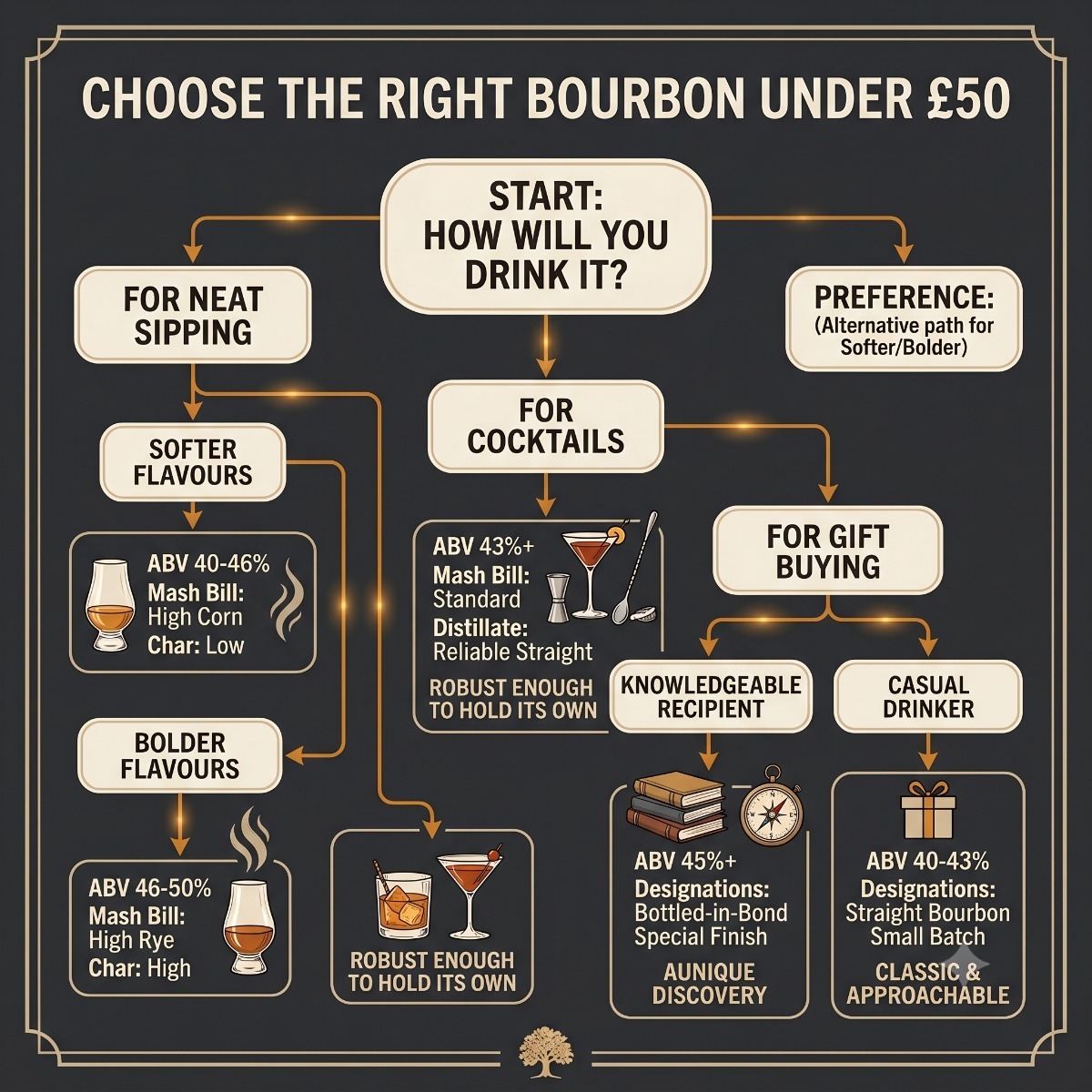
Structured Summary
The strongest bourbon under £50 usually follows these rules:
- ABV: 45–50% often gives the best value.
- Age: useful, but not more important than balance.
- Designation: straight bourbon and Bottled-in-Bond are strong signals.
- Mash bill: high-rye gives spice; wheated gives softness.
- Cask type: new charred oak is central to bourbon character.
- Availability: avoid paying inflated prices for bottles that only look good at US retail.
Common mistakes:
- Comparing UK prices to American budget lists.
- Paying near £50 for weak 40% bourbon without a clear reason.
- Assuming small batch always means better.
- Ignoring whether the bottle is for sipping, cocktails, or gifting.
- Buying allocation hype instead of practical value.
Decision shortcuts:
- For one bottle that does most jobs: choose Bottled-in-Bond or 46–50% straight bourbon.
- For softer drinking: choose wheated bourbon.
- For cocktails: choose higher ABV and more spice.
- For neat drinking: choose balance over maximum proof.
- For gifts: choose clear provenance and moderate strength.
After narrowing the style, compare live options in the Lochs of Whisky bourbon range and choose the bottle that matches your drinking purpose rather than the one with the loudest reputation.


Comments