
 Chat with us on WhatsApp

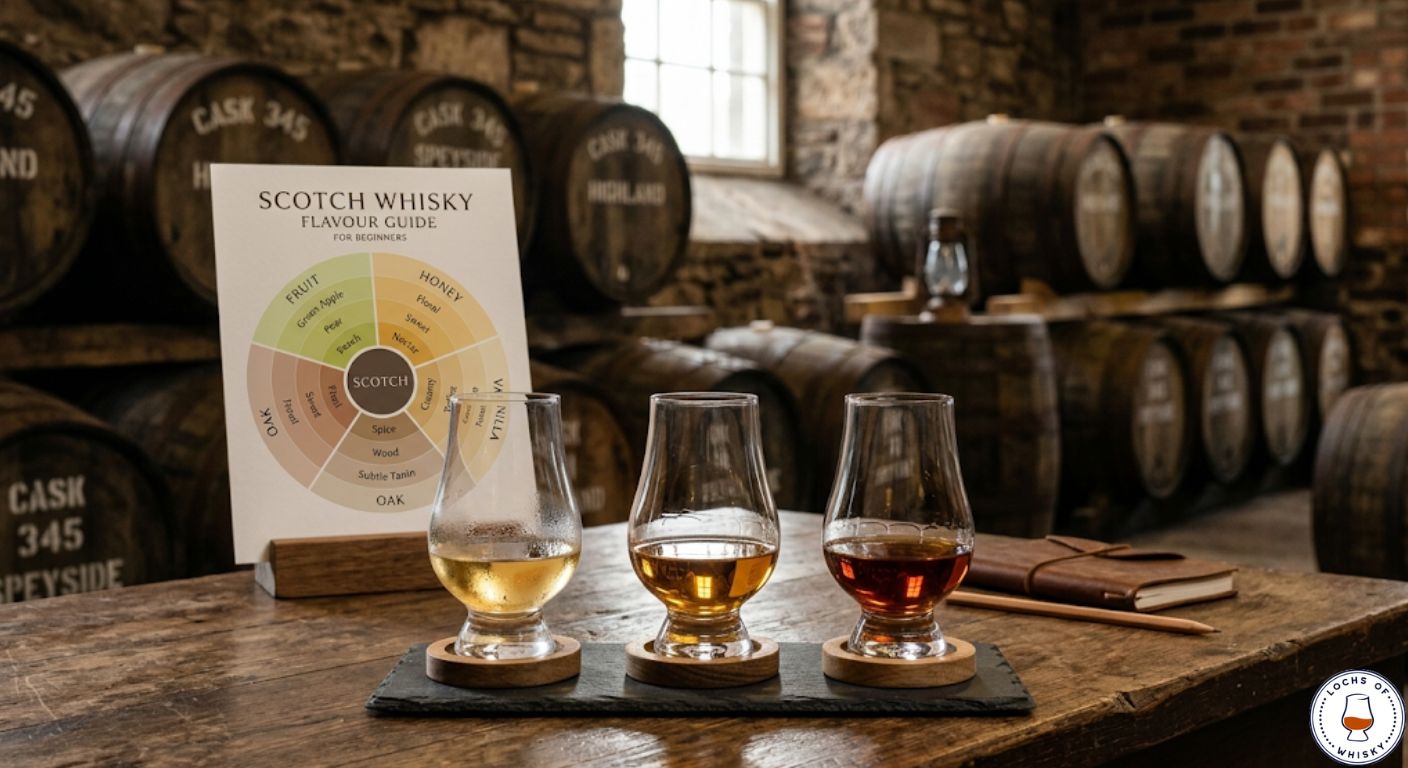
Best Scotch Whisky For Beginners
Choosing the best Scotch whisky for beginners is less about finding the most famous bottle and more about avoiding the wrong first bottle. A good beginner Scotch should be clear in style, moderate in strength, not too expensive, and easy to understand from the first glass.
Scotch whisky covers everything from light Speyside malts to smoky Islay bottles, sherry-cask richness, blended Scotch and higher-strength releases. For a first bottle, the safest starting point is usually something balanced, bottled around 40–46% ABV, and priced sensibly. You can explore the wider range through Scotch Whisky, but the aim here is simple: help you choose a first Scotch that teaches you something without overwhelming your palate.
The Scotch Whisky Association explains that Scotch must be made and matured in Scotland, aged in oak casks for at least three years, and bottled at a minimum of 40% ABV: Scotch Whisky Association definition of Scotch whisky.
-

-
-
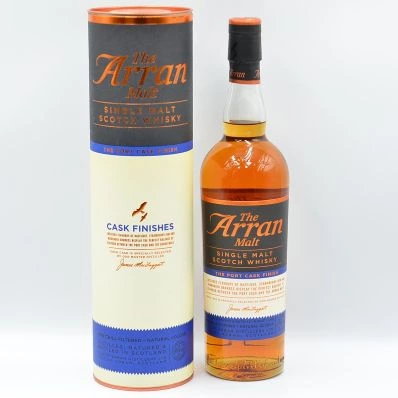 Arran Cask Finishes Port Scotch WhiskySpecial Price £87.98 Regular Price £97.99 Inc VATSaving £10.01
 -
-
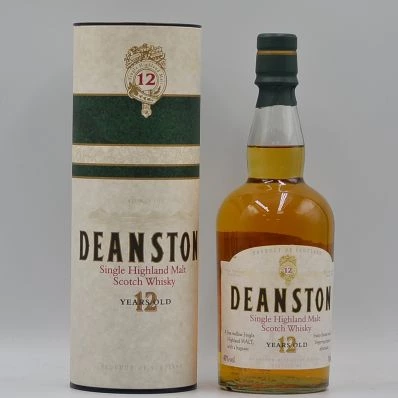 Deanston 12 Year Old Highland Whisky 2000sSpecial Price £56.98 Regular Price £63.99 Inc VATSaving £7.01
 -
-
-
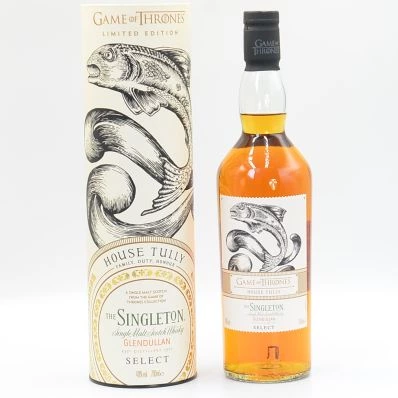 Game of Thrones Whisky Singleton Glendullan House TullySpecial Price £73.98 Regular Price £84.99 Inc VATSaving £11.01
 -
What Makes A Scotch Whisky Good For Beginners?
A good beginner Scotch should be balanced, approachable and easy to read. Look for moderate ABV, clear flavour direction, and a price that allows you to explore without feeling locked into one expensive bottle. Smoothness helps, but it should not be the only thing you look for.
The easiest starting styles are usually:
- Light, fruity single malts
- Soft Highland or Speyside whiskies
- Balanced blended Scotch
- Gentle sherry-cask or bourbon-cask expressions
- Low-to-moderate peat rather than heavy smoke
Avoid making your first bottle a cask-strength whisky, heavily peated Islay malt, or very old expensive bottle. These can be excellent, but they are not always useful as a first reference point.
One thing our customers often underestimate is how much ABV changes the experience; the same style at 46% can feel much fuller and warmer than a lighter bottle at 40%.
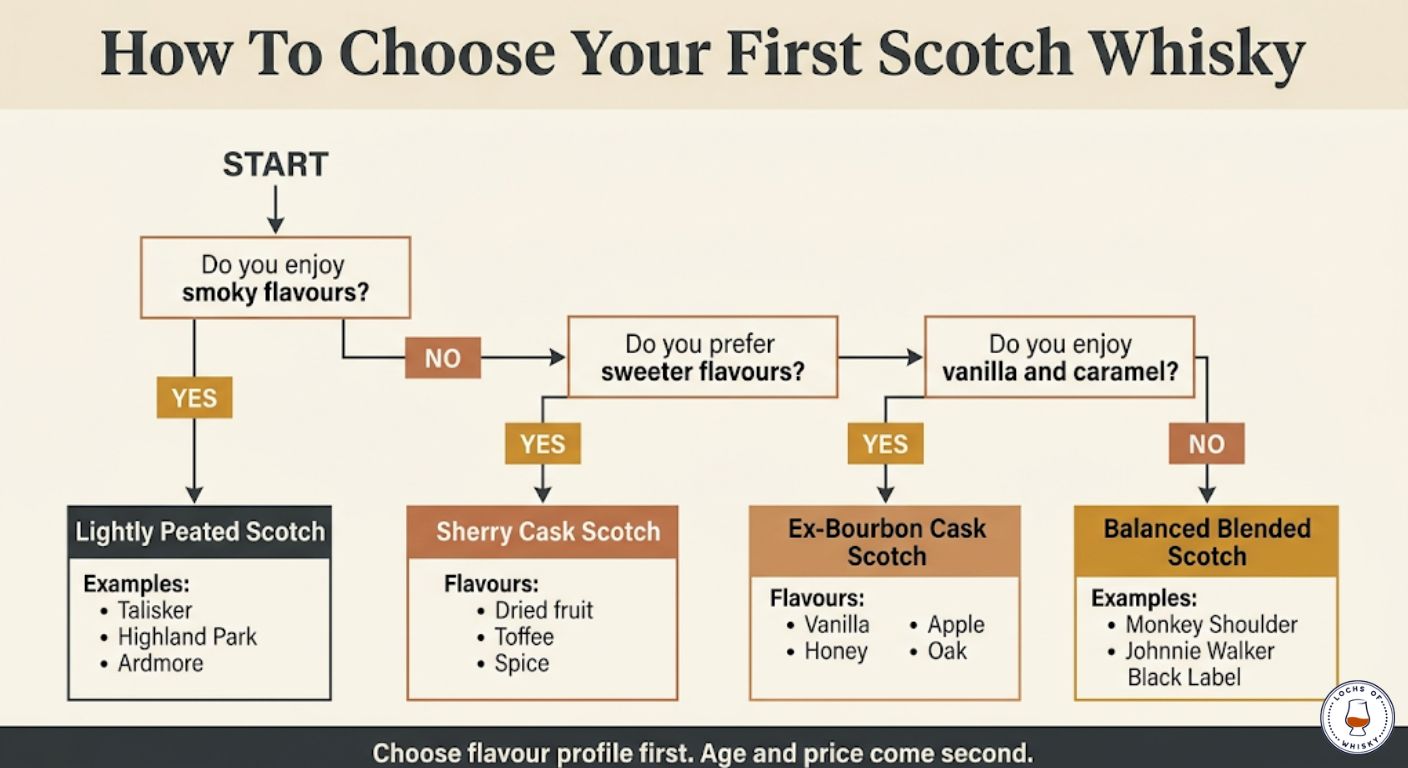
Start With Style, Not Status
The most useful question is not “what is the most respected Scotch?” It is “what style will help me understand Scotch without fighting it?”
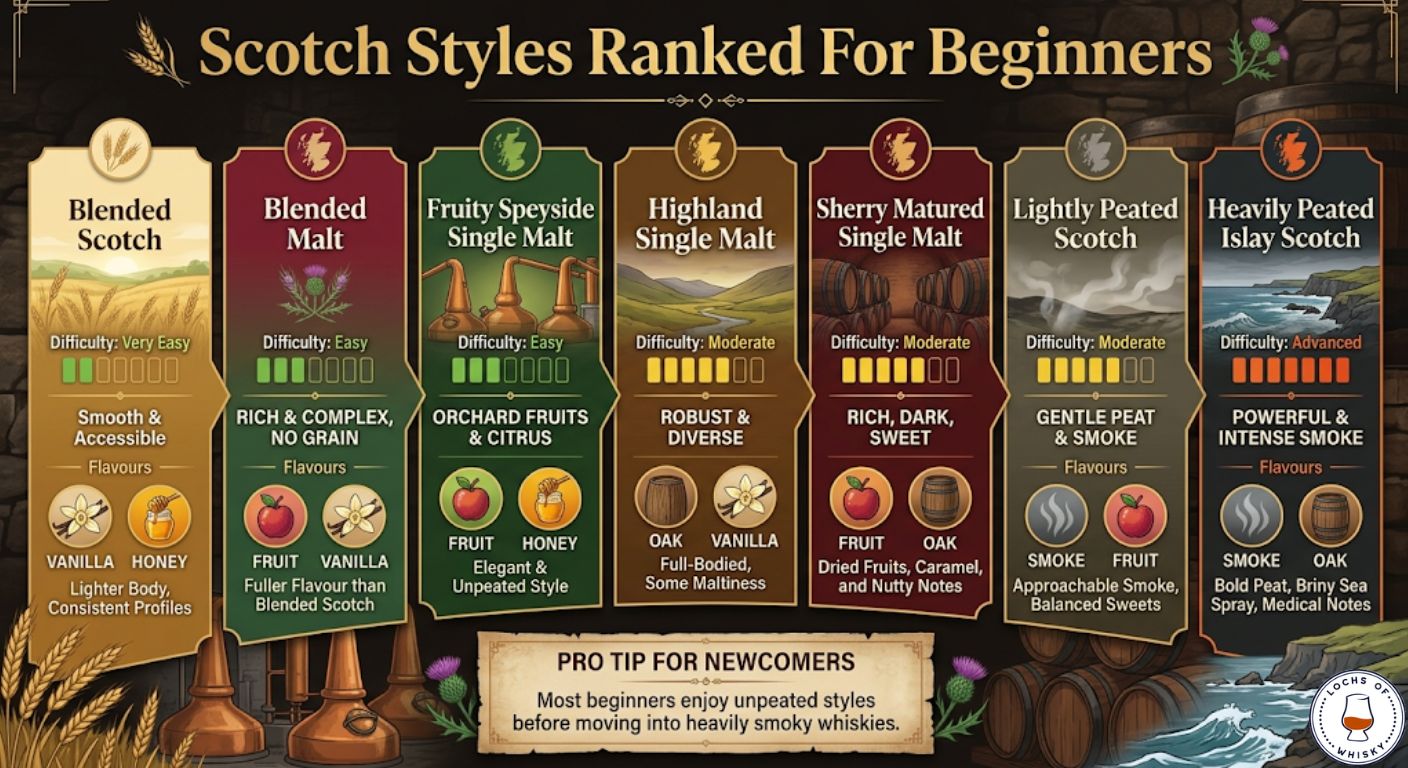
For most beginners, the best starting styles are:
Soft Blended Scotch
Blended Scotch can be a sensible first step because it is designed for balance. It usually combines malt and grain whisky to create a rounded, consistent flavour. Expect cereal sweetness, vanilla, gentle fruit and light oak.
A bottle from Johnnie Walker, for example, can help a beginner understand blended Scotch before moving into more individual single malts.
Best for:
- First-time Scotch drinkers
- People who want a smooth, reliable bottle
- Drinkers who may try it neat, with ice, or in a simple highball
Avoid if:
- You specifically want a strong distillery character
- You already know you prefer full-bodied single malts
Fruity Single Malt Scotch
A light single malt is often the best next step. These bottles show more distillery identity than a blend, but without pushing smoke, oak or alcohol too hard.
A distillery such as Glenlivet is often associated with accessible Speyside-style malt: orchard fruit, honey, vanilla and gentle spice. These flavours are easier for most beginners to recognise than medicinal smoke or heavy oak.
Best for:
- New single malt drinkers
- People who like apple, pear, honey and vanilla notes
- Anyone wanting a classic Scotch profile without heavy peat
Avoid if:
- You want bold smoke
- You prefer very rich, sherried whisky
Blended Malt Scotch
Blended malt is different from blended Scotch. It contains malt whiskies from more than one distillery, but no grain whisky. That gives it more malt character while still keeping balance.
Monkey Shoulder is a useful example of why blended malt works for beginners: soft malt, vanilla, gentle spice and an easy-drinking structure.
Best for:
- Beginners who want more malt flavour than a standard blend
- Bourbon drinkers moving into Scotch
- Drinkers who want a bottle that works neat or in simple serves
Avoid if:
- You want a single-distillery expression
- You want a smoky first bottle
Should Beginners Choose Peated Or Unpeated Scotch?
Most beginners should start with unpeated or lightly peated Scotch. Peated whisky can be excellent, but smoke is one of the most polarising flavours in Scotch. It can taste like bonfire, seaweed, ash, smoked meat, iodine or medicinal smoke depending on the bottle.
If you know you already enjoy smoky flavours, a lightly peated Scotch can be a good second or third bottle. If not, start with fruit, malt, vanilla and gentle oak first. Once you have a reference point, peat is easier to judge properly.
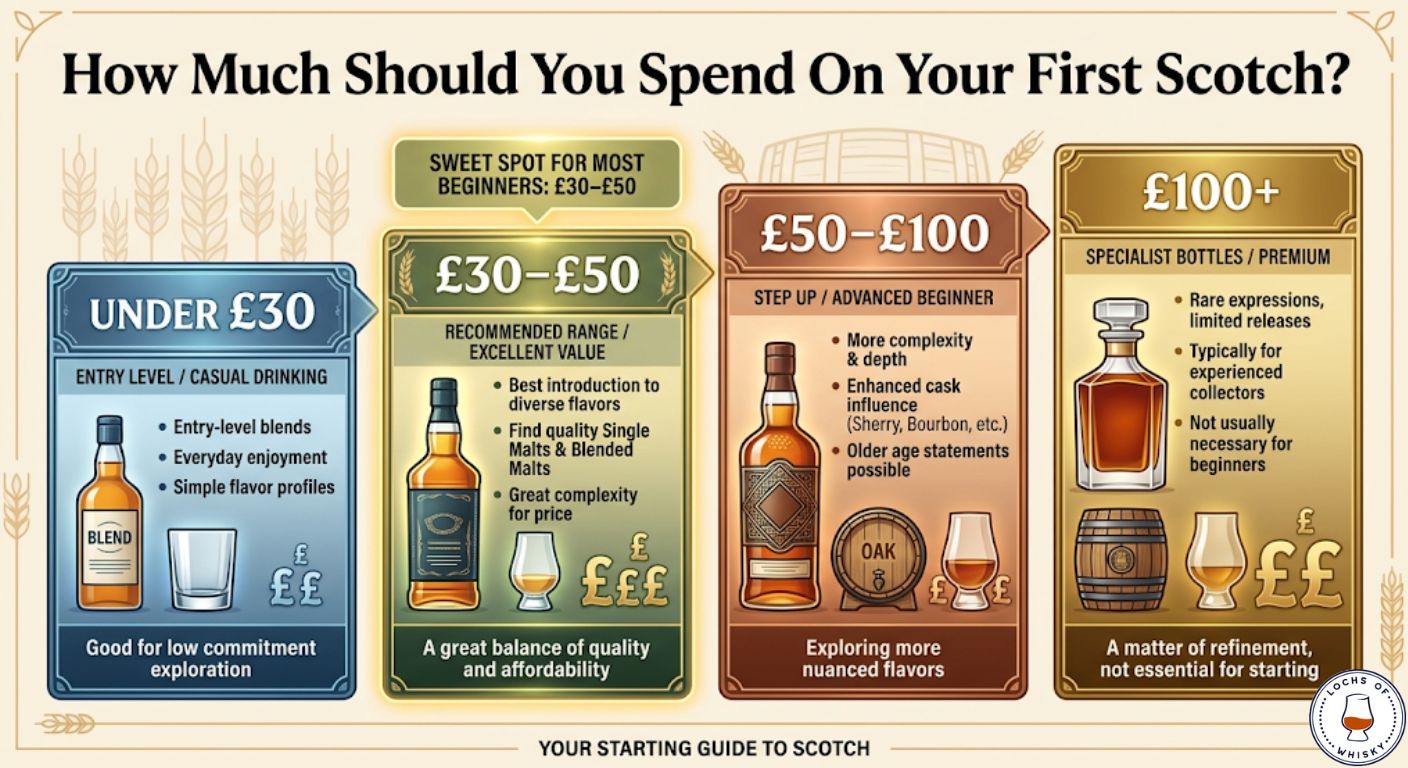
How Much Should A Beginner Spend?
Most beginners should look around £30–£60 for a first serious Scotch bottle. Below that, quality becomes less consistent. Above that, you may be paying for age, scarcity or specialist appeal before you know what you actually enjoy.
A sensible beginner budget looks like this:
| Budget | What To Expect | Best Use |
|---|---|---|
| Under £30 | Simple blends and entry bottles | Mixing, highballs, casual tasting |
| £30–£50 | Strong beginner range | First proper Scotch bottle |
| £50–£100 | More cask influence, age or complexity | Second or third bottle |
| £100+ | Specialist, older or collectible bottles | Better once preferences are clearer |
If you want a first bottle without overspending, the Best Scotch Under £50 range is the most practical place to begin.
Nearly half of Lochs of Whisky customers discovered their first memorable Scotch whisky in the £30–£50 price bracket.
Based on research from 321 Lochs of Whisky customers.
Cask Type Matters More Than Beginners Realise
Cask type has a major effect on flavour. It can make a whisky feel lighter, sweeter, richer, drier or spicier.
The most common beginner-friendly cask styles are:
- Ex-bourbon casks: vanilla, honey, coconut, light oak, orchard fruit
- Sherry casks: dried fruit, spice, darker sweetness, nuttier notes
- Wine or port casks: red fruit, sweetness, richer texture
- Virgin oak: stronger spice, oak, vanilla and grip
For a first Scotch, ex-bourbon cask maturation is usually the safest choice. It tends to give cleaner vanilla and fruit notes. Sherry casks can also work well, but some are richer, drier and more intense.
Best Scotch Whisky For Beginners By Drinker Type
If You Usually Drink Bourbon
Look for Scotch matured in ex-bourbon casks or blended malts with vanilla and caramel-like sweetness. The flavour bridge is easier because bourbon drinkers are already used to oak sweetness, vanilla and soft spice.
Avoid heavily peated Scotch as your first move unless you already enjoy smoky barbecue-style flavours.
If You Usually Drink Red Wine
Look for sherry-cask or wine-cask influenced Scotch. These often bring dried fruit, spice, deeper sweetness and a fuller mouthfeel. Do not jump straight into very old oak-heavy bottles. A younger sherry-influenced malt can be easier to understand.
If You Usually Drink Gin Or White Wine
Start with lighter Speyside, Highland or Lowland-style Scotch. Look for citrus, apple, pear, floral notes and vanilla. Avoid heavy peat and high ABV at first.
If You Want A Gift For A Beginner
Choose something recognisable, balanced and not too extreme. A smooth blend, blended malt or approachable single malt is safer than an unusual cask-strength bottle. The goal is to give the recipient a useful first reference point.
How To Taste Scotch As A Beginner
Start simple. You do not need a formal tasting setup.
- Pour a small measure, around 25ml.
- Smell gently rather than pushing your nose deep into the glass.
- Take a small sip and let it sit briefly.
- Add a few drops of water if the alcohol feels sharp.
- Taste again and notice whether fruit, vanilla, smoke, spice or oak becomes clearer.
Water is not a mistake. It can reduce alcohol heat and make the flavours easier to read. Ice can also help, but it will chill and mute some aromas.
When A Beginner Should Avoid A Bottle
Avoid a Scotch if the label gives you several warning signs at once:
- Cask strength above 55% ABV
- Heavy peat or intense smoke
- Very high price for your first bottle
- Unclear style or no useful bottle information
- Specialist independent bottling with unusual cask treatment
- Collectible bottle you would hesitate to open
These bottles may be excellent later. They are just not always the best first step.
Is Older Scotch Always Better For Beginners?
No, older Scotch is not always better for beginners. Age can add depth, oak, softness and complexity, but it can also make a whisky drier, more expensive and less useful as a first learning bottle. A clear 10 or 12 year old whisky can teach a beginner more than an expensive older bottle.
For beginners, balance matters more than age. A younger bottle with good cask management can be more enjoyable than an older whisky that feels too woody or restrained.
Is All Scotch Whisky Smoky?
No, all Scotch whisky is not smoky. Some Scotch is heavily peated, especially from parts of Islay, but many Scotch whiskies are fruity, malty, floral, creamy or sherry-led with little or no smoke. Beginners should not assume Scotch automatically means peat.
If smoke worries you, start with unpeated Speyside, Highland or blended Scotch before moving into peated styles.
Is Single Malt Better Than Blended Scotch For Beginners?
Single malt is not automatically better than blended Scotch for beginners. Single malt gives you one distillery’s character, while blended Scotch is built for balance and consistency. Both can be good starting points.
Choose single malt if you want clearer distillery identity. Choose blended Scotch if you want something smoother, softer and more forgiving.
What Is The Best Way To Drink Scotch For Beginners?
The best way to drink Scotch as a beginner is neat first, then with a few drops of water. This lets you taste the whisky clearly before adjusting it. If the alcohol feels too sharp, water is useful rather than wrong.
Ice is fine if you prefer it, especially with lighter blends, but it will reduce aroma and soften detail.
Final Takeaway
The best Scotch whisky for beginners is balanced, moderately priced, not too strong, and clear in style. Start with a soft blend, blended malt or fruity single malt before moving into heavier peat, higher ABV or older bottles.
Once you know whether you prefer lighter fruit, richer cask influence, gentle smoke or fuller malt character, it becomes much easier to choose your next bottle. For a step up from entry-level choices, explore Best Scotch 50 to 100 when you are ready to compare more developed bottles.

Comments