
 Chat with us on WhatsApp

Best Scotch Whisky 2026: Editors' Picks Across Every Style
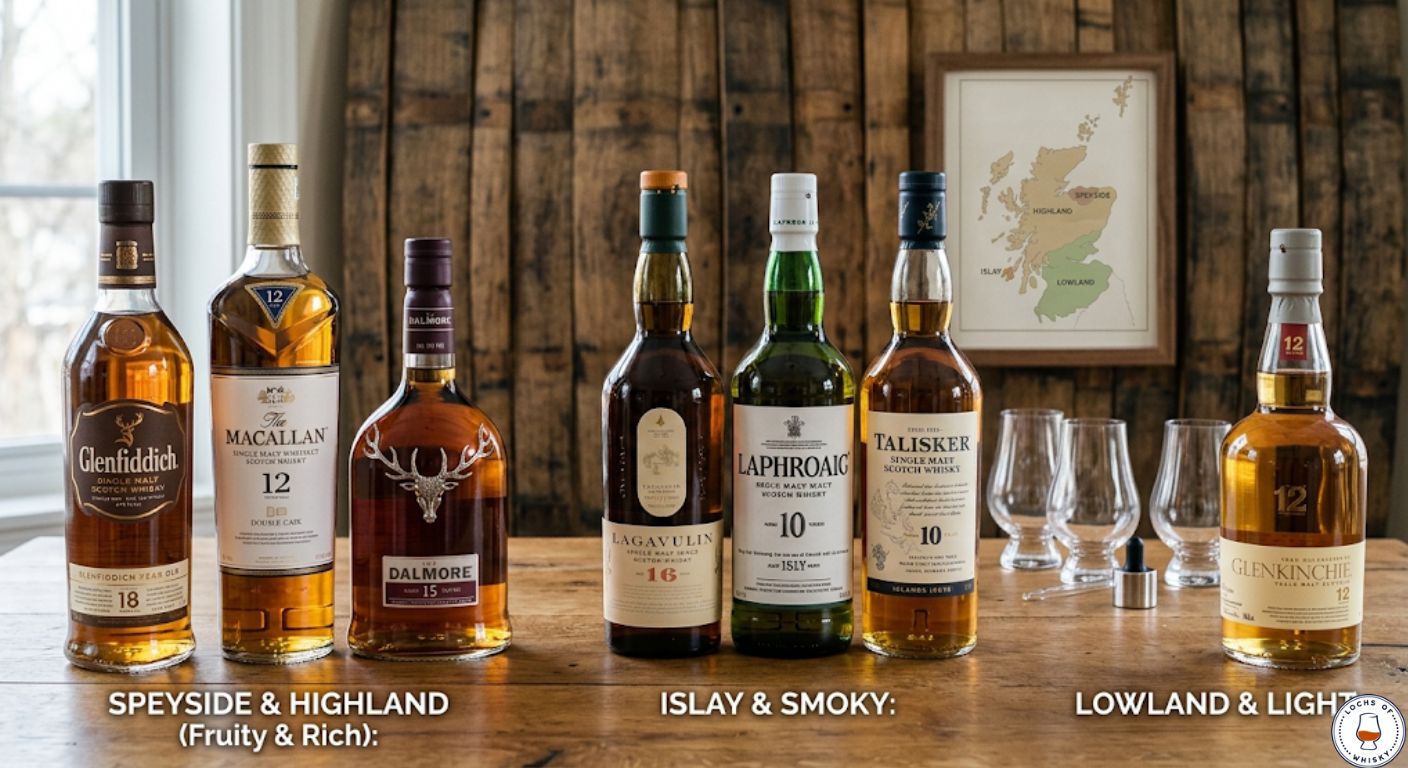
Choosing the best Scotch whisky is not about finding one bottle that beats every other bottle. Scotch covers single malt, blended Scotch, grain whisky, heavily peated Islay malts, softer Speyside drams, coastal island whiskies, old age statements, younger cask-strength releases and collectible bottles from closed or limited-production distilleries.
The right bottle depends on four practical questions: what style you like, how much smoke you want, what strength you are comfortable with, and whether the bottle is for drinking, gifting or collecting.
This guide gives you a clear framework for choosing Scotch whisky in 2026. It explains the main styles, regions, cask influences, price bands and buying mistakes to avoid, while linking through to more detailed guides where a specialist topic needs its own page. For browsing across the full category, start with Scotch Whisky.
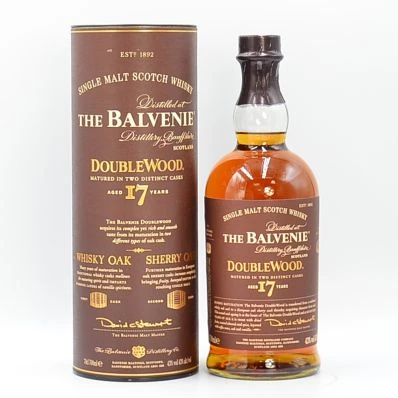
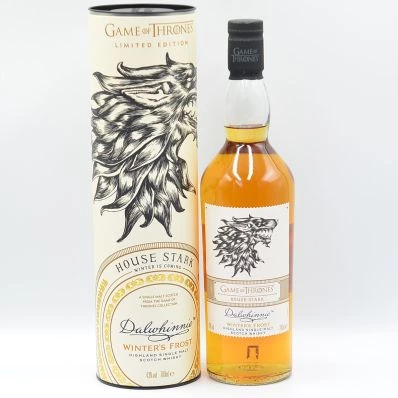
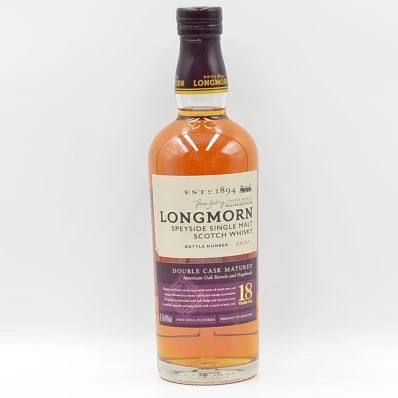
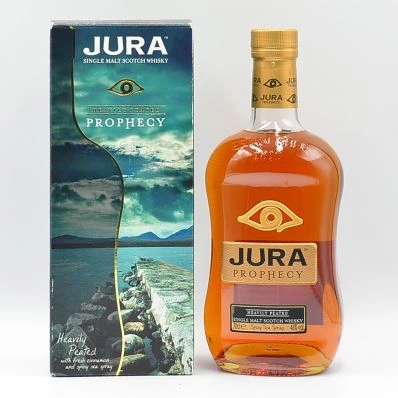
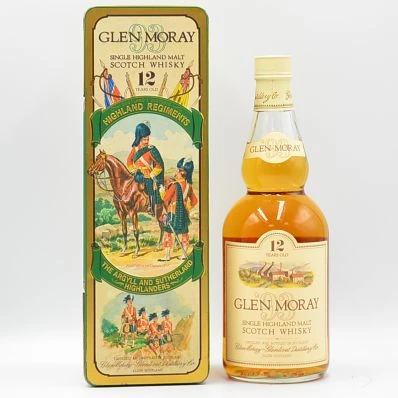
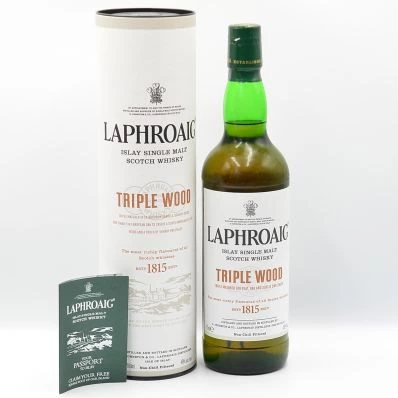
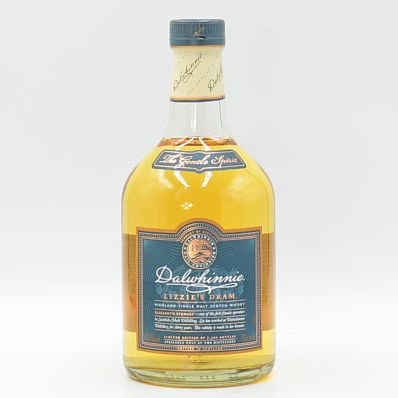
What Makes a Scotch Whisky Worth Choosing?
A good Scotch whisky should match the drinker before it matches a review score. Age, awards and price can help, but they do not guarantee the right bottle.
The most useful buying factors are:
- Style: single malt, blended Scotch, grain whisky or blended malt
- Region: Speyside, Highlands, Islay, Lowlands, Campbeltown or Islands
- ABV: usually 40–46% for easier drinking, 46%+ for more intensity
- Cask type: bourbon cask, sherry cask, wine cask, virgin oak or mixed maturation
- Smoke level: unpeated, lightly peated, coastal smoke or heavy peat
- Purpose: beginner bottle, gift, daily drinker, tasting bottle or collector bottle
The Scotch Whisky Association explains that Scotch must be produced in Scotland, matured in oak casks for at least three years and bottled at a minimum of 40% ABV. That legal structure matters because it keeps Scotch whisky clearly defined.
Single Malt, Blended Scotch and Grain Whisky
Single malt Scotch is made at one distillery from malted barley and distilled in pot stills. It is often the category enthusiasts focus on first because it gives the clearest view of a distillery’s individual character.
Blended Scotch combines malt whisky and grain whisky. It is usually built for balance, consistency and accessibility. A good blend can be smoother and more approachable than a powerful single malt, especially for someone who does not want heavy oak, high ABV or peat smoke.
Grain whisky is often lighter, sweeter and softer. It can show vanilla, coconut, cereal, light spice and creamy texture, especially when matured for longer periods.
For a deeper comparison, use our Top 10 Best Single Malt Whisky, Best Blended Scotch Whisky, and 10 Best Grain Whisky guides.
Best Scotch Whisky by Drinking Style
The most useful way to choose Scotch is by style rather than by brand name alone.
Best Scotch for Beginners
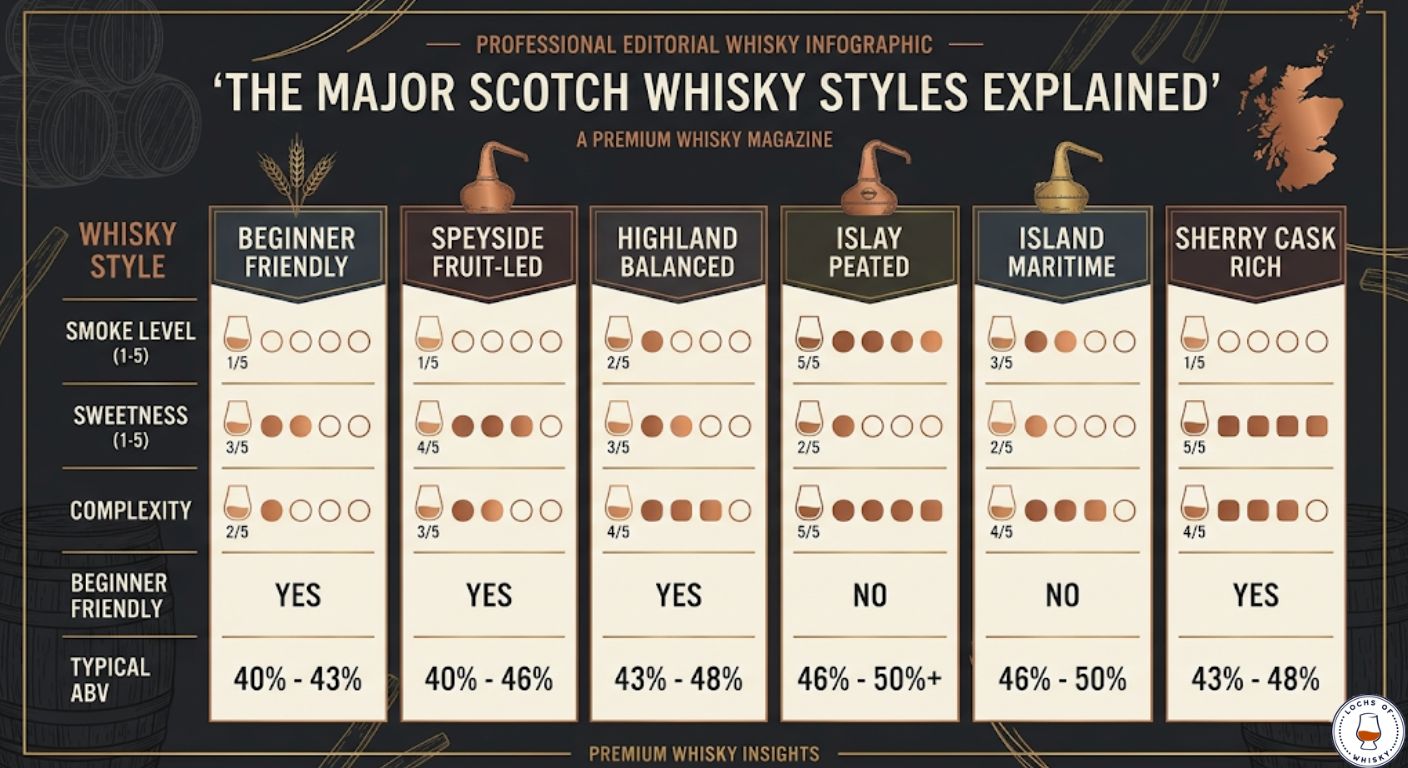
Beginners usually do best with a softer, lower-smoke Scotch around 40–43% ABV. Speyside, Lowland and lighter Highland whiskies are often safer starting points than heavily peated Islay malts or cask-strength bottlings.
Look for:
- Orchard fruit
- Vanilla
- Honey
- Light oak
- Gentle spice
- Low smoke
Good beginner styles include lighter Speyside single malts, smooth blended Scotch and approachable Highland malts. If you are buying for someone new to Scotch, avoid high ABV, heavy peat and unusual wine cask finishes unless you already know their preferences.
Best Scotch for Peat and Smoke
Peated Scotch is one of the most distinctive whisky styles, but it is also one of the easiest places to make a buying mistake.
Islay is the classic region for medicinal smoke, seaweed, tar, ash, iodine and coastal peat. Distilleries such as Laphroaig and Bowmore show how different peated whisky can be, from intense medicinal smoke to softer smoke balanced by fruit and sherry cask influence.
If you want heavy smoke, start with Islay. If you want smoke with maritime salt and pepper, island distilleries are often better. If you want just a touch of smoke, choose a lightly peated Highland or Speyside expression instead.
You can browse the Islay category through Islay Whisky.
Best Scotch for Sherry Cask Drinkers
Sherry cask Scotch is usually richer and darker in flavour. It often brings dried fruit, raisin, fig, date, dark chocolate, clove, orange peel and polished oak.
There is a difference between full sherry maturation and a sherry finish. Full maturation usually gives deeper integration. A finish can add a layer of fruit and spice without dominating the distillery character.
The question our customers often ask is whether a sherry-cask finish is the same as full sherry maturation. It is not, and the difference shows up in both flavour and price.
Sherry-led Scotch suits drinkers who like richer texture, darker fruit and dessert-style depth. It may be less suitable for someone who prefers clean, grassy, citrus-led whisky.
Best Scotch for Coastal and Maritime Character
Coastal Scotch often shows salt, sea spray, pepper, smoke, mineral notes and a dry finish. This does not always mean heavily peated. Some island and coastal whiskies are more about brine and structure than smoke.
Talisker is a useful reference point for peppery maritime Scotch, while Highland Park often combines gentle smoke, heather, honey and island character.
For wider browsing, use Islands Whisky.
Best Scotch for Collectors
Collectors often care about provenance, bottling series, discontinued releases, distillery reputation, age statement, independent bottlers and bottle condition.
A collector bottle does not need to be the oldest bottle on the shelf. A younger single cask from a respected independent bottler can be more interesting than a generic older expression if the cask details, distillery context and bottling strength are strong.
Collector-focused Scotch often includes:
- Closed or limited-production distilleries
- Older official bottlings
- Single cask independent bottlings
- Natural colour and non-chill filtered releases
- Historic packaging or discontinued labels
- Distilleries with strong enthusiast followings
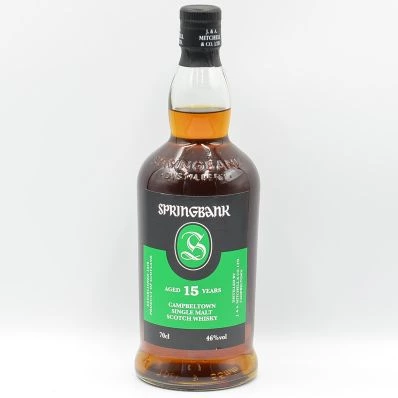
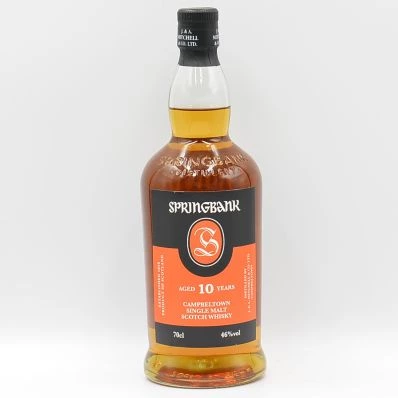
This is where distillery context matters. Springbank, for example, carries a different level of enthusiast attention from many larger-volume producers because of its production style, limited availability and Campbeltown identity.
 Best Scotch Whisky by Region
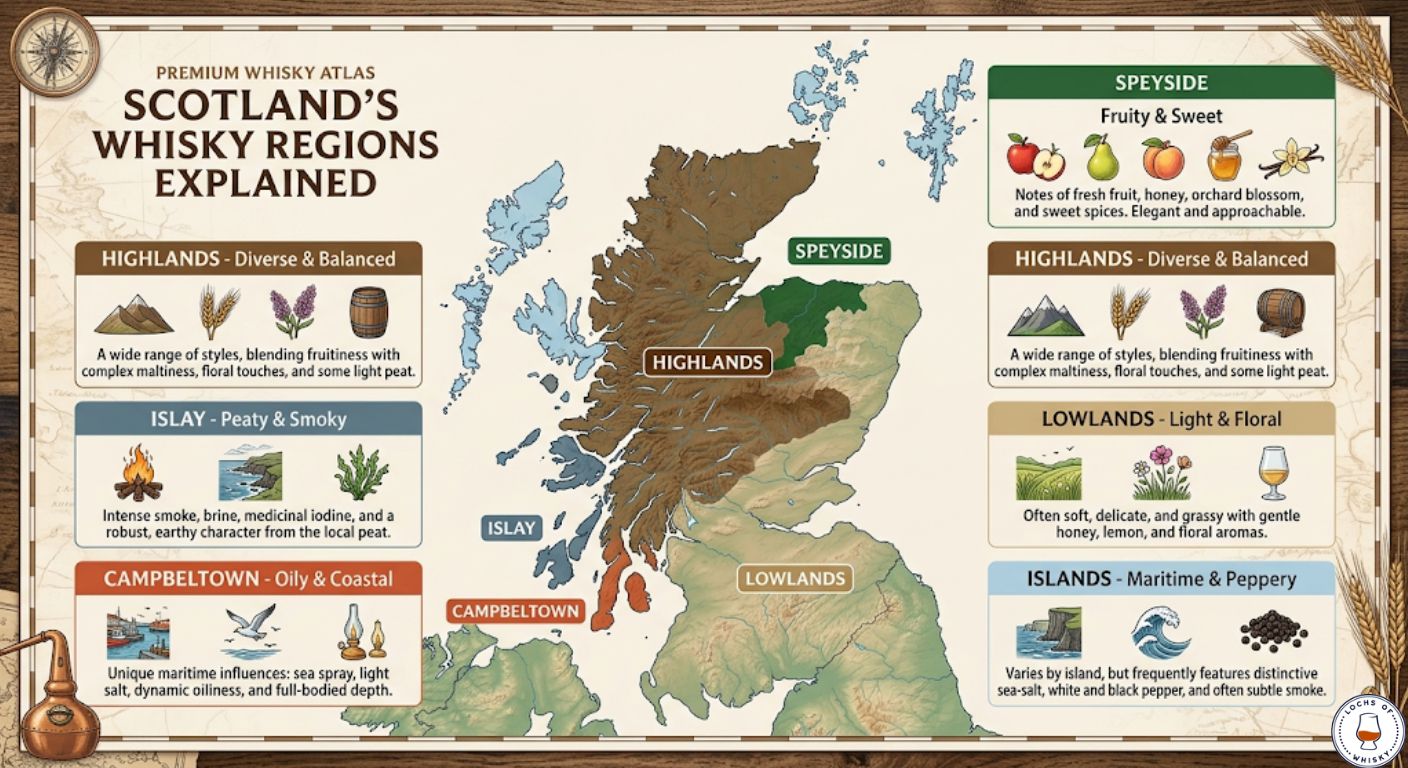
Region should not be treated as a perfect flavour map, but it remains a useful starting point.
Speyside
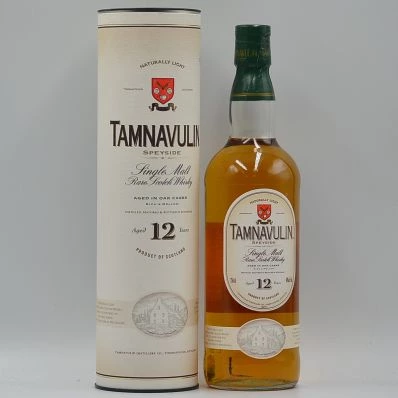
Speyside is often the safest region for fruit-led, elegant single malt. Common flavours include apple, pear, honey, vanilla, malt, light spice and dried fruit in sherry-cask expressions.
It is a strong choice for beginners, gift buyers and drinkers who prefer balance over smoke. Distilleries such as Cardhu and Tomintoul sit comfortably in this softer, approachable part of Scotch.
Explore the category through Speyside Whisky.
Highlands
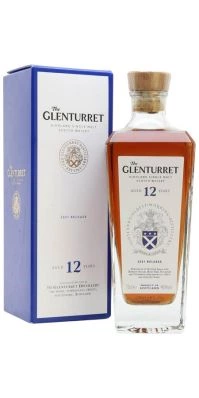
The Highlands is the broadest Scotch region, so it is less predictable than Speyside or Islay. Highland malts can be waxy, fruity, spicy, coastal, rich, dry or lightly smoky.
A Highland bottle is a good choice when you want Scotch with structure but not necessarily heavy peat. Balblair is a useful example of Highland fruit, maturation character and distillery identity.
Browse the region through Highlands Whisky.
Lowlands
Lowland whisky is often lighter, cleaner and more delicate. It can show citrus, grass, vanilla, cereal, flowers and soft spice.
It is a sensible starting point for drinkers who want a gentle Scotch without heavy smoke or dense sherry influence. Auchentoshan is known for triple distillation, while Glasgow 1770 shows how modern Lowland whisky can be broader and more experimental.
You can browse the region at Lowlands Whisky.
Campbeltown
Campbeltown whisky often carries weight, oiliness, coastal character and a distinctive savoury edge. It is a small region, but it has strong enthusiast appeal.
Campbeltown suits drinkers who want something more characterful than a soft Speyside but less medicinal than a full Islay peat profile.
Explore the region through Campbeltown Whisky.
Islands
Island whisky is not a single official Scotch region in the same way as Speyside or Islay, but it is a useful retail and flavour grouping. Island malts often show coastal air, pepper, smoke, salt, heather, honey and firm oak.
They are good choices for drinkers who want character without always going fully into Islay peat.
Islay
Islay is the region most closely associated with peated Scotch. Expect smoke, seaweed, iodine, ash, tar, medicinal notes, brine and sometimes rich sherry cask depth.
Islay is excellent for drinkers who already enjoy smoke. It is riskier as a blind gift unless you know the person likes peated whisky.
Best Scotch Whisky by Price Band
Price should be used as a filter, not as proof of quality.
Under £30
This is a difficult price band for specialist Scotch. You will mostly find accessible blends, entry-level single malts on promotion and supermarket-led options. It can be good for beginners, but the selection is narrower.
If your budget is under £30, avoid obscure high-strength bottles and heavily discounted unknown labels. Choose a recognised lighter style with clear age, ABV and region information.
£30–£60
This is one of the strongest Scotch buying ranges. You can find good single malts, blended malts, independent bottlings and bottles with enough character to be interesting without becoming expensive.
This is the best range for:
- First serious single malt
- Reliable gifts
- Everyday drinking bottles
- Exploring regions
- Trying light peat or sherry cask styles
£60–£100
This range opens up stronger age statements, higher ABV bottlings, smaller batches and more interesting cask types.
It is a good band for enthusiasts who already know their preferred style. It is also where buying mistakes become more expensive, so check ABV, cask type and smoke level carefully.
£100–£200
This range suits special gifts, older age statements, higher-quality independent bottlings and bottles with stronger collector interest.
Age matters, but cask quality matters more. A well-selected 12-year-old single cask can outperform an 18-year-old whisky from tired wood.
For a dedicated older-bottle view, see Best 18 Year Old Whisky.
£200+
At this level, you are usually buying a mix of liquid quality, scarcity, distillery reputation, age, packaging, bottling history and collector demand.
Do not buy purely on age. Check condition, fill level, label details, box presence and whether the bottle is an official release or independent bottling.
How ABV Changes the Drinking Experience
ABV is one of the most important details on a Scotch label.
A whisky bottled at 40% ABV is usually softer and more accessible. A whisky at 46% often gives more body, texture and flavour concentration. Cask-strength Scotch can sit anywhere from the high 50s to over 60% ABV and should be approached differently.
Use this rule:
- 40–43% ABV: easier drinking, beginner-friendly, softer texture
- 46% ABV: stronger flavour, often better texture
- 48–55% ABV: more intensity, often enthusiast-focused
- 55%+ ABV: cask strength, usually best with careful sipping and water
If you are buying a gift, 40–46% ABV is usually safer. If you are buying for an enthusiast, 46% and above may be more interesting.
Cask Type: Bourbon, Sherry, Wine and Virgin Oak
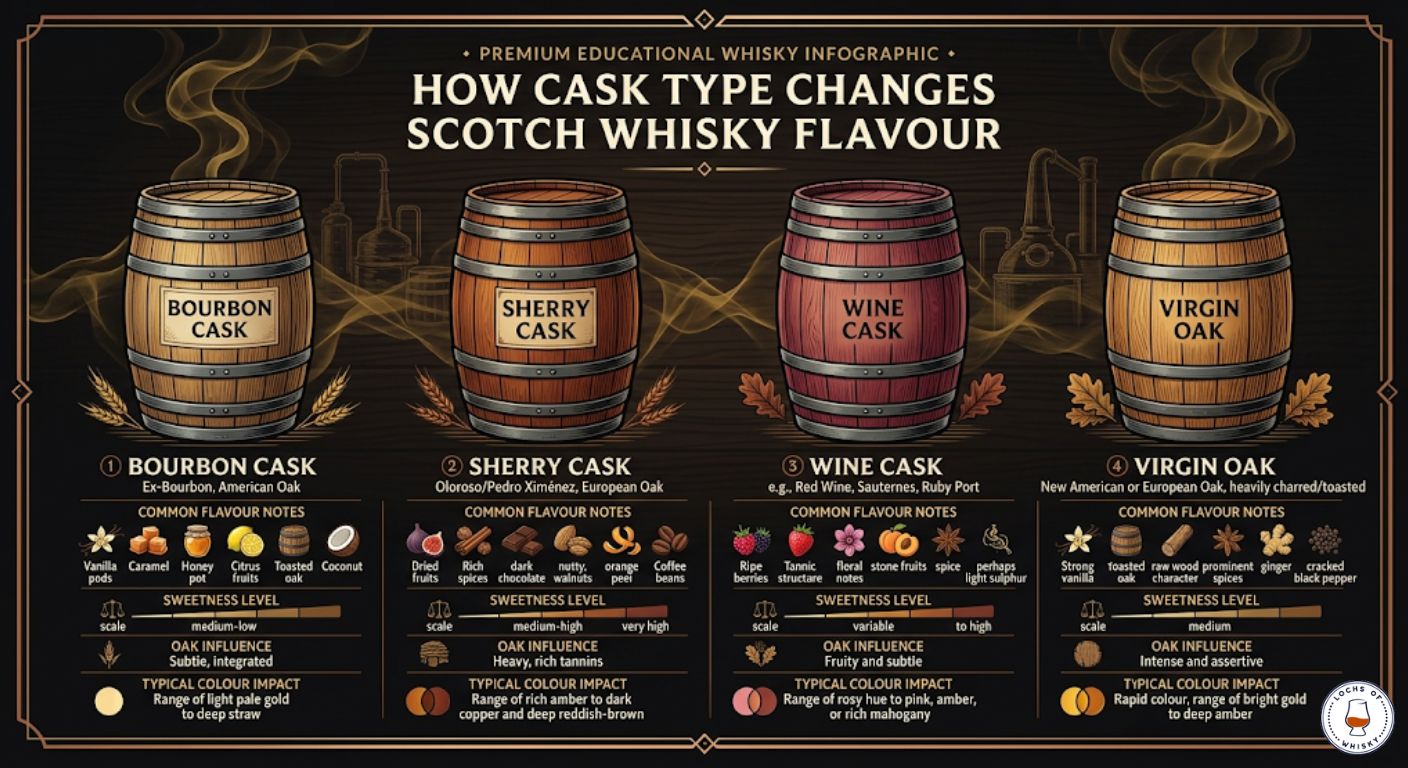
Cask type has a major influence on flavour.
Bourbon casks usually bring vanilla, honey, coconut, citrus, apple and light oak.
Sherry casks often bring dried fruit, chocolate, spice, orange peel, walnut and heavier texture.
Wine casks can add red fruit, tannin, berry notes, dryness and sometimes a more unusual finish.
Virgin oak gives stronger wood spice, sweetness, toast, clove and sometimes a more aggressive oak character.
The safest first choice is usually bourbon or refill cask maturation. Sherry casks are excellent for richer drinkers. Wine casks are more variable and better for people who already know they enjoy experimental maturation.
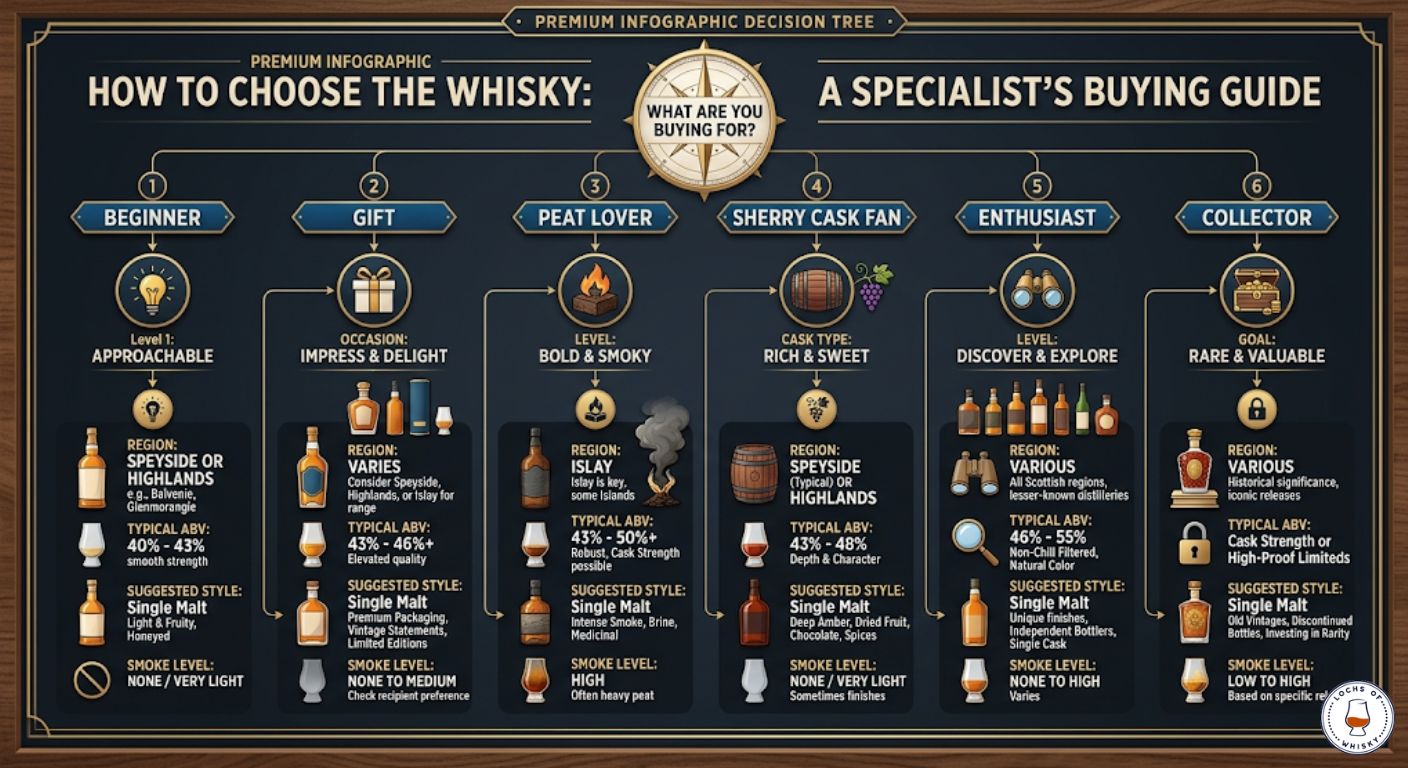
Decision Logic: How to Choose the Right Scotch
Use the bottle’s purpose first.
If you are buying for a beginner
Choose a Speyside, Lowland or lighter Highland whisky around 40–43% ABV. Avoid cask strength, heavy peat and unusual wine cask finishes.
If you are buying for a peat lover
Choose Islay or an island malt. Look for clear smoke language: peated, heavily peated, medicinal, maritime, bonfire, ash or iodine.
If you are buying for a sherry cask drinker
Choose a bottle that clearly states sherry maturation or sherry cask influence. Expect dried fruit, spice, chocolate and heavier texture.
If you are buying a gift
Choose something with a clear identity: region, age statement, distillery, bottler or cask type. A vague bottle is harder to trust as a gift.
If you are buying for an enthusiast
Look for higher ABV, natural colour, non-chill filtration, independent bottling, single cask or a distillery with strong character.
If you are buying for a collector
Prioritise provenance, condition, bottling details and distillery significance. Do not rely on age statement alone.
For broader brand-level comparisons, see Top 10 Best Whisky Brands.
Distillery Context Matters
Two Scotch whiskies can share the same region, age statement and ABV but taste very different because distillery character still matters. Production choices such as fermentation time, still shape, cut points, peat level, cask policy and warehouse style all affect the final whisky.
For example, Nc'Nean represents a newer generation of Scotch whisky production, while Buchanan's sits in a very different part of Scotch history, blending and brand development. Neither should be judged only by region or age statement.
This is why a good Scotch guide should help you understand the bottle’s context, not just rank it in a list.
Common Scotch Buying Mistakes
The most common mistake is buying by age alone. Older whisky can be excellent, but age does not fix poor cask quality.
Other mistakes include:
- Buying heavily peated Islay whisky for someone who dislikes smoke
- Ignoring ABV on cask-strength bottles
- Assuming all Speyside whisky tastes the same
- Treating “smooth” as the only quality measure
- Buying a wine cask finish without checking the flavour direction
- Choosing a collector bottle without checking condition
- Assuming a blended Scotch is automatically lower quality than single malt
The right bottle is the one that matches the drinker’s taste, budget and purpose.
FAQ
What is the best Scotch whisky for beginners?
The best Scotch whisky for beginners is usually a softer Speyside, Lowland or light Highland whisky around 40–43% ABV. Look for vanilla, honey, apple, pear and gentle oak. Avoid heavy peat, very high ABV and unusual wine cask finishes until you know what styles you enjoy.
Is single malt better than blended Scotch?
Single malt is not automatically better than blended Scotch. Single malt gives a clearer view of one distillery’s character. Blended Scotch is built for balance and consistency. Enthusiasts often prefer single malt for detail, while many drinkers prefer blends for smoothness and reliability.
What Scotch whisky should I buy as a gift?
For gifts, choose a bottle with clear identity: age statement, region, distillery, cask type or bottler. If you do not know the person’s taste, avoid extreme peat and high ABV. A balanced Speyside, Highland or premium blended Scotch is usually safer than a heavily smoky Islay malt.
What is the smoothest Scotch whisky style?
Smooth Scotch is usually lower in smoke, moderate in ABV and matured in casks that give vanilla, honey, fruit and soft oak. Speyside, Lowland and some blended Scotch styles are common choices. Smooth does not always mean simple; texture also depends on cask quality and alcohol integration.
What is the best Scotch whisky region?
There is no single best Scotch whisky region. Speyside is strong for fruit and approachability. Islay is best known for peat smoke. The Highlands offer variety. Lowlands are often lighter. Campbeltown is oily and characterful. Islands often bring coastal and maritime notes.
Should I choose Scotch by age statement?
Use age statement as one clue, not the whole decision. A 12-year-old whisky from active casks can taste better than an 18-year-old from tired wood. After around 12 years, cask quality, distillery character and bottling strength often matter more than age alone.
What ABV is best for Scotch whisky?
For beginners and gifts, 40–46% ABV is usually safest. For enthusiasts, 46% and above often gives better texture and flavour. Cask-strength Scotch can be excellent, but it is more intense and usually benefits from careful sipping and a few drops of water.
Is peated Scotch good for beginners?
Peated Scotch can be difficult for beginners because smoke, iodine, ash and medicinal notes are strong flavours. If you are new to peat, start with a lightly peated or balanced smoky whisky before moving into heavier Islay styles.
Summary: Best Scotch Whisky Buying Rules
- Choose by style first, not by reputation alone.
- For beginners, start with Speyside, Lowland or lighter Highland whisky.
- For peat, look to Islay or coastal island styles.
- For rich flavour, consider sherry cask maturation.
- For texture, check ABV carefully.
- For gifts, avoid extreme smoke and cask strength unless requested.
- For collectors, check provenance, condition and bottling details.
- Do not assume older always means better.
- Do not assume single malt is always better than blended Scotch.
The best Scotch whisky in 2026 is the bottle that fits the drinker’s taste, budget and reason for buying. Use region, ABV, cask type and distillery context as your main decision tools, then browse the relevant category once you know the style you want.

Comments