
 Chat with us on WhatsApp


Bourbon for Scotch Drinkers: Find Your Match by Style
Finding the bourbon equivalent of Scotch whisky is not about matching one bottle to another. It is about matching structure: sweetness, cask influence, strength, grain character and finish. Scotch drinkers often know whether they prefer Speyside fruit, Highland balance, Islay smoke, sherry-cask weight or coastal Island character. Bourbon works differently, but the same decision logic can still apply.
This guide explains how to move from familiar Scotch styles into American whiskey without buying blind. It covers mash bills, proof, new oak, sweetness, rye spice, cask finishing and the styles most likely to suit different Scotch preferences. For a broader American whiskey starting point, Lochs of Whisky groups Bourbon, Tennessee whiskey and rye within its American whiskey selection.
-

-
-
-
-
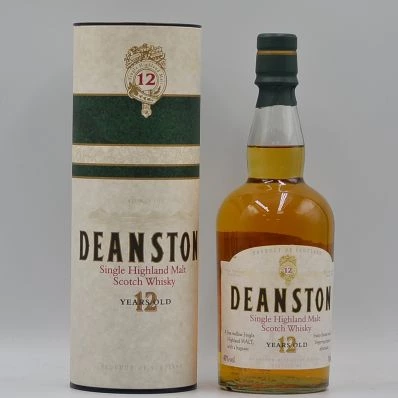 Deanston 12 Year Old Highland Whisky 2000sSpecial Price £56.98 Regular Price £63.99 Inc VATSaving £7.01
 -
-
-
-

What Is the Bourbon Equivalent of Scotch Whisky?
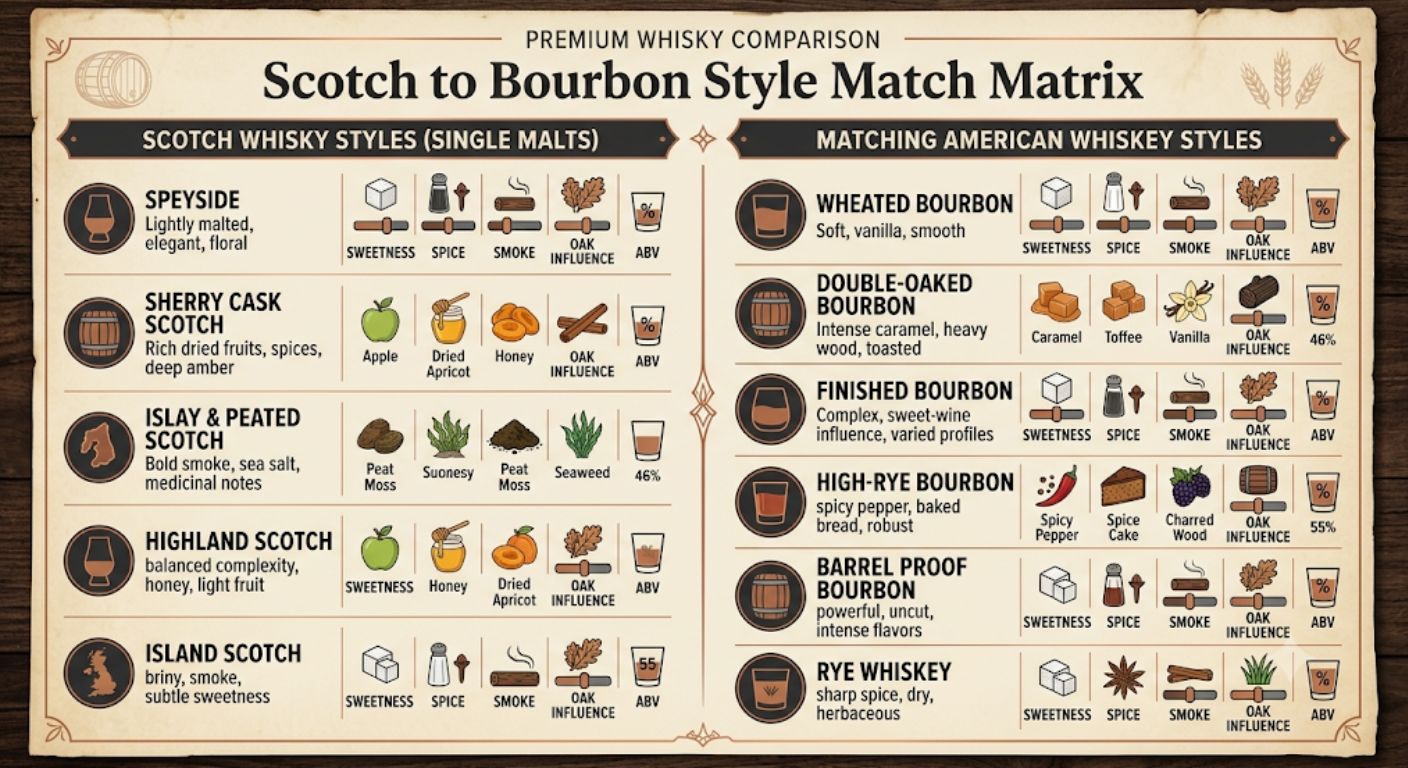
The closest bourbon equivalent of Scotch whisky depends on the Scotch style you already enjoy. Speyside drinkers usually suit softer, lower-proof bourbon. Sherry-cask Scotch drinkers often prefer double-oaked or finished bourbon. Islay drinkers usually need higher proof, rye spice or smoky American whiskey rather than standard sweet bourbon.
Scotch is usually defined by region, distillery character, cask type and age. Bourbon is usually defined by mash bill, proof, oak intensity and whether it is standard, small batch, single barrel, bottled-in-bond or barrel proof. A Scotch drinker should therefore compare flavour structure rather than country of origin.
Scotch vs Bourbon: The Structural Difference That Matters
Both are whiskies, but Scotch is made in Scotland and often uses malted barley, while bourbon is an American whiskey made from at least 51% corn and aged in new charred oak. That new oak rule is the main reason bourbon tends to show more vanilla, caramel, coconut, brown sugar and toasted wood.
Under US rules, bourbon must meet defined standards around grain content, distillation strength, barrel entry proof and maturation in new charred oak. The US Alcohol and Tobacco Tax and Trade Bureau explains these standards through its official distilled spirits guidance, including whisky age and labelling rules at TTB distilled spirits FAQs.
Scotch whisky has its own legal framework, but the practical buyer difference is cask use. Scotch commonly matures in used casks, including ex-bourbon, sherry, wine and refill oak. Bourbon must start in new charred oak, which gives it a stronger oak imprint earlier in maturation.
How Bourbon Is Made in Five Steps
- Mash bill: Bourbon must use at least 51% corn. The rest may include rye, wheat, malted barley or other grains.
- Cooking: The grains are cooked with water to convert starches into fermentable sugars.
- Sour mash: Many producers use backset from a previous distillation to help control acidity and consistency.
- Fermentation and distillation: Yeast turns sugars into alcohol before distillation, often using column stills.
- New charred oak ageing: Bourbon enters new charred oak barrels, where it develops vanilla, caramel, spice, colour and structure.
This makes bourbon more wood-forward at younger ages than many Scotch whiskies. A six-year bourbon can show heavier oak and sweetness than a 12-year Scotch because the cask has never been used before.
If You Like Speyside Scotch, Start with Softer Bourbon
Speyside Scotch drinkers often enjoy orchard fruit, honey, vanilla, gentle malt and a softer finish. The nearest bourbon direction is a lower-to-mid proof bourbon with less aggressive rye spice and a rounded oak profile.
Look for bourbon around 40–46% ABV, especially expressions described as balanced, wheated or approachable. Wheated bourbon replaces rye with wheat in the secondary grain recipe, which usually softens the spice and pushes the profile towards vanilla, pastry, caramel and gentle oak.
If your usual Scotch sits in the Glenlivet, Glenfiddich, Balvenie or Aberlour 12-year style zone, avoid jumping straight into barrel-proof bourbon. The sweetness and oak will feel exaggerated.
If You Like Sherry-Cask Scotch, Look for Oak Weight and Dark Sweetness
Sherry-cask Scotch drinkers are often looking for raisin, fig, dark chocolate, walnut, baking spice and heavier texture. Bourbon will not replicate sherry maturation directly because standard bourbon must mature in new charred oak, but some styles can provide a similar sense of depth.
Double-oaked bourbon is a strong match because it adds extra oak contact after initial maturation. This often increases notes of brown sugar, dark toffee, toasted spice and chocolate. Port-finished or wine-finished American whiskey can also work, though these should be understood as finished whiskey styles rather than traditional straight bourbon equivalents.
The main mistake is assuming all sweet bourbon will suit sherry-cask Scotch drinkers. Sherry influence brings dried fruit, nutty weight and tannin.
If You Like Islay or Peated Scotch, Avoid Soft Entry Bourbon
Peated Scotch drinkers usually want smoke, medicinal depth, coastal weight, ash, tar, seaweed or earthy phenolics. Standard bourbon rarely provides that. Most bourbon is sweet, oak-led and spice-led rather than smoky in the Islay sense.
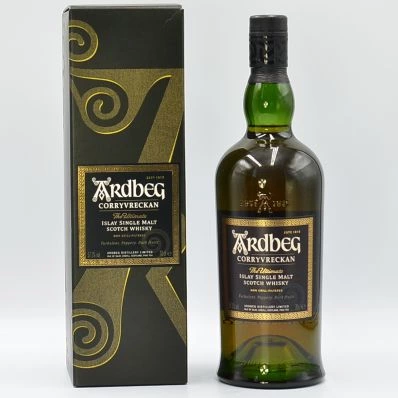
The better route is high-proof bourbon, high-rye bourbon, rye whiskey, or American whiskey with a smoky component. These will not replace Islay peat, but they provide enough intensity to avoid feeling thin. Some Scotch drinkers who enjoy Lagavulin, Laphroaig, Ardbeg or Kilchoman respond better to barrel-proof American whiskey than to gentle 40% bourbon.
If You Like Highland or Island Scotch, Choose Balance Before Power
Highland and Island Scotch cover a wide range, from honeyed and waxy to coastal, oily, lightly smoky or mineral. The bourbon match depends on which side of that range you prefer.
If you like balanced Highland malt, choose bourbon around 45–50% ABV with moderate rye and clear oak structure. If you prefer Island whisky with salt, smoke or texture, move towards higher proof, single barrel or high-rye styles. These give more grip and less simple sweetness.
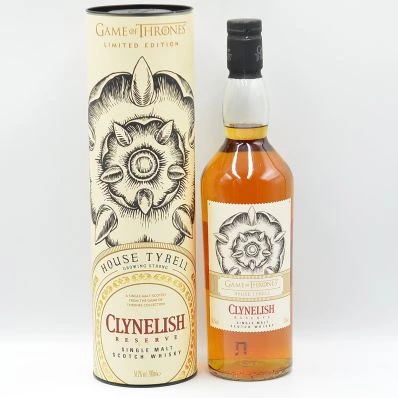
A drinker who enjoys Clynelish, Oban, Highland Park or Talisker may find standard entry bourbon too soft. The better comparison is not flavour-for-flavour, but weight-for-weight.
Why Some Scotch Drinkers Find Bourbon Too Sweet
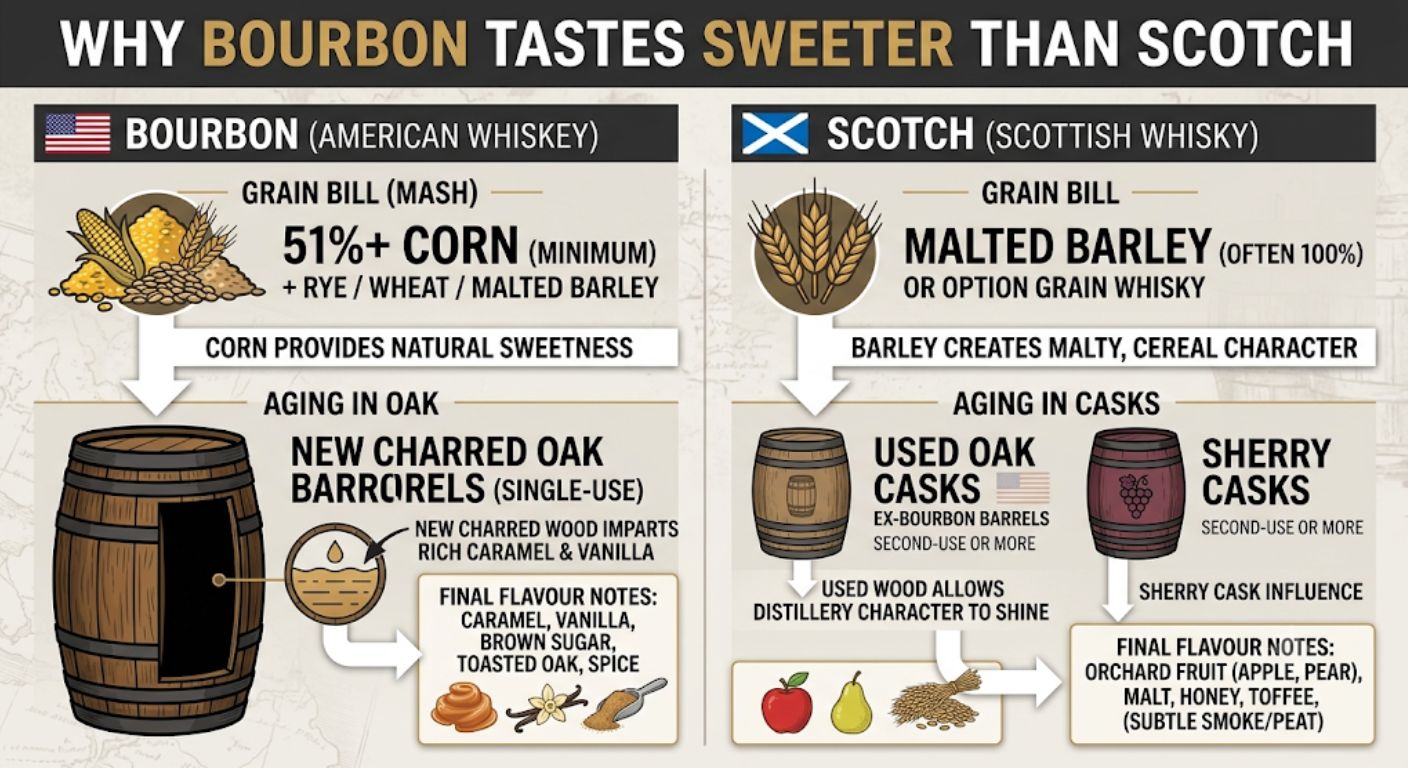
Bourbon often tastes sweeter because corn is the dominant grain and new charred oak contributes vanilla, caramel, coconut and brown sugar. Scotch matured in refill or second-fill casks usually gives less immediate oak sweetness, even when the whisky itself is fruit-led.
If you dislike sweet bourbon, look for three things:
- High rye mash bill: Rye brings spice, dryness, herbal lift and structure.
- Higher ABV: Bottles around 50% ABV often feel less syrupy than soft 40% expressions.
- Older or oakier styles: More tannin can balance sweetness, though too much oak can become bitter.
We often see our customers underestimate how much proof changes the experience: a bourbon at 45% and the same style at barrel strength can feel like two different categories.
High-Rye Bourbon vs Rye Whiskey for Scotch Drinkers
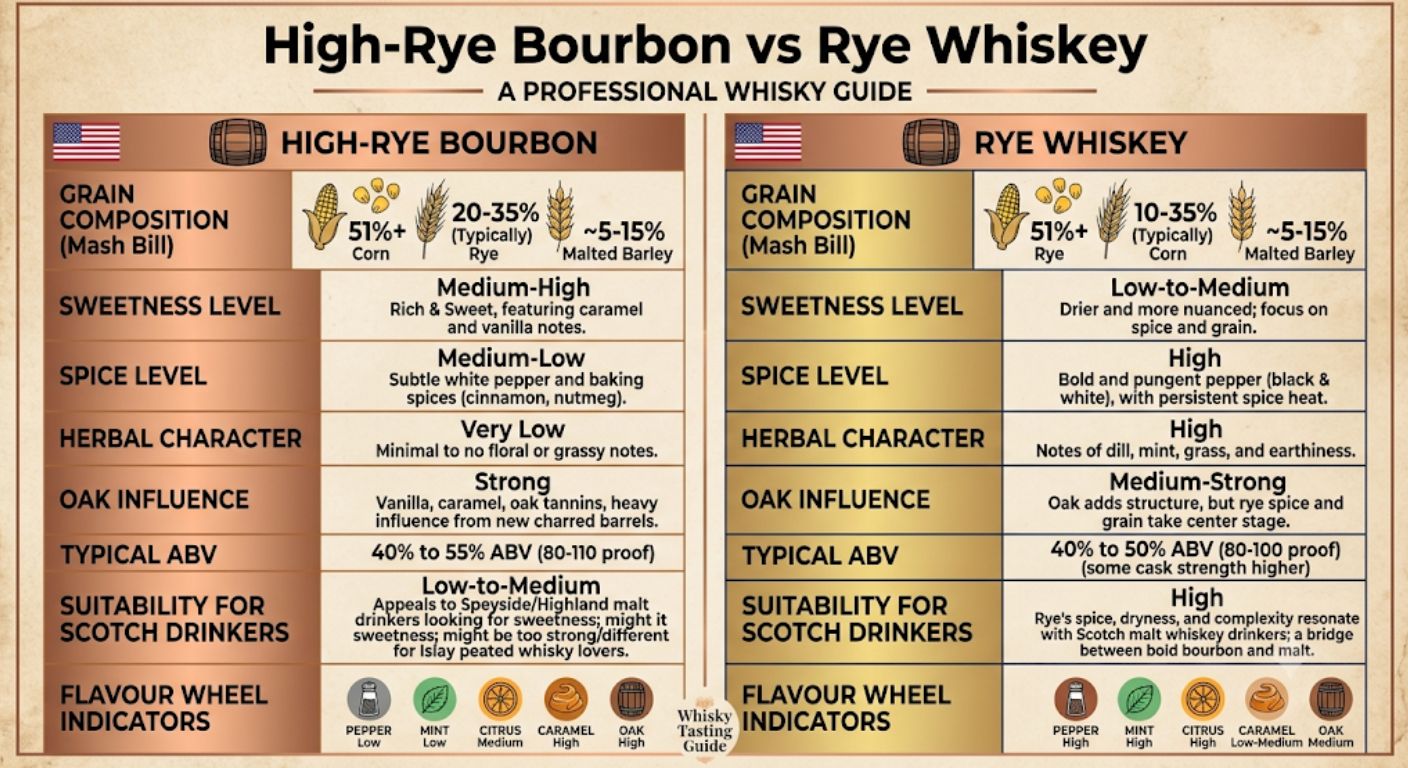
High-rye bourbon still has at least 51% corn, but uses a larger rye portion than softer bourbon styles. Rye whiskey usually requires at least 51% rye, so it is drier, spicier and more grain-driven. Scotch drinkers who dislike heavy sweetness often do better with high-rye bourbon or rye whiskey.
The practical distinction is simple. High-rye bourbon keeps bourbon’s caramel and oak core but adds pepper, mint, clove or herbal spice. Rye whiskey moves further away from bourbon sweetness and closer to dry spice, grain, citrus peel and sharper structure.
If you want American whiskey but not heavy sweetness, rye is often the better bridge. You can still browse broader styles through the World Whisky section, especially if you are comparing American, Japanese, Irish and other non-Scotch categories.
Proof and ABV: The Main Scotch-to-Bourbon Translation Tool
Scotch drinkers should pay close attention to ABV. Many familiar single malts sit at 40–46% ABV, while enthusiast bourbon often sits at 50%, 57.15%, barrel proof or cask strength. Higher strength brings more concentration, oak grip and finish length, but it can also intensify heat.
Use this simple guide:
- 40–43% ABV: softer, easier, usually better for beginners.
- 45–50% ABV: stronger flavour without becoming too aggressive.
- 50–57% ABV: good for drinkers used to cask-strength Scotch.
- 57%+ ABV: powerful, concentrated, not the safest first bourbon purchase.
For Scotch drinkers used to independent bottlings, single casks or natural strength releases, lower-proof bourbon can feel narrow. For drinkers used to standard 40% Speyside or Highland malt, barrel-proof bourbon may be too large a jump.
Age Statements: Why Bourbon Years Do Not Equal Scotch Years
A Scotch drinker should not compare bourbon and Scotch age statements directly. Bourbon’s new charred oak matures spirit more aggressively, especially in Kentucky’s hot summers and cold winters. Scotch usually matures more slowly in a cooler, damp climate and often uses casks that have already held another liquid.
A 6–10 year bourbon can be mature, full and oak-heavy. A 6-year Scotch may still feel young, depending on the cask. An 18-year bourbon can become very tannic, while an 18-year Scotch may become more integrated and layered.
Age matters, but not as a simple quality ranking. For bourbon, mash bill, barrel entry proof, warehouse position and bottling strength often matter just as much.
Bottled-in-Bond, Single Barrel and Barrel Proof Explained
Bottled-in-Bond
Bottled-in-bond whiskey must come from one distillation season, one distiller and one distillery, be aged at least four years in a bonded warehouse, and be bottled at exactly 100 proof, or 50% ABV.
For Scotch drinkers, bottled-in-bond is useful because it gives a reliable strength and a defined production standard. It often offers more structure than entry-level bourbon without the full intensity of barrel proof.
Single Barrel
Single barrel bourbon comes from one individual barrel rather than a batch of multiple barrels. It can be more distinctive, but also more variable. One barrel may be fruit-led and balanced; another may be drier, oakier or hotter.
Barrel Proof
Barrel-proof bourbon is bottled close to its natural cask strength. It suits Scotch drinkers used to cask-strength malt, but it is not always the best first step. Add water carefully if the alcohol dominates the flavour.
Where Tennessee Whiskey Fits
Tennessee whiskey overlaps heavily with bourbon in production style, but it is usually filtered through sugar maple charcoal before ageing. This can soften the spirit and create a smoother, slightly rounded profile.
It is not Scotch-like, but it can suit drinkers who want American oak sweetness without the spikier edge of some rye-heavy bourbons. If you are comparing Tennessee whiskey specifically, the Jack Daniel’s distillery guide gives useful production and brand context.
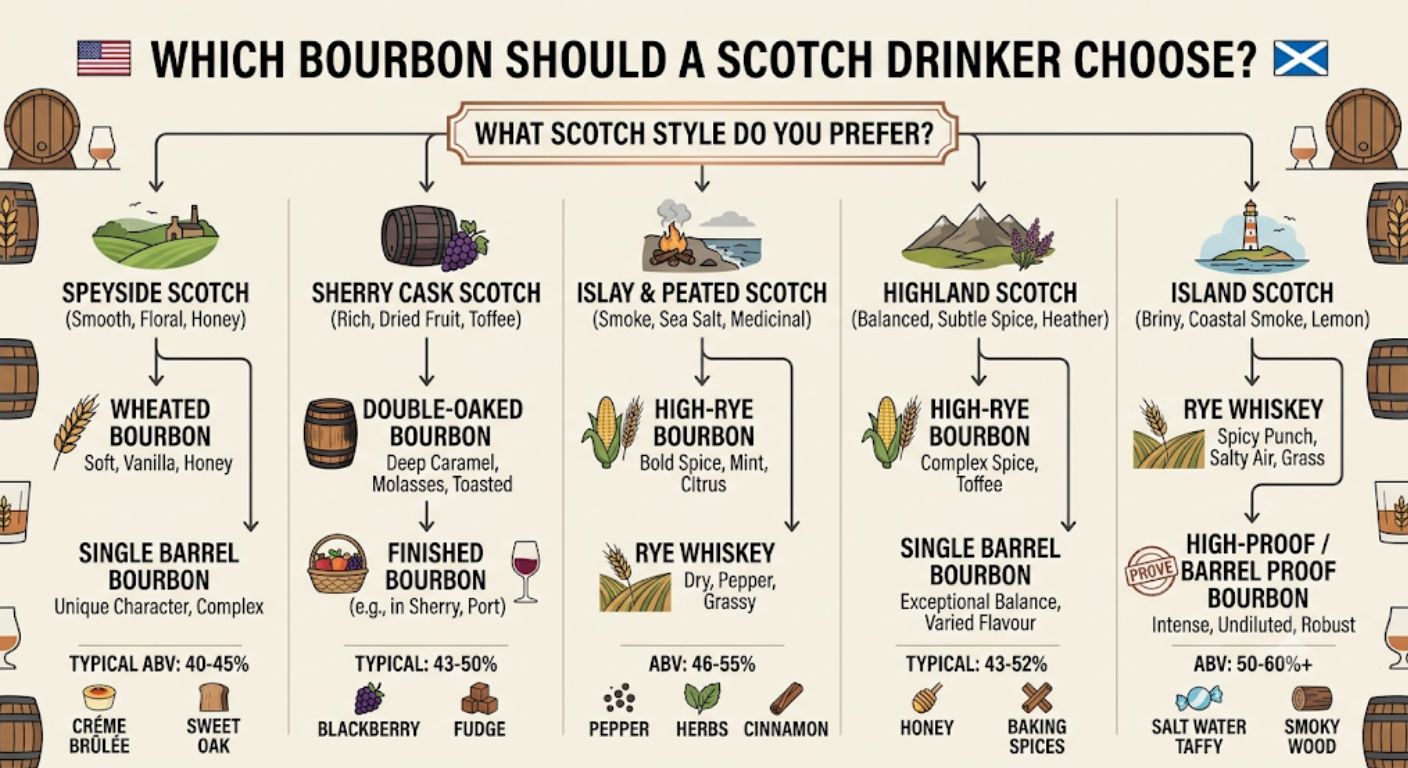
Decision Logic: Match Your Scotch Preference to Bourbon Style
- If you prefer light Speyside Scotch: choose wheated or low-rye bourbon at 40–46% ABV.
- If you prefer sherry-cask Scotch: choose double-oaked, port-finished or darker oak-led American whiskey.
- If you prefer peated Islay Scotch: avoid soft entry bourbon; choose high-proof, high-rye or smoky American whiskey.
- If you prefer Highland balance: choose mid-proof bourbon around 45–50% ABV with clear oak and spice.
- If you prefer Island whisky: choose higher proof, single barrel or rye-influenced styles.
- If bourbon tastes too sweet: move towards rye, high-rye bourbon or bottled-in-bond whiskey.
- If your budget is £30–60: avoid chasing allocated bottles; focus on reliable, available bourbon with clear ABV and mash-bill cues.
- If your budget is £60–100: consider single barrel, bottled-in-bond or higher-proof bourbon before paying for hype.
The safest buying rule is to choose by structure first, label reputation second. A famous bottle is not always the right bottle for a Scotch drinker.
Where to Browse Next
Once you know your preferred direction, the next step is to compare bottles by ABV, mash bill, age statement and cask language. Lochs of Whisky separates Scotch and American styles so buyers can move between familiar and new categories without confusing the two. Scotch drinkers can compare familiar regional and distillery-led styles in the Scotch whisky collection, while American whiskey drinkers looking specifically for corn-led, new-oak styles can browse the Bourbon whiskey category.
FAQ
What bourbon is closest to Scotch whisky?
The closest bourbon depends on the Scotch style. Speyside drinkers usually suit softer wheated bourbon. Sherry-cask drinkers often prefer double-oaked or finished American whiskey. Islay drinkers usually need high-proof, high-rye or smoky whiskey rather than standard sweet bourbon.
What bourbon is not too sweet?
Choose high-rye bourbon, bottled-in-bond bourbon or rye whiskey. These styles usually bring more spice, dryness and structure than wheated or low-proof bourbon. Look for bottles around 45–50% ABV if standard 40% bourbon feels too soft or sweet.
Why is bourbon aged in new oak but Scotch often uses old casks?
Bourbon must mature in new charred oak under US standards. Scotch commonly uses refill casks, ex-bourbon barrels and sherry casks. New oak gives bourbon stronger vanilla, caramel and spice early in maturation, while reused casks allow Scotch to mature more slowly.
Is high-proof bourbon better for single malt drinkers?
High-proof bourbon is often better for Scotch drinkers used to cask-strength single malt, but not for everyone. If you usually drink Scotch at 40–46% ABV, start around 45–50% ABV before moving to barrel proof or cask strength.
Should Scotch drinkers start with bourbon or rye whiskey?
Start with bourbon if you like vanilla, caramel, oak and sweetness. Start with rye whiskey if you prefer spice, dryness, herbal notes and less sugar-like weight. Many Scotch drinkers who dislike sweet bourbon find rye easier to understand.
Is Tennessee whiskey the same as bourbon?
Tennessee whiskey is closely related to bourbon but usually includes charcoal mellowing before ageing. It still gives American oak, vanilla and sweetness, but the profile can feel softer. It is not a direct Scotch replacement, but it can be a useful American whiskey entry point.
Summary: Bourbon Matching Rules for Scotch Drinkers
- ABV matters: 40–46% is softer; 50%+ is more suitable for cask-strength Scotch drinkers.
- Mash bill matters: wheated bourbon is softer; high-rye bourbon is spicier and drier.
- Oak matters: bourbon uses new charred oak, so it often tastes sweeter and woodier than Scotch.
- Age does not translate directly: a younger bourbon can taste more mature than a younger Scotch.
- Peat is hard to replace: Islay drinkers should prioritise proof, spice and intensity rather than expecting true peat smoke.
Common Mistakes
- Buying the most famous bourbon instead of the right style.
- Assuming older bourbon works like older Scotch.
- Ignoring ABV and ending up with a bottle that feels too thin or too hot.
- Expecting bourbon to copy peat, sherry or coastal Scotch exactly.
Decision Shortcuts
- Speyside drinker: softer bourbon, lower rye, 40–46% ABV.
- Sherry-cask drinker: double-oaked or finished American whiskey.
- Islay drinker: high-proof, high-rye or smoky American whiskey.
- Highland drinker: balanced bourbon around 45–50% ABV.
- Sweetness-sensitive drinker: rye whiskey or high-rye bourbon.
The bourbon equivalent of Scotch whisky is not one bottle. It is a style match. Start with the Scotch structure you already trust, then choose the American whiskey that gives the closest balance of grain, oak, proof and finish.

Comments