
 Chat with us on WhatsApp

Bourbon Tasting Notes & Reviews: Our Verdicts on the Big Names
Bourbon reviews are useful only when they help you understand what a bottle is likely to taste like, how it compares with similar bottles, and whether the price makes sense in the UK market. A good review should not just list caramel, vanilla and oak. It should explain the mash bill, ABV, age statement, cask influence, distillery context and drinking style.
This guide gives you a structured way to read bourbon tasting notes and compare well-known bottles without being distracted by hype, scarcity or inflated secondary-market pricing. It also links out to our individual reviews where a bottle needs deeper treatment. If you are looking to compare available bottles, start with the main Bourbon Whiskey category, then use the sections below to narrow by flavour, strength and value.
What Makes a Bourbon Review Useful?
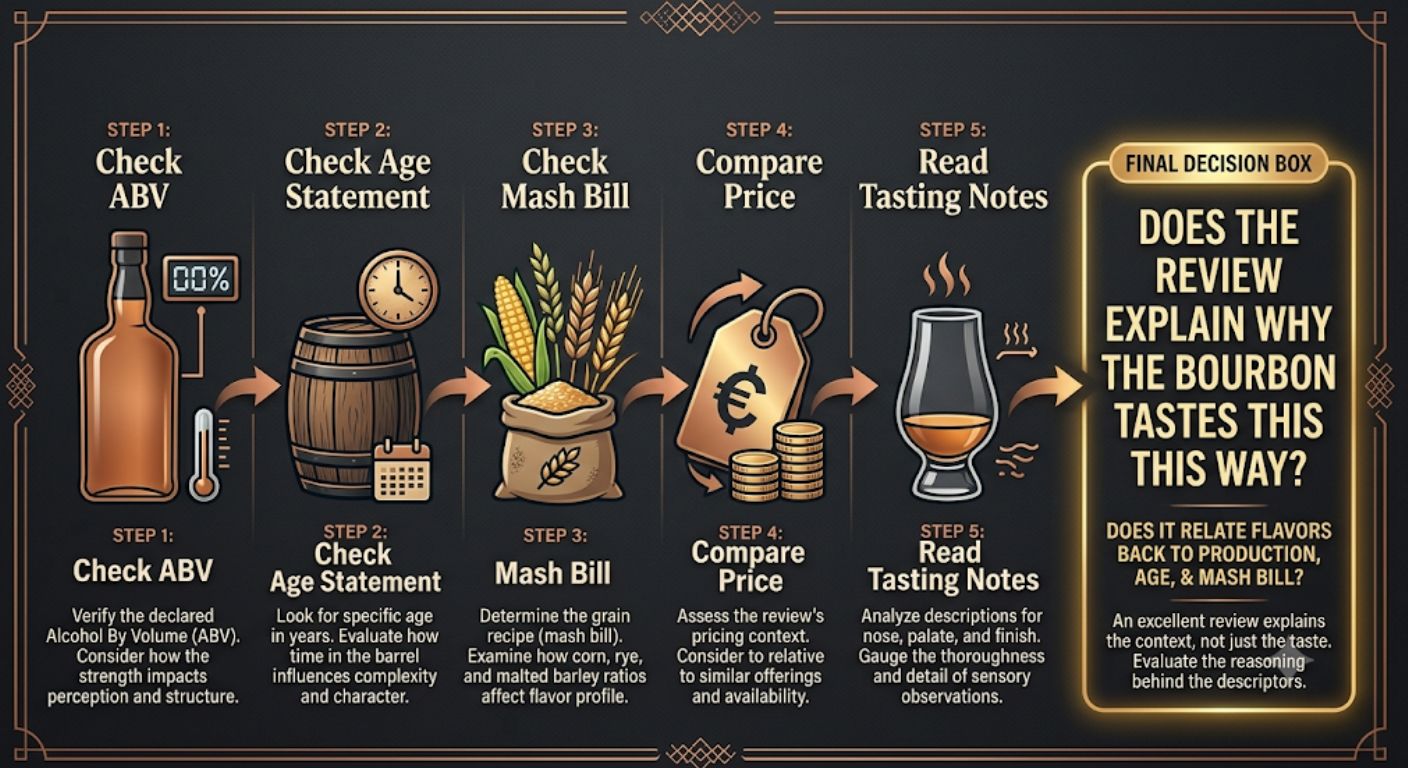
A useful bourbon review should answer five questions clearly: what the bottle is, who makes it, how strong it is, what style it sits in, and whether the price is sensible. The tasting notes matter, but they should come after the facts.
Legally, bourbon whiskey must be made in the United States from a mash bill of at least 51% corn, distilled to no more than 80% ABV, entered into new charred oak at no more than 62.5% ABV, and bottled at a minimum of 40% ABV. The US Alcohol and Tobacco Tax and Trade Bureau sets out those standards in its Beverage Alcohol Manual.
For practical buying, the most useful details are:
- ABV: 40–46% is usually softer; 50% and above brings more weight and heat.
- Age: older is not automatically better, but very young bourbon can taste grainy or sharp.
- Mash bill: rye adds spice; wheat softens the profile; corn brings sweetness.
- Cask influence: new charred oak drives vanilla, caramel, coconut, spice and toasted wood.
- Price: UK pricing often differs from US pricing because of import costs, tax, scarcity and allocation.
How We Read Bourbon Tasting Notes
Bourbon tasting notes usually divide into nose, palate and finish. That structure is useful, but only if the notes are specific enough to help you compare bottles.
Nose
The nose shows the first impression before tasting. Common bourbon aromas include vanilla, caramel, toffee, toasted oak, brown sugar, orange peel, cinnamon, clove, cherry, peanut, leather and charred wood. Softer wheated bourbons often lean towards honey and pastry. High-rye bourbons often show more pepper, mint and dry spice.
Palate
The palate shows texture, sweetness, spice and balance. A bourbon may smell sweet but drink dry if the oak is firm. A high-proof bourbon may taste rich and concentrated, or it may feel hot and unbalanced. This is where ABV, age and cask quality become more important than the brand name.
Finish
The finish tells you what remains after swallowing. A short finish can be fine for an easy mixer or casual pour. A longer finish usually matters more for sipping. Look for whether the finish is sweet, spicy, drying, bitter, oaky, nutty or warming.
Our customers often ask whether a higher ABV always means better bourbon; it does not, but weak oak structure shows up quickly above 50%, so balance matters more as the strength rises.
Mash Bill: Corn, Rye and Wheat
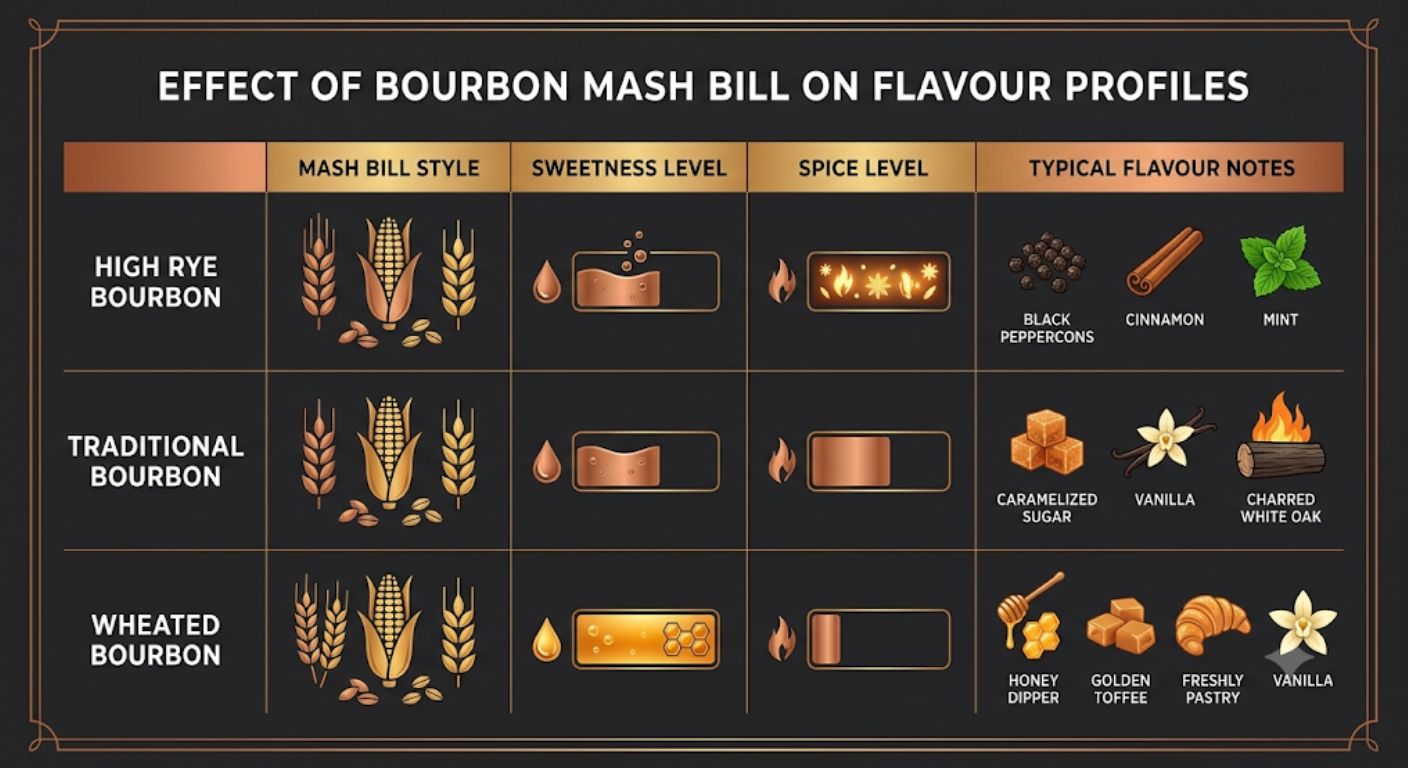
The mash bill is one of the best clues to bourbon flavour. Every bourbon must contain at least 51% corn, but the secondary grain changes the direction of the whiskey.
- High-rye bourbon: usually spicier, drier and more peppery.
- Wheated bourbon: usually softer, rounder and less spicy.
- Traditional bourbon: balances corn sweetness with rye spice and malted barley structure.
ABV and Proof: Why Strength Changes the Review
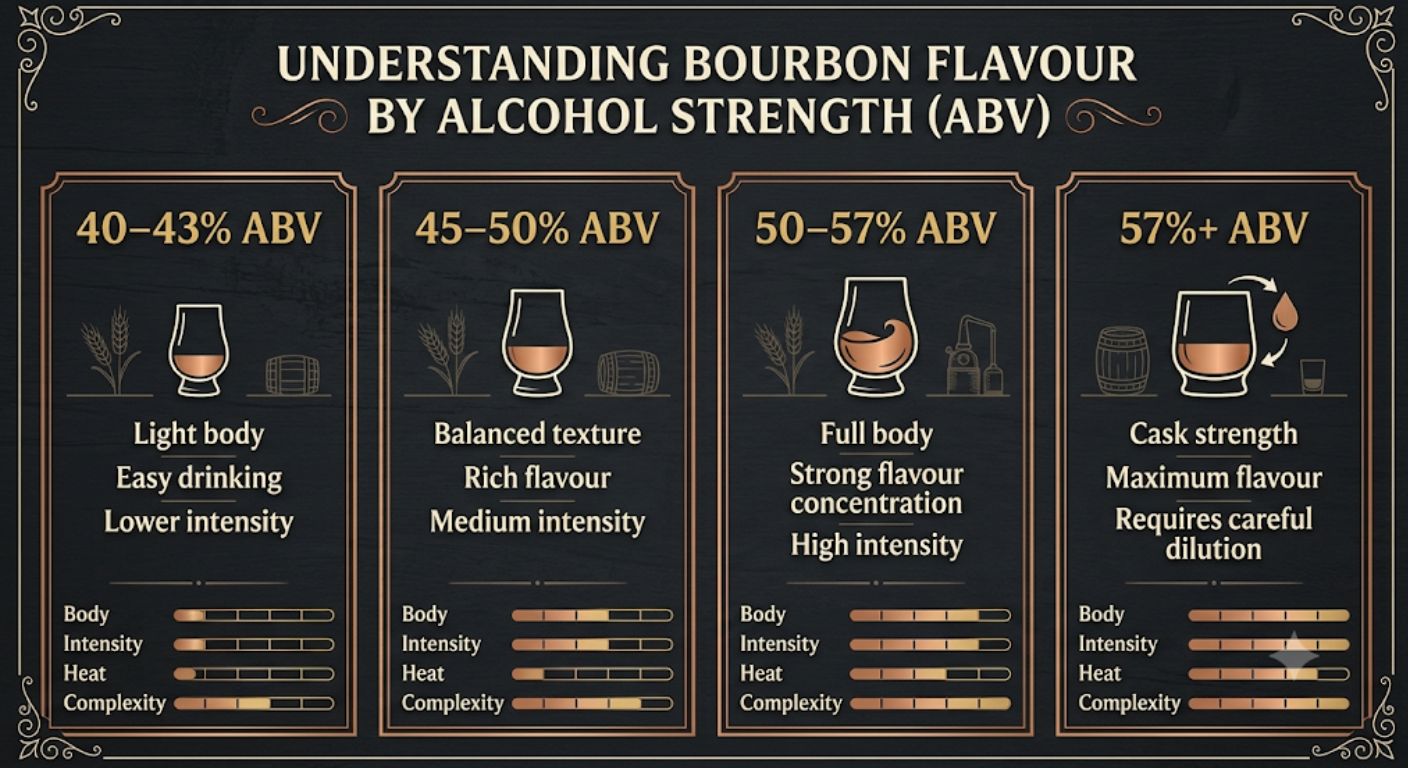
ABV affects almost every part of a bourbon review. A 40% bourbon may be approachable and easy to drink, but can feel thin beside a 50% bottle. A cask-strength bourbon can deliver more flavour concentration, but only if the alcohol is well integrated.
For most UK buyers, the useful ABV bands are:
- 40–43%: approachable, lighter, often suitable for beginners or mixed drinks.
- 45–47%: more texture and flavour without becoming aggressive.
- 50–57%: richer, bolder and better suited to experienced drinkers.
- Above 57%: powerful, often best with a few drops of water.
Age Statements and Maturity
Age matters, but it should not be treated as a simple quality score. Bourbon matures in new charred oak, which means the wood influence can build quickly. A younger bourbon can be lively and useful in cocktails. An older bourbon can be deeper and more complex, but it can also become too dry or tannic.
Age is most useful when compared with ABV and price. A 9-year bourbon at 50% ABV may offer more structure than a younger 40% bottle. A 10-year bottle can feel more refined, but the price has to match the quality in the glass.
Small Batch, Single Barrel and Standard Bourbon
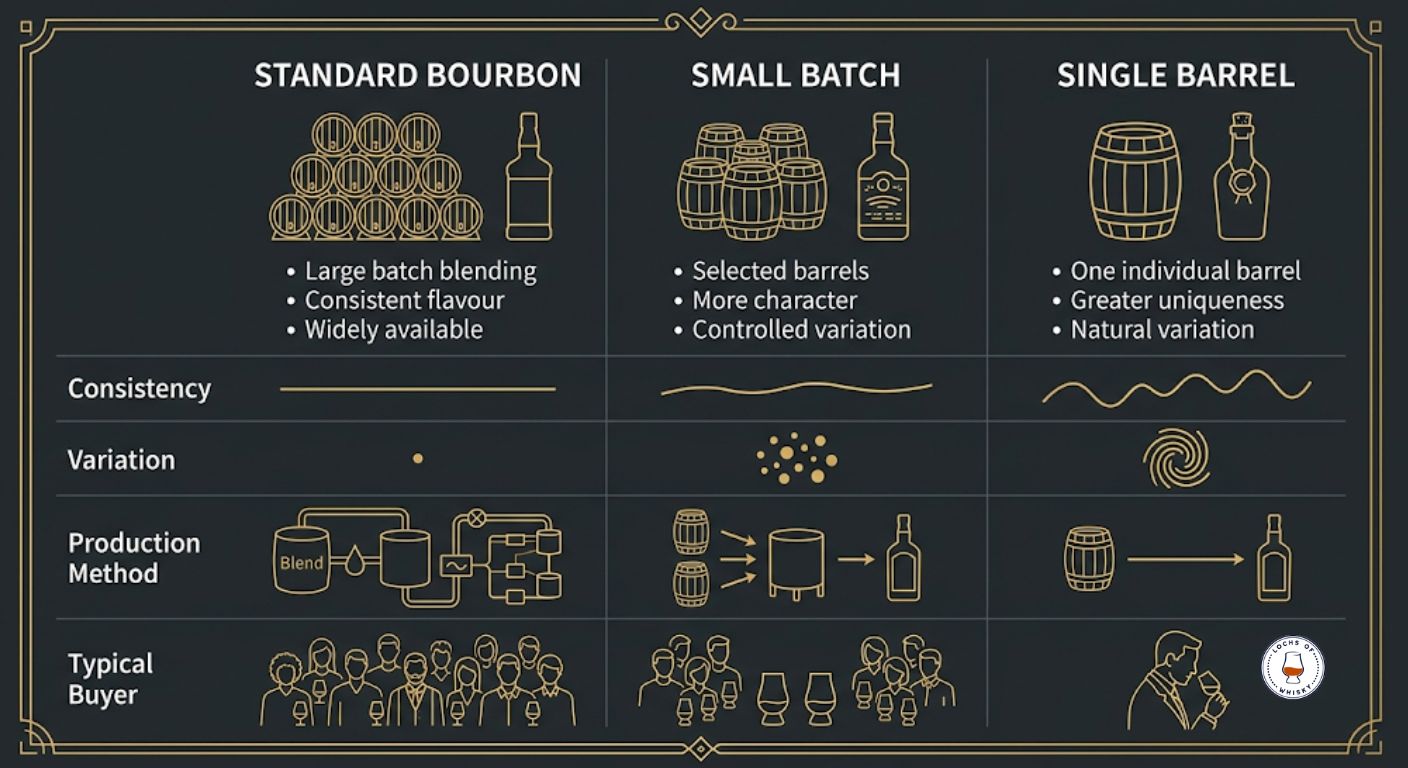
Small batch bourbon is usually made from a selected group of barrels. Single barrel bourbon comes from one barrel. Standard bourbon is usually blended from a wider batch to create consistency. These terms affect variation, flavour control and price expectations.
| Type | Production Method | What To Expect |
|---|---|---|
| Standard bourbon | Large batch blending | Reliable house style and consistent flavour |
| Small batch | Selected group of barrels | More character, but still controlled |
| Single barrel | One individual barrel | More variation, sometimes more distinctiveness |
Small batch is not a strict legal term. It usually signals curation, but the number of barrels can vary between producers. Single barrel is clearer: each barrel can taste different, even within the same brand.
Price, Value and UK Availability
UK bourbon pricing needs its own judgement. A bottle that is considered affordable in the United States may sit at a higher price here because of import costs, duty, VAT, distribution and allocation. That does not make it poor value automatically, but it does mean US review scores cannot be copied across without adjustment.
As a rough guide:
- £25–40: suitable for mixers, casual sipping and entry-level comparison.
- £40–70: often the strongest value band for serious bourbon drinkers.
- £70–120: should show clear age, proof, scarcity or single-barrel character.
- £120+: needs careful scrutiny; reputation and scarcity can overtake drinking quality.
If the aim is reliable availability rather than collector interest, the Best Selling Bourbon selection is a practical place to compare familiar bottles before moving into higher-proof or harder-to-find releases.
Reviewer Trust and Tasting Bias
Bourbon reviewing is subjective. A reviewer may prefer high proof, heavy oak, wheated softness, rye spice or cocktail-friendly balance. That does not make the review wrong, but it means you need to understand the reviewer’s bias before using their verdict.
Good reviews usually explain:
- whether the bottle was tasted neat, with water or in a cocktail;
- whether price was part of the judgement;
- whether the bottle was bought, supplied or sampled;
- how it compares with similar bottles;
- whether scarcity has affected the final verdict.
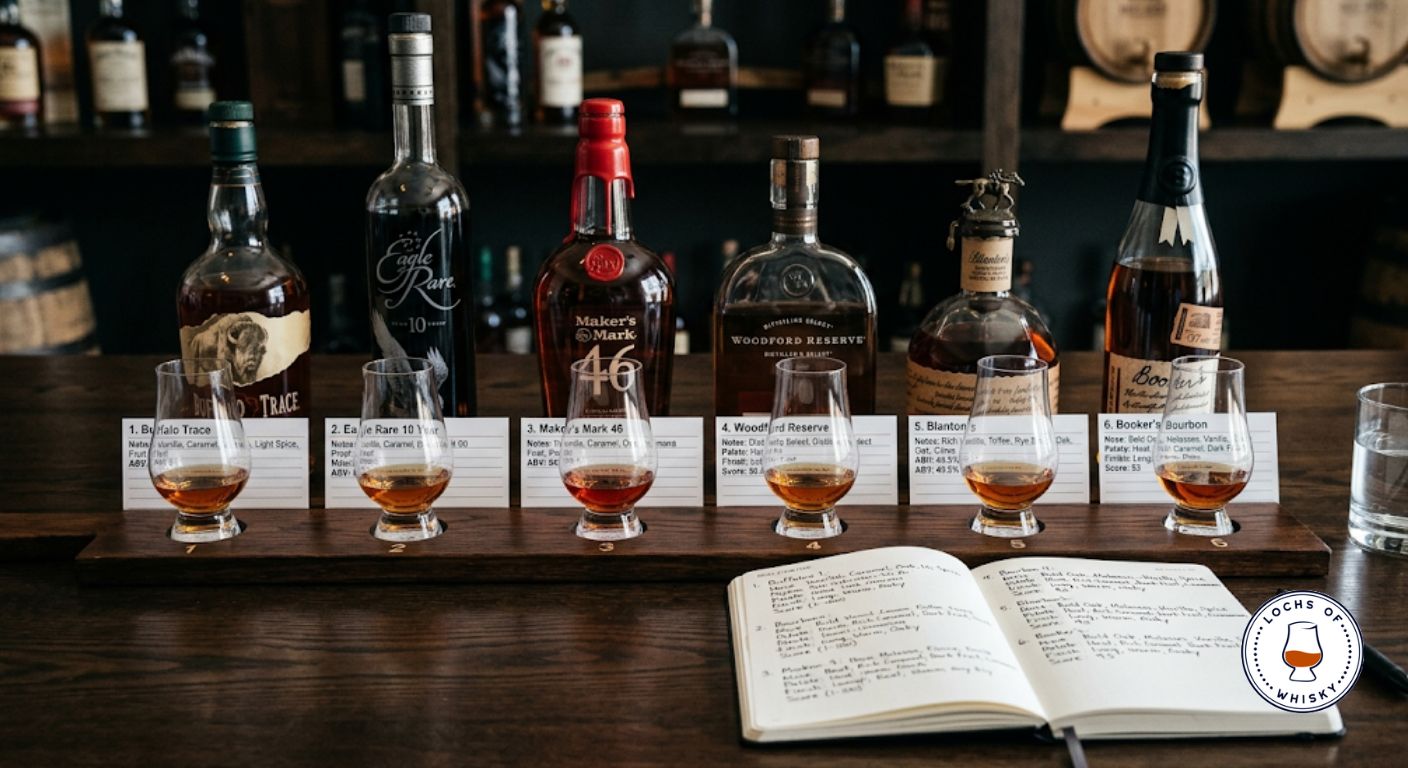
Blind tasting is still one of the cleanest ways to judge bourbon. Cover the bottles, pour into matching glasses, taste in small measures, write notes before discussion, and reveal the labels only after ranking them. This reduces the influence of reputation, packaging and price.
Distillery and Producer Context
Producer context helps explain style, especially when a bottle comes from a recognisable house profile. Some bourbon is built around sweetness and accessibility. Some is structured around spice, oak and proof. Some uses heritage, allocation or independent positioning as part of its appeal.
For distillery-led discovery, compare recognised American whiskey producers with smaller or more specialist names. Our Belmont Farm, Cascade Hollow and Kentucky Owl guides help place individual bottles within their broader production context.
Decision Logic: Which Bourbon Style Should You Choose?
If you want a soft, approachable pour, choose a wheated bourbon around 40–45% ABV. Avoid very high-proof bottles until you know how much alcohol heat you enjoy.
If you want spice, pepper and a drier finish, choose a high-rye bourbon. These usually work well neat, but they also hold up strongly in spirit-led cocktails.
If you want value, focus on the £40–70 range. This is where many bottles offer better proof, better structure or more maturity without moving into scarcity-led pricing.
If you want intensity, choose a cask-strength bourbon, but judge balance carefully. More alcohol does not guarantee better flavour.
If you want consistency, choose a standard or small batch bourbon. If you want variation and individuality, choose single barrel, but accept that one barrel may not taste exactly like another.
If you mainly drink Scotch, start by matching flavour rather than country. Speyside drinkers may prefer softer wheated bourbon. Sherry-cask drinkers may prefer richer oak and dark fruit notes. Islay drinkers may need higher proof and heavier char, although bourbon will not give the same peat smoke.
FAQ
What should good bourbon taste like?
Good bourbon usually shows a balance of corn sweetness, oak, vanilla, caramel, spice and warmth. The exact profile depends on the mash bill, age and ABV. Wheated bourbon is often softer. High-rye bourbon is usually spicier. Older bourbon may show more oak, leather, tobacco or dry spice.
Are bourbon reviews reliable?
Bourbon reviews are useful when they explain context, not just opinion. Look for ABV, age, mash bill, price, tasting method and comparisons with similar bottles. Be cautious with reviews that focus only on hype, scarcity or a final score without explaining how the bottle actually drinks.
What is the difference between small batch and single barrel bourbon?
Small batch bourbon is made by blending a selected group of barrels. Single barrel bourbon comes from one individual barrel. Small batch usually offers more consistency. Single barrel can show more character, but also more variation between bottles.
Does higher proof mean better bourbon?
No. Higher proof can bring more flavour concentration, texture and length, but it can also bring heat. A balanced 45–50% bourbon can drink better than a harsh cask-strength bottle. Judge proof alongside oak structure, age and the quality of the finish.
Why is bourbon more expensive in the UK?
UK bourbon prices reflect import costs, alcohol duty, VAT, distribution and availability. Some allocated bottles also rise because demand is higher than supply. This means US value recommendations do not always translate directly to the UK market.
Should beginners drink bourbon neat or with ice?
Start neat in a small measure, then add a few drops of water if the alcohol feels sharp. Ice can make bourbon easier to drink, but it also reduces aroma and texture. For higher-proof bottles, water is usually more controlled than ice.
Summary: How To Use Bourbon Reviews Properly
- Check the ABV first: strength changes texture, heat and flavour intensity.
- Read the mash bill: rye adds spice; wheat softens the profile.
- Do not overvalue age: older bourbon can be excellent, but oak balance matters more.
- Treat scarcity carefully: hard to find does not always mean better to drink.
- Compare UK prices: US value scores may not apply once import costs are included.
- Use reviews as guidance: your own palate still matters most.
The most common mistake is buying by reputation alone. A better approach is to match the bottle to your preferred flavour: soft and sweet, spicy and dry, rich and oaky, or high-proof and intense. Once you know that direction, bourbon reviews become much easier to use.
For wider browsing across American whiskey styles, use the bourbon range at Lochs of Whisky as a category reference while comparing ABV, age, producer and price.

Related Products
-
-
-
 Barton 1792 Bottled in Bond Kentucky Bourbon WhiskeySpecial Price £62.98 Regular Price £69.99 Inc VATSaving £7.01
Comments