
 Chat with us on WhatsApp


What Is Bourbon? The Complete Guide to American Whiskey
All bourbon is whiskey, but not all whiskey is bourbon. Bourbon is a specific style of American whiskey made from a grain recipe containing at least 51% corn, matured in new charred oak, distilled within set proof limits, and bottled at no less than 40% ABV.
The main confusion comes from the way bourbon sits inside the wider whiskey category. A bottle may be American whiskey without being bourbon. It may be Tennessee whiskey, rye whiskey, corn whiskey, or another legally defined style. This guide explains what bourbon is, how it is made, what the label terms mean, and how to choose a bottle without confusing mash bill, age, ABV, cask type, or region.
For bottle discovery, the most direct category is Bourbon Whiskey, but the useful buying decision starts with understanding the rules behind the label.
What Is Bourbon?
Bourbon is a legally defined American whiskey. It must be made in the United States from a fermented grain mash containing at least 51% corn, distilled to no more than 160 proof, entered into new charred oak at no more than 125 proof, and bottled at no less than 80 proof, or 40% ABV.
The corn requirement is the foundation. Corn gives bourbon its typical sweetness, often showing as vanilla, caramel, toffee, honey, baked corn, or brown sugar. The rest of the grain recipe usually includes rye, wheat, malted barley, or a mix of those grains.
Bourbon does not have to be made in Kentucky, although Kentucky remains the most closely associated region. A bourbon made in Texas, New York, Indiana, Tennessee, or another US state can still legally be bourbon if it follows the same rules.
The legal standards matter because they protect the meaning of the word. The US standards of identity for whisky define bourbon by grain, distillation strength, barrel entry proof, maturation vessel, and bottling strength.
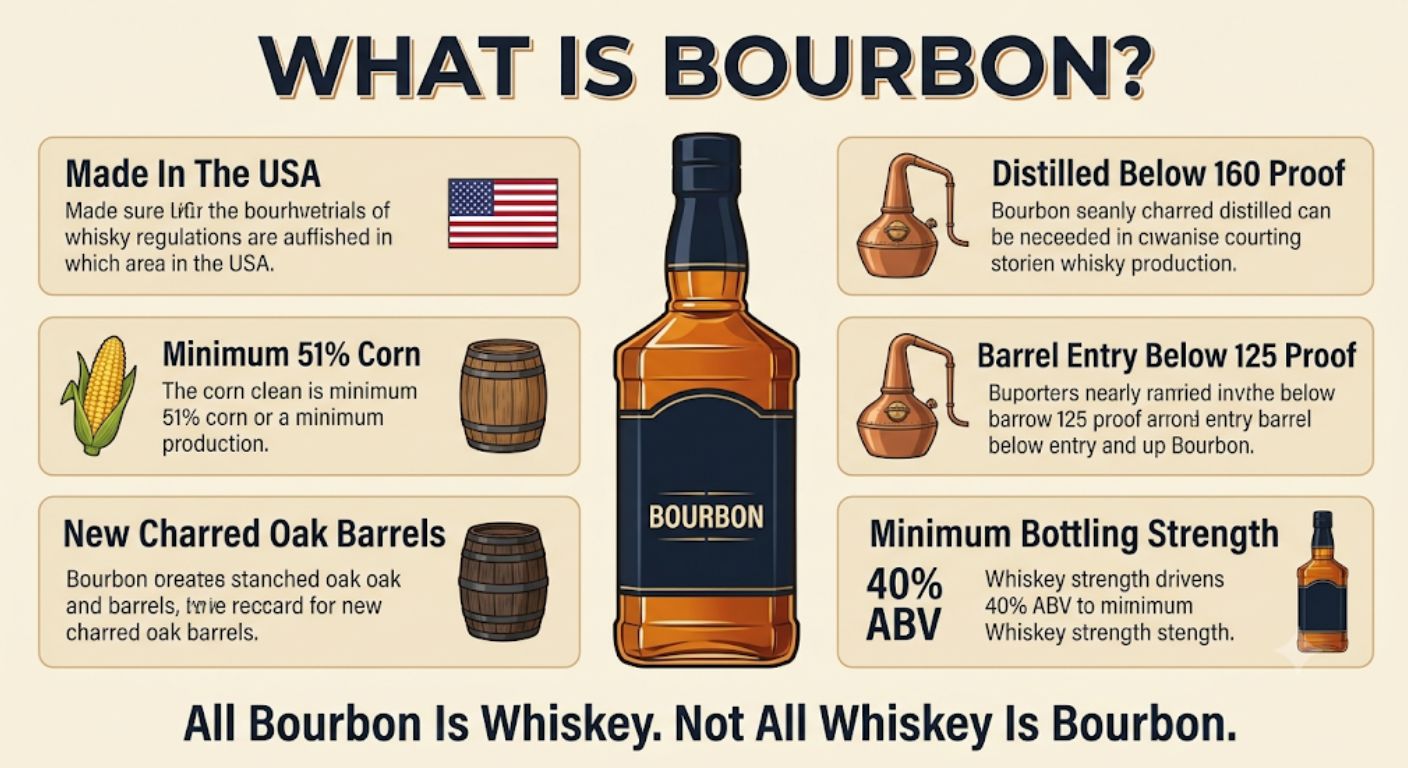
The 6 Legal Rules of Bourbon
Bourbon is not defined by flavour alone. It is defined by production rules. These rules separate bourbon from general American whiskey and stop the term being used loosely.
- It must be made in the United States. Kentucky is traditional, but not compulsory.
- The mash bill must contain at least 51% corn. The remaining grains usually shape the spice, softness, or structure.
- It must be distilled to no more than 160 proof. This helps retain grain character.
- It must enter the barrel at no more than 125 proof. Barrel entry strength affects extraction from the oak.
- It must mature in new charred oak containers. Used barrels do not qualify for standard bourbon production.
- It must be bottled at no less than 80 proof. That equals 40% ABV.
Bourbon, Whiskey, Scotch, And Rye: The Category Difference
Whiskey is the broad category. Bourbon is one type of whiskey. Scotch is whisky made in Scotland under Scottish rules. Rye whiskey is usually defined by a mash bill with at least 51% rye in the United States. The spelling also changes by country and convention: American and Irish producers usually use “whiskey”, while Scotch, Japanese, and many world producers use “whisky”.
| Feature | Bourbon | Scotch whisky | American rye whiskey |
|---|---|---|---|
| Main grain | At least 51% corn | Usually malted barley for single malt | At least 51% rye |
| Country | United States | Scotland | United States |
| Cask rule | New charred oak | Often refill bourbon or sherry casks | New charred oak |
| Typical flavour direction | Sweet, vanilla, caramel, oak spice | Varies by region and cask | Drier, spicier, peppery |
| Minimum bottling strength | 40% ABV | 40% ABV | 40% ABV |
For wider browsing across US styles beyond bourbon, the broader American Whiskey category is the better starting point.
What Bourbon Is Made From: The Mash Bill
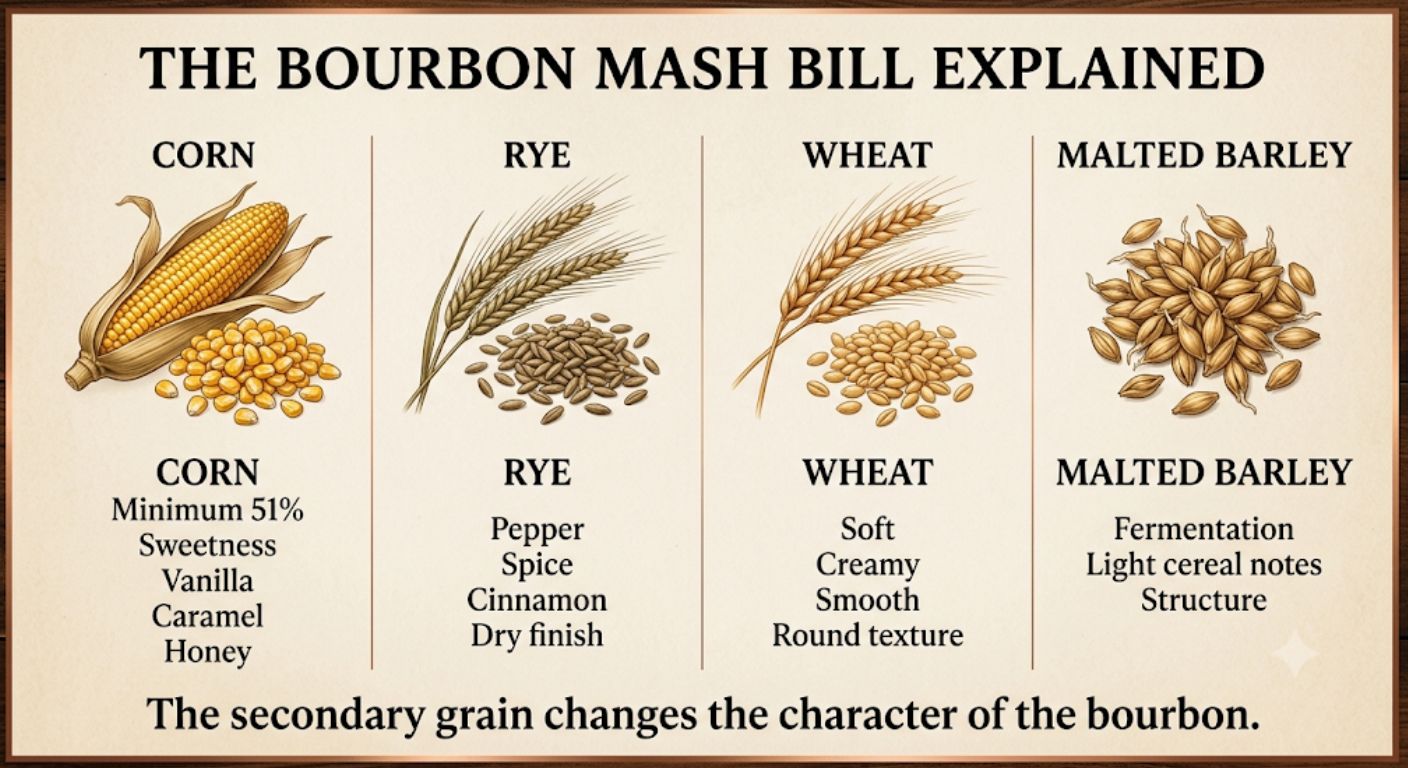
A bourbon mash bill is the grain recipe used before fermentation and distillation. By law, bourbon must contain at least 51% corn. The remaining percentage usually comes from rye, wheat, and malted barley.
The mash bill matters because it shapes the spirit before the barrel starts influencing flavour. Corn brings sweetness. Rye adds spice, pepper, dryness, and structure. Wheat softens the profile and can make the whiskey feel rounder. Malted barley is usually included to help fermentation and add light cereal notes.
Common bourbon mash bill styles include:
- Traditional bourbon: corn, rye, and malted barley.
- High-rye bourbon: more rye in the secondary grain position, giving more spice and grip.
- Wheated bourbon: wheat replaces rye, giving a softer and often sweeter impression.
- High-corn bourbon: corn sits well above 51%, often producing a sweeter, lighter profile.
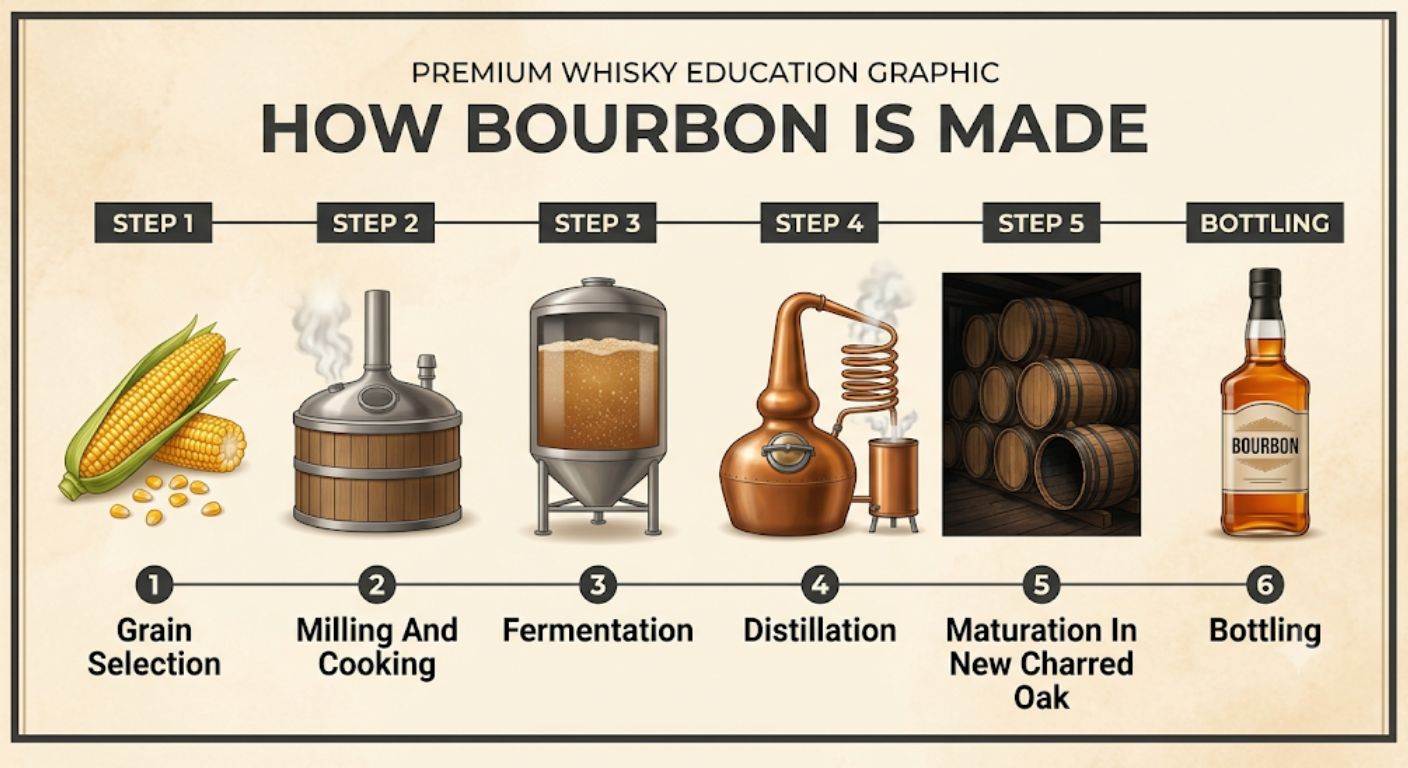
How Bourbon Is Made
Bourbon production follows the same broad path as other grain spirits: grains are cooked, fermented, distilled, matured, and bottled. The difference is that bourbon must stay inside its legal framework at each stage, especially around grain percentage, proof, and oak.
Step 1: Grain selection and milling
The distiller chooses a mash bill led by at least 51% corn. The grains are milled so the starches can be converted and fermented efficiently.
Step 2: Cooking the mash
The grains are cooked with water to make the starches accessible. Corn usually needs a higher cooking temperature than rye, wheat, or malted barley.
Step 3: Fermentation
Yeast converts sugars into alcohol. This creates a low-strength alcoholic liquid often called distiller’s beer.
Step 4: Distillation
The fermented liquid is distilled, often through column stills, pot stills, or a combination. Bourbon must come off the still at no more than 160 proof.
Step 5: Barrel entry and maturation
The new make spirit is reduced if needed and entered into new charred oak at no more than 125 proof. The barrel then drives much of bourbon’s colour, sweetness, spice, and structure.
Step 6: Bottling
The matured whiskey may be batched, filtered, diluted, or bottled at higher strength. Standard bourbon must be bottled at a minimum of 40% ABV.
Why New Charred Oak Matters
New charred oak is central to bourbon. Unlike Scotch whisky, which often matures in refill casks, bourbon must use new charred oak containers. This gives bourbon a strong wood influence even at relatively young ages.
Charring changes the inner surface of the barrel. It creates a layer that helps filter the spirit while allowing the whiskey to extract colour, vanillin, caramelised sugars, oak spice, and toasted notes from the wood. This is why bourbon often shows vanilla, caramel, coconut, brown sugar, cinnamon, clove, and toasted oak.
The barrel also explains why young bourbon can taste more oak-driven than a young Scotch. A three or four-year-old bourbon has spent its full maturation in active new oak. A similarly aged Scotch may have spent time in a refill cask that gives a gentler influence.
Does Bourbon Have To Be Made In Kentucky?
Bourbon does not have to be made in Kentucky. It must be made in the United States. Kentucky dominates bourbon production because of history, climate, distilling infrastructure, limestone-rich water, and long-established warehousing, but the legal definition is national rather than state-only.
Kentucky still matters on a label. “Kentucky Straight Bourbon Whiskey” tells you the whiskey was distilled and aged in Kentucky and meets the straight bourbon rules. But a bourbon from Texas, New York, Indiana, or another US state can still be genuine bourbon if it follows the federal requirements.
Some non-Kentucky producers lean into local climate and maturation conditions. Hotter regions can drive faster extraction from oak, while cooler or more variable climates can change how the spirit moves in and out of the barrel. That does not automatically make one better than the other. It changes the style.
What Does Bourbon Taste Like?
Bourbon usually tastes sweeter and more oak-led than Scotch or rye whiskey. Common notes include vanilla, caramel, brown sugar, honey, maple, toasted oak, cinnamon, nutmeg, orange peel, peanut, coconut, and sometimes leather or tobacco in older bottles.
The exact flavour depends on four main factors:
- Mash bill: corn adds sweetness, rye adds spice, wheat adds softness.
- Age: longer maturation can add oak, tannin, depth, and dryness.
- ABV: higher proof can bring more concentration but more heat.
- Warehouse conditions: heat, airflow, and barrel position affect maturation.
Our customers often underestimate ABV when moving from 40% Scotch to American whiskey; a 50–60% bourbon can be excellent, but it needs slower tasting and sometimes a few drops of water.
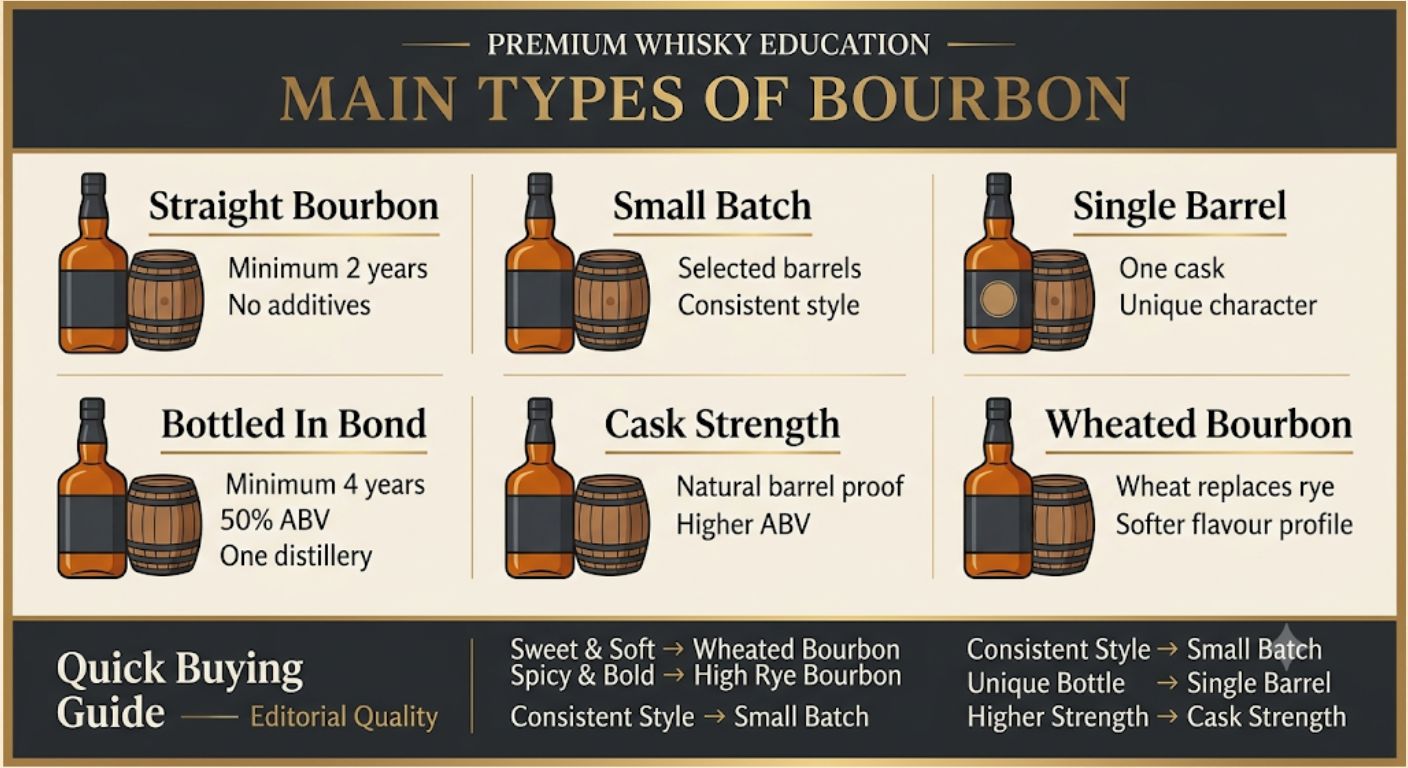
Main Types Of Bourbon
Bourbon labels use several terms that affect buying decisions. Some are legally meaningful. Others are useful but less tightly regulated.
Straight bourbon
Straight bourbon must be matured for at least two years in new charred oak. If it is under four years old, the label must carry an age statement. It cannot contain added colouring or flavouring.
Small batch bourbon
Small batch bourbon is made by combining a selected number of barrels. The term is not strictly defined by a fixed number of casks, so its meaning depends on the producer. In practice, it often signals a more selected batch than a high-volume standard release.
Single barrel bourbon
Single barrel bourbon comes from one individual barrel. It can vary from barrel to barrel, even within the same brand. This is useful for drinkers who value individuality over batch consistency.
Bottled-in-bond bourbon
Bottled-in-bond bourbon must meet additional US requirements. It must be the product of one distilling season, from one distillery, aged at least four years in a federally bonded warehouse, and bottled at 100 proof, or 50% ABV.
Cask strength or barrel proof bourbon
Cask strength bourbon is bottled at or close to its natural barrel strength. These bottles can sit above 55% ABV and may feel intense neat. They are often best approached with small pours and water added gradually.
Wheated bourbon
Wheated bourbon uses wheat instead of rye as the main secondary grain. This can create a softer, rounder profile. Well-known wheated bourbon families include W.L. Weller, and you can read more about that producer through the W.L Weller distillery guide.
Bourbon Label Terms That Actually Matter
A bourbon label can look crowded, but a few details carry most of the useful information.
- ABV or proof: 40% ABV is standard minimum; 45–50% often gives more flavour weight; 55%+ needs more care.
- Age statement: useful, but not the only quality marker. Cask quality matters heavily.
- Straight: confirms at least two years of maturation and no flavouring or colouring.
- Single barrel: expect variation and individuality.
- Small batch: useful, but not legally fixed.
- Bottled-in-bond: a strong quality signal if you want 50% ABV and clear production rules.
- Kentucky: regional origin, not a universal quality guarantee.
If you are comparing labels, prioritise ABV, age statement, mash bill style, and whether the bottle is straight, single barrel, or bottled-in-bond. Price alone is a poor guide because bourbon pricing can be distorted by demand, allocation, and collectability.
Bourbon And Tennessee Whiskey
Tennessee whiskey and bourbon are closely related, but they are not always labelled the same way. Many Tennessee whiskeys meet the broad production requirements for bourbon but are filtered through sugar maple charcoal before maturation. This is known as the Lincoln County Process.
Jack Daniel’s is the clearest example. It meets many bourbon-style requirements but is marketed as Tennessee whiskey, with charcoal mellowing as a defining part of its identity. The distinction is partly legal, partly regional, and partly brand-led.
The useful buying point is simple: if you like bourbon but want a slightly softer charcoal-filtered profile, Tennessee whiskey may suit you. If you want the classic bourbon identity, look for bourbon or straight bourbon on the label.
How To Choose Bourbon By Taste Preference
The easiest way to choose bourbon is to start with flavour preference rather than brand reputation.
- If you prefer soft, sweet whiskey: choose wheated bourbon or lower-rye bourbon around 40–46% ABV.
- If you prefer spice and grip: choose high-rye bourbon or bottled-in-bond bourbon around 50% ABV.
- If you drink Scotch and like sherry casks: look for richer bourbon with darker sugar, oak, spice, and higher ABV.
- If you dislike alcohol heat: avoid barrel proof bottles until you know the style.
- If your budget is £30–60: focus on straight bourbon at 40–50% ABV rather than paying extra for collectable names.
- If your budget is £70–150: consider single barrel, bottled-in-bond, or higher proof releases, but check ABV before buying.
- If your budget is above £150: make sure you are paying for age, limited release status, distillery reputation, or collectability — not just online demand.
Old Forester is a useful reference point because its range shows how proof, age, and release style can change the same core bourbon identity. More background is available in the Old Forester distillery guide.
How Bourbon Differs From Scotch For UK Buyers
UK whisky drinkers often approach bourbon through Scotch habits. That can be useful, but it can also mislead. Bourbon is usually more wood-active, sweeter, and more proof-driven than many entry-level Scotch whiskies.
The biggest differences are:
- Oak use: bourbon uses new charred oak; Scotch often uses refill bourbon, sherry, wine, or other cask types.
- Grain base: bourbon is corn-led; Scotch single malt is malted barley-led.
- Age expectations: bourbon can show strong oak at younger ages because the casks are new.
- ABV culture: many serious bourbon releases sit at 45–60% ABV.
- Regional meaning: Scotch regions are widely used as flavour shorthand; bourbon regions are less rigid stylistically.
If you are coming from Scotch, do not assume an older bourbon is automatically better. Bourbon can become too dry, tannic, or oak-heavy when maturation goes too far. Balance matters more than the largest age number.
Where Smaller American Distilleries Fit
Not every bourbon buyer is looking for the biggest Kentucky names. Smaller American distilleries can offer different grain choices, climate effects, and local identity. They can also be more variable, so label reading becomes more important.
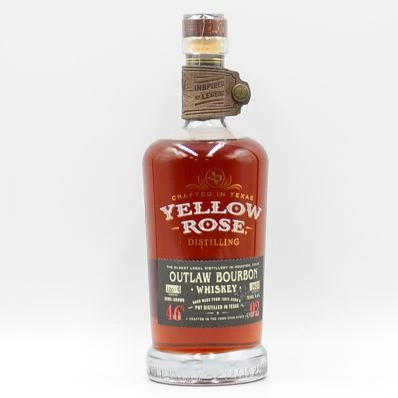
Yellow Rose is a useful example of American whiskey outside the traditional Kentucky centre. Its Texas context gives a different maturation environment, and the Yellow Rose guide gives more background on the distillery.
For broader discovery across American styles, use regional and producer information as a filter, not a guarantee. A smaller producer can make excellent whiskey, but the bottle still needs to make sense on ABV, age, cask use, and price.
Common Bourbon Buying Mistakes
- Assuming all bourbon is from Kentucky: Kentucky is important, but bourbon can be made anywhere in the United States.
- Ignoring ABV: higher proof can be rewarding, but it is not always beginner-friendly.
- Buying only by age: bourbon’s new oak maturation means younger bottles can still be mature and balanced.
- Confusing small batch with single barrel: small batch is blended from selected barrels; single barrel comes from one cask.
- Assuming expensive means better: limited availability can push prices beyond drinking value.
- Overlooking mash bill: rye and wheat make a real difference to flavour and texture.
FAQ
What makes bourbon different from whiskey?
Bourbon is a type of whiskey with specific rules. It must be made in the United States, use at least 51% corn in the mash bill, mature in new charred oak, and be bottled at no less than 40% ABV. Whiskey is the wider category; bourbon is one defined style within it.
Does bourbon have to be made in Kentucky?
No. Bourbon must be made in the United States, but it does not have to be made in Kentucky. Kentucky is historically dominant and remains strongly associated with bourbon, but producers in Texas, Indiana, New York, Tennessee, and other states can legally make bourbon if they follow the rules.
What does 51% corn do to bourbon flavour?
The 51% corn rule gives bourbon its core sweetness. Corn tends to bring flavours such as caramel, vanilla, honey, brown sugar, and soft cereal sweetness. Rye, wheat, and malted barley then adjust the profile, adding spice, softness, structure, or fermentation character.
What is the difference between small batch and single barrel bourbon?
Small batch bourbon is made by combining selected barrels to create a consistent flavour. Single barrel bourbon comes from one individual cask, so it can show more variation from bottle to bottle. Small batch suits consistency. Single barrel suits buyers who like individuality and cask-specific character.
Is Jack Daniel’s bourbon?
Jack Daniel’s meets many bourbon-style production rules, but it is labelled and marketed as Tennessee whiskey. The key distinction is the Lincoln County Process, where the whiskey is filtered through sugar maple charcoal before maturation. It sits close to bourbon in style but uses Tennessee whiskey as its identity.
Is older bourbon better?
Not always. Bourbon matures in new charred oak, so it can become woody, dry, or tannic if aged too long. A well-balanced 6 to 10-year-old bourbon can be more enjoyable than an older bottle where the oak dominates the grain and spirit character.
What ABV should I choose for bourbon?
For easy drinking, 40–46% ABV is a sensible range. For more flavour concentration, 47–50% ABV is often a good step up. Above 55% ABV, bourbon can be intense and may need water. New bourbon drinkers should avoid high-proof bottles until they know the style.
What is wheated bourbon?
Wheated bourbon uses wheat as the main secondary grain instead of rye. This usually gives a softer, smoother, rounder profile with less peppery spice. It can suit drinkers who prefer sweeter, gentler whiskey, although ABV and oak influence still matter.
What is bottled-in-bond bourbon?
Bottled-in-bond bourbon follows extra US rules. It must come from one distillery, one distilling season, be aged at least four years in a federally bonded warehouse, and be bottled at 100 proof, or 50% ABV. It is often a useful quality signal for buyers.
How should you drink bourbon?
Start neat in a small tasting glass, then add a few drops of water if the alcohol feels too strong. Ice can soften heat but also reduces aroma. Cocktails suit some bourbons well, but if you are assessing a bottle, taste it neat first before mixing.
Structured Summary: Bourbon Rules And Buying Shortcuts
Key bourbon rules
- Bourbon is American whiskey, but not all American whiskey is bourbon.
- It must contain at least 51% corn.
- It must be distilled to no more than 160 proof.
- It must enter new charred oak at no more than 125 proof.
- It must be bottled at no less than 40% ABV.
- Straight bourbon must be aged for at least two years.
- Bottled-in-bond bourbon must be aged at least four years and bottled at 50% ABV.
Common mistakes
- Thinking bourbon has to be made in Kentucky.
- Buying by age statement alone.
- Ignoring ABV and proof.
- Confusing small batch with single barrel.
- Assuming wheated bourbon is always low strength or gentle.
- Paying collector prices for bottles intended for everyday drinking.
Decision shortcuts
- If you want sweetness, choose wheated or high-corn bourbon.
- If you want spice, choose high-rye bourbon.
- If you want structure and value, look at straight bourbon around 45–50% ABV.
- If you want consistency, choose small batch.
- If you want cask individuality, choose single barrel.
- If you want stronger legal guarantees, consider bottled-in-bond.
Bourbon is easiest to understand when you read the label in order: country, mash bill style, age or straight designation, ABV, and release type. Once those points are clear, the choice becomes more practical and less brand-led. For wider browsing by producer, style, and bottle type, the American whiskey selection is the natural next category to compare.

Related Products
-
 W.L. Weller Wheated Bourbon 114 Full Proof 75clSpecial Price £269.98 Regular Price £339.99 Inc VATSaving £70.01
 -
-
-
Comments