
 Chat with us on WhatsApp


Charred Oak: Why American Whiskey Tastes The Way It Does
Charred oak is one of the main reasons American whiskey develops its recognisable colour, sweetness and structure. Grain, yeast and distillation establish the character of the new spirit, but maturation in oak introduces many of the vanilla, caramel, coconut, spice and toasted notes associated with bourbon.
For bourbon, the barrel is not simply a storage vessel. It must be a new charred oak container, so every batch of spirit enters wood that still contains its full supply of extractable compounds. The depth of the char, the composition of the oak, the warehouse position and the local temperature cycles all affect what eventually reaches the bottle.
These effects can be compared across our American Whiskey collection, where bottles of similar age or mash bill can still show noticeably different levels of sweetness, oak and spice.
Why Bourbon Uses New Charred Oak
Under the United States standards of identity, bourbon must be stored in charred new oak containers. The wider legal definition also controls its grain composition, distillation strength, barrel-entry proof and minimum bottling strength. The current requirements are set out in the United States standards of identity for distilled spirits.
Using new wood matters because oak does not contribute the same concentration of flavour indefinitely. A freshly made barrel contains more accessible lignin, hemicellulose, tannins and oak lactones than a cask that has already matured another spirit.
This gives bourbon a comparatively direct oak influence, including:
- Vanilla and sweet cream aromas
- Caramel, toffee and brown sugar notes
- Coconut and fresh oak character
- Baking spice and toasted flavours
- Colour, body and drying tannin
The barrel requirement is only one part of the category. Our Complete Guide to Bourbon Whiskey covers the broader production rules, terminology and main styles without duplicating the narrower focus on oak maturation here.
What Happens When a Bourbon Barrel Is Charred?
The inside of an assembled oak barrel is exposed to direct flame for a controlled period. This intense heat blackens the surface and changes the chemical structure of the wood beneath it.
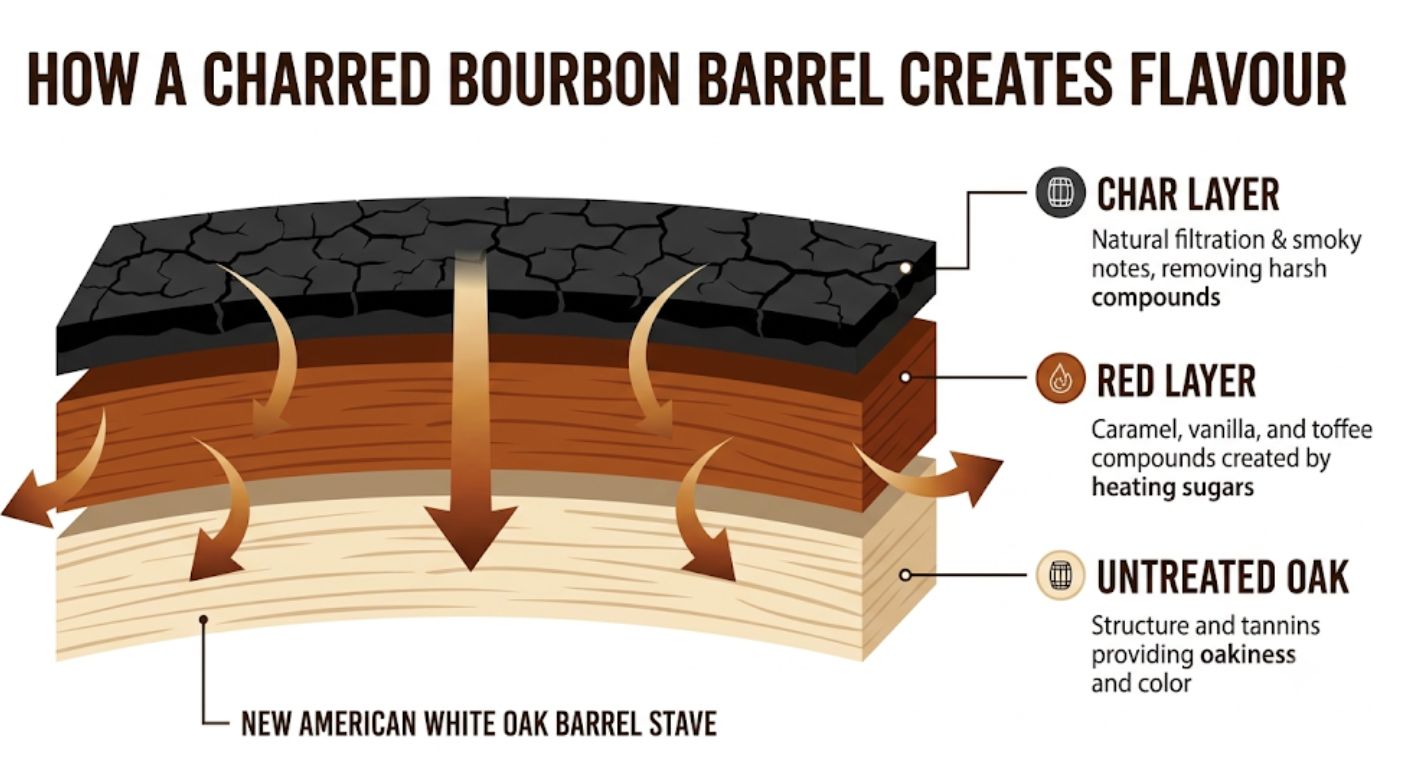
The resulting barrel contains three important areas:
The Char Layer
The char layer is the brittle, blackened surface in direct contact with the whiskey. Its porous carbon structure can absorb or reduce some undesirable compounds in the new spirit. It also changes how the liquid reaches the heat-treated wood beneath it.
Although charred barrels can contribute toasted and smoky impressions, bourbon does not usually taste smoky in the same way as peated Scotch. The primary effects are filtration, wood breakdown and access to caramelised compounds.
The Red Layer
The red layer is the narrow band of heat-altered wood immediately beneath the black char. It is commonly around a few millimetres thick. Here, the heat has broken down and caramelised wood compounds without reducing the oak fully to carbon.
This is one of the most productive parts of the barrel. The whiskey moves into this layer and extracts colour, wood sugars, vanilla-related compounds and toasted flavours during maturation.
The Untreated Oak
Beyond the red layer, the wood remains less affected by the flame. The spirit can still reach this area over time, particularly as seasonal heating and cooling repeatedly push it into and out of the staves.
This deeper oak contributes tannins, lactones and structural character. Too much extraction can make a whiskey dry or woody, which is why greater age does not automatically mean better balance.
How Oak Compounds Create Bourbon Flavour
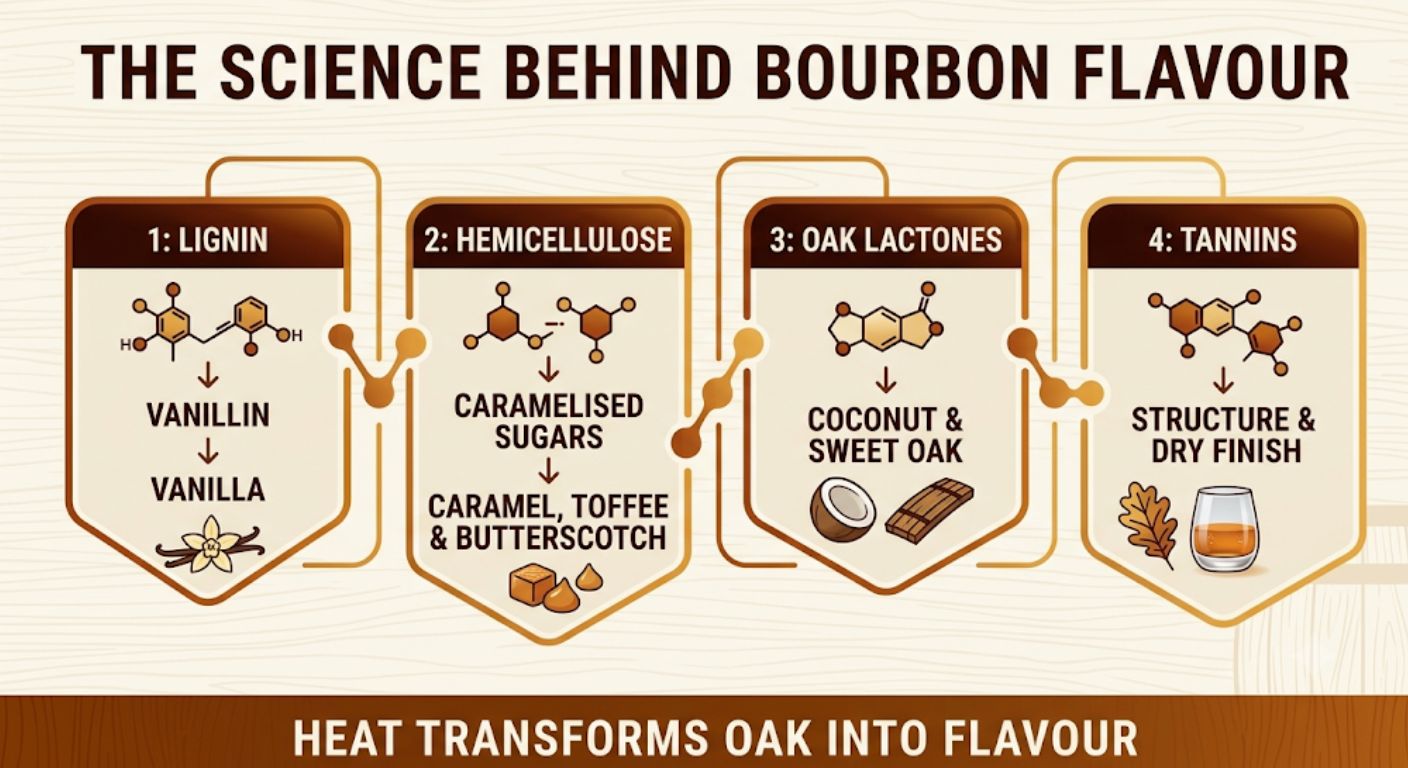
Oak contains several groups of compounds that respond differently to heat. Charring makes some of them easier for the spirit to extract and transforms others into new aroma and flavour molecules.
Lignin and Vanilla
Lignin gives wood much of its strength. When heated, it breaks down into aromatic compounds that include vanillin. This helps explain why vanilla is one of the most consistent flavour references across bourbon, even though no vanilla needs to be added.
The amount perceived in the glass still depends on the barrel treatment, maturation time, entry proof and character of the underlying spirit. One barrel may show vanilla custard, while another presents drier oak spice or toasted wood.
Hemicellulose and Caramelised Sweetness
Hemicellulose is made from wood sugars. Heat breaks it down and encourages caramelisation, producing compounds associated with caramel, toffee, butterscotch and brown sugar.
The whiskey extracts these compounds from the red layer as it matures. They contribute flavour as well as amber and copper colour. Bourbon does not become brown because of its corn or other grains; most of its mature colour comes from its interaction with the barrel.
Oak Lactones and Coconut
American white oak contains comparatively high levels of oak lactones. These can produce coconut, sweet wood and occasionally fresh or creamy aromas.
Lactones help distinguish the influence of new American oak from the subtler contribution of a heavily reused cask. Their presence can be particularly clear in younger bourbons where fresh oak remains prominent.
Tannins and Structure
Tannins contribute dryness, grip and structure. In controlled amounts, they balance the sweetness created by corn and caramelised wood sugars. Excessive tannin can make a whiskey feel bitter, drying or dominated by wood.
Older bourbon therefore requires careful barrel selection. Our customers sometimes assume that a higher age statement guarantees greater complexity, but extended time in new oak can become a disadvantage when the wood overtakes the spirit.
Bourbon Barrel Char Levels
Cooperages and distilleries commonly describe char by level. The precise timings can vary between barrel suppliers, but the following figures are widely used as practical reference points.
| Char level | Approximate burn time | Physical result | Potential influence |
|---|---|---|---|
| Level 1 | 15 seconds | Light surface char | Gentler carbonisation with clearer fresh-oak character |
| Level 2 | 30 seconds | Moderate char layer | Increased caramelisation and filtration |
| Level 3 | 35–40 seconds | Deeper cracked surface | Balanced vanilla, caramel and oak extraction |
| Level 4 | About 55 seconds | Deeply cracked “alligator” surface | Strong carbon layer with substantial heat treatment beneath it |
What Is Alligator Char Level 4?
Level 4 char is a heavy barrel treatment produced by exposing the interior to flame for roughly 55 seconds. The surface becomes shiny, deeply cracked and uneven, resembling alligator skin. This creates a pronounced carbon layer and a substantial heat-affected zone beneath it, but it does not guarantee a sweeter or better whiskey.
The distiller must still match the char level with the new make, barrel-entry proof, expected maturation period and warehouse conditions. A high char level is one production variable rather than a quality grade.
Charred and Toasted Barrels Are Not the Same
Toasting uses lower heat over a longer period, while charring applies direct flame for a much shorter time. Toasting penetrates the stave more gradually and can emphasise sweet spice, vanilla, nuttiness and deeper wood-derived flavours. Charring creates the black carbon surface and a more sharply defined red layer.
| Toasted barrel | Charred barrel |
|---|---|
| Heated slowly | Exposed to direct flame |
| No heavy carbon layer required | Develops a black carbonised surface |
| Heat reaches more gradually into the stave | Produces intense surface heat and cracking |
| Often used to adjust flavour during finishing | New charred oak is required for initial bourbon maturation |
A barrel can be toasted before it is charred. Distillers may specify both treatments to control how compounds develop at different depths within the stave. A whiskey described as “toasted barrel finished” has usually undergone an additional maturation stage rather than simply spending longer in its original bourbon barrel.
How Temperature Cycles Affect Barrel Maturation
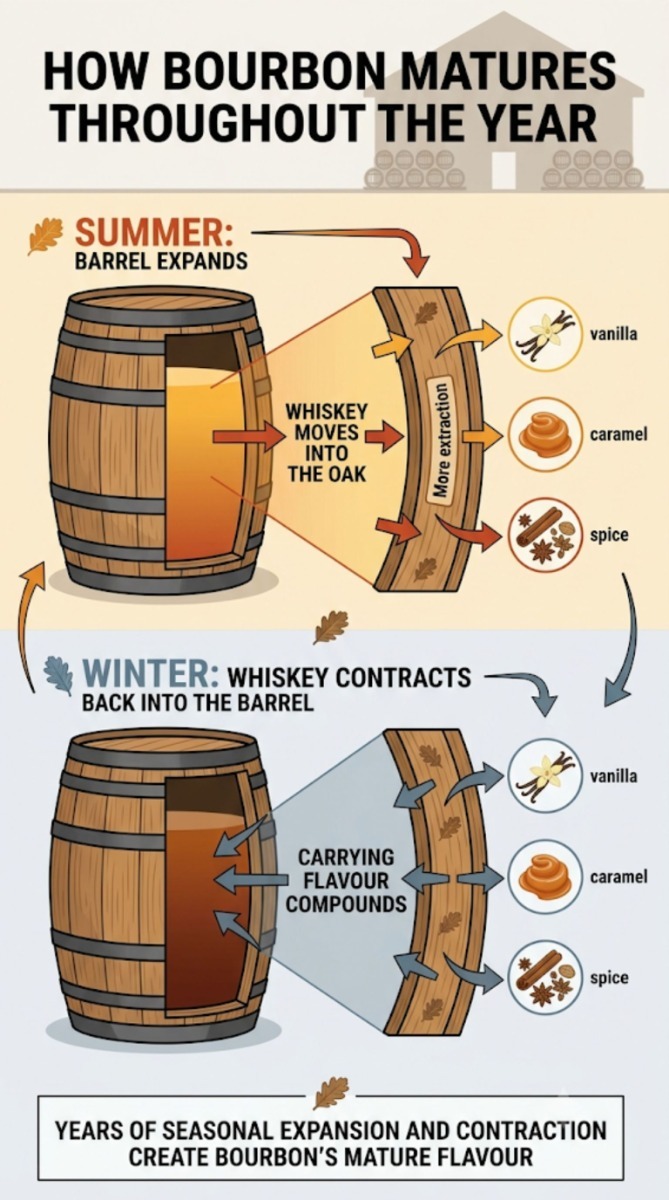
Temperature changes repeatedly move whiskey through the oak. In warm conditions, the liquid expands and penetrates further into the staves. When the temperature falls, it contracts and moves back towards the barrel interior, carrying extracted compounds with it.
American rickhouses can experience substantial seasonal and floor-to-floor temperature variation. Barrels stored near the top may face higher temperatures and faster extraction, while lower positions can mature more slowly. Warehouse design, airflow and regional climate therefore influence flavour alongside age and char level.
More movement does not simply mean faster improvement. Heat can accelerate extraction, evaporation and concentration, but the whiskey still needs time for oxidation, integration and changes between its various compounds. Rapid oak extraction can produce colour and intensity without producing maturity.
-
-
 Game of Thrones Whisky Singleton Glendullan House TullySpecial Price £73.98 Regular Price £84.99 Inc VATSaving £11.01
 -
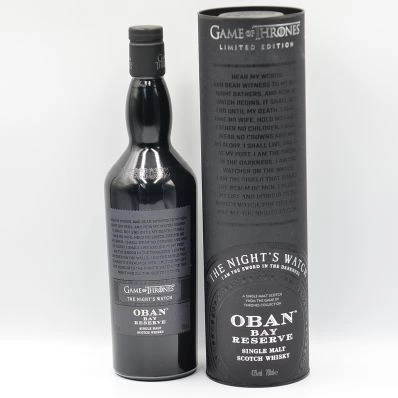 Game of Thrones Whisky Oban Bay Reserve The Night's WatchSpecial Price £72.98 Regular Price £84.99 Inc VATSaving £12.01
 -
-
-
-
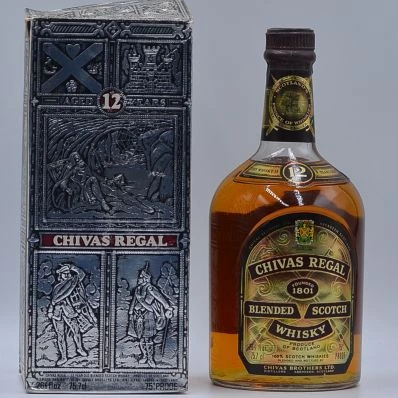 Chivas Regal 12 Year Old Scotch Whisky 75 Proof 1970sSpecial Price £47.98 Regular Price £59.99 Inc VATSaving £12.01
 -
-

-
-
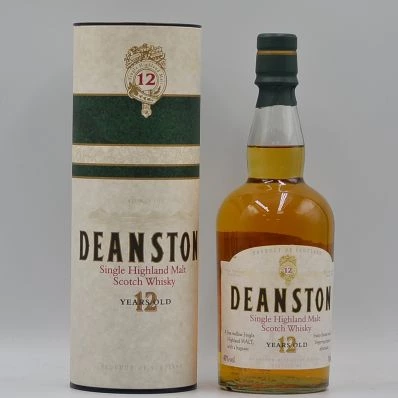 Deanston 12 Year Old Highland Whisky 2000sSpecial Price £56.98 Regular Price £63.99 Inc VATSaving £7.01
How Charred Oak Should Influence Bottle Choice
Understanding oak treatment is useful when comparing American whiskeys, but char level is rarely printed prominently on the label. Age, ABV, cask finishing and the producer’s established style are usually more accessible clues.
Consider the following:
- Younger bourbon: may show more obvious vanilla, coconut, fresh oak and grain sweetness.
- Older bourbon: can offer deeper spice and integration, but may become drying or tannic.
- Higher-strength bottlings: can present concentrated caramel and oak, although alcohol may initially conceal detail.
- Toasted finishes: may increase sweet spice, confectionery notes and wood intensity.
- Lower barrel-entry proof: can change the balance of water-soluble and alcohol-soluble compounds extracted from the oak.
Producer style also provides context. Buffalo Trace releases can show different balances of sweetness, spice and mature oak across the distillery’s range. Michter's places particular emphasis on barrel specification and controlled maturation, while older releases associated with Calumet Farm illustrate how extended ageing can bring oak structure to the front of the profile.
Charred-oak bourbon is likely to suit drinkers who enjoy vanilla, caramel, sweet spice and a fuller oak presence. It may be less suitable for someone seeking the restrained wood influence of a delicate refill-cask malt.
Frequently Asked Questions
Why are bourbon barrels charred?
Bourbon barrels are charred to transform the oak and create a carbonised interior. Heat breaks down lignin and hemicellulose, helping produce vanilla-related compounds and caramelised wood sugars. The char layer also affects filtration, while the heat-treated red layer beneath it supplies much of the colour and flavour extracted during maturation.
How long are bourbon barrels charred?
Common reference times are approximately 15 seconds for Level 1, 30 seconds for Level 2, 35–40 seconds for Level 3 and 55 seconds for Level 4. These are not universal legal standards. Individual cooperages and distilleries can use their own timings, equipment and barrel specifications.
Does a darker char produce a darker bourbon?
A heavier char can increase heat treatment and access to colour-producing compounds, but finished colour also depends on age, temperature, warehouse position, entry proof and the individual barrel. A dark bourbon is therefore not proof of a particular char level, greater age or higher quality.
Can bourbon be matured in a used barrel?
The spirit must first be stored in a new charred oak container to qualify as bourbon. It may later undergo additional maturation or finishing in another cask, subject to the relevant labelling rules. Used ex-bourbon barrels are then widely reused by Scotch and other whisky producers.
Charred Oak Is Central to Bourbon’s Identity
Charred oak shapes bourbon by changing the wood before maturation and controlling how the spirit interacts with it afterwards. Lignin contributes vanilla-related aromas, hemicellulose supplies caramelised sweetness, lactones add coconut and oak, and tannins provide structure. Temperature cycles then move the whiskey repeatedly through these layers.
Char level alone does not determine quality. The finished result depends on how the barrel works with the mash bill, new make, entry proof, warehouse environment and maturation time. Drinkers familiar with the gentler influence of reused casks can compare this directly with bottles in our 12 Year Old Scotch Whisky collection, where ex-bourbon wood often plays a quieter, more integrated role.

Comments