
 Chat with us on WhatsApp

Copper Pot Stills Explained: How Still Shape Shapes Flavour
Copper pot stills shape whisky before it ever reaches a cask. Their size, height, neck shape, lyne arm angle and copper contact all influence how heavy, light, oily, fruity or refined the new make spirit becomes. In simple terms, the still controls how much vapour rises cleanly, how much falls back for further distillation, and how much contact the spirit has with copper.
This matters because still design is one reason two whiskies made from similar raw materials can taste very different. It is especially relevant when comparing traditional malt whisky, Irish single pot still whiskey, and character-led releases from distilleries known for distinctive still shapes.
What Is a Copper Pot Still?
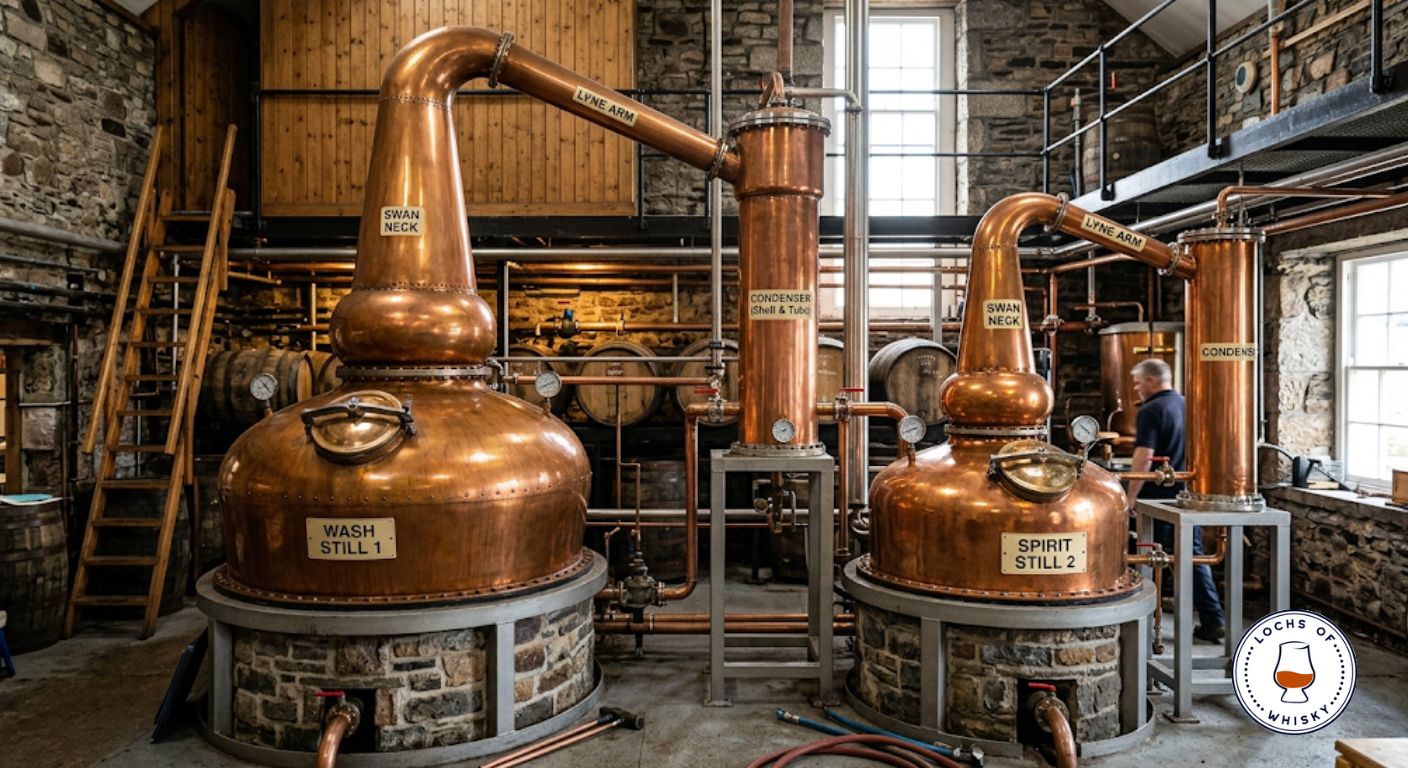
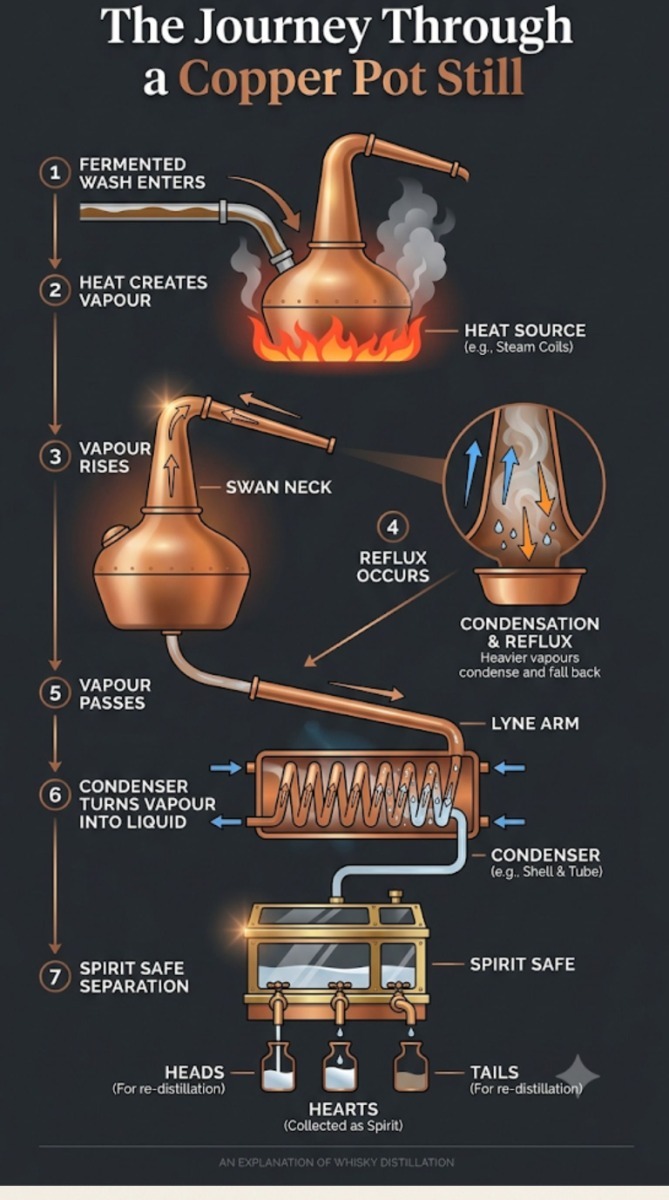
A copper pot still is a batch distillation vessel used to concentrate alcohol and flavour from fermented wash. Unlike a continuous column still, which runs constantly, a pot still works in separate charges. The wash is heated, alcohol vapours rise through the still, then condense back into liquid spirit.
The core parts are the pot, neck, lyne arm and condenser. Each part affects the movement of vapour. The more contact the vapour has with copper and the more reflux occurs, the lighter and cleaner the spirit tends to become.
Why Copper Matters in Whisky Distillation
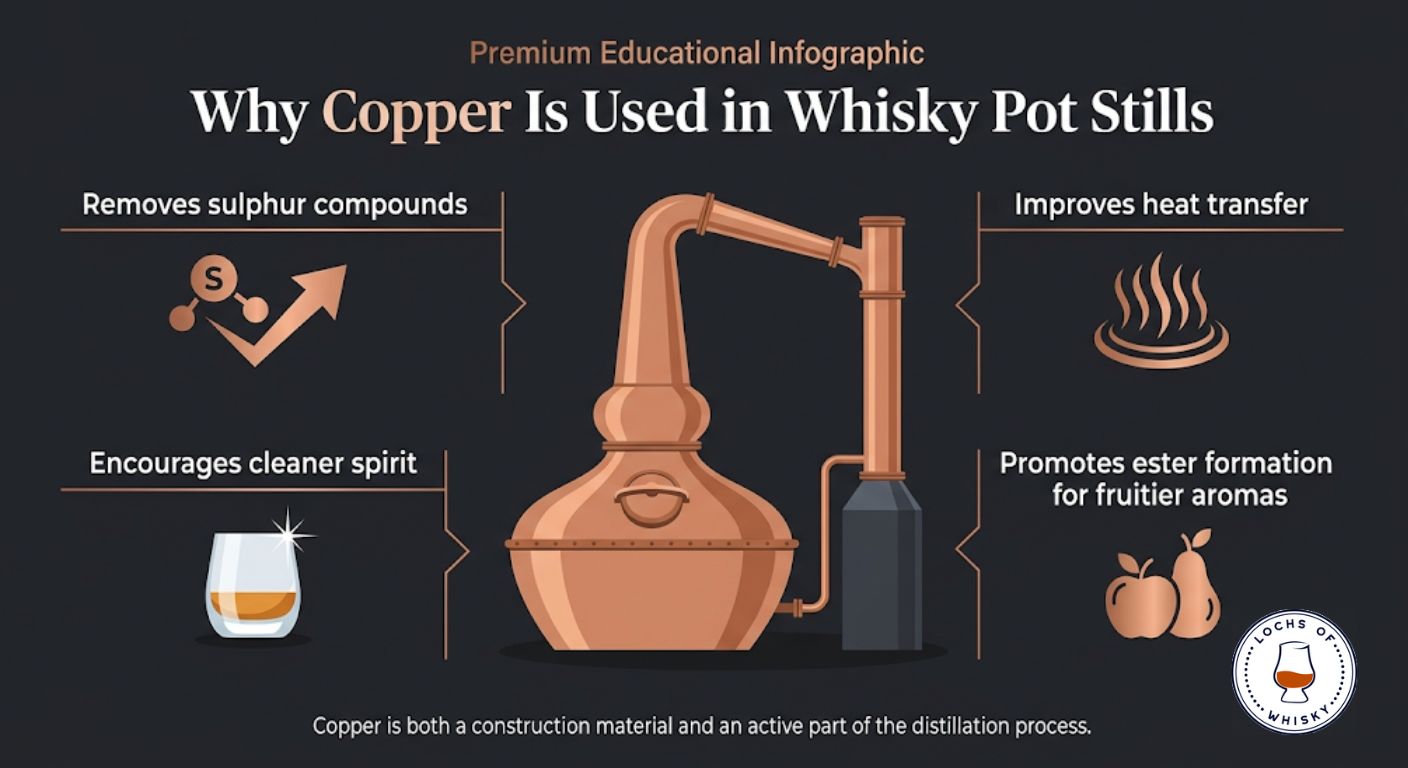
Copper is used because it does more than hold liquid and conduct heat. It reacts with sulphur compounds created during fermentation, helping remove harsh aromas such as boiled cabbage, rubber or rotten egg. The Scotch Whisky Association notes that copper stills are central to traditional malt whisky production, particularly because of their role in shaping spirit character.
Copper also conducts heat efficiently, which helps distillers control temperature and avoid scorching the wash. Over time, copper wears down and needs inspection or repair, so still maintenance is part of preserving a distillery’s house style.
How Still Shape Affects Whisky Flavour
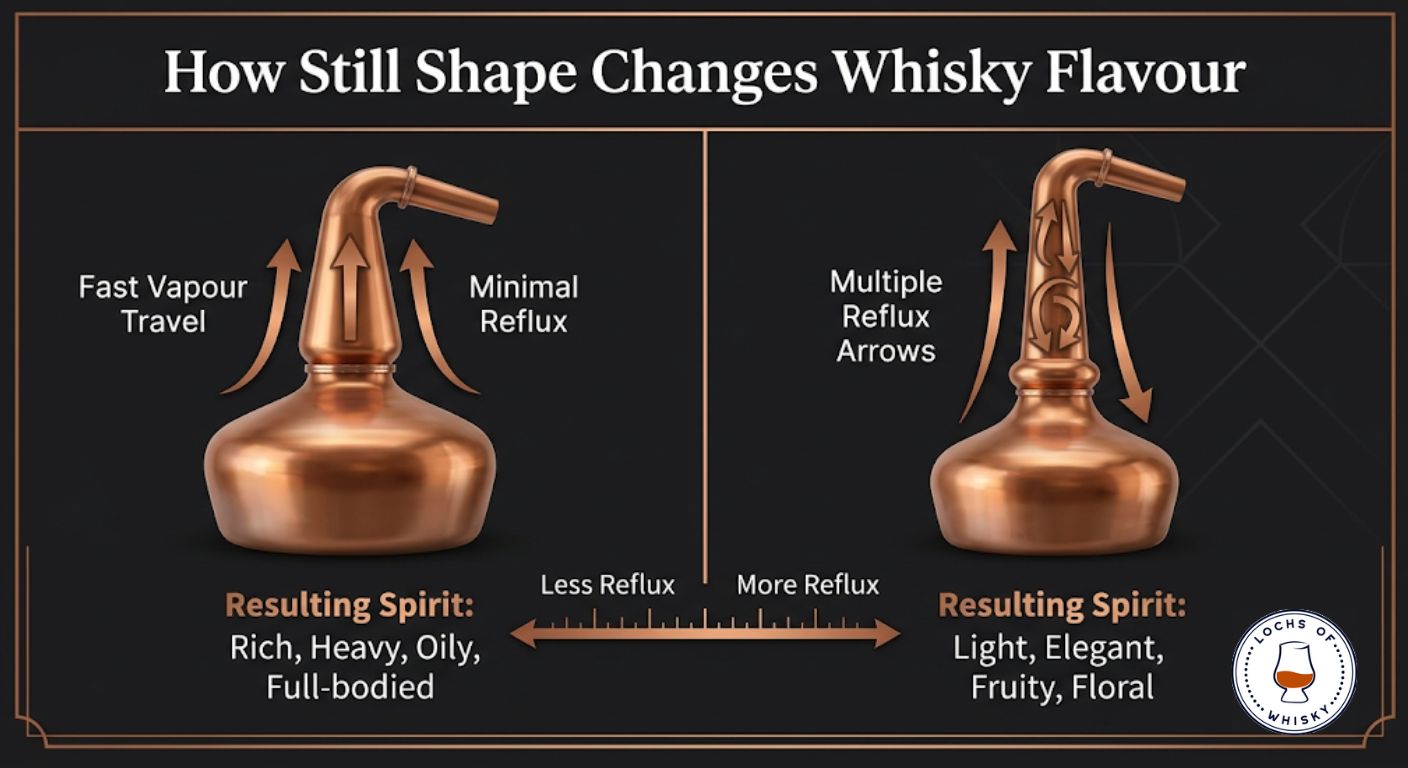
Still shape affects flavour by changing vapour speed, copper contact and reflux. A tall, narrow still usually creates more reflux, producing a lighter, cleaner spirit. A short, squat still gives vapour less distance to travel, often creating a heavier, oilier spirit with more robust texture.
Tall stills
Tall stills encourage lighter compounds to rise while heavier compounds fall back into the pot. This can produce a more delicate, floral or fruity new make spirit. Glenmorangie is a useful reference point because its notably tall stills are often linked with a lighter Highland style.
Short, squat stills
Shorter stills tend to allow more heavier compounds through. The result can be a weightier spirit with more body, oiliness and depth. This does not automatically mean better flavour; it means a different style.
Boil balls and lantern shapes
Bulges, boil balls and lantern shapes increase the surface area inside the still. That creates more opportunity for vapour to condense and fall back, increasing reflux. This can make the spirit cleaner and more refined without stripping out all character.
What Is Reflux in Distillation?
Reflux is the cycle where rising vapour cools, condenses on the inside of the still, falls back down, and is distilled again. More reflux usually creates a lighter, cleaner spirit. Less reflux usually allows heavier flavour compounds through, giving the spirit more body.
The neck height, neck angle, lyne arm angle and condenser setup all influence reflux. An upward-sloping lyne arm encourages more reflux, while a downward-sloping lyne arm allows heavier vapours to pass through more easily.
Common Pot Still Shapes and Their Flavour Effect
- Onion-shaped stills: balanced spirit, often combining weight with reasonable copper contact.
- Lantern stills: usually encourage more reflux, helping create a lighter, cleaner style.
- Boil ball stills: increase copper contact and reflux, often producing refined, fruit-led spirit.
- Short squat stills: often produce heavier, oilier spirit with more texture.
- Tall narrow stills: tend to create lighter, cleaner, more delicate spirit.
One thing our customers often underestimate is how much distillery character is built before the cask; maturation matters, but the still room has already made important decisions before wood is involved.
Pot Stills, Distillery Character and Bottle Choice
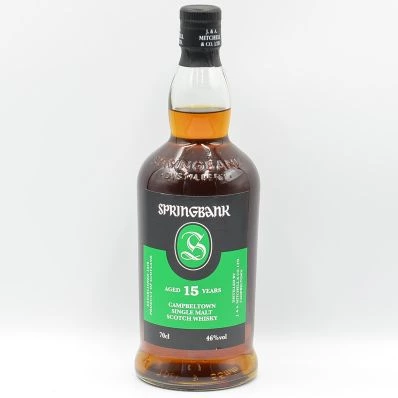
Still design helps explain why distillery-led buying is useful. A bottle from Macallan is not just defined by cask influence; its production setup also contributes to the weight and texture of the spirit. Likewise, Springbank is valued by many enthusiasts partly because its traditional production choices create a distinctive spirit before maturation.
For drinkers exploring Scotch whisky, pot still design is one of the clearest ways to understand why distilleries can feel so different even within the same broad category.
Heads, Hearts and Tails in Pot Still Distillation
During distillation, the spirit run is separated into heads, hearts and tails. The hearts cut is the desirable middle portion kept for maturation. Heads can contain harsh or unsuitable compounds, while tails contain heavier oils and late-running flavours that may be recycled into a future distillation.
The timing of these cuts is a major flavour decision. A narrower cut can create a cleaner spirit. A wider cut may preserve more weight and character, but it requires careful control.
When Copper Pot Still Whisky Makes Sense
Copper pot still whisky makes sense when you want spirit character rather than neutral efficiency. It suits drinkers who care about texture, distillery identity and production detail. It is especially relevant for single malt Scotch, Irish pot still whiskey, and small-batch world whisky where distillery style matters.
It is less useful as a buying signal on its own. “Copper pot still” does not guarantee quality. The still shape, cut points, fermentation, cask type, maturation time and bottling strength all matter. Treat it as one part of the production picture, not the whole answer.
FAQ
Why are whisky stills made from copper?
Whisky stills are made from copper because copper reacts with unwanted sulphur compounds, supports even heat transfer and helps create a cleaner new make spirit. Stainless steel is durable, but it does not provide the same level of chemical interaction during distillation.
Do taller stills make lighter whisky?
Usually, yes. Taller stills encourage more reflux, meaning heavier vapours fall back into the pot while lighter vapours continue upward. This often creates a lighter, more refined spirit, although fermentation, cut points and cask maturation still influence the final whisky.
What is the difference between pot stills and column stills?
Pot stills work in batches and usually produce spirit with more texture and character. Column stills run continuously and are more efficient, often producing lighter, higher-strength spirit. Both have legitimate uses, but they create different production styles.
How long does a copper pot still last?
A copper pot still can last for decades, but parts wear down through heat, cleaning and sulphur reactions. Distilleries monitor wall thickness and replace or repair sections when needed to maintain safety and spirit consistency.
-
-
-
-
-
-
-
-
 Game of Thrones Whisky Johnnie Walker A Song Of FireSpecial Price £139.98 Regular Price £144.99 Inc VATSaving £5.01
 -
-
 Game Of Thrones Whisky Dalwhinnie Winter's Frost House StarkSpecial Price £104.98 Regular Price £134.99 Inc VATSaving £30.01Out of stock
 -
 Jack Daniel's - Master Distiller Batch 2 Jess Motlow Limited Edition Bourbon Whiskey£164.99 Inc VATOut of stock
Final Takeaway
Copper pot stills shape whisky through copper contact, reflux and vapour movement. Tall stills generally create lighter spirit, while shorter stills often create heavier spirit. The best way to use this knowledge is to connect production details with distillery character, then explore bottles through the distilleries and categories that match the style you prefer.

Comments