
 Chat with us on WhatsApp


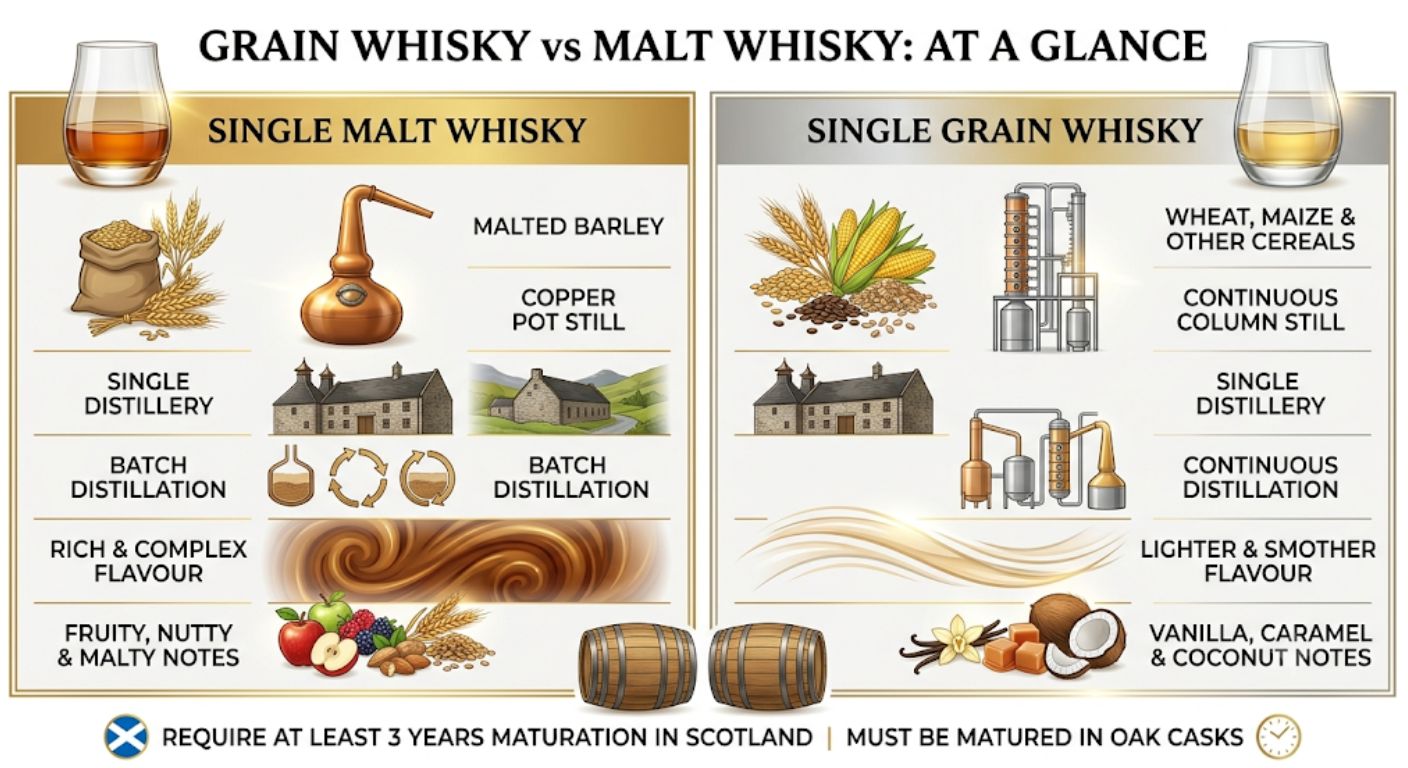
Grain whisky vs malt whisky comes down to ingredients, distillation method and flavour style. Single malt Scotch whisky is made at one distillery from 100% malted barley and distilled in pot stills. Single grain Scotch whisky is also made at one distillery, but it can include other cereals such as wheat or maize and is usually distilled in column stills.
The difference matters because it affects how the whisky tastes, how it is used in blends, and how collectors judge older bottles. If you want to explore the category directly, our single grain whisky selection is the most relevant place to start.
What Is Malt Whisky?
Malt whisky is whisky made from malted barley. In Scotch, single malt must be produced at one distillery using water, malted barley and yeast, then distilled in copper pot stills and matured in oak casks in Scotland for at least three years.
This gives single malt a strong connection to distillery character. Fermentation style, still shape, cut points, cask type and maturation location all influence the final whisky. That is why two single malts from different distilleries can taste very different even when both are made from the same basic ingredient.
For broader regional context, our guide to the five Scotch whisky regions explains how place, tradition and production style shape Scotch whisky.
What Is Grain Whisky?
Grain whisky is whisky made using cereals other than malted barley, although malted barley is usually still present because it helps fermentation. Common grains include wheat, maize, corn and rye. In Scotch, “single grain” does not mean one grain type. It means the whisky was made at one distillery.
Grain whisky is normally distilled in a column still, also called a Coffey or continuous still. This process is more efficient than batch pot distillation and produces a lighter spirit at a higher strength. The result is often softer, sweeter and more cask-led than malt whisky.
Large grain distilleries such as Girvan and Cameronbridge play an important role in Scotch because their whisky forms the base of many blended Scotch whiskies.
Grain Whisky vs Malt Whisky: Key Differences
| Feature | Malt Whisky | Grain Whisky |
|---|---|---|
| Main ingredient | 100% malted barley for single malt Scotch | Wheat, maize, corn, rye or other cereals, usually with some malted barley |
| Distillation | Copper pot stills | Column, Coffey or continuous stills |
| Production style | Batch distillation | Continuous distillation |
| Typical flavour | Richer, heavier, more distillery-led | Lighter, smoother, sweeter, more cask-led |
| Common use | Bottled as single malt or used in blends | Used heavily in blended Scotch, but also bottled as single grain |
| Collector angle | Strong distillery demand and established reputation | Often good age-to-price value, especially older or closed-distillery releases |
How Distillation Changes The Whisky
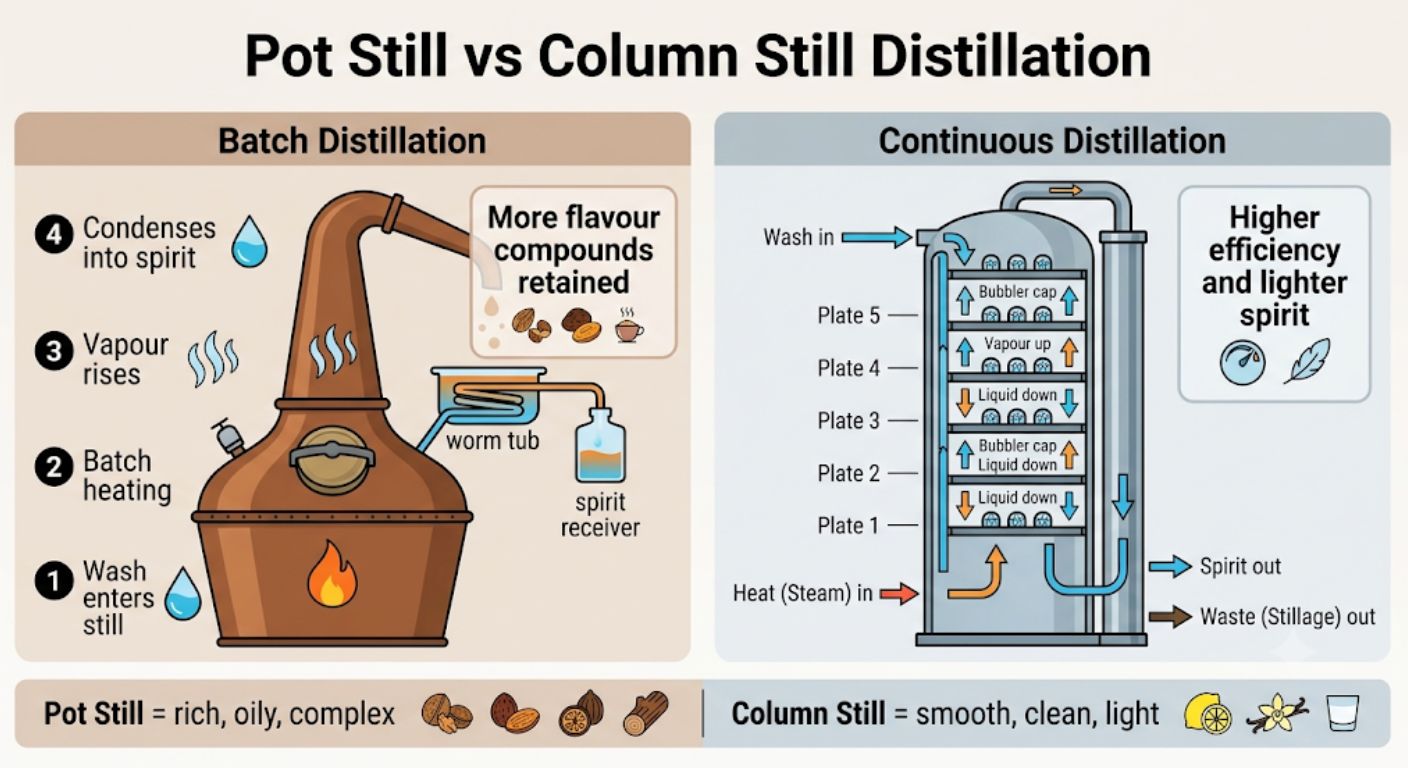
Pot stills operate in batches. They tend to retain more oils, congeners and heavier flavour compounds, which is one reason malt whisky often feels fuller and more distinctive. Still shape matters too: a tall still can produce a lighter spirit, while a shorter still can create more weight and texture.
Column stills run continuously. They are designed for consistency, efficiency and higher-strength spirit. This does not make grain whisky lower quality. It simply creates a different style. Grain whisky often shows vanilla, toffee, coconut, soft cereal and light spice, especially after long maturation in oak.
Is Single Malt Better Than Single Grain?
No. Single malt is not automatically better than single grain. Malt whisky is usually more characterful and distillery-led, while grain whisky is often softer, sweeter and better value at older ages. The better choice depends on what you want from the bottle.
A drinker who enjoys bold distillery identity may prefer single malt. A drinker who wants an elegant, mature, oak-driven whisky may find an older single grain more rewarding than expected. We often find our customers are surprised by how polished older grain whisky can feel compared with younger malts at a similar price.
Classic malt distilleries such as Glenlivet are useful reference points because they show how clearly single malt can express a distillery’s house style.
Why Grain Whisky Is Used In Blended Scotch
Grain whisky gives blended Scotch its structure, softness and volume. Malt whisky brings intensity, weight and distillery character. Grain whisky balances that intensity, creating a smoother and more consistent final whisky.
This is why grain whisky should not be dismissed as “filler”. In a well-made blend, it acts as the backbone. Without grain whisky, many blended Scotch whiskies would be heavier, more expensive and less consistent from batch to batch.
How Grain Choice Affects Flavour
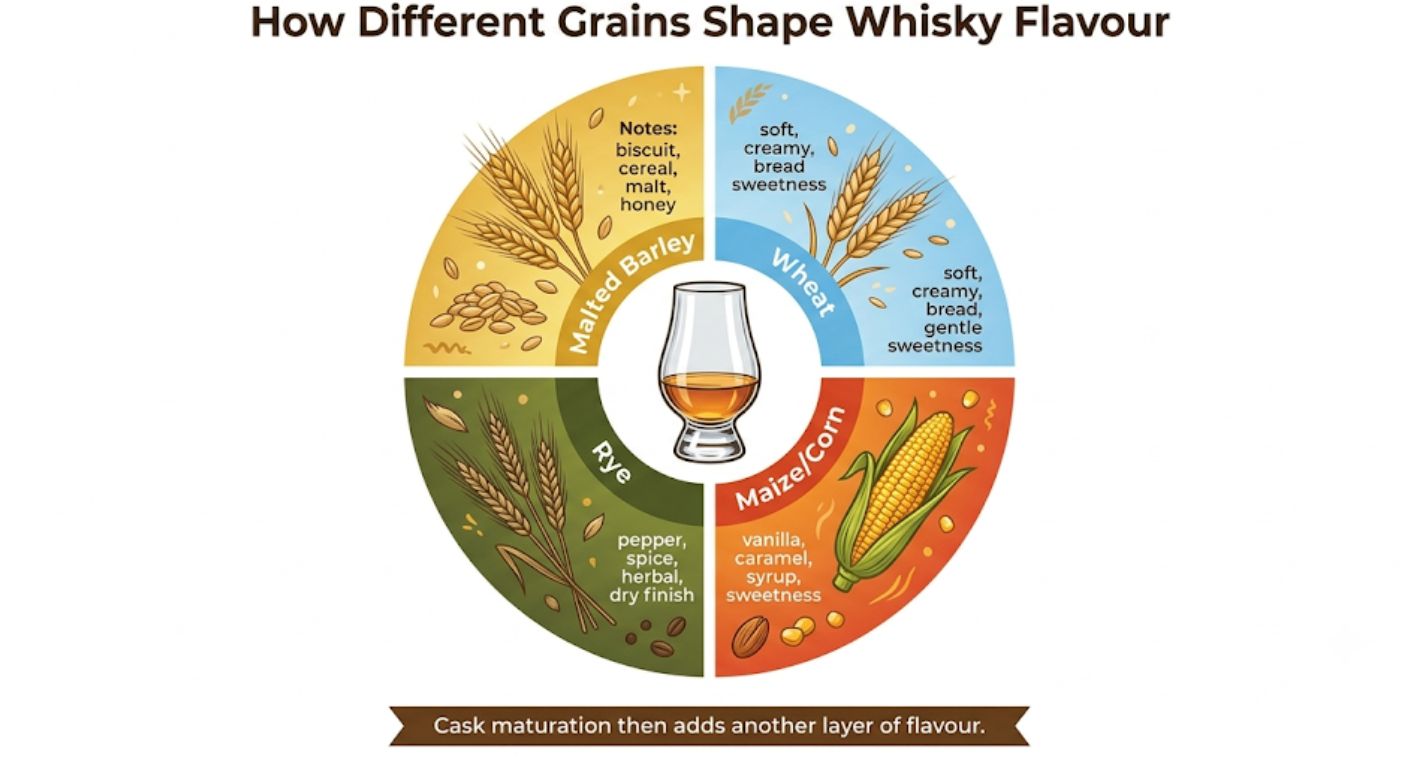
Different grains influence spirit character before the cask takes over:
- Malted barley: cereal sweetness, biscuit notes and malt depth.
- Wheat: soft texture, gentle sweetness and a bread-like quality.
- Maize or corn: rounder sweetness, vanilla and syrup-like notes.
- Rye: spice, dryness and a firmer grain character.
In Scotch grain whisky, the cask often plays a major role because the spirit tends to be lighter. Ex-bourbon casks can bring vanilla, coconut and caramel. Sherry casks can add dried fruit, spice and richer colour.
When Grain Whisky Makes Sense
Grain whisky makes sense if you want a smoother Scotch style, good age-to-price value, or an older whisky where the cask has had time to shape the spirit. It is also worth considering if you already enjoy vanilla-led, soft and polished flavour profiles.
It may not suit you if you want heavy peat, strong coastal character, dense sherry influence or a very obvious distillery signature. In those cases, a single malt from the wider Scotch whisky range may be the better direction.
FAQ
What does “single” mean in single grain whisky?
“Single” means the whisky was made at one distillery. It does not mean it was made from one type of grain. A single grain Scotch whisky can contain several cereals, as long as it comes from a single distillery and follows Scotch whisky rules.
Is grain whisky cheaper than malt whisky?
Grain whisky is often cheaper to produce because column stills are more efficient than pot stills. That can make single grain good value, especially at older ages. However, price still depends on age, cask type, bottler, distillery status and bottle availability.
Are aged single grain whiskies worth collecting?
They can be. Older single grain bottlings, especially from closed or less commonly seen distilleries, can appeal to collectors because they offer maturity, scarcity and a different flavour profile from single malt. They should be judged by provenance, condition, bottler, age and cask details.
Does grain whisky have to be Scotch?
No. Grain whisky can be made in several whisky-producing countries. This article focuses mainly on Scotch grain whisky because the legal categories are clearly defined and directly relevant to single malt, single grain and blended Scotch.
-
-
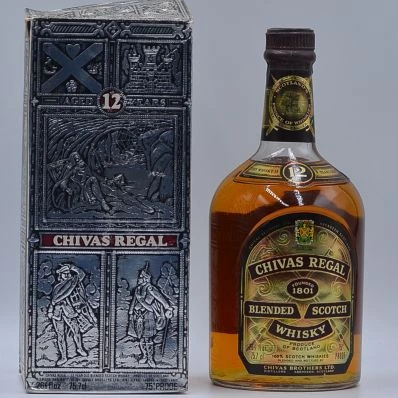 Chivas Regal 12 Year Old Scotch Whisky 75 Proof 1970sSpecial Price £47.98 Regular Price £59.99 Inc VATSaving £12.01
 -
-
-
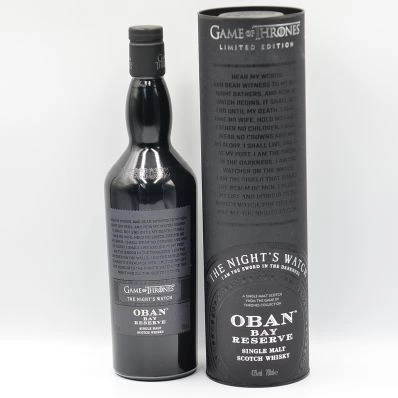 Game of Thrones Whisky Oban Bay Reserve The Night's WatchSpecial Price £72.98 Regular Price £84.99 Inc VATSaving £12.01
 -
-
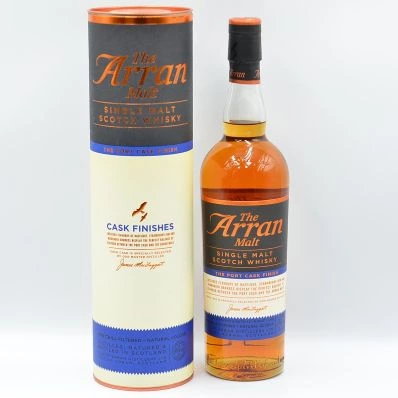 Arran Cask Finishes Port Scotch WhiskySpecial Price £87.98 Regular Price £97.99 Inc VATSaving £10.01
 -
-
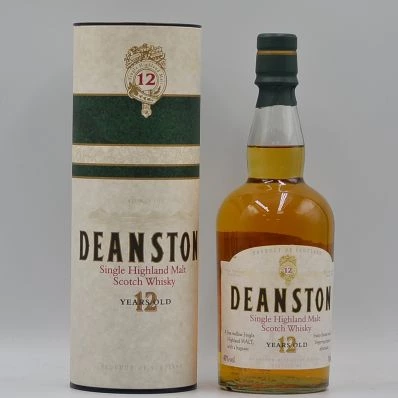 Deanston 12 Year Old Highland Whisky 2000sSpecial Price £56.98 Regular Price £63.99 Inc VATSaving £7.01
 -
-
Final Takeaway
The main difference between grain whisky and malt whisky is not quality. It is production style. Malt whisky is usually barley-based, pot-distilled and distillery-led. Grain whisky is usually cereal-based, column-distilled and lighter in character.
For drinkers and collectors, the best approach is to treat them as different tools rather than rivals. Malt whisky gives you distillery identity. Grain whisky can give you age, elegance and cask influence at strong value.


Comments