
 Chat with us on WhatsApp


Highland Whisky: Region Guide, Styles & Key Distilleries
Highland whisky comes from Scotland’s largest whisky-producing region by geography, which makes it one of the hardest regions to summarise neatly. The Highland whisky region covers a wide spread of mainland Scotland, from coastal distilleries in the north and west to softer, fruit-led styles further east and south.
For buyers, that variety matters. A Highland single malt can be light, floral, waxy, sherried, coastal, smoky or full-bodied depending on where it is made and how it has been matured. If you want to explore current bottles from this region, the Highlands Whisky category is the most relevant place to start.
Where Is the Highland Whisky Region?
The Highland whisky region sits north of the traditional Highland Line, broadly running from Greenock in the west to Dundee in the east. This boundary separates Highland and Lowland production for Scotch whisky labelling purposes.
The Scotch Whisky Association recognises five official Scotch whisky regions: Highland, Lowland, Speyside, Islay and Campbeltown. The Islands are often discussed separately by drinkers, but legally they sit within the Highland region. You can see this regional structure explained by the Scotch Whisky Association.
What Does Highland Whisky Taste Like?
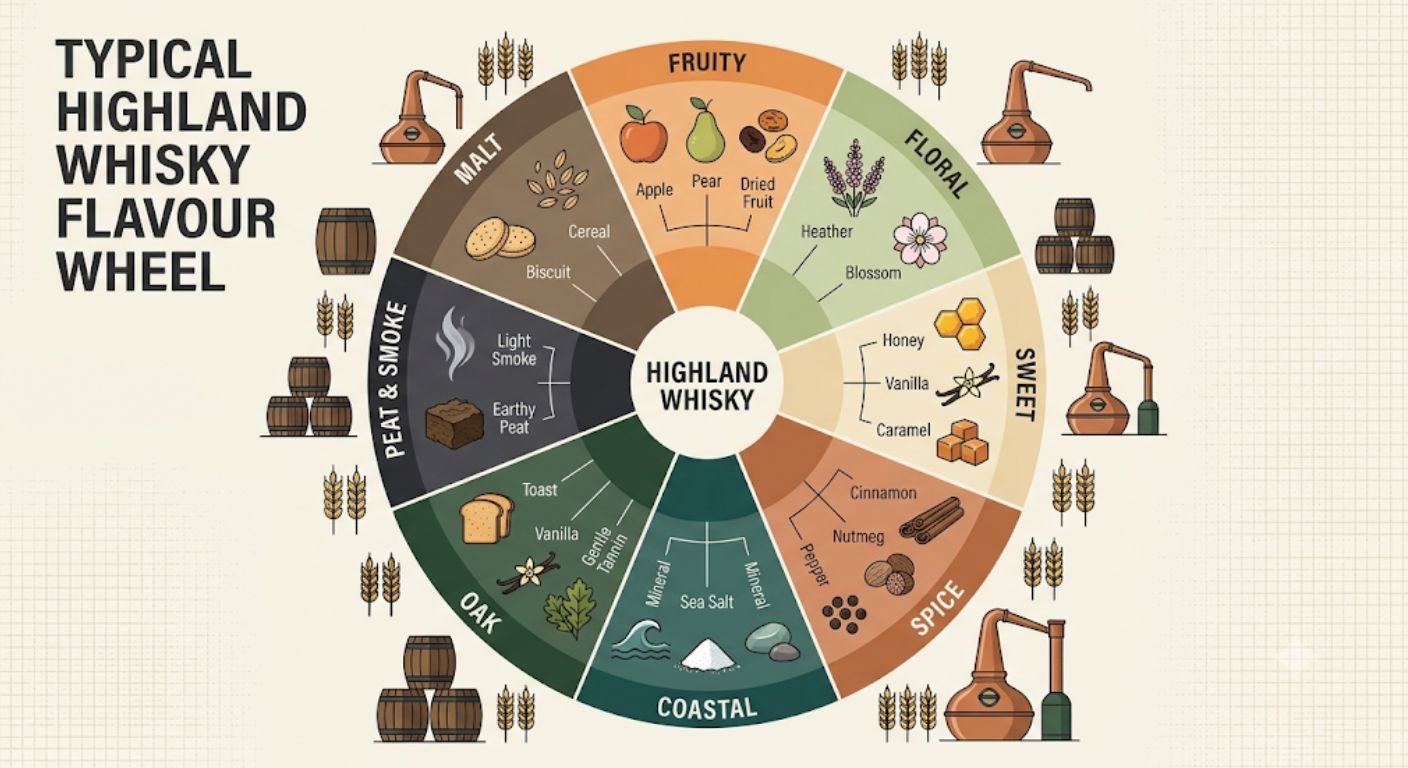
Highland whisky has no single flavour profile because the region is so large. In broad terms, expect malt, honey, fruit, spice, heather, coastal salt, light smoke or richer sherry-cask influence depending on the distillery and sub-region.
This is why Highland whisky works well for drinkers who want variety without moving completely into heavily peated Islay styles or the softer fruit-led profile often associated with Speyside. Most people buying their first Highland bottle underestimate how wide the region is; our customers often expect one “Highland style”, then find the distillery matters more than the regional label.
Highland Whisky Sub-Regions
The most useful way to understand Highland whisky is by breaking the region into broad sub-regions. These are not always strict legal categories, but they help explain why Highland malts can taste so different from each other.
Northern Highlands
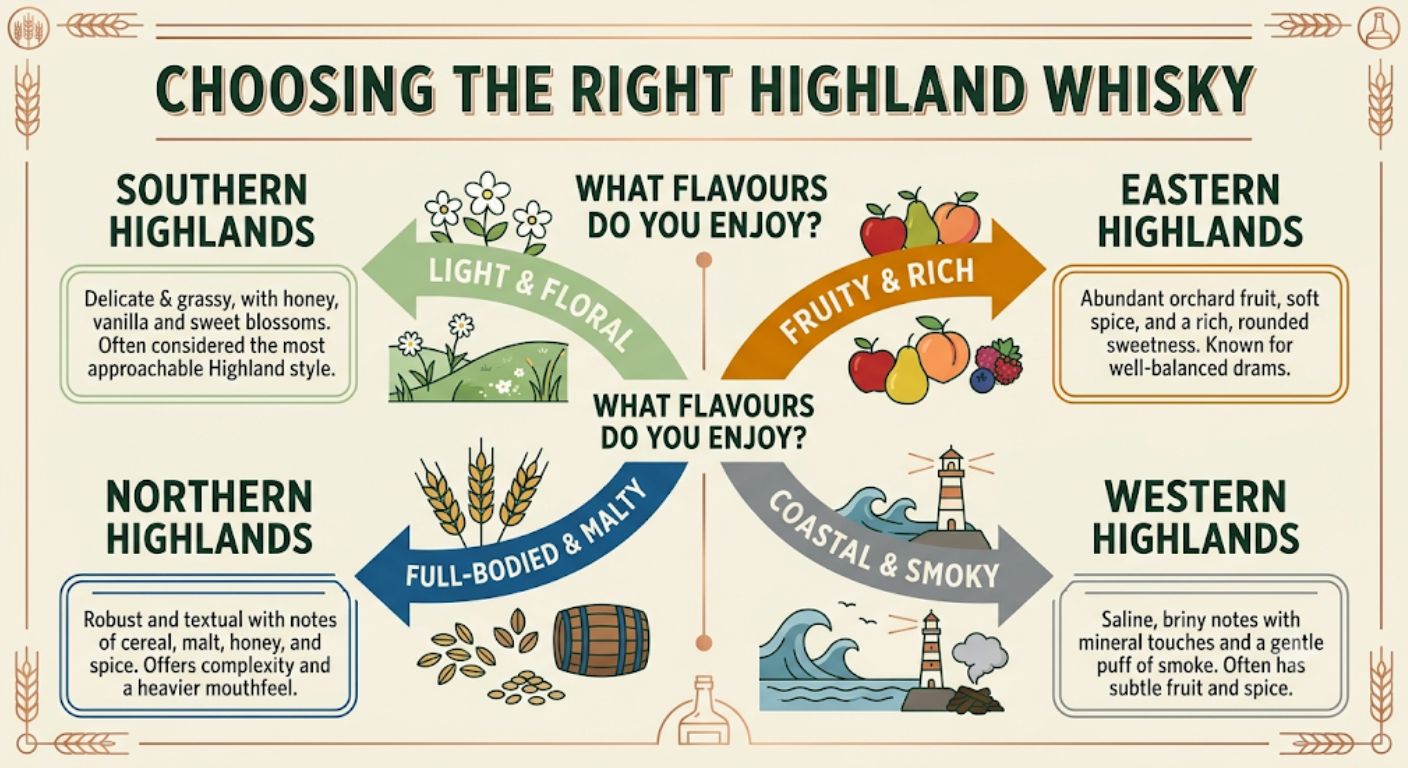
Northern Highland whiskies are often fuller-bodied, with cereal sweetness, orchard fruit, spice and coastal influence. Some examples show waxy texture or subtle saltiness. Older or sherry-matured bottles can become rich, oily and structured.
Eastern Highlands
Eastern Highland malts often lean towards fruit, malt, dry spice and cask-led depth. Sherry casks can add dried fruit, chocolate, leather and nutty notes, while bourbon casks tend to keep the spirit brighter and more orchard-fruit focused.
Southern Highlands
Southern Highland whisky is often lighter and more approachable, with floral, honeyed and grassy notes. These bottles can suit drinkers moving from lighter Speyside or Lowland malts into something with slightly more body.
Western Highlands
Western Highland whiskies can show coastal weight, gentle peat, salt, smoke and richer malt character. They are often more robust than southern styles, but not usually as intensely medicinal or smoky as classic Islay whisky.
Key Highland Distilleries to Know
The Highland region includes some of Scotland’s most varied distillery styles. Rather than treating the whole region as one flavour family, it is more useful to look at individual producers.
Tomatin is a strong example of approachable Highland malt, often showing fruit, malt sweetness and gentle cask influence. It can work well for drinkers who want Highland character without heavy peat or aggressive oak.
Brora sits in a very different part of the Highland conversation. As a historic closed distillery later revived, it carries strong collector interest and is associated with more complex, old-style Highland character.
GlenWyvis represents a newer chapter in Highland whisky, with a community-owned model and a focus on modern Highland production. It is useful for understanding how the region continues to develop rather than only looking backwards.
Highland Whisky vs Speyside Whisky
Speyside sits within the wider Highland area geographically, but it is recognised as its own Scotch whisky region. In buying terms, Speyside is usually easier to predict: fruit, honey, vanilla, orchard notes and sherry-cask richness are common reference points.
Highland whisky is broader. It can be floral, coastal, waxy, smoky, sherried or full-bodied. If you want a more predictable, fruit-led profile, Speyside may be simpler. If you want wider variation by distillery, cask type and location, Highland whisky gives you more range.
How Cask Type Changes Highland Whisky
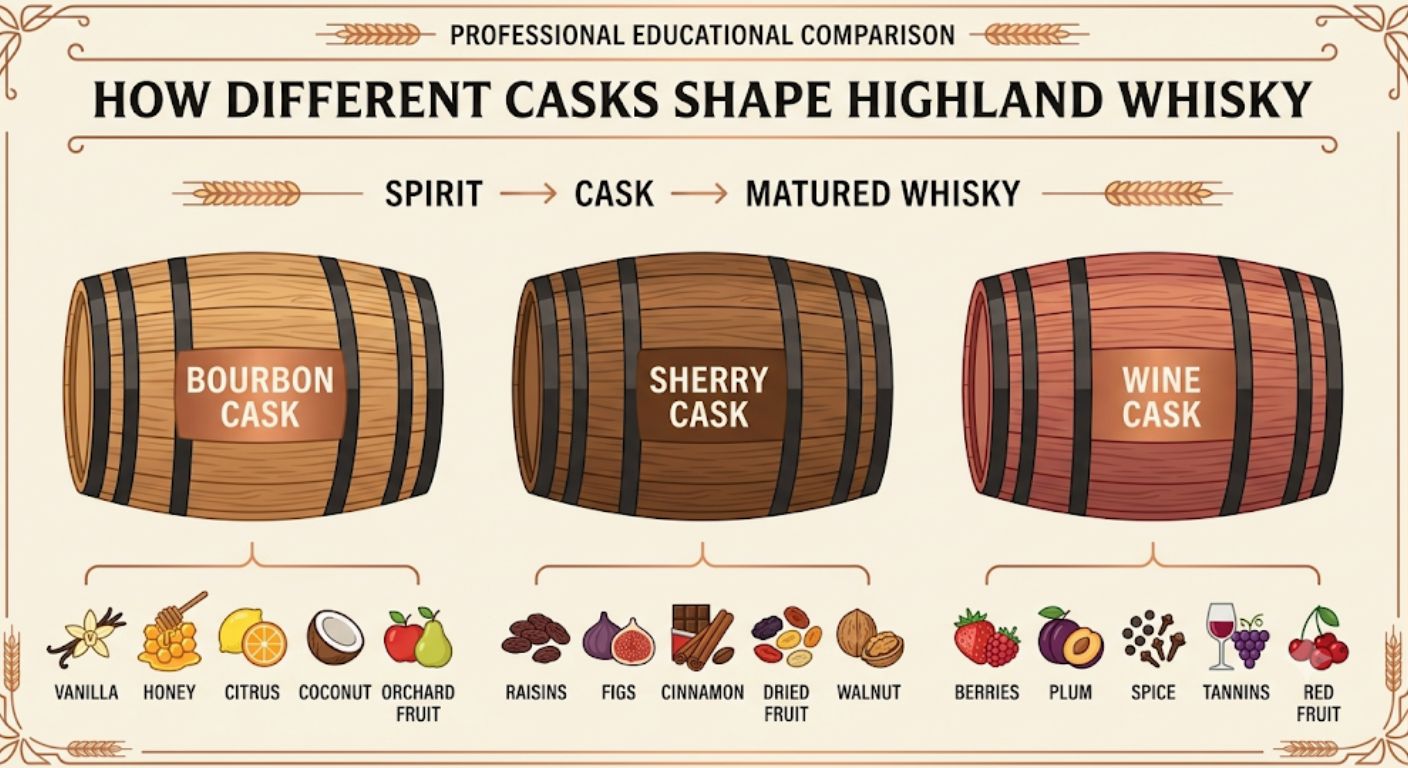
Cask type has a major effect on Highland whisky. Bourbon casks usually bring vanilla, citrus, honey and lighter fruit. Sherry casks can add raisin, fig, spice, chocolate, walnut and darker texture. Wine casks may bring red fruit, tannin and extra sweetness.
Age and ABV also matter. A 40% Highland single malt will usually drink more gently than a cask-strength expression above 55% ABV. Older bottles may show more oak, polish, dried fruit or waxy depth, but age alone does not guarantee balance.
Who Highland Whisky Suits
Highland whisky makes sense if you want regional variety, distillery-led discovery and a wider range of styles than one flavour profile can provide. It suits drinkers who enjoy comparing bottles by producer, cask type, age statement and ABV.
It may not suit buyers who want a very narrow style. If you only want heavy peat, Islay may be more direct. If you want soft, sweet and predictable fruitiness, Speyside may be easier. For broader Scotch discovery, Scotch Whisky gives useful context across regions.
FAQ
Are the Islands part of the Highland whisky region?
Yes. Under official Scotch whisky regional classification, Island distilleries outside Islay are part of the Highland region. Drinkers often treat the Islands as an unofficial sixth region because many island whiskies show coastal, maritime or smoky traits, but legally they are grouped within the Highlands.
Is Highland whisky good for beginners?
Yes, but choose carefully. Lighter southern or fruit-led Highland malts are usually easier starting points than heavily sherried, smoky or cask-strength bottles. Look for moderate ABV, clear age statements and flavour notes such as honey, malt, orchard fruit or gentle spice.
What is the Highland Line in Scotch whisky?
The Highland Line is the boundary traditionally used to separate Highland and Lowland whisky production. It broadly runs from Greenock to Dundee. For whisky buyers, it matters because it helps define what can be labelled as Highland or Lowland Scotch whisky.
What is the difference between Highland and Speyside whisky?
Speyside is officially its own Scotch whisky region, even though it sits within the wider Highland geography. Speyside malts are often sweeter and fruitier. Highland malts are more varied, ranging from floral and honeyed to coastal, smoky, waxy or heavily sherried.
-
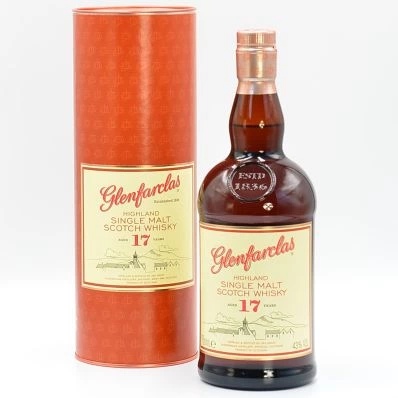 Glenfarclas 17 Year Old Highland Scotch WhiskySpecial Price £139.98 Regular Price £174.99 Inc VATSaving £35.01
 -
-
-

-
-
-
Final Thoughts
The Highland whisky region is best understood through variety rather than one fixed flavour profile. Sub-region, distillery, cask type, age and ABV all shape the final bottle.
For collectors and enthusiasts, that makes Highland whisky one of the most useful Scotch regions to explore by distillery. Start with the style you enjoy, then use the region as a route into producers, cask types and older bottlings that match your taste.

Comments