
 Chat with us on WhatsApp

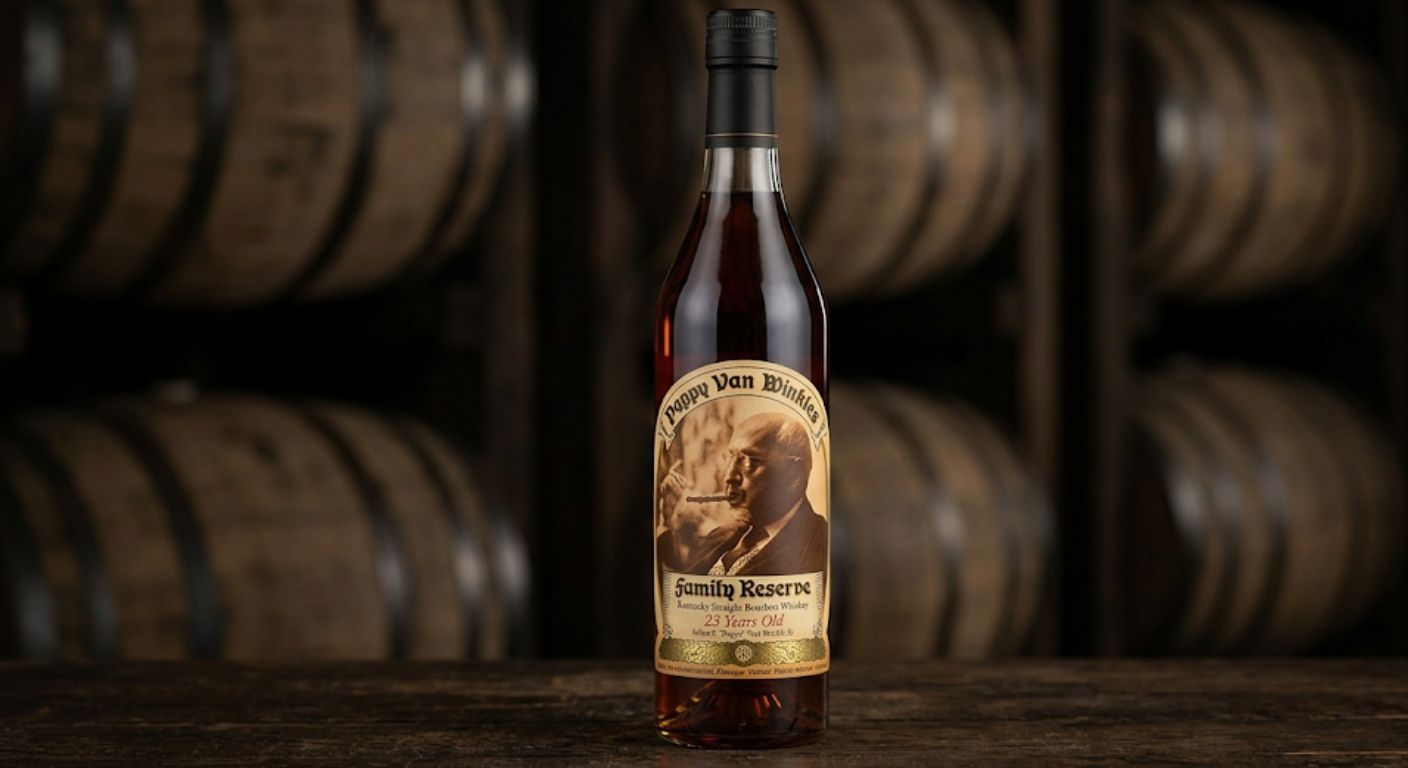
Pappy Van Winkle: The World's Most Wanted Bourbon
Pappy Van Winkle sits at the centre of modern bourbon collecting. It is one of the most recognised names in American whiskey and one of the hardest bottles to buy at retail price. For many buyers, the challenge is not understanding what Pappy Van Winkle is, but understanding why demand has become so extreme, why prices vary so dramatically, and whether the whiskey itself justifies the attention.
This guide explains what Pappy Van Winkle is, how the range is structured, why it is allocated, how bottles reach the UK market, what collectors should know before buying, and how to judge whether a bottle represents genuine value. It also covers authenticity concerns, secondary market pricing, and practical alternatives for buyers who want the style without the hunt.
If you are looking for current American whiskey releases, you can browse the American whiskey collection while using this guide to understand where Pappy Van Winkle fits within the wider category.
What Is Pappy Van Winkle?
Pappy Van Winkle is a family of wheated Kentucky bourbons produced by the Van Winkle family in partnership with Buffalo Trace Distillery in Frankfort, Kentucky.
The range includes:
- Old Rip Van Winkle 10 Year
- Van Winkle Special Reserve 12 Year
- Pappy Van Winkle's Family Reserve 15 Year
- Pappy Van Winkle's Family Reserve 20 Year
- Pappy Van Winkle's Family Reserve 23 Year
Unlike many bourbons that use rye as the secondary grain in the mash bill, Pappy uses wheat. This generally produces a softer profile with notes of caramel, vanilla, baking spice, oak, honey and darker fruit as age increases.
The modern whiskeys are distilled and matured at Buffalo Trace, but the Van Winkle family remains closely involved in blending, selection and brand stewardship.
For more detail on the family and brand history, see the Old Rip Van Winkle distillery guide.
Why Is Pappy Van Winkle So Difficult to Find?
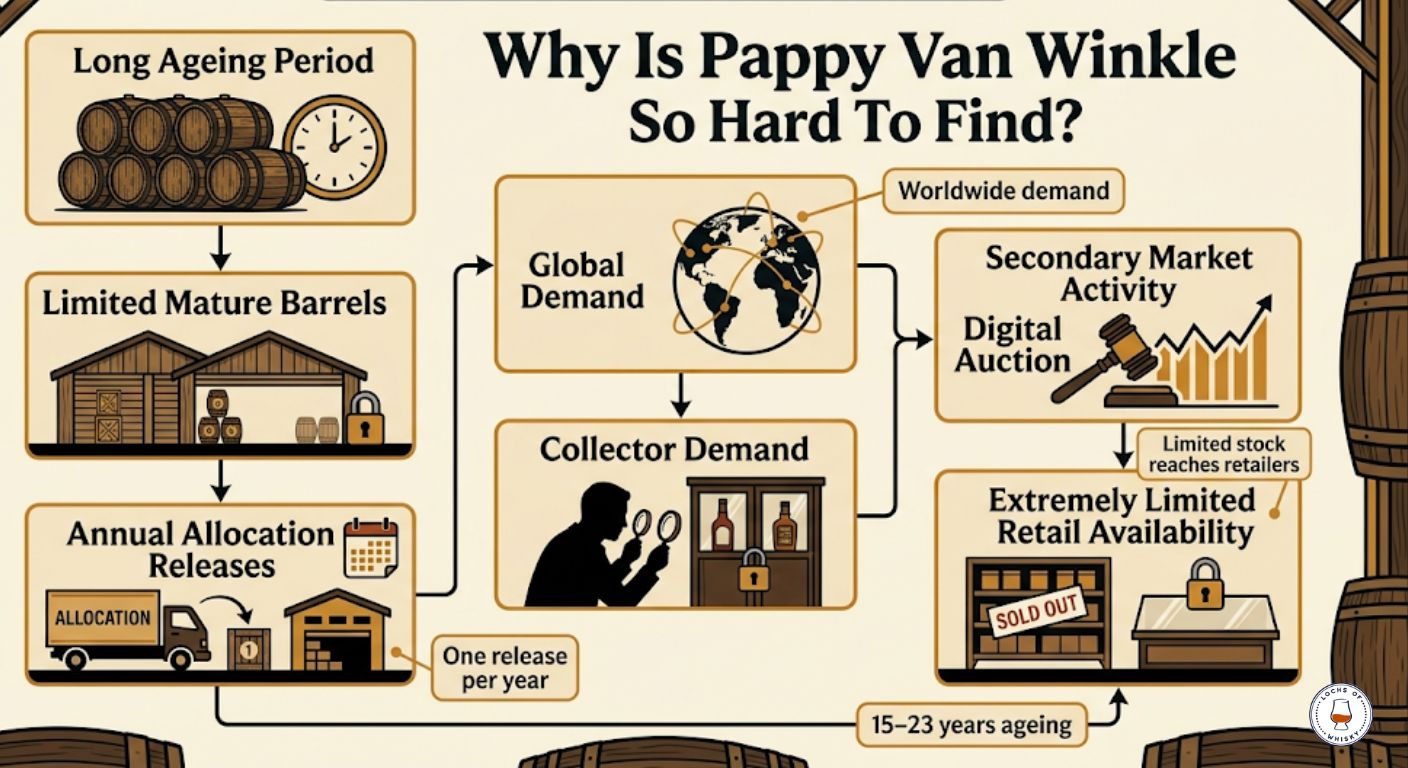
The short answer is that demand dramatically exceeds supply.
Pappy Van Winkle requires long maturation periods. The flagship expressions spend between 15 and 23 years in barrel before release. Every barrel committed to future Pappy production occupies warehouse space for decades.
At the same time:
- Bourbon demand has grown globally
- Collecting has become mainstream
- Secondary market prices have attracted investors and flippers
- Social media has amplified the brand's reputation
- Annual releases remain relatively limited
This creates a scarcity cycle. More people want the bottles than can realistically be supplied.
Unlike standard shelf bourbons that can be replenished throughout the year, Pappy is released through tightly controlled annual allocations.
What Is Allocated Bourbon?
Allocated bourbon refers to bottles distributed in limited quantities to retailers. Unlike standard products that can be reordered regularly, allocated releases are supplied in small amounts and often only once per year. Because demand significantly exceeds production, retailers typically receive far fewer bottles than customers want.
Pappy Van Winkle is one of the most famous examples of allocated bourbon.
Other well-known allocated releases include:
- Eagle Rare 17 Year
- George T. Stagg
- William Larue Weller
- Thomas H. Handy
- E.H. Taylor special releases
- Certain single barrel Blanton's bottlings
Allocation does not necessarily mean a whiskey is better than readily available alternatives. It simply means supply is restricted relative to demand.
One thing we regularly see from our customers is the assumption that rarity automatically equals quality. In practice, many excellent bourbons remain available year-round while some allocated bottles are being judged partly on scarcity rather than flavour alone.
The Pappy Van Winkle Range Explained
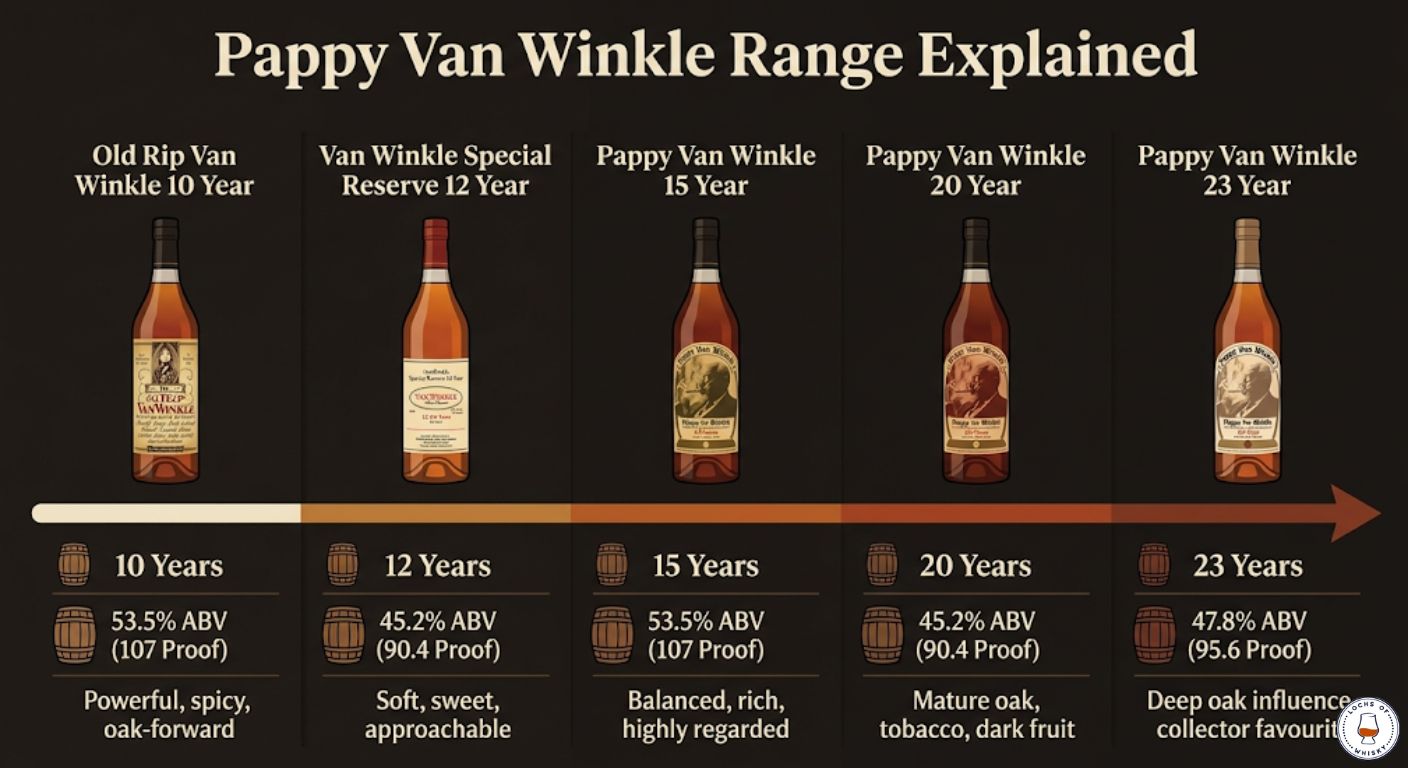
Old Rip Van Winkle 10 Year
ABV: 53.5% / 107 proof
This is the youngest member of the range and often the most approachable entry point.
Key characteristics:
- 10 years old
- Higher proof presentation
- Strong vanilla and oak influence
- More spice and structure than older expressions
Many experienced bourbon drinkers consider it one of the best value releases in the Van Winkle portfolio when purchased close to retail pricing.
Van Winkle Special Reserve 12 Year
ABV: 45.2% / 90.4 proof
Often referred to as "Lot B", this expression is softer and more rounded than the 10 Year. It places more emphasis on sweetness, with honey, toffee, gentle oak and a lower-strength profile.
This expression often appeals to Scotch drinkers transitioning into wheated bourbon because it is mature without being too aggressive.
Pappy Van Winkle Family Reserve 15 Year
ABV: 53.5% / 107 proof
For many enthusiasts, this is the sweet spot of the range. The combination of mature oak and preserved sweetness creates balance without the heavier tannins that can appear in older bourbons.
The 15 Year usually offers more depth than the 10 Year and more power than the 20 Year, making it one of the most respected expressions in the line-up.
Pappy Van Winkle Family Reserve 20 Year
ABV: 45.2% / 90.4 proof
Twenty years in Kentucky warehouses creates significant oak influence. Expect rich oak character, tobacco notes, dark fruit, leather and a long finish.
This expression helped establish much of the brand's legendary reputation, but it is not necessarily the easiest bottle to drink for those new to long-aged bourbon.
Pappy Van Winkle Family Reserve 23 Year
ABV: 47.8% / 95.6 proof
The 23 Year is the oldest regular release in the Van Winkle range. Twenty-three years of maturation produces an intensely oak-driven bourbon, with deep wood influence, dark sweetness and a drier finish.
Some collectors regard it as the ultimate Pappy. Others prefer the balance found in the 15 Year or 20 Year. The oldest bottle is not automatically the best bottle for every palate.
Is Pappy Van Winkle Worth the Price?
This depends entirely on which price is being discussed.
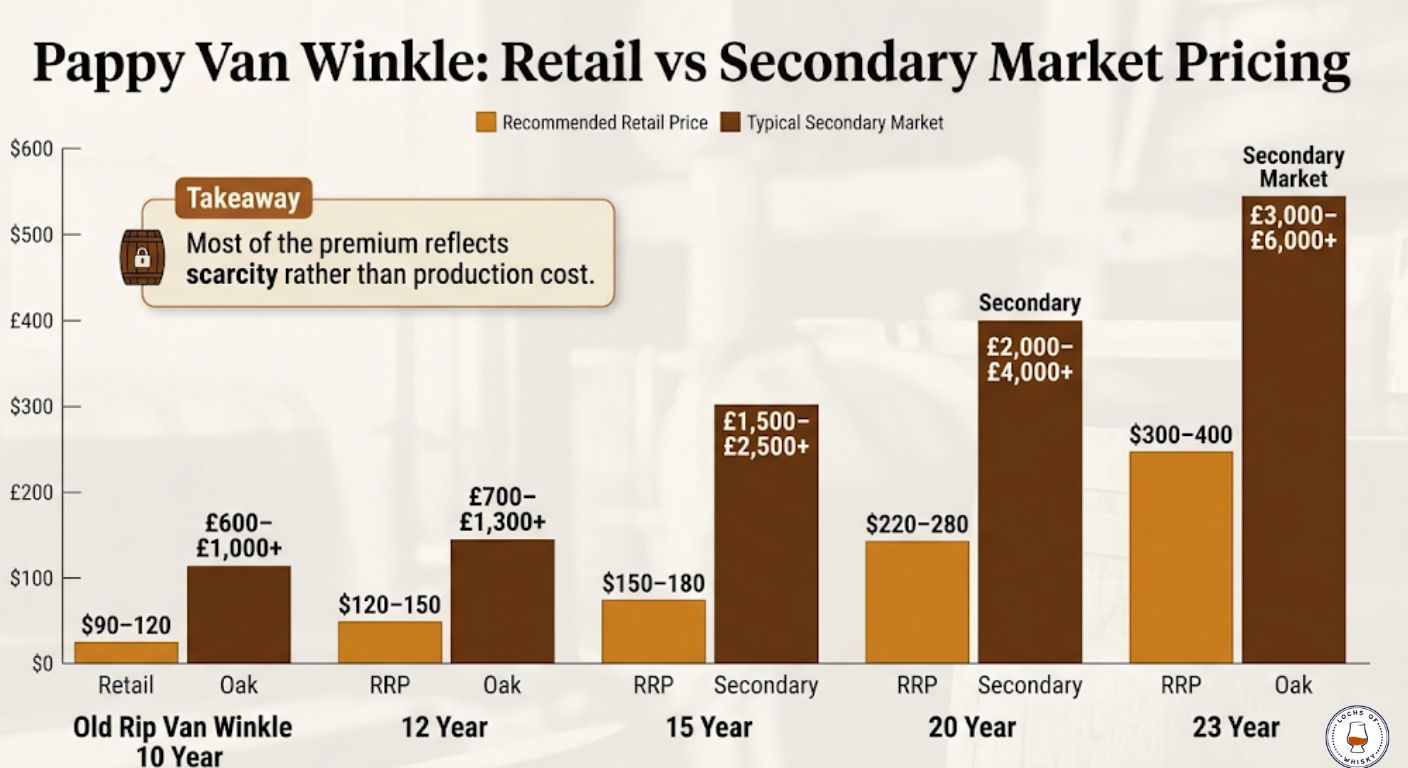
At retail pricing, most enthusiasts would consider Pappy Van Winkle excellent value. At secondary market pricing, the equation changes significantly.
What Whisky Buyers Are Actually Willing To Pay
Secondary market prices for Pappy Van Winkle can reach several thousand pounds, but enthusiast opinion often tells a different story. We surveyed 262 Lochs of Whisky customers and asked how much they would be willing to pay for a bottle of Pappy Van Winkle 15 Year.
72% of whisky drinkers would not pay more than £500 for Pappy Van Winkle.
Based on a Lochs of Whisky customer survey of 262 respondents.
The findings suggest that while Pappy Van Winkle remains one of the most sought-after bourbons in the world, many enthusiasts believe secondary market prices have moved well beyond what the whisky itself is worth. The gap between retail pricing and resale values remains one of the biggest debates in modern bourbon collecting.
| Expression | Typical US MSRP | Typical Secondary Range |
|---|---|---|
| Old Rip Van Winkle 10 Year | $90–120 | £600–£1,000+ |
| Van Winkle Special Reserve 12 Year | $120–150 | £700–£1,300+ |
| Pappy Van Winkle 15 Year | $150–180 | £1,500–£2,500+ |
| Pappy Van Winkle 20 Year | $220–280 | £2,000–£4,000+ |
| Pappy Van Winkle 23 Year | $300–400 | £3,000–£6,000+ |
Many bourbon specialists would argue that the quality of the whiskey broadly aligns with retail pricing rather than resale pricing. The additional premium often reflects scarcity, status and collectability rather than a proportional increase in drinking quality.
Why the UK Market Is Different
The UK bourbon market operates differently from the United States.
Historically, certain premium American whiskey releases have occasionally been easier to source in Europe than in parts of the United States. Distribution agreements, export strategies and market priorities can create surprising availability differences.
This has been particularly noticeable with some Blanton's releases, where export-focused bottlings reached European retailers more consistently than American shelves.
For buyers researching bourbon availability, it is useful to compare both domestic and international pricing rather than assuming the US market always offers the easiest access.
Those exploring premium bourbon more broadly may also find useful context in the Bourbon Whiskey category.
How to Find Pappy Van Winkle in the UK
1. Enter Retail Lotteries
Many retailers use draw systems, ballots, raffles or customer allocation lists for rare American whiskey releases. These systems reduce the advantage held by secondary market buyers and give regular customers a fairer chance of access.
2. Build Relationships With Specialist Retailers
Consistent customers often receive earlier awareness of unusual arrivals. This does not mean spending excessively. It usually means buying regular bottles, engaging with specialist retailers, participating in tastings where available, and showing genuine interest in the category rather than only appearing for allocated releases.
3. Follow Annual Release Windows
Pappy Van Winkle releases typically appear during autumn in the United States. UK availability may follow different timing depending on importers, allocation and retailer release schedules. Awareness matters because bottles often sell quickly.
4. Consider Independent Bottlers and Alternatives
Many buyers become so focused on Pappy that they overlook outstanding American whiskey available at a fraction of the price. Exploring the wider American whiskey category often provides a better drinking experience per pound spent.
How to Spot a Fake Pappy Van Winkle
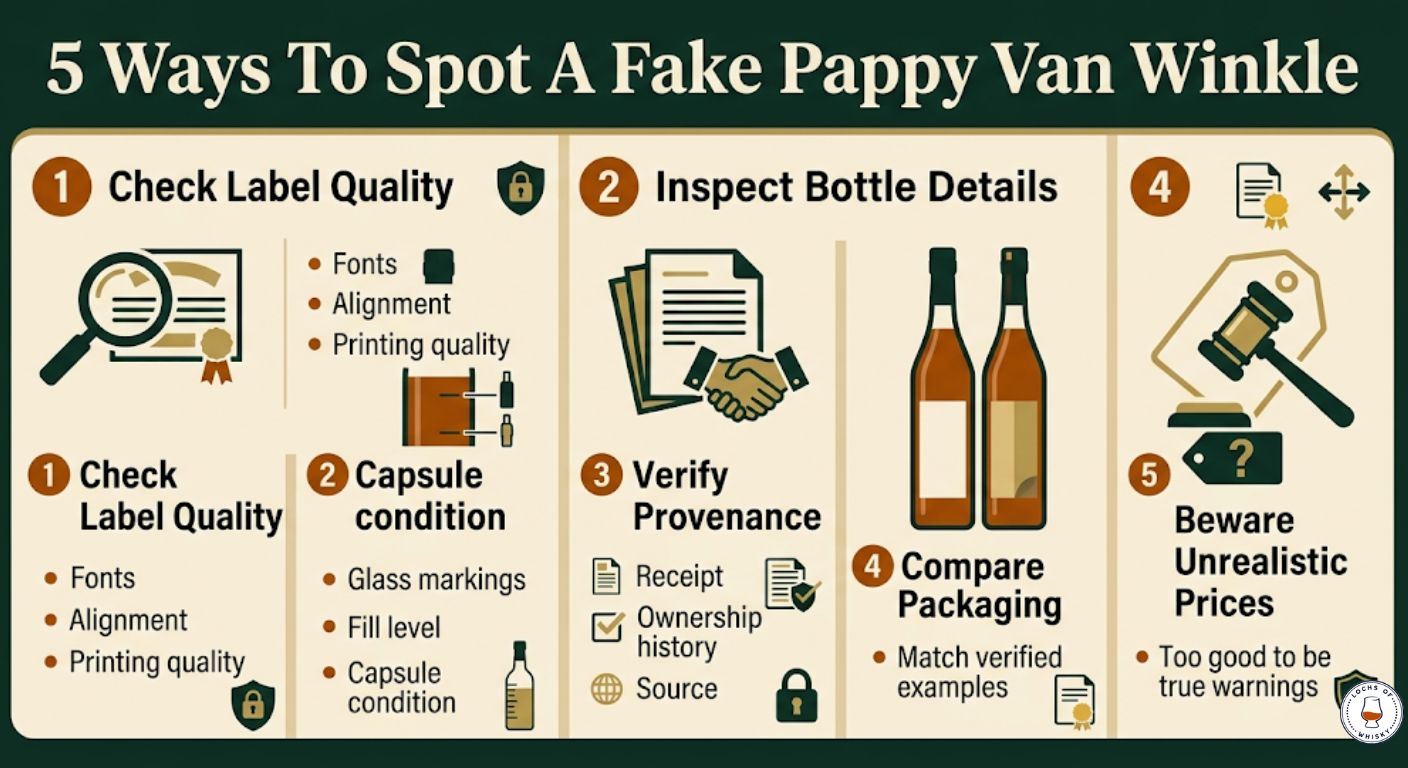
Counterfeit rare whiskey has become a genuine concern. Before purchasing any bottle, check the label, glass, seal, provenance and price logic carefully.
1. Check the Label Quality
Look for incorrect fonts, spelling mistakes, misaligned printing, poor paper quality, colour inconsistencies and labels that do not match verified examples.
2. Inspect the Bottle Details
Check glass markings, fill level, capsule condition, cork fitment and any signs that the bottle has been opened, refilled or tampered with.
3. Ask for Provenance
Provenance is often the most important factor. Ask where the bottle was purchased, whether there is a receipt, and whether the seller can provide documented ownership history.
4. Compare Packaging Consistency
Compare the bottle against verified examples from established retailers and recognised auction houses. Small differences can matter, especially on older releases.
5. Be Wary of Unrealistic Pricing
If a bottle worth several thousand pounds is being offered dramatically below market value, caution is warranted. Authenticity matters more than finding the absolute lowest price.
Pappy Van Winkle vs Other Collectible Bourbons
Pappy is not the only highly sought-after bourbon. Other bottles frequently discussed alongside it include:
- George T. Stagg
- William Larue Weller
- Eagle Rare 17 Year
- Four Roses Limited Edition
- Parker's Heritage Collection
- Michter's Celebration
What separates Pappy is cultural recognition. Many collectors who know little about bourbon still recognise the Pappy name. That level of brand recognition is unusual within whiskey.
Should You Drink It or Collect It?
There is no universal answer.
If you purchase a bottle at retail price, opening it is often easier to justify. If you have paid several thousand pounds on the secondary market, the decision becomes more complicated.
The whiskey was created for drinking. However, many bottles ultimately become collection pieces due to replacement cost and rarity.
Collectors should remember that storage conditions matter:
- Store bottles upright
- Keep temperature stable
- Avoid direct sunlight
- Protect the capsule and label
- Keep original packaging where available
Poor storage can damage both condition and drinking quality, regardless of how desirable the bottle is.
Would Whisky Enthusiasts Open Their Pappy?
Pappy Van Winkle sits between drinking whiskey and collectible whiskey. To understand how buyers actually think about it, we surveyed 262 Lochs of Whisky customers and asked whether they would open or keep a bottle of Pappy Van Winkle.
41% of whisky enthusiasts would never open a bottle of Pappy.
Based on a Lochs of Whisky customer survey of 262 respondents.
Decision Logic: Which Pappy Van Winkle Is Right for You?
If you want the best balance of age and flavour
Choose the 15 Year. Many enthusiasts consider it the strongest overall expression because it combines mature oak, sweetness, structure and proof without becoming too dry.
If you prefer softer, sweeter whiskey
Choose the 12 Year. The lower proof and wheated mash bill create an approachable profile with less intensity than the 10 Year or 15 Year.
If you enjoy powerful bourbons
Choose the 10 Year. The higher proof delivers more intensity, spice and grip while still showing the softer Van Winkle character.
If you collect long-aged bourbons
Consider the 20 Year or 23 Year. These expressions showcase the effects of extended Kentucky maturation, but they are more oak-driven and may not suit every drinker.
If your priority is drinking quality rather than collecting
Look beyond Pappy entirely. Many outstanding American whiskeys offer excellent flavour, strong provenance and better value without allocation challenges.
Frequently Asked Questions
Why is Pappy Van Winkle so expensive?
Retail pricing is relatively reasonable. The high prices most people see come from secondary market demand, limited annual allocations and collector interest rather than production cost alone. The difference between retail and resale value is driven by scarcity, reputation and status.
How many bottles of Pappy Van Winkle are released each year?
Exact figures are not publicly disclosed. Production varies by expression and available mature stock, but supply remains significantly below global demand. The long ageing period also limits how quickly production can respond to rising interest.
Is Pappy Van Winkle bourbon or whiskey?
Pappy Van Winkle is Kentucky straight bourbon whiskey. It uses a wheated mash bill rather than the rye-based recipes common in many bourbons, which usually gives it a softer and sweeter profile.
Can you buy Pappy Van Winkle in the UK?
Yes, although availability is limited. Bottles occasionally appear through specialist retailers, auctions and allocation systems. UK buyers should expect limited supply, high demand and careful provenance checks before purchase.
What is the best Pappy Van Winkle expression?
The 15 Year is commonly regarded as the most balanced release. Preferences vary, and some collectors prefer the greater oak influence of the 20 Year or 23 Year. For drinking, balance matters more than age alone.
Is Pappy Van Winkle better than other premium bourbons?
Not necessarily. It is one of the most famous premium bourbons, but personal preference remains more important than reputation. Many enthusiasts prefer other limited releases depending on flavour profile, proof and oak level.
-
-
-
-
-
-
-
-
 Game Of Thrones Whisky Dalwhinnie Winter's Frost House StarkSpecial Price £104.98 Regular Price £134.99 Inc VATSaving £30.01
 -
-
-
Summary
Pappy Van Winkle occupies a unique position in American whiskey. It is both a respected wheated bourbon range and a symbol of modern whiskey scarcity.
Key points to remember:
- It is a wheated Kentucky bourbon associated with the Van Winkle family and Buffalo Trace.
- The core range spans 10 to 23 years old.
- Scarcity is driven by allocation and long maturation periods.
- Retail pricing and secondary pricing are dramatically different.
- Authenticity and provenance are essential when buying.
- The 15 Year is often regarded as the most balanced expression.
- Collectability and drinking quality are not always the same thing.
Common mistakes include assuming the oldest expression is automatically the best, paying secondary prices without understanding market value, ignoring provenance checks, and overlooking excellent alternatives available at normal retail pricing.
For readers looking to explore American whiskey beyond the Pappy phenomenon, the wider American whiskey selection provides useful context for understanding where these bottles sit within the broader category.

Comments