
 Chat with us on WhatsApp


Whisky and whiskey are two spellings of the same broad type of distilled spirit. The spelling usually indicates where the bottle was produced rather than a fundamental difference in the liquid. Scotland, Canada and Japan generally use “whisky”, while Ireland and the United States usually use “whiskey”.
The distinction matters when reading labels because it provides an immediate clue about the bottle’s origin and production tradition. A bottle of Scotch whisky, for example, must meet specific Scottish production and maturation rules. However, spelling alone does not tell you whether a whisky is smoky, smooth, single malt, blended or made from a particular grain.

Whisky or Whiskey: What Is the Core Difference?
The core difference is spelling convention. “Whisky” is most closely associated with Scotland, while “whiskey” is standard in Ireland and the United States. These conventions reflect historical and commercial traditions, but they are not universal rules. Some producers deliberately use the less common spelling for their country.
| Spelling | Commonly Used In | Typical Examples |
|---|---|---|
| Whisky | Scotland, Canada, Japan and Australia | Scotch single malt, blended Scotch, Canadian whisky and Japanese whisky |
| Whiskey | Ireland and the United States | Irish whiskey, Bourbon, Tennessee whiskey and American rye whiskey |
The spelling should therefore be treated as a sign of regional convention rather than a definition of flavour or quality. Two bottles labelled “whisky” can be completely different in style, just as two American whiskeys may use different grains, casks and production methods.
Where Do the Words Whisky and Whiskey Come From?
Both words developed from Gaelic expressions meaning “water of life”. The Irish form is commonly written as uisce beatha, while the Scottish Gaelic form is uisge beatha. These expressions were themselves translations of the Latin term aqua vitae, which was used for distilled spirits in medieval Europe.
As the Gaelic terms were spoken and written in English, they gradually became forms such as “usquebaugh”, then “whisky” and “whiskey”. The modern spellings share the same linguistic origin. The additional “e” did not create a separate category of spirit; it became a way of distinguishing different national traditions.
Why Is Scotch Spelled Whisky Without an “E”?
Scottish producers established “whisky” as their standard English spelling. It remains the recognised term used on Scotch labels and within the legal name “Scotch Whisky”. A genuine Scotch product will therefore be labelled whisky rather than whiskey, regardless of whether it is a single malt, single grain or blend.
The Scotch Whisky Regulations 2009 define how Scotch Whisky must be produced, matured, labelled and marketed. Among other requirements, it must be distilled in Scotland, matured there in oak casks for at least three years and bottled at a minimum strength of 40% ABV.
The absence of the “e” does not identify a particular flavour. Scotch includes lightly floral, fruity, waxy, coastal and heavily peated styles. For example, whisky associated with Lagavulin is known for an assertive Islay character, while spirit produced at Roseisle was designed to give blenders considerable stylistic flexibility.
Why Does Irish Whiskey Use an “E”?
Irish distillers widely adopted “whiskey” during the nineteenth century. The spelling helped prominent Dublin producers distinguish their pot still spirit from Scottish whisky, particularly as cheaper blended Scotch became more widely exported. The convention later became closely associated with Irish production as a whole.
Irish whiskey must be produced on the island of Ireland and matured in wooden casks for at least three years. The category includes blended whiskey, grain whiskey, malt whiskey and single pot still whiskey. Single pot still whiskey is especially associated with Ireland and is made using both malted and unmalted barley at one distillery.
Triple distillation is common in Ireland and can produce a lighter, more refined spirit by increasing the separation of alcohol and flavour compounds. It is not, however, a universal rule. Some Irish whiskeys are double distilled, and some Scotch whiskies are triple distilled.
Why Does American Whiskey Usually Include the “E”?
American producers generally use “whiskey”, partly because Irish immigrants and distillers influenced the development of the country’s spirits industry. The spelling is now standard across most American categories, including Bourbon, Tennessee whiskey and rye whiskey.
Production rules have far more influence on an American whiskey’s character than the extra letter. Bourbon must be made from a mash containing at least 51% corn and matured in new charred oak containers. Rye whiskey must contain at least 51% rye. These grain recipes and cask requirements help create the vanilla, caramel, spice and toasted oak notes commonly associated with the category.
Readers comparing these styles can explore the broader American whiskey category, where the spelling covers several legally distinct forms of whiskey rather than a single production method.
Why Does Maker’s Mark Spell It “Whisky”?
Maker’s Mark is an American Bourbon producer that uses “whisky” without the “e”. The spelling is generally attributed to the Samuels family’s Scottish heritage. American producers are not required to follow one universal spelling convention, so an individual brand may use whisky while still meeting the legal requirements for Bourbon.
Is Japanese Whisky Spelled With an “E”?
Japanese producers normally use “whisky” without an “e”. The convention reflects the strong influence of Scotch production on the development of the Japanese industry. Masataka Taketsuru studied whisky production in Scotland before returning to Japan, and early Japanese distillers adopted many Scottish techniques and naming conventions.
Japanese whisky should not be assumed to taste like Scotch simply because it uses the same spelling. Producers may work with different still shapes, yeast strains, cask types and blending components. The spelling reflects historical influence and accepted usage, not a guaranteed flavour profile.
Does the Spelling Tell You How the Spirit Was Made?
No. The spelling can indicate likely geographical origin, but it does not provide enough information to establish the grains, still type, number of distillations, cask programme or flavour profile. Those details must be taken from the category and the individual label.
| Factor | Typical Scotch Approach | Typical Irish Approach | Typical American Approach |
|---|---|---|---|
| Common spelling | Whisky | Whiskey | Whiskey |
| Common grains | Malted barley or mixed grains | Malted barley, unmalted barley or mixed grains | Corn, rye, wheat and malted barley |
| Typical distillation | Often double distilled | Often triple distilled | Often column distilled, sometimes with pot stills or doublers |
| Cask rules | Oak casks for at least three years | Wooden casks for at least three years | Depends on category; Bourbon uses new charred oak |
| Common flavour direction | Ranges from light and fruity to heavily peated | Often fruit-led, cereal-rich or gently spicy | Often vanilla-led, sweet, spicy and oak-forward |
One thing we regularly see with our customers is that the spelling attracts attention first, but the category, ABV and cask details usually provide far more useful information about how the bottle will actually drink.

Does Triple Distillation Make Whiskey Smoother?
Triple distillation can produce a lighter and cleaner spirit because each distillation allows the producer to separate more heavier compounds from the desired spirit. This is one reason smoothness is often associated with Irish whiskey. However, still shape, cut points, fermentation, maturation and bottling strength also affect texture, so triple distillation does not automatically guarantee a smoother result.
Double distillation can retain a heavier or more robust character, but it does not necessarily make whisky harsh. Producers control the spirit through the design and operation of their stills. The equipment and production objectives matter more than treating the number of distillations as a simple quality measure.
What Is the Difference Between Single Malt and Single Pot Still?
Single malt whisky is made at one distillery using 100% malted barley and pot stills. Irish single pot still whiskey is also made at one distillery in pot stills, but its mash contains both malted and unmalted barley. The unmalted barley can contribute a creamy texture, cereal character and distinctive spice.
“Single” refers to one distillery rather than one cask or one production batch. This is an important distinction when comparing labels. A single malt may contain whisky from many casks and several production years, provided all the spirit comes from the same distillery.
Some distilleries also produce spirit mainly intended for blends rather than a widely distributed single malt range. Kininvie, for example, has historically operated with a relatively low public profile despite contributing malt whisky to important blended products.
Does Whisky or Whiskey Indicate Better Quality?
No. Neither spelling indicates superior ingredients, longer maturation or better production standards. Quality must be judged from the producer, category, maturation, cask management, bottling strength and the condition or provenance of the individual bottle.
A three-year-old whisky can legally belong to the same broad category as an 18-year-old whisky, but the age, cask influence and final character may differ significantly. ABV also matters. A bottle at 40% ABV may feel lighter than a cask-strength release above 55%, even when both carry the same national spelling.
The spelling should therefore be used as an initial clue rather than a buying decision. Check the country of origin, legal category, distillery, age statement, cask information and alcohol strength before comparing bottles.
How to Use the Spelling When Choosing a Bottle
The spelling is useful when you need to identify the likely production tradition quickly. It can help separate Scotch and Japanese whisky from Irish and American whiskey, but it should be followed by a closer reading of the label.
- Choose by category: Decide whether you are looking for Scotch single malt, Irish single pot still, Bourbon, rye or another defined style.
- Check the grains: Malted barley, corn, rye and unmalted barley create different starting profiles.
- Check the ABV: Higher-strength bottlings usually deliver greater concentration and may benefit from the addition of water.
- Check the maturation: Age, cask type and finishing can have more influence on flavour than national spelling.
- Check the producer: Distillery character and production choices remain important within every category.
Do not reject a bottle because its spelling looks unfamiliar. Exceptions are legitimate, particularly in the United States and among producers with deliberate historical or family reasons for choosing one form. The information elsewhere on the label will provide a more reliable picture of what is inside.

Frequently Asked Questions
What is the difference between whisky and whiskey?
Whisky and whiskey describe the same broad family of distilled grain spirits. “Whisky” is normally used in Scotland, Canada and Japan, while “whiskey” is standard in Ireland and the United States. The spelling reflects national convention and history; it does not by itself define ingredients, quality or flavour.
Why is Scotch whisky spelled without an “e”?
Scotland traditionally uses the spelling “whisky”, and “Scotch Whisky” is the recognised legal name of the protected Scottish spirit. A genuine bottle of Scotch will therefore use whisky without an “e”. Its production category, region and distillery provide more information about its likely character.
Why does Irish whiskey have an “e”?
Irish distillers widely adopted “whiskey” in the nineteenth century, partly to distinguish their pot still products from Scottish whisky in export markets. The convention became established in Ireland and later influenced American usage through Irish migration and involvement in the developing US whiskey industry.
What does uisce beatha mean?
Uisce beatha is an Irish Gaelic expression meaning “water of life”. The Scottish Gaelic equivalent is uisge beatha. Both developed from the Latin term aqua vitae. Over time, English pronunciation and spelling shortened these Gaelic expressions into the modern words whisky and whiskey.
Is Bourbon whisky or whiskey?
Bourbon is normally called American whiskey, with an “e”. However, individual producers may choose the spelling whisky. The spelling does not change the legal category: Bourbon must still meet its production rules, including a mash containing at least 51% corn and maturation in new charred oak containers.
Is Irish whiskey always triple distilled?
No. Triple distillation is strongly associated with Irish whiskey, but it is not used by every producer or expression. Some Irish whiskeys are double distilled. Similarly, most Scotch is double distilled, but certain Scotch distilleries use triple or partial triple distillation.
-
-
-
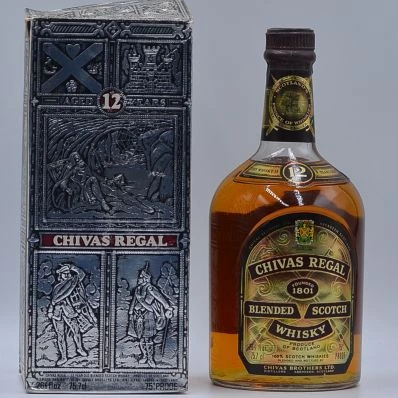 Chivas Regal 12 Year Old Scotch Whisky 75 Proof 1970sSpecial Price £47.98 Regular Price £59.99 Inc VATSaving £12.01
 -
-
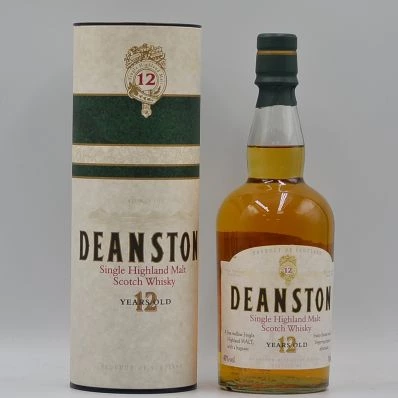 Deanston 12 Year Old Highland Whisky 2000sSpecial Price £56.98 Regular Price £63.99 Inc VATSaving £7.01
 -
-
-
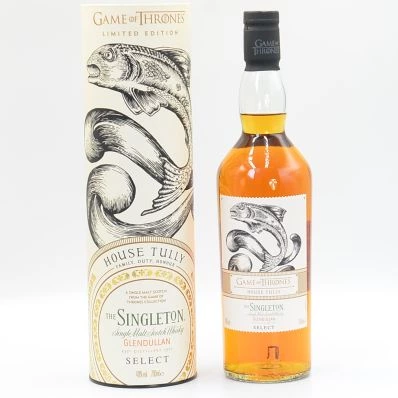 Game of Thrones Whisky Singleton Glendullan House TullySpecial Price £73.98 Regular Price £84.99 Inc VATSaving £11.01
 -
-

The Key Point to Remember
Whisky and whiskey are regional spelling conventions for the same broad type of spirit. Whisky is normally used for Scottish, Canadian and Japanese products, while whiskey is standard for Irish and American spirits. Exceptions exist, so the spelling should never be treated as a complete production definition or a measure of quality.
Use the spelling to identify the likely tradition, then examine the category, grains, distillery, cask details, age and ABV. Those details will tell you considerably more about the bottle. For a closer look at corn-led, rye-led and other US styles, explore the range of American whiskey styles.

Comments