
 Chat with us on WhatsApp

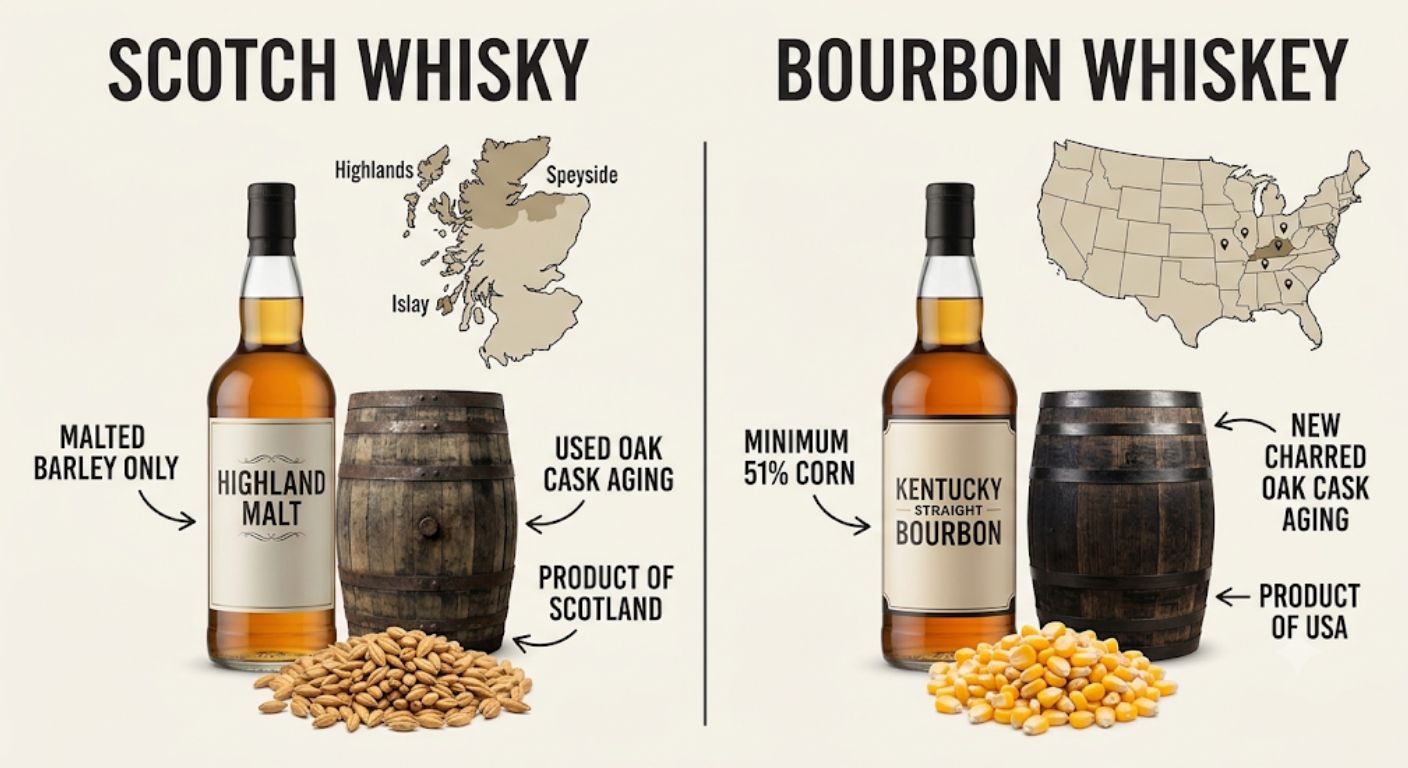
Scotch and Bourbon are both whiskies, but they are not interchangeable styles. The difference starts with law, origin, grain, cask type and climate, then shows up clearly in flavour, price, age statement and how each bottle should be used.
Bourbon is American whiskey built around corn sweetness, new charred oak and bold vanilla-caramel flavour. Scotch whisky must be made in Scotland and can range from light, honeyed Speyside single malt to heavily peated Islay whisky, sherried Highland malts, blended Scotch and old collectible releases.
This guide explains the practical difference between Scotch and Bourbon so you can choose correctly before buying. It covers legal definitions, mash bills, casks, ageing, ABV, peat, flavour, cocktails and beginner decision logic, with clear pointers to the relevant Lochs of Whisky categories where useful.
For American styles, start with the broader American whiskey selection before narrowing into Bourbon.
Scotch vs Bourbon at a glance
| Factor | Scotch Whisky | Bourbon Whiskey |
|---|---|---|
| Country | Scotland only | United States |
| Main grain | Usually malted barley for single malt; mixed grains for blends | Minimum 51% corn |
| Cask rule | Oak casks, commonly ex-Bourbon or sherry-seasoned | New charred oak containers |
| Minimum age | 3 years | No minimum for standard Bourbon; 2 years for straight Bourbon |
| Minimum bottling strength | 40% ABV | 40% ABV / 80 proof |
| Typical flavour | Malty, fruity, coastal, smoky, sherried or oaky depending on style | Sweet corn, vanilla, caramel, spice, toasted oak |
| Smoke | Only some Scotch is peated | Usually not peat-smoked |
| Common use | Neat drinking, tasting, collecting, some cocktails | Neat, rocks, highballs and classic whiskey cocktails |
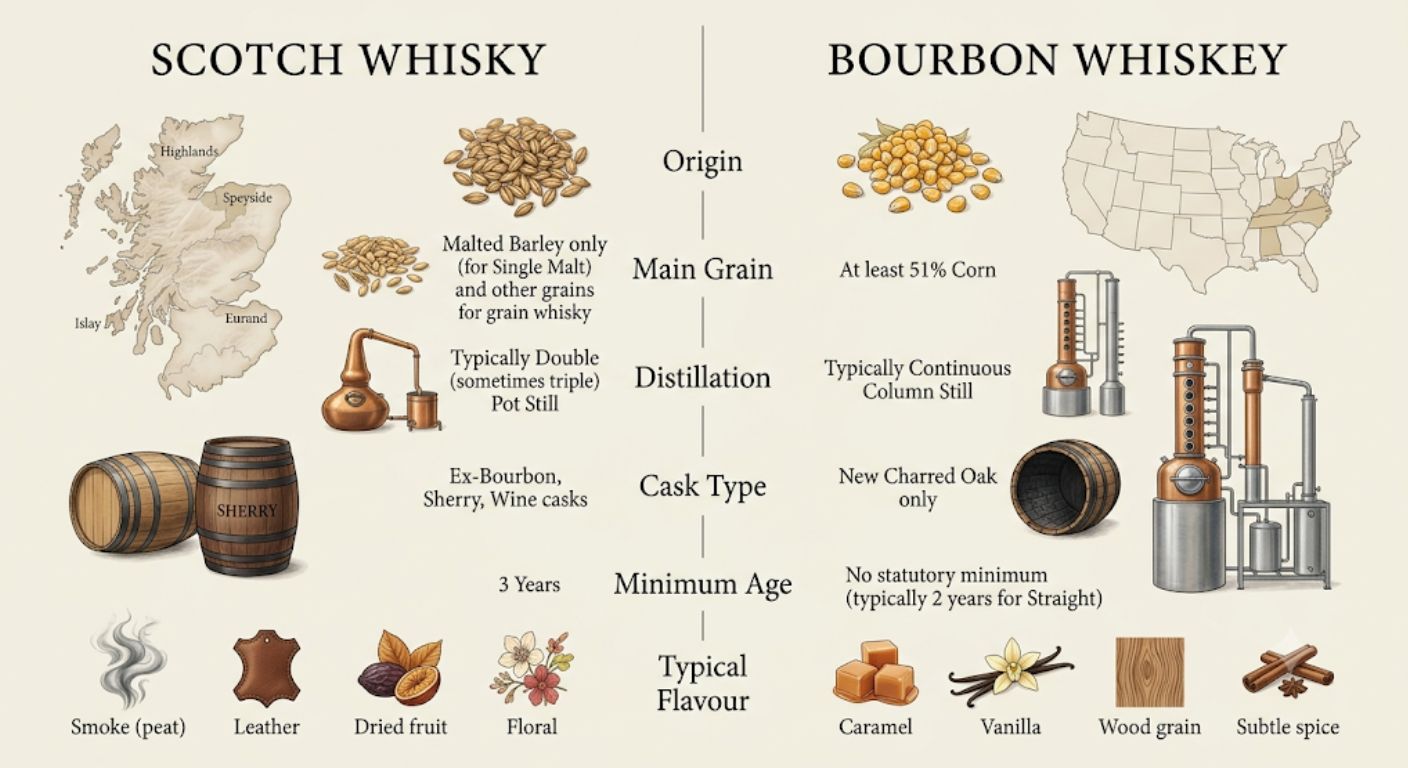
The most important difference is not that one is “better”. It is that Bourbon is a more tightly defined American whiskey style, while Scotch is a broader category with several legally recognised sub-styles.
What legally makes Scotch different from Bourbon?
Scotch must be produced in Scotland, matured in oak casks for at least three years and bottled at a minimum of 40% ABV. The legal framework is set out in the Scotch Whisky Regulations 2009, which protects Scotch as a specific geographical and production category.
Bourbon must be made in the United States from a mash containing at least 51% corn, distilled to no more than 160 proof, entered into new charred oak at no more than 125 proof and bottled at a minimum of 80 proof, or 40% ABV.
That legal difference matters because it controls what the whisky can taste like. Scotch has more flexibility in cask type and style. Bourbon has a stricter grain and barrel identity.
Scotch rules in plain English
- Produced at a distillery in Scotland
- Made from water, cereals and yeast
- Matured in oak casks in Scotland for at least three years
- Bottled at no less than 40% ABV
- Labelled within one of the recognised Scotch whisky categories
The main Scotch categories include single malt Scotch whisky, single grain Scotch whisky, blended malt Scotch whisky, blended grain Scotch whisky and blended Scotch whisky.
Single malt Scotch is made from 100% malted barley at one distillery, usually in copper pot stills. Blended Scotch combines malt and grain whiskies from different distilleries. That is why Scotch can range from light and grassy to rich, waxy, smoky, oily, coastal or heavily sherried.
The broadest commercial category to explore from here is Scotch Whisky, especially if you want to compare regions and styles side by side.
Bourbon rules in plain English
- Made in the United States
- Made from at least 51% corn
- Distilled to no more than 160 proof
- Filled into new charred oak at no more than 125 proof
- Bottled at no less than 80 proof / 40% ABV
- Free from added colouring or flavouring
Straight Bourbon must be aged for at least two years. If it is younger than four years, the label must usually state its age. Standard Bourbon has no federal minimum ageing period, although in practice most reputable bottles are matured long enough to develop clear oak character.
For a fuller Bourbon-only explanation, use the complete guide to American whiskey and Bourbon rather than treating this comparison guide as a Bourbon definition page.
Grain recipe: malted barley versus corn
The grain recipe is one of the clearest reasons Scotch and Bourbon taste different.
Bourbon must contain at least 51% corn. The remaining grains are usually rye, wheat and malted barley. Corn gives Bourbon its rounded sweetness. Rye adds spice and grip. Wheat softens the texture. Malted barley helps fermentation and can add cereal depth.
Scotch depends on category. Single malt Scotch is made entirely from malted barley. Blended Scotch may include both malt whisky and grain whisky, often made from wheat or maize alongside malted barley.
Why Bourbon is usually sweeter
Bourbon is usually sweeter because corn is the dominant grain and new charred oak pushes strong vanilla, caramel and toasted sugar notes into the whiskey. That sweetness is structural, not added sugar.
Scotch can also taste sweet, especially when matured in ex-Bourbon or sherry-seasoned casks, but the sweetness usually comes through as honey, orchard fruit, dried fruit, malt, spice or cask influence rather than direct corn sweetness.
This is why a Bourbon drinker often finds Speyside or Highland Scotch easier than heavily peated Islay whisky. A soft Speyside malt around 40–43% ABV usually offers honey, vanilla and fruit without the heavier smoke or coastal salt.
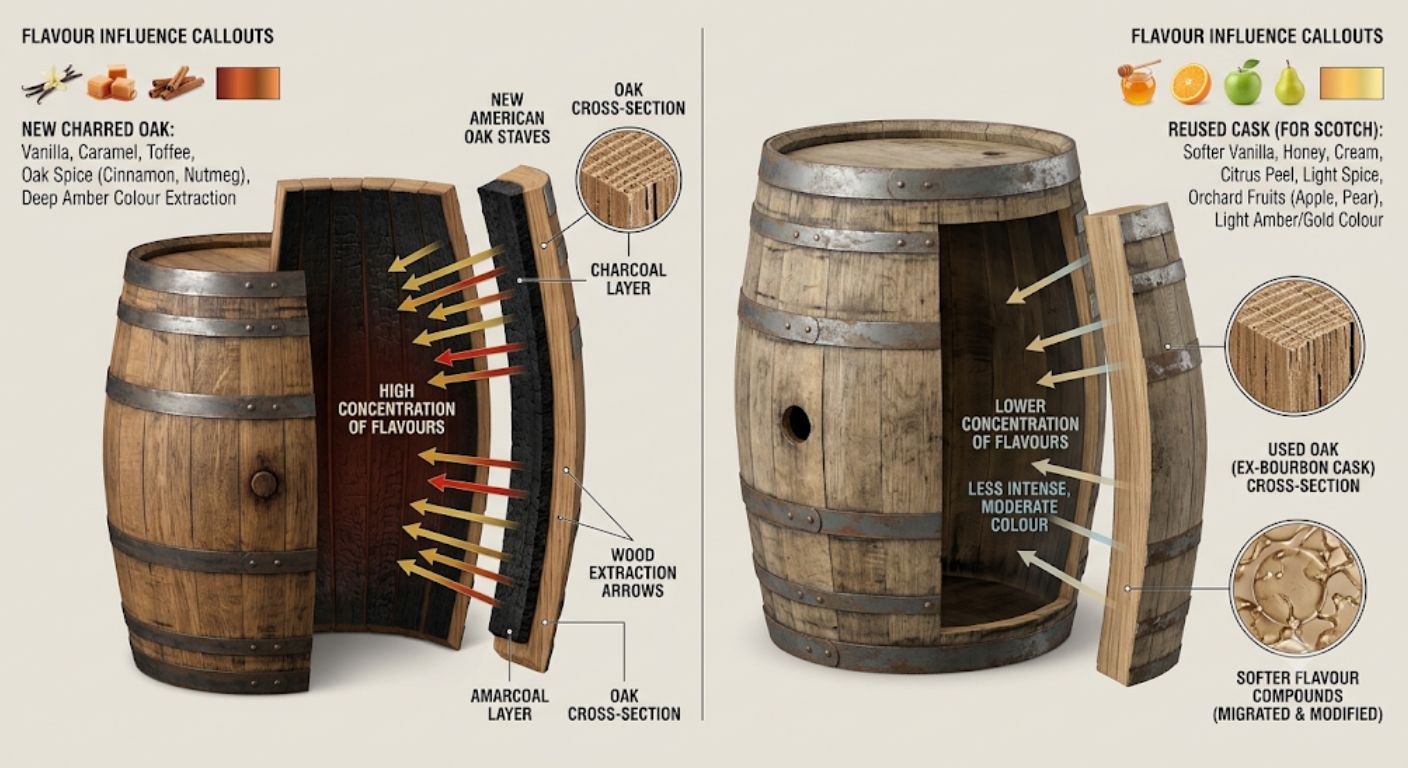
Cask type: new charred oak versus refill oak
Bourbon must be aged in new charred oak. Scotch must be matured in oak, but Scotch producers can use a much wider range of cask types, including ex-Bourbon barrels, sherry-seasoned casks, refill hogsheads, wine casks, port pipes and other oak vessels permitted under regulation.
This is one of the biggest flavour differences.
What new charred oak does to Bourbon
- Vanilla
- Caramel
- Toasted coconut
- Brown sugar
- Charred oak spice
- Firm tannin
- Darker colour at a younger age
Because the cask has not been used before, the oak impact is strong. That is why a 6–9 year old Bourbon can taste mature, sweet and oak-forward.
What used casks do to Scotch
Scotch often matures in used oak, especially ex-Bourbon barrels. These casks have already given their most aggressive oak compounds to Bourbon, so Scotch tends to mature more gradually.
Ex-Bourbon casks often bring vanilla, citrus, coconut and light honey notes to Scotch. Sherry-seasoned casks can add dried fruit, walnut, dark chocolate, spice and richer colour. Refill casks may allow more distillery character to show through.
Customers regularly ask us whether age statement matters more than cask type. After 12 years, the differences often become more about cask quality than time in wood — we have seen younger whiskies show more balance than older bottles from tired casks.
Ageing and climate: Kentucky heat versus Scottish warehouses
Climate changes how whisky matures. Bourbon often ages in warmer American warehouse conditions, especially in Kentucky. Scotch usually matures in Scotland’s cooler, damper climate.
In hotter climates, casks expand and contract more aggressively. Whiskey moves in and out of the oak more quickly. Water can evaporate faster than alcohol, so ABV may rise in the barrel. This helps explain why older Bourbon can become very concentrated, oaky and high proof.
In Scotland, maturation is slower. Alcohol tends to evaporate more readily than water in many warehouse conditions, so cask strength may fall over time. The result is often slower integration, softer wood extraction and more gradual development.
| Factor | Kentucky-style Bourbon ageing | Scotch whisky ageing |
|---|---|---|
| Climate | Warmer, greater seasonal swings | Cooler, damper, slower |
| Wood impact | Faster and stronger | Slower and more gradual |
| ABV trend | Often rises in cask | Often falls in cask |
| Older whisky risk | Heavy oak and tannin | Flatness if cask is inactive |
| Best buying check | Proof, age and barrel style | Region, cask type, age and bottler |
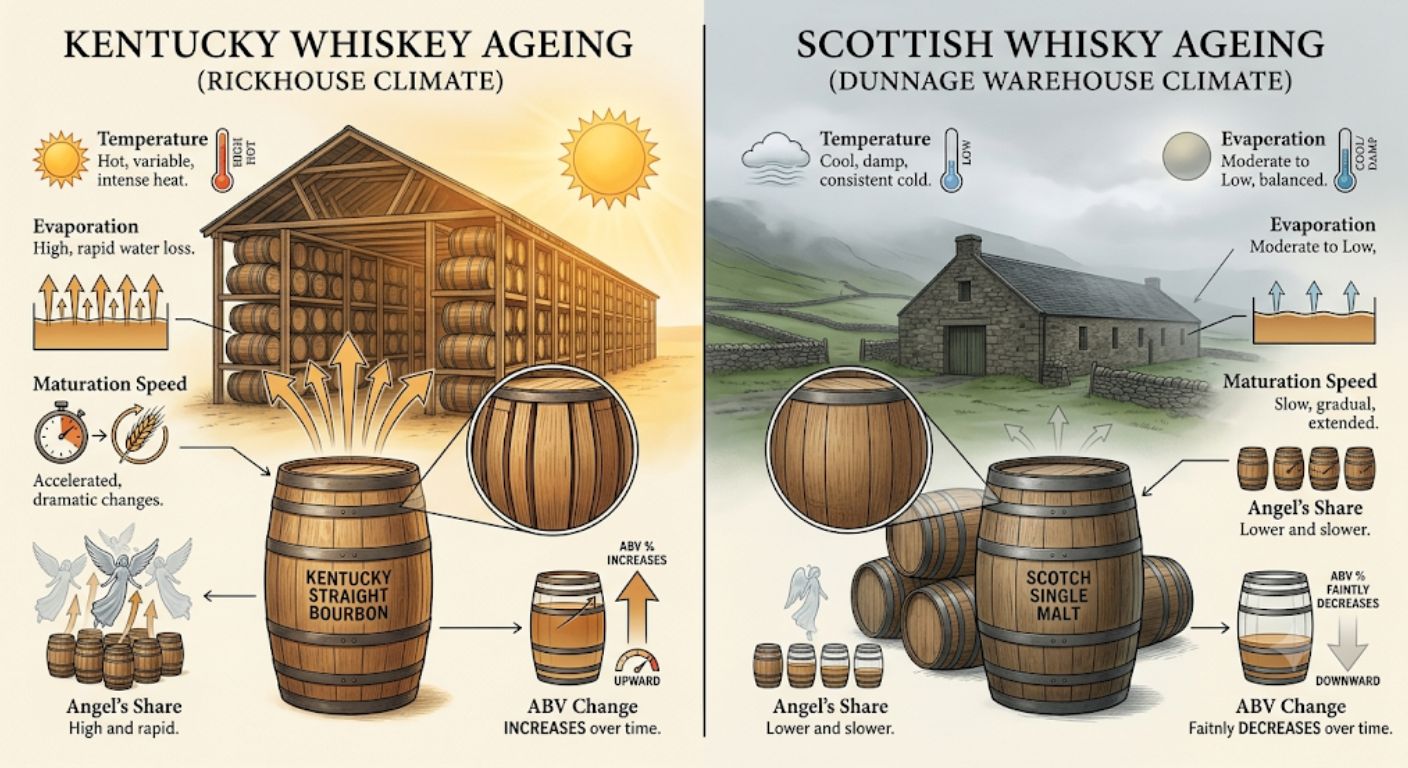
A 10 year old Bourbon and a 10 year old Scotch should not be judged as if they have aged in the same way. The same number on the label does not mean the same wood impact.
Peat and smoke: not all Scotch is smoky
No, the majority of Scotch is not smoky. Peated Scotch is made when malted barley is dried using peat smoke, which creates smoky, earthy, medicinal or coastal flavours. Many Speyside, Highland and Lowland Scotch whiskies are unpeated and can taste fruity, honeyed, grassy, malty or sherried instead.
This is one of the biggest buyer errors. Many people try one smoky Scotch and assume all Scotch tastes that way. It does not.
Where smoky Scotch usually comes from
Peat is strongly associated with Islay, although it is not limited to Islay. Some Highland, Island and Campbeltown whiskies also use peat. Peat level varies heavily, from gentle smoke to intense medicinal character.
Bourbon is usually not peat-smoked. It can taste smoky from barrel char, but that is different from peat smoke. Barrel char gives toasted oak, caramelised sugar and spice. Peat gives phenolic smoke, ash, earth, iodine, seaweed or medicinal notes depending on the whisky.
If you like Bourbon and want to move into Scotch, do not start with heavily peated whisky unless you already enjoy smoke. Start with unpeated single malt, a softer blend, or a Bourbon-cask matured Scotch.
Distillation: pot still character versus column still efficiency
Single malt Scotch is usually distilled in copper pot stills. Pot stills operate in batches and tend to retain more weight, texture and distillery character. This is one reason single malt Scotch can vary so much between distilleries.
Bourbon is commonly distilled using column stills, often followed by a doubler or thumper. This supports larger-scale production while retaining enough grain and fermentation character for the finished whiskey.
This does not mean Scotch is automatically more complex or Bourbon is automatically simpler. It means the production systems emphasise different things. Scotch often foregrounds distillery style and cask history. Bourbon often foregrounds grain recipe, yeast, barrel char, warehouse position and proof.
For example, Wild Turkey is known for robust, high-character Bourbon with strong oak and spice, while Woodford is often discussed for a more polished, rounded Bourbon style. Smaller producers such as Leipers Fork show how American whiskey can still carry local identity rather than simply fitting one mass-market profile.
Flavour comparison: what each actually tastes like
Bourbon usually tastes sweeter, fuller and more directly oak-led. Scotch has a wider flavour range, from soft and honeyed to maritime, smoky, waxy, nutty, floral or dried-fruit rich.
Bourbon flavour markers
- Vanilla
- Caramel
- Brown sugar
- Toffee
- Sweet corn
- Baking spice
- Toasted oak
- Orange peel
- Cherry
- Cinnamon
- Pepper, especially in higher-rye styles
Bourbon is often easier for beginners because its sweetness is immediate. It also performs well in cocktails because the oak, corn and spice remain clear when mixed.
For a narrower Bourbon buying route, the dedicated Bourbon Whiskey category is the better place to compare bottles by strength, producer and style.
Scotch flavour markers
- Malt biscuit
- Honey
- Apple and pear
- Citrus
- Heather
- Vanilla
- Dried fruit
- Nutmeg and clove
- Coastal salt
- Smoke or peat, where used
- Wax, oil or cereal weight in some distillery styles
Scotch is harder to summarise because region, distillery, cask and bottler all matter. A first-fill sherry cask Highland malt and a refill Bourbon-cask Islay whisky can feel like completely different drinks.
ABV and proof: check strength before buying
Both Scotch and Bourbon can be bottled at 40% ABV, but many enthusiast-level bottles sit higher.
- 40% ABV: approachable entry strength
- 43–46% ABV: common for better texture and flavour delivery
- 50% ABV: bold but still controlled
- 57% ABV and above: high proof or cask strength territory
Bourbon labels often use proof. 100 proof equals 50% ABV. 80 proof equals 40% ABV.
Cask-strength Bourbon can be intense because the whiskey may leave the barrel at a high proof. Cask-strength Scotch can also be powerful, but the texture varies depending on age, cask type and distillery character.
If you are buying for someone who normally drinks 40% blended Scotch, do not jump straight to a barrel-proof Bourbon without checking whether they enjoy high-strength whiskey. Strength changes the experience more than many buyers expect.
Which is better for beginners: Scotch or Bourbon?
Bourbon is usually easier for beginners who like sweetness, vanilla and cocktails. Scotch is better for beginners who want variety, regional identity and a slower path into distillery character. Neither is better overall.
Choose Bourbon first if you prefer:
- Vanilla, caramel and sweet oak
- Whiskey with ice or in an Old Fashioned
- A fuller, sweeter flavour from the first sip
- Bottles around £30–60 with clear flavour impact
Choose Scotch first if you prefer:
- Honey, fruit, malt, citrus or sherry notes
- Exploring regions and distillery styles
- Neat drinking
- Collectible older bottles or independent bottlings
- More variation between bottles
If your budget is £30–60, avoid chasing old age statements. Look for good cask quality, 40–46% ABV and a style that matches your palate. For Scotch, that often means approachable Speyside, Highland or blended malt. For Bourbon, it usually means a well-made straight Bourbon with enough age and proof to hold its flavour.
For a Scotch drinker moving into Bourbon, the best starting point is usually lower-rye or wheated Bourbon. For a Bourbon drinker moving into Scotch, start with Bourbon-cask matured Scotch, Speyside single malt or a balanced blended malt rather than heavily peated Islay.
Can you use Scotch instead of Bourbon in cocktails?
Yes, Scotch can replace Bourbon in some cocktails, but it changes the drink. Bourbon gives sweetness, vanilla and oak. Scotch may bring malt, smoke, fruit, sherry or coastal notes depending on the bottle.
An Old Fashioned made with Scotch can work well, especially with blended Scotch, lightly peated Scotch or a richer malt. It will not taste like a Bourbon Old Fashioned. The sweetness will usually be lower and the grain character will be more malty.
Use Bourbon for:
- Old Fashioned
- Mint Julep
- Whiskey Sour
- Boulevardier
- Manhattan variations where sweetness and oak are wanted
Use Scotch for:
- Rob Roy
- Penicillin
- Smoky Old Fashioned variations
- Highballs
- Simple stirred drinks where malt or peat is part of the point
Do not use expensive old Scotch in cocktails unless you specifically want that result. A balanced blended Scotch or younger malt is usually more sensible.
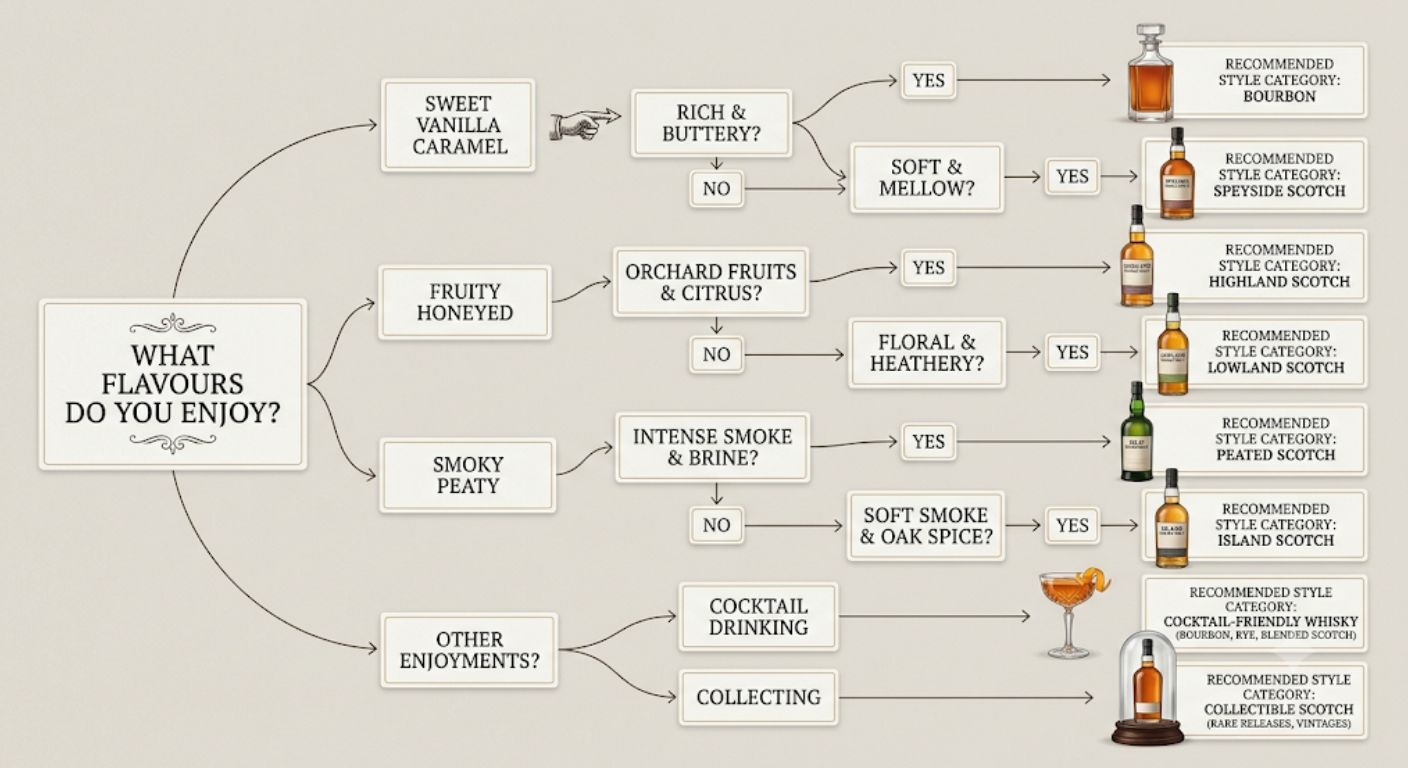
Scotch vs Bourbon decision logic
Use flavour first, then check ABV, age and cask type.
If you like sweet, easy-drinking whiskey
Choose Bourbon. Look for 40–50% ABV, straight Bourbon, and flavour notes around vanilla, caramel, brown sugar and oak. Avoid very high-proof bottles at first unless you already enjoy intense whiskey.
If you like fruit, honey and malt
Choose unpeated Scotch. Speyside, Highland or Bourbon-cask matured single malts are usually the safest route. Look around 40–46% ABV.
If you like smoke
Choose peated Scotch, not Bourbon. Bourbon can have barrel char and toasted oak, but peat smoke is a Scotch-style production choice. Islay is the obvious region to explore, though not every smoky whisky comes from Islay.
If you want cocktails
Choose Bourbon first. It is structurally suited to classic American whiskey cocktails. Scotch works well in specific cocktails but requires more care because smoke, sherry or malt can dominate.
If you are buying a gift
Choose based on the recipient’s current drinking habits. Bourbon drinkers usually respond well to sweeter, oak-forward bottles. Scotch drinkers are more style-sensitive, so region, peat level and cask type matter.
If you are collecting
Scotch usually offers broader collecting routes through closed distilleries, independent bottlers, old vintages, limited releases and regional styles. Bourbon collecting is more brand, allocation and proof driven. Both markets reward provenance, condition and authenticity.
For rare, discontinued or older bottles, the important checks are bottle condition, fill level, packaging, batch information and whether the price reflects current market reality rather than online noise.
Common mistakes when comparing Scotch and Bourbon
- Assuming all Scotch is smoky
- Assuming all Bourbon must come from Kentucky
- Treating age statements as equal across climates
- Ignoring ABV and proof
- Buying cask strength for someone who drinks 40% whisky
- Thinking new oak and sherry casks create the same kind of sweetness
- Comparing cheap Bourbon with old single malt Scotch as if they occupy the same price tier
- Using an expensive single malt in cocktails without a clear reason
- Confusing barrel char smoke with peat smoke
- Ignoring whether a Scotch is single malt, blended malt or blended Scotch
The easiest way to avoid mistakes is to read the label in this order: country, category, ABV, age statement, cask type and peat level.
FAQ
What is the main difference between Scotch and Bourbon?
Scotch must be made in Scotland and aged in oak for at least three years. Bourbon must be made in the United States from at least 51% corn and aged in new charred oak. Scotch has wider regional and cask variation. Bourbon is usually sweeter, oakier and more vanilla-led.
Is Scotch or Bourbon sweeter?
Bourbon is usually sweeter because it is corn-based and matured in new charred oak. Scotch can be sweet too, especially when matured in ex-Bourbon or sherry casks, but its sweetness is usually more malty, fruity, honeyed or dried-fruit driven rather than direct corn sweetness.
Does Bourbon have to come from Kentucky?
No. Bourbon must be made in the United States, but it does not have to come from Kentucky. Kentucky is historically and commercially dominant because of climate, production scale and distilling heritage, but Bourbon can legally be produced in other US states.
Does Scotch have to come from Scotland?
Yes. Scotch whisky must be produced in Scotland and matured there in oak casks for at least three years. If the whisky is made elsewhere, it cannot legally be sold as Scotch, even if it uses Scottish-style production methods or similar casks.
Is all single malt Scotch smoky?
No. Most single malt Scotch is not heavily smoky. Peated Scotch gets its smoke from peat used during barley drying. Many Speyside, Highland and Lowland single malts are unpeated and focus more on fruit, honey, malt, vanilla, grass, sherry or gentle spice.
What is the minimum age for Scotch and Bourbon?
Scotch must be matured for at least three years. Standard Bourbon has no federal minimum ageing period, but straight Bourbon must be aged for at least two years. If straight Bourbon is under four years old, the label usually needs an age statement.
Why does Bourbon use new charred oak barrels?
Bourbon uses new charred oak because the legal standard requires it. The new oak and char layer create Bourbon’s typical vanilla, caramel, toasted oak, spice and colour. Scotch often reuses those empty Bourbon barrels later, producing a softer and more gradual oak influence.
Can you make an Old Fashioned with Scotch?
Yes. A Scotch Old Fashioned works, but it tastes different from a Bourbon version. Bourbon gives sweetness and vanilla. Scotch gives malt, fruit, smoke or sherry depending on the bottle. Use blended Scotch or a younger malt rather than an expensive old single malt.
Which is better for a beginner?
Bourbon is usually easier if the beginner likes sweet, vanilla-led whiskey or cocktails. Scotch is better if they want to explore different regions and flavours. For a safe Scotch start, choose unpeated Speyside or Highland whisky around 40–46% ABV.
Is Scotch stronger than Bourbon?
Not necessarily. Both can be bottled at 40% ABV, and both can be much stronger. Bourbon often uses proof on the label, where 100 proof equals 50% ABV. Scotch usually uses ABV directly. Always check strength before buying, especially with cask-strength releases.
-
-
-
-
-
-
-
-
-
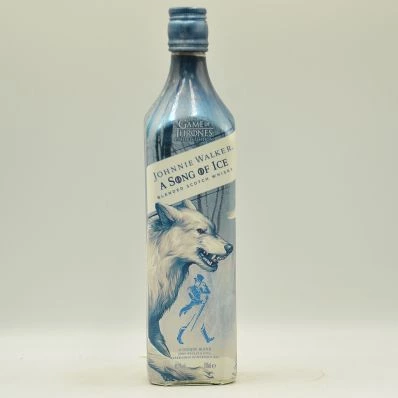
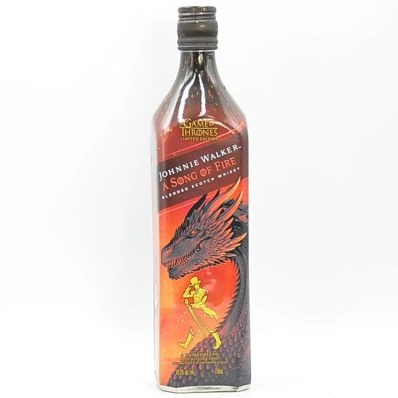 Game of Thrones Whisky Johnnie Walker A Song Of FireSpecial Price £139.98 Regular Price £144.99 Inc VATSaving £5.01
 -
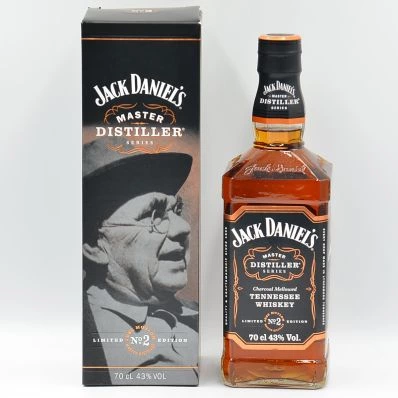 Jack Daniel's - Master Distiller Batch 2 Jess Motlow Limited Edition Bourbon Whiskey£164.99 Inc VATOut of stock
 -
Structured summary
Key rules
- Scotch must be made in Scotland.
- Bourbon must be made in the United States.
- Bourbon must contain at least 51% corn.
- Scotch single malt is made from malted barley at one distillery.
- Scotch must be aged for at least three years.
- Straight Bourbon must be aged for at least two years.
- Bourbon uses new charred oak.
- Scotch uses oak casks, often ex-Bourbon or sherry-seasoned.
- Both must usually be bottled at a minimum of 40% ABV.
- Peat smoke is a Scotch production choice, not a general whisky rule.
Common mistakes
- Thinking all Scotch is smoky.
- Thinking Bourbon must come from Kentucky.
- Treating Bourbon age and Scotch age as directly equal.
- Ignoring proof or ABV.
- Confusing charred oak smoke with peat smoke.
- Buying by age statement alone.
Decision shortcuts
- Prefer vanilla, caramel and cocktails: choose Bourbon.
- Prefer fruit, malt and regional variety: choose Scotch.
- Prefer smoke: choose peated Scotch.
- Prefer easy entry: choose Bourbon or unpeated Scotch around 40–46% ABV.
- Buying a gift: match the recipient’s current style before choosing age or price.
For a final comparison route, use Scotch for distillery-led discovery and Bourbon for corn-led American whiskey character. From there, compare the relevant Lochs of Whisky categories by style, strength, age and cask type rather than relying on the Scotch-versus-Bourbon label alone.

Comments