
 Chat with us on WhatsApp

Single Malt vs Blended Whisky: What's The Difference?
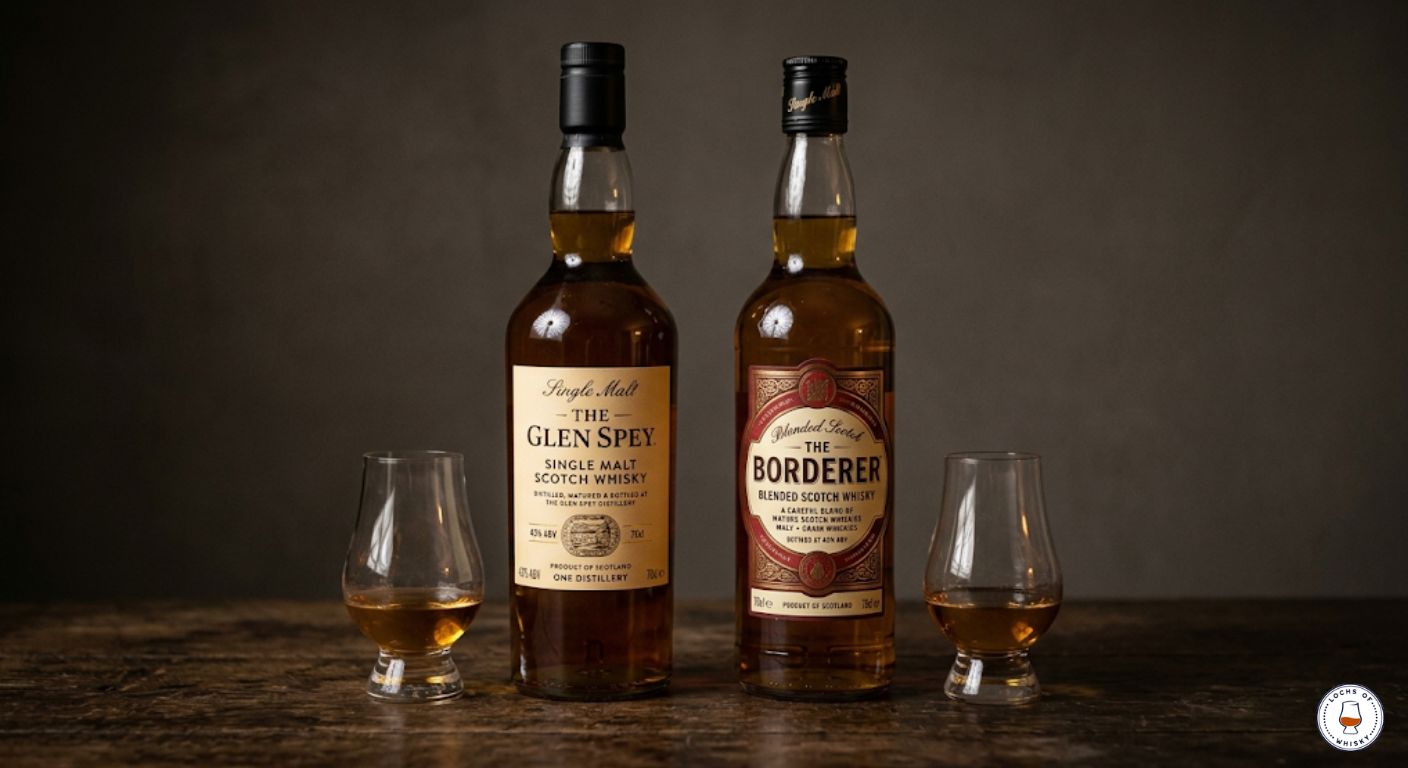
Single malt vs blended whisky is one of the first comparisons most whisky drinkers run into, and it matters because the label tells you how the whisky was made, not whether it is automatically better. A single malt comes from one distillery and is made from malted barley. A blended whisky combines whiskies from different production streams, usually malt whisky and grain whisky.
That difference affects flavour, price, consistency, ABV, cask influence, and how you should use the bottle. Some single malts are bold, complex and distillery-led. Some blends are softer, more consistent and better value. Neither category wins by default.
This guide explains the practical difference between single malt and blended whisky, how to read the label, what each style usually tastes like, and when each one makes more sense to buy, drink or gift.
Single Malt vs Blended Whisky: Quick Comparison
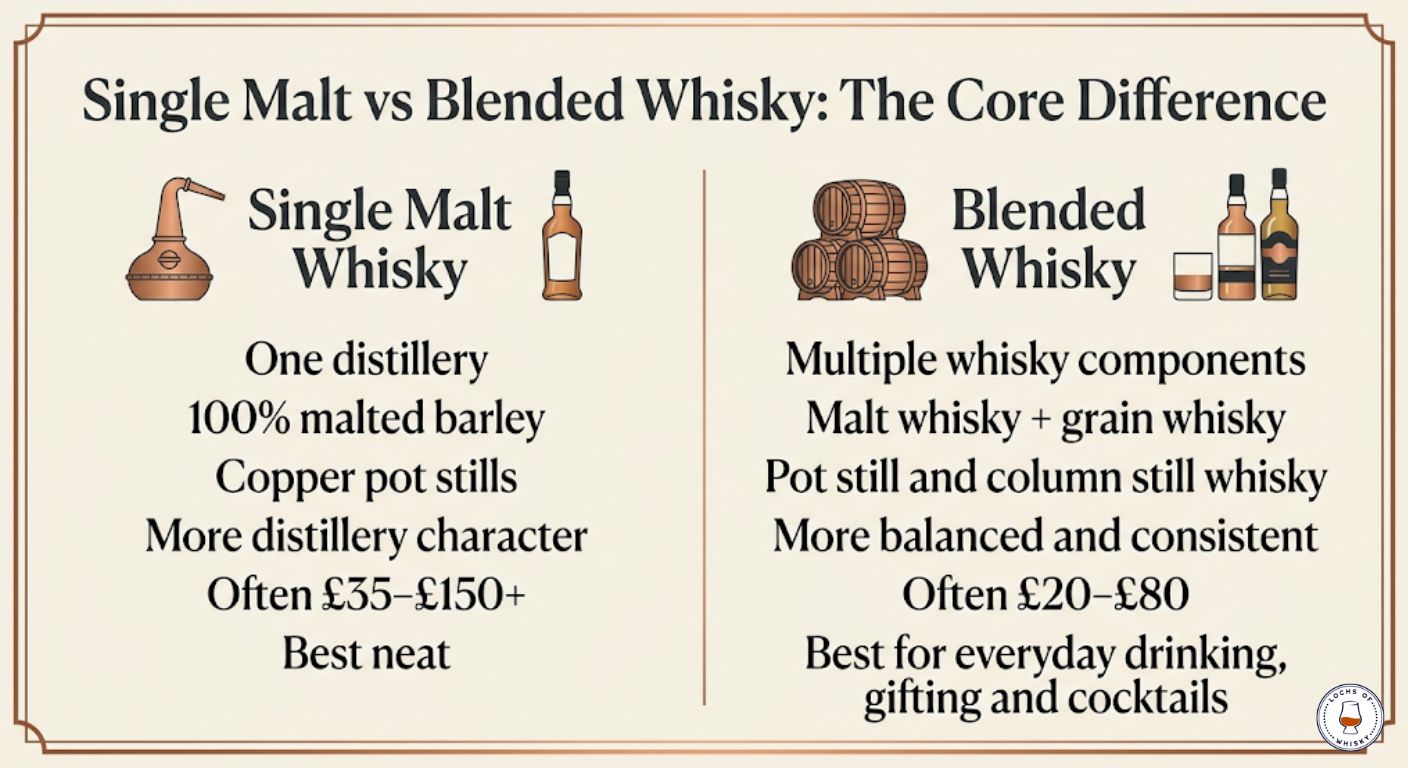
| Feature | Single Malt Whisky | Blended Whisky |
|---|---|---|
| Distillery source | One distillery | Usually multiple distilleries |
| Main ingredients | 100% malted barley | Usually malt whisky and grain whisky |
| Still type | Copper pot stills | Pot still malt whisky plus column still grain whisky |
| Flavour style | More distillery-specific | More balanced and consistent |
| Typical ABV | Usually 40–46%, sometimes cask strength | Usually 40–43% |
| Price range | Often £35–£150+ | Often £20–£80, with premium blends higher |
| Best for | Exploring distillery character | Everyday drinking, gifting and mixing |
| Main buying risk | Too intense, too peaty or too expensive for the palate | Too light if you want strong distillery character |
If you want a whisky that clearly reflects one distillery, look at single malt. If you want balance, consistency and approachable flavour, blended whisky is often the safer choice. For readers comparing bottle types before buying, the Blended Scotch Whisky category is the natural place to understand how blends sit in the wider Scotch range.
-
-
-
-
-
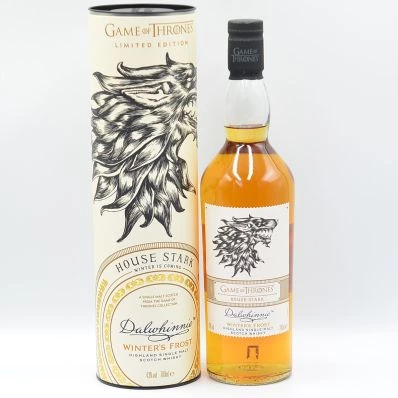 Game Of Thrones Whisky Dalwhinnie Winter's Frost House StarkSpecial Price £104.98 Regular Price £134.99 Inc VATSaving £30.01Out of stock
 -
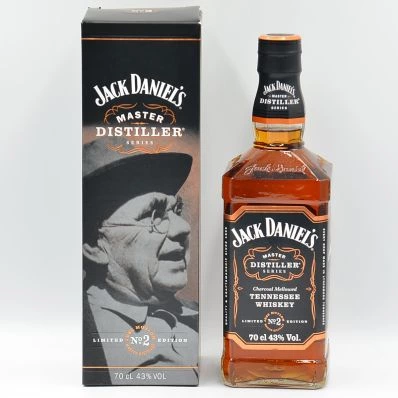 Jack Daniel's - Master Distiller Batch 2 Jess Motlow Limited Edition Bourbon Whiskey£164.99 Inc VATOut of stock
 -
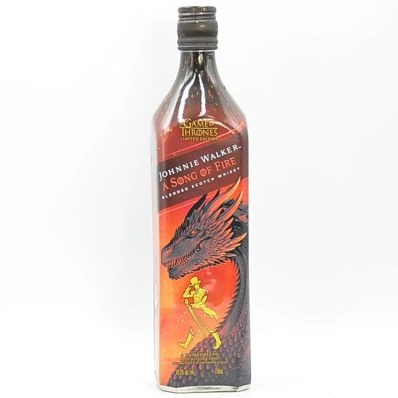 Game of Thrones Whisky Johnnie Walker A Song Of FireSpecial Price £139.98 Regular Price £144.99 Inc VATSaving £5.01
 -
-
-
-
What Is Single Malt Whisky?
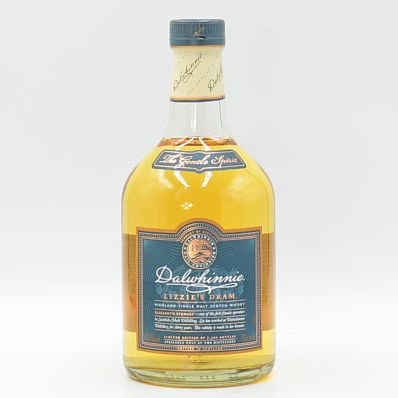
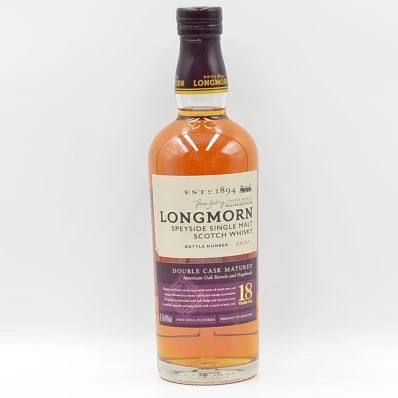
Single malt whisky is whisky made at one distillery using 100% malted barley. For Scotch, it must be distilled in copper pot stills, matured in oak casks in Scotland for at least three years, and bottled at a minimum of 40% ABV.
The word “single” does not mean single barrel. It means single distillery. A bottle of single malt can still contain whisky from many different casks, as long as all of those casks came from the same distillery.
That point matters. Many standard single malts are assembled from several casks to create a reliable house style. A 12-year-old single malt, for example, may include whisky from multiple barrels, but every drop must come from that one distillery and the youngest whisky in the bottle must be at least 12 years old.
Single malt is usually where drinkers begin to notice distillery identity. A coastal malt may show brine, smoke or mineral notes. A sherry-cask Highland malt may lean into dried fruit, spice and oak. A lighter Speyside malt may offer apple, honey, vanilla or orchard fruit. The category is broad, but the common thread is origin: one distillery, one production identity.
What Is Blended Whisky?
Blended whisky combines different whiskies to create a consistent finished style. In Scotch, blended Scotch whisky usually means a mix of one or more single malt Scotch whiskies with one or more single grain Scotch whiskies.
The grain whisky is often lighter in body and produced more efficiently in column stills. The malt whisky brings structure, flavour and character. The blender’s job is to combine them so the final whisky tastes balanced and recognisable from batch to batch.
That consistency is the main point. A single malt often shows the identity of one distillery. A blend is built around a target flavour profile. The aim may be soft fruit, gentle smoke, honeyed sweetness, cereal notes, spice, vanilla, or a smooth texture that works neat, over ice or in a highball.
Blended whisky is sometimes dismissed as lower quality, but that is too simple. Some blends are cheap and light. Others are carefully built from mature malt and grain whiskies. The category covers entry-level bottles, premium blends, old blends and collectable discontinued releases.
The Scotch Whisky Association sets out the five Scotch whisky categories clearly, including single malt, single grain, blended malt, blended grain and blended Scotch whisky, which is useful for checking the legal distinctions.
The Main Difference: One Distillery vs Many Components
The core difference is origin. Single malt comes from one distillery. Blended whisky is assembled from different whisky components, often from multiple distilleries and production types.
That single point explains most of the practical differences:
- Single malt is usually more distillery-led.
- Blended whisky is usually more style-led.
- Single malt often has stronger variation between brands.
- Blended whisky is usually designed for consistency.
- Single malt tends to cost more because production is slower and less efficient.
- Blended whisky often offers better everyday value.
A single malt from Ben Nevis, for example, is bought partly because the drinker wants the character associated with that distillery. The Ben Nevis distillery guide gives useful context on why distillery identity matters when comparing single malt bottles.
A blend works differently. The label may not lead with one distillery because the final whisky is the product of composition. The master blender is deciding how much malt character, grain softness, cask sweetness, smoke, spice and maturity the bottle should show.
Does Single Malt Mean Single Barrel?
No. Single malt does not mean single barrel. It means the whisky was made at one distillery from malted barley. A single malt can be made from many barrels, as long as all the whisky came from the same distillery.
This is one of the most common label misunderstandings. “Single cask” or “single barrel” is a separate term. A single cask whisky comes from one individual cask. A single malt can be a single cask, but most regular single malts are not.
Most core-range single malts are created by combining several casks from the same distillery. This helps the producer keep flavour consistent. It also allows the whisky maker to balance different cask types, ages and strengths.
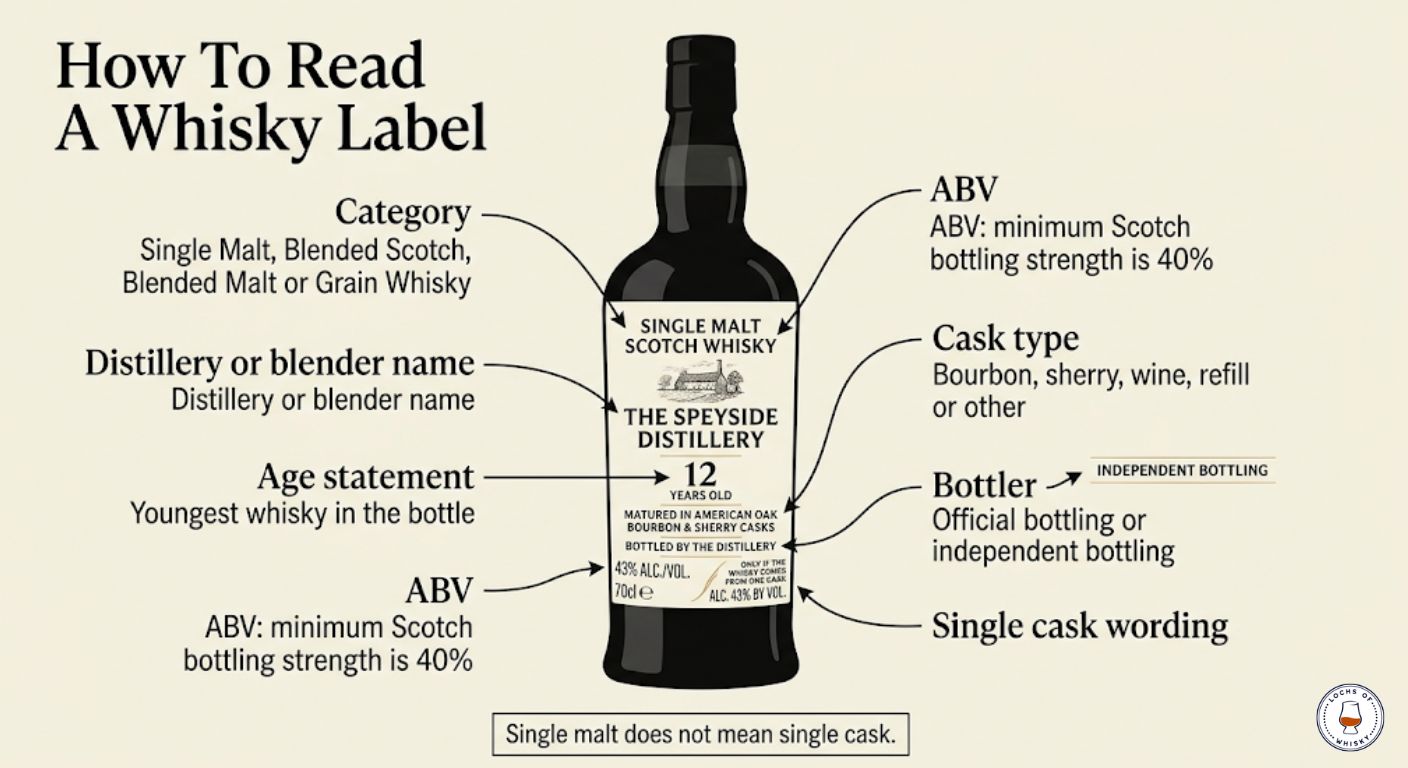
For buyers, this means you should not assume “single malt” automatically means smaller batch, rarer, stronger or more limited. Check the full label. Look for:
- Distillery name
- Age statement
- ABV
- Cask type
- Bottler
- Single cask wording, if relevant
- Natural colour or non-chill filtered details, if stated
How Production Shapes The Flavour
Single malt and blended whisky taste different because they are made differently. Production affects weight, texture, flavour concentration and cost.
Single malt Scotch is made from malted barley and distilled in copper pot stills. Pot still distillation is a batch process. It tends to produce a heavier, more characterful spirit, though the exact style depends on fermentation, still shape, cut points and cask maturation.
Blended Scotch usually includes grain whisky. Grain whisky can be made with cereals such as wheat or maize and is often produced in column stills. Column stills allow continuous distillation, creating a lighter spirit at larger scale. This makes grain whisky useful in blends because it can soften heavier malt components and create balance.
This does not mean grain whisky is flavourless. Mature grain whisky can show vanilla, coconut, soft cereal, toffee and light spice. But in many blends, its role is structural. It gives body, volume and smoothness while allowing the malt components to provide stronger flavour accents.
The practical effect is simple:
- Single malt often gives more concentrated distillery character.
- Blended whisky often gives a smoother, more rounded profile.
- Single malt can be more challenging.
- Blended whisky is usually easier to drink across different occasions.
The Five Scotch Whisky Categories
Scotch whisky is not split only into single malt and blended whisky. There are five legal categories:
- Single Malt Scotch Whisky — malt whisky from one distillery, made from malted barley in pot stills.
- Single Grain Scotch Whisky — grain whisky from one distillery, which may include cereals beyond malted barley.
- Blended Malt Scotch Whisky — single malt whiskies from two or more distilleries, with no grain whisky.
- Blended Grain Scotch Whisky — single grain whiskies from two or more distilleries.
- Blended Scotch Whisky — one or more single malt Scotch whiskies blended with one or more single grain Scotch whiskies.
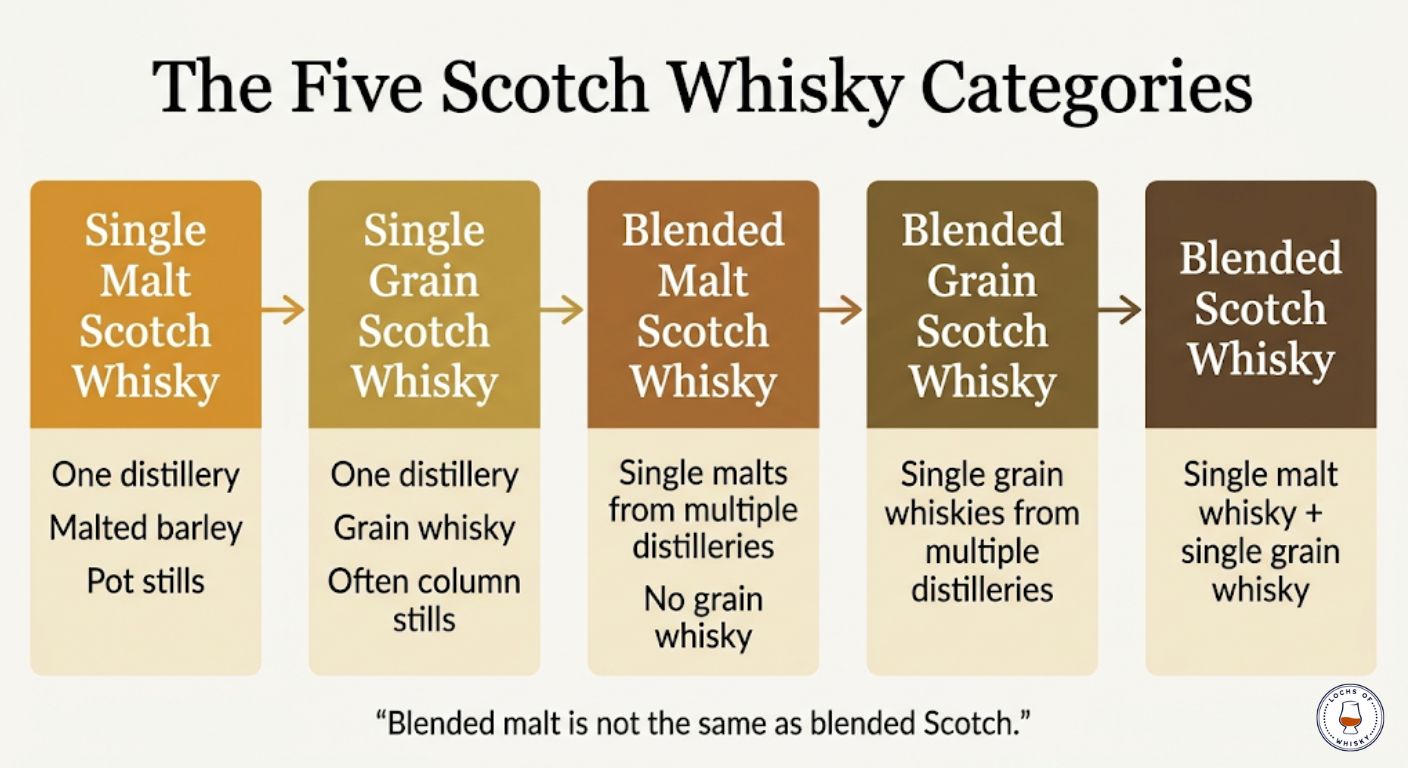
Blended malt is the category that causes the most confusion. It is not the same as blended Scotch. A blended malt contains only malt whisky from different distilleries. A blended Scotch contains both malt whisky and grain whisky.
This distinction matters when buying. If you want malt-only flavour but do not need one distillery, blended malt can be a good middle ground. If you want a softer, lighter and usually more affordable style, blended Scotch may make more sense.
Flavour Differences: What To Expect In The Glass
Single malt is usually more specific. Blended whisky is usually more controlled.
A single malt can be light, fruity, smoky, oily, coastal, spicy, waxy, nutty or heavily sherried. The flavour depends on the distillery, cask type, maturation length and bottling strength. Some distilleries have a clear house character. Others vary widely depending on cask programme and release style.
Blended whisky usually aims for balance. Common notes include:
- Honey
- Vanilla
- Toffee
- Light oak
- Orchard fruit
- Soft cereal
- Gentle spice
- Mild smoke in some blends
Single malt usually gives more variation between bottles. That is part of the appeal, but also part of the risk. A beginner who picks a heavily peated single malt at 46% ABV may find it too intense. Another beginner may love it immediately. A blend at 40% ABV is usually less demanding.
Most people buying their first single malt underestimate how much the regional style matters. After one dram, it is usually the thing our customers either fall in love with or quietly avoid next time.
If you are moving from blends into single malt, start with softer styles first. Speyside, Lowland and some Highland malts are usually easier entry points than heavily peated island or Islay styles.
Is Single Malt Better Than Blended Whisky?
Single malt is not automatically better than blended whisky. It is usually more distillery-specific, often more expensive, and sometimes more complex. Blended whisky is usually more consistent, more approachable and often better value.
The better choice depends on what you want from the bottle.
Choose single malt if you want:
- Clear distillery character
- More variation between bottles
- A whisky to drink slowly and compare
- More cask influence
- More collector interest around specific releases
- A stronger sense of provenance
Choose blended whisky if you want:
- A smoother everyday drink
- Better value under £50
- A bottle for guests
- A whisky for highballs or cocktails
- Reliable flavour
- Less risk when gifting
Quality sits inside both categories. A poor single malt is still poor whisky. A well-made blend can be better balanced than a young, rough single malt. Price, age and category are clues, not guarantees.
Why Is Single Malt More Expensive Than Blended Whisky?
Single malt is usually more expensive because it is made from malted barley at one distillery, distilled in batches using pot stills, and often matured with a stronger focus on cask character. Blended whisky can include lighter grain whisky produced more efficiently in column stills.
The main cost factors are:
- Raw material: malted barley is generally more expensive than common grain inputs used in grain whisky.
- Distillation: pot stills work in batches, while column stills can run continuously.
- Scale: blended whisky can be produced in larger volumes.
- Maturation: single malts often rely heavily on cask quality and longer maturation.
- Brand and scarcity: distillery reputation can increase demand and price.
- ABV and presentation: higher-strength and non-chill filtered bottles often sit at higher price points.
That does not mean every expensive single malt is better. A £45 single malt from an active distillery may offer more character than a £90 bottle carried by brand prestige. A £35 blend may be better for mixing than a £70 single malt because you are paying for balance rather than distillery detail.
As a rough buying guide:
- £25–£40: blended whisky often gives better value.
- £35–£60: good entry-level single malts become realistic.
- £60–£100: cask type, ABV and distillery matter more.
- £100+: check age, bottler, cask details and scarcity before buying.
Age Statements, ABV And Cask Type
Age, ABV and cask type often matter more than whether a bottle is single malt or blended.
An age statement tells you the youngest whisky in the bottle. A 12-year-old single malt may include older whisky, but nothing younger than 12 years. A 15-year-old blend follows the same principle: the youngest component must be at least 15 years old.
ABV affects texture and intensity. Most standard bottles sit around 40–43% ABV. Many enthusiast-focused single malts are bottled at 46% ABV or higher. Cask-strength whiskies can sit above 55% ABV and may need water to open up properly.
Cask type shapes flavour heavily:
- Ex-bourbon casks often bring vanilla, coconut, honey and citrus.
- Sherry casks often bring dried fruit, spice, chocolate and richer oak.
- Wine casks can add red fruit, tannin or sweetness.
- Refill casks may show more distillery character and less wood influence.
- Peated casks or peated spirit add smoke, earth, ash or medicinal notes.
For single malt, cask type can define the bottle. For blended whisky, cask type is usually part of the balancing process rather than the whole identity.
Regional Style Still Matters
Region does not guarantee flavour, but it helps set expectations. This is especially useful when buying single malt.
Common regional expectations include:
- Speyside: fruit, honey, apple, vanilla, sherry influence.
- Highland: broad range, from light and floral to rich and robust.
- Islay: often smoky, peaty, maritime and medicinal.
- Lowland: lighter, grassy, citrus-led and gentle.
- Campbeltown: oily, coastal, sometimes smoky or funky.
- Islands: varied, often coastal, smoky, peppery or mineral.
These are useful starting points, not fixed rules. Distillery character and cask type still matter more than the map alone.
For example, Ardmore is often associated with Highland peat and a more robust profile than many drinkers expect from the region. The Ardmore distillery guide is useful context if you want to understand why individual distilleries can sit outside simple regional assumptions.
Arbikie is a different kind of reference point, with a farm-to-bottle production identity rather than a traditional Scotch single malt profile. The Arbikie distillery guide helps show how newer producers can broaden how drinkers think about whisky origin.
When To Choose Single Malt
Choose single malt when you want to understand a distillery, compare production styles, or buy a bottle with a clearer sense of origin.
Single malt makes most sense when:
- You are drinking neat.
- You want to compare regions or distilleries.
- You are buying for a whisky enthusiast.
- The bottle has useful details such as age, ABV, cask type or bottler.
- You want more character than a standard blend.
- You are happy to spend £40–£100 for a stronger whisky experience.
For beginners, do not start with the strongest or smokiest bottle unless you already know you like peat. A 40–46% ABV Speyside or Highland malt is usually safer. If you prefer lighter sweetness, look for ex-bourbon maturation. If you prefer richer flavours, look for sherry cask influence.
The Single Malt Whisky category is best used once you know whether you want softer fruit, richer sherry influence, coastal character, peat smoke or a specific distillery.
When To Choose Blended Whisky
Choose blended whisky when you want balance, reliability, value or versatility.
Blended whisky makes most sense when:
- You want an easy-drinking bottle.
- You are buying for someone whose palate you do not know.
- You want whisky for highballs or cocktails.
- Your budget is £25–£50.
- You prefer smoothness over strong distillery character.
- You want less risk from peat, high ABV or heavy oak.
Blends are especially useful for shared drinking. A bold single malt can divide opinion. A well-made blend is usually more forgiving. It can work neat, with ice, with soda, or in a simple whisky cocktail.
For gifting, blended whisky can be safer if the recipient is not a committed single malt drinker. For enthusiasts, single malt or blended malt is usually more interesting because it gives them more detail to explore.
Single Malt Or Blended Whisky For Cocktails?
Blended whisky is usually the better choice for cocktails because it is consistent, affordable and balanced. Single malt can work, but the stronger distillery character may dominate the drink and the higher price can be wasted in heavily mixed serves.
Use blended whisky for:
- Highballs
- Whisky and ginger
- Rob Roy style drinks
- Simple sour serves
- Large-batch drinks
- Casual mixed drinks
Use single malt for cocktails only when its flavour has a purpose. A smoky malt can work in small amounts. A sherried malt can add richness. A lighter malt can make a refined highball. But if the whisky is expensive, cask strength or heavily characterful, it is usually better tasted neat first.
The rule is simple: if the cocktail hides the whisky, use a blend. If the cocktail showcases the whisky, choose the single malt carefully.
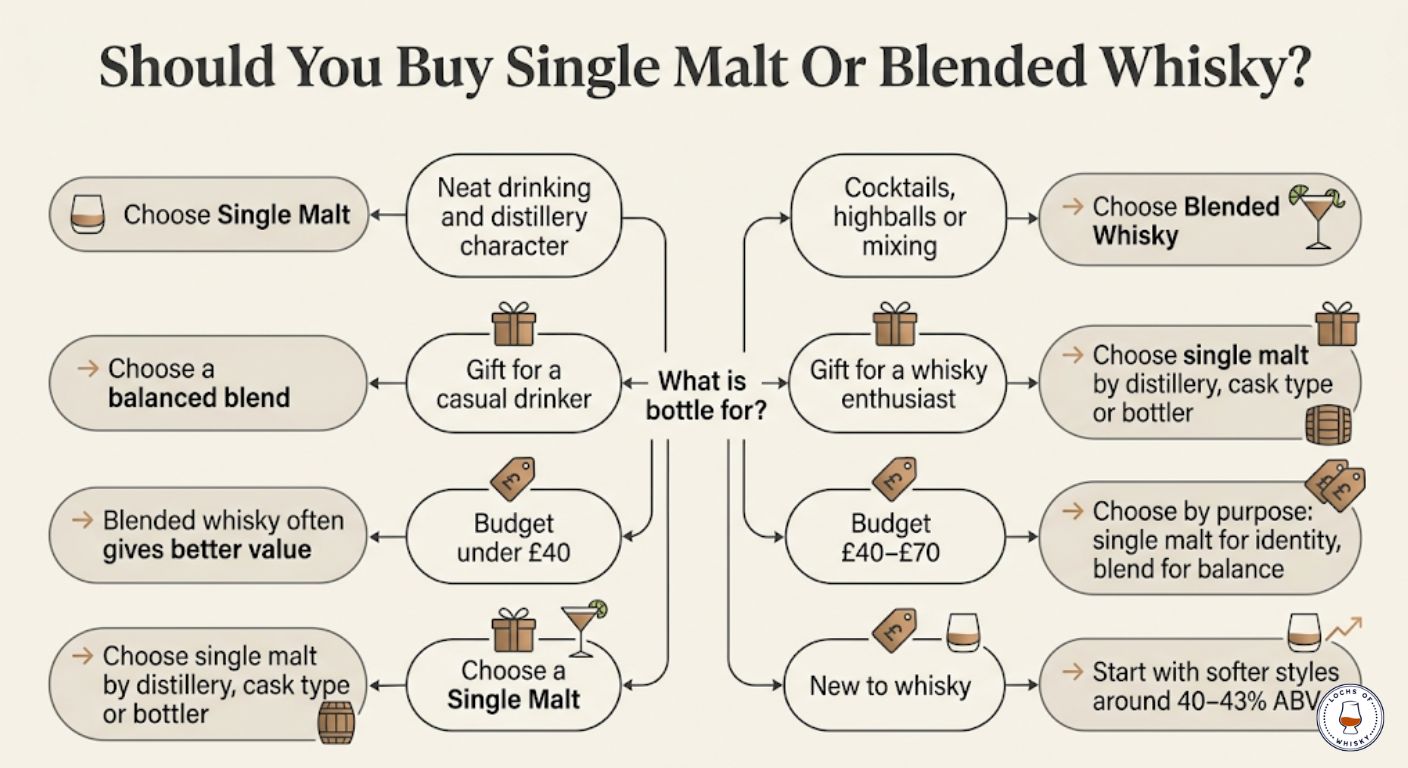
Decision Logic: Which Should You Buy?
Use the bottle purpose first, then choose the category.
If you are new to whisky, choose a blended Scotch or a gentle single malt around 40–43% ABV. Avoid cask strength, heavy peat and unusual wine finishes until you know your palate.
If you want flavour exploration, choose single malt. Start with a region or distillery style, then compare cask types.
If you want value under £40, choose blended whisky. Single malts under £40 can be good, but the strongest value often sits with blends.
If your budget is £40–£70, choose based on purpose. A single malt will usually give more identity. A premium blend may give smoother balance.
If you want a gift, choose blended whisky for a casual drinker and single malt for an enthusiast. If the person already follows a distillery, buy by distillery rather than by category.
If you dislike smoke, avoid heavily peated single malts. Look for Speyside, Lowland or bourbon-cask Highland styles.
If you like bold flavour, avoid very light blends. Look for single malt, blended malt or higher-ABV releases.
If you want whisky for cocktails, choose blended whisky unless a specific single malt flavour is required.
If you are buying old or collectable bottles, check condition, fill level, closure, label, box, age statement and bottler. Category alone does not prove desirability.
Common Buying Mistakes
The most common mistake is assuming single malt always means better. It does not. It means one distillery and malted barley.
The second mistake is assuming blended whisky is cheap or inferior. Some blends are entry-level, but others are carefully constructed and mature.
Other common mistakes include:
- Confusing single malt with single cask.
- Ignoring ABV.
- Buying heavy peat for someone who prefers smooth whisky.
- Treating age as the only quality marker.
- Assuming region always predicts flavour.
- Forgetting that cask type can dominate the spirit.
- Paying premium single malt prices for a bottle intended mainly for cocktails.
A better approach is to read the label in order: category, distillery or blender, age, ABV, cask type, bottler and purpose.
FAQ
What does “single” mean in single malt?
“Single” means the whisky comes from one distillery. It does not mean one barrel, one batch or one bottle run. A single malt can contain whisky from several casks, provided every cask came from the same distillery and the whisky was made from malted barley.
Is blended whisky lower quality than single malt?
No. Blended whisky is not automatically lower quality. It is made for a different purpose. Many blends are designed for balance, consistency and accessibility, while single malts focus more on distillery identity. Quality depends on the whisky, age, casks, ABV and blending skill.
What is the difference between blended malt and blended Scotch?
Blended malt contains single malt whiskies from two or more distilleries and no grain whisky. Blended Scotch contains one or more single malt whiskies blended with one or more single grain whiskies. Blended malt is malt-only. Blended Scotch combines malt and grain whisky.
Can single malt be a blend of different barrels?
Yes. Most regular single malts are made by combining different casks from the same distillery. This is often called vatting or marrying. It helps maintain consistency. The whisky remains single malt because all the casks come from one distillery.
Is single malt smoother than blended whisky?
Not always. Blended whisky is often smoother because it is designed for balance and may include lighter grain whisky. Single malt can be smooth, but it can also be smoky, oily, spicy, tannic or high strength. Smoothness depends more on production, cask quality and ABV than category.
Why is single malt more expensive than blended whisky?
Single malt is usually more expensive because it uses malted barley, batch distillation in pot stills and one distillery’s stock. Blended whisky can include grain whisky made more efficiently in column stills. Demand, age, cask type, ABV and distillery reputation also affect price.
Can single malt whisky be used in cocktails?
Yes, but it is not always the best use of the bottle. Blended whisky is usually better for cocktails because it is balanced and cost-effective. Use single malt when the flavour adds something specific, such as peat smoke, sherry richness or coastal character.
What is best for beginners: single malt or blended whisky?
Beginners usually do best with approachable blends or lighter single malts around 40–43% ABV. Avoid very smoky, cask-strength or heavily oaked bottles at first. If starting with single malt, Speyside, Lowland or softer Highland styles are usually safer than intense peat.
Does age matter more in single malt or blended whisky?
Age matters in both, but it is not the only quality marker. The age statement shows the youngest whisky in the bottle. A well-made 10 or 12-year-old whisky can outperform an older bottle from tired casks. Cask quality, ABV and balance matter as much as time.
Structured Summary
Single malt and blended whisky are different categories, not quality rankings.
Key rules
- Single malt means one distillery and 100% malted barley.
- Blended Scotch usually combines malt whisky and grain whisky.
- Single malt is usually more distillery-led.
- Blended whisky is usually more consistent and approachable.
- Age statements show the youngest whisky in the bottle.
- Scotch must be bottled at a minimum of 40% ABV.
- Cask type can shape flavour more than age alone.
- Region helps, but distillery and cask details matter more.
- Blended malt is not the same as blended Scotch.
- Single malt does not mean single cask.
Common mistakes
- Assuming single malt is always better.
- Assuming blended whisky is always cheap.
- Confusing single malt with single barrel.
- Ignoring ABV.
- Buying smoky whisky for someone who wants smooth whisky.
- Paying single malt prices for a bottle intended only for mixing.
Decision shortcuts
- For neat drinking and distillery character, choose single malt.
- For cocktails, highballs and everyday value, choose blended whisky.
- For gifting a casual drinker, choose a balanced blend.
- For gifting an enthusiast, choose by distillery, cask type or bottler.
- For beginners, start with softer styles around 40–43% ABV.
- For bold flavour, look at higher-ABV single malt or blended malt.
The best bottle is the one that fits the purpose. Single malt gives you origin and character. Blended whisky gives you balance and consistency. Both deserve a place on the shelf when chosen for the right reason.

Comments