
 Chat with us on WhatsApp


Speyside Whisky: Region Guide, Character & Key Distilleries
Speyside whisky refers to Scotch whisky distilled in the Speyside region of north-east Scotland, centred around the River Spey and surrounding towns such as Dufftown, Rothes, Elgin and Aberlour. It is the densest whisky-producing region in Scotland and is especially associated with orchard fruit, honey, vanilla, malt, gentle spice and sherry-cask richness.
For drinkers comparing regional styles, Speyside is often the safest starting point: less coastal and smoky than Islay, generally softer than many Highland malts, but still capable of serious depth. If you are exploring bottles rather than just reading about the region, the natural next step is our Speyside Whisky selection.
What Defines The Speyside Whisky Region?
Speyside is legally recognised as one of Scotland’s protected whisky regions under the Scotch Whisky Regulations 2009. The region sits within the wider Highlands geographically, but whisky labelling treats Speyside as its own named production area when the spirit is distilled within the defined boundary. The Scotch Whisky Association explains the protected regional framework in its producer and bottler guidance.
This is why some bottles may still carry older Highland wording while clearly being associated with Speyside distilleries. Historically, Speyside was often treated as a Highland sub-region. Modern labelling gives producers the option to use Speyside when the whisky qualifies.
What Does Speyside Whisky Taste Like?
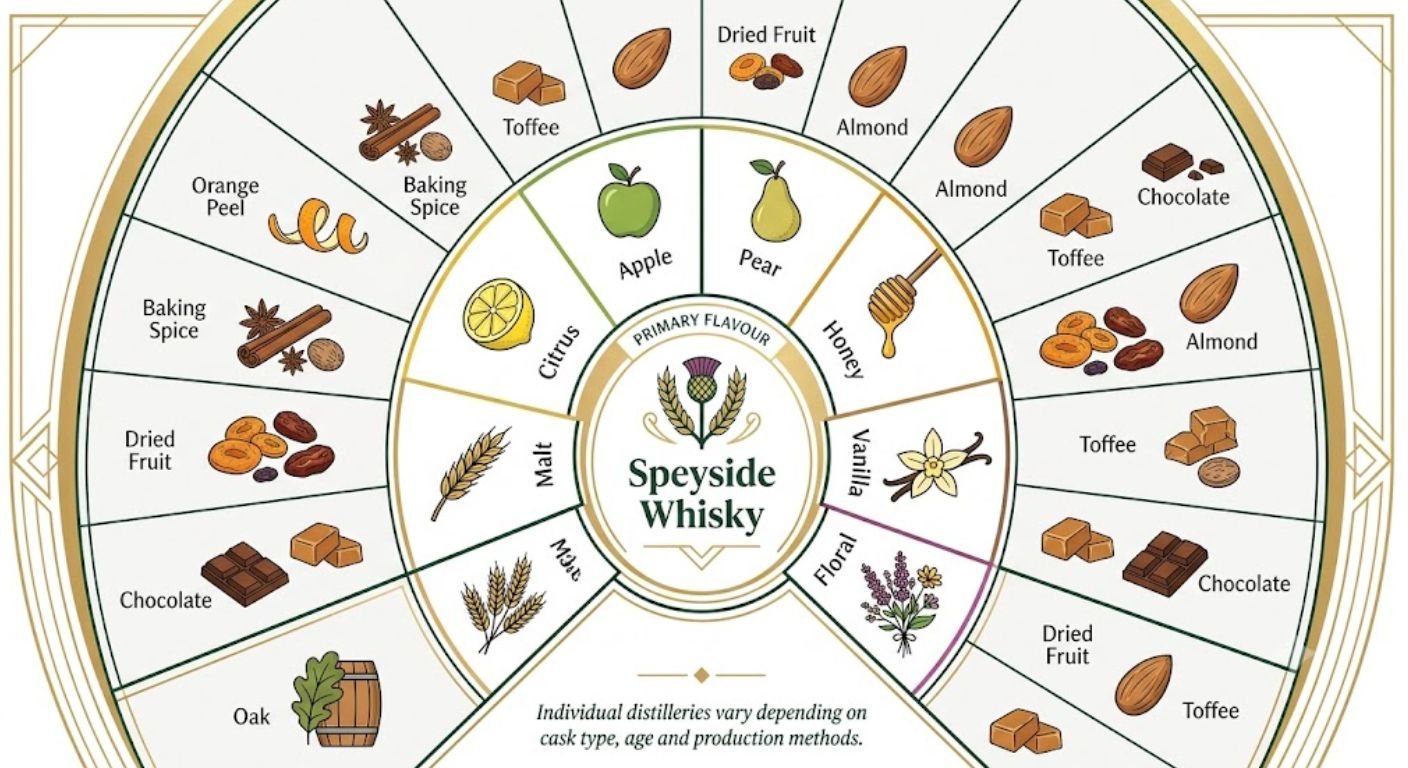
Speyside whisky is usually associated with fruit-led, elegant and approachable flavours. Common notes include apple, pear, honey, vanilla, malt, citrus, soft spice and dried fruit. That does not mean every Speyside whisky tastes the same. Cask choice, still shape, fermentation and bottling strength all change the final character.
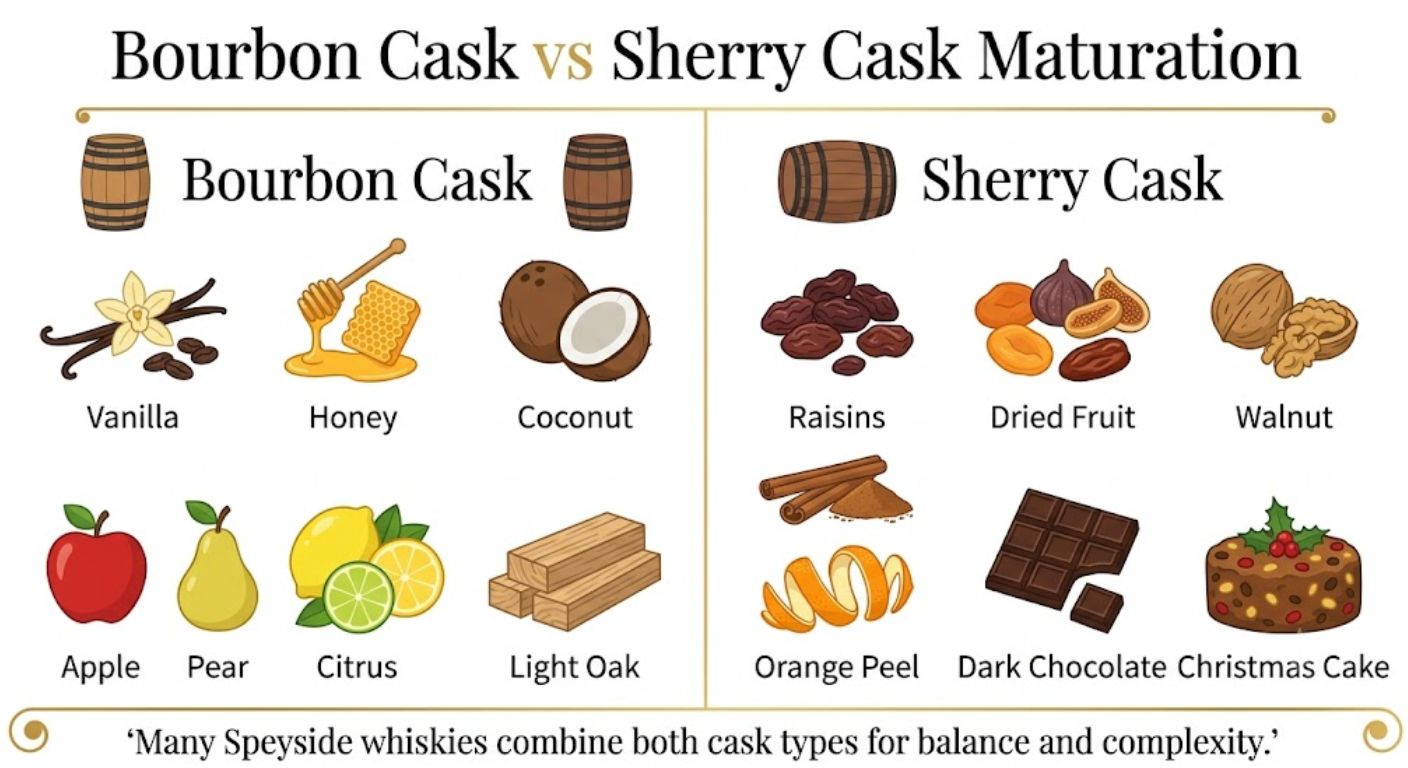
A bourbon-cask Speyside malt may lean towards vanilla, orchard fruit and light oak. A sherry-cask expression may bring raisins, dates, walnuts, orange peel, spice and darker sweetness. Heavier examples can feel rich and old-fashioned; lighter examples can be clean, fresh and almost floral.
One thing our customers often underestimate is how much cask type changes the same region: two Speyside bottles can sit side by side and feel completely different if one is bourbon-led and the other is fully sherry-matured.
Speyside Vs Highland Whisky
The main difference is scope. Highland whisky covers a much larger and more varied area, while Speyside is smaller, denser and more closely associated with fruit-forward single malt styles. Highland malts can range from light and grassy to waxy, coastal, spicy or robust. Speyside tends to be more focused around fruit, malt sweetness and cask-driven balance.
| Feature | Speyside | Highland |
|---|---|---|
| Typical style | Fruity, honeyed, elegant, often sherry-influenced | Broad range: fruity, waxy, spicy, coastal or rich |
| Geography | Centred around the River Spey | Largest Scotch whisky region |
| Buyer appeal | Good for beginners and sherry-cask drinkers | Good for exploring wider Scotch variation |
| Common casks | Bourbon barrels and sherry casks | Bourbon, sherry, wine and varied oak programmes |
For the broader Scotch category context, our Scotch Whisky page gives the wider structure without narrowing the focus to one region.
Why Are There So Many Distilleries In Speyside?
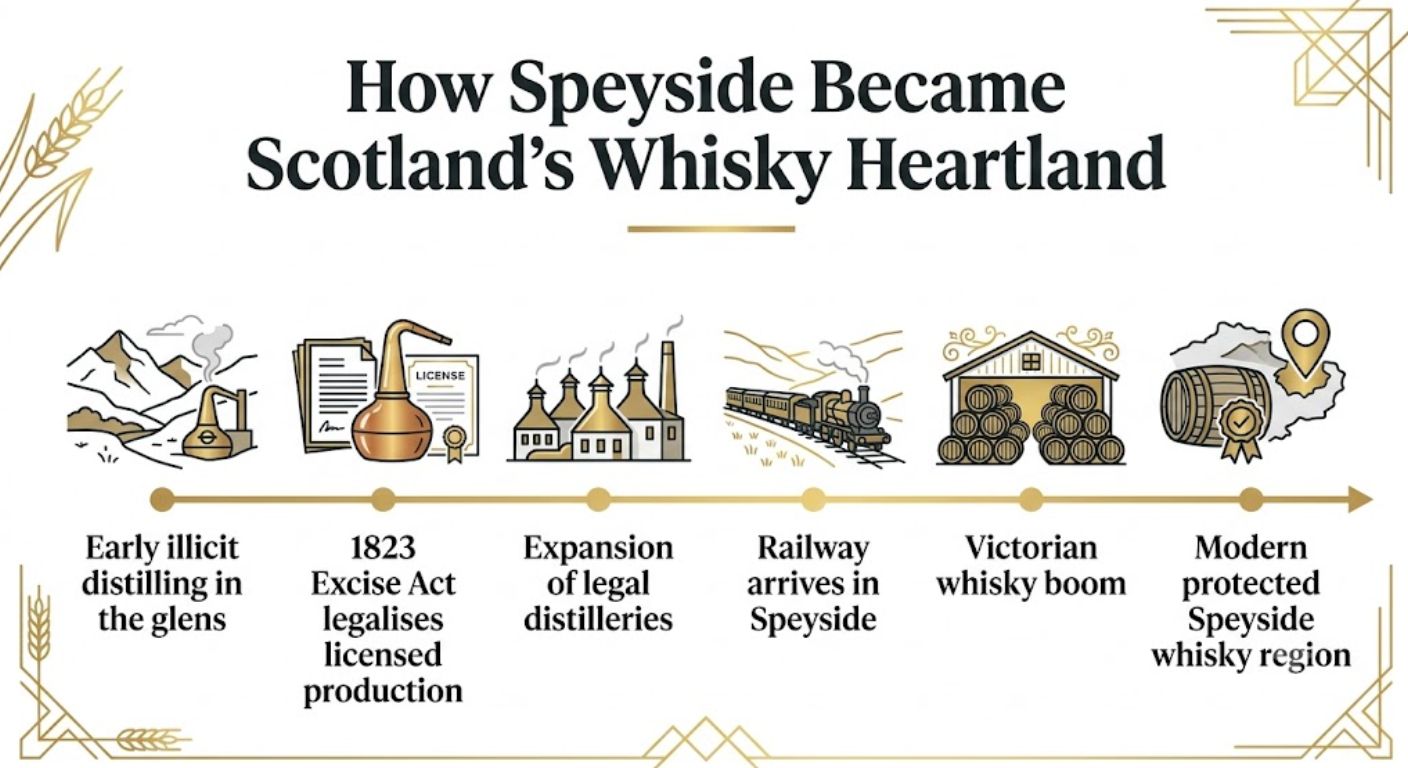
Speyside’s distillery concentration comes from geography, water, barley, transport and history. The glens offered water sources and cover for illicit distilling before legal production expanded. The 1823 Excise Act helped shift production from small illegal stills into licensed distilleries, and improved rail links later helped whisky move out of the region at scale.
Dufftown is often called the whisky capital of the world because of its historic density of distilleries. The phrase “Rome was built on seven hills, Dufftown stands on seven stills” reflects that concentration, even if the exact working distillery count has changed over time.
Key Speyside Distilleries To Know
Many famous Speyside names are large, active producers, but the region also includes closed, modern and less obvious distillery stories that matter to collectors. Banff, for example, is a closed distillery with strong old-bottle interest because no new spirit is being produced. Its relevance comes from scarcity, history and independent bottlings rather than current visitor-centre visibility.
Glen Keith is useful for understanding the more modern, production-led side of Speyside. It was built in the 20th century and has played an important role in blending supply, while occasional single malt releases give drinkers a clearer view of its own distillery character.
Roseisle represents the newer industrial face of Speyside whisky. Opened in the 21st century, it was designed for flexibility and scale, showing that Speyside is not only about Victorian distillery heritage. It continues to shape the future of Scotch production as much as the region’s older names shaped its past.
How Sherry Casks Shape Speyside Whisky
Sherry casks are central to many well-known Speyside styles. Oloroso-seasoned oak can add dried fruit, walnut, clove, cinnamon, orange peel, dark chocolate and Christmas cake notes. European oak often brings more spice and tannin, while American oak tends to give softer vanilla and sweetness.
This matters when buying because “sherry finish” and “full sherry maturation” are not the same. A finish may add a final layer of fruit and spice, while full maturation usually gives deeper colour, heavier texture and stronger cask influence. ABV also matters: a 40% Speyside malt will usually feel softer than a cask-strength release from the same distillery.
Who Is Speyside Whisky Best For?
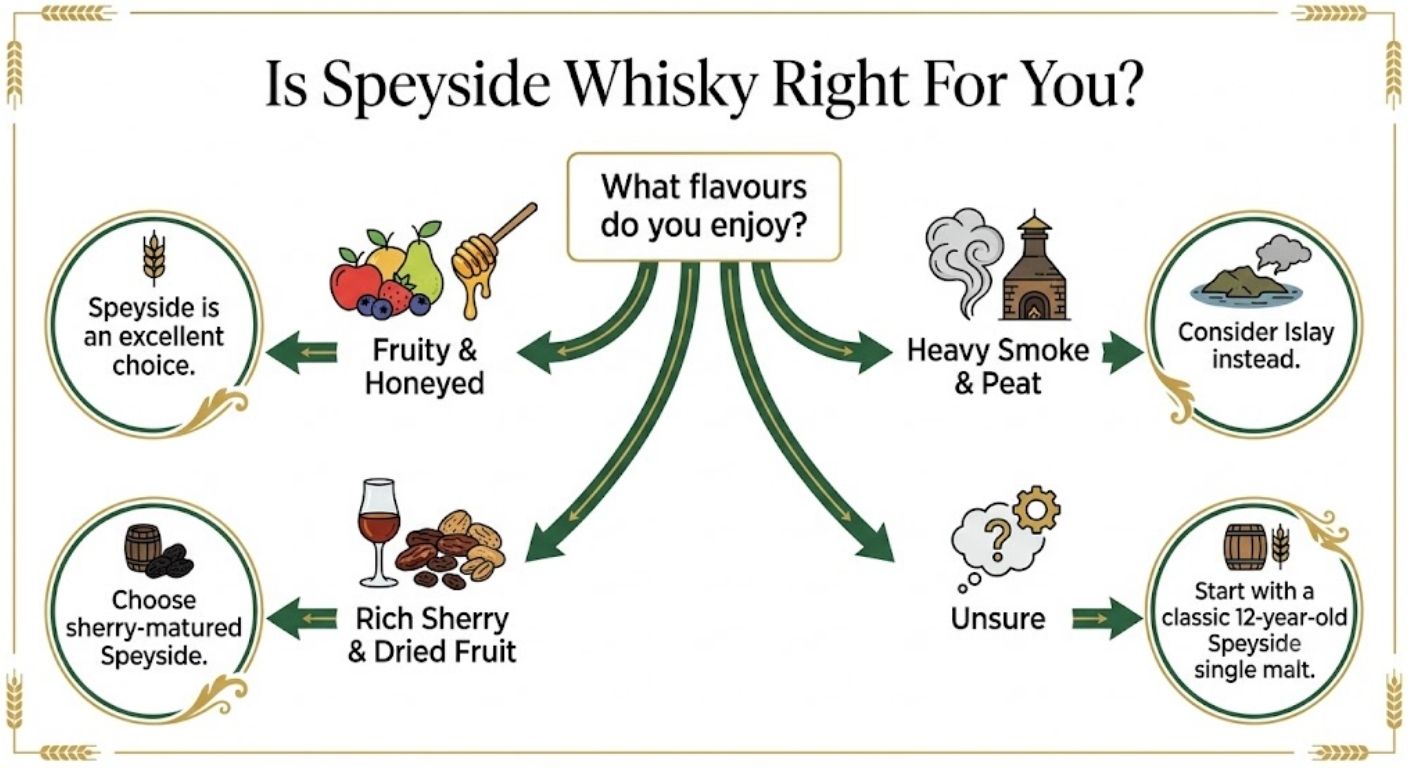
Speyside whisky makes sense if you want fruit, balance, approachability and clear cask influence. It suits beginners who are cautious about smoke, gift buyers who want a safer regional style, and experienced drinkers looking for sherried or independently bottled single malts with depth.
It may be less suitable if you specifically want heavy peat, coastal salinity or very austere spirit character. In those cases, another Scotch region may be a better fit. Speyside is broad, but its centre of gravity remains fruit, malt sweetness and wood balance.
FAQ
Is Speyside whisky always smooth?
No. Speyside whisky is often smooth and approachable, but that is not a rule. Younger bottles, high-ABV releases and active oak casks can bring heat, spice or grip. The region is better understood as fruit-led and balanced rather than automatically soft.
Is Speyside good for beginners?
Yes, Speyside is one of the most beginner-friendly Scotch regions because many bottles are fruity, sweet and relatively gentle. Classic 12-year-old styles often work well as first single malts, especially for drinkers who want to avoid heavy peat or medicinal smoke.
What is the difference between Glenfiddich 12 and Glenlivet 12?
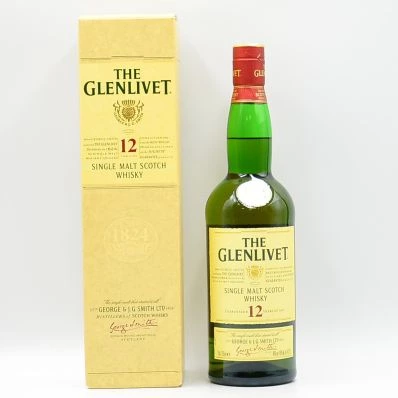
Glenfiddich 12 is often associated with fresh pear, apple and light malt, while Glenlivet 12 tends to feel softer, with vanilla, citrus and gentle floral notes. Both are approachable Speyside benchmarks, but neither represents the full depth of the region.
Why is Dufftown important in Speyside whisky?
Dufftown matters because of its unusually high concentration of distilling history. It became a practical centre for production, warehousing, transport and tourism. For many drinkers, it represents Speyside’s identity as a working whisky region rather than just a flavour category.
-
-
-
-
-
-
-
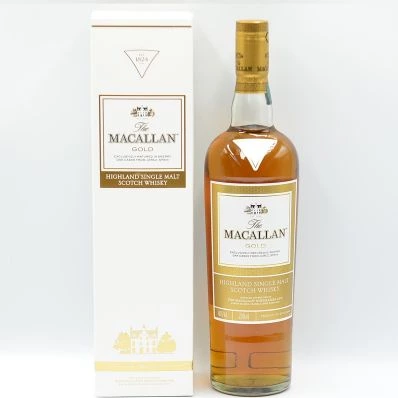 Macallan 1824 Series Gold Single Malt WhiskySpecial Price £269.98 Regular Price £284.99 Inc VATSaving £15.01
 -
Final Thoughts
The Speyside whisky region is best understood as Scotland’s centre of fruit-led, cask-sensitive single malt production. Its reputation for smoothness is useful, but incomplete. The better guide is balance: orchard fruit, malt sweetness, sherry depth, bourbon-cask vanilla and distillery variation.
For bottle discovery, start with the region itself, then narrow by distillery, cask type, age and ABV. The most useful next step is browsing Speyside single malt whisky with those details in mind.


Comments