
 Chat with us on WhatsApp


The Kentucky Bourbon Trail: Distilleries Worth Knowing
The Kentucky Bourbon Trail is useful only if you understand how to plan it. The distilleries are not all next to each other, the best tours often need advance booking, and the most famous names are not always the best fit for every visitor.
This guide explains what the Kentucky Bourbon Trail is, how the main regions work, which distilleries are worth knowing, and how to think about tours, tastings, transport, bottle buying and timing. It is written for whisky and whiskey drinkers who want context, not a loose travel list.
For UK drinkers, the Trail also helps explain why Kentucky whiskey tastes the way it does. Bourbon is shaped by corn-heavy mash bills, new charred oak barrels, warm maturation conditions and distillery scale. If you are exploring from home, Lochs of Whisky’s American whiskey selection is the natural starting point.
What is the Kentucky Bourbon Trail?
The Kentucky Bourbon Trail is a distillery tourism route organised around Kentucky’s bourbon industry. It connects major producers, historic sites, visitor centres and tasting experiences across the state. It is not one single road. It is better understood as a network of distilleries grouped by region.
Kentucky matters because bourbon is deeply tied to the state’s climate, grain supply, limestone-rich water, cooperage tradition and long maturation history. Bourbon can legally be made anywhere in the United States, but Kentucky remains the category’s centre of gravity.
The Trail is useful because it turns that production context into something practical. Instead of only reading about mash bills, barrel char and rickhouses, visitors can see how different producers interpret the same legal framework. A large-scale distillery such as Jim Beam gives one view of Kentucky bourbon. A more historic site such as Buffalo Trace gives another. Smaller or more visitor-led distilleries add different perspectives again.
The mistake is treating the Trail like a checklist. You do not need to visit every distillery to understand Kentucky bourbon. A better approach is to choose by region, production style and experience type.
Bourbon basics before planning the Trail
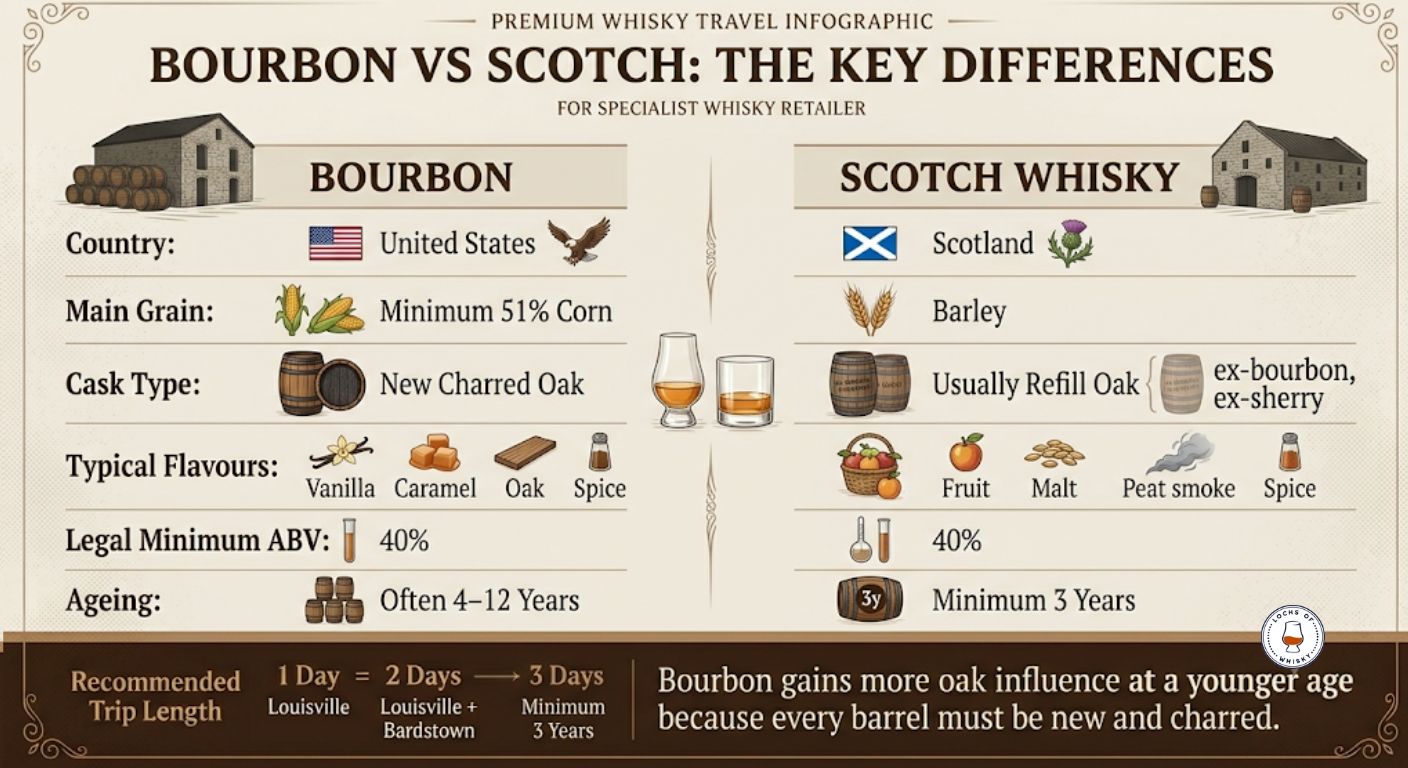
Bourbon is American whiskey made from a mash bill of at least 51% corn, distilled to no more than 160 proof, aged in new charred oak containers, entered into the barrel at no more than 125 proof, and bottled at a minimum of 40% ABV. It cannot contain added flavouring or colouring.
Those rules explain much of bourbon’s style. Corn gives sweetness and body. New charred oak gives vanilla, caramel, spice and toasted wood. Kentucky’s temperature swings push whiskey in and out of the barrel, accelerating oak interaction compared with cooler maturation climates.
For Scotch drinkers, this matters. Bourbon is usually more oak-forward at a younger age than Scotch whisky of the same age. A 6–9 year old bourbon can feel mature, intense and cask-driven, while Scotch often relies more heavily on long ageing, refill casks, peat, sherry influence or regional house style.
This is also why age statements work differently. Older is not always better in bourbon. Very old bourbon can become heavily tannic because new oak is powerful. Many reliable everyday bourbons sit between four and twelve years old, depending on mash bill, barrel location and proof.
If you already enjoy bourbon and want to explore the category more directly, Lochs of Whisky’s Bourbon Whiskey range is the clearest commercial category to use.
Where is the Kentucky Bourbon Trail?
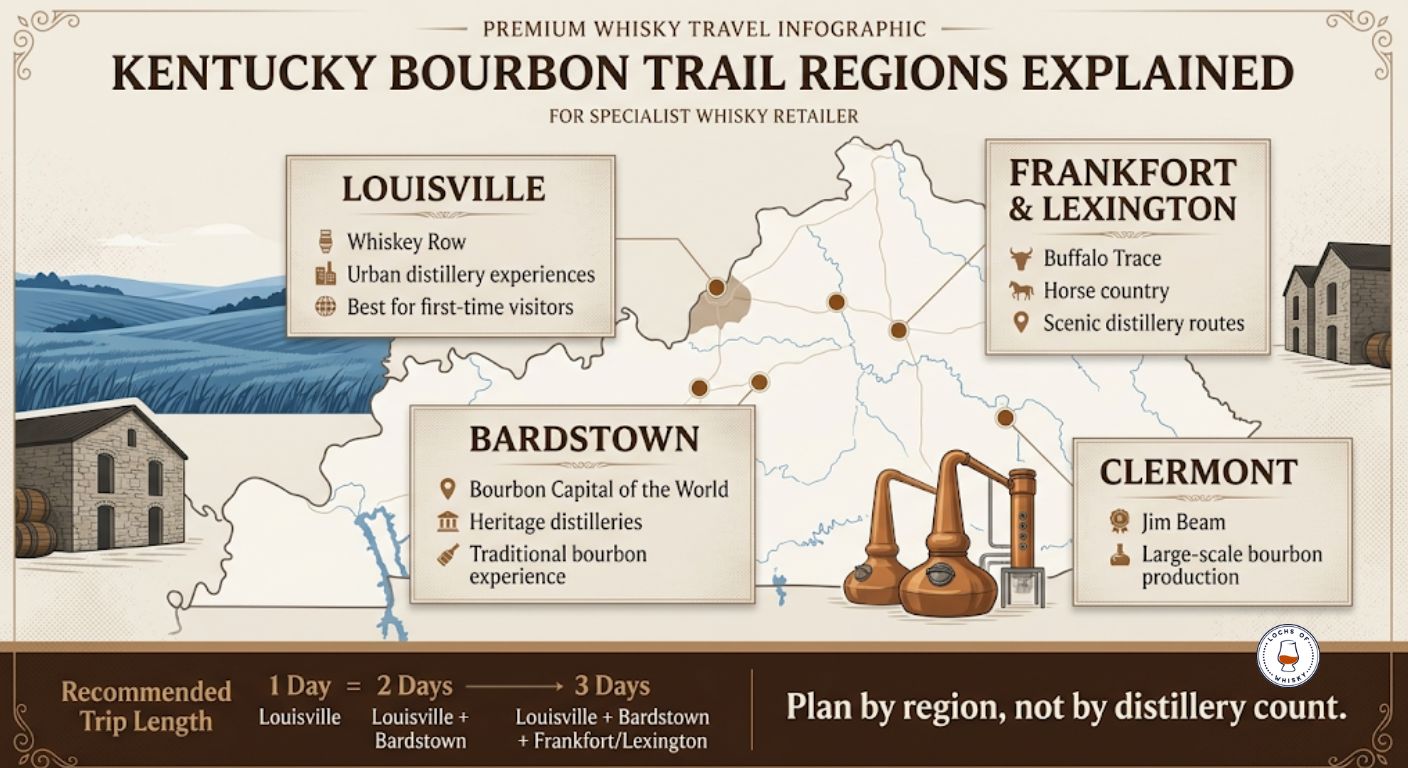
The Kentucky Bourbon Trail is spread across several regions, including Louisville, Bardstown, Frankfort, Lexington, Lawrenceburg, Clermont, Loretto and Northern Kentucky. Distilleries can be 20–60 minutes apart, and some are farther. Planning by region is the most important practical rule.
The main areas to understand are:
- Louisville — best for Whiskey Row, urban distillery experiences, bars and short stays.
- Bardstown — often called the Bourbon Capital of the World, strong for historic bourbon context.
- Frankfort and Lexington — useful for Buffalo Trace, Woodford Reserve, Castle & Key, Four Roses and horse-country scenery.
- Clermont and Central Kentucky — important for Jim Beam and larger-scale bourbon production.
- Northern Kentucky — useful if travelling through Cincinnati or following the B-Line area.
Trying to cover too much ground in one day usually weakens the experience. Two distillery visits in a day is comfortable. Three can work if the timings and locations are tight. Four is usually too many unless you are skipping full tours and only doing quick tastings or gift-shop stops.
Louisville and Whiskey Row
Louisville is the easiest entry point for many visitors because it offers bourbon experiences without long drives. Whiskey Row gives a concentrated view of bourbon culture through visitor centres, tasting rooms, bars and historic brand sites.
This is the best region if you want a short introduction rather than a countryside itinerary. It works well for first-time visitors, business travellers, couples, and anyone who does not want to self-drive between rural distilleries.
The limitation is that urban experiences are not always full production tours. Some are visitor centres, microdistilleries, brand homes or tasting-led experiences. That is not a weakness if you know what you are booking. It becomes a problem only when visitors expect every Louisville stop to feel like a working rickhouse and stillroom tour.
Choose Louisville if you want:
- short travel times;
- strong food and bar options;
- easy hotel access;
- tasting-led experiences;
- a lower-risk first Trail visit.
Avoid building a full trip around Louisville alone if your main interest is seeing large rickhouses, countryside distillery campuses and production scale.
Bardstown and bourbon heritage
Bardstown is one of the most important areas for understanding bourbon’s heritage. It is closely associated with Kentucky’s identity as bourbon country and gives a stronger sense of place than a purely urban itinerary.
Bardstown works well for visitors who want history, traditional bourbon architecture and access to several major names within a manageable driving area. It is also a sensible base for a multi-day trip because it sits close to several important distillery routes.
The value of Bardstown is not only bottle tasting. It helps explain how bourbon became a regional industry: grain farming, cooperage, family ownership, large warehouses, distribution networks and tourism all sit close together.
Choose Bardstown if you want:
- a stronger heritage feel;
- traditional bourbon scenery;
- a base outside Louisville;
- a slower itinerary;
- access to several classic Kentucky producers.
For collectors, Bardstown and the surrounding region can also be useful because distillery gift shops sometimes carry limited releases, distillery-only bottlings or branded single barrel selections. Availability changes constantly, so it should be treated as a possibility, not a guarantee.
Frankfort, Lexington and the Bluegrass region
Frankfort and Lexington are useful for visitors who want a balance of distillery history, production detail and landscape. This region includes some of the most recognisable names in American whiskey and offers a strong contrast between historic campuses, modern visitor centres and scenic routes.
Buffalo Trace is one of the key names here. It is not always part of the official Trail structure in the same way as every Kentucky Distillers’ Association site, but for most whiskey drinkers it remains one of the most important Kentucky distilleries to understand. Its wider portfolio, historic reputation and strong collector demand make it a major reference point.
Buffalo Trace tours are popular and can be difficult to book. The official reservation calendar opens up to eight weeks ahead, with tour dates released on Wednesdays at 10:00 a.m. Eastern Time. If you are planning around Buffalo Trace, book that first and build the rest of the day around it.
Lexington is also useful as a base because it gives access to several distilleries without forcing every night in a different town. It suits visitors who want bourbon and broader Kentucky context: horse country, historic towns, restaurants and scenic driving.
Choose this region if you want:
- major distillery names;
- a mix of production and heritage;
- good scenery;
- a practical multi-night base;
- access to sought-after gift-shop bottles.
Clermont, Beam and large-scale bourbon
Clermont is important because it shows the scale of Kentucky bourbon. Jim Beam is one of the defining global bourbon names, and visiting a producer of that size helps explain how bourbon moved from regional whiskey to international category.
Large-scale distilleries are useful because they reveal the operational side of bourbon: grain handling, fermentation capacity, barrel warehousing, blending consistency and brand architecture. For enthusiasts, that context matters. It helps explain why core-range bourbons are consistent, why small-batch expressions differ, and why limited releases attract attention.
Some visitors dismiss larger brands because they are widely available. That is a mistake. A major distillery can teach more about bourbon structure than a small brand with a more romantic story but less production depth.
Choose Jim Beam and the Clermont area if you want:
- a clear view of bourbon at scale;
- recognisable brand history;
- accessible tasting experiences;
- a practical stop between other regions;
- context for mainstream and premium bourbon lines.
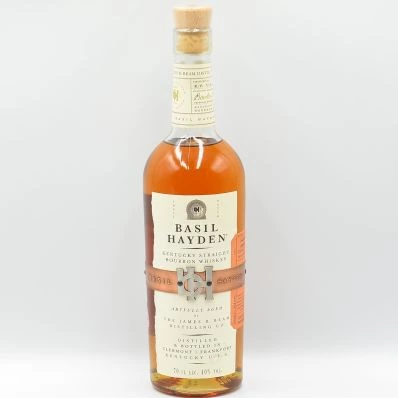
Basil Hayden and lighter bourbon styles
Basil Hayden is useful to understand because it sits at the lighter, more approachable end of the bourbon conversation. It is often associated with a softer style, lower bottling strength and an easy-drinking profile compared with higher-proof Kentucky bourbon.
This matters when planning tastings. Not every visitor wants cask-strength bourbon, barrel-proof heat or heavy oak. A lighter bourbon can be a better introduction for drinkers moving from softer Scotch styles, Irish whiskey or lower-ABV blended whiskies.
The trade-off is intensity. If you enjoy high-proof bourbon, heavy rye spice or deep oak concentration, Basil Hayden may feel restrained. If you want a gentle entry point, it can make sense.
Choose lighter bourbon styles if:
- you prefer 40–43% ABV spirits;
- you dislike aggressive oak;
- you are moving from softer Scotch or Irish whiskey;
- you want bourbon for sipping rather than high-proof tasting.
Avoid starting with very high-proof bourbon if you are new to American whiskey. Proof can dominate the experience before you understand the underlying style.
What happens on a bourbon distillery tour?
Most bourbon distillery tours include some combination of production explanation, fermentation areas, stills, rickhouses, barrel maturation and a guided tasting. Some tours are highly practical. Others are more brand-led or experience-led.
A standard visit often lasts around one hour. Elevated tastings, blending sessions, cocktail classes or warehouse experiences may take longer. Some sites also offer tastings without a full production tour.
The most common issue is repetition. After two or three tours, you will hear the legal definition of bourbon, the role of corn, and the importance of new charred oak several times. That is why the best Trail plans mix formats.
A strong two-day plan might include:
- one major production tour;
- one historic distillery;
- one tasting-only session;
- one premium or warehouse experience;
- one gift-shop stop.
Customers often ask us why two bourbons from the same state can taste so different; the answer usually sits in the mash bill, barrel entry proof, warehouse location and bottling strength rather than the word “Kentucky” on the label.
How many distilleries should you visit in a day?
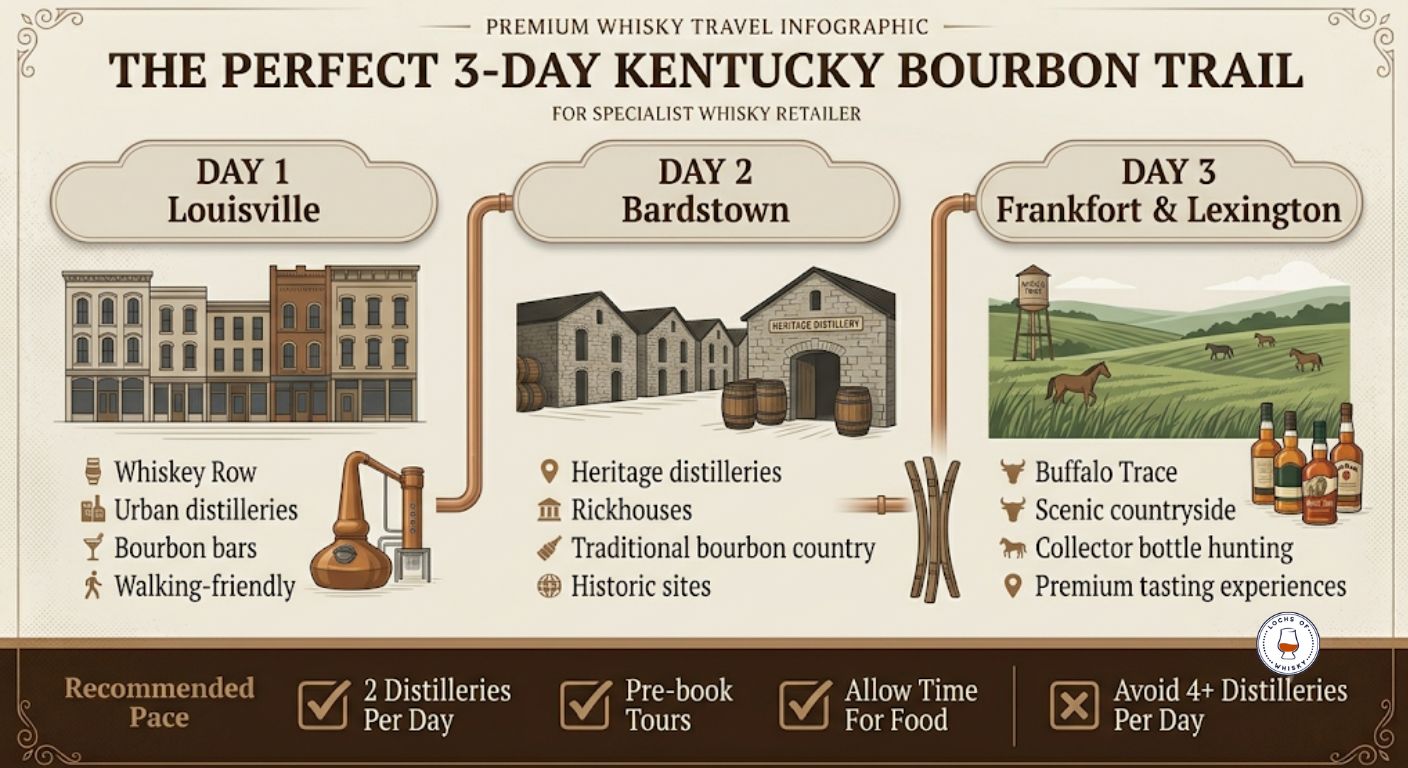
Most visitors should plan for two distilleries per day. Three is possible if they are close together and the bookings line up. Four or more usually leads to rushed travel, palate fatigue and weaker recall of what you tasted.
Two visits gives enough time to:
- travel safely between locations;
- eat properly;
- browse gift shops;
- ask questions;
- avoid over-drinking;
- take notes if comparing bottles.
If you are an enthusiast with limited time, three visits can work. Make one a full tour, one a tasting, and one a short stop. Do not book three full production tours unless you specifically enjoy operational detail.
For collectors, an early morning gift-shop visit can be worthwhile, especially at high-demand distilleries. But bottle hunting should not dominate the whole itinerary. Allocated bottles are never guaranteed, and chasing them can turn a good trip into a queue-management exercise.
Three-day Kentucky Bourbon Trail itinerary from Louisville
A practical three-day Kentucky Bourbon Trail itinerary from Louisville should group distilleries by region. Do not drive back and forth across the state for isolated bookings.
Day 1: Louisville and Whiskey Row
Start with Louisville’s urban bourbon experiences. Choose one full brand experience and one tasting-led stop. Leave time for Whiskey Row, dinner and a proper bourbon bar.
This day is best for orientation. You can learn the basic production rules, taste a few styles and avoid heavy driving after landing or arriving.
Suggested focus:
- urban bourbon history;
- tasting flights;
- cocktail or blending sessions;
- easy walking routes;
- lower transport risk.
Day 2: Bardstown and Central Kentucky
Use the second day for Bardstown or the central bourbon region. This is where the Trail starts to feel more like Kentucky bourbon country rather than city tourism.
Book one major distillery tour and one smaller or heritage-led visit. If you include Jim Beam, leave enough time for the campus and tasting experience rather than treating it as a quick stop.
Suggested focus:
- rickhouses;
- larger production scale;
- historic bourbon setting;
- gift-shop browsing;
- lunch between visits.
Day 3: Frankfort, Lexington and Buffalo Trace
Use the third day for Frankfort and Lexington, especially if Buffalo Trace is a priority. Book Buffalo Trace first because availability is competitive, then build around the confirmed time.
This day suits drinkers interested in major Kentucky names, collector demand and classic bourbon architecture. Keep the plan realistic. If your Buffalo Trace booking is late morning or early afternoon, avoid adding a distant second tour that forces a rushed drive.
Suggested focus:
- Buffalo Trace;
- Lexington or Frankfort base;
- scenic driving;
- one additional tasting;
- bottle research rather than over-sampling.
Self-drive or guided tour?
Self-drive gives more flexibility, but it requires discipline. Guided tours reduce drink-driving risk and remove route planning, but they cost more and lock you into a schedule.
Choose self-drive if:
- someone in the group will not drink;
- you want to move at your own pace;
- you are visiting only one or two distilleries per day;
- you want control over meals and stops;
- you are comfortable with rural driving.
Choose a guided tour if:
- everyone wants to taste;
- you are visiting three distilleries in one day;
- you do not know the area;
- you want collection and drop-off;
- you prefer a fixed route.
Rideshare services can work in Louisville and Lexington, but they are less reliable in rural areas. Do not assume Uber or Lyft will be available outside major towns when a tour ends.
For UK visitors, remember that American drink-driving enforcement, road layouts and rural distances are not things to improvise around. If there is no designated driver, book transport.
Booking tours in advance
Advance booking is now one of the most important parts of the Kentucky Bourbon Trail. Popular distilleries and premium experiences can sell out weeks ahead, especially around weekends, holidays and peak travel periods.
The safest booking order is:
- Choose your base region.
- Identify the one distillery you most want to visit.
- Book that tour first.
- Add nearby stops only after the anchor booking is confirmed.
- Leave gaps for driving, food and delays.
Buffalo Trace is the clearest example. Its reservation calendar opens up to eight weeks ahead, with dates released on Wednesdays at 10:00 a.m. Eastern Time. For high-demand dates, treat that release time seriously.
Do not rely on walk-ins for key tours. Some distilleries may offer limited same-day availability, but that is not a plan. It is a fallback.
Buying allocated bottles and distillery exclusives
Many visitors hope to buy allocated bourbon in Kentucky. This can happen, but it should be approached carefully. Distillery gift shops may offer limited releases, single barrels, distillery exclusives or rotating daily bottles, but supply changes quickly.
Buffalo Trace is especially associated with bottle hunting because of demand for its wider portfolio. Some visitors arrive early to improve their chances. Others use daily prediction websites or social groups to guess what might appear. None of this guarantees a bottle.
A better approach is to define what you want before you travel:
- a distillery-exclusive bottle;
- a bottle-your-own experience;
- a limited single barrel;
- a core bottle at fair pricing;
- a souvenir bottle with personal value.
Do not assume Kentucky gift shops are always cheaper than UK retail once travel, exchange rates and luggage restrictions are considered. Some bottles are better bought at source. Others are easier to buy from a specialist retailer later.
Bottle hunters should also check airline and customs rules before buying heavily. High-strength whiskey, checked baggage limits and import allowances matter.
Can children go on the Kentucky Bourbon Trail?
Some distilleries allow children on certain tours, while others restrict access by age or experience type. General visitor centres may be more family-friendly than production tours, warehouse tours or premium tastings. Always check the specific distillery policy before booking.
Children obviously cannot take part in tastings, and some tours may involve stairs, industrial areas, strong aromas or long periods of standing. A distillery visit can work for families, but the itinerary should be lighter.
For families, choose:
- one distillery visit per day;
- visitor centres with space to move;
- short tours;
- outdoor grounds where available;
- meal stops close by.
Avoid building a full tasting-focused itinerary around children. Even if entry is allowed, the experience may not be enjoyable for them.
Is the Kentucky Bourbon Trail Passport still available?
The official Kentucky Bourbon Trail Passport & Field Guide was retired on 1 July 2025. The programme has shifted away from the old physical passport model and towards digital planning and regional exploration.
This matters because older articles may still tell visitors to collect passport stamps or complete the Field Guide. That advice is now outdated. Use official planning tools and current distillery booking pages instead.
The practical takeaway is simple: plan by region, not by passport completion. The modern Trail is better treated as a flexible bourbon map than a stamp-collection exercise.
Kentucky bourbon styles to understand before tasting
The Trail becomes more useful when you know what you are tasting for. Bourbon differences are not random. They usually come from mash bill, proof, barrel management, age and blending.
Traditional bourbon mash bills
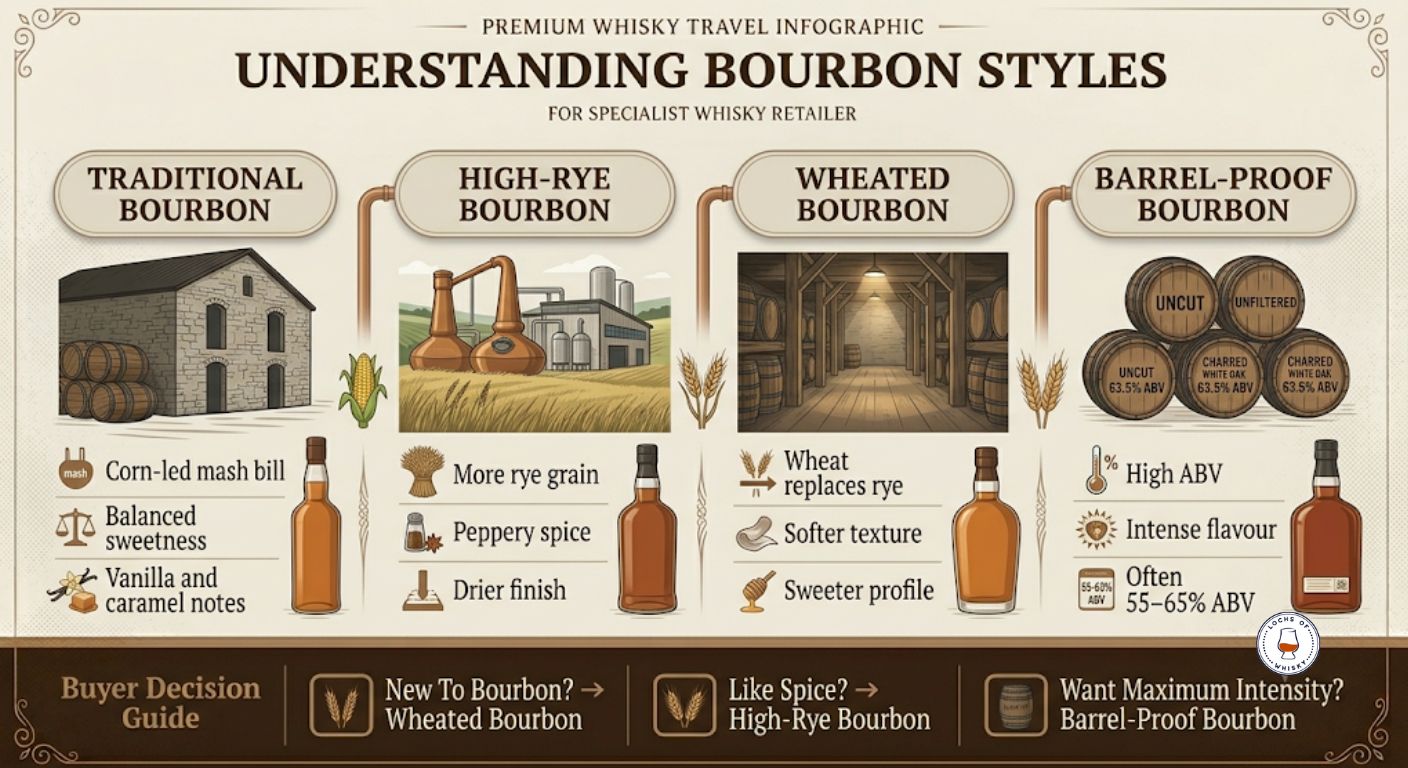
Most bourbon uses corn as the majority grain, supported by rye or wheat and a small amount of malted barley. Rye usually adds spice, structure and dryness. Wheat usually softens the profile and can make the whiskey feel rounder.
High-rye bourbon
High-rye bourbon is useful for drinkers who like spice, grip and a drier finish. It can appeal to Scotch drinkers who prefer structure over sweetness.
Wheated bourbon
Wheated bourbon replaces rye with wheat as the main secondary grain. It often feels softer, sweeter and less peppery. This can suit drinkers who want approachability rather than sharp spice.
Barrel-proof and cask-strength bourbon
Higher-proof bourbon can deliver intense flavour, but it is not always better. It needs time, dilution and a careful palate. Many barrel-proof releases sit well above 55% ABV, which can overwhelm newer drinkers.
Single barrel bourbon
Single barrel bourbon comes from one barrel rather than a larger batch. It can show more variation. That is part of the appeal, but it also means one bottle may differ from another.
Decision logic: which Trail stops fit your taste?
If you are new to bourbon, start with one large producer and one tasting-led visitor experience. This gives you production context without overloading the day.
If you prefer softer whisky, look for wheated bourbon, lower ABV releases and tasting flights that include approachable styles. Avoid starting with barrel-proof bottles above 55% ABV.
If you like spicy American whiskey, choose high-rye bourbon or add a rye whiskey tasting if available. Do not assume all bourbon will be sweet and soft.
If you collect bottles, prioritise distilleries with strong gift-shop programmes, single barrel options or distillery-exclusive releases. Build the day around early arrival and realistic expectations.
If you are travelling from the UK, do not overbuy bottles before checking baggage rules. One or two meaningful bottles are usually better than filling a suitcase with standard releases.
If your budget is around £30–60, focus on core bourbon styles and reliable distillery names. Avoid paying inflated prices for allocated bottles unless you understand why they are priced higher.
If your budget is £60–150, look for single barrels, higher-proof releases, limited batches or bottles with clear distillery provenance.
If you are mainly exploring from home, focus on Kentucky-made bottles with clear mash bill, ABV and distillery context. Lochs of Whisky’s Kentucky Whiskey category is the most relevant place to compare that style directly.
Common mistakes when planning the Kentucky Bourbon Trail
The biggest mistake is trying to do too much. The Trail is spread out, and distillery visits take longer than they look on a map. A rushed itinerary makes every tasting less useful.
The second mistake is booking famous names only. Big names matter, but variety matters more. A good itinerary includes contrast: large-scale production, heritage, tasting-led experience and one smaller or more specialised stop.
The third mistake is ignoring food and water. Bourbon tastings are small, but multiple neat spirit samples add up. Eat properly and leave time between visits.
The fourth mistake is assuming gift shops will have rare bottles. Some do. Many will not. Treat allocated bottles as a bonus, not the foundation of the trip.
The fifth mistake is treating bourbon like Scotch with different branding. Bourbon has its own rules, oak profile, proof culture and maturation logic. Understanding those differences makes the Trail far more rewarding.
Summary: how to plan the Kentucky Bourbon Trail properly
- Region first: plan around Louisville, Bardstown, Frankfort/Lexington or Central Kentucky rather than chasing isolated bookings.
- Two distilleries per day is enough: three can work; four is usually too many.
- Book early: popular tours can sell out well ahead of travel dates.
- Anchor the trip around one priority distillery: then add nearby stops.
- Understand ABV: 40–46% is easier for beginners; 55%+ needs more care.
- Know the mash bill: rye adds spice, wheat softens, corn gives sweetness and body.
- Do not overvalue age: new charred oak means bourbon can become mature at a younger age than many Scotch whiskies.
- Treat allocated bottles as uncertain: buy for interest and provenance, not because a queue suggests importance.
- Use transport sensibly: self-drive only works with a designated driver.
- Avoid passport-based planning: the physical Passport & Field Guide has been retired.
The Kentucky Bourbon Trail is best approached as a structured way to understand American whiskey, not a race through famous distilleries. Choose fewer stops, compare styles carefully, and pay attention to mash bill, proof, barrel type and distillery context. That is how the Trail becomes useful beyond the trip itself.


Comments