
 Chat with us on WhatsApp

Whisky Drinking Statistics UK: Who Drinks Whisky and How Much?
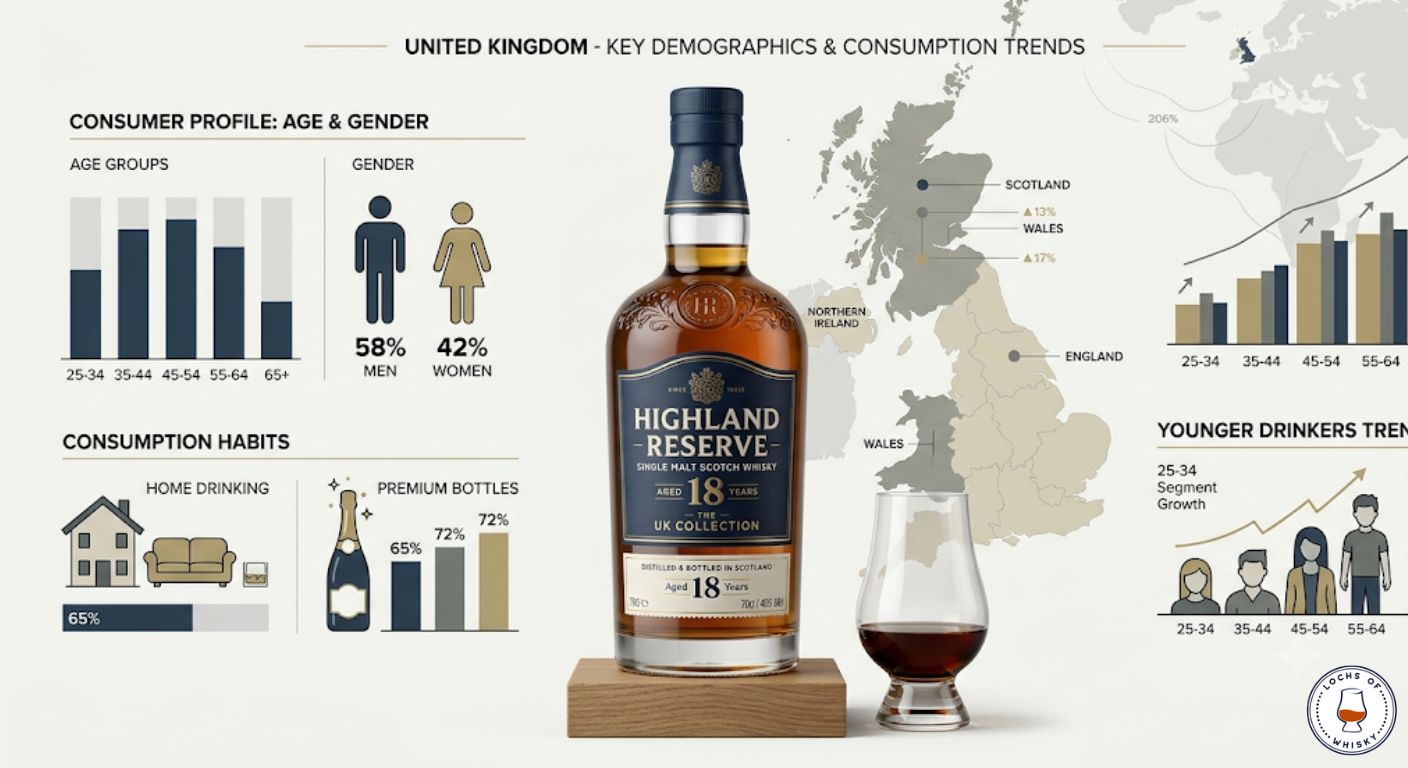
Whisky drinking statistics in the UK show a market shaped by moderation, premiumisation, home drinking, cocktails and changing demographics. The question is no longer simply how much whisky people drink. The better question is who drinks it, where they drink it, what they choose, and why some consumers are drinking less while others are trading up.
This guide explains the main UK whisky drinking patterns using consumer behaviour, spirits duty, off-trade sales, age, gender, moderation trends and premium bottle buying. It also helps separate drinking statistics from wider Scotch industry data, export figures and investment commentary, which are related but not the same topic.
For readers moving from statistics into bottle choice, the broadest starting point is the full Scotch Whisky selection, where style, age, region and price can be compared directly.
UK Whisky Drinking Statistics at a Glance
- Around 6.2 million adults in Britain are commonly cited as Scotch whisky drinkers.
- That equals roughly 12% of the adult population.
- Women are now commonly reported to make up more than a third of whisky drinkers.
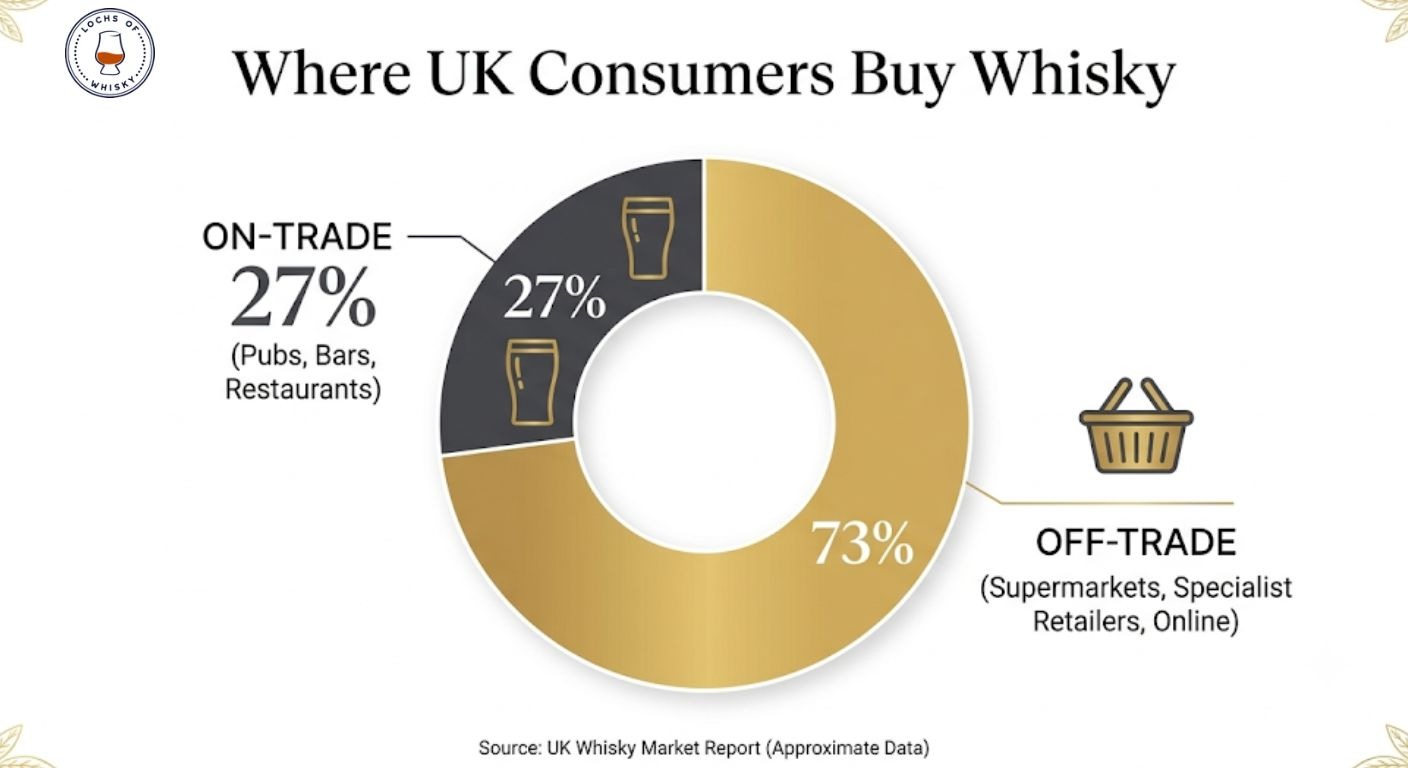
- Most UK alcohol purchases now happen through the off-trade, including supermarkets, specialist retailers and online shops.
- Younger drinkers often discover whisky through cocktails, highballs and mixed drinks before moving into neat whisky.
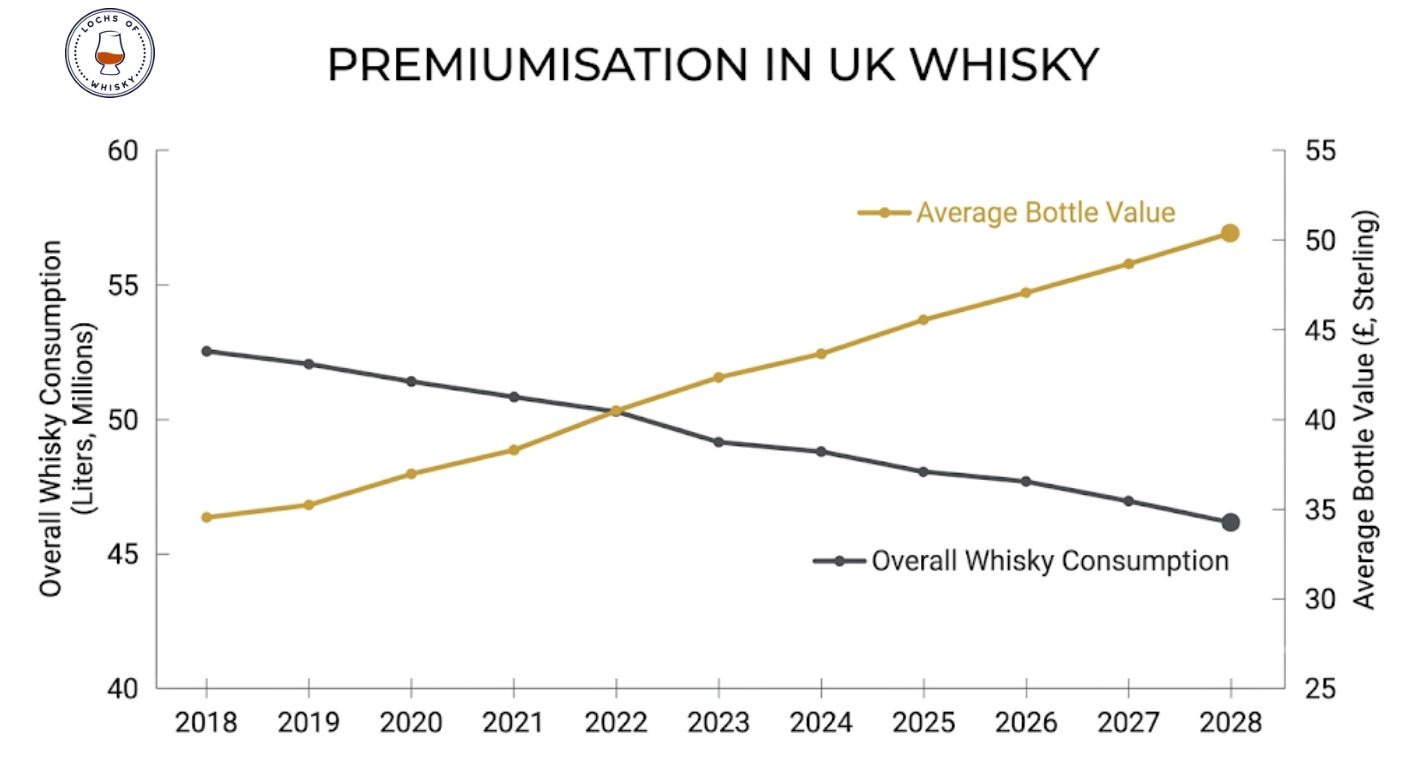
- Premiumisation means whisky value can remain strong even when overall drinking volume is under pressure.
How Many People Drink Whisky In The UK?
Around 6.2 million adults in Britain are commonly cited as Scotch whisky drinkers, equal to roughly 12% of the adult population. That does not mean all of them drink whisky heavily or regularly. It includes occasional drinkers, gift buyers, cocktail drinkers and people who drink Scotch as one part of a wider spirits repertoire.
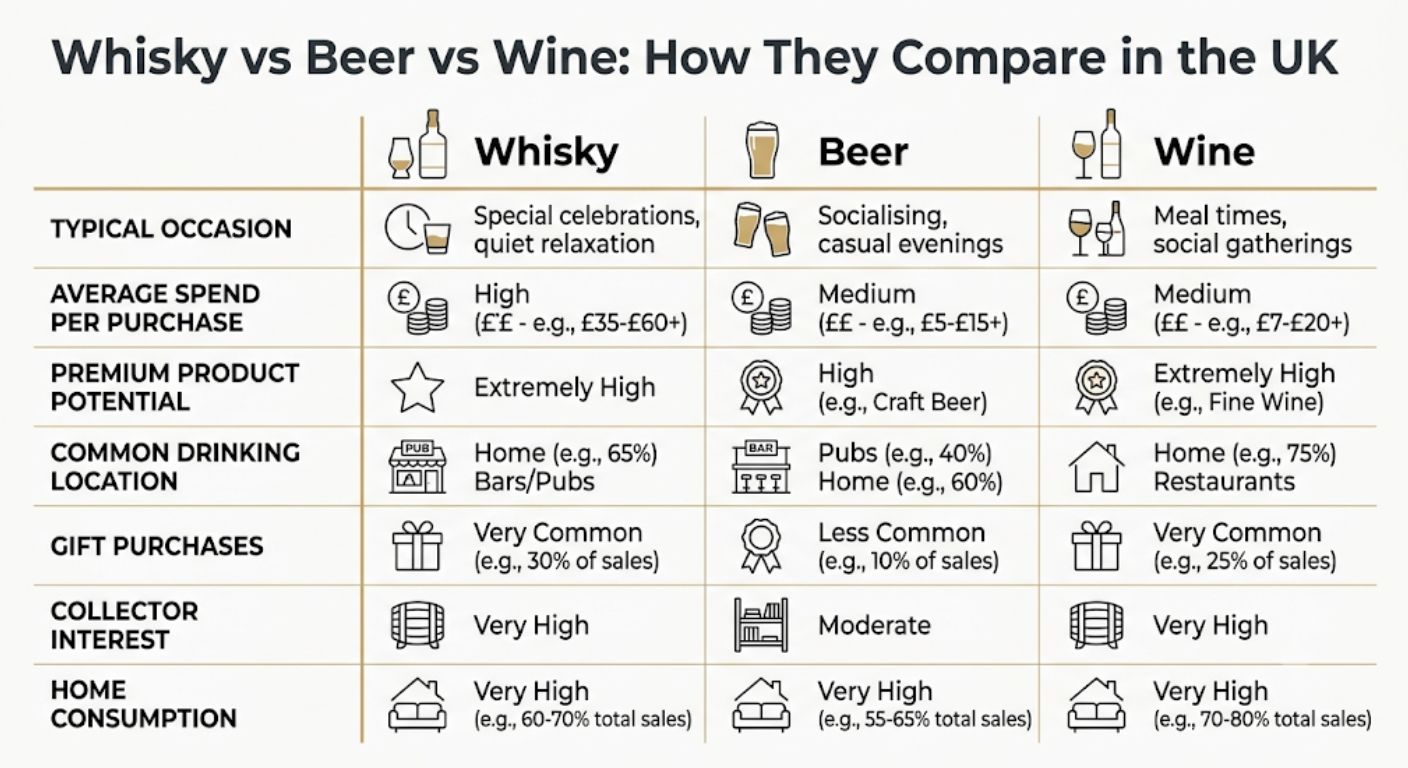
The UK whisky audience is therefore smaller than the total alcohol-drinking population but more commercially significant than volume alone suggests. Whisky has a high value-per-serve compared with many beer, cider and lower-priced wine purchases, especially when buyers move into single malt, independent bottlings, age-statement Scotch or limited releases.
That distinction matters. A person drinking one £70 bottle slowly over several months may count as a lighter drinker by volume, but they are still important to the whisky market. UK whisky statistics need to be read through both lenses: consumption volume and bottle value.
Downloadable UK Whisky Drinking Statistics Table
The table below summarises the key UK whisky drinking statistics covered in this guide. You can also download the data as a CSV file for reference, citation or editorial use.
| Statistic | Figure | What It Shows |
|---|---|---|
| British adults who drink Scotch whisky | Around 6.2 million | Whisky is a minority category by drinker count, but commercially important. |
| Share of adults drinking Scotch whisky | Around 12% | The whisky audience is smaller than the total alcohol-drinking population. |
| Female whisky drinkers | Around 36% | Women now represent a much larger share of whisky drinkers than historic assumptions suggest. |
| Alcohol bought through the off-trade | Around 73% | Home drinking, supermarkets, specialist retailers and online buying are central to whisky sales. |
| Units in a 70cl bottle at 40% ABV | 28 UK units | Bottle count alone does not show alcohol consumption clearly. |
| Units in a 70cl bottle at 58% ABV | Just over 40 UK units | Cask-strength bottles contain much more alcohol than standard 40% bottles. |
Who Drinks Whisky In The UK?
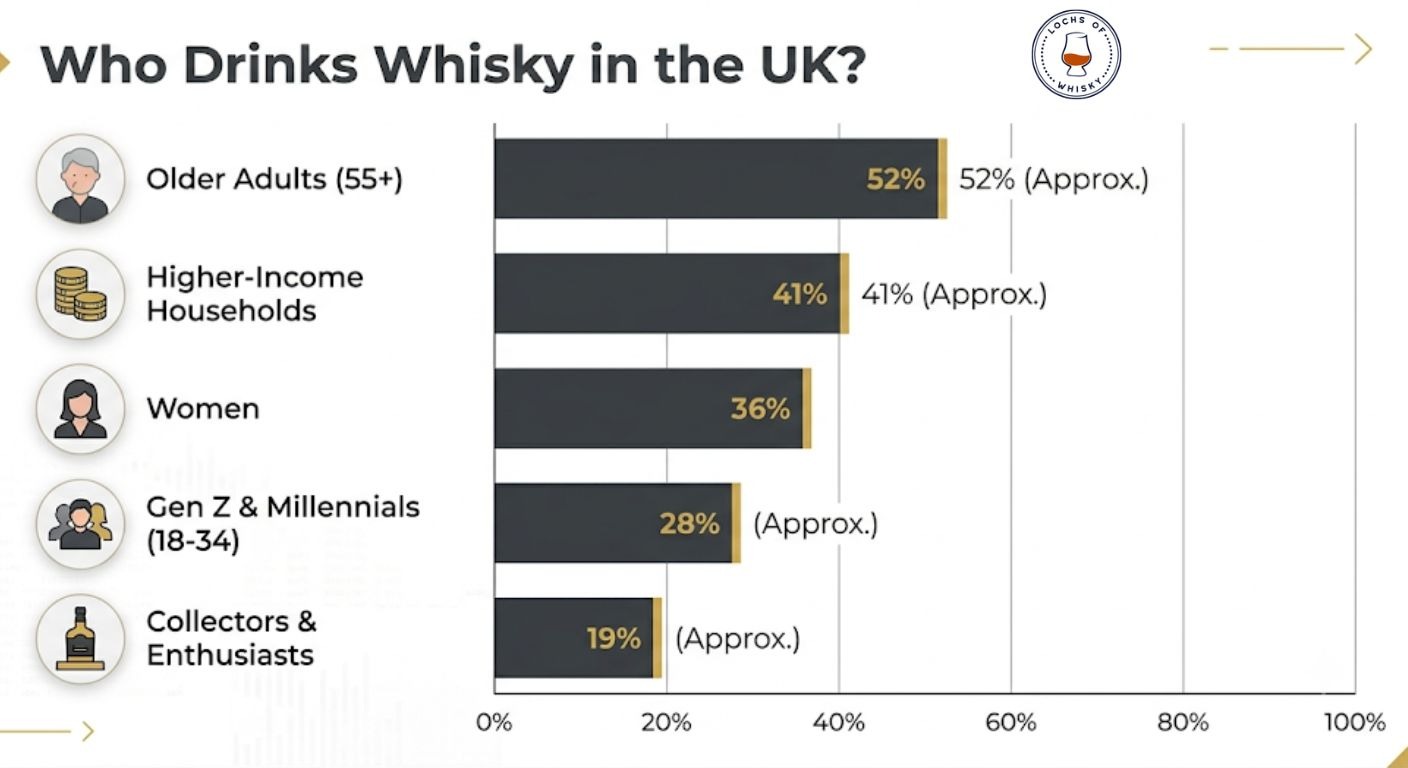
UK whisky drinkers are not one uniform group. The modern market includes traditional Scotch drinkers, cocktail-led younger consumers, premium spirits buyers, collectors, gift buyers and people who buy one or two bottles a year for specific occasions.
The strongest demographic themes are:
- Older drinkers remain important because they are more likely to drink whisky neat, with water or over ice.
- Higher-income drinkers are more likely to buy regularly, especially in premium spirits categories.
- Women now represent a much larger share of whisky drinkers than historic assumptions suggest.
- Gen Z and younger Millennials often discover whisky through cocktails rather than neat serves.
- Collectors and enthusiasts buy less frequently but at higher average bottle values.
This is why whisky drinking statistics cannot be reduced to “more people” or “fewer people”. The market is fragmenting. Some consumers are drinking less alcohol overall, while others are buying better bottles, stronger ABV releases or more distinctive cask-led styles.
How Many Women Drink Whisky In The UK?
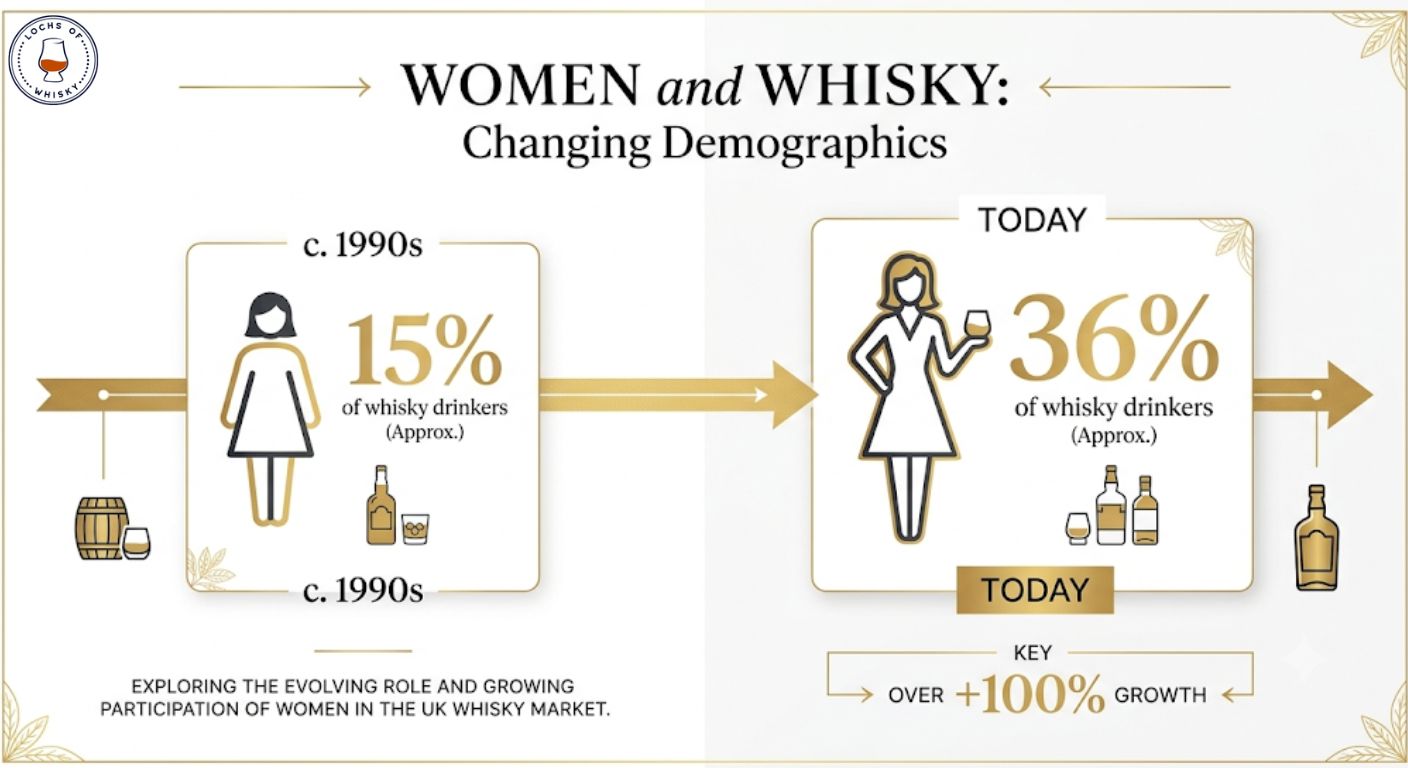
Women are now commonly reported to make up more than a third of whisky drinkers, compared with much lower levels in previous decades. Some industry commentary places the shift from around 15% in the 1990s to approximately 36% today.
This is one of the clearest changes in UK whisky drinking behaviour. It challenges the older assumption that whisky is mainly a male category. In practice, female whisky drinkers are present across single malt, blended Scotch, American whiskey, Irish whiskey, world whisky and cocktail-led serves.
The change is partly cultural and partly retail-led. Better access to tasting information, clearer bottle descriptions, less reliance on old masculine advertising cues, and broader flavour-led discovery have all helped widen the audience.
Are Younger People Drinking Less Whisky?
Younger people are generally drinking less alcohol than previous generations, but that does not mean whisky has no role with younger consumers. The main change is how they enter the category. Younger drinkers are more likely to encounter whisky through cocktails, mixed drinks, highballs and social serves before moving into neat whisky.
Health concerns are a major reason younger adults drink less alcohol overall. Cost, social habits, wellness culture and the availability of low- and no-alcohol alternatives also influence behaviour. This creates a more selective whisky audience: fewer automatic drinkers, but more deliberate buyers when interest does develop.
Gen Z whisky behaviour is particularly tied to cocktail culture. Espresso Martinis, Spritz serves, aperitivo-style occasions and lighter mixed drinks have changed how spirits are presented. For more detail on that specific trend, see our Whisky Cocktail Statistics guide.
Where Do UK Consumers Buy And Drink Whisky?
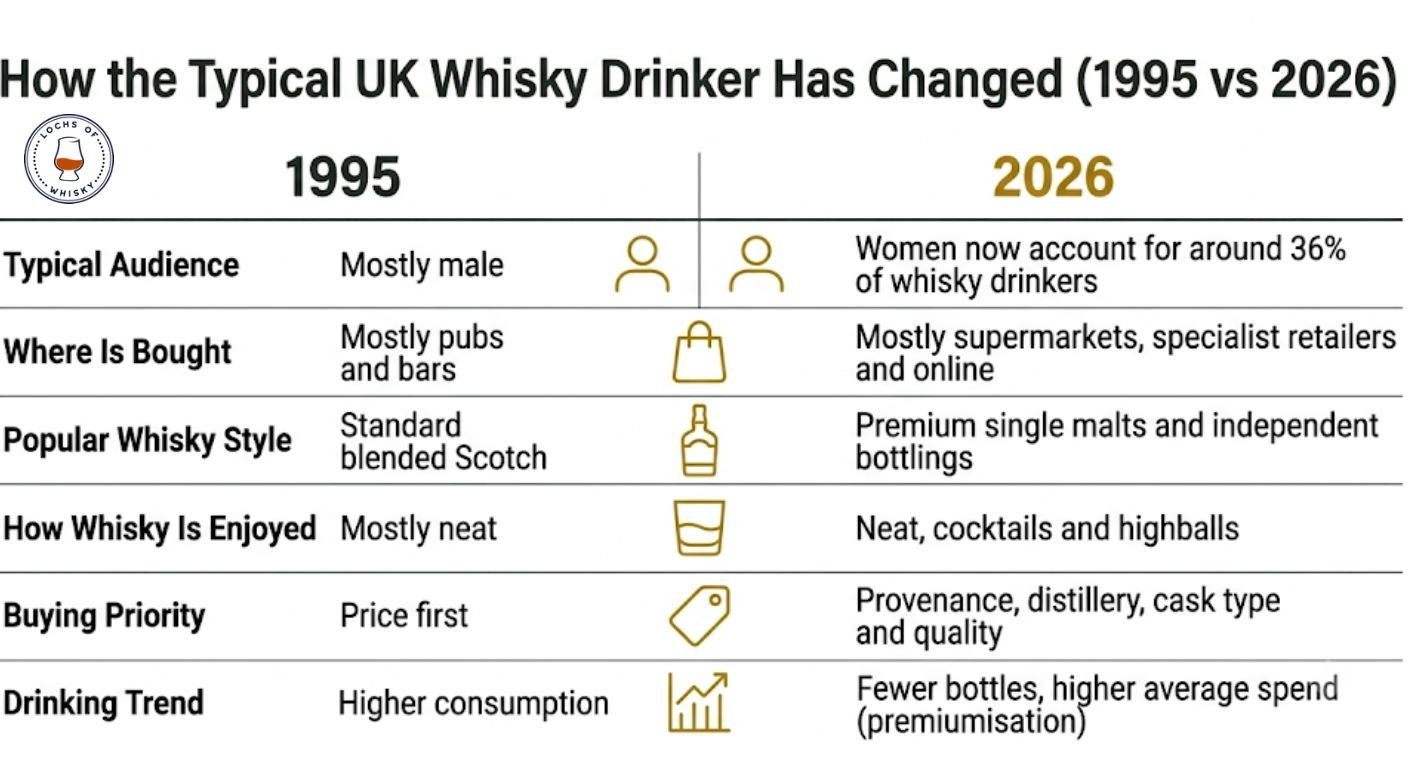
Most UK alcohol is now bought through the off-trade. That means supermarkets, convenience stores, specialist retailers and online shops rather than pubs, bars and restaurants. Research commonly cites around 73% of alcohol being bought in the off-trade, with the off-trade also holding a major share of the spirits market.
This matters for whisky because the buying decision often happens at home, online or in-store, not at the bar. Labels, ABV, age statement, cask type, region and bottle price all carry more weight when the customer is choosing a full bottle rather than ordering a single serve.
The on-trade still matters because pubs, bars, restaurants and whisky events introduce people to new styles. A customer may try a smoky Islay malt in a bar, then later buy a bottle online. But the main commercial decision increasingly sits in the off-trade.
We regularly see customers hesitate less over region than ABV; many are happy to try Islay, Speyside or Highland whisky, but cask strength still needs clearer explanation because 57% ABV is a very different drinking experience from 40%.
How Much Whisky Do People Drink?
Whisky consumption should be measured carefully because bottle sales, pure alcohol units and drinker numbers tell different stories. A 70cl bottle at 40% ABV contains 28 UK units. A cask-strength bottle at 58% ABV contains just over 40 units. Two bottles can look similar on a shelf but represent very different alcohol content.
For individual drinkers, the important measure is not only bottle count. It is ABV, pour size and frequency. A 25ml measure of 40% whisky is one unit. A larger home pour or a higher-strength dram can be much more.
This is why health and moderation trends are central to UK whisky statistics. Some consumers are drinking fewer serves, but choosing higher-quality bottles. Others are moving away from neat spirits and into longer mixed drinks. Both patterns affect volume, value and brand discovery.
Lochs of Whisky Consumer Survey 2026: How Often Do People Drink Whisky?
Our survey found that 22% of respondents drink whisky once a week, making it the most common drinking frequency. A further 26% enjoy whisky two or more times each week, while 16% reserve it for monthly or special occasions.
The findings suggest that, for many enthusiasts, whisky remains an occasional drink rather than an everyday one.
Premiumisation: Why Whisky Value Can Rise Even When Volume Falls
Premiumisation means consumers buying fewer but more expensive products, often because they want better provenance, clearer production detail, stronger identity or a more distinctive drinking experience. In whisky, this usually means trading up from standard blends into single malt, age-statement bottles, independent bottlings, cask finishes, limited releases or higher-strength expressions.
This is one reason whisky can remain commercially strong even when wider alcohol consumption softens. A drinker who buys one £85 bottle instead of two £30 bottles has reduced volume but increased spend.
Premiumisation is strongest when the bottle gives the buyer clear reasons to trust the price. Useful signals include:
- Named distillery or credible producer
- Age statement or vintage
- Clearly disclosed ABV
- Cask type or maturation detail
- Independent bottler reputation
- Limited batch or single cask information
For buyers trying to stay below the premium tier while still avoiding anonymous entry-level bottles, the Whisky Under £100 range is the most practical middle ground.
Alcohol Duty And Whisky Prices In The UK
UK whisky prices are heavily affected by alcohol duty, VAT, production costs, shipping, retail margin and inflation. Spirits are taxed by alcohol strength, so higher-ABV products attract more duty than lower-strength drinks.
Industry bodies have repeatedly argued that tax makes up a very large share of the price of an average bottle of Scotch.
For drinkers, the practical point is simple: duty rises can increase shelf prices even when the liquid itself has not changed. This is especially relevant for standard 70cl bottles at 40% ABV, where price sensitivity is high, and for cask-strength bottles, where alcohol strength increases the duty burden.
What Types Of Whisky Are UK Drinkers Choosing?
UK whisky drinkers choose across several broad categories. Each has different drinking patterns and buyer expectations.
Blended Scotch
Blended Scotch remains important by volume because it is familiar, accessible and widely distributed. It is often used in mixed drinks, highballs and everyday serves. It usually sits at 40% ABV and is less dependent on age-statement positioning.
Single Malt Scotch
Single malt is more important to enthusiasts, collectors and premium buyers. Region, distillery character, age, cask type and ABV matter more here. A 10- or 12-year-old single malt can be a strong entry point, while older or cask-strength releases require more specific preference.
American Whiskey
American whiskey, especially bourbon and rye, has benefited from cocktail culture. Bourbon’s sweeter profile works well in Old Fashioneds, Whiskey Sours and Manhattans, while rye appeals to drinkers who want more spice and structure.
World Whisky
Japanese, Indian, Taiwanese, Australian and European whiskies have broadened UK whisky interest. These bottles often attract drinkers who already understand Scotch but want to explore production outside Scotland.
Decision Logic: What UK Whisky Statistics Mean For Bottle Choice
Statistics are useful only if they help buyers make better decisions. Use the patterns below to turn market behaviour into practical bottle selection.
- If you are new to whisky, start around 40–46% ABV. Avoid cask strength until you know how alcohol strength changes flavour and texture.
- If you prefer lighter, fruitier styles, look at Speyside, Lowland or some Highland single malts before heavily peated Islay whisky.
- If you enjoy smoky flavours, Islay and some island malts are more logical than guessing by age statement alone.
- If your budget is £30–60, avoid chasing old age statements. Look for well-made younger single malts, quality blends or American whiskey instead.
- If your budget is £60–100, look more closely at cask type, ABV and bottler reputation. These often matter more than packaging.
- If you are buying as a gift, choose recognisable style cues: region, age, ABV and flavour direction. Do not rely only on bottle design.
- If you are buying for collecting, prioritise condition, provenance, bottler, release context and scarcity. Do not treat drinking popularity as proof of future value.
Common Misreadings Of Whisky Drinking Statistics
Whisky data is often used too loosely. These are the main mistakes to avoid:
- Confusing Scotch exports with UK drinking. Export performance shows global demand, not domestic consumption.
- Assuming fewer drinkers means a weaker market. Value can rise when buyers trade up.
- Treating cocktail use as low-quality consumption. Cocktails are a major discovery route for younger drinkers.
- Ignoring ABV. A 70cl bottle at 40% and one at 58% are not equivalent in alcohol units.
- Assuming age always means better whisky. Cask quality, distillery character and balance matter more than age alone.
FAQ: UK Whisky Drinking Statistics
What percentage of UK adults drink whisky?
Commonly cited estimates suggest around 12% of British adults drink Scotch whisky, equal to roughly 6.2 million people. This includes occasional drinkers as well as regular whisky drinkers, so it should not be read as the number of people drinking whisky every week.
Are whisky drinkers getting younger?
Younger consumers are not necessarily drinking more neat whisky, but they are encountering whisky differently. Gen Z and younger Millennials often discover whisky through cocktails, highballs and mixed drinks before exploring single malts, bourbon or premium bottles.
Do women drink whisky in the UK?
Yes. Women now make up a significant share of whisky drinkers, commonly reported at more than a third of the market. This is a major shift from older whisky marketing assumptions and reflects broader access to flavour-led information, cocktails and premium spirits.
Is whisky consumption falling in the UK?
Overall alcohol consumption is affected by moderation, health concerns and cost pressures. Whisky volume can soften while value remains resilient because some drinkers buy fewer bottles but choose better-quality, higher-priced or more distinctive releases.
Why are young people drinking less alcohol?
Health concerns are the main driver, followed by cost, social changes, wellness culture and low- or no-alcohol alternatives. For whisky, this means fewer automatic drinkers but more selective consumers who often enter through cocktails or premium occasions.
Does alcohol duty affect whisky prices?
Yes. UK alcohol duty is a major factor in whisky pricing, especially for spirits. Higher-ABV bottles carry more duty because tax is linked to alcohol strength. Duty rises can increase retail prices even when production, age or cask details remain unchanged.
Is whisky mainly bought in pubs or shops?
Most alcohol in the UK is now bought through the off-trade, including supermarkets, specialist retailers and online shops. Bars and restaurants still help people discover styles, but full-bottle purchases are increasingly made for home drinking.
What is the most practical whisky strength for beginners?
Most beginners should start between 40% and 46% ABV. This range gives enough flavour without the intensity of cask strength. Once someone understands their preferred region, cask type and flavour profile, higher-strength bottles become easier to judge.
Structured Summary: What The UK Whisky Drinking Data Shows
- Whisky drinkers are a minority of UK adults, but the category has high value per bottle.
- Women now represent a much larger share of whisky drinkers than historic stereotypes suggest.
- Younger drinkers often discover whisky through cocktails rather than neat serves.
- Home drinking and off-trade buying are central to modern whisky sales.
- Premiumisation means value can grow even when volume is under pressure.
- ABV matters: 40%, 46% and cask strength are very different buying decisions.
- Age statement helps, but cask quality, distillery style and bottler reputation often matter more.
Common Mistakes
- Reading export data as domestic drinking data.
- Assuming all whisky drinkers consume neat Scotch.
- Ignoring cocktail-led whisky discovery.
- Buying by age statement alone.
- Forgetting that higher ABV means more alcohol per pour.
Decision Shortcuts
- For first bottles: choose 40–46% ABV and a clear regional style.
- For gifts: prioritise recognisable flavour direction and bottle context.
- For cocktails: bourbon, rye and approachable blended Scotch are practical starting points.
- For exploration: compare region, cask type and bottler before chasing age.
UK whisky drinking statistics show a category becoming more selective, more premium and more varied. For buyers, the practical answer is not to follow the largest trend blindly, but to match bottle choice to drinking style, ABV tolerance, budget and flavour preference.

Comments