
 Chat with us on WhatsApp


Whisky Tourism Statistics Scotland: Distillery Visitors & Spending
Whisky tourism in Scotland is no longer a small add-on to distillery production. Visitor centres, guided tastings, warehouse experiences and regional whisky trails now form a major part of how people discover Scotch whisky, understand provenance and connect bottles to place.
This guide explains the main whisky tourism Scotland statistics behind that growth: visitor numbers, spending, regional impact, international demand and the practical pressures affecting distillery tourism. It also shows why tourism matters to whisky buyers. A bottle is easier to understand when you know where it was made, how the distillery presents itself, and what kind of visitor experience surrounds it.
For readers exploring bottles after visiting Scotland, the natural starting point is the broader Scotch Whisky selection, especially if the trip has helped narrow interest by region, distillery or style.
Headline Whisky Tourism Statistics In Scotland
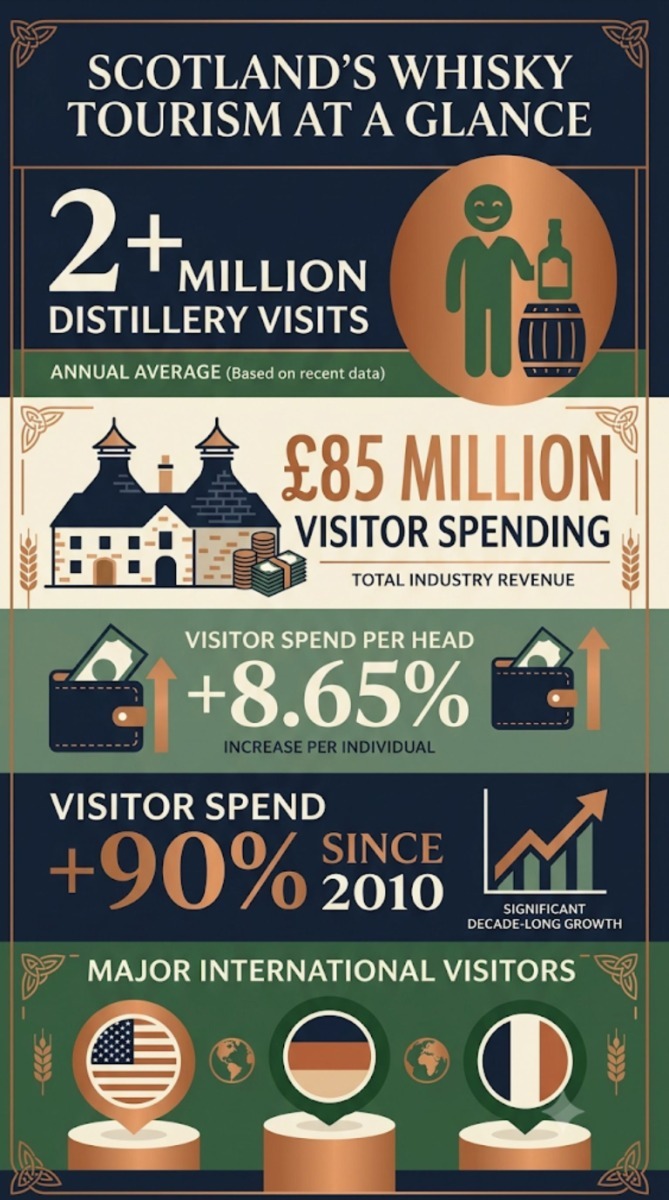
Scotch whisky visitor centres have become one of Scotland’s strongest tourism assets. According to the Scotch Whisky Association, visitor numbers to Scotch whisky visitor centres topped 2 million in 2022, with total visitor spending of more than £85 million across Scotland’s whisky regions. The same data showed visitor spend per head had increased by 8.65%, underlining that whisky tourism is not just about footfall, but higher-value engagement with distilleries and local economies.
The key figures are:
- Over 2 million visits to Scotch whisky visitor centres in 2022.
- More than £85 million spent at visitor centres across Scotland’s whisky regions.
- Visitor spend per head up 8.65%.
- Visitor spend up around 90% since 2010.
- UK visitors made up just over half of visits to Scotch whisky sites.
- The United States, Germany and France were among the leading international visitor markets.
The latest public Scotch whisky tourism figures should be read as a recovery benchmark rather than a guaranteed upward trend. Visitor centres recovered strongly after pandemic disruption, but cost pressures, transport reliability and changing travel behaviour still affect the market. The Scotch Whisky Association remains the primary authority source for industry-level visitor centre data.
How Many People Visit Scotch Whisky Distilleries?
More than 2 million people visited Scotch whisky distilleries and visitor centres in 2022. Later industry references point to around 2.7 million visits in 2024, showing that whisky tourism has continued to recover strongly, although individual distillery performance varies by region, accessibility and brand investment.
These numbers matter because distillery visits are different from general attraction visits. A visitor centre can turn a whisky from an abstract bottle on a shelf into a named place with stills, warehouses, casks, water sources, production choices and regional identity. That context often changes how people buy whisky afterwards.
A visitor who has toured Speyside may become more confident choosing lighter, fruit-led single malts. A visitor who has been to Islay may understand why peat, smoke and maritime character matter. Someone who has toured a Highland distillery may pay closer attention to cask type, age statement and ABV rather than buying by region alone.
For whisky retailers, this matters because tourism increases the value of clear bottle information. Customers often come back from Scotland searching by distillery name, not just by “single malt”. Distillery-led discovery is therefore central to how serious whisky buyers behave.
How Much Do Visitors Spend At Scottish Whisky Distilleries?
Visitor spending at Scotch whisky sites exceeded £85 million in the latest major published industry data. That spend includes tours, tastings, bottle purchases, merchandise and premium experiences. It does not capture every indirect benefit to hotels, restaurants, taxis, ferries or regional food and drink businesses.
Spend per head is especially important. A higher spend per visitor suggests that whisky tourism is becoming more experience-led and more premium. Visitors are not only paying for a basic tour. They are booking warehouse tastings, blending sessions, limited-release experiences and bottle-your-own options where available.
For many visitors, the most valuable part of a distillery visit is the chance to connect a bottle to a production story. A 12-year-old single malt, for example, becomes easier to assess when the buyer understands maturation, cask influence and house style. Readers comparing mature but approachable bottles can explore 12 Year Old Scotch Whisky after understanding how age statements fit into distillery-led buying.
One thing we see with our customers is that a distillery visit often changes the buying question from “what is a good whisky?” to “which bottle best represents this distillery?”
Why Whisky Tourism Matters To Scotland’s Economy
Whisky tourism supports Scotland in three connected ways: direct visitor centre spending, wider regional tourism spending and long-term brand value for Scotch whisky. The direct visitor centre spend is visible in tour bookings, tasting fees and bottle sales. The wider regional spend is spread across accommodation, restaurants, transport and other attractions.
This is especially important in rural whisky regions. Distilleries are often located outside major cities, where tourism income can support jobs and keep visitors moving through smaller towns, islands and coastal communities. A distillery with a strong visitor centre can become an anchor attraction for a wider area.
The economic value is not limited to large names. Smaller and mid-sized distilleries can benefit when visitors build trips around production sites rather than only around Edinburgh, Glasgow or major landmarks. This is where distillery guides become useful. A visitor interested in a Highland distillery such as Deanston is often looking for more than a bottle; they want to understand setting, history, production style and how the whisky fits into the wider Scotch landscape.
Who Visits Scotch Whisky Distilleries?
UK visitors account for a large share of Scotch whisky tourism, but international visitors are central to the sector’s value. The United States, Germany and France are consistently important visitor markets, reflecting both tourism demand and major export-market awareness of Scotch whisky.
The visitor profile usually falls into four groups:
- Domestic leisure visitors adding a distillery to a Scottish trip.
- International whisky enthusiasts travelling specifically for distillery access.
- Gift buyers using the visit to choose a more meaningful bottle.
- Collectors looking for distillery-only releases, older bottlings or limited editions.
These groups behave differently. A casual visitor may buy a standard 40% ABV single malt as a memory of the trip. An enthusiast may compare cask strength releases, vintage bottlings or independent bottlings from the same distillery. A collector may care more about discontinued packaging, release history and whether a bottle is tied to a specific visitor centre or distillery event.
What Visitors Learn From Distillery Tours
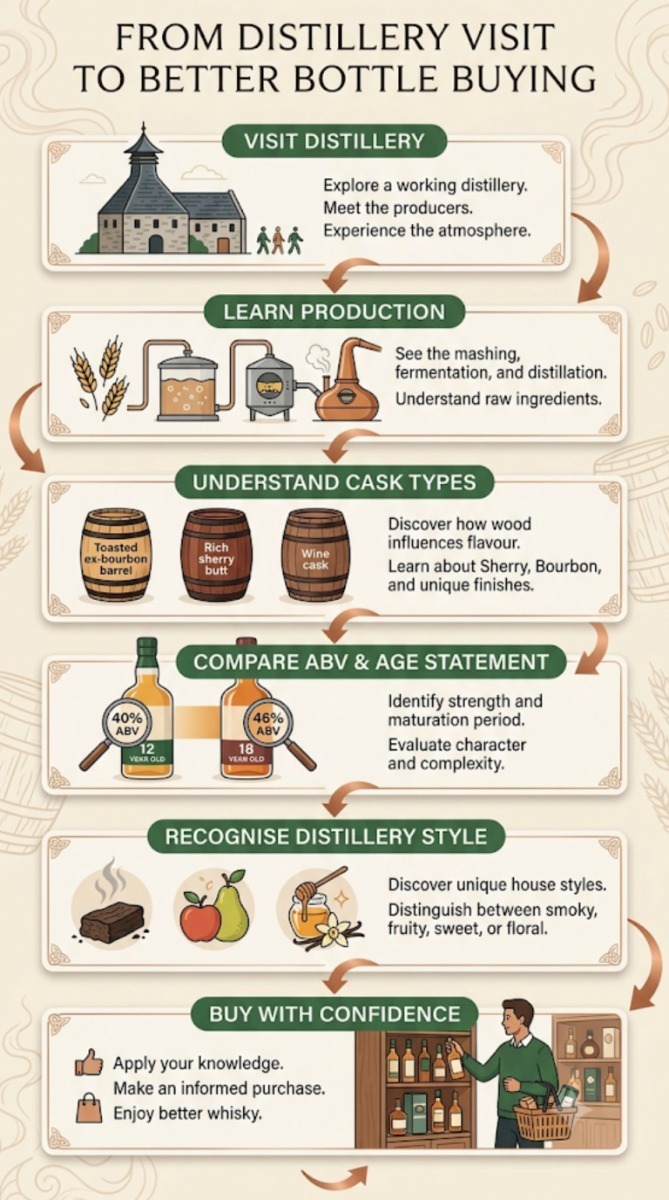
A strong distillery tour helps visitors understand the practical details that affect whisky style. This usually includes ingredients, fermentation, distillation, maturation, cask type, age statement and bottling strength. These details matter more than broad region labels alone.
Key whisky details visitors should pay attention to include:
- ABV: Standard bottlings are often around 40–46% ABV, while cask-strength releases can be much higher.
- Age statement: A 10, 12, 15 or 18-year-old bottle tells you minimum maturation age, not automatic quality.
- Cask type: Bourbon casks, sherry casks and wine finishes can produce very different styles.
- Region: Speyside, Highland, Islay, Lowland and Campbeltown help with context, but do not guarantee flavour.
- Bottler: Official bottlings and independent bottlings can show different sides of the same distillery.
Tourism also explains why distillery identity matters. A coastal distillery, a city distillery and a remote island distillery may all make single malt Scotch whisky, but the visitor experience around each one will be very different.
Regional Differences In Whisky Tourism
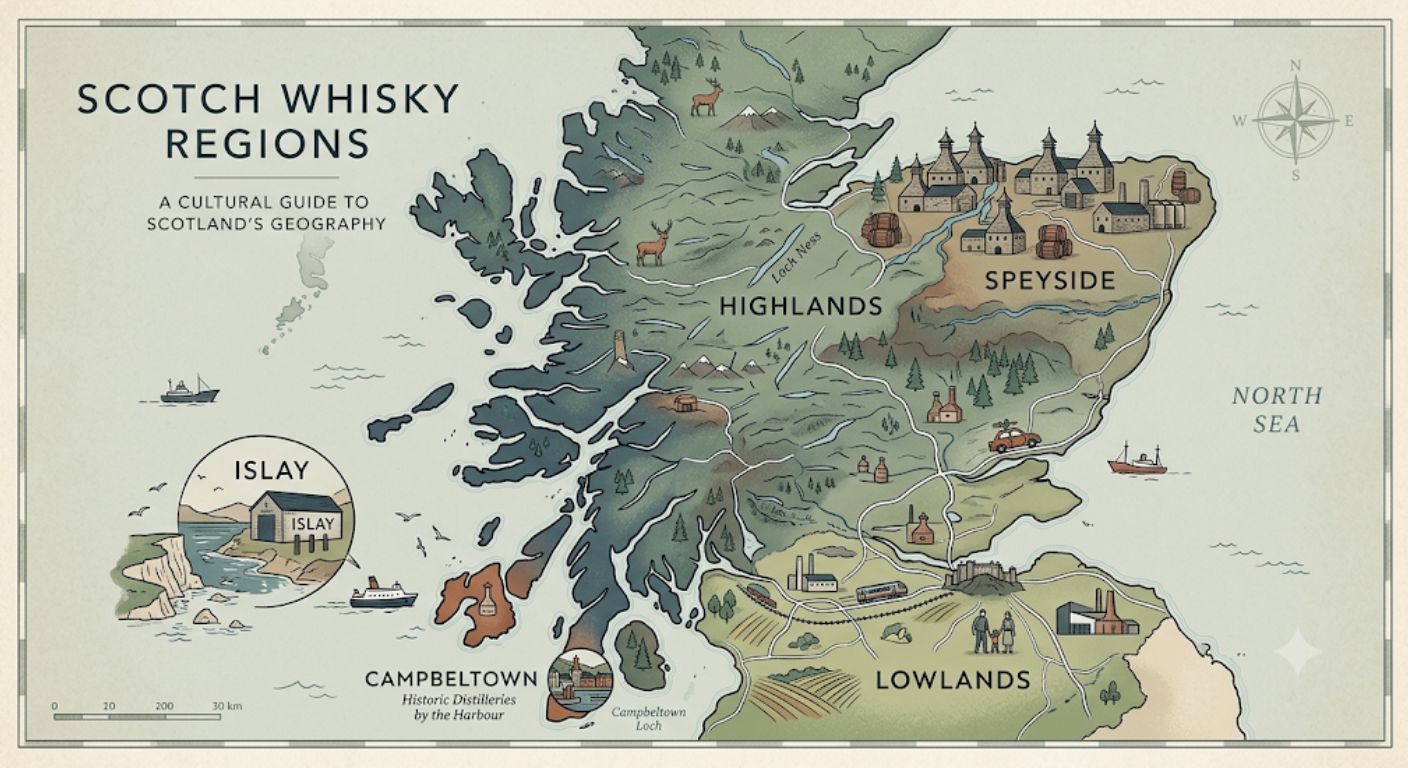
Scotland’s whisky tourism is shaped by geography. Speyside benefits from high distillery density. Islay attracts visitors who actively seek peated whisky and island distillery culture. The Highlands offer scale and variety. The Lowlands are often easier to access for visitors based around Edinburgh or Glasgow. Campbeltown carries historic significance despite its small number of active distilleries.
Regional access affects visitor numbers. Distilleries near cities, main roads or established tourism routes usually have a lower barrier to entry. Island distilleries can offer a more distinctive experience, but visitors may need to plan around ferries, accommodation and seasonal demand.
This is why transport infrastructure matters. Ferry reliability, road capacity and travel time can influence whether visitors choose a distillery route or stay with easier urban attractions. Islay, Skye, Orkney and more remote Highland locations can all be affected by access constraints.
For buyers, regional tourism is useful but should not become the only buying rule. A whisky from Oban carries coastal Highland context, but bottle choice should still consider ABV, age, cask type and whether the release is an official or independent bottling.
Whisky Tourism And Food And Drink Experiences
Food and drink tourism is one of the strongest ways visitors connect with Scotland. Distillery tours sit naturally within that wider pattern because whisky is both a drink and a place-based product. Visitors often combine distilleries with restaurants, local produce, hotels, scenic routes and regional food experiences.
This also explains why whisky cocktail culture matters, even in a Scotch tourism article. Some visitors first encounter whisky through mixed drinks before moving towards neat serves, single malts or distillery-specific bottles. For a narrower look at that behaviour, the supporting guide on whisky cocktail statistics covers how cocktail culture is reshaping whisky sales.
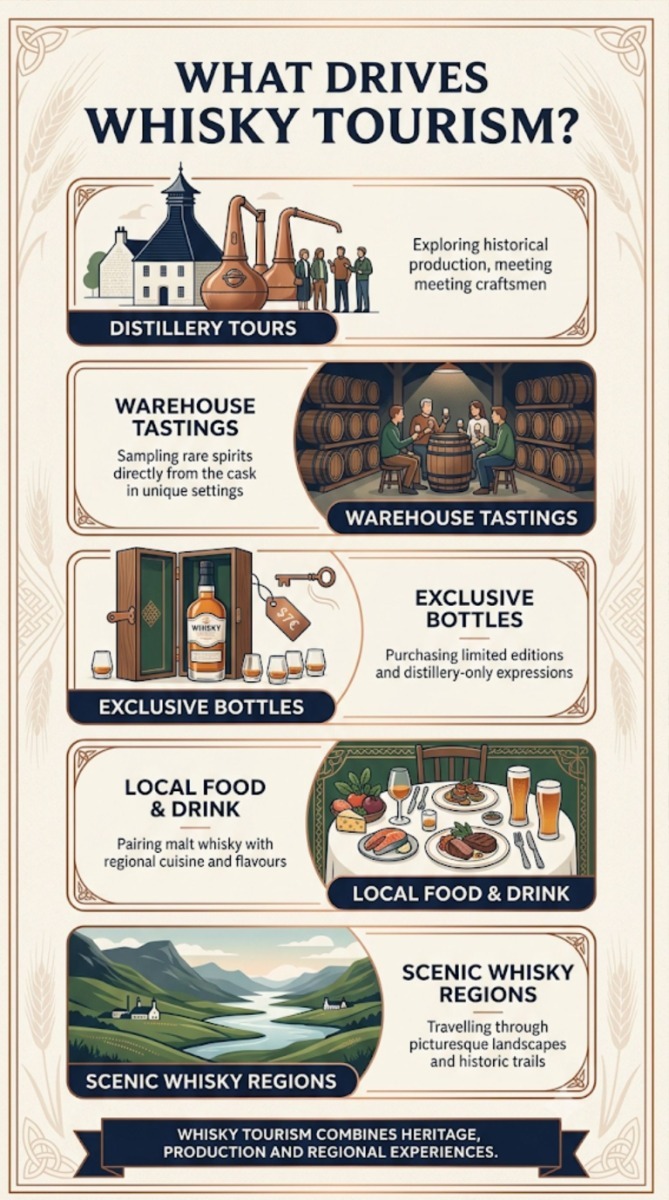
Distilleries have adapted by offering broader visitor experiences. Many now provide guided tastings, premium flights, food pairings, warehouse tastings, blending sessions and shop-exclusive bottlings. These formats help visitors understand whisky without needing expert knowledge before they arrive.
Infrastructure Challenges For Whisky Tourism
Whisky tourism depends on more than distillery quality. Visitors need reliable roads, ferries, public transport, accommodation and clear booking information. In the Highlands and islands, these practical details can decide whether a visitor books a tour at all.
The main infrastructure challenges include:
- Ferry capacity and cancellations for island distilleries.
- Seasonal pressure on accommodation in popular whisky regions.
- Road disruption on key routes such as the A9, A83 and A96.
- Limited public transport options for rural distillery visits.
- Tour availability during peak travel periods.
These issues do not remove demand, but they make planning more important. Visitors who want to tour multiple distilleries should book early, check travel times carefully and avoid assuming that every distillery accepts walk-ins.
How Whisky Tourism Affects Bottle Buying
Distillery tourism often creates more informed buyers. After seeing a still house, warehouse or cask sample, visitors usually become more aware of production details. That can reduce buying mistakes.
The most common buying improvements are:
- Checking ABV before buying, especially with cask-strength whisky.
- Understanding that older whisky is not always better.
- Comparing cask type instead of relying only on age.
- Recognising the difference between official and independent bottlings.
- Using distillery style as a guide rather than relying on packaging.
This is particularly relevant for less obvious distilleries. A buyer researching Macduff may be dealing with different bottling names, independent releases and varying age statements. Clear distillery context helps prevent confusion.
Decision Logic: How To Use Whisky Tourism Statistics As A Buyer
Whisky tourism statistics are useful only if they help you make better decisions. Visitor numbers show which experiences are popular, but popularity alone should not decide what bottle to buy.
- If you are new to Scotch whisky, start with a 40–46% ABV single malt from an accessible region such as Speyside, Highland or Lowland.
- If you enjoyed a distillery tour, look for bottles that represent that distillery’s core style before moving into unusual cask finishes.
- If your budget is £30–60, avoid chasing older age statements. Focus on reliable 10–12-year-old single malts or well-made non-age-statement releases.
- If your budget is £60–120, compare cask type, ABV and bottler. This is where independent bottlings and higher-strength releases become more relevant.
- If you want a keepsake from a trip, choose a bottle linked to the distillery or region rather than a generic gift pack.
- If you are collecting, prioritise provenance, condition, release context and packaging over visitor-centre popularity.
The best use of whisky tourism is to improve context. A distillery visit can show you what you like, but bottle details still matter. Region, cask type, ABV and age statement should all be checked before purchase.
FAQ
How many tourists visit Scotland each year?
Scotland receives millions of overnight visitors each year, with both domestic and international tourism contributing heavily to the economy. Whisky tourism forms one specialist part of that market. Scotch whisky visitor centres alone attracted more than 2 million visits in 2022, making distilleries a major part of Scotland’s visitor economy.
How many people visited Scotch whisky distilleries in 2024?
Industry references point to around 2.7 million visits to Scotch whisky distilleries in 2024. This suggests strong recovery beyond the 2.2 million-style post-pandemic benchmark and the 2,004,918 visits recorded in 2022. Exact figures should always be checked against the latest Scotch Whisky Association release.
How much do tourists spend at Scottish distilleries?
Visitors spent more than £85 million at Scotch whisky visitor centres in the latest major published industry data. Spend per head rose by 8.65%, showing that visitors are paying for more than basic tours. Premium tastings, bottle purchases and distillery-exclusive experiences all contribute to total spend.
Why are Scotch whisky visitor centres important?
Visitor centres connect whisky to place. They help visitors understand production, maturation, cask type, age statements, regional identity and distillery history. This improves buying confidence and supports rural tourism, especially where distilleries act as anchor attractions for smaller towns, islands and Highland routes.
Which international visitors are important for whisky tourism?
The United States, Germany and France are among the key international visitor markets for Scotch whisky tourism. These countries are also important export markets, which means distillery visits can reinforce global demand. International visitors often spend heavily on tastings, bottles and premium experiences.
Does whisky tourism affect bottle prices?
Tourism can increase demand for certain distillery releases, especially visitor-centre exclusives and limited bottlings. It does not automatically make a bottle more valuable. Age, ABV, cask type, bottler, condition, provenance and availability remain more important buying factors than visitor numbers alone.
What should beginners buy after visiting a Scottish distillery?
Beginners usually do best with a core single malt around 40–46% ABV before moving into cask-strength or unusual finishes. A 10 or 12-year-old bottle is often a sensible starting point. Choose by distillery style, cask type and region rather than souvenir packaging alone.
‹
Best Sellers
-
-
-

-
-
-
-
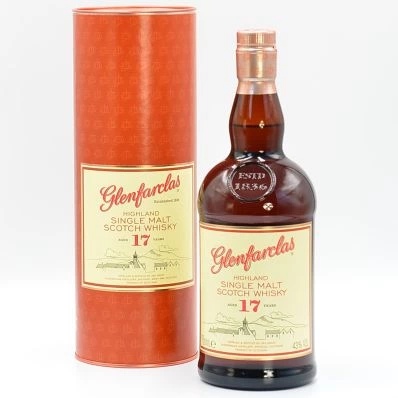 Glenfarclas 17 Year Old Highland Scotch Whisky
Special Price
£139.98
Regular Price
£174.99
Inc VAT
Saving £35.01
Glenfarclas 17 Year Old Highland Scotch Whisky
Special Price
£139.98
Regular Price
£174.99
Inc VAT
Saving £35.01
›
-
-
-
-
-
-
-
Glenfarclas 17 Year Old Highland Scotch WhiskySpecial Price £139.98 Regular Price £174.99 Inc VATSaving £35.01
Summary: What Whisky Tourism Statistics Tell Us
Whisky tourism in Scotland is a major part of the Scotch whisky economy. Visitor centres attract millions of visits, generate tens of millions in direct spend and help buyers understand whisky through place, production and provenance.
- Scotch whisky visitor centres recorded more than 2 million visits in 2022.
- Visitor spending exceeded £85 million across Scotland’s whisky regions.
- Spend per head increased by 8.65%.
- International visitors, especially from the US, Germany and France, remain highly important.
- Distillery tourism supports rural economies as well as major whisky brands.
- Transport, ferry access and accommodation can limit growth in remote regions.
- Tourism improves bottle understanding, but buying decisions should still check ABV, age, cask type and bottler.
Common mistakes include buying only by age statement, assuming every regional whisky tastes the same, ignoring ABV, or treating visitor-centre popularity as proof of bottle quality. The better shortcut is simple: use tourism for context, then use bottle details for the final decision.
For readers moving from distillery interest to bottle discovery, the full Scotch range at Lochs of Whisky provides a practical next step without separating the bottle from its production context.

Comments