
 Chat with us on WhatsApp


Whisky Maturation: How Time In The Cask Changes The Spirit
Whisky maturation is the period when new make spirit rests in oak casks and develops into whisky. This is where raw alcohol softens, colour forms, and much of the final flavour takes shape. The cask does not simply “store” the spirit. It changes it through extraction, evaporation, oxidation, and interaction with the wood.
For buyers, maturation helps explain why two whiskies from the same distillery can taste very different. Age, cask history, oak species, warehouse conditions, and bottling strength all matter. This is especially important when comparing standard bottlings with cask strength whisky, where the cask influence can feel more direct and less diluted.
What Happens During Whisky Maturation?
Maturation works through three linked actions:
- Additive maturation: the spirit extracts flavour, colour, and structure from the oak.
- Subtractive maturation: the cask helps remove rougher sulphur, cereal, and solvent-like notes.
- Interactive maturation: oxygen, alcohol, acids, and wood compounds react over time to create new aromas and textures.
This is why young spirit can smell sharp or grassy, while mature whisky often shows vanilla, spice, dried fruit, coconut, honey, oak, or leather. The exact result depends on the cask and the spirit placed into it.
Why Oak Matters
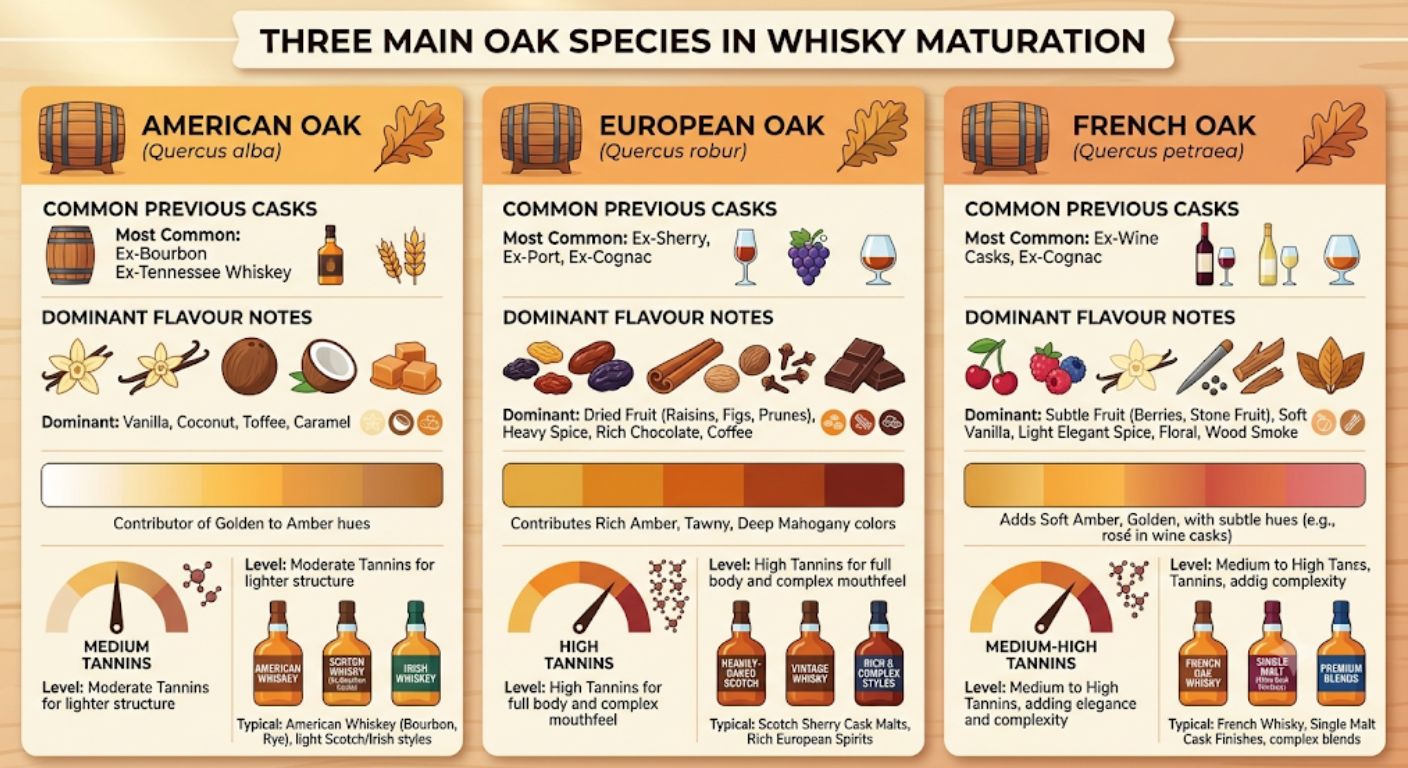
Oak is used because it is strong, watertight enough to hold liquid, and porous enough to allow slow oxygen interaction. It also contains compounds that shape flavour. Lignin can contribute vanilla-like notes. Hemicellulose can bring caramelised sweetness. Tannins add grip, structure, and dryness.
For Scotch whisky, oak is also a legal requirement. The Scotch Whisky Association explains that Scotch must mature in oak casks with a capacity not exceeding 700 litres, alongside the wider rules set by the Scotch Whisky Regulations.
American oak usually gives sweeter notes such as vanilla, coconut, honey, and light spice. European oak tends to bring more dried fruit, clove, tannin, and darker spice. French oak can sit somewhere between elegance and spice, depending on seasoning and previous use.
Cask History Changes The Result
The previous life of a cask has a major influence on the whisky. Ex-bourbon casks often produce lighter, sweeter flavours. Sherry-seasoned casks can create richer notes of raisin, walnut, orange peel, dark chocolate, and spice. Wine casks may add red fruit, tannin, and acidity.
First-fill casks usually have the strongest impact because they still hold more active wood and previous-liquid influence. Refill casks are gentler and can suit longer maturation because they allow more distillery character to remain visible.
The question our customers often ask is whether a finish is the same as full maturation; it is not, and the difference usually shows in both flavour depth and price.
Age Does Not Automatically Mean Better Whisky
Older whisky is not automatically better. Longer maturation can add depth, but it can also create too much oak. Over-matured whisky may taste dry, bitter, woody, or tired, with less distillery character.
A well-made 10, 12, or 15 year old whisky can be more balanced than an older bottle that has spent too long in an aggressive cask. The best age depends on the spirit style and the cask. Robust spirit can handle longer ageing. Lighter spirit may lose its identity if the oak takes over.
How Warehouse Conditions Affect Maturation
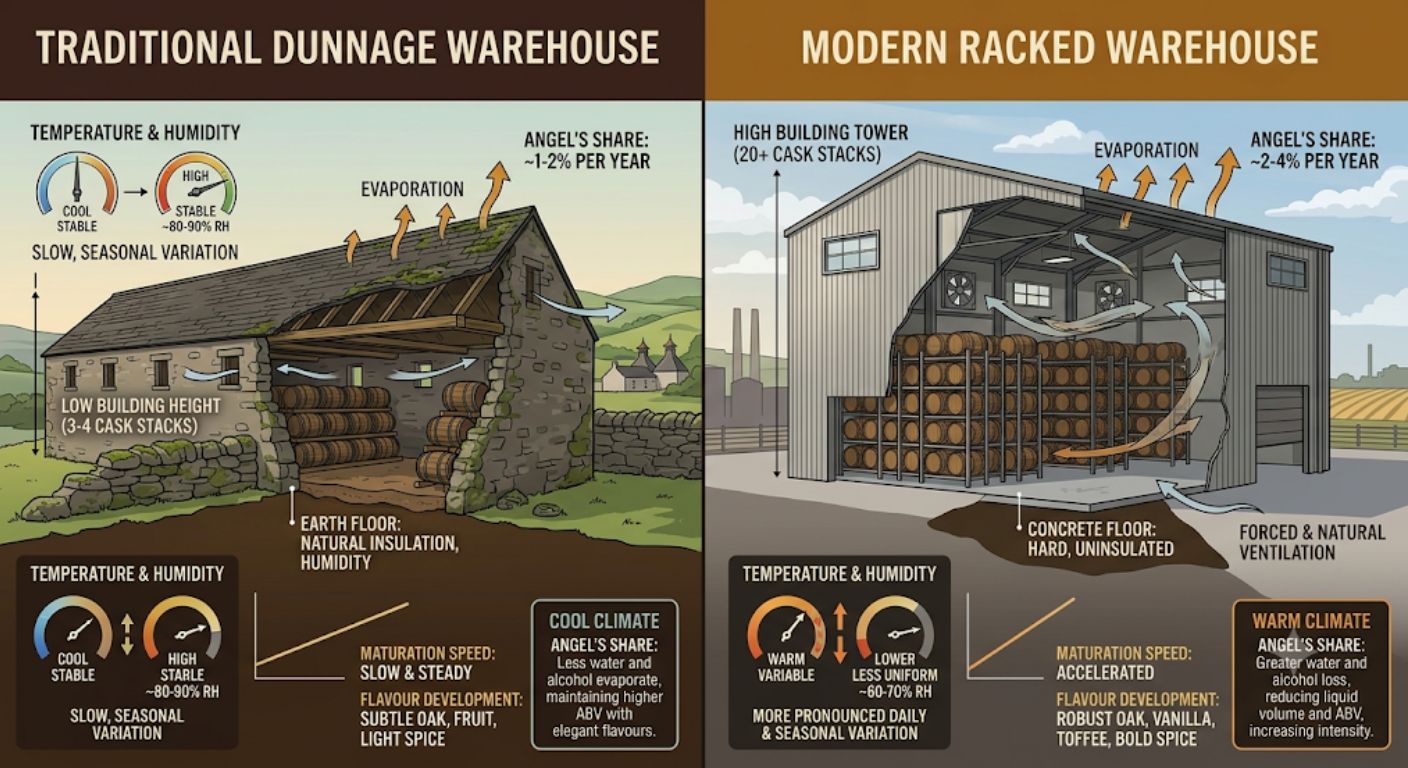
Warehouse conditions influence how quickly whisky matures. Temperature changes push spirit in and out of the oak. Warmer climates often speed up extraction and evaporation. Cooler Scottish warehouses usually produce slower, steadier maturation.
Humidity also matters. In drier conditions, water can evaporate faster, sometimes increasing ABV. In more humid conditions, alcohol can evaporate more quickly, reducing strength. This evaporation is known as the angel’s share.
Traditional dunnage warehouses are low, cool, and often have earth floors. Racked warehouses are taller and more efficient, but they can create greater temperature variation between upper and lower levels.
Charring, Toasting And STR Casks
Charring and toasting prepare the inside of a cask before spirit is added. Toasting gently heats the wood and develops sweet, spicy compounds. Charring burns the surface, creating a charcoal layer that can filter harsher compounds while adding colour and flavour.
| Char Level | Typical Effect | Flavour Direction |
|---|---|---|
| Level 1 | Light char | Gentle oak, light sweetness |
| Level 2 | Moderate char | Vanilla, caramel, soft spice |
| Level 3 | Heavy char | Darker colour, stronger wood influence |
| Level 4 | Alligator char | Charcoal, smoke, intense sweetness and spice |
STR means shaved, toasted, and re-charred. It is often used to rejuvenate wine casks by removing tired surface wood, heating the oak, and reactivating it. STR casks can bring red fruit, baking spice, sweetness, and a polished oak character.
Distillery Character Still Matters
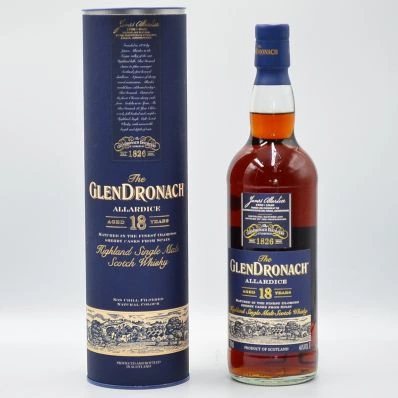
The cask is powerful, but it should not erase the distillery. A mature whisky should still show some link to the spirit that went into the wood. Glendronach is closely associated with rich sherry-cask styles, while Balvenie is known for a balanced approach to wood and malt character. Glenmorangie is especially relevant when discussing wood management and cask-led flavour development.
This is why maturation should be read alongside distillery style. A sherry cask from one distillery will not taste the same as a sherry cask from another. Spirit weight, still shape, fermentation, cut points, and warehouse policy all influence the final result.
How To Use Maturation When Choosing Whisky
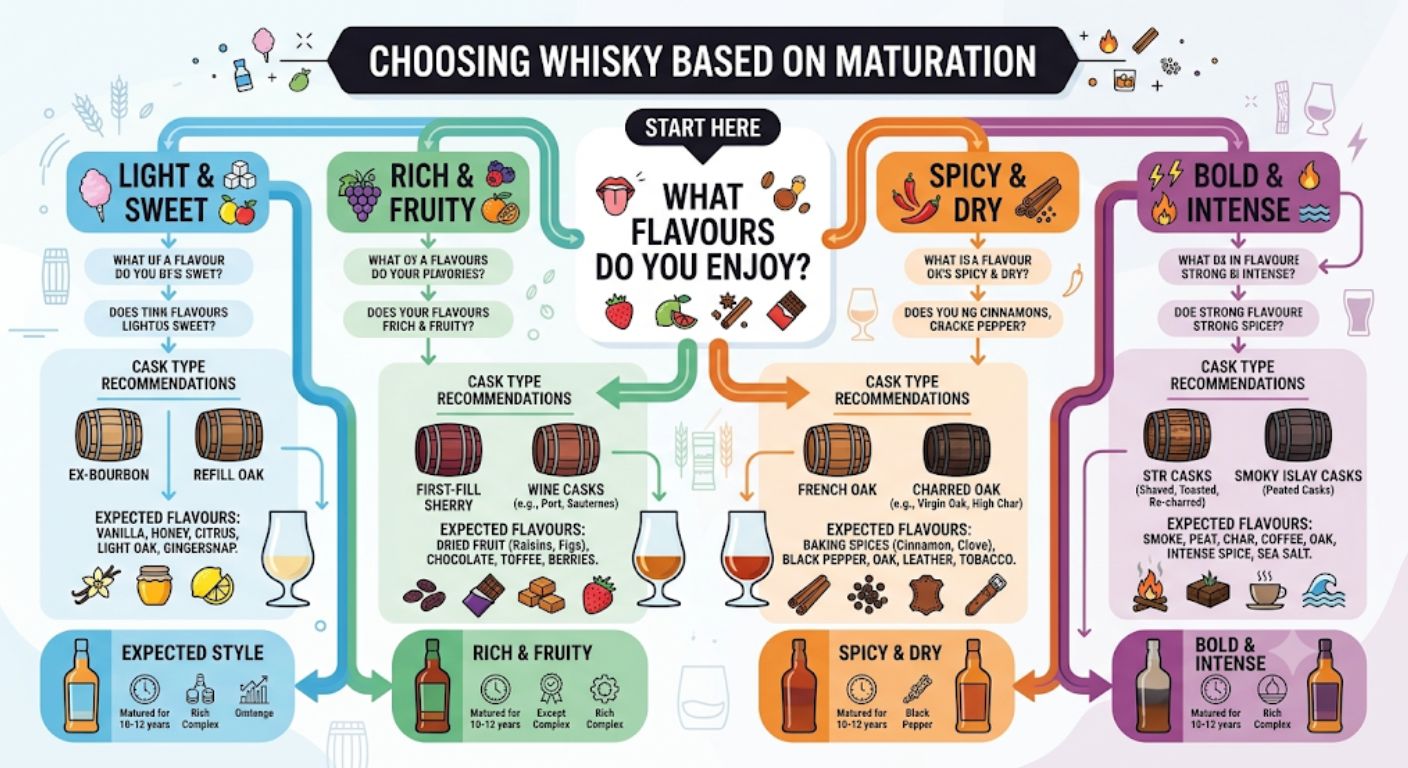
Use maturation details to judge whether a bottle fits your taste and purpose. If you prefer lighter whisky, look for refill casks, ex-bourbon maturation, or moderate age statements. If you prefer richer styles, sherry casks, wine finishes, and first-fill casks may make more sense.
Higher ABV bottlings can show maturation more clearly, but they can also feel intense. Adding a few drops of water can open the whisky without flattening it. For broader browsing, Scotch whisky remains the natural place to compare cask type, age, region, and bottling strength together.
FAQ
Does whisky age after bottling?
No. Whisky maturation stops once the spirit leaves the cask and is bottled. Glass does not allow the same oxygen and wood interaction, so the whisky will not gain age, colour, or cask-derived flavour after bottling.
Is older whisky always smoother?
No. Older whisky can be softer, but it can also become too woody or tannic. Smoothness depends on spirit quality, cask type, warehouse conditions, bottling strength, and balance. Age is useful information, but it is not a guarantee of quality.
What does first-fill mean?
First-fill means the cask is being used for Scotch maturation for the first time after previously holding another liquid, such as bourbon or sherry. These casks usually give stronger flavour, colour, and oak influence than refill casks.
What is the angel’s share?
The angel’s share is the whisky lost to evaporation during maturation. Both alcohol and water can evaporate through the cask over time. The rate depends on climate, humidity, warehouse type, cask size, and maturation length.
-
-
-
-
-
-
-
-
-
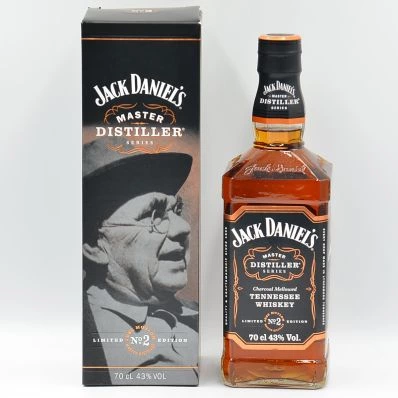 Jack Daniel's - Master Distiller Batch 2 Jess Motlow Limited Edition Bourbon Whiskey£164.99 Inc VATOut of stock
 -
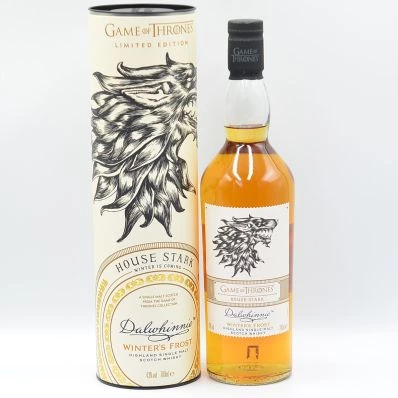 Game Of Thrones Whisky Dalwhinnie Winter's Frost House StarkSpecial Price £104.98 Regular Price £134.99 Inc VATSaving £30.01Out of stock
 -
-
Final Takeaway
Whisky maturation is not just about age. It is the combined effect of oak, cask history, warehouse conditions, spirit character, and time. A good bottle shows balance between the distillery and the wood, rather than simply tasting old.
For bottles where maturation strength and cask influence are central to the experience, explore cask strength Scotch whisky with age, ABV, and cask type in mind.

Comments