
 Chat with us on WhatsApp


Your Guide to Taiwanese Whisky: Brands and What Makes It Special
Taiwan has developed one of the most distinctive modern whisky industries. Its producers generally work with familiar single malt methods, imported barley and established cask types, but mature their spirit in a hot, humid climate that behaves very differently from Scotland.
The result is whisky that can develop strong fruit, spice and oak character within a relatively short period. That does not make Taiwanese whisky a direct substitute for older Scotch. It creates a separate style shaped by rapid maturation, careful cask management and frequent use of higher bottling strengths. Our selection of Taiwanese whisky shows how much variation can exist within this relatively young category.
What Makes Taiwanese Whisky Different?
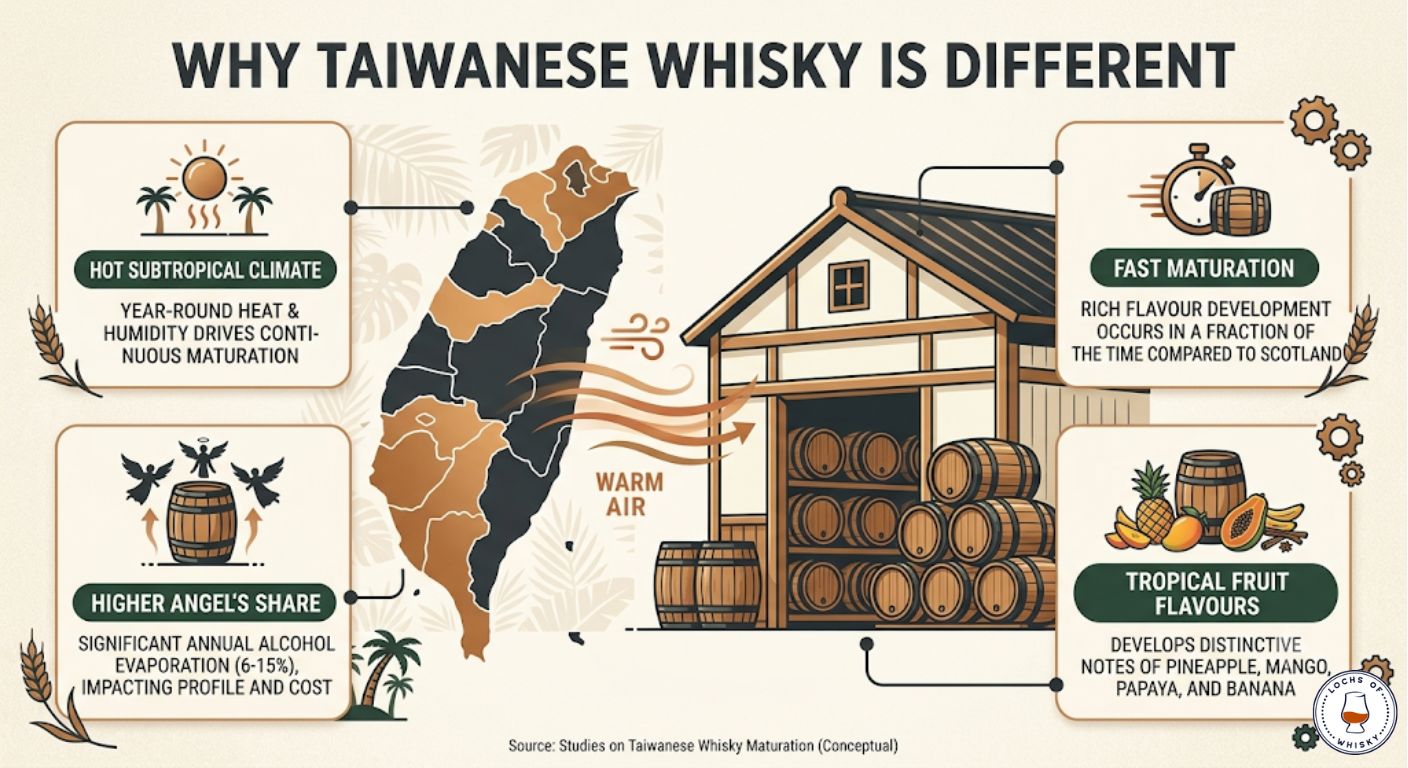
Taiwanese whisky is primarily distinguished by its maturation climate. Taiwan experiences high temperatures, substantial humidity and significant seasonal heat. Inside some warehouses, temperatures can approach 40°C, causing the spirit and oak to interact more aggressively than they would in a cool Scottish warehouse.
During warmer periods, the whisky expands further into the cask wood. As temperatures fall, it contracts and carries extracted compounds back into the spirit. This repeated movement can develop colour, fruit, spice and oak influence quickly.
The climate also creates practical challenges. Fast extraction can produce an over-oaked or unbalanced whisky if the distillery leaves it in unsuitable wood for too long. Taiwanese producers therefore need close control over:
- The quality and previous use of each cask
- Warehouse temperature and location
- The length of maturation
- The spirit’s alcohol strength
- The point at which the whisky is bottled
Age statements alone are consequently less useful when judging Taiwanese whisky. A four-year-old Taiwanese single malt may show considerably more cask influence than a four-year-old whisky matured in a cooler country, although the two will not necessarily have the same complexity or development.
Taiwanese Whisky Maturation vs Scottish Maturation
| Factor | Taiwan | Scotland |
|---|---|---|
| Typical climate | Hot, humid and subtropical | Cool and relatively temperate |
| Warehouse temperatures | Can approach 40°C during hot periods | Normally much lower and more stable |
| Annual angel’s share | Often estimated at approximately 10–15% | Often around 2%, although conditions vary |
| Cask extraction | Rapid and intensive | Slower and more gradual |
| Common maturation approach | Shorter maturation with close cask monitoring | Longer maturation is generally more practical |
| Common flavour direction | Ripe fruit, tropical fruit, spice and pronounced oak | Varies widely by region, spirit and cask programme |
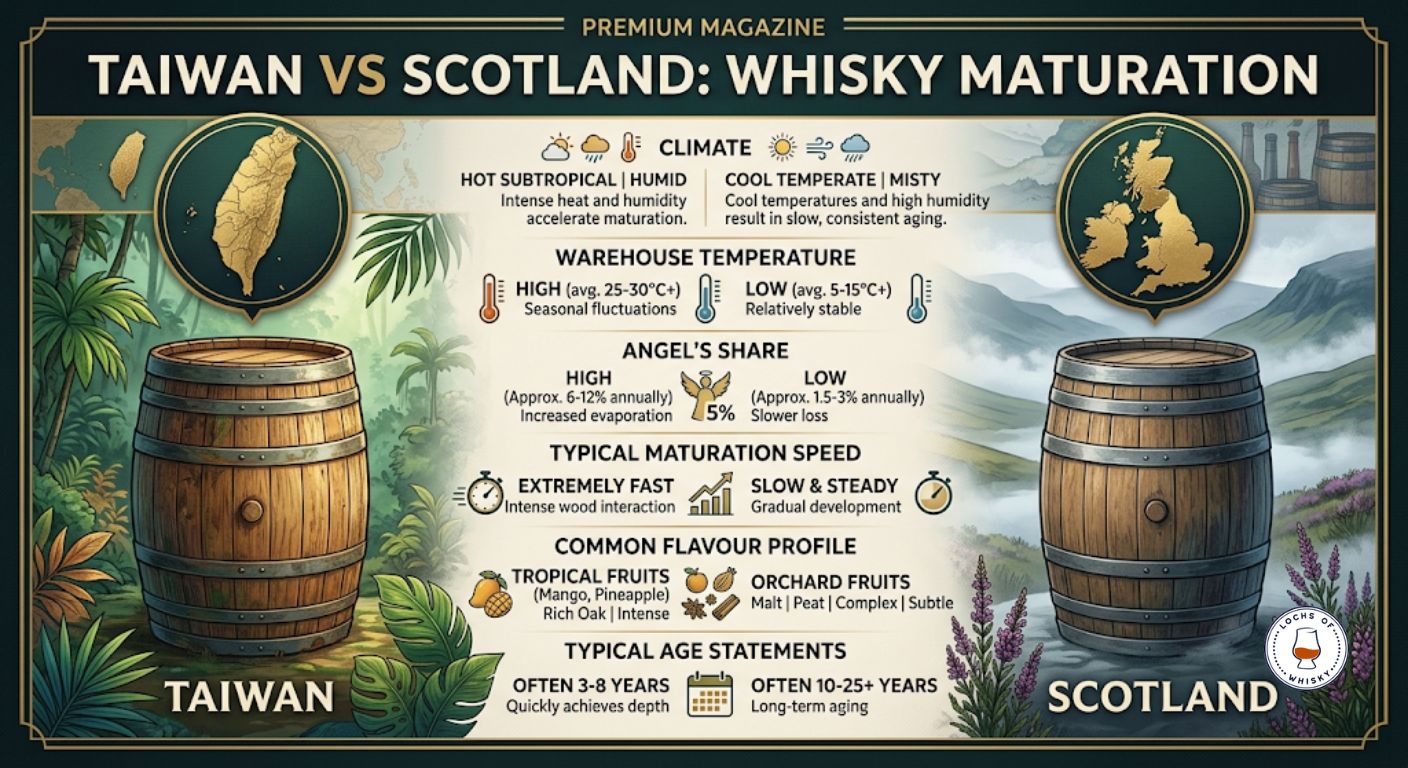
Some comparisons suggest that one year of maturation in Taiwan can create a level of cask activity similar to four or five years in Scotland. This should be treated as a broad illustration rather than a precise age conversion. Rapid oak extraction cannot reproduce every chemical change created by decades of slow maturation.
The wider comparison also shows why geographical labels do not tell the full story. Production method, still shape, cask quality and warehouse management remain important, whether the whisky comes from Taiwan, Scotland or Ireland.
The Angel’s Share in Taiwanese Warehouses
The angel’s share is the whisky lost through evaporation while a cask matures. In Taiwan, annual losses are commonly reported at around 10–15%, compared with roughly 2% in many Scottish warehouses. Exact figures depend on the warehouse, cask and local conditions.
This high evaporation rate places a practical limit on long maturation. A Taiwanese cask can lose a substantial part of its contents within only a few years. The producer must balance flavour development against declining volume and the risk of excessive oak influence.
Humidity also affects which components evaporate most quickly. Depending on storage conditions, the alcohol strength may rise or fall during maturation. Producers therefore monitor both liquid volume and ABV rather than assuming every cask will develop in the same way.
Why Taiwanese Whisky Often Tastes Fruity
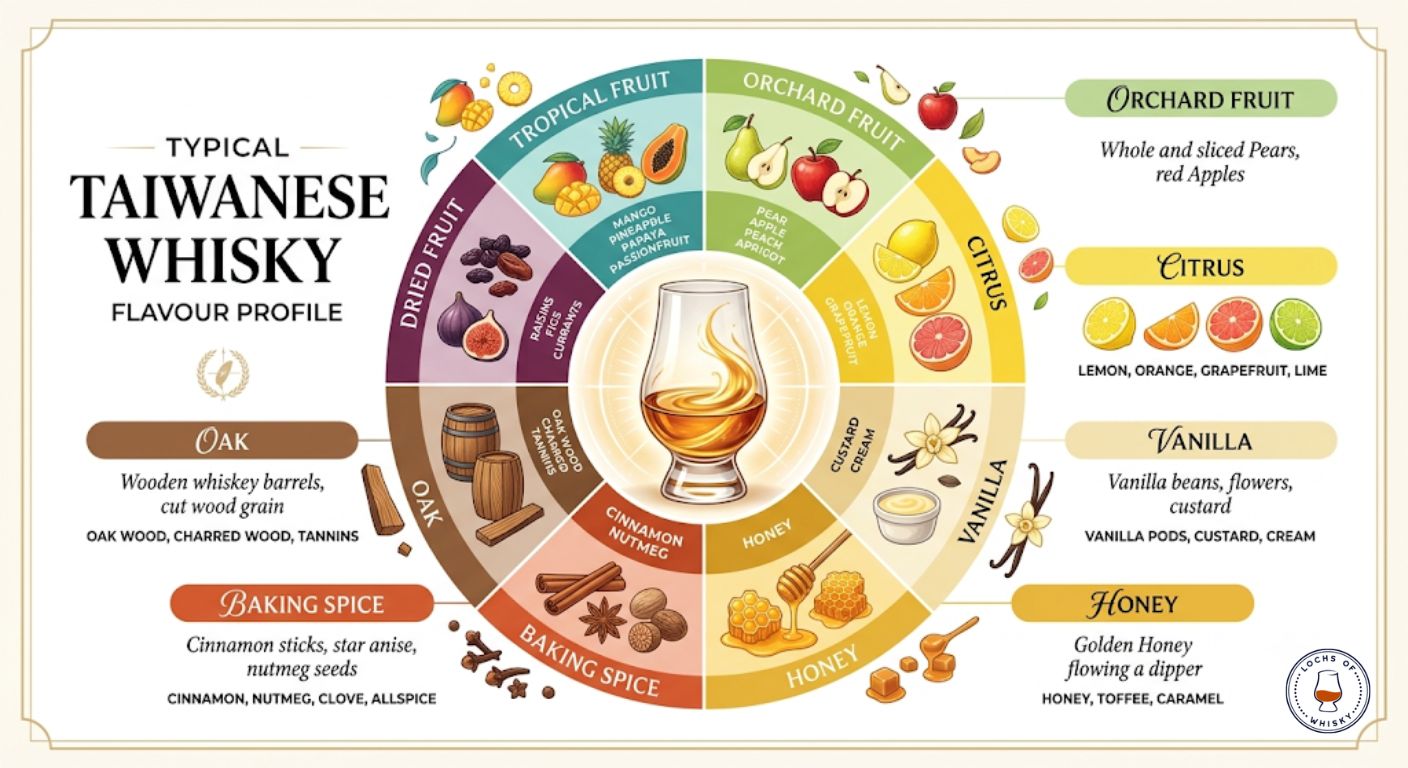
Taiwanese single malts are frequently associated with mango, pineapple, papaya, citrus peel, ripe pear, plum and other concentrated fruit notes. These flavours do not come from fruit being added to the whisky. They develop through fermentation, distillation and maturation.
Fruity compounds known as esters begin forming during fermentation. Distillation determines which of these compounds pass into the new make spirit. Taiwan’s warm maturation conditions can then accelerate the interaction between those spirit compounds, the oak and any residue from the cask’s previous contents.
Cask choice makes a major difference:
- Ex-bourbon casks commonly contribute vanilla, coconut, citrus and sweet oak.
- Sherry casks can add dried fruit, nuts, spice and richer sweetness.
- Wine casks may introduce red fruit, tannin and deeper spice.
- Port or fortified-wine casks can produce berry, plum and syrup-like notes.
- Local wine or plum liqueur casks can give Taiwanese releases a more regionally specific character.
Heat intensifies these cask-derived flavours, but a strong Taiwanese whisky should still retain clear spirit character. Heavy colour and forceful oak do not automatically indicate balance or maturity.
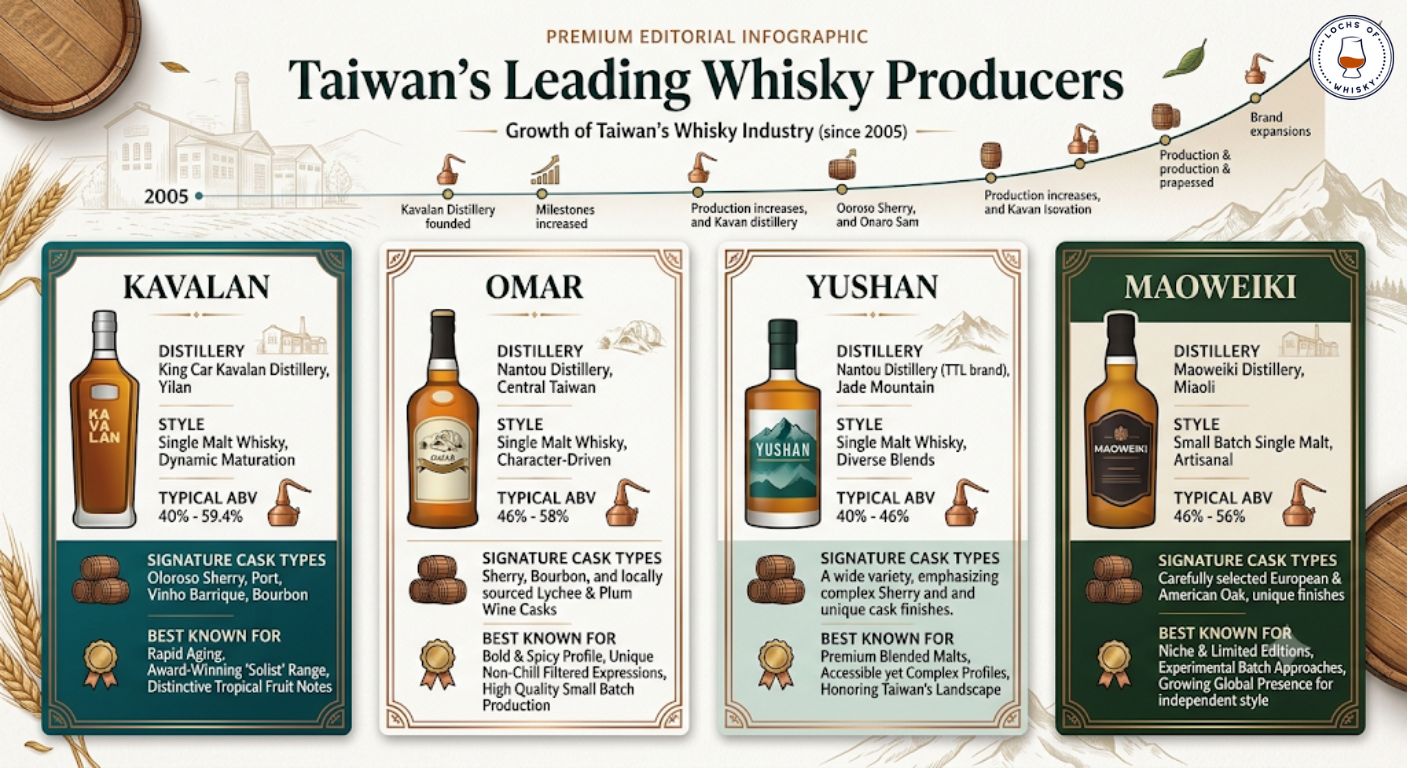
Important Taiwanese Whisky Brands and Distilleries
Kavalan
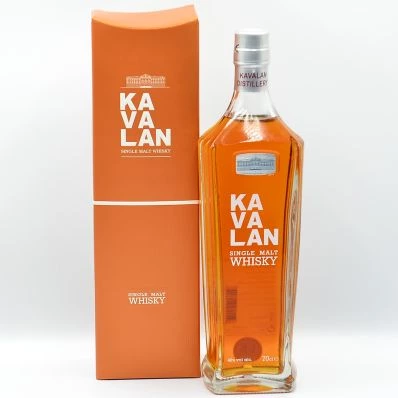
Kavalan is the producer most closely associated with the international development of Taiwanese whisky. Established by the King Car Group in Yilan County, the distillery began producing spirit in 2006 and released its first whisky in 2008.
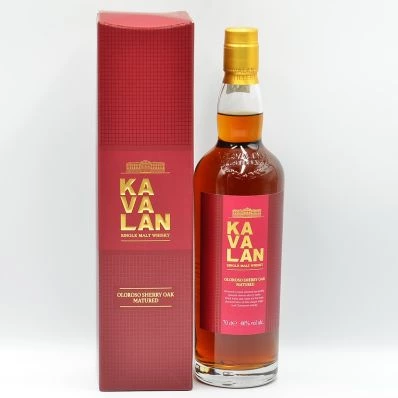
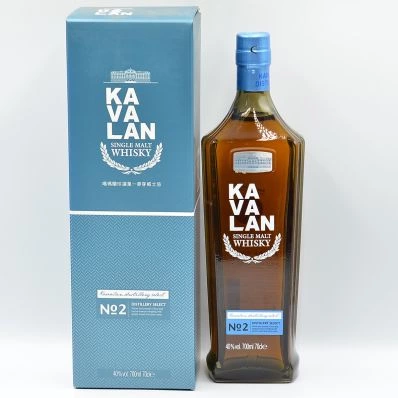
Kavalan produces a broad range of single malts, from accessible 40% ABV releases to single-cask and cask-strength bottlings that can exceed 55% ABV. Its range demonstrates the effect of ex-bourbon, sherry, port, brandy and wine casks under Taiwanese maturation conditions.
The main ranges include:
- Core expressions: generally approachable bottlings designed to introduce the distillery’s fruit-led style.
- Concertmaster releases: whiskies given additional maturation or finishing in fortified-wine casks.
- Solist bottlings: single-cask, cask-strength releases that place greater emphasis on the individual cask.
One thing our customers sometimes underestimate is the difference between a core Kavalan bottled at 40% ABV and a Solist release above 55% ABV; the cask-strength bottle can deliver much more alcohol, oak and concentrated fruit.
Omar and Nantou Distillery
Omar is produced at Nantou Distillery, which is operated by the Taiwan Tobacco and Liquor Corporation. The distillery gives buyers a useful alternative to Kavalan and demonstrates that Taiwanese whisky is not centred on a single producer.
Omar releases include bourbon-cask and sherry-cask single malts, alongside less conventional bottlings finished in Taiwanese fruit-wine or plum-liqueur casks. These local casks can introduce green plum, floral sweetness, dried fruit and spice that differ from conventional European fortified-wine maturation.
Many Omar expressions are bottled at 46% ABV, while cask-strength editions can reach approximately 50–60%. As with Kavalan, the exact cask and bottling strength often tell the buyer more than the age statement alone.
Yushan
Yushan is another whisky name connected with Nantou Distillery. Bottlings sold under the Yushan label can include single malt and blended malt expressions. They are often positioned as more accessible introductions to Taiwanese production rather than direct equivalents to Omar’s more cask-focused releases.
Buyers should check the full label carefully because Omar and Yushan releases can differ in composition, strength and intended style even when they originate from the same distilling organisation.
Maoweiki and Smaller Producers
Maoweiki represents Taiwan’s developing independent distilling scene. Its production is much smaller than Kavalan’s and international availability remains limited. This makes it more relevant as evidence of a widening Taiwanese industry than as an easy first purchase for most UK buyers.
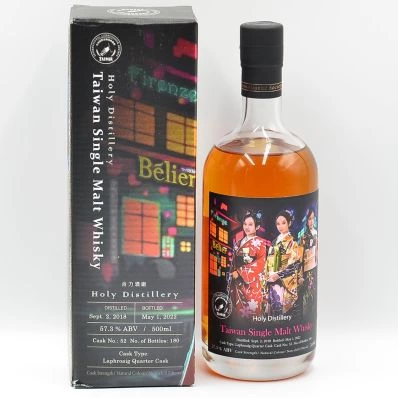
Other smaller projects, including Holy Distillery, are experimenting with local grains, yeasts and cask types. Availability can be inconsistent, and buyers should separate genuine distillery-produced whisky from sourced or privately labelled releases. The producer, distillation location and maturation details should be stated clearly before a bottle is treated as representative of Taiwanese whisky.
What Is the STR Cask Process?
STR stands for shaving, toasting and re-charring. Developed by the late whisky consultant Dr Jim Swan, the process rejuvenates used wine casks by removing part of the inner surface, heating the exposed oak and applying a fresh char before the cask is filled with new spirit.
- Shaving: part of the wine-soaked inner wood is removed, reducing excessive wine residue and exposing fresh oak.
- Toasting: the cask is heated more gradually to break down oak compounds and develop sugars, spice and vanilla characteristics.
- Re-charring: a stronger flame creates a charred surface that changes extraction and can help filter harsher compounds.
The process became closely associated with Kavalan Solist Vinho Barrique. It allows an ex-wine cask to retain some influence from its previous contents while giving the new spirit greater access to active oak. Whisky Magazine’s detailed account of Kavalan’s STR casks explains how the method was developed around the distillery’s fruity spirit and humid maturation environment.
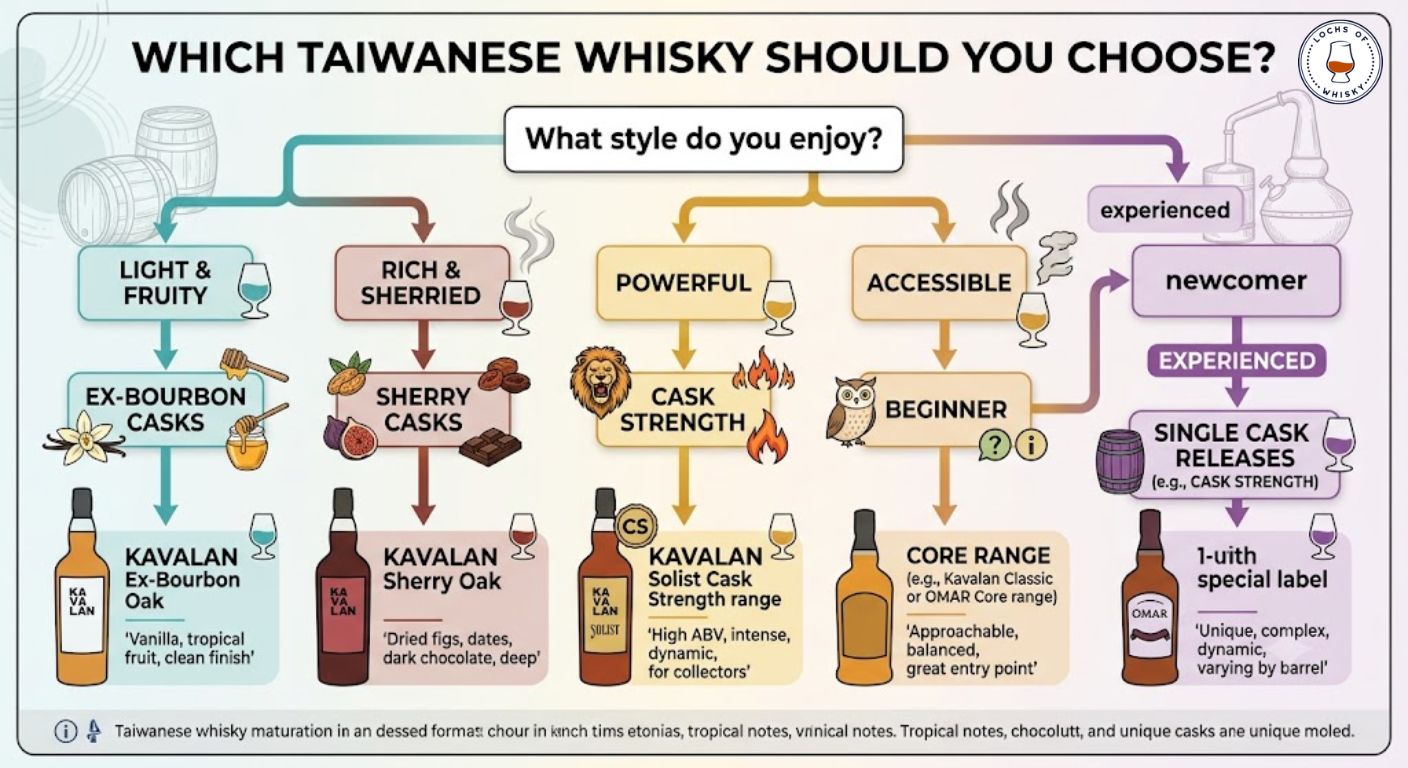
How to Choose a Taiwanese Whisky
The most useful buying details are the producer, cask type, ABV and bottling format. Age can provide context, but it should not be the main decision point.
Choose a Core Bottling for a First Introduction
A core single malt bottled at 40–46% ABV normally gives the clearest introduction to a producer’s house style. These releases tend to be easier to approach than single-cask editions and often show tropical fruit, vanilla and gentle spice without excessive alcohol intensity.
This option suits someone exploring Taiwanese whisky for the first time or moving from fruit-led Scotch and Japanese single malt.
Choose Ex-Bourbon Casks for Spirit-Led Fruit
Ex-bourbon maturation generally allows the distillery character to remain easier to identify. Expect vanilla, citrus, coconut, orchard fruit and tropical fruit, although the exact balance varies by producer and cask.
Choose this style when you want to understand the new make spirit rather than a heavily fortified-wine-influenced release.
Choose Sherry or Wine Casks for Greater Weight
Sherry, port and wine casks can produce darker fruit, spice, tannin and richer sweetness. Taiwan’s climate can amplify those characteristics quickly, so these whiskies may feel heavier and more cask-driven.
They suit drinkers who already enjoy concentrated cask influence. Avoid choosing by colour alone, as a darker whisky is not automatically more complex.
Check the ABV Before Buying Cask Strength
Single-cask Taiwanese whisky is commonly bottled at natural strength, often between 50% and 60% ABV. These releases can provide detailed cask character but may require water and careful tasting.
A cask-strength bottle makes sense for experienced drinkers who value concentration and individual cask variation. It may not suit someone seeking a light or immediately accessible dram.
Check Whether the Whisky Is Naturally Presented
Some enthusiasts prefer whisky bottled without chill filtration or added colouring because it provides a less altered presentation. These details should be stated on the bottle or producer information rather than assumed.
Natural colour does not guarantee quality, but transparent production information makes it easier to understand what has shaped the whisky in the glass.
Frequently Asked Questions
How fast does whisky age in Taiwan compared with Scotland?
Taiwan’s heat and humidity create much faster cask interaction than Scotland’s cooler climate. One year in Taiwan is sometimes compared with four or five years of Scottish maturation, but this is only a broad guide. Rapid extraction develops colour and wood influence quickly, while some slower maturation reactions still require time.
What is the angel’s share percentage for Taiwanese whisky?
Taiwanese warehouses can lose approximately 10–15% of a cask’s contents each year, although the exact rate varies. Many Scottish warehouses lose closer to 2% annually. The higher Taiwanese angel’s share makes very long maturation costly and increases the importance of choosing the right bottling point.
Is four-year-old Taiwanese whisky mature?
A four-year-old Taiwanese whisky can show substantial cask development because heat accelerates extraction from the oak. It may display deep colour, ripe fruit and pronounced spice. However, maturity depends on balance rather than colour or age alone. Poor cask management can produce excessive oak even within a relatively short period.
Which Taiwanese whisky brands are available besides Kavalan?
Omar and Yushan, produced through Nantou Distillery, are the most established alternatives. Smaller producers such as Maoweiki and Holy Distillery show how the industry is expanding, although their bottles may be difficult to find outside Taiwan. Availability in the UK remains much narrower than Kavalan’s distribution.
Why does Taiwanese whisky taste like tropical fruit?
Fruity esters are created during fermentation and carried through distillation. Taiwan’s warm maturation environment accelerates their interaction with oak and cask-derived compounds. This can produce concentrated notes associated with mango, pineapple, papaya, pear and plum, particularly when the underlying spirit is already fruit-led.
Is Taiwanese Whisky Worth Exploring?
Taiwanese whisky makes most sense for drinkers interested in the relationship between climate, cask selection and flavour development. It offers a clear contrast with whisky matured slowly in cooler regions and shows why a low age statement does not always mean limited cask influence.
Start with a core bottling at 40–46% ABV if you want to understand the producer’s spirit. Move towards single-cask, sherry-cask or STR-matured expressions once you know how much oak, alcohol and concentrated fruit you prefer.
Taiwan remains a relatively small whisky-producing country, but its climate and technically managed cask programmes give it a recognisable identity within the broader world whisky category.

Comments