
 Chat with us on WhatsApp

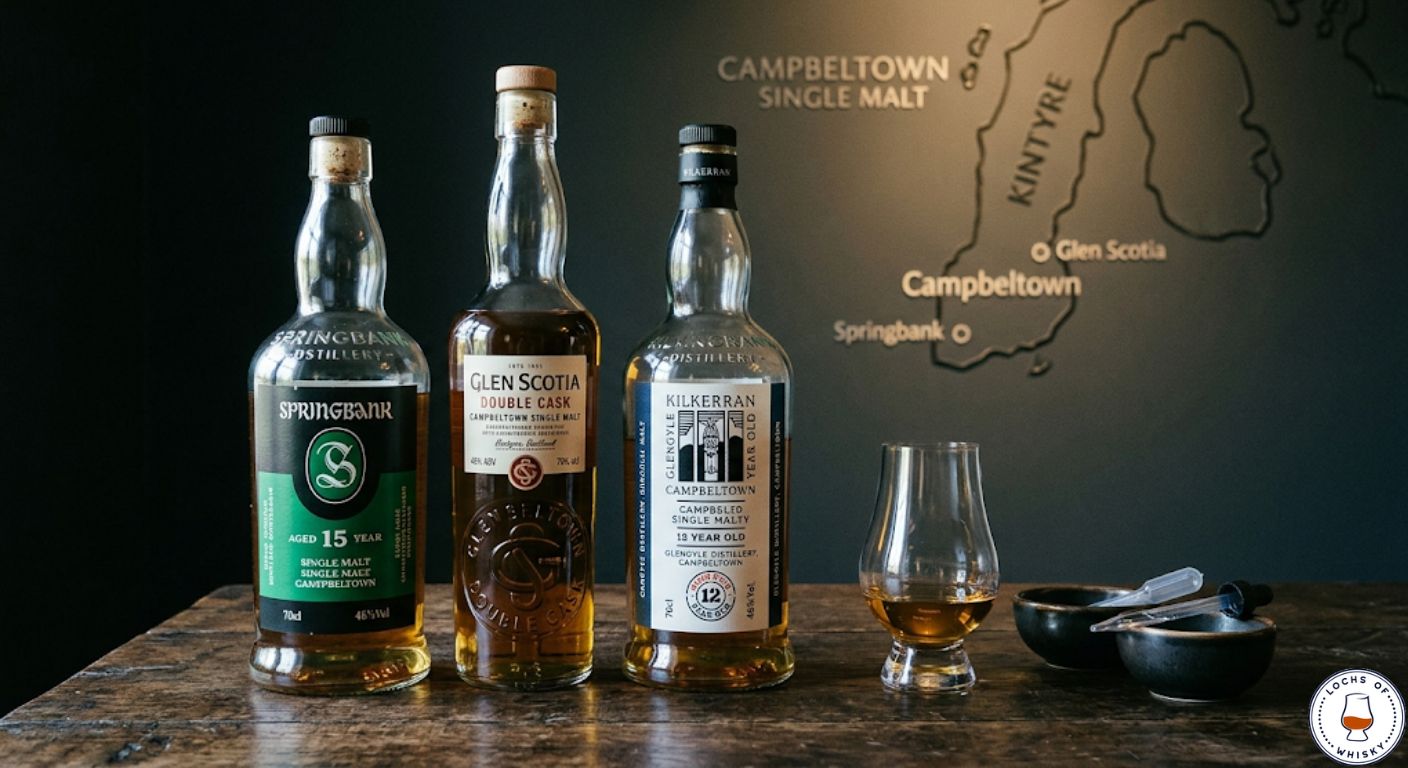
Campbeltown Whisky Tasting Notes
Campbeltown whisky is Scotch whisky distilled in Campbeltown on Scotland’s Kintyre peninsula, one of the officially recognised Scotch whisky regions. It is known for a compact but distinctive profile: coastal salinity, oily texture, earthy depth, old-school production character and, in many bottles, the note often called Campbeltown funk.
This guide explains how to read Campbeltown whisky reviews properly. It covers the main flavour traits, the three modern distilleries, how Springbank, Glen Scotia and Kilkerran differ, what cask type and ABV change in the glass, and how to choose a bottle without relying only on reputation.
For current availability, the full Campbeltown whisky selection gives the clearest starting point, but the better buying decision comes from understanding the style first.
-
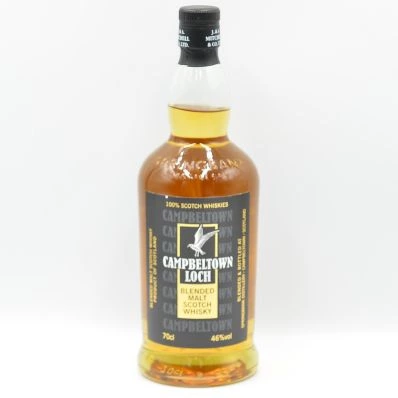 Springbank Campbeltown Loch Blended Scotch WhiskySpecial Price £40.98 Regular Price £43.99 Inc VATSaving £3.01
 -
-
-
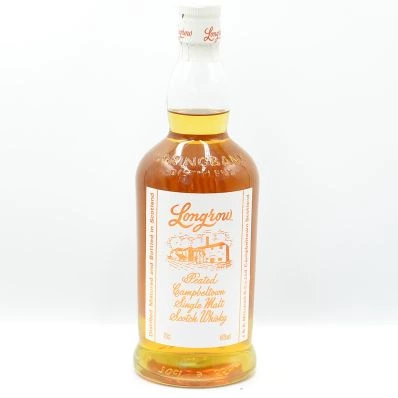 Longrow Single Malt Peated Whisky CampbeltownSpecial Price £48.98 Regular Price £54.99 Inc VATSaving £6.01
 -
-
What Campbeltown Whisky Usually Tastes Like
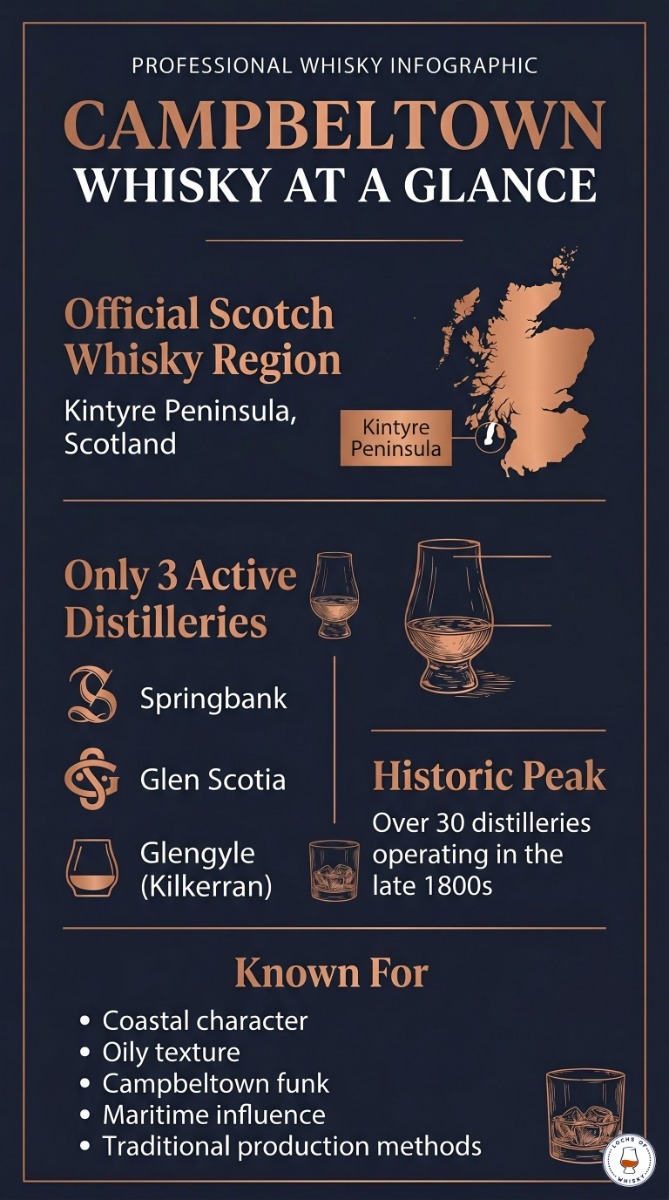
Campbeltown whisky is usually weightier, oilier and more coastal than many other Scotch styles. Common notes include sea salt, wax, engine oil, damp warehouse, orchard fruit, malt, smoke, leather and sometimes a farmyard or wool-like edge. Not every bottle shows all of these traits, but the combination is what makes the region distinctive.
The most useful tasting notes for Campbeltown whisky are not just “sweet”, “smoky” or “salty”. They should explain structure:
- Is the whisky oily or clean?
- Is the smoke gentle, industrial, earthy or medicinal?
- Is the cask adding fruit, spice, sweetness or tannin?
- Does the finish stay coastal, smoky, waxy or dry?
- Is the ABV lifting the flavour or making it aggressive?
A Campbeltown review should also name the distillery. The region is small, but the styles are not identical. Springbank, Glen Scotia and Kilkerran each carry the region differently.
How Many Distilleries Are In Campbeltown?
There are three active Campbeltown distilleries:
- Springbank
- Glen Scotia
- Glengyle, whose whisky is bottled as Kilkerran
Campbeltown once had many more distilleries, but the modern region is built around this small active group. That makes distillery identity especially important. A bottle labelled Campbeltown does not automatically taste like Springbank, and a Glen Scotia release should not be judged as though it is trying to be Kilkerran.
The clearest way to understand the region is to treat each distillery separately, then compare where they overlap.
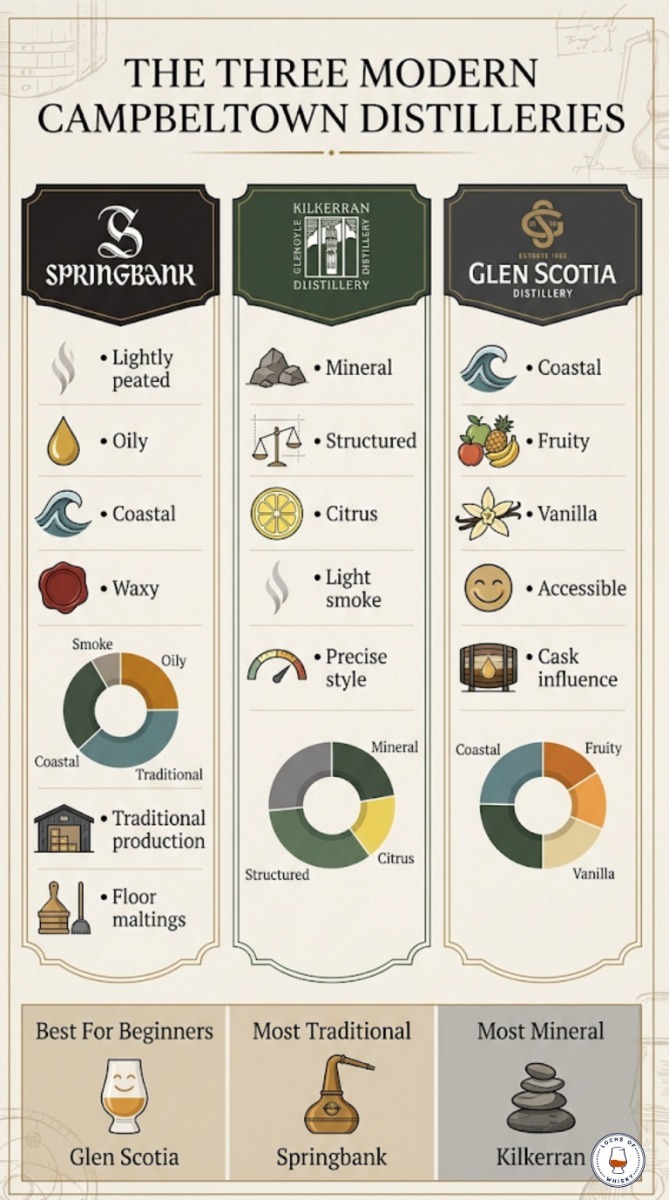
Springbank: Oily, Complex And Traditional
Springbank is the benchmark name for many Campbeltown drinkers. Its reputation comes from production style as much as flavour. The distillery is known for traditional processes, including floor maltings, varied distillation regimes across its brands, and a house character that often feels oily, coastal, waxy and lightly industrial.
Springbank’s core single malt is usually lightly peated and distilled two-and-a-half times. That unusual distillation approach helps create a texture that can feel broader than a very clean double-distilled malt but less polished than triple distillation. In tasting terms, that often means citrus, malt, wax, brine, mineral smoke, orchard fruit and a faint mechanical edge.
Springbank 10 Year Old is often the practical reference point. It is not always easy to find at retail, but it gives a useful read on the house style: enough age to show maturity, enough distillery character to avoid being dominated by cask, and usually enough ABV to carry the texture. For a deeper bottle-specific breakdown, see the Springbank 10 Year Old tasting review.
Springbank 15 Year Old usually shifts the conversation towards darker fruit, sherry influence and a richer mid-palate. It can feel more mature and rounded, but it is not automatically “better” for every drinker. If you want the distillery’s oil, coastal edge and structure, the cask balance matters as much as the age statement. The full Springbank 15 Year Old tasting review covers that profile in more detail.
Springbank 18 Year Old often brings more polish, softer integration and deeper cask maturity. It is the type of bottle where buyers should check ABV, cask composition and release details before assuming every year tastes the same. Older Campbeltown whisky can be excellent, but age does not remove batch variation. The Springbank 18 Year Old tasting review is the better place to judge that specific expression.
A useful way to compare the age range is through a vertical tasting. The Springbank vertical tasting review shows how the same distillery changes across age, cask influence and maturity rather than treating each bottle in isolation.
Kilkerran And Glengyle: Mineral, Precise And Often Excellent Value
Glengyle / Kilkerran adds another side to Campbeltown. Kilkerran can share the region’s coastal and earthy traits, but it often feels more mineral, structured and direct than Springbank. It can show lemon peel, chalk, light smoke, malt, orchard fruit, damp stone and restrained sweetness.
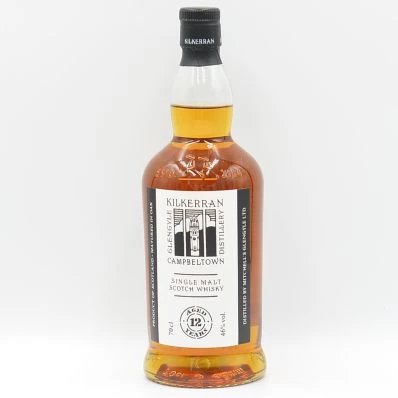
Kilkerran 12 Year Old is often suggested as an accessible Campbeltown entry point when available at sensible retail pricing. It usually gives enough distillery character to understand the region without pushing too far into extreme funk or heavy cask influence.
For buyers, the key is to check whether the bottle is a core age statement, heavily peated release, cask-strength release or limited batch. Those details change the experience sharply. A 46% core bottling will behave differently from a cask-strength release above 55% ABV, especially for newer drinkers.
If you like clean Speyside-style fruit, Kilkerran may feel more austere at first. If you enjoy mineral, coastal and lightly smoky whisky, it can be one of the most rewarding Campbeltown options.
Glen Scotia: Accessible, Coastal And Cask-Driven
Glen Scotia is often the easiest modern Campbeltown distillery for new drinkers to approach. Its whiskies can show sea spray, vanilla, orchard fruit, spice, gentle smoke, oak sweetness and a slightly musty or dunnage-style note.
Glen Scotia Double Cask is one of the most common entry points because it is usually more available than Springbank and often more affordable. The cask influence tends to be clearer, with bourbon sweetness and sherry-seasoned richness making the whisky easier to read. That does not make it simple or generic; it just means the distillery character is usually framed by cask sweetness.
Glen Scotia also helps explain why Campbeltown reviews need to mention batch, ABV and cask type. A bourbon-led Glen Scotia can feel clean, coastal and lightly fruity. A sherry-influenced version can move towards raisin, spice, dark sugar and drier oak. Same region, different outcome.
What Does Campbeltown Funk Taste Like?
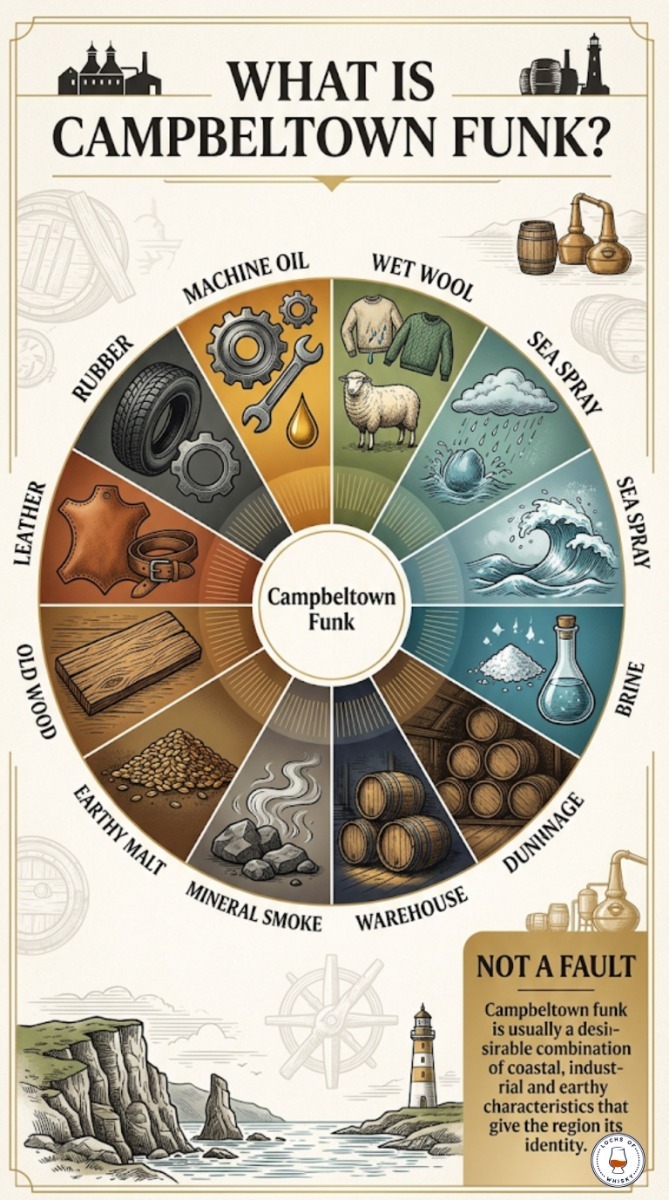
Campbeltown funk tastes like an oily, coastal, earthy and slightly industrial note in whisky. Common descriptions include machine oil, wet wool, dunnage warehouse, rubber, brine, damp malt, mineral smoke and old wooden floors. It is not a fault by default; in balanced whisky, it adds depth and regional identity.
The word “funk” can be misleading because it sounds negative. In Campbeltown whisky reviews, it usually means a savoury or organic complexity that sits behind the fruit, malt and cask notes. It can make a whisky feel more handmade and less polished.
There are limits. A faint oily edge can be attractive. A sulphury, mouldy or dirty cask note can be unpleasant. Good reviews should separate distillery character from flaws.
One thing our customers often underestimate is how much this oily, coastal edge changes the drinking experience; a whisky can be technically gentle in ABV but still feel bold because the flavour profile is so distinctive.
Maritime Notes: Salt, Brine And Coastal Weight
Campbeltown’s coastal identity is central to its tasting profile. Reviews often mention salt, brine, sea spray, mineral smoke or damp warehouse air. These notes do not mean the whisky literally tastes like seawater. They describe a dry, savoury edge that cuts through sweetness.
This matters when choosing a bottle. If you prefer soft vanilla, honey and orchard fruit, a heavily coastal Campbeltown may feel too savoury. If you like Islay’s coastal side but not always heavy peat, Campbeltown can be a useful alternative.
For broader browsing across Scotch styles, the main Scotch whisky range gives useful context, but Campbeltown should still be judged on its own terms rather than treated as a halfway point between Speyside and Islay.
ABV: Why Strength Changes Campbeltown Whisky
ABV is one of the most important details in Campbeltown whisky reviews. Many accessible bottles sit around 46% ABV. Cask-strength releases may sit above 55% ABV. That difference changes texture, aroma and how much water the whisky can take.
As a rule:
- 40–43% ABV usually feels lighter and more accessible.
- 46% ABV often gives better texture and flavour delivery.
- 50–55% ABV can feel concentrated but still manageable.
- 55%+ ABV needs more care, especially for newer drinkers.
Campbeltown spirit often has enough weight to handle higher ABV, but not every drinker needs cask strength. If you want to understand the region, a balanced 46% bottling is often more useful than a powerful limited release.
Cask Type: Bourbon, Sherry, Port And Batch Variation
Cask type changes Campbeltown whisky dramatically. Ex-bourbon casks usually bring vanilla, citrus, coconut, pale fruit and clean oak. Sherry casks add dried fruit, spice, dark sugar, leather and sometimes sulphur. Port or wine casks can bring red fruit, tannin and a richer finish.
Campbeltown whisky can work well with active casks because the spirit often has enough weight to avoid being buried. But very active wood can still dominate. A review should make clear whether the bottle tastes like the distillery or mainly like the cask.
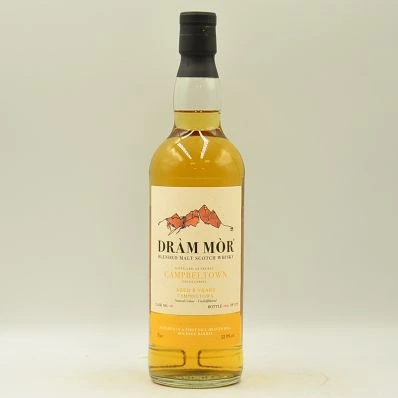
This is where batch variation matters. Two releases under the same name can differ if the cask balance changes. Campbeltown Loch is a good example discussed by reviewers because different lots have shown different levels of bourbon-led and sherry-led influence. If a review names a batch, lot code or bottling year, treat that information as important.
Production Integrity And Why Buyers Care
Campbeltown whisky attracts drinkers who care about production details. Natural colour, non-chill filtration, floor maltings, fermentation, distillation style and warehouse character all matter because they affect texture and flavour.
The Scotch Whisky Association explains that the Scotch Whisky Regulations 2009 define the protected regional names, including Campbeltown, and set rules around Scotch whisky categories and labelling: Scotch Whisky Association Scotch whisky FAQs.
For buyers, the practical point is simple. Read the label and listing details:
- Does it state the ABV?
- Is there an age statement?
- Is the cask type disclosed?
- Is it natural colour?
- Is it non-chill filtered?
- Is it a core release, batch release or single cask?
- Is the bottler official or independent?
A bottle does not need every detail to be good, but missing information should affect how confidently you buy.
Springbank, Hazelburn And Longrow: The Key Differences
Springbank Distillery produces three main styles under different names: Springbank, Hazelburn and Longrow. Springbank is lightly peated and distilled two-and-a-half times. Hazelburn is unpeated and triple distilled. Longrow is heavily peated and double distilled.
This matters because people often talk about “Springbank” as though it is one flavour. It is not. The name on the label tells you which production style you are buying.
Use this basic rule:
- Choose Springbank for oily, coastal, lightly peated complexity.
- Choose Hazelburn for unpeated, smoother, triple-distilled Campbeltown character.
- Choose Longrow for heavier peat and a more robust smoky profile.
If peat level matters to you, check the specific label before buying. Do not assume all bottles from the Springbank site taste the same.
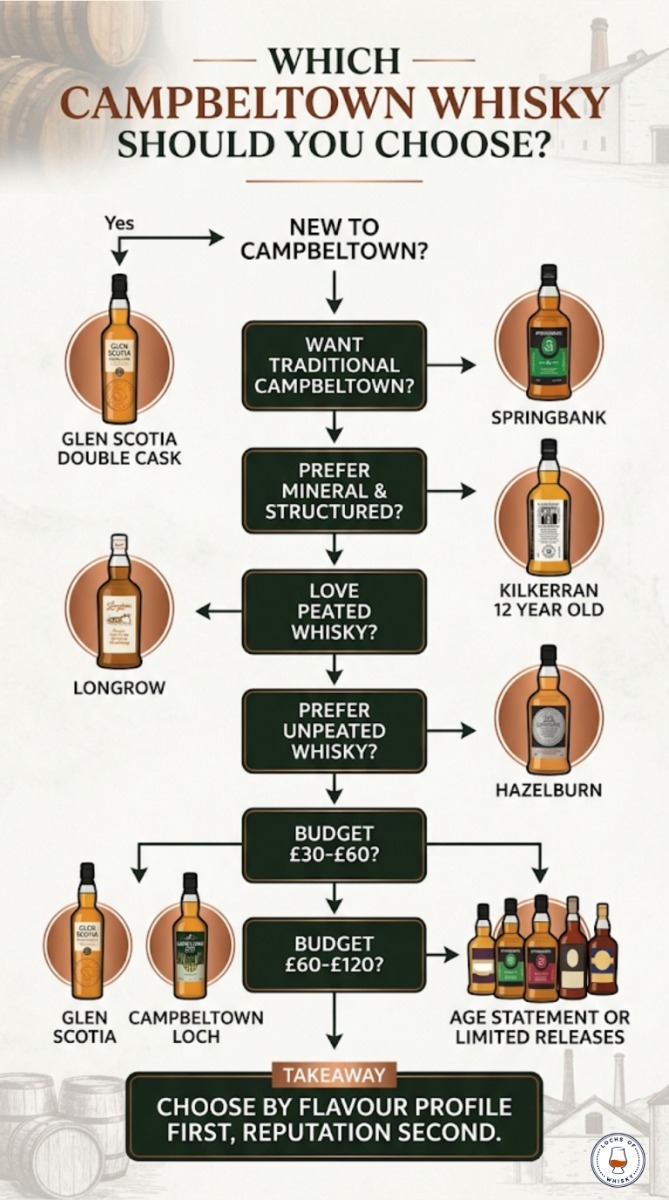
Decision Logic: Which Campbeltown Whisky Should You Choose?
If you are new to Campbeltown whisky, start with a bottle that shows the region clearly without pushing too far into scarcity pricing or cask strength.
If you want the classic Campbeltown profile
Choose Springbank 10 Year Old if available at sensible retail pricing. It gives oily texture, coastal character, gentle peat and enough complexity to explain why the region has such a strong following.
If you want a more accessible first bottle
Choose Glen Scotia Double Cask or a similar Glen Scotia core release. You will usually get coastal character with more obvious cask sweetness, making it easier for newer drinkers.
If you want mineral and structured whisky
Choose Kilkerran 12 Year Old or another balanced Kilkerran release. It is often less plush than sherry-heavy Springbank but can be precise, coastal and rewarding.
If your budget is £30–60
Avoid chasing highly allocated Springbank bottles at inflated secondary pricing. Look for Glen Scotia core releases, Campbeltown Loch, or Kilkerran when available near retail. This price band is about learning the region, not buying the most hyped bottle.
If your budget is £60–120
You can start considering stronger age statements, limited batches or better cask-led expressions. Check ABV and cask type carefully. A higher price should bring clearer identity, not just a famous name.
If you are buying as a gift
Avoid cask-strength Campbeltown unless the recipient already likes bold Scotch. A 46% core bottle is safer, especially if the drinker is still exploring Scotch styles.
If you dislike oily, salty or earthy whisky
Campbeltown may not be the best first choice. Look for cleaner fruit-led Scotch first, then return to Campbeltown when you want more savoury complexity.
Common Campbeltown Whisky Review Terms Explained
Campbeltown reviews often use language that can confuse newer drinkers. These are the terms that matter most.
Oily
A thick, coating mouthfeel. It can make flavours last longer and feel more intense.
Briny
A dry, salty edge. This is common in coastal Scotch and often appears on the finish.
Dunnage
A damp, earthy warehouse note. It can feel like old wood, stone, must or cellar air.
Funk
A broad term for savoury, industrial or organic complexity. It can include oil, rubber, wool, malt and earthy notes.
Mineral
A dry, stony or chalky quality. Kilkerran often shows this clearly.
Sherry-led
A profile driven by dried fruit, spice, dark sugar and richer cask notes.
Bourbon-led
A profile driven by vanilla, citrus, coconut, pale fruit and cleaner oak.
FAQ
Is Campbeltown an official whisky region?
Yes. Campbeltown is one of the recognised Scotch whisky regions under the Scotch Whisky Regulations 2009. It is smaller than regions such as Speyside or Highland, but it has a protected regional identity and a distinct whisky character built around coastal, oily and often lightly smoky styles.
What does Campbeltown funk taste like?
Campbeltown funk usually tastes oily, earthy, coastal and slightly industrial. Common tasting notes include machine oil, wet wool, brine, rubber, damp warehouse, mineral smoke and old wood. In a balanced whisky, this adds complexity rather than unpleasantness.
Why is Springbank whisky so hard to find?
Springbank is hard to find because production is limited, demand is high and many bottles are chased by collectors and enthusiasts. Retail allocation can be tight, and some bottles move quickly into the secondary market. That scarcity does not mean every inflated price is sensible.
What is the best affordable Campbeltown whisky for beginners?
Glen Scotia Double Cask, Campbeltown Loch and Kilkerran 12 Year Old are usually sensible starting points when priced fairly. They give access to Campbeltown character without requiring a rare Springbank allocation. For most beginners, 46% ABV is a good strength to start with.
What is the difference between Springbank, Hazelburn and Longrow?
Springbank is lightly peated and distilled two-and-a-half times. Hazelburn is unpeated and triple distilled. Longrow is heavily peated and double distilled. They come from the same distillery site, but they are designed to show different spirit styles.
Why does Glen Scotia sometimes taste musty?
Glen Scotia can show damp warehouse, old wood or slightly musty notes because of its coastal maturation character, cask influence and distillery profile. A mild dunnage note can be part of the appeal. Harsh sulphur, mould or stale cardboard would suggest a less successful cask or batch.
Does age matter in Campbeltown whisky?
Age matters, but it is not the only sign of quality. Campbeltown spirit can show strong character at 10–12 years. Older releases may bring polish and cask depth, but cask quality, ABV and batch balance often matter more than the number on the label.
Should I add water to Campbeltown whisky?
Add water if the whisky feels tight, hot or closed. A few drops can open oily, smoky and coastal notes, especially above 46% ABV. For cask-strength bottles, water is often useful. For lighter 40–43% bottlings, taste neat first before adjusting.
Structured Summary
Key rules for reading Campbeltown whisky reviews:
- Region: Campbeltown is small, official and highly distinctive.
- Distilleries: Springbank, Glen Scotia and Glengyle/Kilkerran should be judged separately.
- ABV: 46% is often a strong balance of flavour and drinkability.
- Age: 10–12 years can be enough if the spirit and cask quality are strong.
- Cask type: Bourbon gives citrus and vanilla; sherry gives dried fruit and spice.
- Style: Expect coastal, oily, earthy and sometimes smoky notes.
- Scarcity: Hard-to-find does not automatically mean better value.
Common mistakes:
- Buying Springbank only because of reputation.
- Ignoring ABV on cask-strength releases.
- Treating all Campbeltown whisky as one flavour.
- Confusing Campbeltown funk with a faulty cask.
- Paying secondary-market pricing without checking alternatives.
Decision shortcuts:
- Choose Springbank for classic oily Campbeltown complexity.
- Choose Kilkerran for mineral, structured, coastal malt.
- Choose Glen Scotia for a more accessible and often better-available entry point.
- Choose Hazelburn if you want unpeated Campbeltown.
- Choose Longrow if you want peat-heavy Campbeltown.
Campbeltown rewards drinkers who read the details. Start with distillery, ABV, cask type and age statement, then use tasting notes to decide whether the bottle suits your palate. For wider comparison across the category, the Campbeltown Scotch whisky range is the natural place to continue.

Comments