
 Chat with us on WhatsApp

Best Campbeltown Whisky
Campbeltown whisky occupies a very specific corner of Scotch whisky. The region is small, production volumes are limited, and the flavour profile is often heavier, oilier, saltier, and more characterful than many mainstream Highland or Speyside styles. That combination creates strong loyalty among enthusiasts, but it also makes Campbeltown one of the easiest Scotch regions to buy incorrectly if you do not understand the differences between the distilleries and production styles.
This guide explains what Campbeltown whisky is, why the region matters historically, how the surviving distilleries differ, what flavour styles to expect, and which bottles make the most sense at different budgets and experience levels. It also covers the practical buying issues surrounding Campbeltown whisky today, including scarcity, pricing inflation, cask styles, peat levels, and why certain bottles disappear from retail almost immediately.
Readers looking to browse the wider Scotch whisky selection can use this guide as a starting framework before narrowing into specific distilleries or bottle styles.

What Is Campbeltown Whisky?
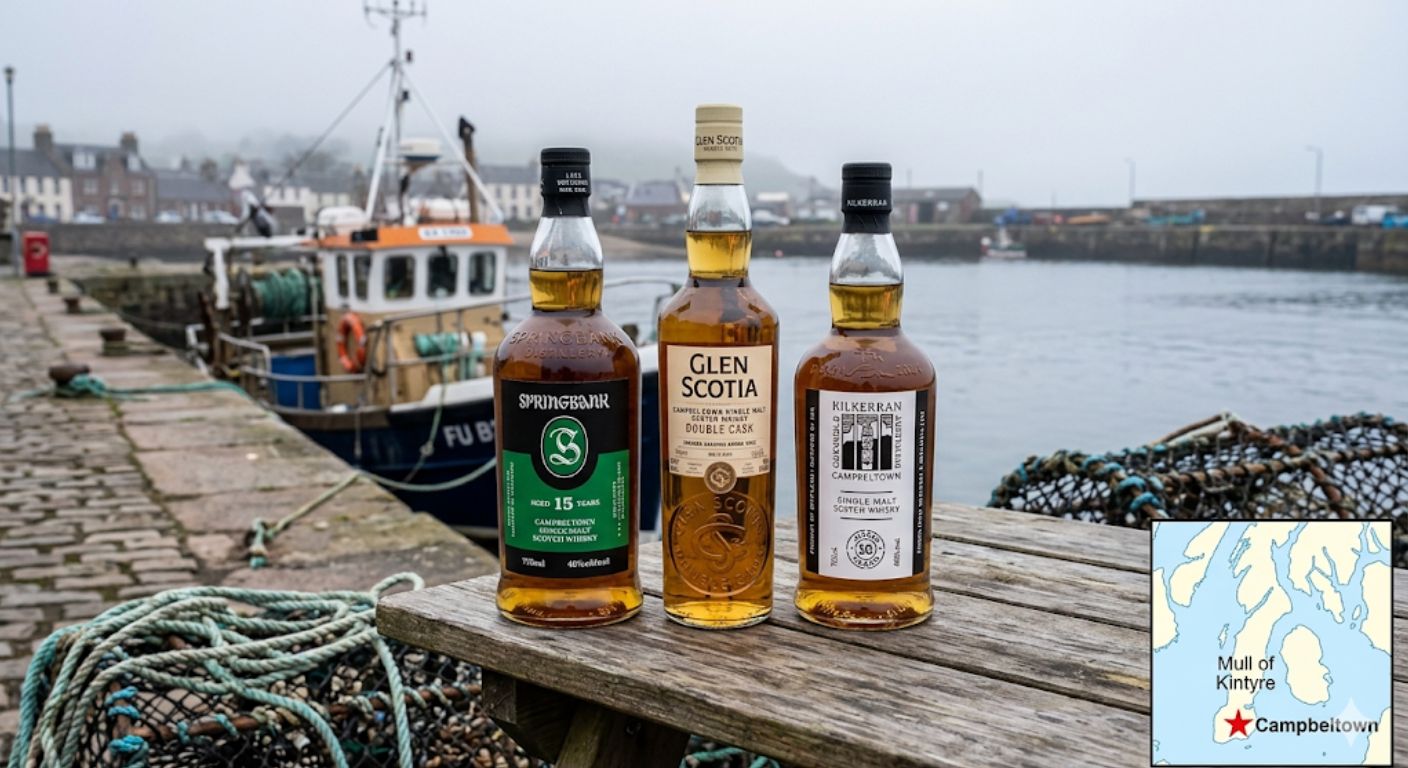
Campbeltown whisky is Scotch whisky produced in and around the town of Campbeltown on the Kintyre Peninsula in western Scotland. Once known as the “Whisky Capital of the World”, the region previously housed more than 30 distilleries. Today, only three active distilleries remain: Springbank, Glen Scotia, and Glengyle.
The style is typically associated with:
- Maritime or coastal influence
- Oily texture
- Salt or brine notes
- Earthy peat smoke
- Heavier spirit character
- Traditional production methods
Unlike Speyside or Highland whisky, Campbeltown is not defined by softness or easy-drinking consistency. Even the lighter expressions usually retain a dense, slightly industrial structure that enthusiasts often describe as “Campbeltown funk”.
For readers wanting a deeper regional breakdown rather than a buyer-focused guide, the dedicated Campbeltown whisky region guide explores the legal and historical structure of the region in more detail.
Where Is the Campbeltown Whisky Region?
The Campbeltown whisky region sits at the southern end of the Kintyre Peninsula in Argyll & Bute, western Scotland. It is a legally recognised Scotch whisky region, despite its small size and low number of operating distilleries.
A common misconception is that Campbeltown is an island region. It is not. The town sits on a remote peninsula connected to mainland Scotland.
That geography matters because the region’s coastal environment heavily influences maturation conditions. Many Campbeltown whiskies show maritime characteristics including:
- Sea spray
- Salted caramel
- Brine
- Mineral notes
- Coastal smoke
The Scotch Whisky Association provides the legal definitions for Scotch whisky production regions and protected designations on its official website: Scotch Whisky Association.
Why Was Campbeltown the Whisky Capital of the World?
During the late 19th century, Campbeltown became one of Scotland’s largest whisky-producing centres. At its peak, the town had more than 30 operating distilleries and exported whisky internationally at enormous scale.
Several factors contributed to its rise:
- Easy access to shipping routes
- Local coal supplies
- Strong demand from blending companies
- Large barley availability
- Rapid industrial expansion
The region’s decline came just as quickly.
Three major problems damaged Campbeltown’s reputation and commercial stability:
1. Overproduction and Falling Quality
As demand increased, some distilleries prioritised volume over quality. Inconsistent spirit character and poor production standards began damaging the region’s reputation.
2. The Pattison Crash
The Pattison whisky crash of 1898 destabilised large parts of the Scotch industry. Many financially weak producers failed shortly afterwards.
3. Prohibition in the United States
American Prohibition removed one of Scotland’s largest export markets. Campbeltown, heavily dependent on exports, was hit particularly hard.
By the mid-20th century, nearly every distillery had closed.
Only Springbank survived continuously. Glen Scotia narrowly survived several shutdown periods. Glengyle closed for decades before reopening under Mitchell’s ownership in the 2000s.
What Does Campbeltown Whisky Taste Like?

Campbeltown whisky usually combines maritime saltiness, oily texture, earthy notes, dried fruit, and smoke. Some bottlings are lightly peated while others are heavily smoky. Springbank expressions are particularly known for their industrial, oily “funk”.
Common flavour characteristics include:
- Salted toffee
- Engine oil
- Wet earth
- Coastal smoke
- Sea spray
- Leather
- Dried fruit
- Mineral notes
- Oily mouthfeel
The term “Campbeltown funk” is commonly used to describe the region’s slightly industrial, oily, sometimes earthy character. It is most strongly associated with Springbank.
That profile is not universally beginner-friendly. Some drinkers immediately gravitate towards it, while others prefer softer Speyside or Highland styles first.
Customers regularly ask us whether Campbeltown whisky is similar to Islay whisky because both can be coastal and smoky. In practice, Campbeltown is usually oilier and more industrial, while Islay often pushes peat smoke much further.
Readers specifically interested in peat-forward Scotch should also see the Best Peated Whisky guide.
The Three Campbeltown Distilleries
Modern Campbeltown whisky revolves around three distilleries:
- Springbank
- Glen Scotia
- Glengyle
Each produces a very different interpretation of the region.
Springbank Distillery
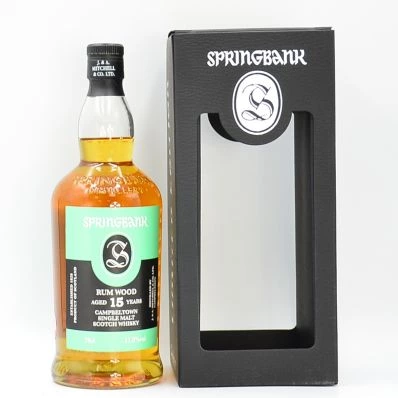
Springbank Distillery is the defining name of modern Campbeltown whisky. The distillery is known for traditional production methods, partial floor malting, manual processes, and unusually varied spirit styles.
The distillery produces three distinct whisky lines:
Springbank
- Medium peat level
- Two-and-a-half-times distilled
- Oily, maritime, earthy style
- Usually bottled around 46% ABV
This is the classic Campbeltown profile most enthusiasts associate with the region.
Longrow
- Heavily peated
- Double distilled
- Smokier and more powerful
- Often bottled at higher ABV
Longrow appeals more directly to peat enthusiasts.
Hazelburn
- Unpeated
- Triple distilled
- Softer texture
- Cleaner spirit profile
Hazelburn is often the easiest entry point for drinkers unfamiliar with Campbeltown whisky.
Scarcity is now a major issue with Springbank releases. Retail allocations are limited, and many standard releases immediately appear on the secondary market at double or triple retail pricing.
Readers wanting bottle-level analysis should see:
- Springbank 10 Year Old Review
- Springbank 15 Tasting Review
- Springbank 18 Year Old Tasting Review
- Springbank Vertical Tasting Review
Glen Scotia Distillery
Glen Scotia Disilltery produces a more approachable version of Campbeltown whisky while still retaining maritime structure and coastal character.
The distillery has gained significant recognition in recent years through:
- World Whiskies Awards success
- Strong single cask releases
- Well-received age-statement bottlings
- Improved modern core range consistency
Typical Glen Scotia characteristics include:
- Salted caramel
- Vanilla
- Coastal spice
- Light smoke
- Dried fruit
- Softer texture than Springbank
The Victoriana release is often recommended for experienced drinkers wanting a stronger, more concentrated Campbeltown style without the difficulty of sourcing Springbank.
Glengyle and Kilkerran
Glengyle distillery reopened in 2004 under Mitchell’s ownership after decades of closure. The whisky is released under the Kilkerran name due to trademark complications surrounding the Glengyle brand.
Kilkerran has become one of the fastest-growing enthusiast favourites in Scotch whisky.
The style sits somewhere between Springbank and Glen Scotia:
- Light maritime influence
- Oily texture
- Citrus
- Earthy peat
- Mineral structure
- Often bottled at higher ABV
Best Campbeltown Whisky by Style
For Beginners
- Glen Scotia Double Cask
- Hazelburn 10
- Kilkerran 12
These whiskies retain Campbeltown identity without overwhelming peat or heavy industrial notes.
For Peat Lovers
- Longrow Peated
- Kilkerran Heavily Peated
- Springbank Local Barley releases
For Collectors
- Older Springbank age statements
- Limited Local Barley editions
- Glen Scotia festival bottlings
- Single cask Kilkerran releases
- Early reopened Glengyle bottlings
Understanding ABV, Cask Types, and Age Statements
ABV
Many respected Campbeltown bottlings sit above 46% ABV.
Higher ABV generally means:
- Fuller texture
- Stronger peat impact
- More concentrated maritime notes
- Less dilution
Cask-strength releases can exceed 55–60% ABV.
Cask Types
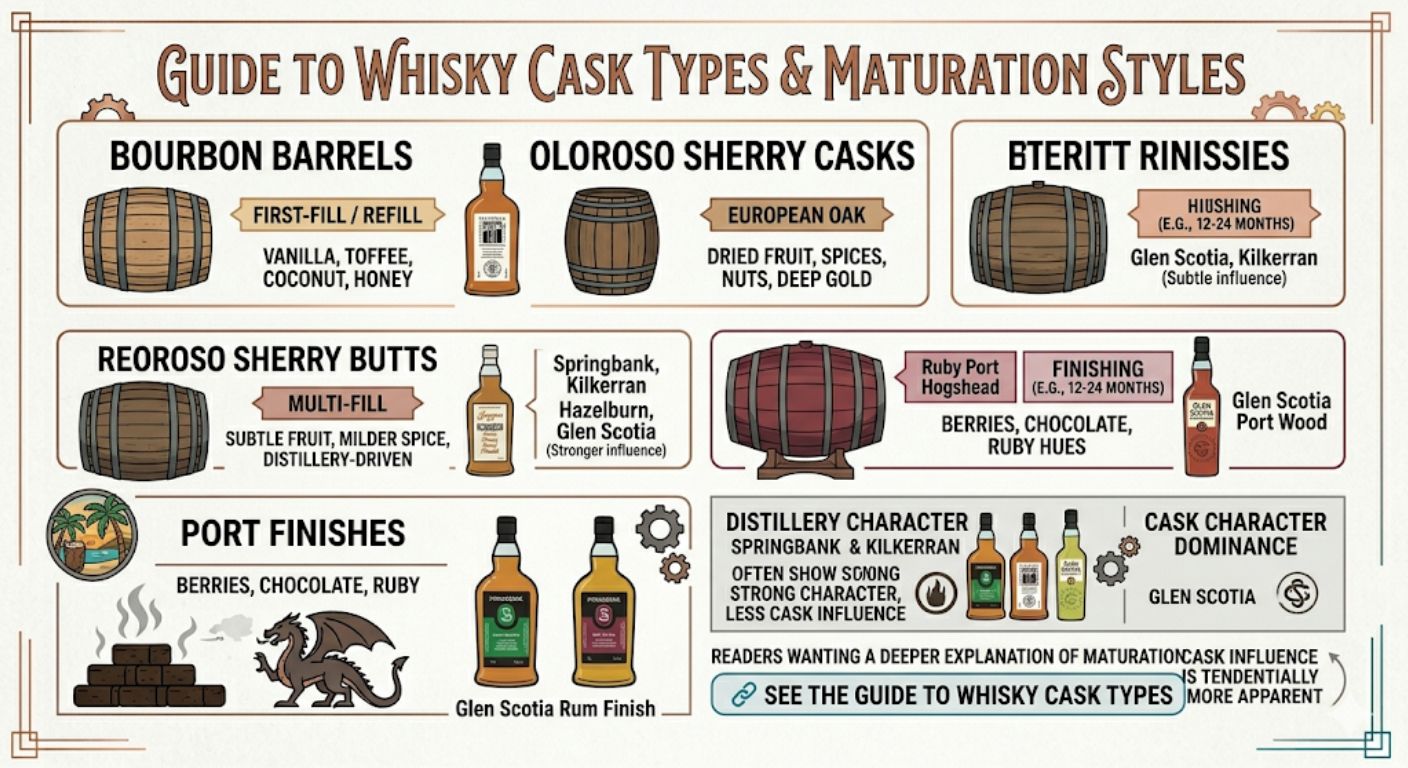
Common maturation styles include:
- Bourbon barrels
- Oloroso sherry casks
- Refill sherry butts
- Port finishes
- Rum casks
Readers wanting a deeper explanation of maturation should see the guide to whisky cask types.
Age Statements
- 8–12 years for younger core bottlings
- 15–18 years for premium age statements
- 21–25 years for older collector releases
The Best 18 Year Old Whisky guide explores how maturity affects whisky style across different regions and production approaches.
Why Is Springbank So Difficult to Find?
Springbank scarcity comes from several overlapping factors:
- Limited production capacity
- Traditional slow production methods
- Global enthusiast demand
- Allocation-based retail distribution
- Strong collector interest
The distillery does not produce enough whisky to satisfy worldwide demand.
Campbeltown Whisky Buying Guide
If You Want Traditional Campbeltown Character
- Springbank 10
- Kilkerran 12
- Glen Scotia Victoriana
If You Prefer Less Smoke
- Hazelburn
- Glen Scotia Double Cask
- Older bourbon-matured Glen Scotia releases
If You Prefer Heavy Peat
- Longrow
- Kilkerran Heavily Peated
If Your Budget Is £40–70
Focus on:
- Glen Scotia core range
- Kilkerran standard releases
If Your Budget Is £100+
Look at:
- Older Glen Scotia expressions
- Single cask bottlings
- Festival releases
- Older Kilkerran releases
Best Campbeltown Whisky UK Buyers Can Usually Find
- Glen Scotia Double Cask
- Glen Scotia Victoriana
- Kilkerran 12
- Longrow NAS releases
- Hazelburn 10
Readers wanting to browse currently available regional bottlings can explore the Campbeltown whisky category.
FAQ
What is Campbeltown whisky?
Campbeltown whisky is Scotch whisky produced in Campbeltown on Scotland’s Kintyre Peninsula. The region was once home to more than 30 distilleries and is now represented by Springbank, Glen Scotia, and Glengyle.
What does Campbeltown whisky taste like?
Campbeltown whisky usually combines maritime saltiness, oily texture, earthy notes, dried fruit, and smoke. Some bottlings are lightly peated while others are heavily smoky.
Is Campbeltown whisky peated?
Some Campbeltown whisky is heavily peated, while other expressions contain little or no peat. Longrow is heavily peated, Springbank is moderately peated, and Hazelburn is unpeated.
What is the difference between Springbank, Longrow, and Hazelburn?
Springbank is medium-peated and distilled two-and-a-half times. Longrow is heavily peated and double distilled. Hazelburn is unpeated and triple distilled.
Why is Springbank whisky expensive?
Springbank prices are driven by limited production, global demand, collector interest, and secondary market flipping.
Is Campbeltown whisky good for beginners?
Some Campbeltown whiskies work well for beginners, particularly Glen Scotia Double Cask and Hazelburn 10.
Structured Summary
Key Buying Rules
- Campbeltown whisky is usually oilier and more maritime than most Scotch regions
- Springbank, Glen Scotia, and Kilkerran all produce very different styles
- Peat levels vary significantly between releases
- ABV matters heavily in Campbeltown whisky
- Scarcity affects pricing, especially for Springbank
Common Buyer Mistakes
- Assuming all Campbeltown whisky tastes heavily peated
- Overpaying for inflated secondary market bottles
- Ignoring ABV differences
- Treating age statement as the only quality indicator
- Buying Springbank without understanding the flavour style first
Decision Shortcuts
- New to Campbeltown: start with Glen Scotia Double Cask
- Want classic regional character: choose Springbank 10
- Prefer peat: choose Longrow or Kilkerran Heavily Peated
- Want lower smoke: choose Hazelburn
- Want collector-focused releases: look at older Glen Scotia or Springbank bottlings
Readers exploring broader Cambletown whisky styles can browse the full Cambletown whisky collection.

Comments