
 Chat with us on WhatsApp

Insider’s Guide to the Five Scotch Whisky Regions
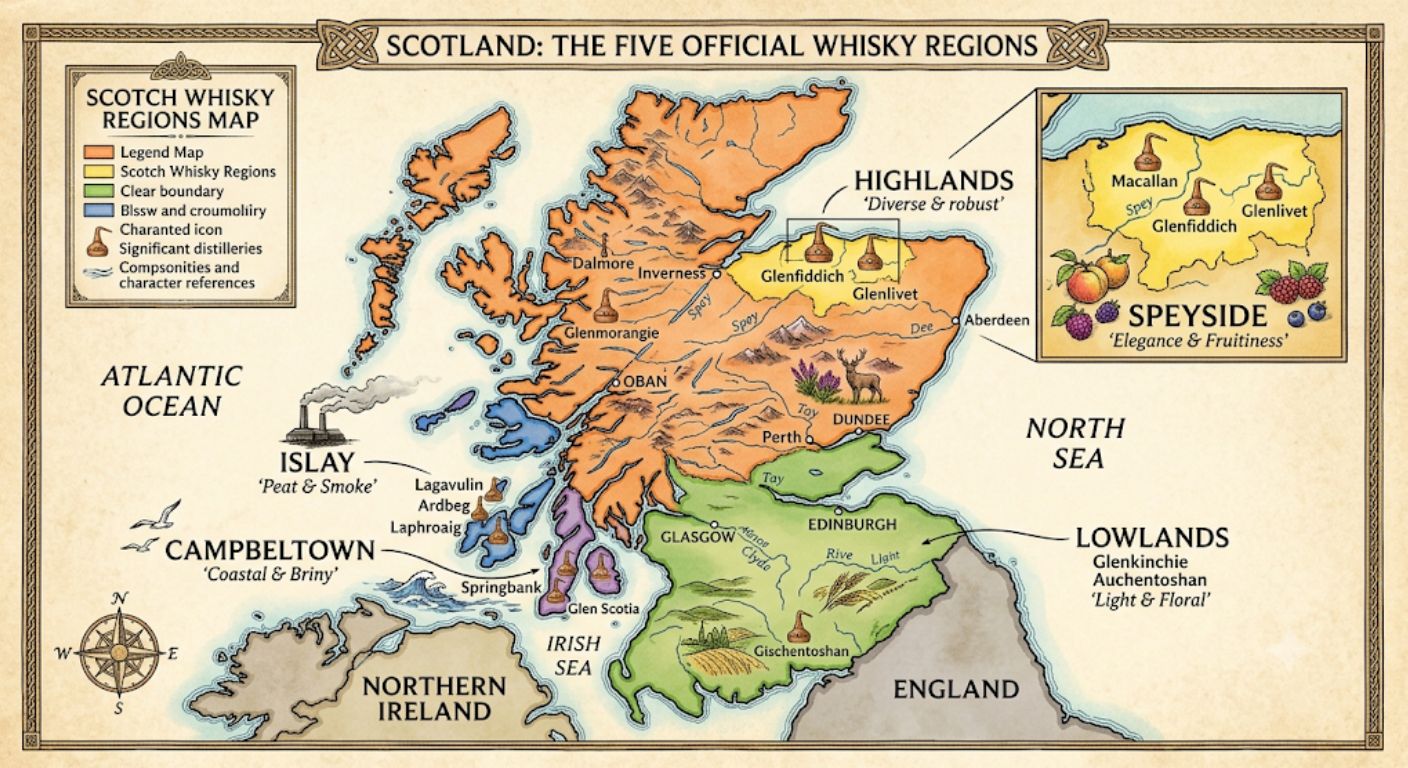
Scotland has five officially recognised whisky regions: the Highlands, Lowlands, Speyside, Islay and Campbeltown. These regional names help identify where a single malt was distilled, but they are not fixed guarantees of flavour. Production choices, cask type, maturation time and bottling strength can create major differences between distilleries in the same region.
This guide explains what each region represents, the styles commonly associated with it and how to use regional information when choosing a bottle. It also clarifies why the Islands are not a separate official region and which bottle details should be checked alongside location. Readers who want to compare bottles across the country can begin with the wider Scotch whisky collection.
What Are the Five Official Scotch Whisky Regions?
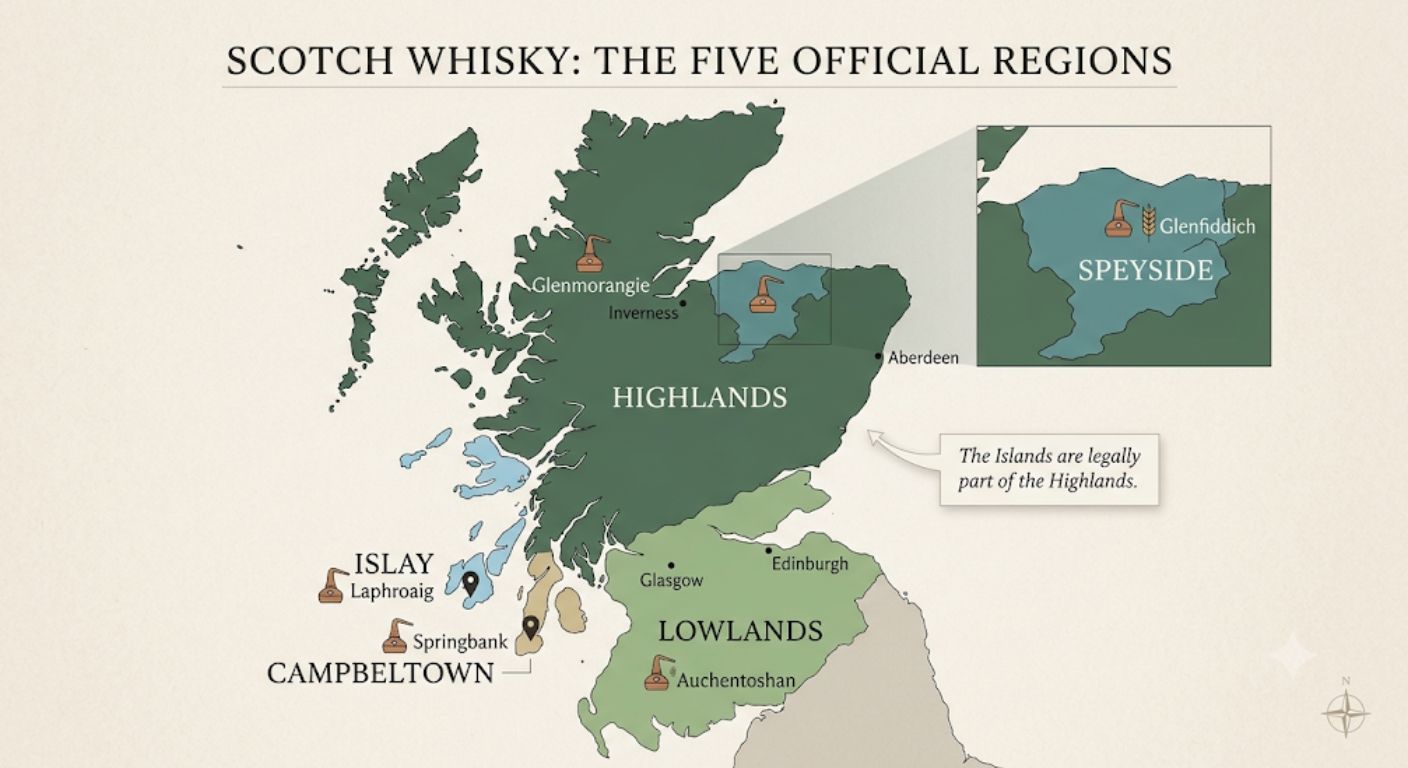
The five official Scotch whisky regions are the Highlands, Lowlands, Speyside, Islay and Campbeltown. Their names are protected geographical designations under the Scotch Whisky Regulations 2009. A producer cannot use one of these regional names unless the whisky meets the relevant geographical and production requirements.
The five regions are:
- Highlands: Scotland’s largest and most varied whisky region.
- Lowlands: Traditionally associated with lighter, softer spirit.
- Speyside: A concentrated distilling area known for fruit-led and cask-driven single malts.
- Islay: An island region closely associated with peat smoke and maritime character.
- Campbeltown: A small historic region producing oily, coastal and sometimes lightly smoky whisky.
The legal basis for these geographical names is set out in the Scotch Whisky Regulations 2009. The regulations also control how Scotch whisky is produced, matured, described and labelled.
Scotland now has a large and changing number of operational malt and grain distilleries. Our separate guide explains how many distilleries there are in Scotland and why totals can vary as sites open, close or move between production and dormant status.
How Much Does a Whisky Region Tell You About Flavour?
A region gives useful context, but it should be treated as a starting point rather than a complete tasting description. Speyside generally offers more fruit-led and unpeated options than Islay, but heavily peated Speyside whisky and unpeated Islay whisky both exist.
Several factors can have as much influence as location:
- Peat use: Malt dried with peat produces smoky and phenolic flavours.
- Fermentation: Longer fermentation can encourage fruitier or more complex spirit.
- Still shape: Tall stills and higher reflux generally produce a lighter spirit, while shorter stills can create a heavier style.
- Cask type: Ex-bourbon, sherry-seasoned and wine casks contribute different flavours and textures.
- Maturation time: Age affects integration and wood influence, but greater age does not automatically mean greater quality.
- ABV: A whisky bottled at 46% ABV or cask strength can feel substantially different from an expression bottled at 40% ABV.
Most people buying their first single malt underestimate how much the regional style matters; after one dram, it is usually the thing our customers either seek out again or quietly avoid next time.
Speyside Whisky
Speyside sits around the River Spey in north-east Scotland. It is geographically within the Highlands but has its own protected regional designation because of its unusually dense concentration of distilleries and long-standing distilling identity.
Speyside whisky is commonly associated with:
- Apple, pear and orchard-fruit notes
- Honey, vanilla and malt sweetness
- Dried fruit and spice from sherry-seasoned casks
- Low or moderate peat levels
- Accessible bottling strengths of around 40–46% ABV
These traits make Speyside a practical starting point for buyers who want to explore single malt without beginning with strong peat smoke. The region is not uniform, however. Some distilleries produce light, floral spirit, while others favour rich sherry maturation, heavier still character or limited peated runs.
Glenfiddich is one of the region’s most widely recognised distilleries and provides a clear reference point for Speyside’s fruit-led style. Its core expressions commonly combine orchard fruit, malt sweetness and restrained oak rather than dominant peat.
For more detail on the region’s boundaries, production history and important producers, see our Speyside whisky region guide.
Who Should Choose Speyside?
Choose Speyside if you prefer fruit, honey, vanilla, dried fruit or gentle spice. It is particularly suitable for newcomers, gift buyers who do not know the recipient’s peat preference and drinkers moving from blended Scotch into single malt. Buyers wanting a richer style should look for sherry-cask maturation rather than relying on the region alone.
Highland Whisky
The Highlands form the largest official Scotch whisky region. The area covers much of mainland Scotland north of the Highland Line and includes distilleries with very different climates, production traditions and spirit styles.
There is no single dependable Highland flavour profile. Depending on the distillery and its location, Highland whisky may be:
- Light, floral and citrus-led
- Honeyed, malty and softly fruity
- Rich, nutty and influenced by sherry-seasoned casks
- Waxy, mineral or full-bodied
- Coastal, salty or lightly smoky
Glenmorangie represents the lighter and more fragrant end of Highland whisky. Its tall stills encourage high reflux, contributing to a comparatively delicate new-make spirit that can show citrus, vanilla and floral characteristics after maturation.
The size of the Highlands makes the regional name less predictive than Speyside, Islay or Campbeltown. A buyer comparing two Highland bottles should pay close attention to the distillery, cask type, age statement and ABV rather than assuming they will taste similar.
Our Highland whisky region guide examines the region’s sub-areas and explains why northern, central, eastern and western Highland malts can differ so markedly.
Who Should Choose Highland Whisky?
Choose Highland whisky when you want variety rather than one tightly defined regional style. Lighter Highland malts suit drinkers who prefer citrus, vanilla and floral notes, while heavier examples work better for those seeking malt, wax, spice or richer cask influence. Check the individual distillery before buying.
Islay Whisky
Islay is a small island off Scotland’s west coast and one of the most distinctive official whisky regions. It is strongly associated with peat smoke, although not every Islay whisky is heavily peated.
Common Islay characteristics include:
- Peat smoke, ash and char
- Medicinal or antiseptic notes
- Seaweed, brine and coastal minerality
- Lemon, vanilla and malt beneath the smoke
- Oilier textures and long, smoky finishes
Peated whisky gains its smoky character when malted barley is exposed to smoke from burning peat during kilning. Phenolic compounds settle on the grain and carry through fermentation and distillation. The strength and type of smoke depend on the peat, kilning process and distillery specification.
Laphroaig is closely associated with Islay’s medicinal, maritime and heavily peated style. It is a useful reference point for experienced peat drinkers, but its iodine-like and smoky character can be challenging as a first single malt.
Islay also produces unpeated and lightly peated spirit. Regional reputation should therefore be checked against the individual bottle. Our detailed Islay whisky region guide covers peat levels, distillery locations and the differences between the island’s major producers.
Who Should Choose Islay?
Choose Islay if you already enjoy smoke, char, coastal flavours or strongly savoury spirits. If you are uncertain about peat, begin with a lightly peated expression rather than a cask-strength or heavily phenolic bottle. A standard bottling at 40–46% ABV will usually provide a more controlled introduction.
Lowland Whisky
The Lowlands cover southern Scotland, including areas around Glasgow, Edinburgh and the Borders. The region was historically known for producing lighter spirit, much of it intended for blending, although its modern distilleries now produce a broader range of styles.
Lowland whisky is commonly described as:
- Light-bodied and approachable
- Floral, grassy or citrus-led
- Softly malty with restrained peat
- Fresh and relatively delicate
Triple distillation is often associated with the Lowlands, but it is not a regional requirement and is not used by every Lowland distillery. Triple distillation can create a lighter, cleaner spirit by increasing copper contact and raising the strength of the new make, but still design and cut points remain important.
Auchentoshan is the best-known Scottish example of a distillery using triple distillation across its core malt production. Its style is generally lighter and more delicate than many double-distilled single malts.
New and revived distilleries have made the modern Lowlands more diverse than its traditional description suggests. The Lowland whisky region guide provides further context on the region’s development and current producers.
Who Should Choose Lowland Whisky?
Choose Lowland whisky if you prefer lighter body, floral notes, citrus or gentle malt. It can be a suitable introduction for new whisky drinkers and for buyers who find heavily peated or strongly sherried malts overwhelming. Check the cask details, as active wine or sherry casks can substantially increase richness.
Campbeltown Whisky
Campbeltown is located on the Kintyre Peninsula on Scotland’s west coast. It was once one of the country’s largest distilling centres, with dozens of operating distilleries during the nineteenth century. Closures reduced the region to a small number of surviving producers, but its protected status remains.
Campbeltown whisky is often associated with:
- Oily or weighty texture
- Coastal salt and mineral notes
- Malt, cereal and orchard fruit
- Industrial, waxy or slightly earthy character
- Light to moderate smoke in some expressions
These descriptors are useful but not universal. The remaining producers use different production methods and release whiskies with varied cask types, peat levels and bottling strengths.
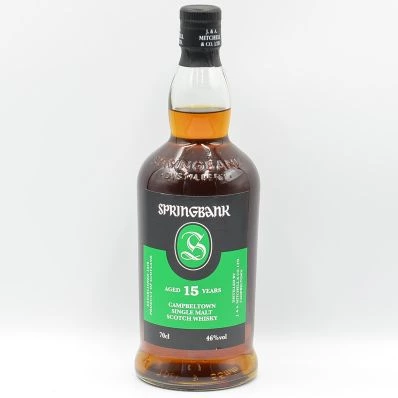
Springbank is central to Campbeltown’s modern identity. Its traditional production methods, partial triple distillation and lightly peated spirit contribute to a complex style that can combine malt, oil, fruit, smoke and coastal character.
Availability can be more limited than in larger regions because Campbeltown has relatively few active distilleries and some releases are produced in modest quantities. The Campbeltown whisky region guide explains the region’s rise, decline and surviving distillery structure.
Who Should Choose Campbeltown?
Choose Campbeltown if you want a more distinctive, textured single malt and already understand your tolerance for smoke and heavier spirit. It is less predictable than a soft Speyside entry bottle, so check the distillery, expression and ABV carefully. Limited availability can also push prices above equivalent-age bottles from larger regions.
Is the Islands an Official Scotch Whisky Region?
The Islands are not an official Scotch whisky region. Distilleries on Skye, Orkney, Mull, Jura, Arran, Lewis, Harris and other Scottish islands are legally classified as Highland producers, except those on Islay, which has its own protected regional designation.
Retailers and whisky writers often use “Islands” as a practical sub-category because many island distilleries share coastal settings. However, island whiskies do not have one consistent flavour profile. They range from light and unpeated to heavily smoky, maritime and full-bodied.
The term remains useful for browsing and comparison, but it should not be treated as a sixth legally protected region. The bottle’s formal designation will normally refer to Highland Single Malt Scotch Whisky unless it comes from Islay.
Speyside vs Islay: What Is the Difference?
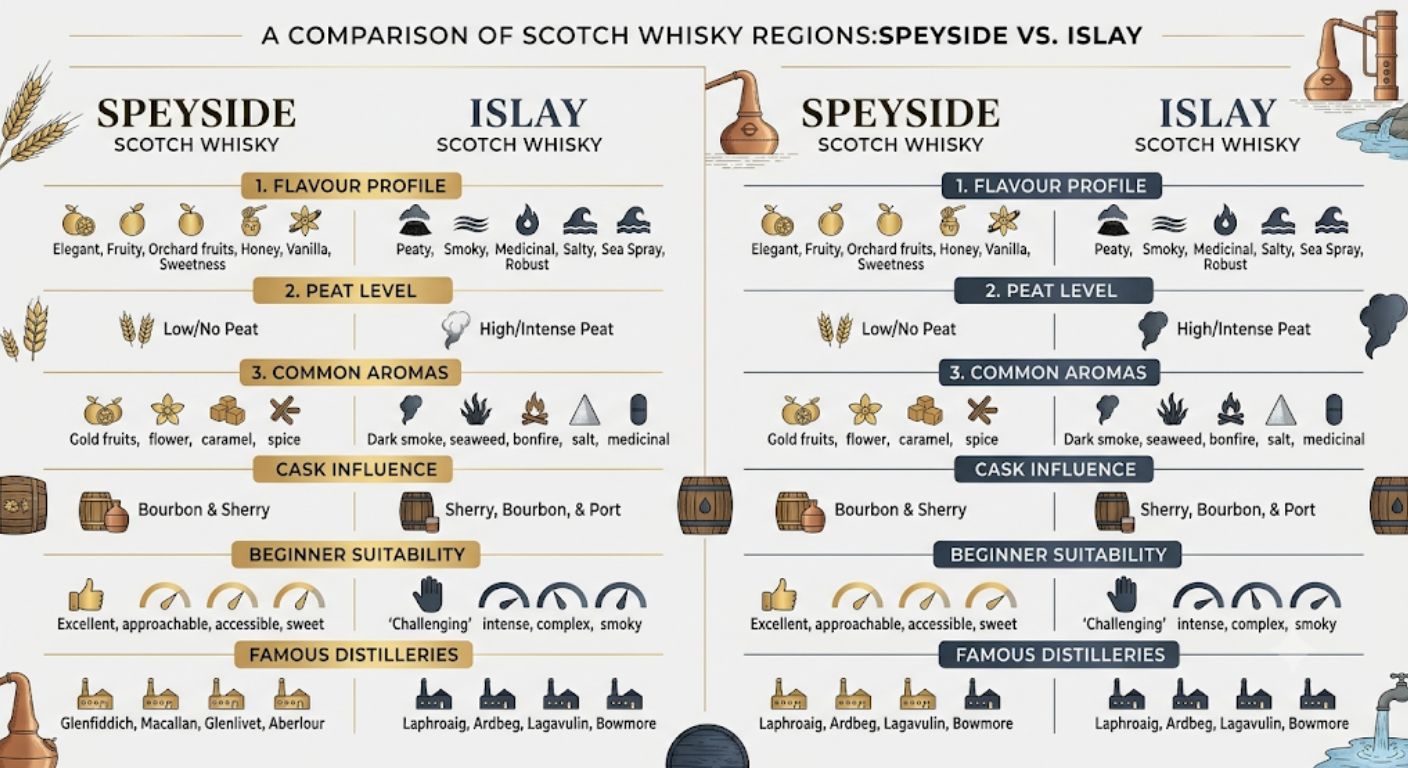
Speyside whisky is generally fruitier, sweeter and less heavily peated, while Islay is more closely associated with peat smoke, medicinal notes and coastal character. These are regional tendencies rather than absolute rules. The exact distillery, cask type and bottling strength remain essential when comparing bottles.
| Comparison | Speyside | Islay |
|---|---|---|
| Common flavour direction | Orchard fruit, honey, vanilla, dried fruit and spice | Peat smoke, ash, brine, medicinal notes and citrus |
| Typical peat level | Usually low or unpeated, with some exceptions | Often moderate to heavy, with unpeated exceptions |
| Beginner suitability | Usually a more accessible starting point | Better for drinkers who already enjoy smoky flavours |
| Cask influence | Ex-bourbon and sherry-seasoned casks are both common | Ex-bourbon is common, with sherry and wine casks also used |
| Buying risk | Rich sherry maturation may be heavier than expected | Strong peat can overwhelm buyers unfamiliar with smoke |
How Is Scotch Whisky Legally Defined?
Scotch whisky must be produced in Scotland according to controlled production and maturation rules. Regional identity is only one part of the definition. A bottle must also meet requirements covering ingredients, distillation, maturation, alcoholic strength and labelling.
- It must be produced at a distillery in Scotland. The base ingredients are water and malted barley, with other whole cereal grains permitted in relevant production categories.
- It must mature in Scotland for at least three years. Maturation must take place in oak casks with a capacity not exceeding 700 litres.
- It must be bottled at no less than 40% ABV. Bottlings below 40% ABV cannot legally be sold as Scotch whisky.
Scotch is divided into five legal production categories: Single Malt Scotch Whisky, Single Grain Scotch Whisky, Blended Malt Scotch Whisky, Blended Grain Scotch Whisky and Blended Scotch Whisky. These categories describe how and where the spirit was produced; they are separate from the five geographical regions.
How to Use Region, Age, ABV and Cask Type When Buying
The region should narrow the search, not make the final decision. Four details provide a more reliable picture of a bottle: distillery, age statement, ABV and cask type.
1. Start with the Region
Use the region to identify a broad direction. Speyside and Lowland whiskies are often easier starting points for buyers who prefer softer, fruitier spirit. Islay is more suitable for established peat drinkers. Highland and Campbeltown bottles require closer attention to the individual producer.
2. Check the Distillery
Distillery identity is usually more precise than region. Two neighbouring producers can use different peat levels, fermentation times, still shapes and cut points. Once you find a distillery style you trust, other releases from that producer become easier to assess.
3. Read the Age Statement Correctly
An age statement gives the age of the youngest whisky in the bottle. A 12-year-old single malt may contain older whisky, but none of its contents can be younger than 12 years.
Age does not guarantee quality. Older whisky normally carries a higher price because of extended storage, evaporation and reduced cask yield. However, a well-selected 10-year-old can be better balanced than an 18-year-old dominated by inactive or excessive oak.
4. Check the ABV
- 40–43% ABV: Usually accessible and easy to approach.
- 46% ABV: Often offers more body and flavour concentration.
- 50% ABV and above: More intense and may benefit from a small amount of water.
- Cask strength: Bottled with little or no reduction after maturation and can exceed 60% ABV.
Buyers unfamiliar with high-strength whisky should not assume that a familiar regional name guarantees an easy drinking experience. A 58% ABV Speyside single malt can feel more intense than a smoky Islay whisky bottled at 40% ABV.
5. Identify the Cask Type
Ex-bourbon casks commonly contribute vanilla, citrus, coconut and gentle oak. Sherry-seasoned casks can add dried fruit, nuts, spice and deeper colour. Wine casks may introduce red fruit, tannin or sweetness, depending on the previous contents and length of maturation.
Distinguish between full maturation and a finish. Full maturation means the whisky spent its stated maturation period in that cask type. A finish means it was transferred into another cask for a shorter final period.
Which Scotch Whisky Region Should You Choose?
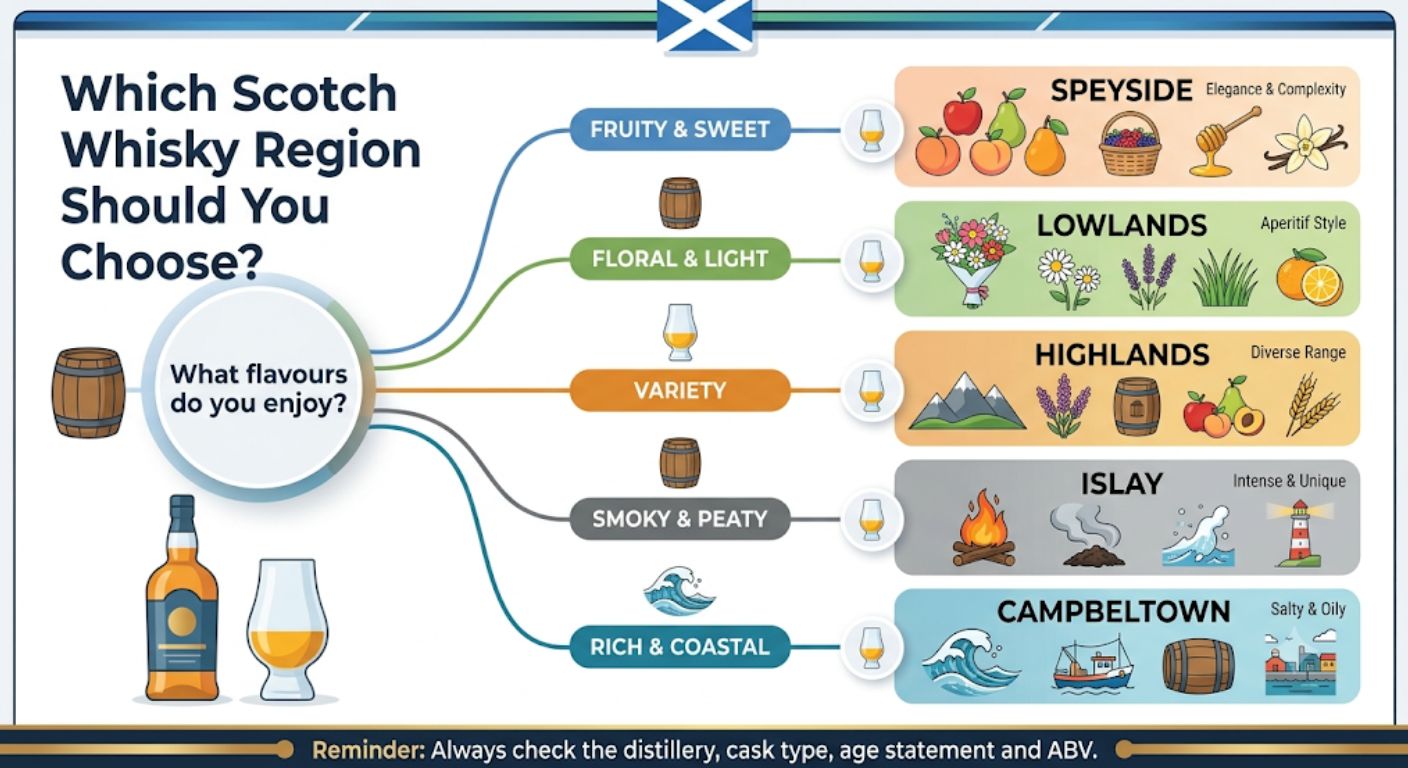
The right region depends on the flavours you already enjoy, your experience with peat and the strength of whisky you are comfortable drinking. Use the following rules to reduce the chance of choosing a bottle that does not suit you.
- If you prefer apple, pear, honey or dried fruit: Start with Speyside.
- If you prefer floral, grassy or citrus-led spirit: Consider the Lowlands or a lighter Highland malt.
- If you prefer peat smoke, ash or medicinal character: Choose Islay.
- If you prefer oil, malt, coastal salt and moderate smoke: Consider Campbeltown.
- If you want the broadest range of styles: Explore Highland distilleries individually.
- If you are new to single malt: Begin around 40–46% ABV before moving to cask-strength releases.
- If your budget is around £30–£60: Focus on established core-range Speyside, Lowland or Highland bottlings rather than older age statements or limited Campbeltown releases.
- If you are buying a gift: Avoid heavily peated Islay whisky unless the recipient’s preference is known.
Frequently Asked Questions
What is the most popular Scotch whisky region?
Speyside is one of the most prominent regions because it contains a high concentration of distilleries and many internationally recognised single malts. Popularity does not make it the correct choice for every drinker. Buyers who prefer smoke may favour Islay, while those seeking greater stylistic variety may prefer the Highlands.
Which Scotch whisky region is best for beginners?
Speyside is usually the safest starting point because many expressions are unpeated, fruit-led and bottled at an accessible 40–43% ABV. Lowland whisky can also work well for drinkers who prefer light, floral spirit. Beginners should check the ABV and cask type rather than choosing by region alone.
Is all Islay whisky smoky?
No. Islay is strongly associated with peated whisky, but the island also produces unpeated and lightly peated expressions. Peat levels can vary between distilleries and between releases from the same producer. Check the bottle description for terms such as unpeated, lightly peated, heavily peated or phenolic.
Does sea air make island whisky taste salty?
Coastal maturation is often used to explain salty or maritime notes, but flavour cannot be attributed to sea air alone. Distillery character, peat composition, cask selection and maturation conditions all contribute. Maritime descriptions are useful tasting references, not proof that salt physically entered the cask from the surrounding air.
Is Speyside part of the Highlands?
Speyside lies geographically within the wider Highland area, but it is a separate protected Scotch whisky region. A qualifying producer may label its whisky as Speyside rather than Highland. The distinction reflects Speyside’s concentration of distilleries, historical development and recognised regional identity.
What is the minimum maturation period for Scotch whisky?
Scotch whisky must mature in Scotland in oak casks for at least three years. The casks cannot exceed 700 litres. Many single malts mature for considerably longer, but a spirit aged for less than three years cannot legally be labelled or sold as Scotch whisky.
What does an age statement on Scotch whisky mean?
The age statement refers to the youngest whisky contained in the bottle. A 15-year-old blended or single malt Scotch cannot contain any whisky younger than 15 years. Older components may be included, but their presence does not allow the producer to display a higher age than the youngest component.
What must appear on a Scotch whisky label?
A label must accurately identify the relevant legal category, such as Single Malt Scotch Whisky or Blended Scotch Whisky. Any regional or locality name must be used lawfully. Where an age is stated, it must refer to the youngest component. The bottle must also show its alcoholic strength, which cannot be below 40% ABV.
Are there five or six Scotch whisky regions?
There are five official regions: Highland, Lowland, Speyside, Islay and Campbeltown. The Islands are often presented as a sixth region for practical browsing, but they have no separate protected regional status. Island distilleries outside Islay are legally classified within the Highland region.
-
-
-
-
-
-
-
-
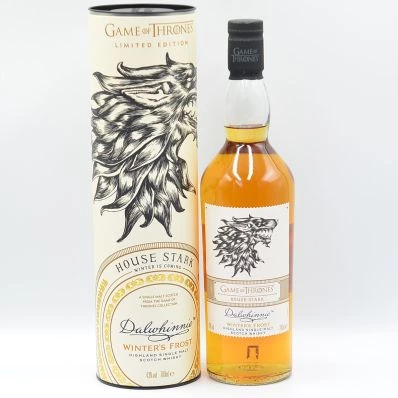 Game Of Thrones Whisky Dalwhinnie Winter's Frost House StarkSpecial Price £104.98 Regular Price £134.99 Inc VATSaving £30.01Out of stock
 -
-
-
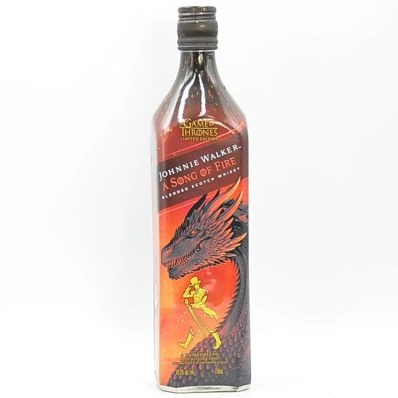 Game of Thrones Whisky Johnnie Walker A Song Of FireSpecial Price £139.98 Regular Price £144.99 Inc VATSaving £5.01
Scotch Whisky Regions: Key Rules and Decision Shortcuts
- Scotland has five official whisky regions: Highland, Lowland, Speyside, Islay and Campbeltown.
- The Islands are an informal sub-category of the Highlands, not a sixth official region.
- Region indicates broad context, but distillery character is usually more precise.
- Speyside is commonly fruit-led and accessible, while Islay is more closely associated with peat smoke.
- Highland whisky covers the widest range of styles.
- Lowland whisky is often lighter, but modern production is increasingly varied.
- Campbeltown commonly offers oily, coastal and characterful spirit.
- Scotch must mature in Scotland in oak casks for at least three years.
- The minimum legal bottling strength is 40% ABV.
- An age statement always identifies the youngest whisky in the bottle.
- Cask type and ABV can affect the drinking experience as much as region.
Common buying mistakes include assuming every Islay whisky is heavily peated, treating the Islands as an official region and choosing an older bottle without checking its cask type or strength. The most reliable shortcut is to use region to identify a broad style, then confirm the distillery, ABV, age statement and maturation details before buying.
To compare bottles by geographical origin, explore all Scottish whisky regions and use the regional filters alongside the bottle specifications.

Comments