
 Chat with us on WhatsApp


How To Read A Whisky Label
A whisky label is more than packaging. It tells you what type of whisky is in the bottle, where it comes from, how strong it is, how long it has matured, and sometimes what kind of cask shaped its character. Learning how to read a whisky label helps you avoid guessing from the front design alone.
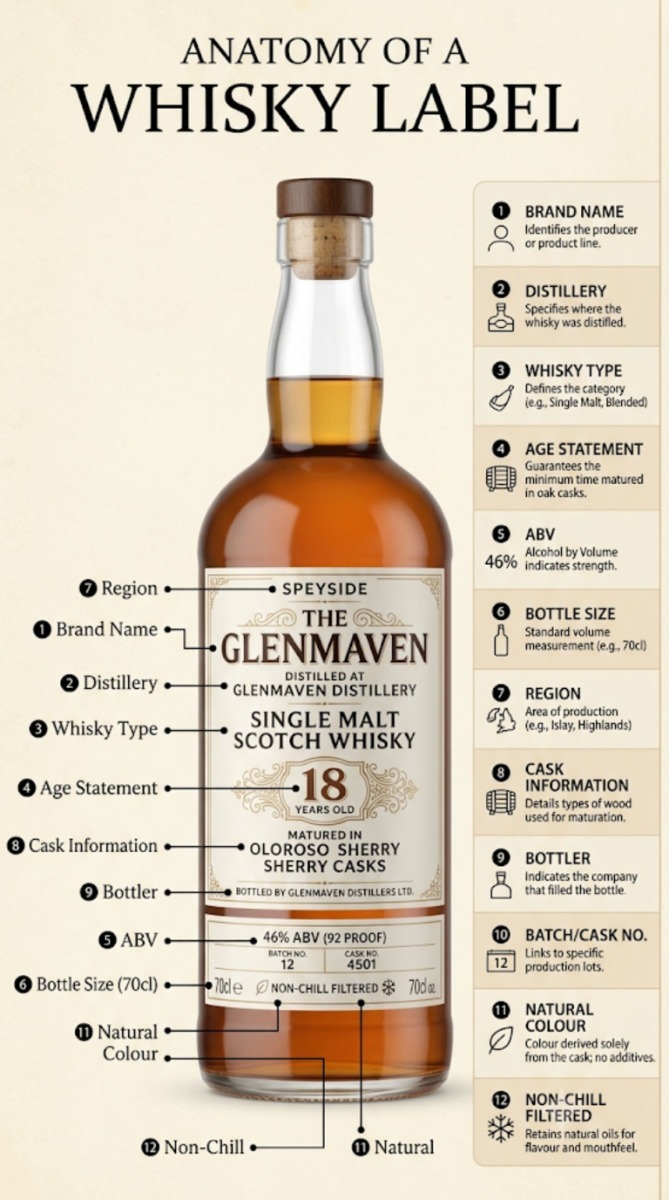
For Scotch, the most useful details are usually the category, age statement, ABV, region, cask information, bottler, and any notes on colour or filtration. If you are comparing bottles across Scotch whisky, these details give you a clearer idea of what you are buying before you reach the tasting notes.
Start With The Whisky Type

The whisky type tells you the legal category of the liquid. For Scotch, common label terms include single malt, single grain, blended malt, blended grain, and blended Scotch whisky.
- Single malt Scotch whisky comes from one distillery and is made from malted barley.
- Single grain Scotch whisky comes from one distillery but may use other grains and different still types.
- Blended Scotch whisky combines malt and grain whiskies from more than one distillery.
- Blended malt Scotch whisky combines malt whiskies from more than one distillery.
The word “single” does not mean single cask. It means the whisky comes from one distillery. A single malt can still be made from many casks married together before bottling.
Check The Age Statement
The age statement shows the youngest whisky in the bottle. If a bottle says 12 years old, every drop must be at least 12 years old, even if older casks are included in the final vatting.
This is one of the most misunderstood parts of a whisky label. Older does not automatically mean better. Age tells you how long the whisky matured in oak, not whether the balance, cask quality, or distillery character is right.
No Age Statement whisky, often shortened to NAS, does not automatically mean poor quality. It simply means the producer has chosen not to declare an age. Some NAS whiskies are built around younger, brighter casks; others include older stock but avoid being tied to a single number.
Look At The ABV
ABV means alcohol by volume. Scotch whisky must be bottled at a minimum of 40% ABV. Many standard releases sit at 40% or 43%, while more characterful or specialist bottlings often appear at 46%, 48%, or cask strength.
Cask strength whisky is bottled closer to the strength it reached in the cask, rather than being diluted down to a standard bottling strength. It can offer more intensity, but it may also need water in the glass.
One thing our customers often underestimate is how differently the same distillery can drink at 40% compared with cask strength, especially if they are buying a bottle as a gift.
Use Region As A Clue, Not A Rule
Regions can help you place a whisky geographically, but they are not a guarantee of flavour. Islay often suggests peat and coastal character, Speyside is often associated with fruit and sherry casks, and the Highlands can vary widely.
For a broader regional overview, use our guide to the five Scotch whisky regions. A label may point you towards a regional style, but the distillery, cask and ABV usually tell you more.
Read The Cask Information Carefully
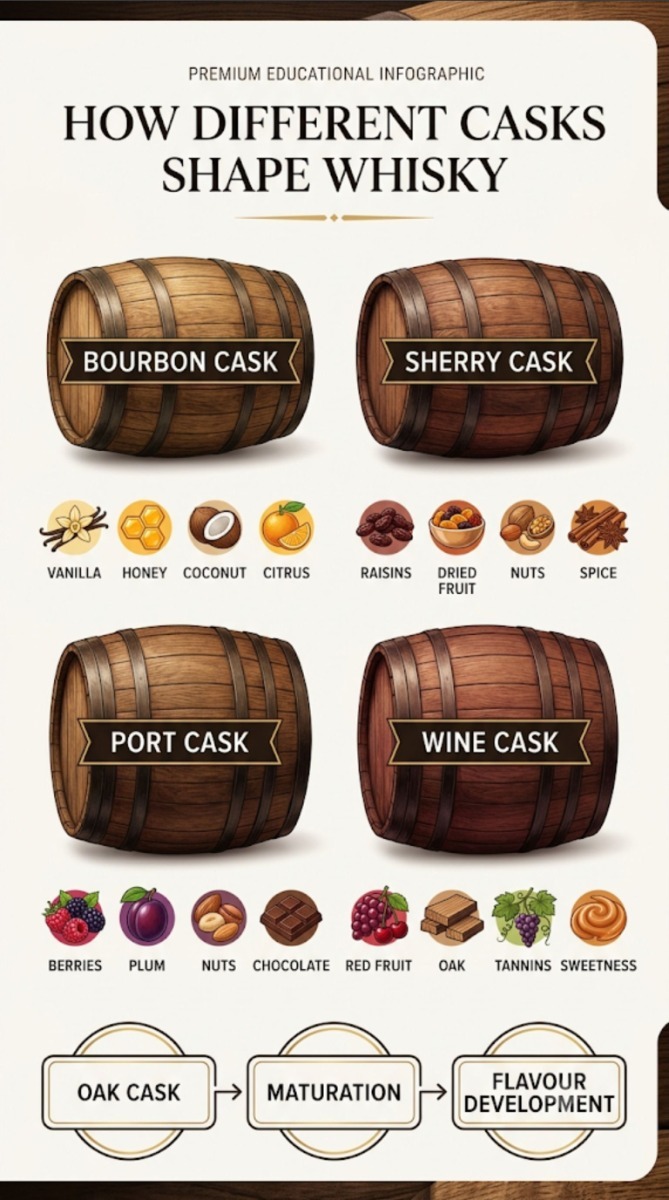
Cask terms can be very useful, but they need reading carefully. A whisky labelled as ex-bourbon cask will often lean towards vanilla, honey, citrus and lighter oak. Sherry casks tend to bring dried fruit, raisins, nuts, spice and richer sweetness.
A “finish” is different from full maturation. A sherry finish means the whisky spent part of its life in another cask before bottling. Full sherry maturation means the whisky matured entirely in that cask type.
Terms like first-fill, refill, single cask, double matured and cask finish all affect how much influence the wood is likely to have. They do not guarantee quality, but they do help explain why two bottles from the same distillery can taste very different.
Check The Bottler
The bottler tells you who released the whisky. An official bottling comes from the distillery or brand owner. An independent bottling is selected and bottled by a third-party bottler.
Independent bottlings can be especially useful for enthusiasts because they often show a distillery from a different angle: single cask releases, unusual cask types, higher ABV, or limited batches. When browsing all Scotch distilleries, it is worth comparing official and independent examples where both are available.
For example, Kilchoman labels often make the Islay identity clear, while bottlings connected with Badachro or Monkey Shoulder may require a closer look at category and bottling details.
Understand Colour And Filtration Claims
Some labels mention “natural colour” or “non-chill filtered”. Natural colour means the colour comes from cask maturation rather than added caramel colouring. Non-chill filtered means the whisky has not gone through a filtration process designed to stop cloudiness when chilled or diluted.
If a non-chill filtered whisky turns cloudy when you add water or ice, that is not a fault. It is usually caused by natural oils and compounds becoming visible. Many enthusiasts see this as a sign that more texture has been retained.
What To Prioritise When Buying
If you are reading a whisky label quickly, use this order:
- Type: single malt, blend, grain, bourbon, rye or another category.
- Origin: country, region and distillery if stated.
- ABV: standard strength or higher-strength bottling.
- Age: youngest whisky in the bottle, if declared.
- Cask: bourbon, sherry, wine, refill, first-fill or finish.
- Bottler: official bottling or independent bottling.
- Transparency details: natural colour, non-chill filtered, batch or cask number.
This gives you a practical reading order without getting distracted by design, story copy, or broad flavour claims.
FAQ
What does an age statement on a whisky label mean?
An age statement shows the youngest whisky in the bottle. A 15-year-old whisky may include older casks, but it cannot include whisky younger than 15 years. The number is a minimum age, not an average age.
Is No Age Statement whisky lower quality?
No Age Statement whisky is not automatically lower quality. It means the producer has chosen not to declare the youngest component. Some NAS whiskies are built for flexibility, allowing younger and older casks to be combined for a target style.
What does non-chill filtered mean?
Non-chill filtered whisky has not been processed to remove natural oils and fatty compounds that can cause cloudiness. It may look hazy when water or ice is added, but this is not a defect. It can also preserve more texture.
What does cask strength mean?
Cask strength means the whisky has been bottled close to the strength it reached in the cask, without being diluted down to a standard ABV such as 40% or 43%. It is usually stronger and more concentrated.
Does region tell you how a whisky will taste?
Region gives a useful clue, but it is not a flavour guarantee. Distillery style, cask type, peat level, age and ABV all affect the final character. Region is best treated as a starting point, not a final answer.
-
-
 Jack Daniel's - Master Distiller Batch 2 Jess Motlow Limited Edition Bourbon Whiskey£164.99 Inc VATOut of stock
 -
-
-
-
-
-
-
-
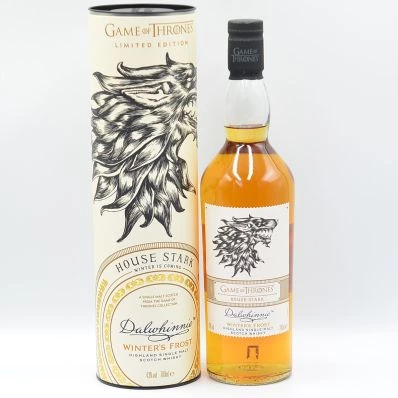 Game Of Thrones Whisky Dalwhinnie Winter's Frost House StarkSpecial Price £104.98 Regular Price £134.99 Inc VATSaving £30.01Out of stock
 -
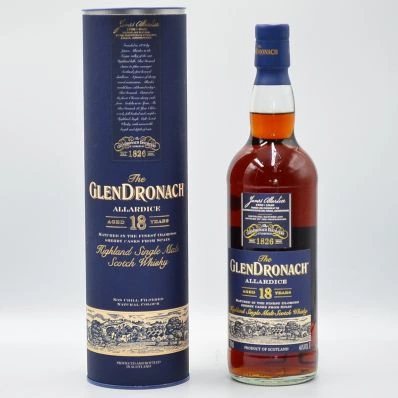
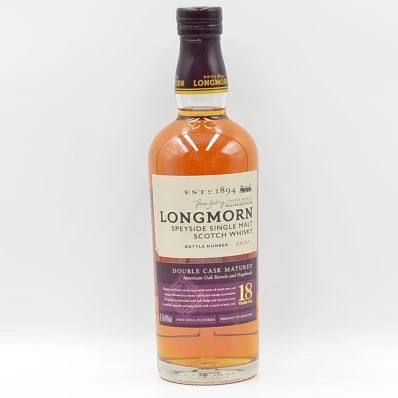
Final Thoughts
The best way to read a whisky label is to focus on the factual details first: type, distillery, age, ABV, cask, bottler, colour and filtration. These details tell you far more than the front-label design.
Once you know what each part means, a label becomes a practical buying tool. It helps you compare bottles, understand production choices, and explore Scotch whisky bottles with more confidence.

Comments