
 Chat with us on WhatsApp


The Most Collectible Scotch Whiskies
Collectible Scotch whisky is not defined by price alone. The strongest bottles usually combine recognised distillery reputation, genuine scarcity, condition, provenance, age, cask detail and long-term collector demand. A limited label does not automatically make a whisky collectible; supply has to be meaningfully constrained and the bottle has to matter to buyers beyond the initial release.
This guide explains what makes Scotch whisky collectible, which distilleries are most commonly sought after, and how to judge a bottle before buying. It is written for collectors, enthusiasts and buyers who want to understand the difference between a genuinely important bottle and a release that is simply marketed as limited. For current examples, the natural starting point is the collectible whisky selection, where older, discontinued and harder-to-find bottles sit in one place.
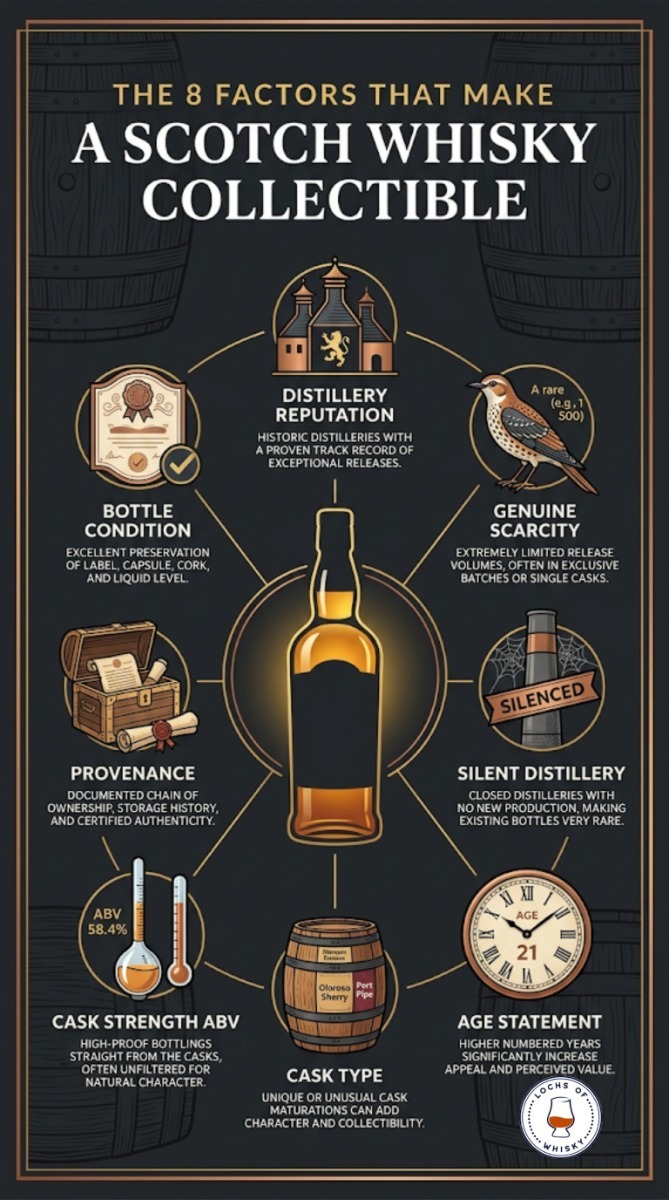
What Makes A Scotch Whisky Collectible?
A Scotch whisky becomes collectible when demand is likely to outlast normal drinking interest. The main drivers are finite supply, distillery reputation, age statement, vintage, cask type, bottling strength, packaging condition and provenance. The best bottles usually have several of these factors working together.
The clearest sign is genuine scarcity. That can come from a closed distillery, a discontinued series, a single cask, an old vintage, or a release that was bottled in small numbers and never repeated. Marketed scarcity is weaker. A bottle can say “limited edition” on the label and still be easy to replace.
Collectors also look at the full specification. A 30-year-old single malt from a recognised distillery will usually attract more interest than a young, no-age-statement release from the same producer. Cask strength bottlings, sherry cask maturation, single cask releases and older vintages often carry stronger collector signals because they are harder to replicate.
- Distillery: Is the producer strongly followed by collectors?
- Age or vintage: Is the whisky old, from a notable era, or clearly dated?
- Cask detail: Is the cask type disclosed and meaningful?
- ABV: Is it standard strength, high strength or natural cask strength?
- Condition: Is the fill level, label, capsule and box intact?
- Provenance: Can the bottle’s ownership and authenticity be trusted?
The Scotch Distilleries Collectors Watch Closely
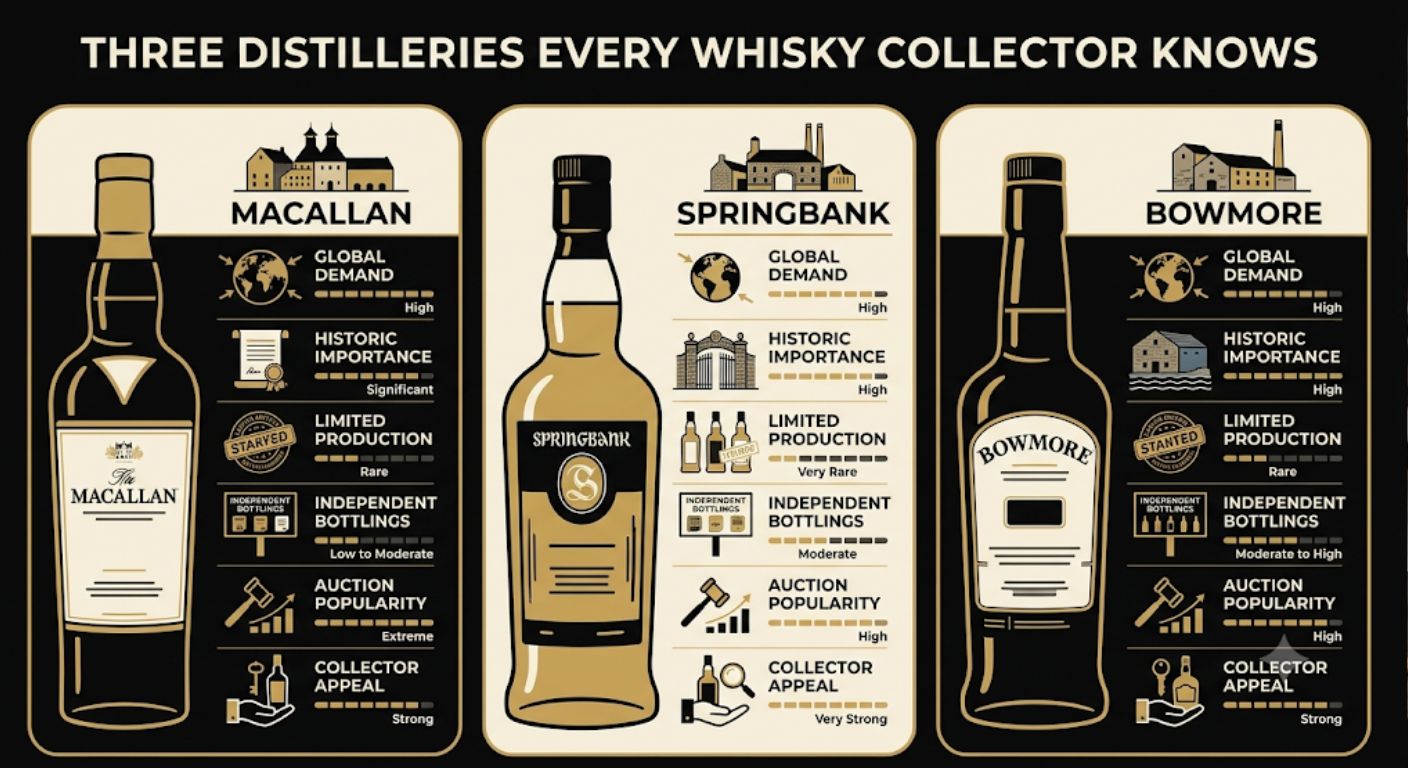
Collector interest is not spread evenly across Scotch whisky. Some distilleries have built long-term demand because of historical importance, production style, limited supply, strong independent bottlings or auction visibility.
Macallan
Macallan is one of the most recognised names in collectible Scotch whisky. Older sherry-cask releases, Fine & Rare bottlings, anniversary editions and early vintage expressions are especially closely followed. The brand’s strength comes from consistency, global demand and a long record of high-profile collector interest.
That does not mean every Macallan bottle should be treated the same. Entry-level modern releases, wide-distribution editions and heavily marketed launches need more careful judgement. The strongest Macallan bottles usually combine age, vintage, sherry cask influence, original packaging and excellent condition.
Springbank
Springbank attracts collectors for different reasons. It has limited production, traditional floor maltings, strong Campbeltown identity and a highly engaged enthusiast base. Demand is not driven only by luxury positioning. It is driven by credibility among drinkers and collectors.
Springbank 10, 12 Cask Strength, 15, 18, 21 and local barley releases all attract attention, but the strongest bottles tend to be older, well-preserved or part of limited series. Campbeltown’s smaller production base also reinforces scarcity. Buyers interested in the wider category can browse Scotch whisky by region, distillery and style.
Bowmore
Bowmore is one of Islay’s most important collector distilleries. The most sought-after examples include older vintages, 1950s and 1960s bottlings, Black Bowmore releases and notable independent bottlings. Bowmore’s appeal comes from historic depth, distillery identity and the rarity of older stocks.
Collectors should pay particular attention to fill level, label condition and capsule integrity on older Bowmore bottles. Many important examples are decades old, so condition becomes part of the bottle’s value and credibility.
Silent Distilleries And Closed Scotch Whisky
Closed distilleries are collectible because supply cannot be replaced. Once mature stock is bottled and consumed, there is no new production from the original period. That makes silent distillery whisky one of the clearest examples of physical rarity.
Port Ellen, Brora, Rosebank, Dallas Dhu, Littlemill and St Magdalene are often discussed in this context. Even where a distillery has been revived, old stock from the original production era remains separate. A new Port Ellen or Brora release does not replace whisky distilled before closure.
Silent distillery bottles need careful buying discipline. Look for clear bottler information, distillation year, bottling year, age statement, cask reference where available and trustworthy provenance. Independent bottlings can be especially important because many closed-distillery releases reached collectors through specialist bottlers rather than official distillery channels.
Official Bottlings, Independent Bottlings And Single Casks
Official bottlings are released by the distillery owner. They often carry stronger brand recognition and are easier for newer collectors to understand. Independent bottlings are selected and bottled by a separate company, often from individual casks. These can show a distillery in a less standardised style.
Single cask releases are particularly relevant because each cask is finite. Once bottled, the exact whisky cannot be repeated. A single cask Scotch at natural colour, non-chill filtered and cask strength may attract serious enthusiasts even when the distillery is less famous.
Our customers often underestimate ABV on collectible bottles; a cask-strength release at 55–60% can be very different from the same distillery bottled at 40–46%, both in drinking style and collector appeal.
Independent bottlings should be judged on the strength of the distillery, the reputation of the bottler, the cask information and the number of bottles released. A well-documented 20-year-old single cask from a respected bottler can be more collectible than a vague official limited edition with little production detail.
Age Statement, Vintage And Cask Type
Age matters, but it is not the only measure. A 25-year-old whisky from tired wood can be less interesting than a 12-year-old from an excellent active sherry cask. Collectors usually give weight to age statements above 18 years, but cask quality and distillery reputation still matter.
Vintage and distillation year can add another layer of interest. A bottle distilled in the 1960s, 1970s or 1980s may reflect a production era that no longer exists. Changes in barley varieties, yeast, still operation, cask policy and ownership can all affect why older whisky is sought after.
Cask type is another major signal. Sherry-seasoned oak, bourbon barrels, port pipes, Madeira casks and unusual finishes all influence flavour and collectability. Full maturation usually carries more weight than a short finish. A whisky matured entirely in a sherry butt for 25 years is not the same proposition as a younger whisky finished briefly in sherry wood.
Condition And Provenance
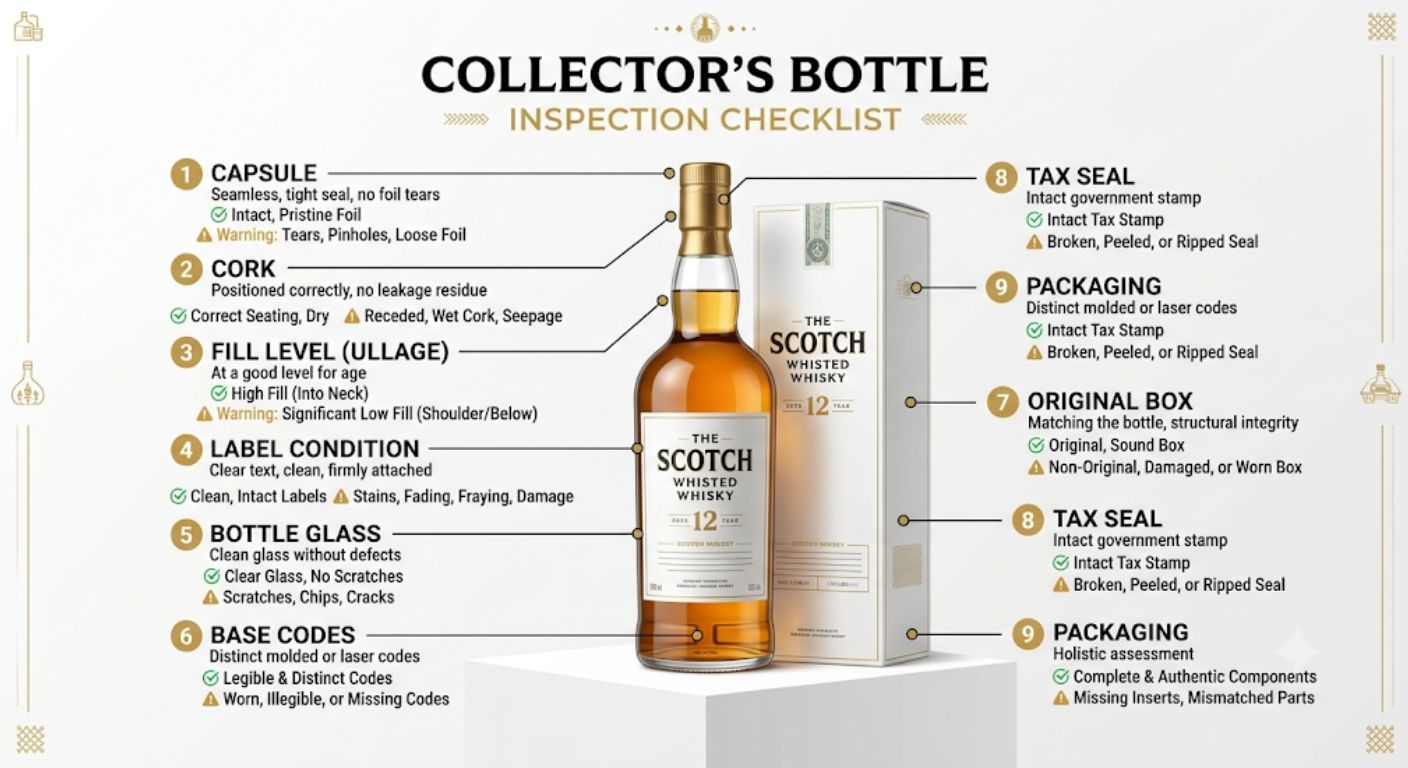
Condition is not cosmetic detail. It affects confidence. A collectible bottle should be checked for fill level, capsule condition, label damage, signs of leakage, torn seals, fading, staining and whether the original box or tube is present.
Fill level is especially important on older bottles. Some evaporation can be normal, but a low shoulder fill, sticky capsule or stained label may indicate leakage. Original packaging also matters. A complete bottle with box, booklet or wooden case will usually be more desirable than the same bottle without packaging.
Provenance means the bottle’s ownership and storage history. Receipts, auction records, original retailer invoices and credible specialist sourcing all help. For high-value bottles, this is not optional. Counterfeit risk increases with price, age and famous distillery names.
Storage Rules For Collectible Whisky
Whisky should be stored upright, away from sunlight, in a stable cool environment. Unlike wine, Scotch whisky should not be stored on its side because high-strength alcohol can degrade the cork over time.
- Keep bottles upright to protect the cork and capsule.
- Avoid direct sunlight to prevent label fading and light damage.
- Keep temperature stable, ideally around 15–20°C.
- Avoid damp storage that can damage boxes and labels.
- Keep original packaging with the bottle wherever possible.
Buying Collectible Scotch: Retailer, Auction Or Private Sale
There are three common routes into collectible Scotch: specialist retailers, auction houses and private sellers. Each has different risks.
A specialist retailer gives clearer pricing, direct purchase, consumer protection and a simpler buying process. Auction houses can offer access to unusual bottles, but the hammer price is not the final price. Buyer’s premium, VAT on fees, shipping, insurance and storage costs can change the real cost significantly.
Private sales carry the highest risk unless the seller is known and the bottle has strong documentation. Buyers need to consider authenticity, payment protection, alcohol sale rules and shipping legality. UK sellers should also understand tax reporting and disposal rules; HMRC guidance on capital gains tax on personal possessions is relevant when higher-value bottles are sold.
Decision Logic: Which Collectible Scotch Should You Choose?
Start with the reason you are buying. A drinking-led collector should not use the same decision process as someone preserving older bottles. The best choice depends on budget, risk tolerance and how much research you are willing to do.
- If you are new to collecting, start with recognised distilleries, clear age statements and complete packaging. Avoid obscure bottles with weak provenance.
- If your budget is £50–£150, look for limited independent bottlings, cask strength releases and discontinued core expressions. Avoid paying inflated prices for common modern releases.
- If your budget is £150–£500, consider older single malts, Springbank releases, notable Islay bottlings and well-documented single casks.
- If you want long-term collector interest, prioritise distillery reputation, finite supply, condition and provenance over packaging design.
- If you want lower risk, buy from specialist retailers rather than unknown private sellers.
- If you are buying closed distillery whisky, check distillation year, bottler, fill level and capsule condition before price.
Collectors should also separate bottle collecting from financial speculation. Market conditions change, and not every collectible bottle rises in value. For broader context, read the dedicated whisky investment guide and the current whisky investment market 2026 overview.
Common Mistakes When Buying Collectible Scotch
- Buying the label, not the specification: A famous distillery name is not enough. Check age, ABV, cask type and release size.
- Ignoring condition: A damaged label, poor fill level or missing box can reduce desirability.
- Confusing limited with scarce: Not all limited releases become collectible.
- Overpaying during hype: New releases can spike early and settle later.
- Ignoring fees: Auction premiums, shipping and insurance can materially change the final cost.
- Buying without provenance: The higher the price, the more documentation matters.
FAQ
Which Scotch whisky is worth collecting?
Scotch whisky worth collecting usually comes from recognised distilleries, closed distilleries, older age statements, discontinued releases, single casks or respected independent bottlers. Macallan, Springbank and Bowmore are commonly watched, but condition, provenance and cask detail matter as much as the name on the label.
Are limited edition Scotch whiskies always collectible?
No. Limited edition only matters when demand remains strong after release and supply is genuinely constrained. A bottle with clear age, cask detail, small outturn and strong distillery reputation is more collectible than a large-volume release with limited packaging but little technical detail.
Is old Scotch whisky always valuable?
No. Age helps, but value depends on distillery, condition, fill level, packaging, provenance and buyer demand. Some older blends have modest value, while younger single cask malts from sought-after distilleries can attract strong collector interest.
Should collectible whisky be opened?
Opening a bottle usually removes most of its collector value. If the aim is drinking, open it and enjoy it. If the aim is preservation, keep it sealed, upright, boxed and stored away from heat and light.
What ABV is best for collectible Scotch?
There is no single best ABV, but cask strength releases often attract collectors because they are less diluted and usually closer to the original cask character. Many collectible single casks sit between 50% and 60% ABV, though older official bottlings at 40–46% can still be highly desirable.
Does the box matter?
Yes. Original packaging can materially affect desirability, especially for older or higher-value bottles. Wooden cases, tubes, booklets and certificates should be kept with the bottle. Damaged or missing packaging does not make a bottle worthless, but it can reduce collector confidence.
Where should I start if I want to collect Scotch?
Start with clear, well-documented bottles from recognised Scotch distilleries. Look for age statements, known bottlers, good condition and sensible pricing. Avoid high-risk private sales until you understand fill levels, capsules, labels and provenance checks.
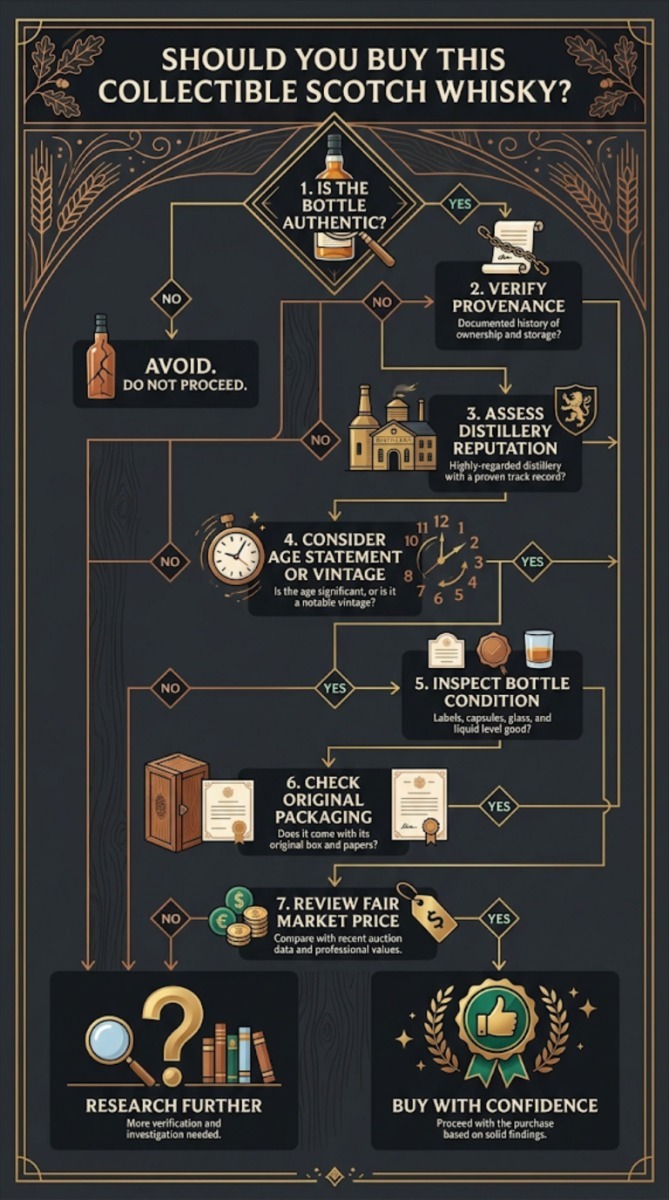
Summary: The Rules For Collectible Scotch Whisky
- Prioritise genuine scarcity over marketing language.
- Use distillery reputation as a starting point, not the whole decision.
- Check age statement, vintage, ABV, cask type and bottler.
- Inspect fill level, label, capsule and packaging before buying.
- Be cautious with private sales unless provenance is strong.
- Store bottles upright, cool, dark and stable.
- Avoid assuming every limited release will become collectible.
The strongest collectible Scotch bottles are usually specific, well-documented and difficult to replace. They do not rely on broad claims. They show their importance through distillery, age, cask, condition and provenance. For buyers comparing older, discontinued or harder-to-find bottles, the broader old and rare collectible whisky range is the most relevant place to continue browsing.
Source brief used:

Related Products
-
-
-
-
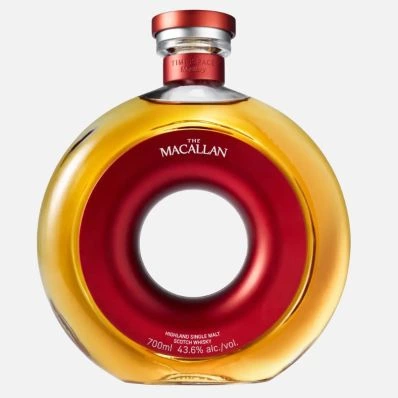 Macallan Time Space Mastery Single Malt WhiskySpecial Price £1,249.98 Regular Price £1,499.99 Inc VATSaving £250.01

Comments