
 Chat with us on WhatsApp

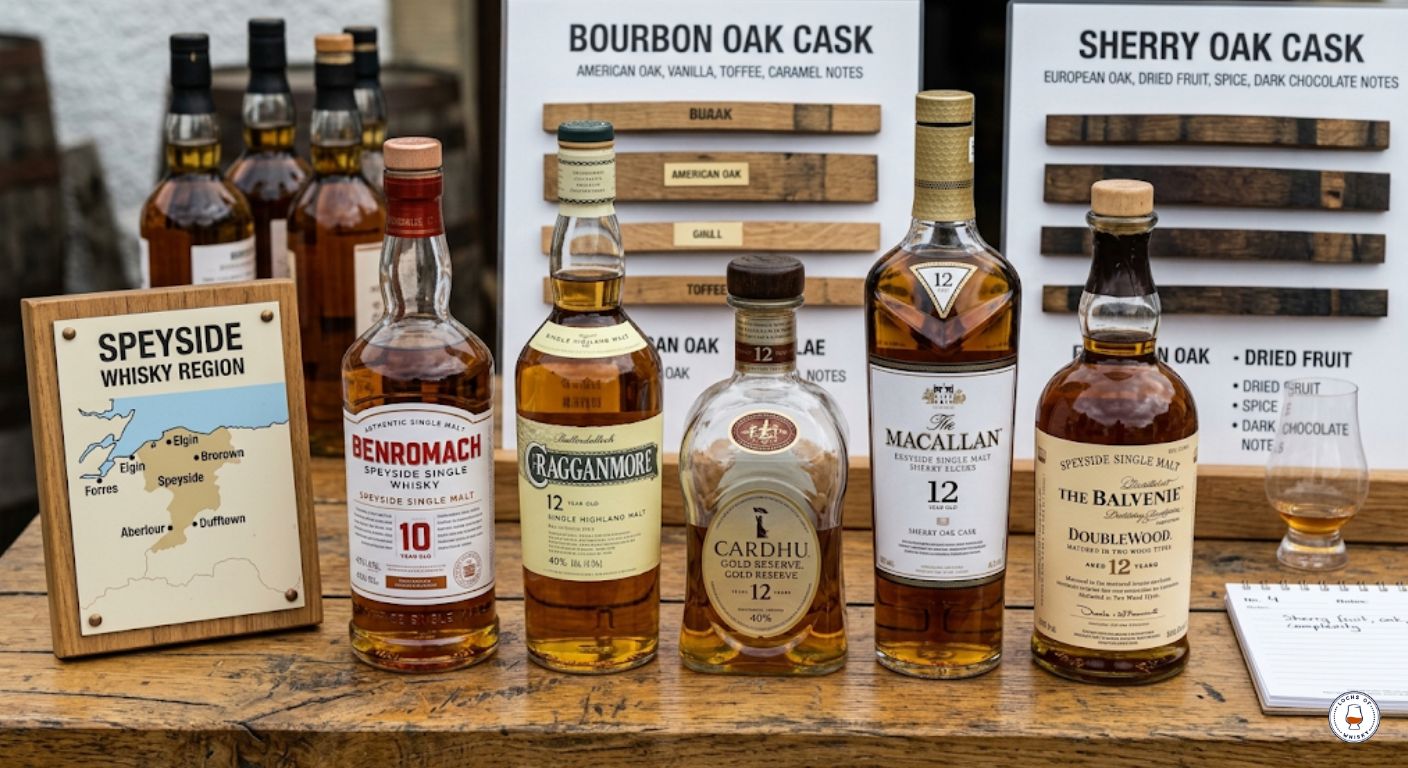
Speyside Whisky Tasting Notes
Speyside whisky is often described as fruity, honeyed and approachable, but that shorthand can hide important differences between bottles. A light bourbon-cask Speyside at 40% ABV is not the same buying decision as an 18-year-old sherry-matured single malt, a higher-strength independent bottling, or a mystery malt carrying a regional label.
This guide explains how to read Speyside whisky tasting notes properly. It covers the region, common flavour patterns, cask influence, age statements, ABV, distillery style and the buyer decisions that matter before choosing a bottle. If you already know you want this regional profile, you can browse the full Speyside whisky selection while using this guide to narrow down the right style.
-
-
-
-
-
-
-
-
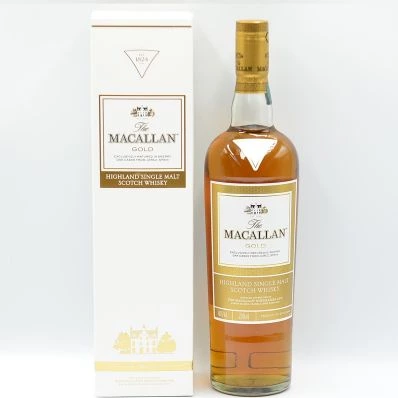 Macallan 1824 Series Gold Single Malt WhiskySpecial Price £269.98 Regular Price £284.99 Inc VATSaving £15.01
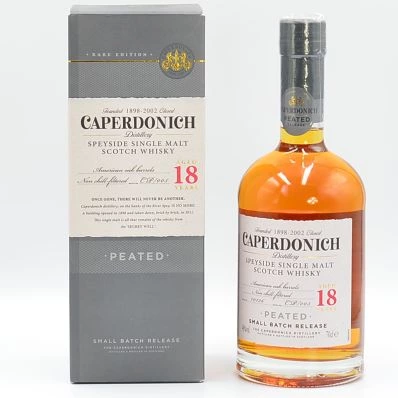
What Is A Speyside Whisky?
A Speyside whisky is Scotch whisky produced within the legally defined Speyside area of Scotland, centred around the River Spey and parts of Moray and the Highlands. Speyside sits within the wider Highland geography, but it is protected as its own Scotch whisky region under the Scotch Whisky Regulations.
The Scotch Whisky Association explains that “Highland”, “Lowland”, “Speyside”, “Islay” and “Campbeltown” are the five major traditional geographical indications protected in law, and that Speyside distillers may also use Highland descriptions because Speyside sits within the Highland region. This is why a Speyside bottle may sometimes carry Highland wording without being incorrectly labelled.
For buyers, the region is useful because it sets expectations. Speyside has one of the highest concentrations of malt distilleries in Scotland and is strongly associated with fruit-led, honeyed, floral and sherry-cask styles. It does not guarantee flavour, but it gives a reliable starting point.
What Does Speyside Whisky Taste Like?
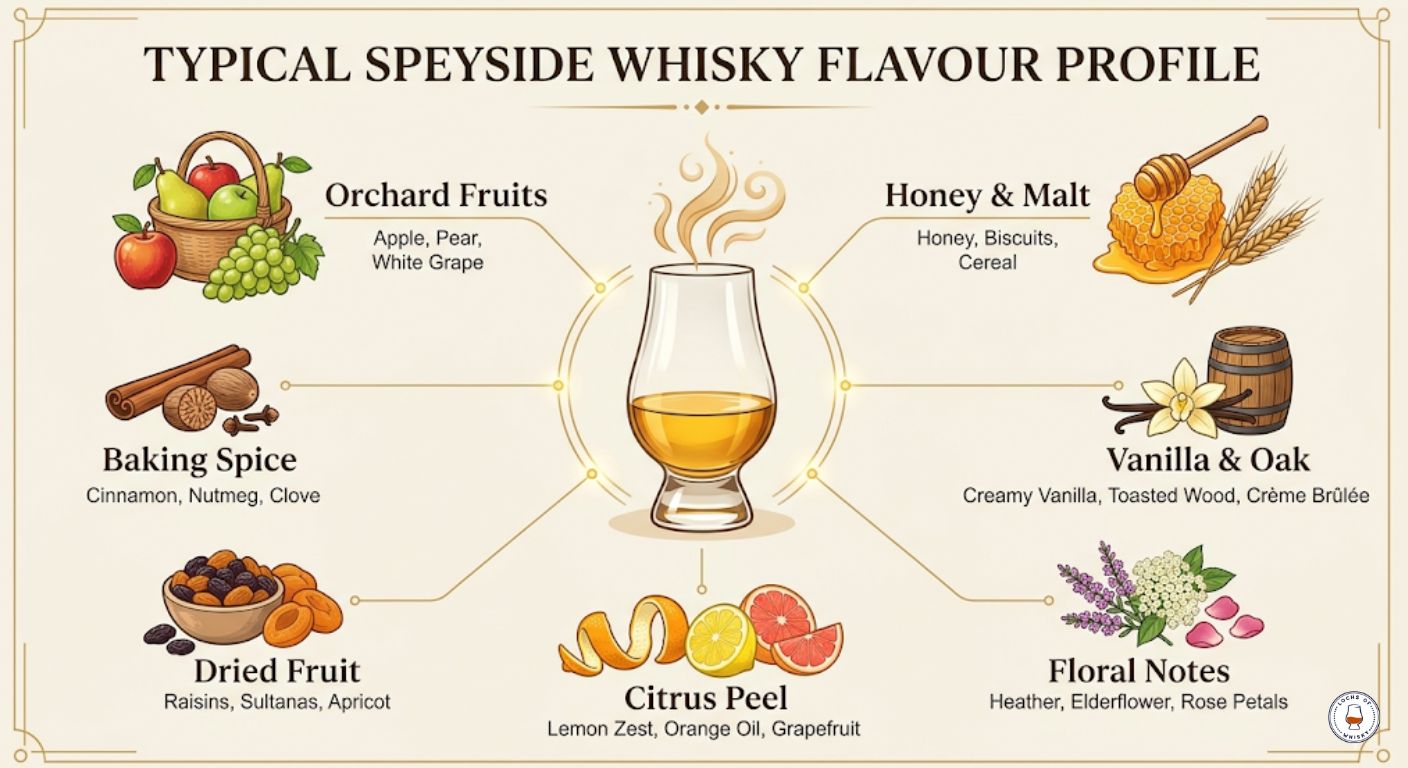
Speyside whisky usually tastes softer, fruitier and sweeter than heavily peated Scotch. Common notes include apple, pear, honey, vanilla, malt, orange peel, dried fruit, light spice and polished oak. Sherry-cask examples often move towards raisin, fig, chocolate and richer fruitcake notes.
The main Speyside flavour families are:
- Orchard fruit: apple, pear, white grape and light citrus.
- Honey and malt: cereal sweetness, heather honey and soft biscuit notes.
- Vanilla and oak: common in bourbon-cask matured whisky.
- Dried fruit and spice: more common in sherry-cask maturation.
- Floral lift: lighter styles can show grass, blossom and gentle herbal notes.
This is why Speyside often works well for drinkers moving into single malt Scotch. It gives structure and flavour without demanding that the buyer already enjoys heavy peat, maritime smoke or very dry oak.
How To Read Speyside Whisky Tasting Notes
Useful tasting notes should tell you more than whether a bottle is “smooth” or “sweet”. They should help you understand where the flavour comes from and whether the bottle fits your preference.
Read Speyside whisky reviews in four parts:
- Nose: the aroma before tasting. Look for fruit, malt, cask sweetness, oak and alcohol lift.
- Palate: the flavour and texture. This is where sweetness, spice, fruit weight and body matter.
- Finish: what remains after swallowing. Short finishes can feel simple; longer finishes may show oak, spice or dried fruit.
- Balance: whether the fruit, cask, alcohol and oak work together.
A good Speyside review should also mention ABV, cask type and age statement. Without those, tasting notes can become too subjective to guide a purchase.
Cask Type Is Usually The Biggest Clue
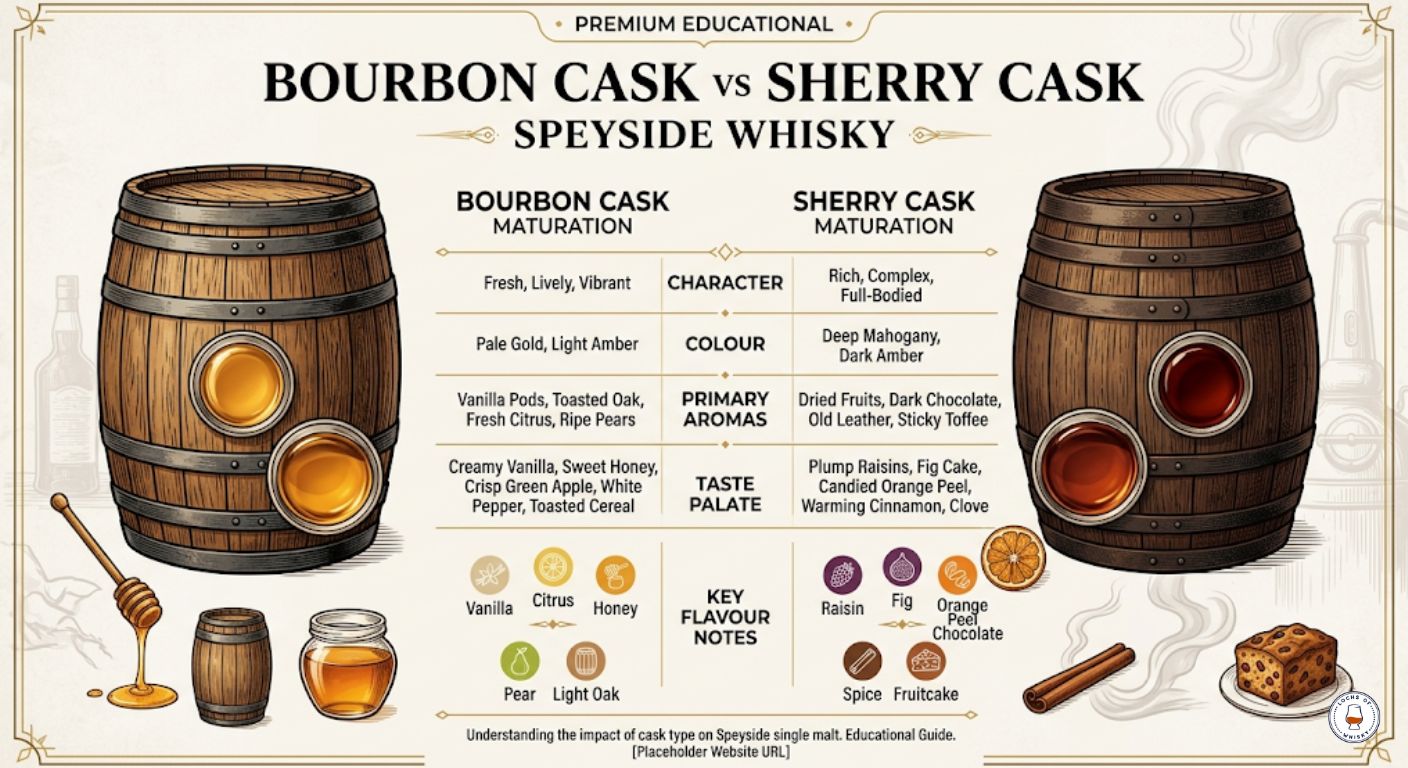
Cask type often explains the difference between two Speyside bottles better than the distillery name alone. A bourbon-cask Speyside usually leans towards vanilla, citrus, pear and lighter honey. A sherry-cask Speyside usually brings dried fruit, spice, dark sugar, orange peel, walnut and chocolate.
Full sherry maturation and sherry finishing are not the same thing. Full maturation means the whisky spent its ageing period in sherry-seasoned oak. A finish usually means the whisky matured elsewhere first, then spent a shorter period in a sherry cask before bottling. The question our customers ask most is whether a sherry-cask finish is the same as full sherry maturation; it is not, and the difference shows up in both flavour depth and price.
Speyside is also a useful region for comparing cask style across individual bottles. A review such as GlenDronach 18 Allardice Tasting Review is a good example of a richer, sherry-led profile, while a bourbon-cask or refill-cask bottle will usually sit lighter and cleaner.
Age Statement: What It Tells You And What It Does Not
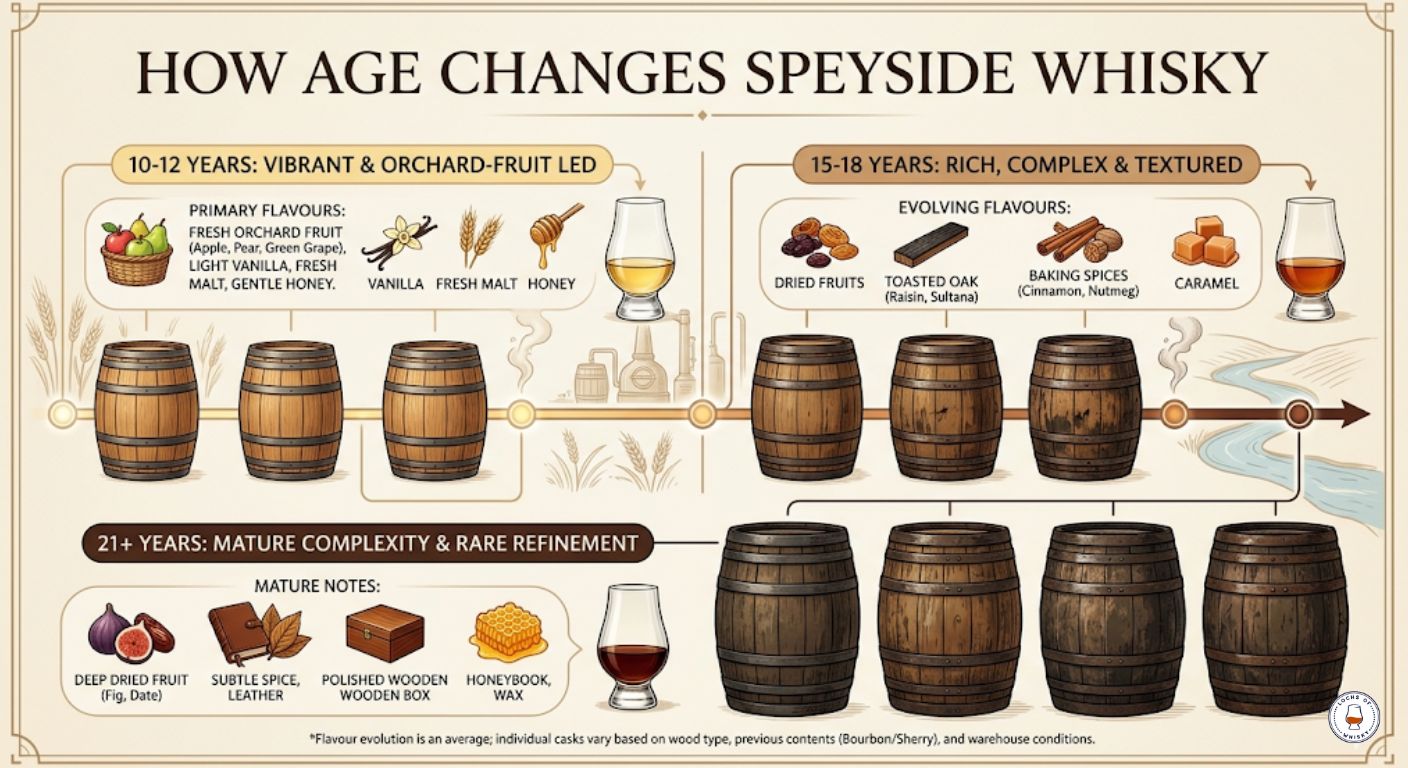
An age statement tells you the age of the youngest whisky in the bottle. A 12-year-old Speyside has spent at least 12 years in oak. An 18-year-old has spent at least 18 years in oak. It does not automatically mean the older bottle is better.
Age usually changes Speyside whisky in these ways:
- 10–12 years: brighter fruit, lighter malt, more obvious distillery character.
- 15–18 years: deeper cask influence, more spice, richer texture and longer finish.
- 21 years and above: more oak, darker fruit, polished texture, higher price and greater risk of over-oaking if the cask was too active.
For most buyers, 12 to 18 years is the most useful range for Speyside whisky. Under £50, expect simpler structure and lighter finishes. Between £60 and £120, cask quality becomes more important than age alone. Above that, you should be looking carefully at bottler, ABV, cask type and release context.
ABV And Strength: Why 40%, 43%, 46% And Cask Strength Matter
ABV changes how Speyside whisky feels. A 40% bottle can be soft and easy to approach, but may feel lighter in texture. At 43%, many bottles gain a little more weight. At 46%, the whisky often carries more flavour and mouthfeel, especially if it is non-chill filtered. Cask-strength releases can be much more intense.
Use this as a simple guide:
- 40% ABV: accessible, lighter, often entry-level or core range.
- 43% ABV: slightly fuller, common in premium core bottlings.
- 46% ABV: stronger texture, often more natural presentation.
- 50%+ ABV: powerful, concentrated, better for experienced drinkers.
If you are buying from the wider Scotch whisky range, ABV is one of the quickest ways to avoid choosing a bottle that is either too light or too forceful for the intended drinker.
Common Speyside Styles
Light, Orchard-Fruit Speyside
This style is usually fresh, clean and approachable. Expect apple, pear, lemon, honey, vanilla and soft cereal notes. It is often found in younger or bourbon-cask matured expressions, especially around 40–43% ABV.
This is usually the safest starting point for someone new to single malt Scotch. It gives clear regional character without heavy oak, smoke or very high strength.
Sherry-Cask Speyside
Sherry-cask Speyside is richer and darker. Expect raisin, orange peel, fig, fruitcake, nutmeg, chocolate, polished oak and sometimes leather or tobacco in older bottles. These whiskies can feel broader and more serious than lighter fruit-led styles.
If you prefer depth, dried fruit and spice, sherry-led Speyside is usually the better route. The Macallan 12 Tasting Review sits naturally in this part of the conversation because Macallan is closely associated with sherry-seasoned oak and richer Speyside structure.
Double-Cask And Finished Speyside
Double-cask Speyside uses more than one cask type to build flavour. Bourbon casks may provide vanilla and citrus, while sherry casks add dried fruit and spice. Finishes in port, rum or wine casks can add extra sweetness, fruit or tannin.
These bottles are often useful when you want a balance between easy fruit and deeper cask character. The Balvenie 17 DoubleWood Tasting Review is a relevant follow-on if you want to understand how layered wood influence changes a Speyside profile.
Higher-Strength And Independent Bottlings
Independent bottlings can show a distillery from a different angle. They may use single casks, higher ABV, unusual maturation or less diluted presentation. This can make them more interesting, but also less predictable.
For experienced drinkers, higher-strength Speyside can reveal more texture, spice and cask detail. For a gift or first bottle, it can be too intense unless the recipient already enjoys stronger whisky.
Are All Speyside Whiskies Sweet And Unpeated?
No. Speyside is known for sweet, fruity and honeyed whisky, but not every Speyside bottle follows that profile. Some distilleries have used peat historically, and some modern releases revive lightly smoky or more robust styles. Cask type, ABV and distillery character still matter.
This is where tasting notes become important. A bottle described as orchard-fruit, vanilla and honey will drink very differently from one described as earthy, meaty, smoky or heavily sherried. Do not assume Speyside always means delicate.
Lesser-Known Speyside Distilleries Worth Understanding
Speyside is not only about the most recognised names. Some of the region’s most interesting whisky comes from distilleries that appear frequently in independent bottlings, blends, limited releases or enthusiast-led selections.
- Mortlach — often heavier, meaty and robust compared with the softer Speyside stereotype.
- Linkwood — known among enthusiasts for elegant fruit and floral structure.
- Dailuaine — valued for weight, malt character and independent bottling interest.
- Mannochmore — often overlooked, but relevant for buyers exploring Speyside beyond core supermarket names.
- Glen Grant — historically important, often lighter and fruit-led, with strong regional identity.
These names matter because they help buyers move beyond brand recognition. Once you understand the distillery style, the bottler, cask and ABV become easier to judge.
Decision Logic: Which Speyside Whisky Should You Choose?
Use the bottle details before relying on broad tasting descriptions.
- If you are new to single malt: choose a 10–12-year-old Speyside at 40–43% ABV with bourbon-cask or balanced cask influence.
- If you like dried fruit and richer whisky: choose sherry-cask Speyside, especially 12–18 years old.
- If you want more flavour weight: look for 46% ABV or higher, but avoid cask strength unless you already enjoy stronger whisky.
- If your budget is £30–60: focus on clean distillery character rather than age. Avoid paying extra only for packaging or vague premium wording.
- If your budget is £60–120: compare cask type, ABV and age. This is where better Speyside bottles usually become more interesting.
- If buying a gift: choose recognisable Speyside style: fruit, honey, vanilla or sherry richness. Avoid very high ABV unless requested.
- If buying for a collector: look more closely at distillery, bottler, release size, age statement, vintage and condition.
If you want a widely recognised lighter reference point, the Glenfiddich 12 Tasting Review is useful because it shows the accessible orchard-fruit side of the region.
Speyside Whisky Tasting Notes By Buyer Type
For Beginners
Look for tasting notes that mention apple, pear, honey, vanilla, malt and gentle oak. Avoid bottles where the main notes are cask strength, tannic oak, sulphur, heavy spice or intense sherry unless the buyer already knows they enjoy that profile.
For Sherry-Cask Drinkers
Look for raisin, fig, orange peel, dark chocolate, cinnamon, nutmeg and polished oak. Check whether the bottle is fully sherry matured or only finished. Full maturation usually costs more and tends to deliver deeper cask influence.
For Experienced Drinkers
Look at ABV, bottler, vintage, cask number and whether the whisky is single cask or small batch. Independent Speyside bottlings can be excellent, but tasting notes should be read alongside the technical details.
For Old And Rare Buyers
Condition, fill level, closure, packaging and provenance matter as much as tasting notes. Older Speyside bottles may offer mature oak and historic distillery character, but old whisky is not automatically better. Bottle condition should always be checked before purchase.
Common Mistakes When Reading Speyside Whisky Reviews
- Assuming Speyside always means sweet: many are fruit-led, but some are smoky, spicy, meaty or cask-heavy.
- Choosing by age alone: a well-made 12-year-old can outperform an inactive-cask 18-year-old.
- Ignoring ABV: 40% and cask strength are completely different drinking experiences.
- Confusing sherry finish with sherry maturation: the flavour depth and price can differ significantly.
- Trusting vague tasting notes: “smooth” tells you less than fruit type, cask type, oak level and finish length.
- Assuming mystery malts are inferior: some are good value, but the buyer should know they may not identify a named distillery.
Frequently Asked Questions
What makes Speyside whisky distinctive?
Speyside whisky is distinctive because it often combines orchard fruit, honey, vanilla, malt and refined cask influence. Many bottles are softer than heavily peated Scotch, but the region is not one-dimensional. Sherry casks, bourbon casks, age, ABV and distillery style all change the final profile.
What is the difference between Highland and Speyside whisky labels?
Speyside sits within the wider Highland geography, but it is also a protected Scotch whisky region. Some Speyside distilleries may use Highland wording on labels for tradition, legal flexibility or brand positioning. If the whisky was distilled within the Speyside boundary, both regional references can be valid.
Are all Speyside whiskies unpeated and sweet?
No. Sweet fruit, honey and vanilla are common Speyside traits, but not universal rules. Some Speyside whiskies show peat, spice, meatiness, heavy sherry influence or firm oak. Always check tasting notes, cask type and ABV before assuming a bottle will be soft or sweet.
What Speyside whisky works with dark chocolate?
Rich sherry-cask Speyside usually works best with dark chocolate because dried fruit, orange peel, caramel and spice stand up to bitterness. Look for 12–18-year-old bottles with oloroso or PX influence. Lighter bourbon-cask Speyside can be too delicate for very dark chocolate.
Is Shieldaig 18 a real distillery?
Shieldaig is generally understood as a bottler or private-label name rather than a named Speyside distillery. Bottles like this are often mystery malts, meaning the source distillery is not disclosed. That does not automatically make the whisky poor, but it changes how buyers should judge provenance and price.
Why does Speyside have so many distilleries?
Speyside developed a dense distilling culture because of water access, barley-growing conditions, transport links and legal changes after the 1823 Excise Act. The River Spey and surrounding area became a practical base for malt whisky production, which is why the region still carries such strong distillery density.
Is Speyside whisky good for beginners?
Yes, Speyside is often a strong starting point for beginners because many bottles are fruit-led, balanced and not heavily peated. Choose 40–43% ABV, 10–12 years old, and tasting notes that mention apple, pear, honey, vanilla or light sherry rather than cask strength or heavy oak.
Should I choose Speyside or Islay whisky?
Choose Speyside if you prefer fruit, honey, vanilla, sherry richness or a softer single malt profile. Choose Islay if you want peat smoke, coastal character, medicinal notes or a more forceful style. If you are comparing the two directly, read the Islay vs Speyside whisky guide.
Structured Summary
- Region: Speyside is legally defined but geographically connected to the Highlands.
- Flavour: expect fruit, honey, vanilla, malt, floral notes and, in sherry-cask bottles, dried fruit and spice.
- Cask type: bourbon casks usually mean lighter vanilla and citrus; sherry casks mean richer dried fruit and spice.
- Age: 10–12 years is often bright and accessible; 15–18 years usually adds more cask depth.
- ABV: 40–43% is approachable, 46% gives more texture, and cask strength is better for experienced drinkers.
- Price: under £60, prioritise clarity and balance; £60–120, compare age, cask type and ABV carefully.
Common Mistakes
- Buying by age statement alone.
- Ignoring the difference between sherry finish and full sherry maturation.
- Assuming every Speyside whisky is light and sweet.
- Choosing high ABV as a gift without knowing the recipient’s preference.
- Reading tasting notes without checking cask type and bottler.
Decision Shortcuts
- Beginner: 10–12 years, 40–43% ABV, fruit and honey notes.
- Sherry lover: oloroso or PX influence, dried fruit, spice and chocolate notes.
- Experienced drinker: 46% ABV or higher, single cask or independent bottling.
- Gift buyer: recognisable Speyside style, moderate strength, clear tasting notes.
- Collector: focus on distillery, bottler, age, vintage, release context and condition.
Speyside whisky reviews are most useful when they connect flavour to facts: region, cask, age, ABV and bottling context. Once those details are clear, choosing the right bottle becomes much easier. For further browsing, the main Scotch whisky category gives the wider regional context beyond Speyside.

Comments